Connecticut Warning of Default on Residential Lease
Overview of this form
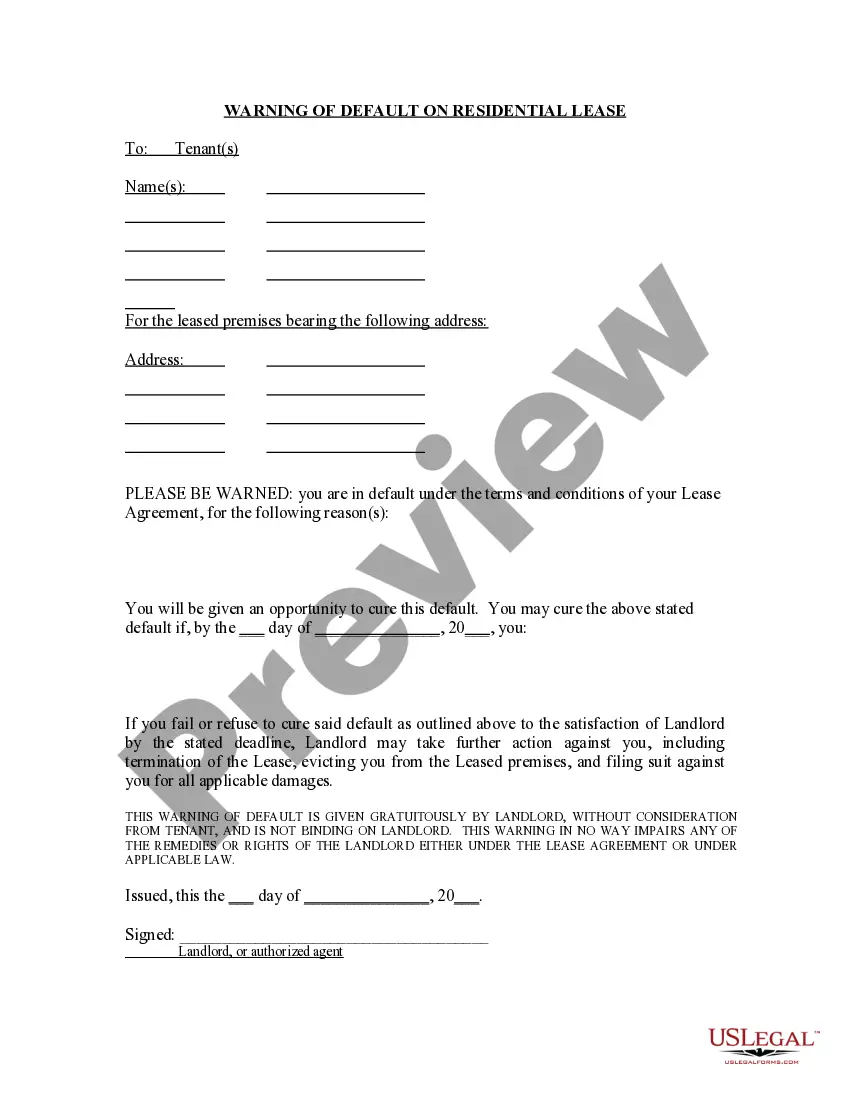
The Warning of Default on Residential Lease is a letter issued by a landlord to a tenant, signaling potential default under the lease agreement. This form serves as a formal notice that the landlord is concerned about specific conditions that need to be remedied. It is distinct from eviction notices because it offers the tenant an opportunity to address the issues before any further action is taken.
Key components of this form
- Identification of the landlord and tenant
- Date of issuance
- Details of the specific lease default or concern
- Landlord's signature or that of an authorized agent
- Disclaimer regarding the non-binding nature of the warning



When this form is needed
This form should be used when a landlord wishes to formally notify a tenant of a breach or default under their lease agreement. It is typically employed in situations where the tenant has failed to meet specific obligations, such as timely rental payments or maintenance duties. Using this form can help facilitate communication between the landlord and tenant before pursuing more severe actions like eviction.
Intended users of this form
This form is intended for:
- Residential landlords managing rental properties
- Property management professionals overseeing tenant relations
- Tenants receiving notice of default who need to understand their rights and responsibilities
Completing this form step by step
- Identify the parties involved by entering the names of the landlord and tenant.
- Specify the date the warning is issued.
- Detail the specific conditions that constitute the default.
- Have the landlord or authorized agent sign the document.
- Provide a copy of the warning to the tenant, ensuring they acknowledge receipt.
Notarization guidance
This form does not typically require notarization unless specified by local law. However, it is essential to check state regulations for any specific requirements regarding signatures.
Get your form ready online
Our built-in tools help you complete, sign, share, and store your documents in one place.
Make edits, fill in missing information, and update formatting in US Legal Forms—just like you would in MS Word.
Download a copy, print it, send it by email, or mail it via USPS—whatever works best for your next step.
Sign and collect signatures with our SignNow integration. Send to multiple recipients, set reminders, and more. Go Premium to unlock E-Sign.
If this form requires notarization, complete it online through a secure video call—no need to meet a notary in person or wait for an appointment.
We protect your documents and personal data by following strict security and privacy standards.

Make edits, fill in missing information, and update formatting in US Legal Forms—just like you would in MS Word.

Download a copy, print it, send it by email, or mail it via USPS—whatever works best for your next step.

Sign and collect signatures with our SignNow integration. Send to multiple recipients, set reminders, and more. Go Premium to unlock E-Sign.

If this form requires notarization, complete it online through a secure video call—no need to meet a notary in person or wait for an appointment.

We protect your documents and personal data by following strict security and privacy standards.
Common mistakes
- Failing to include specific details about the default.
- Not signing the document or using an unauthorized signature.
- Not providing a copy to the tenant.
- Confusing this warning with a formal eviction notice.
Advantages of online completion
- Convenience of instant downloading and printing.
- Editability allows customization to fit specific situations.
- Reliability with templates drafted by licensed attorneys.
Legal use & context
- Serves as documented proof of the landlordâs attempts to resolve issues.
- Essential in establishing a timeline before pursuing eviction if necessary.
- May affect security deposit return and other claims if taken to court.
Quick recap
- The Warning of Default is a proactive measure before legal action.
- Includes essential details regarding the default and remedies.
- Important for both landlords and tenants to understand their rights.
Looking for another form?
Form popularity
FAQ
Connecticut is often considered a tenant-friendly state due to its laws that protect renters. The Connecticut Warning of Default on Residential Lease is one example, as it ensures tenants receive proper notification before any legal actions are taken. Furthermore, Connecticut's legal framework promotes equitable treatment of tenants, encouraging negotiations and clear communication. This environment benefits both tenants and landlords by promoting mutual understanding.
The new tenant law in Connecticut emphasizes the importance of clear communication between landlords and tenants, particularly regarding the Connecticut Warning of Default on Residential Lease. This law mandates that landlords notify tenants in writing before taking action due to nonpayment of rent. Additionally, it offers tenants a chance to address their default, fostering a fair resolution process. It is crucial for both parties to understand their rights and responsibilities under this law.
The default clause in a lease outlines the responsibilities of both the tenant and landlord if either party fails to meet their contractual obligations. This clause typically explains what constitutes a default and the potential consequences. Understanding this part of your lease is essential, especially when it relates to a Connecticut Warning of Default on Residential Lease, as it helps clarify your rights and responsibilities.
If you face issues with your landlord in Connecticut, you can report them to the local housing authority or the Department of Consumer Protection. These organizations can guide you in addressing problems related to a Connecticut Warning of Default on Residential Lease. Additionally, you might consider consulting with a lawyer who specializes in tenant rights to fully understand your options.
The default clause on a residential lease specifies the conditions under which a landlord or tenant may be considered in default. This section provides clarity on the obligations for both parties and the consequences of failing to meet these obligations. Knowing the default clause can protect your rights and inform you about potential Connecticut Warning of Default on Residential Lease notices.
The default by tenant clause in a lease outlines the actions that will be considered a breach of the lease agreement by the tenant. If a tenant violates any of these terms, the landlord has the right to initiate eviction or other legal actions. Understanding this clause can help tenants avoid situations that might lead to a Connecticut Warning of Default on Residential Lease.
When it is stated that a tenant will be in default, it usually refers to a situation in which the tenant is likely to breach the lease agreement. This could result from not paying rent, causing property damage, or violating lease terms. It is important for tenants to be aware of these conditions, particularly concerning a Connecticut Warning of Default on Residential Lease.
If your landlord defaults, you may have several options to protect your rights as a tenant. You can issue a notice that outlines the default and demand necessary remedies, potentially leading to legal proceedings if the issues remain unaddressed. Utilizing resources from platforms like UsLegalForms can help you navigate the process following a Connecticut Warning of Default on Residential Lease.
When a property is in default, it indicates that the landlord has not fulfilled certain legal or contractual obligations stated in the lease. This could involve consistently failing to repair critical issues within the property or not adhering to local housing laws. A Connecticut Warning of Default on Residential Lease serves as a formal notice that landlords must take prompt action to address these defaults.
Section 47a 21 of the Connecticut General Statutes outlines the responsibilities of landlords in Connecticut regarding rent payments and property maintenance. It specifies the legal avenues for tenants if landlords default on these responsibilities. Understanding this section is crucial for tenants who may receive a Connecticut Warning of Default on Residential Lease to know their rights.