Connecticut Warning of Default on Commercial Lease
What is this form?
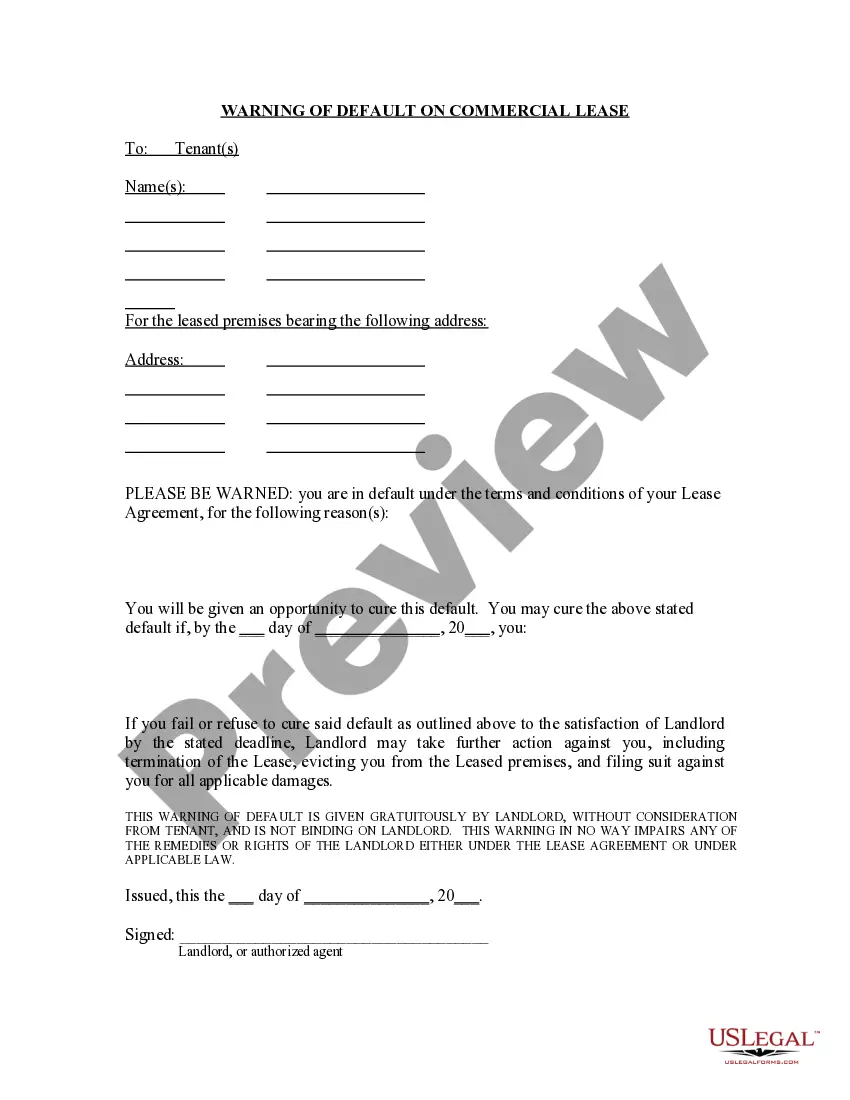
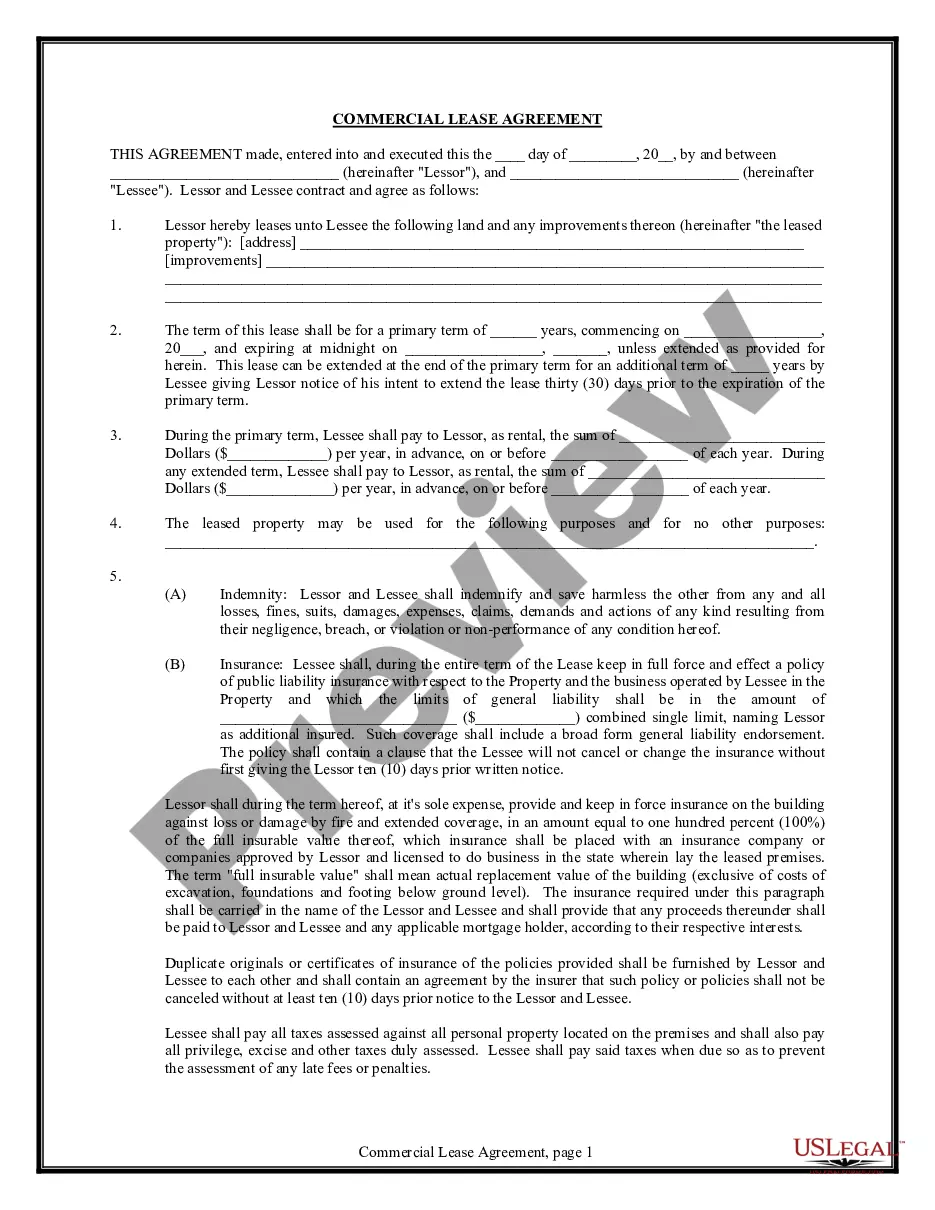
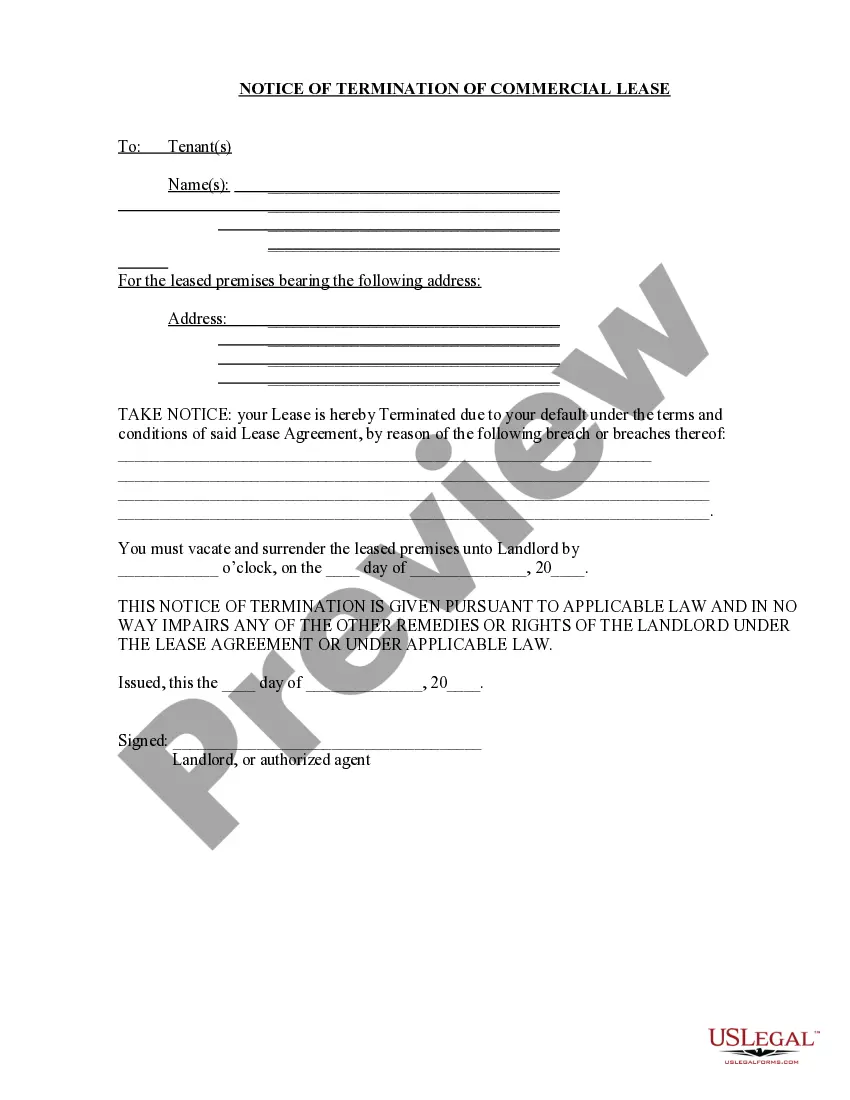
The Warning of Default on Commercial Lease is a legal notice issued by a landlord to a tenant. It signals that the tenant is at risk of breaching the lease agreement if specific issues are not addressed. This form serves to formally notify the tenant of potential default, primarily related to unpaid rent, and outlines the landlord's rights before taking further action, such as eviction. Unlike other lease forms, this warning specifically focuses on addressing defaults, allowing tenants a chance to remedy the situation before more severe consequences occur.
Key parts of this document
- Date of issuance: Specify the date the warning is issued.
- Landlord information: Include the name and signature of the landlord or authorized agent.
- Tenant notification: Clearly outline the conditions leading to the warning of default.
- Notice of potential consequences: Inform the tenant of the implications if the default is not corrected.
When to use this document
This form is essential when a tenant fails to make timely rent payments or does not comply with other lease obligations. Landlords should use this warning when they have concerns regarding a tenant's adherence to the lease agreement and wish to provide formal notification of a potential default. This proactive step allows the tenant the opportunity to rectify the issue before eviction proceedings may need to commence.
Who this form is for
- Landlords seeking to inform tenants of lease violations.
- Property managers coordinating tenant communications.
- Businesses leasing commercial space in need of formal legal notifications.
- Residential landlords with commercial lease agreements.
How to prepare this document
- Identify the date of issuance by filling in the appropriate day, month, and year.
- Clearly write the name and signature of the landlord or authorized agent.
- Review the lease agreement to identify the specific default conditions.
- Ensure that the language is clear and outlines the potential consequences of continued default.
Does this form need to be notarized?
This form does not typically require notarization unless specified by local law. Always verify any additional requirements based on your jurisdiction to ensure the document is legally valid.
Get your form ready online
Our built-in tools help you complete, sign, share, and store your documents in one place.
Make edits, fill in missing information, and update formatting in US Legal Forms—just like you would in MS Word.
Download a copy, print it, send it by email, or mail it via USPS—whatever works best for your next step.
Sign and collect signatures with our SignNow integration. Send to multiple recipients, set reminders, and more. Go Premium to unlock E-Sign.
If this form requires notarization, complete it online through a secure video call—no need to meet a notary in person or wait for an appointment.
We protect your documents and personal data by following strict security and privacy standards.

Make edits, fill in missing information, and update formatting in US Legal Forms—just like you would in MS Word.

Download a copy, print it, send it by email, or mail it via USPS—whatever works best for your next step.

Sign and collect signatures with our SignNow integration. Send to multiple recipients, set reminders, and more. Go Premium to unlock E-Sign.

If this form requires notarization, complete it online through a secure video call—no need to meet a notary in person or wait for an appointment.

We protect your documents and personal data by following strict security and privacy standards.
Typical mistakes to avoid
- Failing to provide a specific deadline for the tenant to remedy the default.
- Not clearly stating the reasons for the default.
- Omitting the signature of the landlord or authorized agent.
- Using vague language that may confuse the tenant about what is expected.
Why use this form online
- Convenience of immediate download, allowing for quick action.
- Editability to customize details specific to your tenant and lease agreement.
- Reliability of professionally drafted templates, ensuring legal compliance.
Legal use & context
- This warning serves as an official notice to tenants and helps maintain a legal record of communication.
- It is crucial for landlords to provide such a warning to avoid complications during eviction proceedings.
- The form solidifies the landlord's position and demonstrates due diligence in managing tenant issues.
What to keep in mind
- The Warning of Default on Commercial Lease is vital for addressing tenant defaults.
- Proper completion and delivery of the form protects landlords and meets legal obligations.
- Understand the importance of local laws when using this form.
Looking for another form?

Form popularity
FAQ
Default in a lease agreement refers to a failure to meet the terms set forth in the contract. For instance, not paying rent on time or failing to maintain the property can both be considered defaults. A Connecticut Warning of Default on Commercial Lease is a formal notice to the tenant about these violations. Understanding the terms of your lease is essential to avoid default and potential legal repercussions.
When you default on a commercial lease, your landlord typically has the right to initiate eviction proceedings. They may also issue a Connecticut Warning of Default on Commercial Lease, informing you of the breach. This document is crucial as it provides you with an opportunity to correct the default before further actions take place. It's advisable to consult legal assistance to navigate this situation.
To negotiate getting out of a commercial lease, prepare by understanding your lease terms and the reasons for your request. If a Connecticut Warning of Default on Commercial Lease applies to your situation, use it as leverage in negotiations. Be honest with your landlord and suggest a mutually beneficial exit strategy, such as agreeing to cover some costs or finding a new tenant. Employing uslegalforms can assist you in drafting proposals and negotiating effectively.
To back out of a commercial lease, review the lease agreement for clauses related to termination. If you received a Connecticut Warning of Default on Commercial Lease, you might have grounds for terminating the lease based on default conditions. Always communicate your intentions in writing and seek your landlord's agreement to avoid potential conflicts. Consider using resources from uslegalforms to draft your termination letter.
The best excuse to break a lease often revolves around significant business challenges or changes in circumstances. For example, if you've received a Connecticut Warning of Default on Commercial Lease, that could indicate financial hardships that legally justify your exit. Documenting any changes or difficulties will support your claim and strengthen your negotiating position with the landlord.
To write a letter to get out of a commercial lease, start by clearly stating your intention to terminate the lease. Specify the reason, especially if it relates to a Connecticut Warning of Default on Commercial Lease. Include essential details like your lease information and a proposed move-out date. Finally, ensure you keep a copy for your records and send it via certified mail for proof of delivery.
A notice of default on a commercial lease is a formal notification to a tenant that they are failing to comply with the lease terms, such as late payments. This document serves as the landlord's warning and outlines the actions that need to be taken to rectify the situation. In Connecticut, receiving a Warning of Default on Commercial Lease is an important step in the eviction process. Businesses should take these notices seriously and seek proper advice to navigate the situation effectively.
When a business defaults on a lease, it means the tenant fails to meet the lease terms, such as not paying rent. This can lead to legal consequences, including eviction and damage to the tenant's credit score. In Connecticut, a Warning of Default on Commercial Lease may be issued to formally notify the tenant. It is crucial for businesses to address any lease issues promptly to avoid escalation.
The best excuse to break a commercial lease often involves valid claims such as property damage, unsafe conditions, or failure to meet lease terms by the landlord. Documenting these issues can support your case for breaking the lease legally. Consulting resources like USLegalForms can provide guidance on navigating a Connecticut Warning of Default on Commercial Lease effectively.
The clause in a commercial lease consists of specific terms and conditions agreed upon by both the landlord and tenant. It can cover aspects like payment schedules, maintenance obligations, and penalties for default. Familiarizing yourself with the clauses, including those related to a Connecticut Warning of Default on Commercial Lease, is key to protecting your interests throughout the lease term.