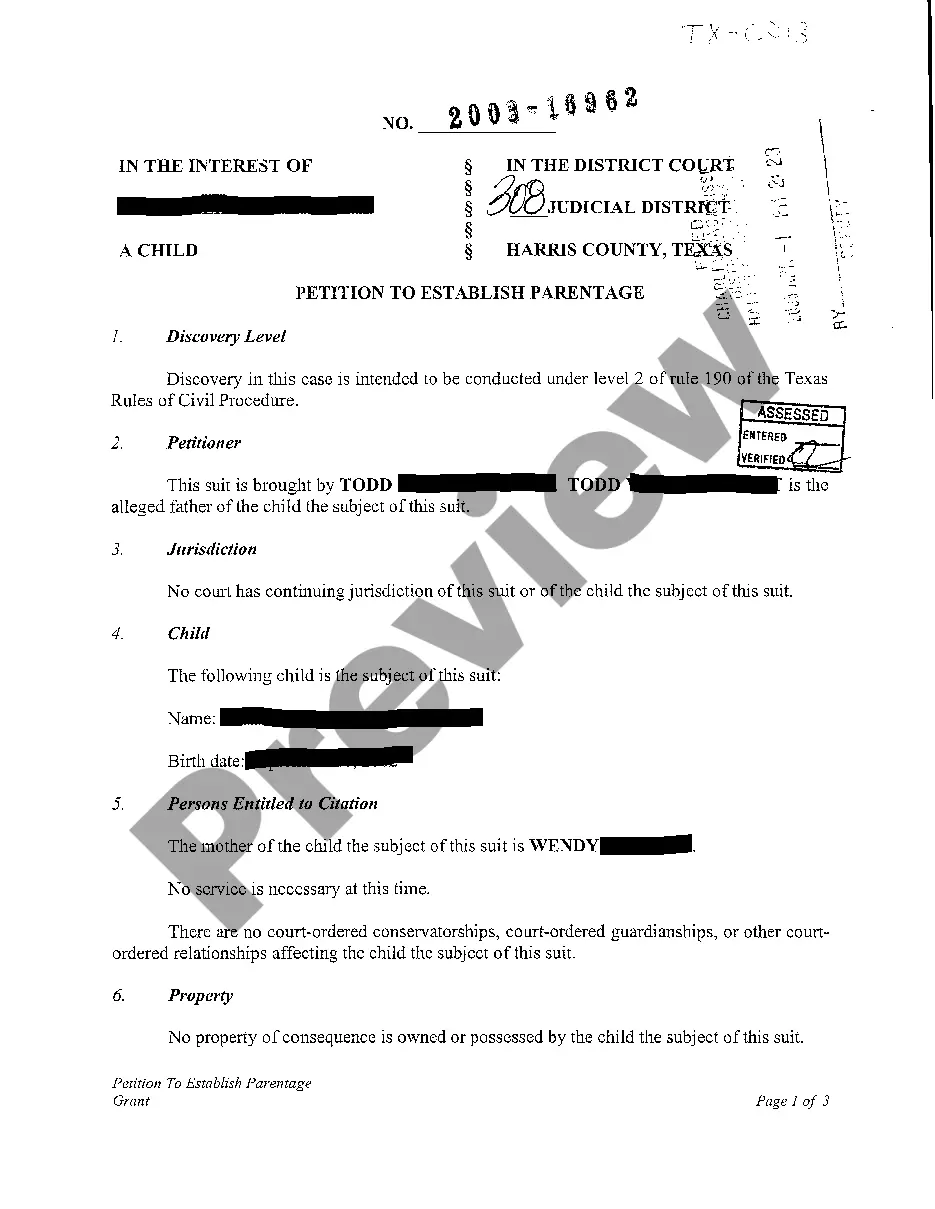
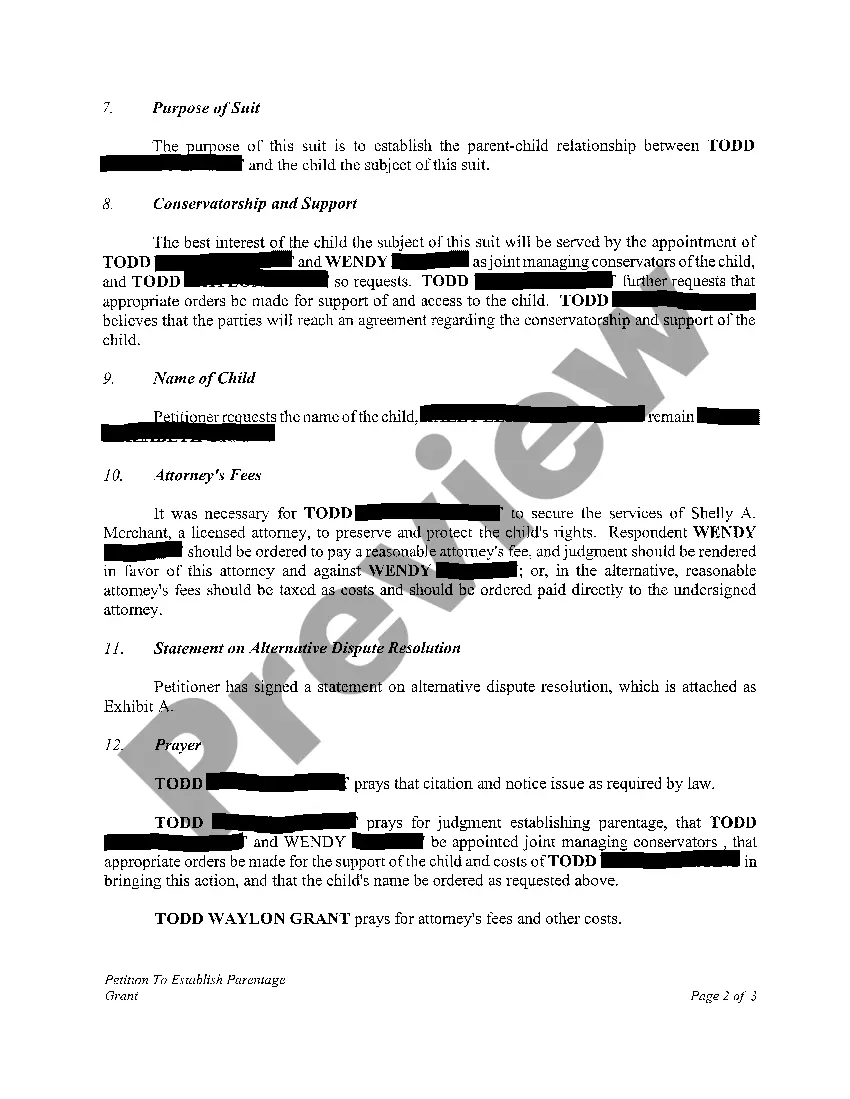
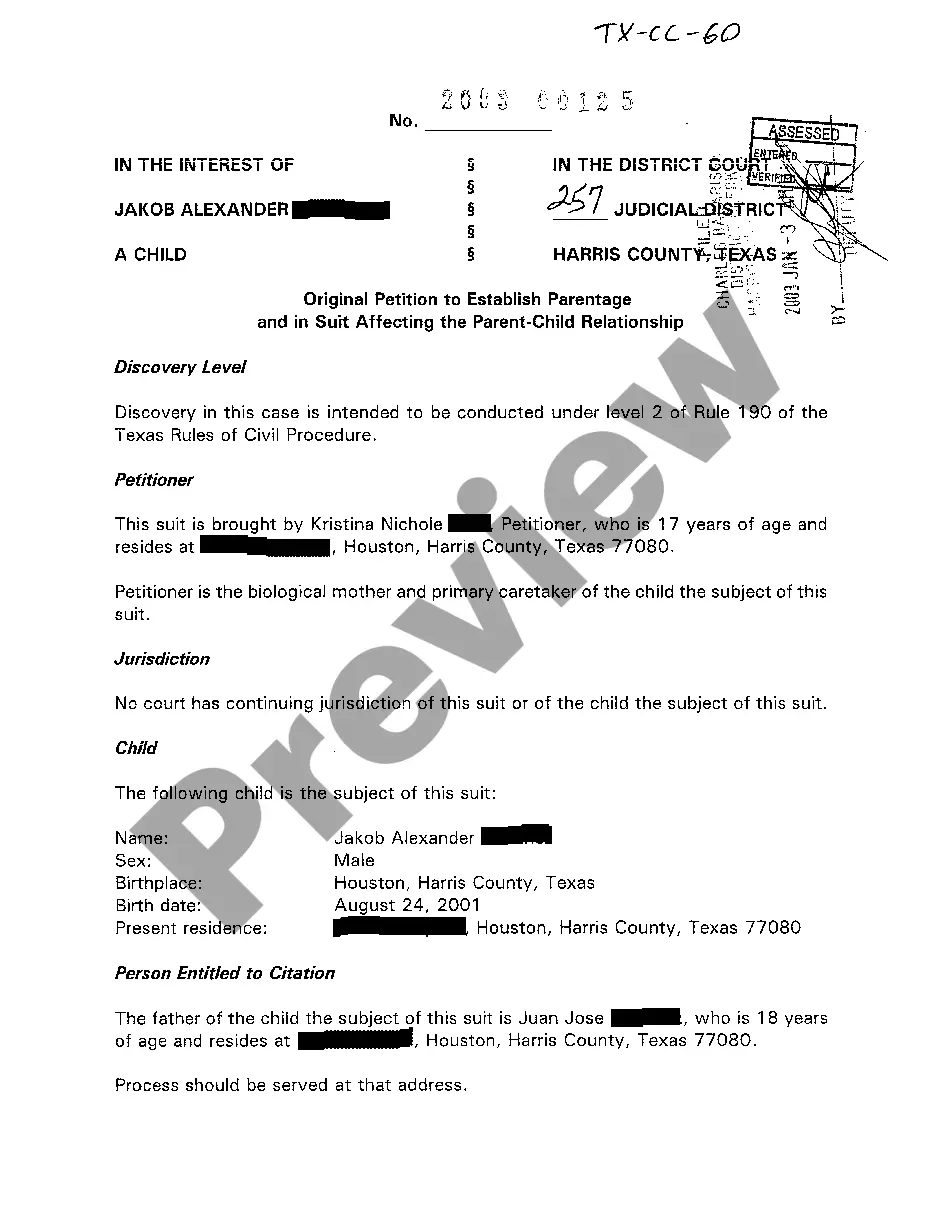
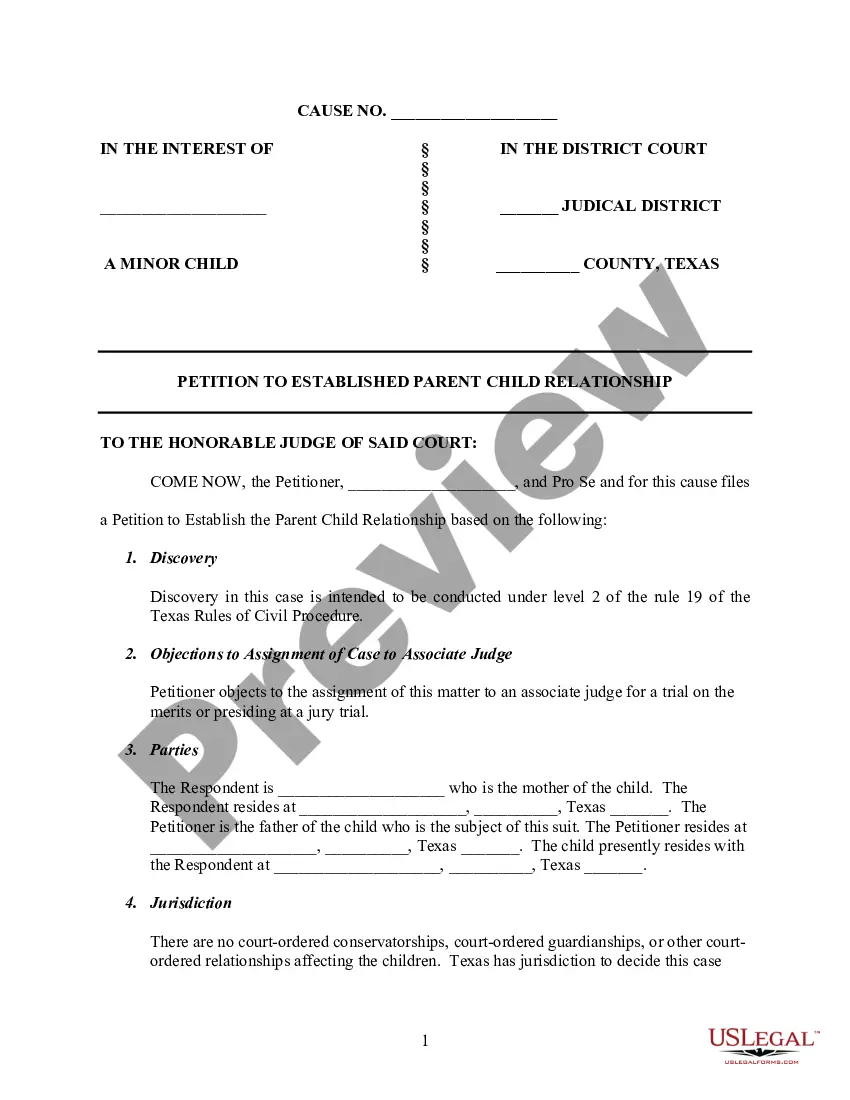
Texas Petition to Establish Parentage
Notarization guidance
This form does not typically require notarization to be legally valid. However, some jurisdictions or document types may still require it. US Legal Forms provides secure online notarization powered by Notarize, available 24/7 for added convenience.


Form popularity
FAQ
Signing a voluntary declaration of parentage or paternity, OR. Getting a court order (either on your own or with the help of the Local Child Support Agency).
How do you establish paternity in Texas? In Texas, paternity can be established either voluntarily by signing an Acknowledgment of Paternity form or involuntarily through a court order. When the mother and father agree that the father is in fact the biological father, paternity can be established voluntarily.
Get on the birth certificate. Once your child is born, the easiest way to establish paternity is by getting your name on the birth certificate. Get an order through an administrative agency. Get a court order.
How do you establish paternity in Texas? In Texas, paternity can be established either voluntarily by signing an Acknowledgment of Paternity form or involuntarily through a court order. When the mother and father agree that the father is in fact the biological father, paternity can be established voluntarily.
Most paternity test results are available with-in 4-6 weeks after a swab.
Establishing paternity ensures a father's legal rights and various rights and privileges for their children, such as rights to inheritance, father's medical and life insurance benefits, and Social Security and veterans' benefits, plus access to paternal family health history.
In Texas, signing a birth certificate will not establish paternity. In fact, a purported legal father of a child who is not married to the mother will not be able to even sign the birth certificate until he signs a voluntary acknowledgment of paternity (AOP).
Birth certificate. If a birth certificate declares the father and he signs it, this is a legally binding qualification of paternity. DNA test. Court order.