Connecticut Letter from Tenant to Landlord containing Request for permission to sublease
What this document covers
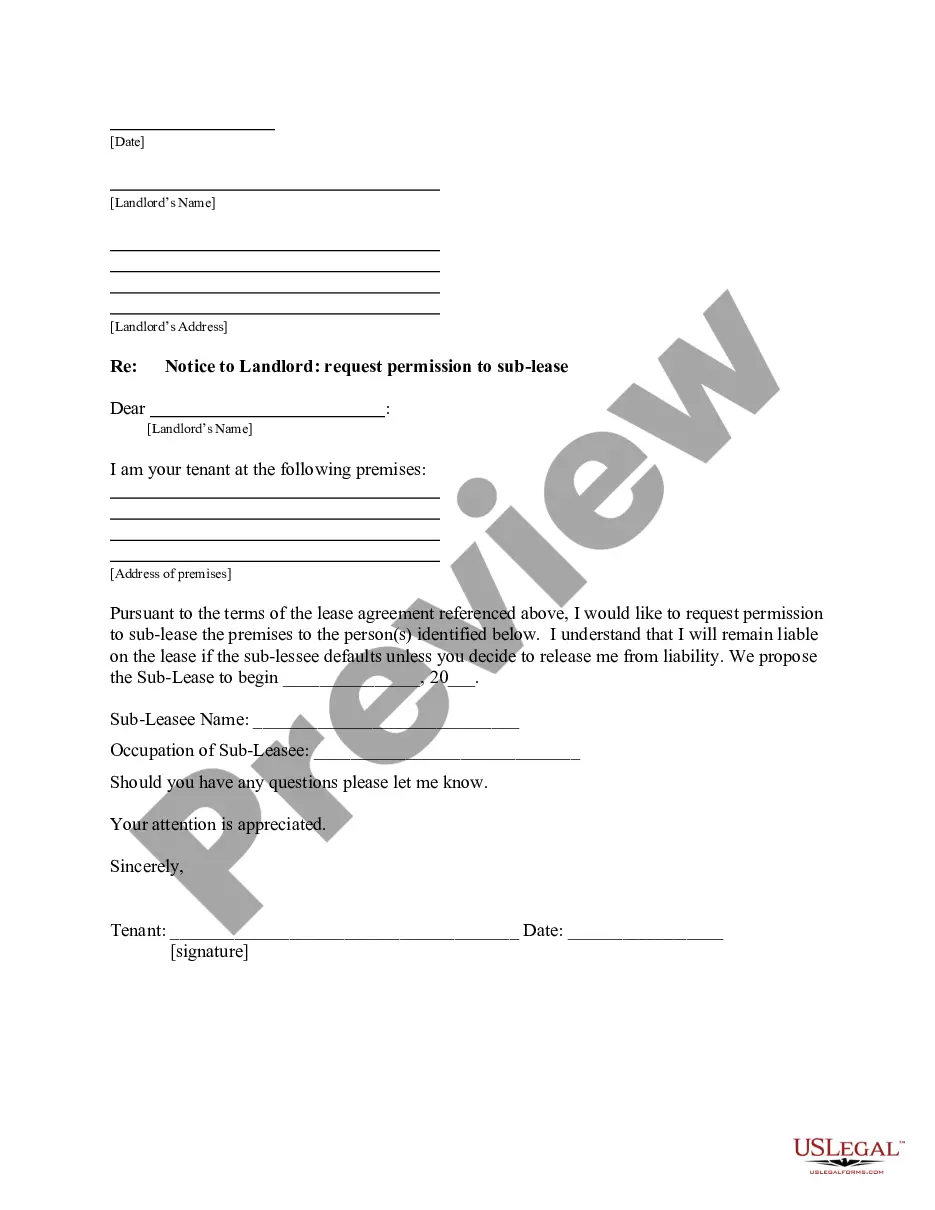
This is a letter from a tenant requesting permission to sublease the rental property to another individual. The letter formalizes the tenant's request and outlines important considerations, including that the tenant retains liability under the original lease. This form is essential for securing the landlord's approval before proceeding with a sublease, differentiating it from general lease agreements and termination notices.
Main sections of this form
- Sub-leasee name: Identify the individual to whom you wish to sublet the property.
- Occupation of sub-leasee: Share relevant details regarding the subtenant's profession.
- Tenant's acknowledgment: Confirm that the tenant remains liable for the lease terms.
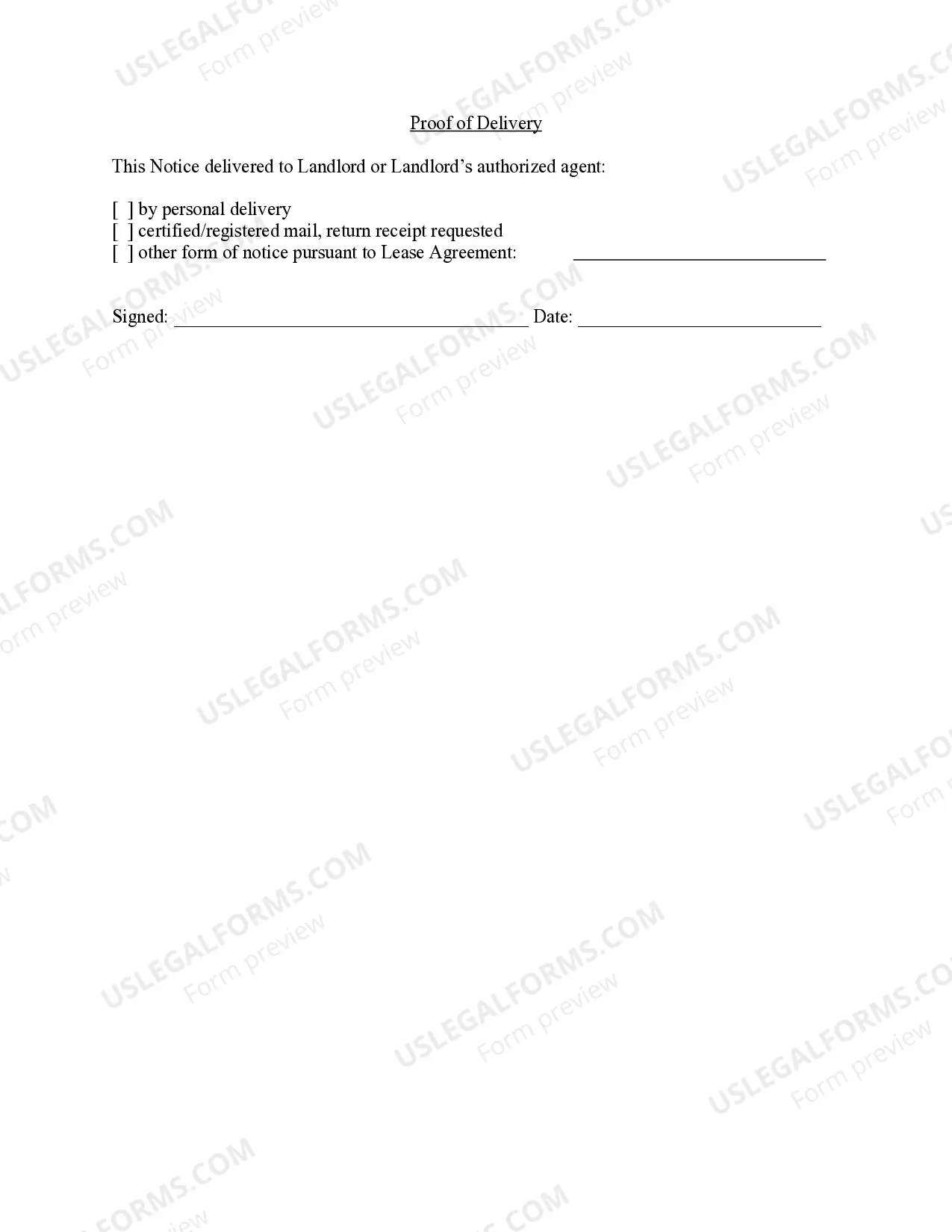
- Delivery method: State how the notice is delivered to the landlord.
- Signature and date: Include the tenant's signature and the date of the request.
When to use this document
This form is used when a tenant wishes to sublease their rental unit to another person. It is required in situations where there is a need to obtain the landlord's consent before the sublease can be finalized. Common scenarios include relocating temporarily for work or educational purposes, or when a tenant needs to share financial responsibilities due to unforeseen circumstances.
Who can use this document
- Current tenants seeking to sublease their rental unit.
- Tenants who need to formally ask their landlord for permission to sublet.
- Individuals who are responsible for existing lease agreements with their landlords.
How to prepare this document
- Identify the parties involved: Fill in the name of the sub-leasee and their occupation.
- Review lease terms: Ensure you understand your obligations as the original tenant.
- Draft the letter: Include a professional greeting and clearly state your request to sublease.
- Sign and date the letter: Provide your signature and the date to formalize the request.
- Deliver the letter: Use your chosen method to send the letter to your landlord.
Notarization requirements for this form
This form does not typically require notarization unless specified by local law. It is advisable to confirm local regulations to ensure compliance when submitting the request to the landlord.
Get your form ready online
Our built-in tools help you complete, sign, share, and store your documents in one place.
Make edits, fill in missing information, and update formatting in US Legal Forms—just like you would in MS Word.
Download a copy, print it, send it by email, or mail it via USPS—whatever works best for your next step.
Sign and collect signatures with our SignNow integration. Send to multiple recipients, set reminders, and more. Go Premium to unlock E-Sign.
If this form requires notarization, complete it online through a secure video call—no need to meet a notary in person or wait for an appointment.
We protect your documents and personal data by following strict security and privacy standards.

Make edits, fill in missing information, and update formatting in US Legal Forms—just like you would in MS Word.

Download a copy, print it, send it by email, or mail it via USPS—whatever works best for your next step.

Sign and collect signatures with our SignNow integration. Send to multiple recipients, set reminders, and more. Go Premium to unlock E-Sign.

If this form requires notarization, complete it online through a secure video call—no need to meet a notary in person or wait for an appointment.

We protect your documents and personal data by following strict security and privacy standards.
Mistakes to watch out for
- Failing to specify the sub-leasee's name and occupation.
- Not including a proper date and signature on the request letter.
- Neglecting to check specific local laws regarding subleasing.
- Forgetting to maintain clear communication with the landlord throughout the process.
Benefits of completing this form online
- Convenient access: Download and complete the form from anywhere at any time.
- Editability: Easily modify the document to fit your specific situation.
- Reliable resources: Forms are crafted by licensed attorneys, ensuring legal validity.
Legal use & context
- The letter facilitates communication between the tenant and landlord regarding subleasing.
- Ensures that the original tenant remains liable, protecting the landlord's interests.
- Helps avoid potential eviction issues that can arise without proper notification.
What to keep in mind
- This form serves as a formal request to sublease a rental unit.
- Tenants must remain accountable for the lease even after subleasing.
- Compliance with state-specific regulations and the lease agreement is crucial.
Definitions you should know
- Subtenant: A person who rents a property from a tenant instead of the landlord.
- Landlord: The owner of the property being rented.
- Lease: A legal agreement outlining the terms of renting a property.
Looking for another form?


Form popularity
FAQ
An example of consent to a sublease involves a written agreement from the landlord allowing a tenant to lease their apartment or house to another party. In this case, the Connecticut Letter from Tenant to Landlord containing Request for permission to sublease serves as a formal notification. This letter should clearly outline the details of the sublease arrangement and provide the landlord an opportunity to approve the subtenant. By using an official template, tenants can ensure that they meet all legal requirements and facilitate a smooth transition.
Subleasing and subletting generally refer to the same concept: allowing another person to occupy your rental space while maintaining your lease obligations. However, some distinctions can arise based on the terms set by the landlord and specific legal definitions. To navigate this terrain effectively, consider drafting a Connecticut Letter from Tenant to Landlord containing Request for permission to sublease to clarify your intentions.
Subletting in Connecticut is legal, provided that the original lease allows it and you obtain the landlord's approval. Many leases contain specific clauses concerning subletting, so it's vital to read yours carefully. Use a Connecticut Letter from Tenant to Landlord containing Request for permission to sublease to communicate your request appropriately and legally.
Yes, in most cases, you must inform your landlord if you plan to sublet your apartment or house. Failure to do so may violate the terms of your lease and lead to potential legal issues. Provide a well-written Connecticut Letter from Tenant to Landlord containing Request for permission to sublease to formalize your intent and seek approval.
Writing a sublease letter involves outlining the details of the original lease and specifying the terms of the sublease. Include the names of all parties involved, the property address, and the duration of the sublease. Be sure to mention the need for landlord approval through the Connecticut Letter from Tenant to Landlord containing Request for permission to sublease to ensure smooth transitions.
In Connecticut, having someone live with you without being on the lease typically requires the landlord's consent. Most lease agreements stipulate that any additional occupants need to be approved by the landlord. When addressing this situation, consider using the Connecticut Letter from Tenant to Landlord containing Request for permission to sublease to formalize the request.
In Connecticut, sublet laws require tenants to seek permission from their landlords before subleasing the property. The landlord cannot unreasonably withhold consent, but they can impose specific conditions. Understanding these laws helps tenants draft the Connecticut Letter from Tenant to Landlord containing Request for permission to sublease and stay compliant with state regulations.
To write a letter of permission to a tenant, start by clearly stating your intention to grant permission for a specific action, such as subleasing. Include essential details like the property address, the tenant's name, and a timeline for the arrangement. Ensure you mention your approval for the Connecticut Letter from Tenant to Landlord containing Request for permission to sublease to maintain clarity and establish a formal record.
Many landlords dislike subleasing because it complicates lease management and may introduce risks, such as unreliable tenants. If a subtenant violates lease terms, the original tenant often remains liable. To address this concern, tenants should always provide a Connecticut Letter from Tenant to Landlord containing Request for permission to sublease, assuring landlords that the new tenant is trustworthy and approved.
Typically, a sublease includes important details such as the names of the original tenant and subtenant, the duration of the sublease, and rental payment terms. The agreement must clearly state the responsibilities of each party, including maintenance and utilities. Importantly, to formalize this process, it is essential to submit a Connecticut Letter from Tenant to Landlord containing Request for permission to sublease to obtain the landlord's approval.