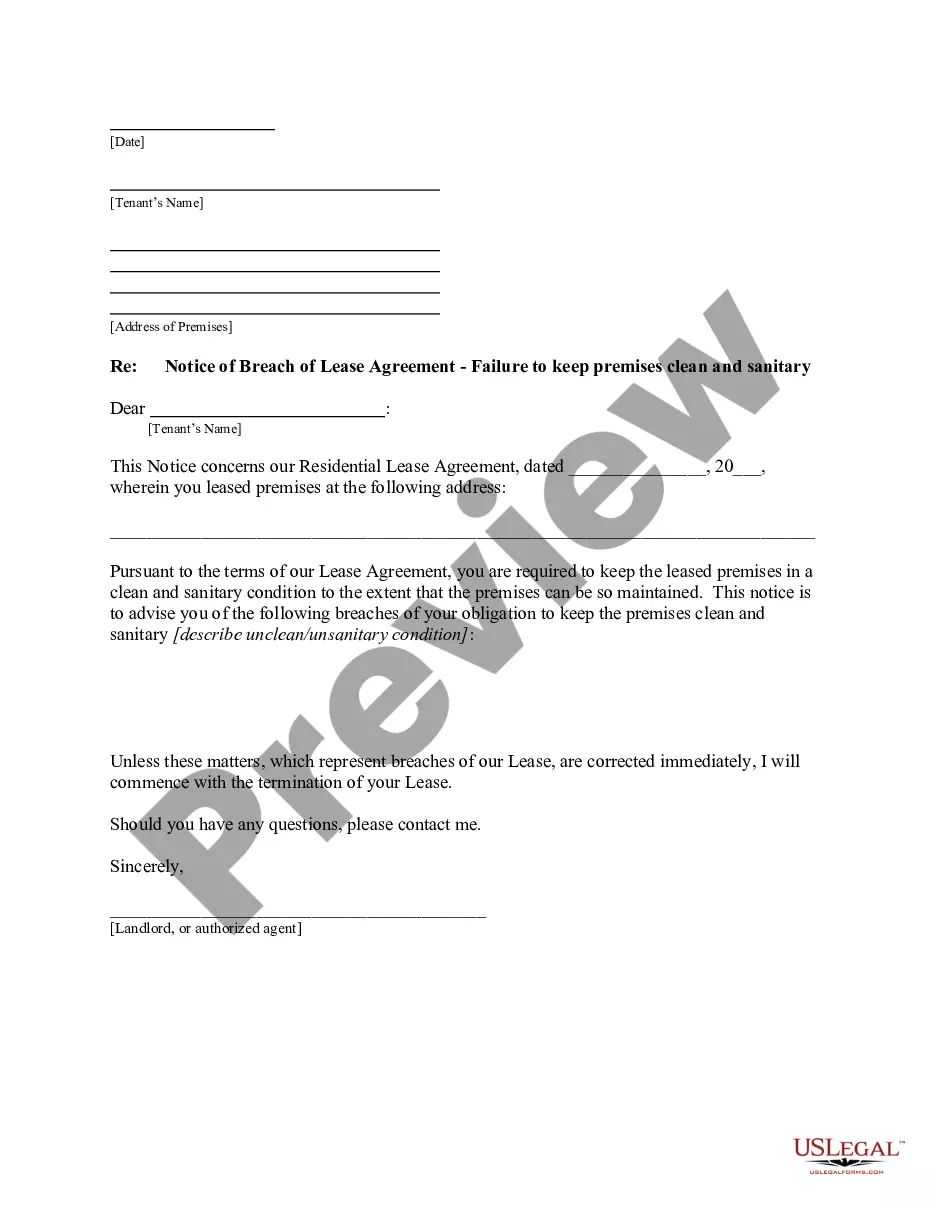
Connecticut Letter from Landlord to Tenant for Failure to keep premises as clean and safe as condition of premises permits - Remedy or lease terminates
What is this form?
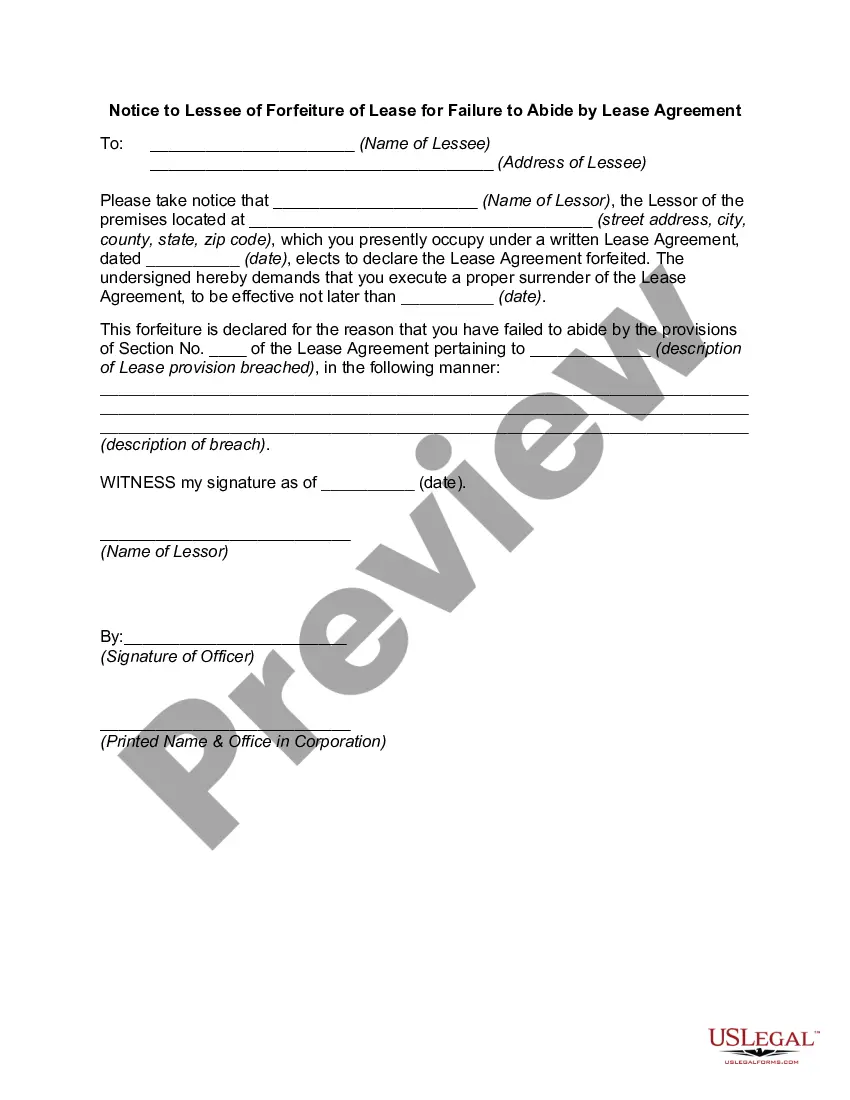
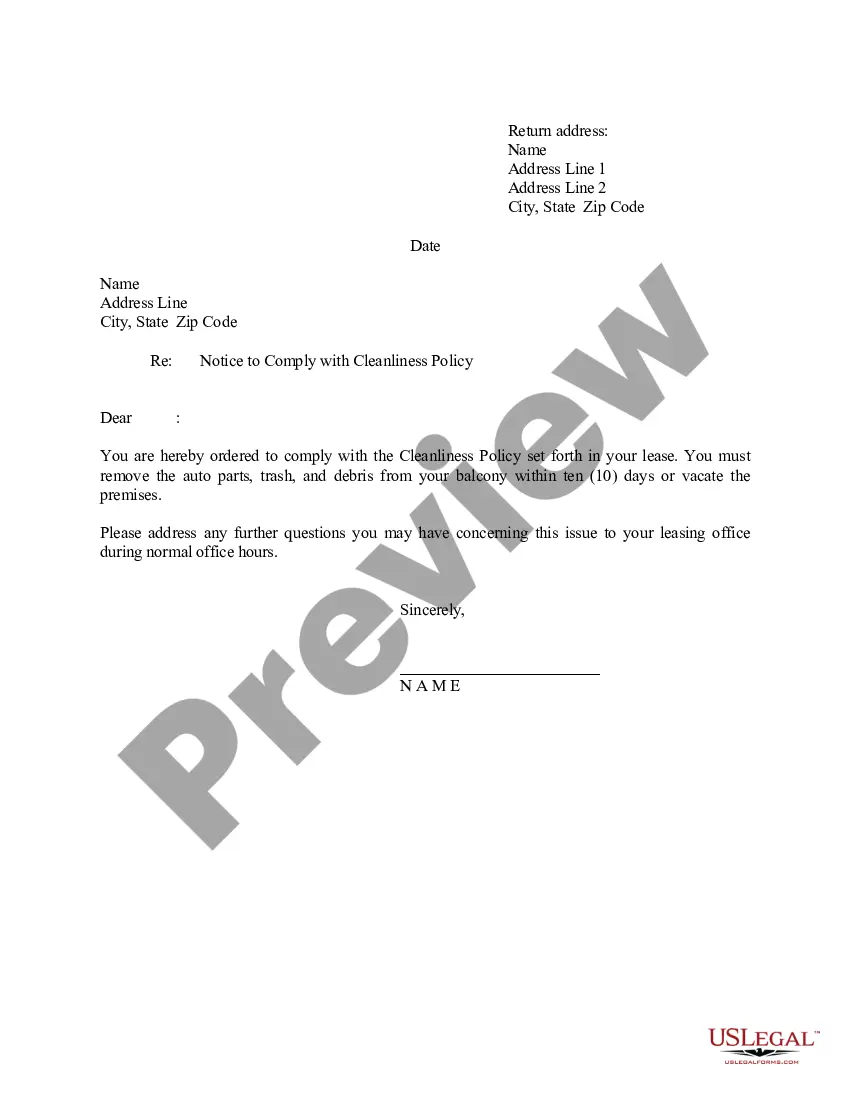
This form is a written notice from a landlord to a tenant regarding the tenant's responsibility to maintain the leased premises in a clean and sanitary condition. Specifically, it outlines breaches of this obligation and informs the tenant of potential remedies or lease termination. This notice is crucial for landlords to enforce cleanliness and safety standards, setting it apart from other forms which may not address lease violations directly.
Key components of this form
- Identification of the parties involved (landlord and tenant).
- Reference to the Lease Agreement terms regarding property maintenance.
- Specific description of the unclean or unsanitary conditions identified.
- Instructions on how the tenant can address these breaches.
- Notice of potential remedies or consequences, including lease termination.


When to use this document
Who can use this document
- Landlords who are renting out property to tenants.
- Property management companies managing leased properties.
- Real estate agents representing landlords in lease agreements.
- Tenants who have received such a notice and wish to understand their rights and obligations.
Steps to complete this form
- Identify the landlord and tenant by including their full names and addresses.
- Reference the specific Lease Agreement and its cleanliness clauses.
- Clearly describe the unclean or unsanitary conditions observed.
- Specify the timeframe in which the tenant is expected to remedy the breaches.
- Indicate the potential consequences if the issues are not resolved, including lease termination.
Notarization requirements for this form
Notarization is generally not required for this form. However, certain states or situations might demand it. You can complete notarization online through US Legal Forms, powered by Notarize, using a verified video call available anytime.
Get your form ready online
Our built-in tools help you complete, sign, share, and store your documents in one place.
Make edits, fill in missing information, and update formatting in US Legal Forms—just like you would in MS Word.
Download a copy, print it, send it by email, or mail it via USPS—whatever works best for your next step.
Sign and collect signatures with our SignNow integration. Send to multiple recipients, set reminders, and more. Go Premium to unlock E-Sign.
If this form requires notarization, complete it online through a secure video call—no need to meet a notary in person or wait for an appointment.
We protect your documents and personal data by following strict security and privacy standards.

Make edits, fill in missing information, and update formatting in US Legal Forms—just like you would in MS Word.

Download a copy, print it, send it by email, or mail it via USPS—whatever works best for your next step.

Sign and collect signatures with our SignNow integration. Send to multiple recipients, set reminders, and more. Go Premium to unlock E-Sign.

If this form requires notarization, complete it online through a secure video call—no need to meet a notary in person or wait for an appointment.

We protect your documents and personal data by following strict security and privacy standards.
Typical mistakes to avoid
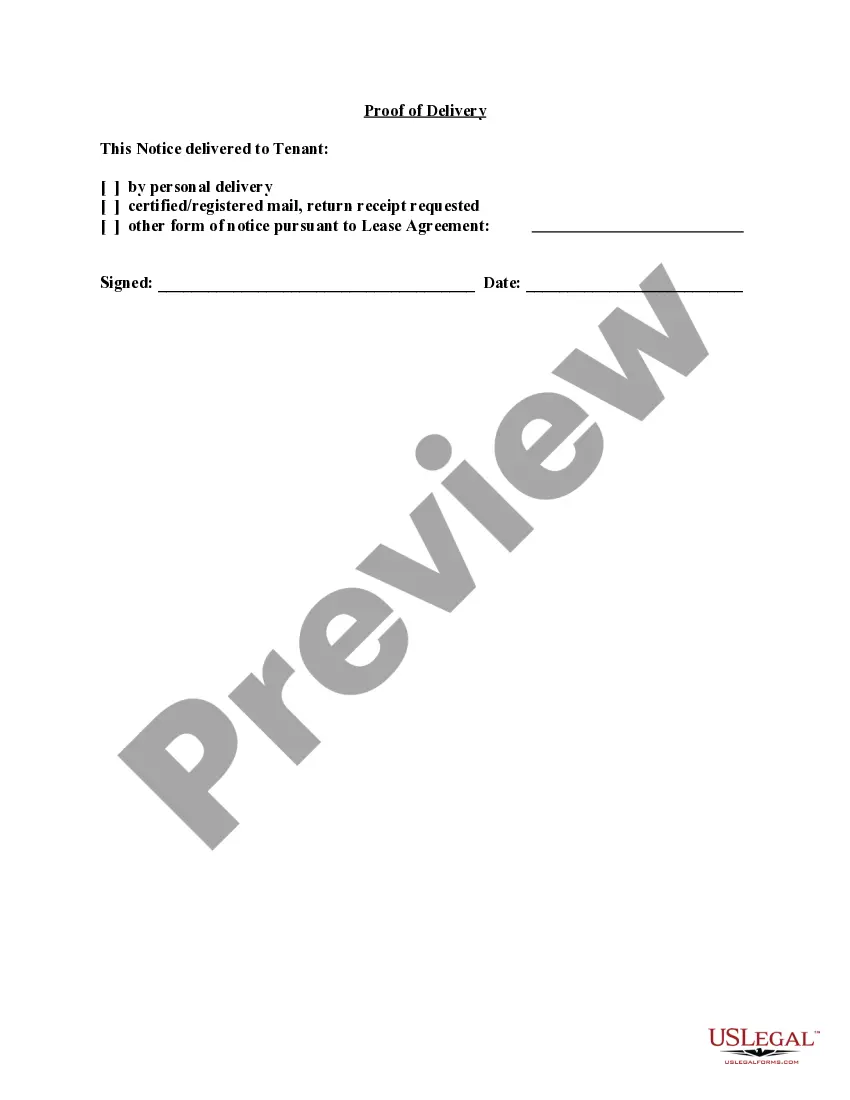
- Failing to deliver the notice properly, which may affect its enforceability.
- Not specifying the exact issues or breaches clearly enough.
- Omitting the deadlines for the tenant to respond or remedy the issues.
- Using vague language that could lead to misunderstandings.
Advantages of online completion
- Convenience of downloading the form instantly from anywhere.
- Editable format that allows landlords to customize the notice.
- Prepared by licensed attorneys, ensuring legal reliability.
- Access to state-specific language and requirements for better compliance.
Legal use & context
- Helps establish a documented trail of communication regarding lease obligations.
- Supports legal action if breaches are not remedied and lease termination is pursued.
- Ensures both parties are aware of their rights and responsibilities under the lease.
Main things to remember
- The form is essential for formalizing cleanliness issues between landlords and tenants.
- It provides a structured approach to notifying tenants of breaches and potential consequences.
- Understand the specific requirements of your State to ensure proper use.
Looking for another form?


Form popularity
FAQ
To politely tell a tenant to move out, approach the topic with sensitivity. Start by expressing appreciation for their tenancy, then clearly outline the reasons for the request, such as issues with property maintenance or failure to uphold cleanliness standards. Provide a reasonable timeframe for moving out, encouraging open communication for any questions they may have.
When writing a letter for your tenant, begin with a friendly greeting that acknowledges the tenant by name. Address their specific needs or concerns, clearly outlining any expectations you have, such as maintaining cleanliness in the property. Ensure your communication is clear and supportive to foster a cooperative relationship.
To write a letter from landlord to tenant, start with your contact information, followed by the tenant's details. Clearly articulate the purpose of the letter, including any concerns such as 'failure to keep premises as clean and safe as condition permits.' Maintain a professional tone, and provide any necessary instructions or timelines for compliance.
In Connecticut, a tenant may remain in the rental unit for a reasonable time after the lease expires, particularly if no action is taken by the landlord. However, landlords can issue a notice to vacate, which must comply with legal requirements. Therefore, it is crucial for both parties to communicate effectively and resolve any issues promptly.
To write a quick notice for a tenant, begin with a straightforward title indicating the purpose of the notice. State the main concern, such as 'failure to keep premises as clean and safe,' and provide a brief description of what is expected. Conclude with a request for action or a timeline for resolution, ensuring the tenant understands the urgency.
When writing a letter to your landlord about problems, begin with a polite greeting. Clearly outline the specific issues you are experiencing, such as safety concerns or cleanliness violations, while referencing your rights as a tenant under Connecticut law. Encourage a prompt response to your concerns to foster a positive landlord-tenant relationship.
To write a letter from landlord to tenant to vacate, start with a formal greeting. Clearly state the intent to terminate the lease, detailing the reasons such as 'failure to keep premises as clean and safe as the condition of premises permits.' Utilize a professional tone throughout, provide a deadline for the tenant to vacate, and include any relevant legal references to ensure clarity and compliance with Connecticut law.
Section 15b of the Massachusetts General Laws Chapter 186 outlines tenants' rights related to the condition of the rental property. It emphasizes that landlords must maintain the premises in a condition suitable for human habitation. Additionally, tenants can use a Connecticut Letter from Landlord to Tenant for Failure to keep premises as clean and safe as condition of premises permits - Remedy or lease terminates to communicate and resolve any safety concerns that might arise during their lease.
The 3x rent law in Massachusetts allows a tenant to recover up to three times the amount of rent if a landlord fails to return a security deposit within 30 days of request. This law protects tenants against unfair practices and encourages landlords to operate transparently. If a landlord issues a Connecticut Letter from Landlord to Tenant for Failure to keep premises as clean and safe as condition of premises permits - Remedy or lease terminates, it indicates serious issues that might also affect security deposit considerations.
In Connecticut, a landlord is required to give tenants a minimum of 30 days' notice to vacate the premises for lease violations or non-payment of rent. In the case of repeated cleanliness and safety issues, a Connecticut Letter from Landlord to Tenant for Failure to keep premises as clean and safe as condition of premises permits - Remedy or lease terminates may provide the necessary formal documentation. This ensures clarity and offers tenants the opportunity to rectify any concerns before moving.