Connecticut Letter from Landlord to Tenant about time of intent to enter premises
Overview of this form
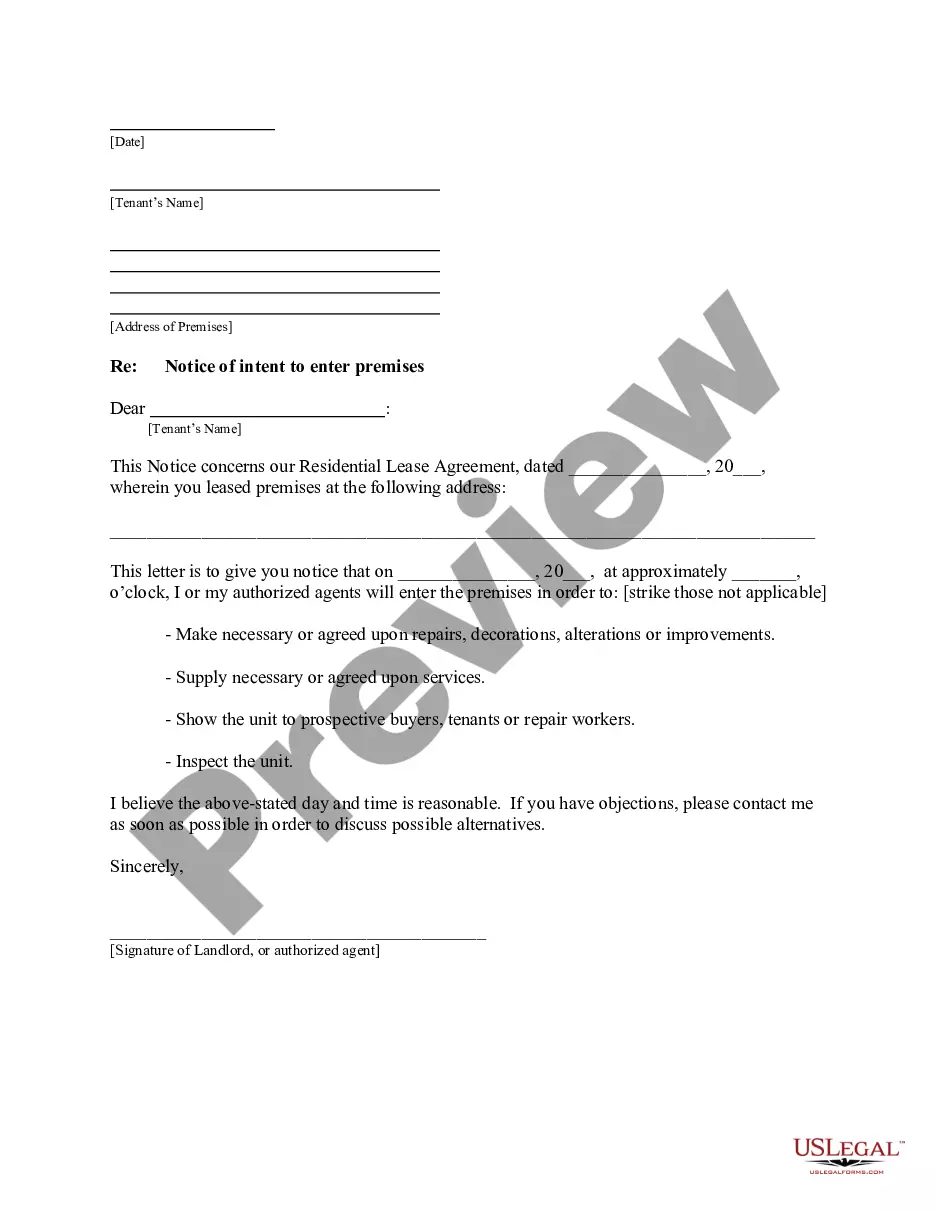
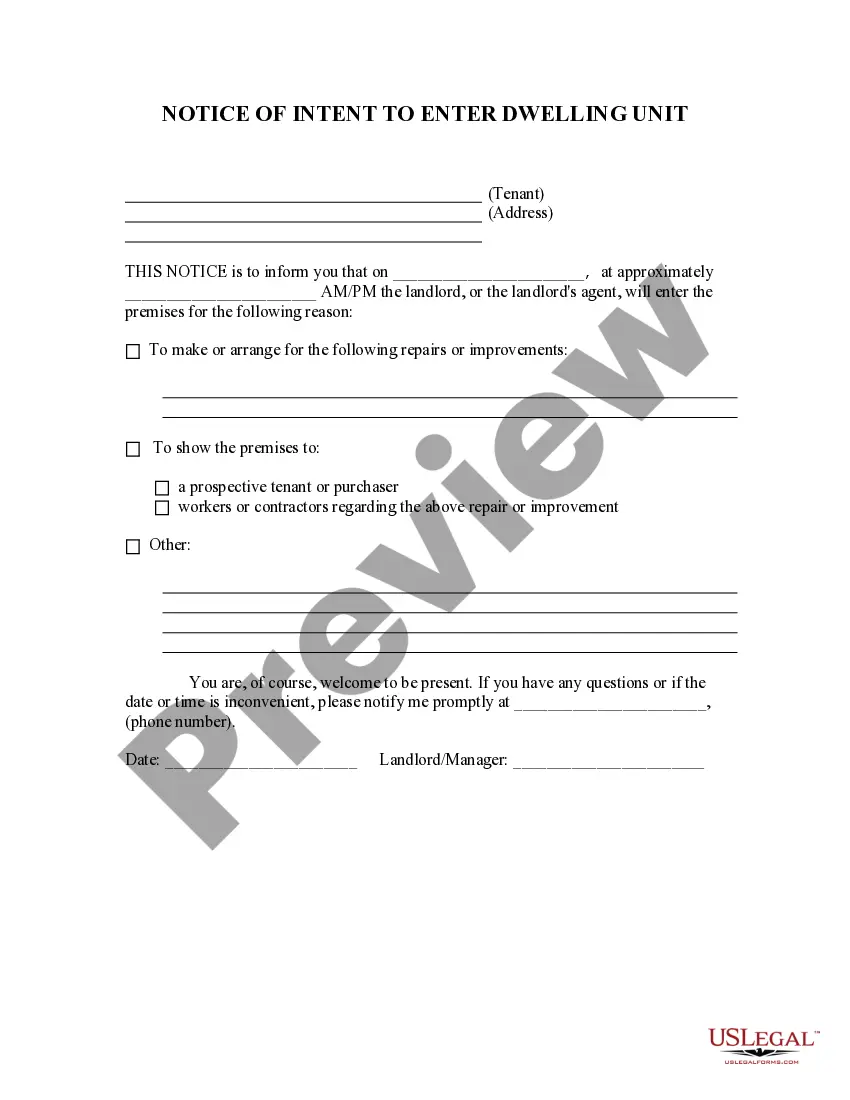
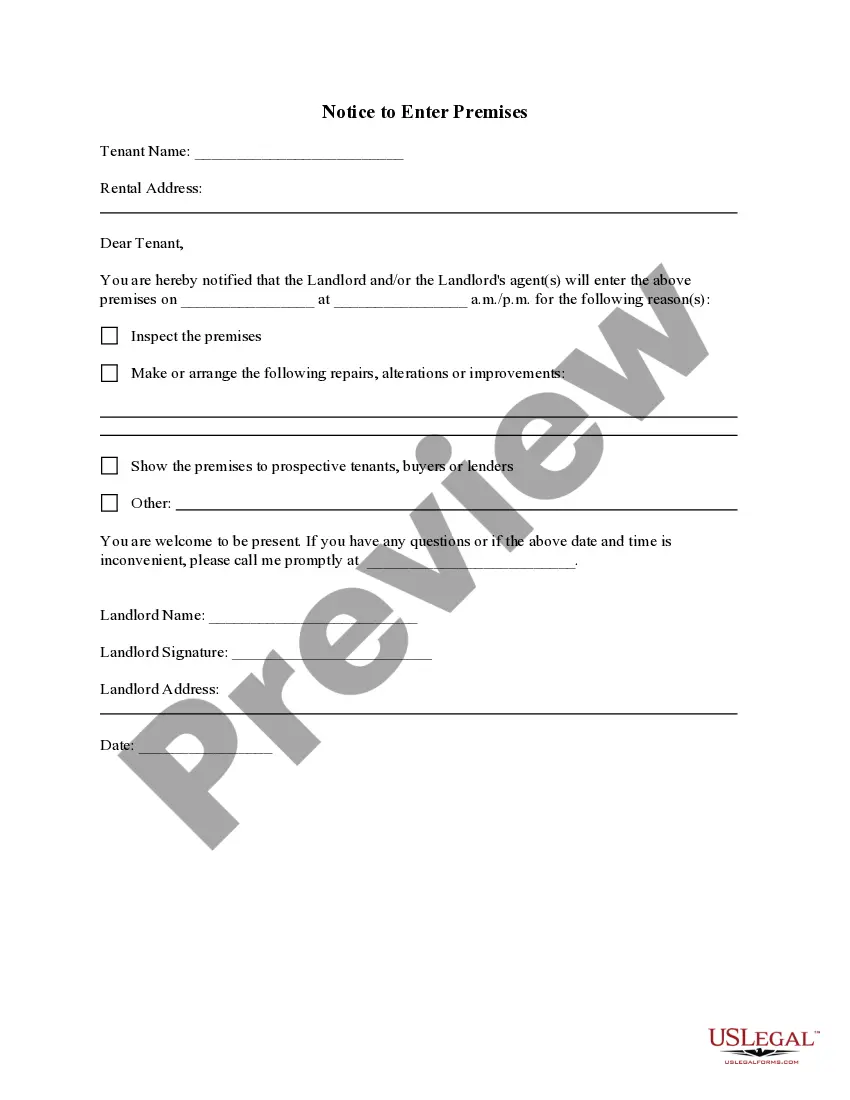
This Letter from Landlord to Tenant about time of intent to enter premises is a formal notice from a landlord to a tenant. It serves to inform the tenant that the landlord or an authorized agent plans to enter the rented property for specific reasons such as repairs, inspections, or showings. This letter is essential for compliance with state laws regarding tenant notifications and helps clarify the landlord's intentions and timelines, distinguishing it from other forms that may not specify entry notices.
Main sections of this form
- Date of the Residential Lease Agreement
- Address of the leased premises
- Date and time of intended entry
- Reasons for entering the premises
- Contact information for objections
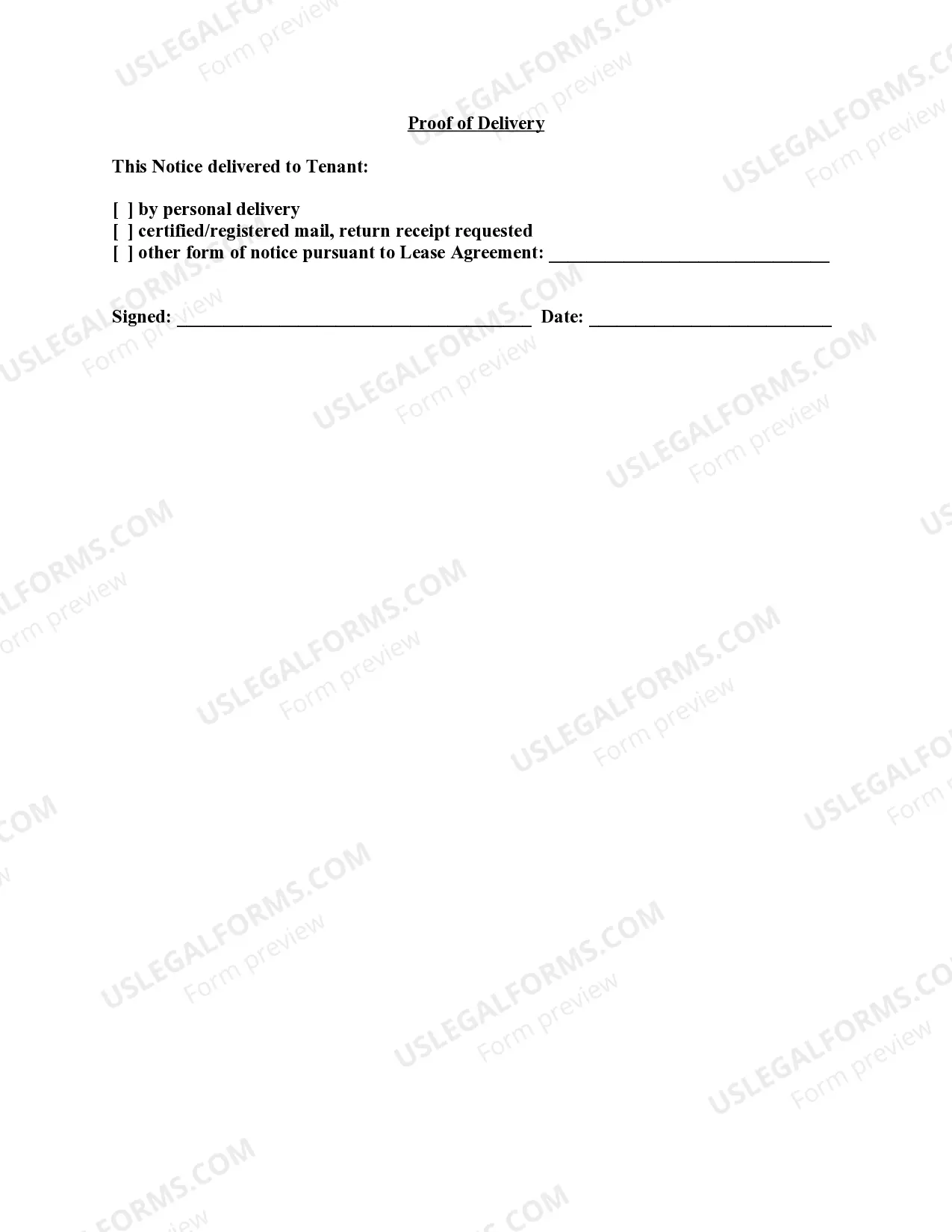
- Proof of delivery method
When to use this form
This form should be used when a landlord needs to provide official notice to a tenant regarding the intent to enter the leased premises. Common scenarios include when the landlord needs to perform repairs, conduct inspections, provide necessary services, or show the property to prospective tenants or buyers. Providing this notice ensures transparency and helps maintain a professional landlord-tenant relationship.
Who this form is for
- Landlords or property owners who lease residential properties.
- Authorized agents acting on behalf of the landlord.
- Tenants who need to understand their rights regarding entry into the rented spaces.
How to prepare this document
- Identify the date of the original Residential Lease Agreement.
- Provide the address of the leased premises.
- Enter the date and time when entry is planned.
- Specify the reasons for the intended entry, checking those that apply.
- Include your contact information for any tenant objections.
- Choose the method of proof for delivery of the notice.
Notarization guidance
Notarization is generally not required for this form. However, certain states or situations might demand it. You can complete notarization online through US Legal Forms, powered by Notarize, using a verified video call available anytime.
Get your form ready online
Our built-in tools help you complete, sign, share, and store your documents in one place.
Make edits, fill in missing information, and update formatting in US Legal Forms—just like you would in MS Word.
Download a copy, print it, send it by email, or mail it via USPS—whatever works best for your next step.
Sign and collect signatures with our SignNow integration. Send to multiple recipients, set reminders, and more. Go Premium to unlock E-Sign.
If this form requires notarization, complete it online through a secure video call—no need to meet a notary in person or wait for an appointment.
We protect your documents and personal data by following strict security and privacy standards.

Make edits, fill in missing information, and update formatting in US Legal Forms—just like you would in MS Word.

Download a copy, print it, send it by email, or mail it via USPS—whatever works best for your next step.

Sign and collect signatures with our SignNow integration. Send to multiple recipients, set reminders, and more. Go Premium to unlock E-Sign.

If this form requires notarization, complete it online through a secure video call—no need to meet a notary in person or wait for an appointment.

We protect your documents and personal data by following strict security and privacy standards.
Avoid these common issues
- Failing to provide adequate notice as required by state law.
- Not including all relevant details, such as date, time, or reason for entry.
- Using unclear or informal language that may confuse the tenant.
- Not documenting the method of delivery properly.
Benefits of using this form online
- Convenient access to legally compliant templates.
- Easily editable to fit specific situations and needs.
- Reliability and assurance that the form meets state legal standards.
- Instant download for immediate use.
Legal use & context
- This letter serves as a legal document to inform the tenant accurately.
- Helps avoid disputes by clearly stating the landlord's intentions and giving tenants fair notice.
- It is enforceable in court if disputes arise regarding entry into the premises.
Key takeaways
- The letter is essential for legal compliance in notifying tenants.
- Providing reasonable notice protects both landlords and tenants.
- Always check state-specific laws to ensure compliance with notification requirements.
Looking for another form?








Form popularity
FAQ
Section 47a 16 of the Connecticut General Statutes outlines the legal requirements for landlords when notifying tenants about entering rental premises. This section specifies that landlords must give reasonable notice to tenants before entering their units, typically at least 24 hours in advance. Proper adherence to this statute ensures that tenants are informed and can prepare for the landlord's visit. To simplify this process, you can use a Connecticut Letter from Landlord to Tenant about time of intent to enter premises, ensuring compliance with the law and protecting rights for both parties.
In Connecticut, landlords cannot show up unannounced unless there is an emergency. Generally, they must provide at least 24 hours' notice before entering the premises. If you find yourself in a situation where a landlord attempts unannounced access, it’s wise to respond with a 'Connecticut Letter from Landlord to Tenant about time of intent to enter premises' to firmly but politely assert your right to privacy.
In Connecticut, landlords cannot enter a tenant's property without proper notice and consent. They also cannot retaliate against tenants for exercising their legal rights or lock out a tenant without following legal procedures. Understanding these restrictions can empower tenants, and utilizing a 'Connecticut Letter from Landlord to Tenant about time of intent to enter premises' can help clarify expectations between parties.
If you need to refuse landlord access, first understand your rights as a tenant in Connecticut. You can notify your landlord in writing, clearly explaining why you are denying entry. It’s beneficial to maintain a respectful tone, and you can reference the 'Connecticut Letter from Landlord to Tenant about time of intent to enter premises’ to convey that you respect the process while asserting your rights.
To write a demand letter to a tenant, start by including your contact information, the date, and the tenant's address at the top of the letter. Clearly state the purpose of the letter, which is to inform the tenant about their obligations, and use the phrase 'Connecticut Letter from Landlord to Tenant about time of intent to enter premises' to highlight the specific context. Be direct and include specific details regarding the issue, ensuring that the tone remains professional and respectful.
An example of a letter to a tenant for inspection includes all relevant details about the inspection. Start with your information, mention the tenant, and state your intent to inspect the property. Specify the date and time for the inspection, and reassure them that you will minimize any inconvenience. This format mirrors a Connecticut Letter from Landlord to Tenant about time of intent to enter premises.
A letter of intent from a landlord is a document that outlines the landlord's intentions regarding a rental agreement. This letter typically specifies rental terms, conditions, and any other related information. It serves as a preliminary communication before the final lease is signed and should embody the essence of a Connecticut Letter from Landlord to Tenant about time of intent to enter premises.
Writing a formal letter to a tenant requires a professional tone and clear structure. Begin with your name and address, followed by the tenant's information. State the purpose of your letter, such as maintenance or inspection, and clearly define any actions required from the tenant. Utilize a Connecticut Letter from Landlord to Tenant about time of intent to enter premises format for better clarity.
To write a letter of intent for rent, you should clearly state your intention to lease a property. Start with an introduction, followed by detailed terms such as rental amount, duration, and any conditions. End with a polite closing and your signature, ensuring it follows the format of a Connecticut Letter from Landlord to Tenant about time of intent to enter premises.
An inspection note should be brief yet informative. Start with the date and the reason for the inspection, followed by any observations or findings. Make sure to include any requirements for the tenant before or after the inspection. This note can serve as a reference for both parties and should reflect the standards of a Connecticut Letter from Landlord to Tenant about time of intent to enter premises.