Connecticut Letter from Landlord to Tenant as Notice to remove Wild Animals in Premises
About this form
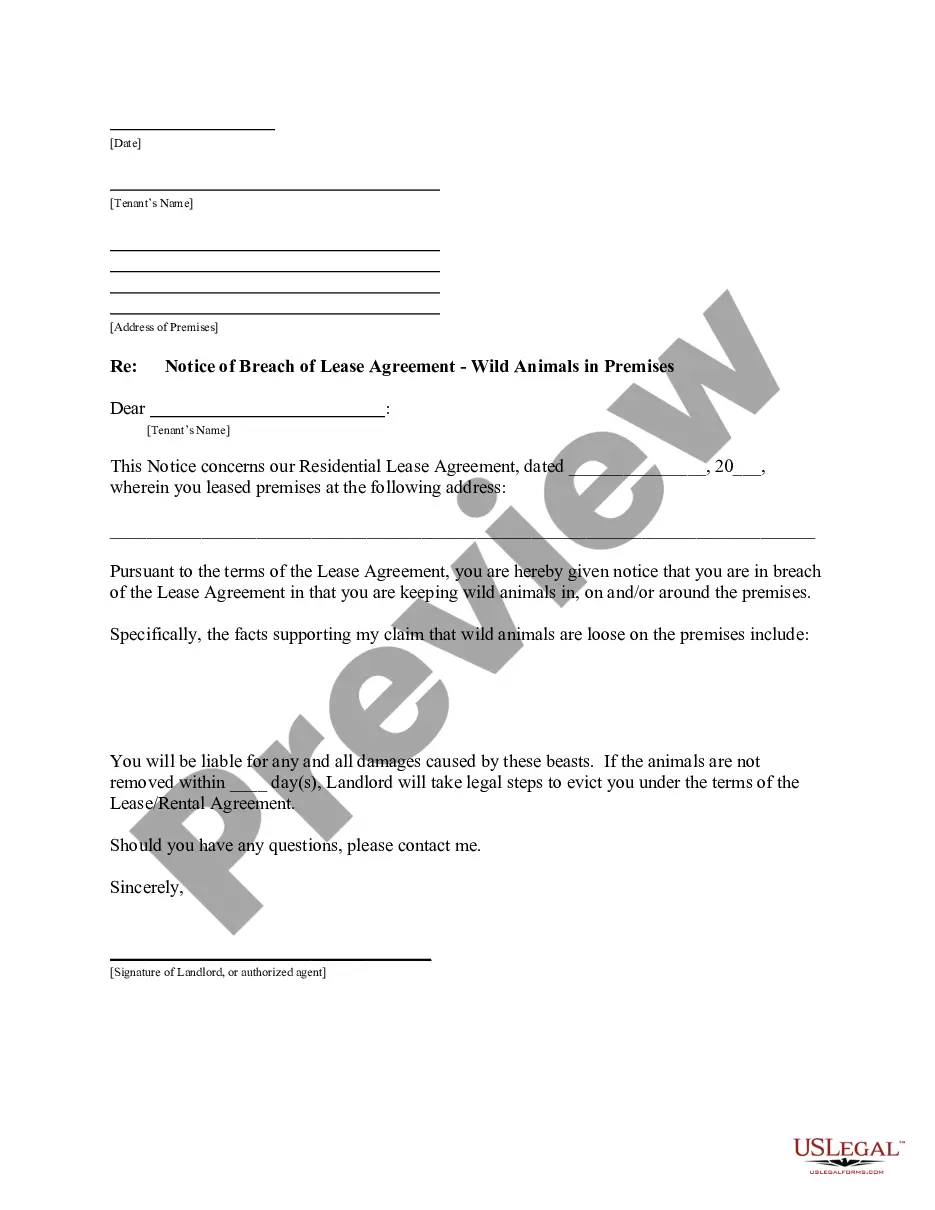
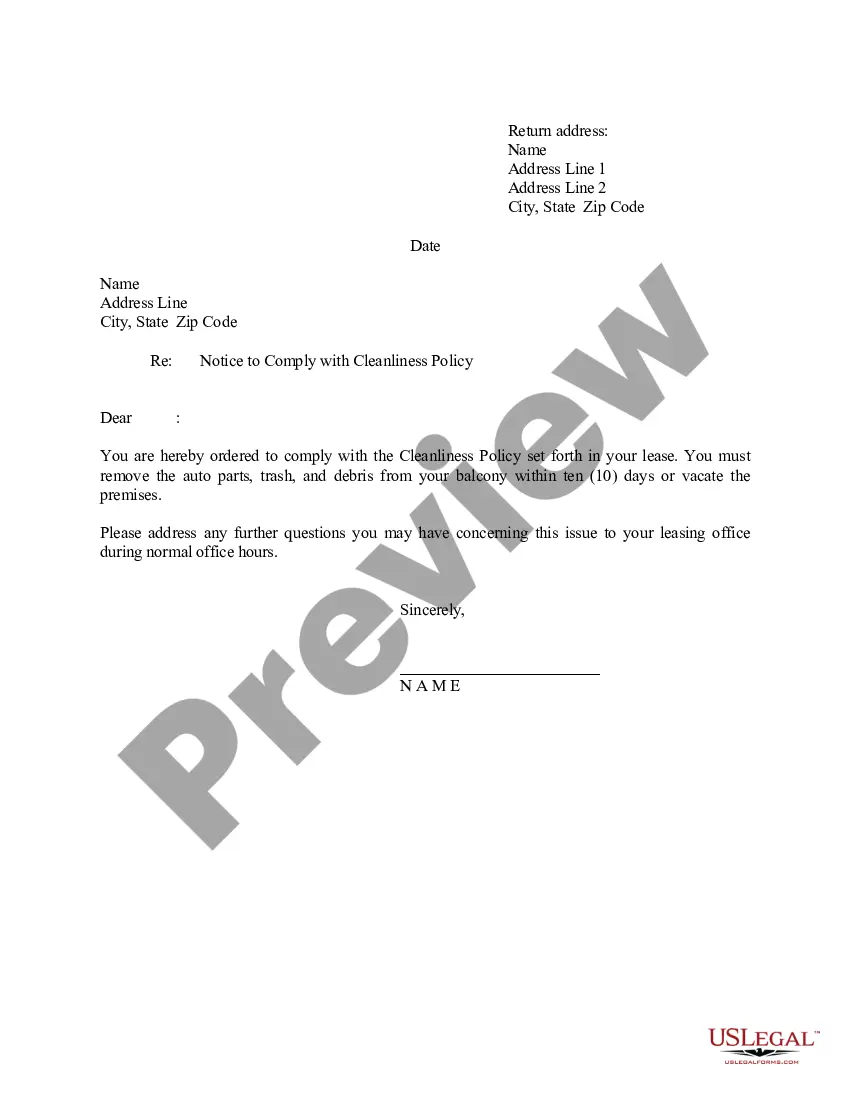
This letter from landlord to tenant serves as a notice to remove wild animals present on the premises. It is crucial for landlords to document this issue as it represents a breach of the lease agreement. Unlike other notices that may address different lease violations, this form specifically targets issues related to the presence of wild animals, ensuring that the tenant is informed of the violation and given a chance to rectify it.
What’s included in this form
- Identification of the parties involved (landlord and tenant).
- Clear statement of the lease agreement breach regarding wild animals.
- Signature line for the landlord or authorized agent.
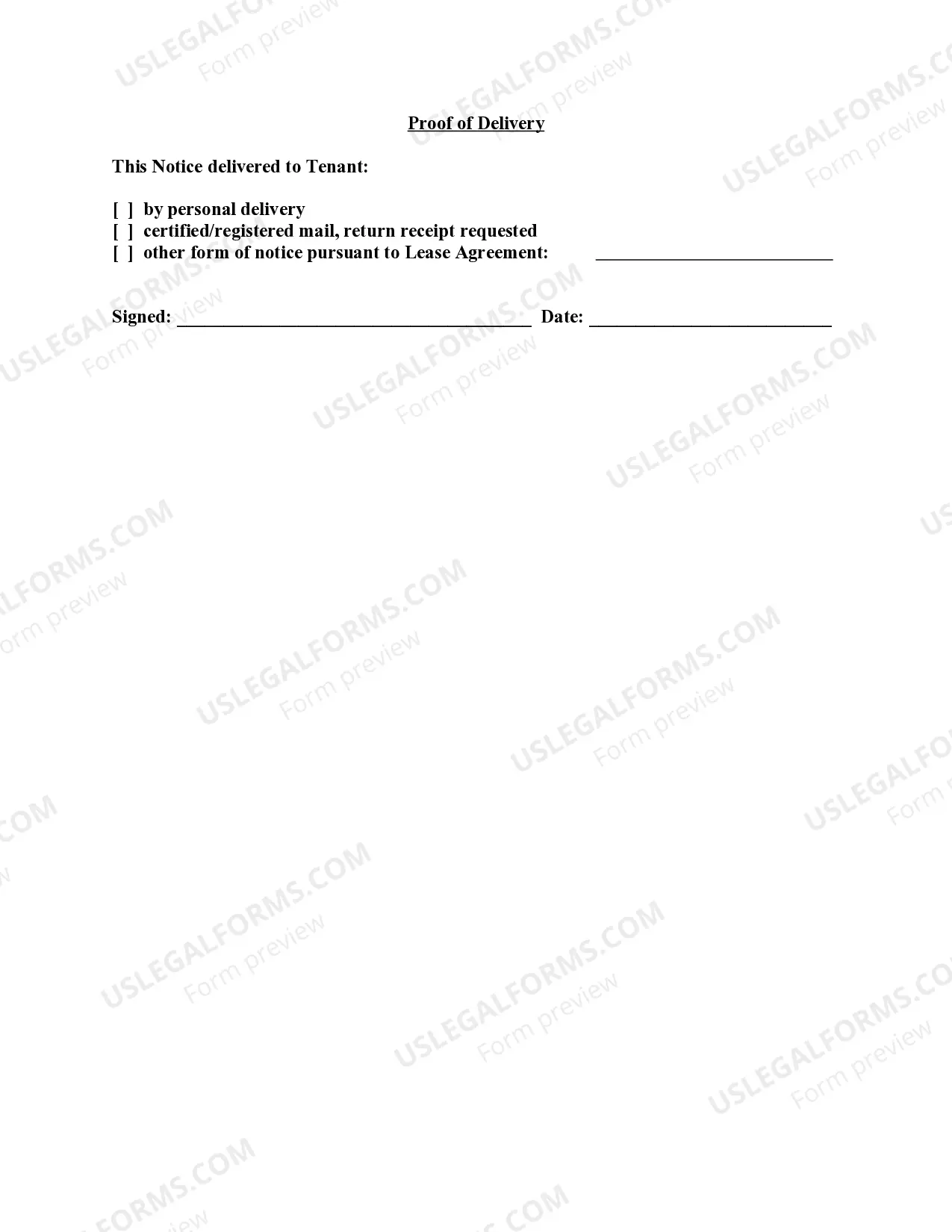
- Proof of delivery options (personal delivery or certified/registered mail).

Situations where this form applies
This form should be used when a landlord discovers that a tenant has kept wild animals on the property, violating the lease agreement. Typical scenarios include instances where wildlife, such as raccoons or snakes, are found residing in or around rented units, posing potential risks or health concerns for other tenants and the property.
Who needs this form
This form is intended for:
- Landlords managing residential properties.
- Property managers acting on behalf of landlords.
- Tenants who need to address wild animal issues with their landlord.
Completing this form step by step
- Identify the parties involved by entering the landlord's and tenant's names.
- Clearly state the specific lease terms that have been violated.
- Provide details about the wild animals present on the premises.
- Sign the form at the designated signature line.
- Choose the method of delivery and document it accordingly.
Does this form need to be notarized?
Notarization is generally not required for this form. However, certain states or situations might demand it. You can complete notarization online through US Legal Forms, powered by Notarize, using a verified video call available anytime.
Get your form ready online
Our built-in tools help you complete, sign, share, and store your documents in one place.
Make edits, fill in missing information, and update formatting in US Legal Forms—just like you would in MS Word.
Download a copy, print it, send it by email, or mail it via USPS—whatever works best for your next step.
Sign and collect signatures with our SignNow integration. Send to multiple recipients, set reminders, and more. Go Premium to unlock E-Sign.
If this form requires notarization, complete it online through a secure video call—no need to meet a notary in person or wait for an appointment.
We protect your documents and personal data by following strict security and privacy standards.

Make edits, fill in missing information, and update formatting in US Legal Forms—just like you would in MS Word.

Download a copy, print it, send it by email, or mail it via USPS—whatever works best for your next step.

Sign and collect signatures with our SignNow integration. Send to multiple recipients, set reminders, and more. Go Premium to unlock E-Sign.

If this form requires notarization, complete it online through a secure video call—no need to meet a notary in person or wait for an appointment.

We protect your documents and personal data by following strict security and privacy standards.
Common mistakes to avoid
- Failing to specify the types of wild animals involved.
- Not including accurate lease agreement references.
- Neglecting to sign the notice before delivering it.
- Incorrectly choosing a method of delivery that does not provide proof.
Advantages of online completion
- Easy to download and customize for specific needs.
- Reliable and legally reviewed content drafted by licensed attorneys.
- Convenient access from anywhere, enabling quick responses to lease violations.
- Immediate availability allows for prompt action in urgent situations.
Looking for another form?

Form popularity
FAQ
In Connecticut, landlords are generally not responsible for damages caused by tenants' negligence or intentional misconduct. They also do not need to fix issues relating to routine wear and tear, unless specified in the lease. If you encounter unwelcome wildlife within your living space, using a Connecticut Letter from Landlord to Tenant as Notice to remove Wild Animals in Premises can assist in getting prompt assistance for such matters.
In Connecticut, tenants typically must provide a 30-day written notice before moving out, unless the lease states otherwise. This ensures that both you and your landlord are on the same page regarding the end of your tenancy. Including a formal notice might prevent issues, especially if the property has had any pest concerns. A Connecticut Letter from Landlord to Tenant as Notice to remove Wild Animals in Premises can be your preliminary step to ensure a smooth transition.
New landlord laws in Connecticut focus on increasing tenant protections and ensuring safe living conditions. For instance, landlords are now required to disclose specific facts about the rental unit, including any history of pest problems. If pests appear, you may use a Connecticut Letter from Landlord to Tenant as Notice to remove Wild Animals in Premises to formally alert your landlord about necessary actions.
In Connecticut, a landlord cannot enter your premises without proper notice unless there is an emergency. They also cannot retaliate against you for exercising your tenant rights, such as filing complaints regarding unsafe conditions. Utilizing a Connecticut Letter from Landlord to Tenant as Notice to remove Wild Animals in Premises can help clarify any issues you face with unwanted pests, ensuring your rights are upheld.
In Connecticut, tenants cannot legally withhold rent simply because repairs are needed. However, you have the right to request timely repairs through a Connecticut Letter from Landlord to Tenant as Notice to remove Wild Animals in Premises if pests pose a nuisance. If the landlord still does not address the issue, you might seek remedies through the court system, but it is best to document all communications.
Yes, having too many pets can lead to eviction if it violates the lease agreement. Landlords may issue a Connecticut Letter from Landlord to Tenant as Notice to remove Wild Animals in Premises to address this issue. This letter will typically outline the limit on pets and give you a deadline to reduce the number of animals. It is crucial to review your lease and communicate with your landlord to prevent eviction.
To evict a pet, landlords typically start with a Connecticut Letter from Landlord to Tenant as Notice to remove Wild Animals in Premises. This letter outlines the issues regarding the pet and sets a deadline for removal. If the tenant does not comply, the landlord can proceed with formal eviction proceedings through the court system, which may involve additional steps like filing paperwork and appearing in court. Always consult legal resources or professionals for guidance.
If a landlord discovers that you have a pet without permission, they may issue a Connecticut Letter from Landlord to Tenant as Notice to remove Wild Animals in Premises. This letter serves as a formal notice requiring you to take action within a specified time frame. Depending on your lease agreement, landlords often have the right to ask you to remove the pet or face potential eviction. It's best to communicate with your landlord to explore options and ensure compliance.
A no pets allowed apartment letter is a formal document that outlines the restrictions regarding pets in a rental property. This letter typically details the reasons for the policy and the implications for tenants. It's essential for maintaining clarity and avoiding misunderstandings. For templates or legal guidance, check out uslegalforms.
When writing a letter to get someone out of your house, begin with a clear statement of your intent. Include the deadline for departure and any reasons that support your request. Maintain a respectful tone to encourage compliance. Consider templates from uslegalforms to ensure your letter meets legal requirements.