Connecticut Amendment to Prenuptial or Premarital Agreement
About this form
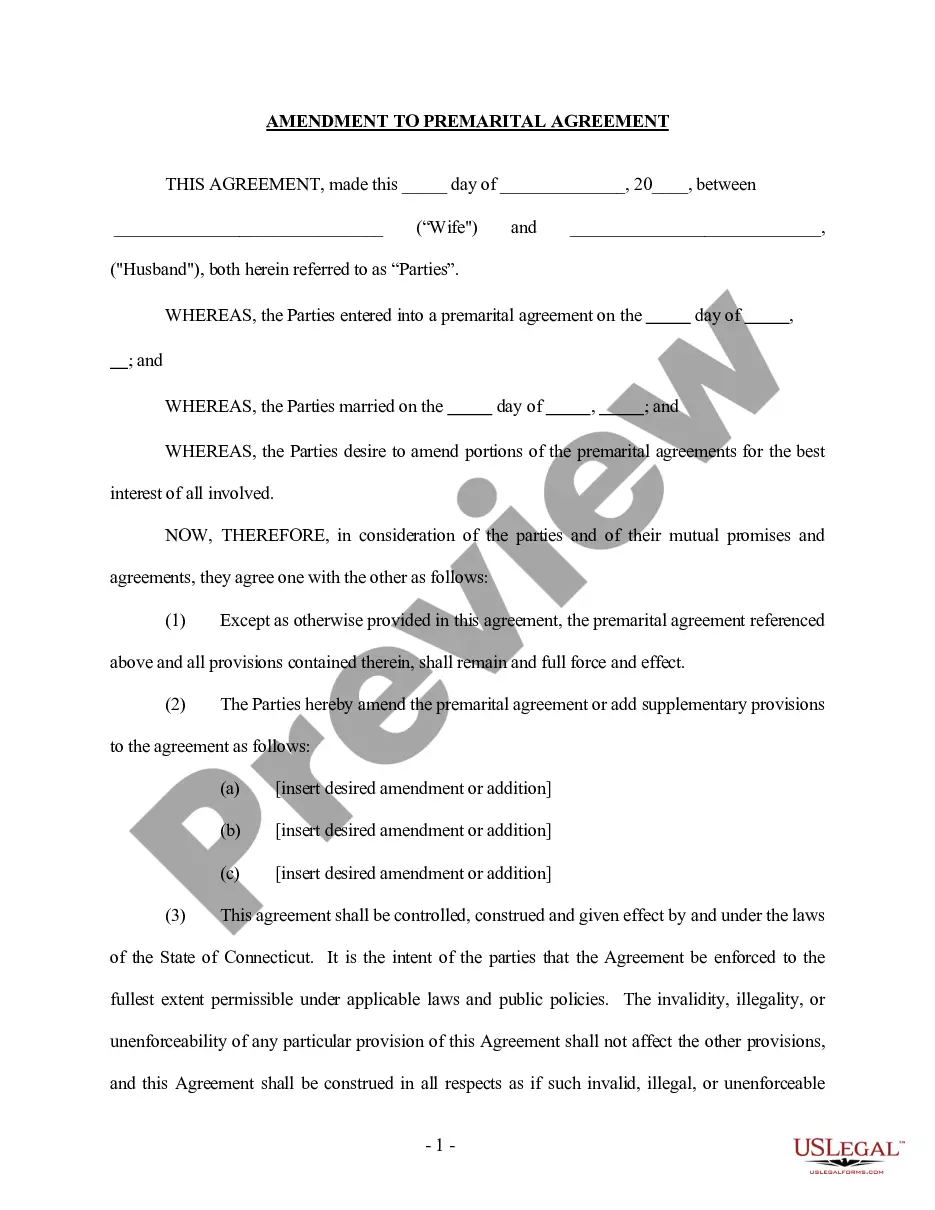
The Amendment to Prenuptial or Premarital Agreement is a legal document that allows parties to modify or add terms to their existing premarital agreement. This form is specifically tailored for use in Connecticut and serves to clarify or update financial arrangements or obligations in light of changing circumstances. Unlike a new prenuptial agreement, this amendment simply alters existing terms without the need for negotiation from scratch.
What’s included in this form
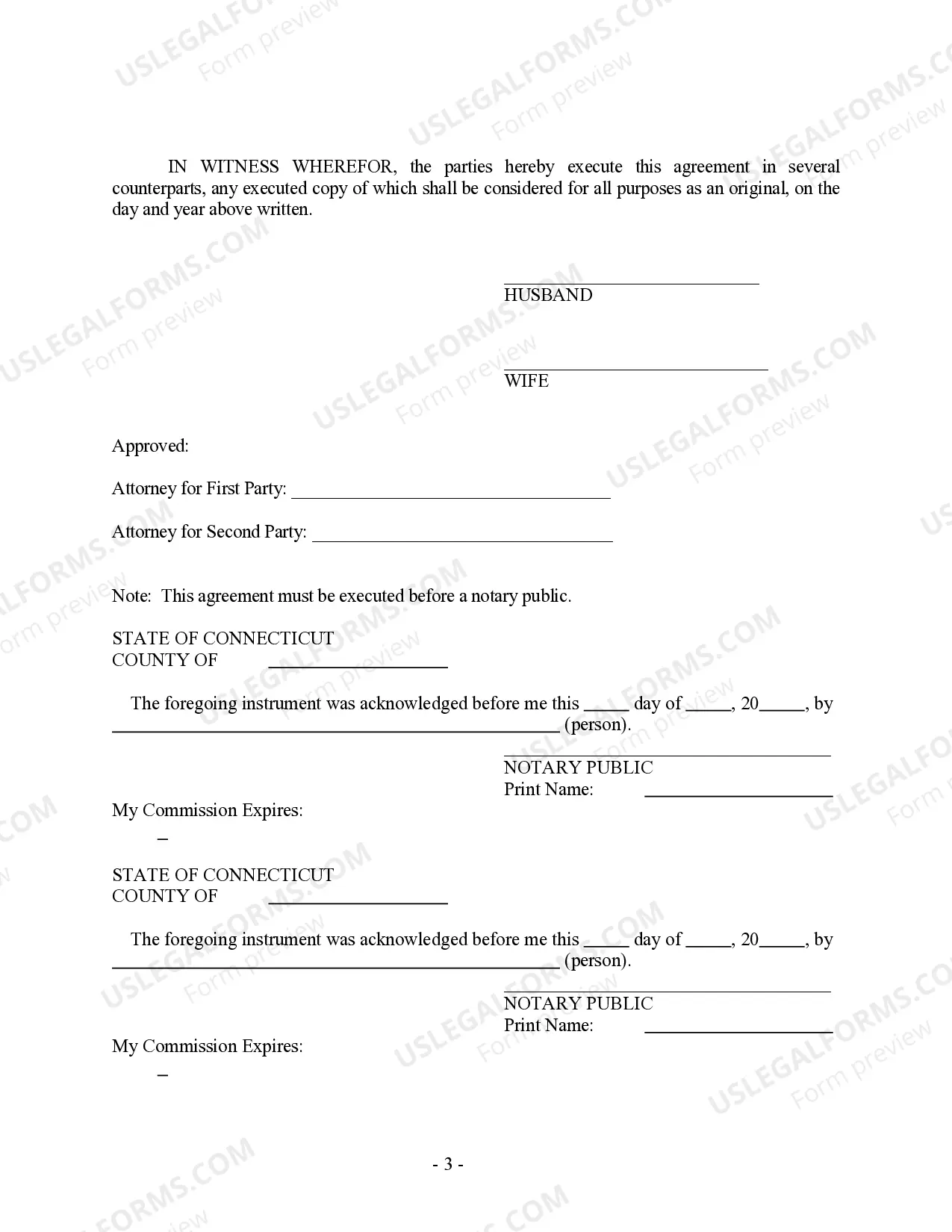
- Parties involved: Identifies the Wife and Husband as parties to the amendment.
- Amendment section: Provides space to specify changes or additions to the existing agreement.
- Governing law: Clarifies that the amendment will be governed under the laws of Connecticut.
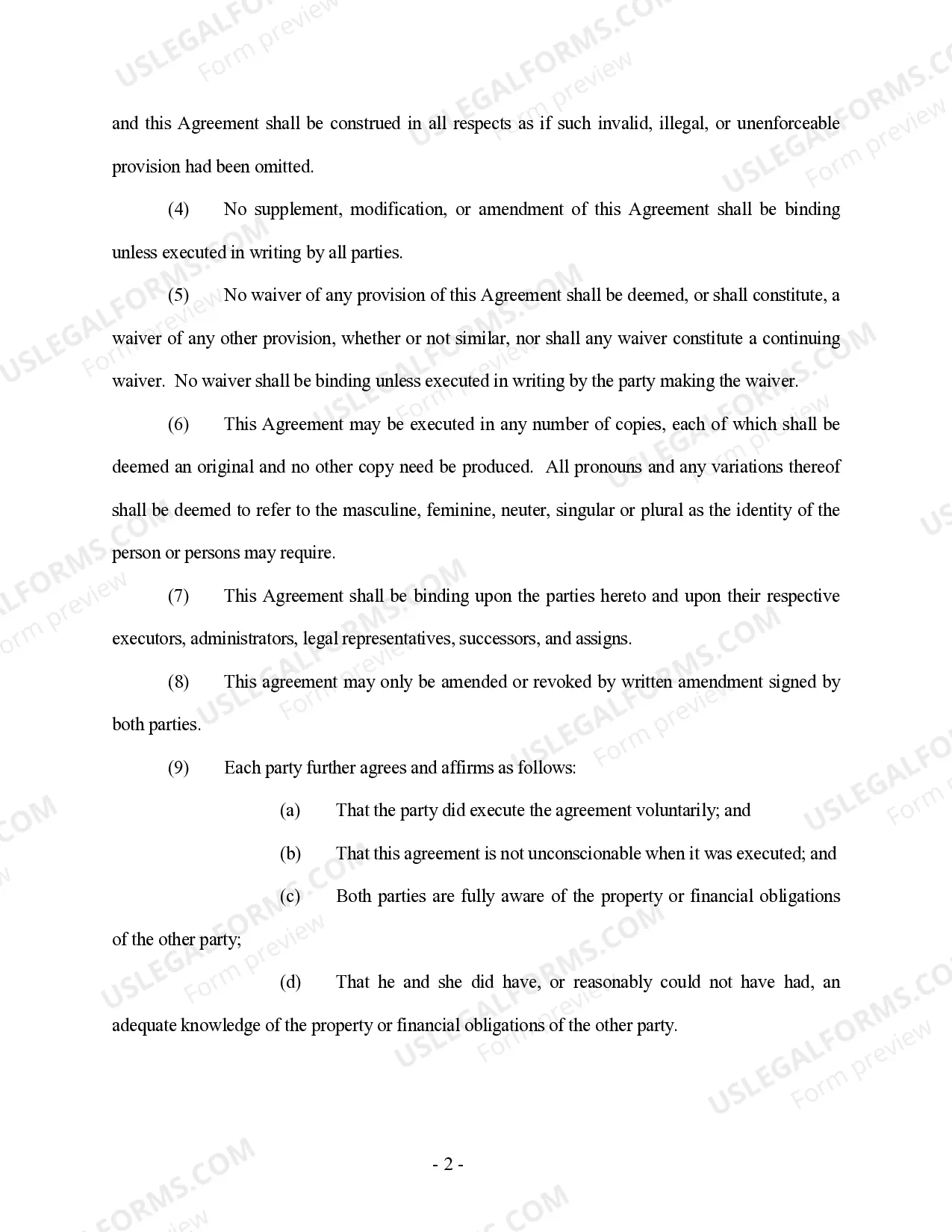
- Execution requirements: Specifies that all amendments must be signed in writing by both parties.
- Binding provisions: Details the binding nature of the amendment and the original agreement.
Common use cases
This form should be used when parties wish to change specific terms of their prenuptial or premarital agreement. Common scenarios include changes in financial status, the birth of a child, or other significant life events that may warrant updates to the original agreement.
Who needs this form
- Couples who already have a prenuptial or premarital agreement in place.
- Individuals seeking to clarify or modify financial terms following significant life changes.
- Parties looking to ensure that all terms of their agreement are current and mutually understood.
How to complete this form
- Identify the parties by entering the names of the Wife and Husband.
- Add the date on which the amendment is made.
- Specify the desired amendments or additions to the original prenuptial agreement in the designated section.
- Ensure both parties sign the amendment in the presence of a notary public.
- Keep copies of the signed document for your records.
Notarization requirements for this form
To make this form legally binding, it must be notarized. Our online notarization service, powered by Notarize, lets you verify and sign documents remotely through an encrypted video session.
Get your form ready online
Our built-in tools help you complete, sign, share, and store your documents in one place.
Make edits, fill in missing information, and update formatting in US Legal Forms—just like you would in MS Word.
Download a copy, print it, send it by email, or mail it via USPS—whatever works best for your next step.
Sign and collect signatures with our SignNow integration. Send to multiple recipients, set reminders, and more. Go Premium to unlock E-Sign.
If this form requires notarization, complete it online through a secure video call—no need to meet a notary in person or wait for an appointment.
We protect your documents and personal data by following strict security and privacy standards.

Make edits, fill in missing information, and update formatting in US Legal Forms—just like you would in MS Word.

Download a copy, print it, send it by email, or mail it via USPS—whatever works best for your next step.

Sign and collect signatures with our SignNow integration. Send to multiple recipients, set reminders, and more. Go Premium to unlock E-Sign.

If this form requires notarization, complete it online through a secure video call—no need to meet a notary in person or wait for an appointment.

We protect your documents and personal data by following strict security and privacy standards.
Common mistakes
- Failing to notarize the document, which can invalidate the amendment.
- Omitting necessary details in the amendment section, leading to ambiguity.
- Not having both parties sign, which undermines the enforceability of the agreement.
Why complete this form online
- Convenient access to professionally drafted legal templates.
- Ability to customize the form to meet specific needs easily.
- Instant download for immediate use.
- Guidance provided on how to complete the document correctly.
Key takeaways
- This form allows for modifications to an existing prenuptial agreement in Connecticut.
- Both parties must sign in front of a notary public for the amendment to be valid.
- Use this form to address changes in circumstances that affect financial obligations.
Looking for another form?

Form popularity
FAQ
Yes, you can add an addendum to a prenuptial agreement in Connecticut. This process involves drafting a new document that specifies the additional terms to be included. Both parties must sign the addendum for it to be legally binding. By using the US Legal Forms platform, you can easily create a precise addendum as part of your Connecticut Amendment to Prenuptial or Premarital Agreement.
To amend a prenuptial agreement in Connecticut, both parties must agree to the changes. You need to create a written amendment that clearly outlines the new terms. It should be signed by both parties, just like the original agreement. Utilizing the US Legal Forms platform can simplify this process, offering templates and guidance for a Connecticut Amendment to Prenuptial or Premarital Agreement.
Several factors can render a prenup unenforceable, including lack of voluntary consent, absence of full financial disclosure, or if it is deemed unconscionable. In Connecticut, the courts examine the validity of prenuptial agreements thoroughly, so it is important to ensure compliance with state laws. Ensuring that your prenup is well-drafted and adheres to the standards of the Connecticut Amendment to Prenuptial or Premarital Agreement is essential for enforceability. Consulting with a legal professional can help strengthen your agreement.
Absolutely, an addendum to a prenup is possible and often recommended. This allows couples to modify specific aspects of their agreement without starting from scratch. In the context of the Connecticut Amendment to Prenuptial or Premarital Agreement, creating an addendum can help address new financial situations or changes in personal circumstances. Keeping your prenup current ensures continued protection for both parties.
Yes, prenups hold up in Connecticut if they meet specific legal standards. The courts in Connecticut respect well-drafted prenuptial agreements, particularly when both parties understand and voluntarily agree to the terms. To enhance the enforceability of your agreement, consider utilizing the Connecticut Amendment to Prenuptial or Premarital Agreement process. This provides an opportunity to make necessary updates to your prenup and strengthens its legal standing.
Prenups are generally valid in most states, but specific regulations can vary. Some states impose restrictions on the enforceability of certain prenups based on factors like fairness and full disclosure. It is crucial to be aware of these differences, particularly when considering the Connecticut Amendment to Prenuptial or Premarital Agreement. Understanding these laws ensures that your prenuptial agreement remains valid.
Yes, a prenuptial agreement can be amended, allowing couples to adjust their financial plans as their circumstances change. In Connecticut, a formal process exists for making these amendments, often referred to as the Connecticut Amendment to Prenuptial or Premarital Agreement. It typically requires both parties' consent and must be documented correctly to ensure enforceability. This flexibility helps couples adapt their prenups to new life events.
The two keys to the enforceability of a prenuptial agreement in Connecticut are voluntary consent and full disclosure of assets. Both parties must enter into the agreement willingly, without pressure or coercion. Additionally, each party should provide a complete and honest account of their financial situations. Focusing on these aspects ensures a robust Connecticut Amendment to Prenuptial or Premarital Agreement.
Modifying a prenuptial agreement requires both parties to agree on the changes. You should draft an amendment that clearly states the new terms and ensure both parties sign it. As with the original agreement, having the modification notarized adds to its legitimacy. This approach is essential for a proper Connecticut Amendment to Prenuptial or Premarital Agreement.
Several factors can render a prenuptial agreement unenforceable in Connecticut. If one party did not provide full financial disclosure or if the agreement was signed under duress, it may be challenged in court. Additionally, if the terms are grossly unfair at the time of enforcement, the court may refuse to uphold it. Understanding these pitfalls is vital for a valid Connecticut Amendment to Prenuptial or Premarital Agreement.