Colorado Last Will and Testament for other Persons
Understanding this form
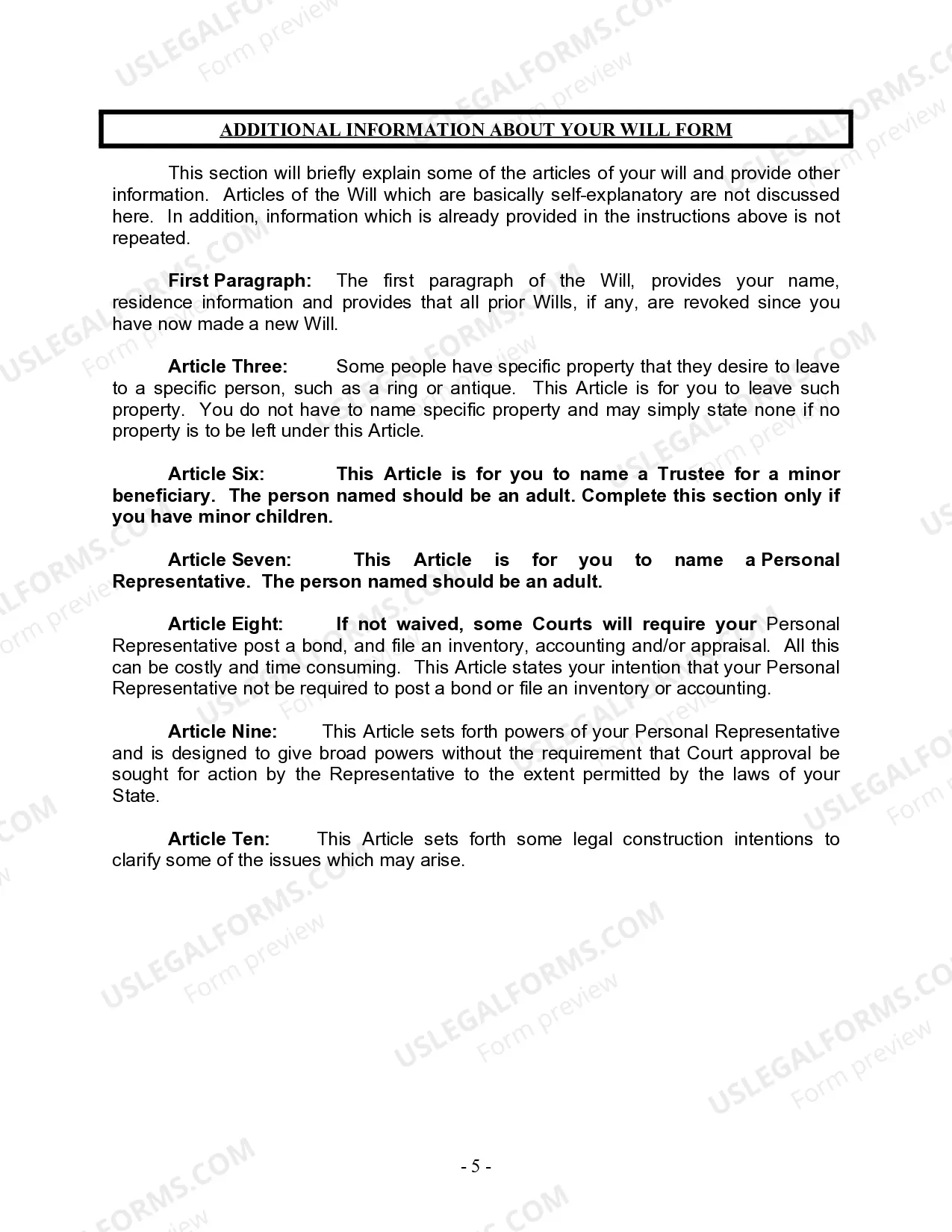
The Last Will and Testament for Other Persons is a legal document that outlines how your assets will be distributed upon your death if you cannot find another existing will or document that fits your needs. This form allows you to specify beneficiaries, appoint a personal representative to manage your estate, and establish provisions for guardianship if applicable. This will is specifically tailored for residents of Colorado and can be conveniently completed on your computer for ease of use.
Key components of this form
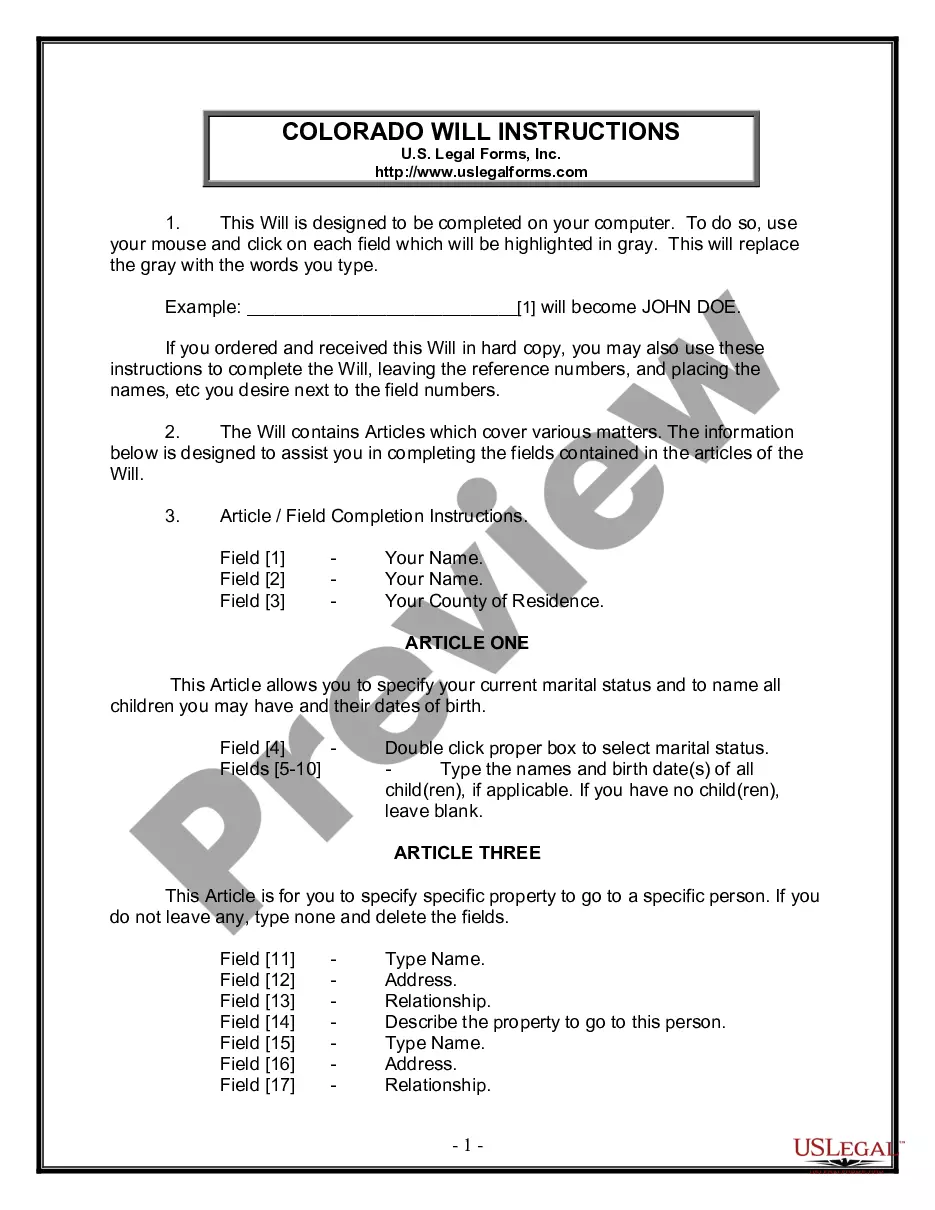
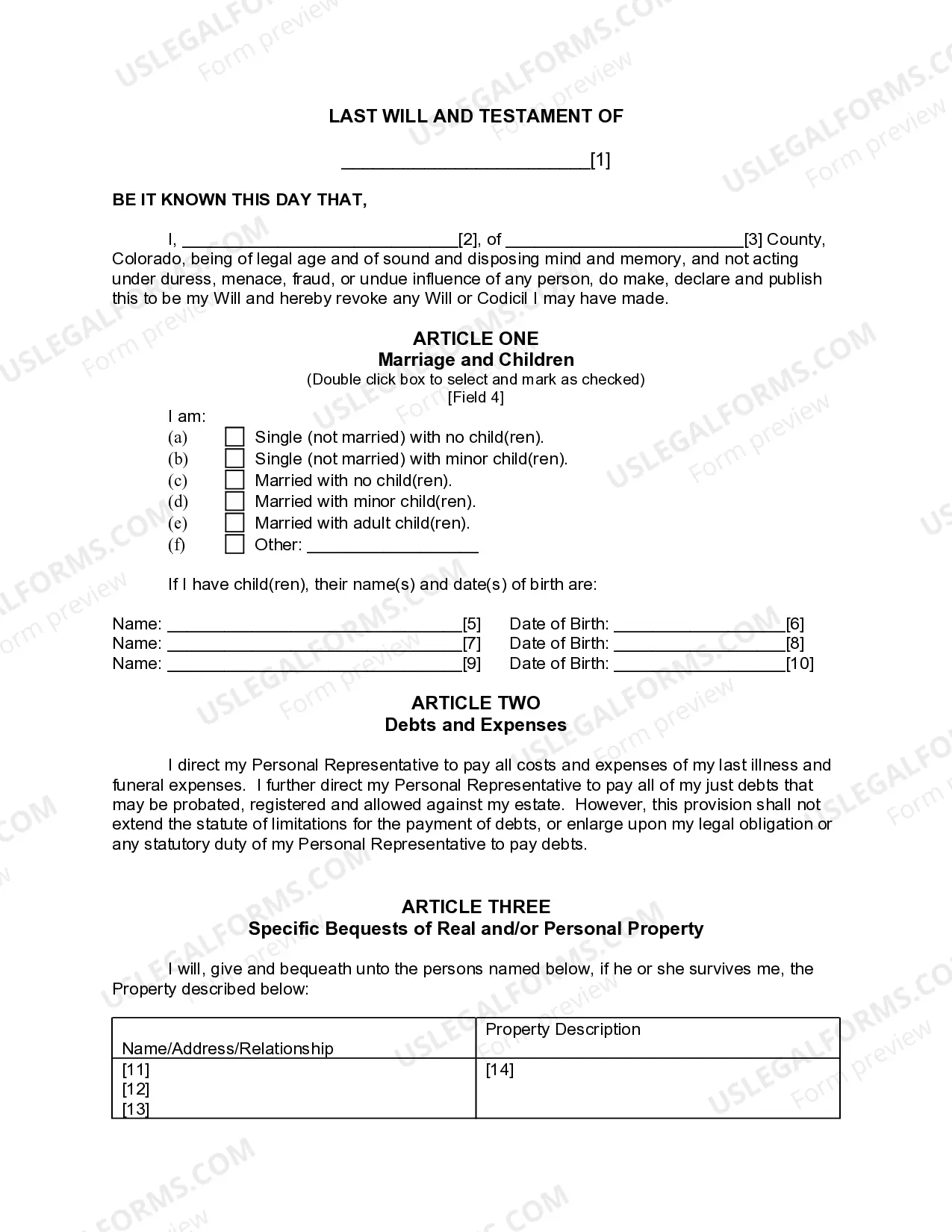
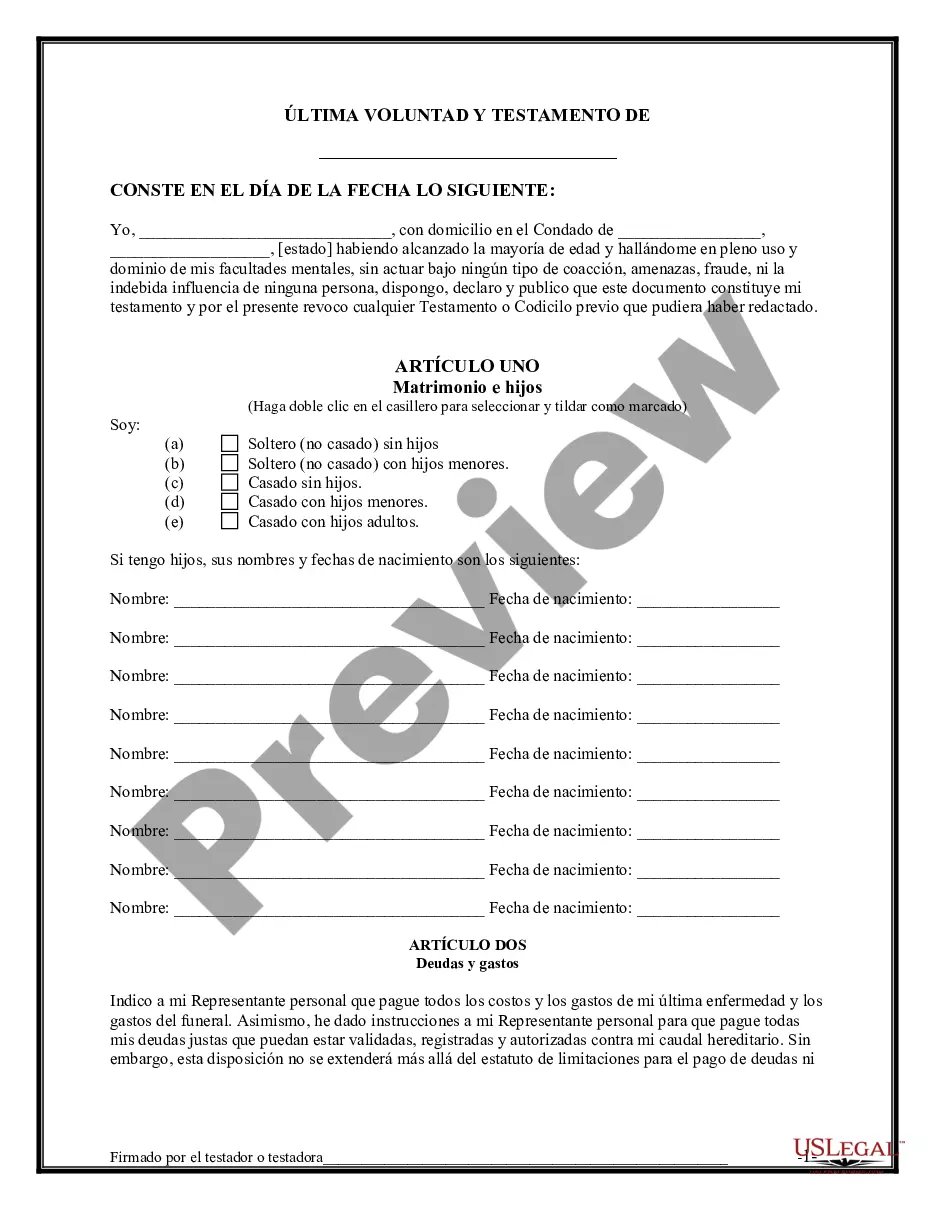
- Article One: Specifies your marital status and names your children, if any, along with their birth dates.
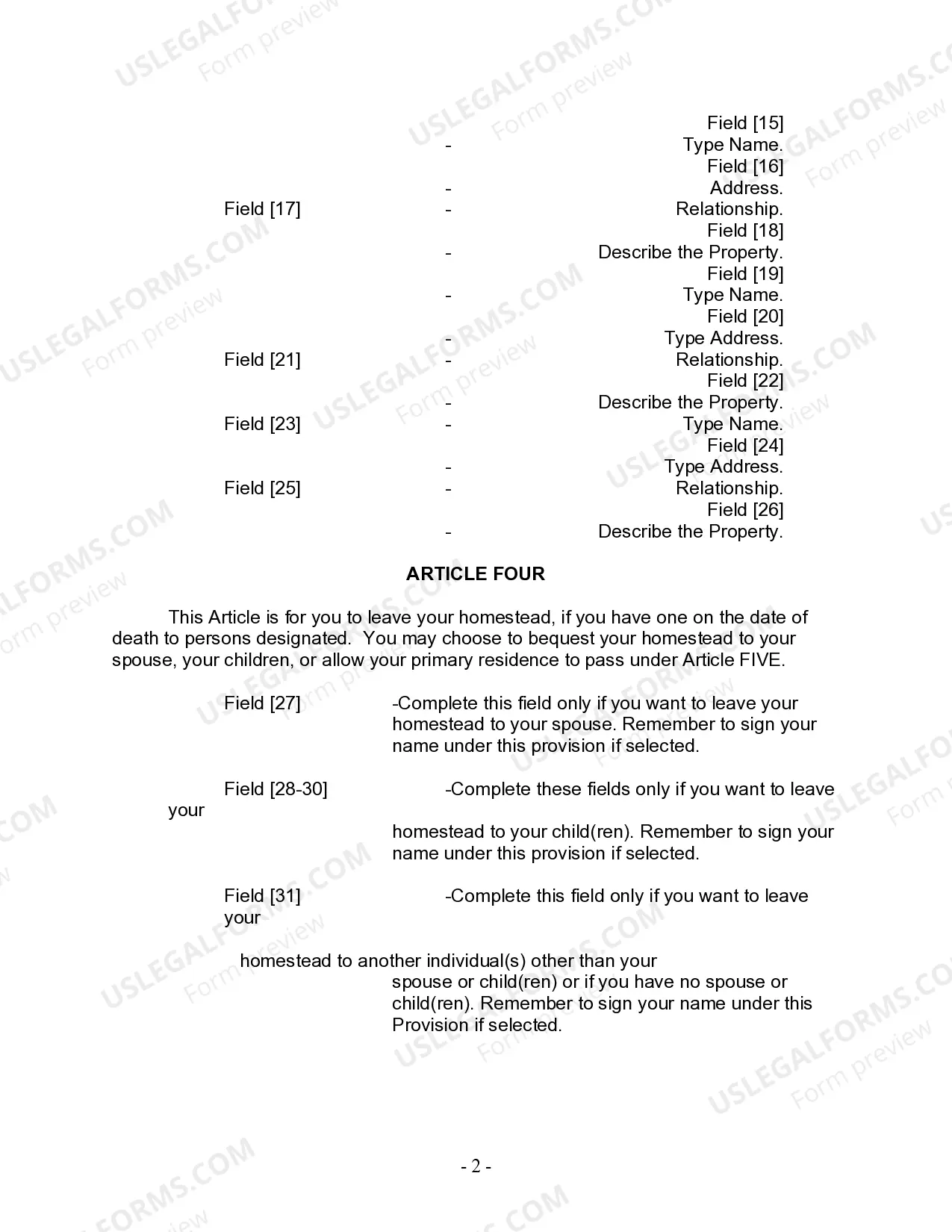
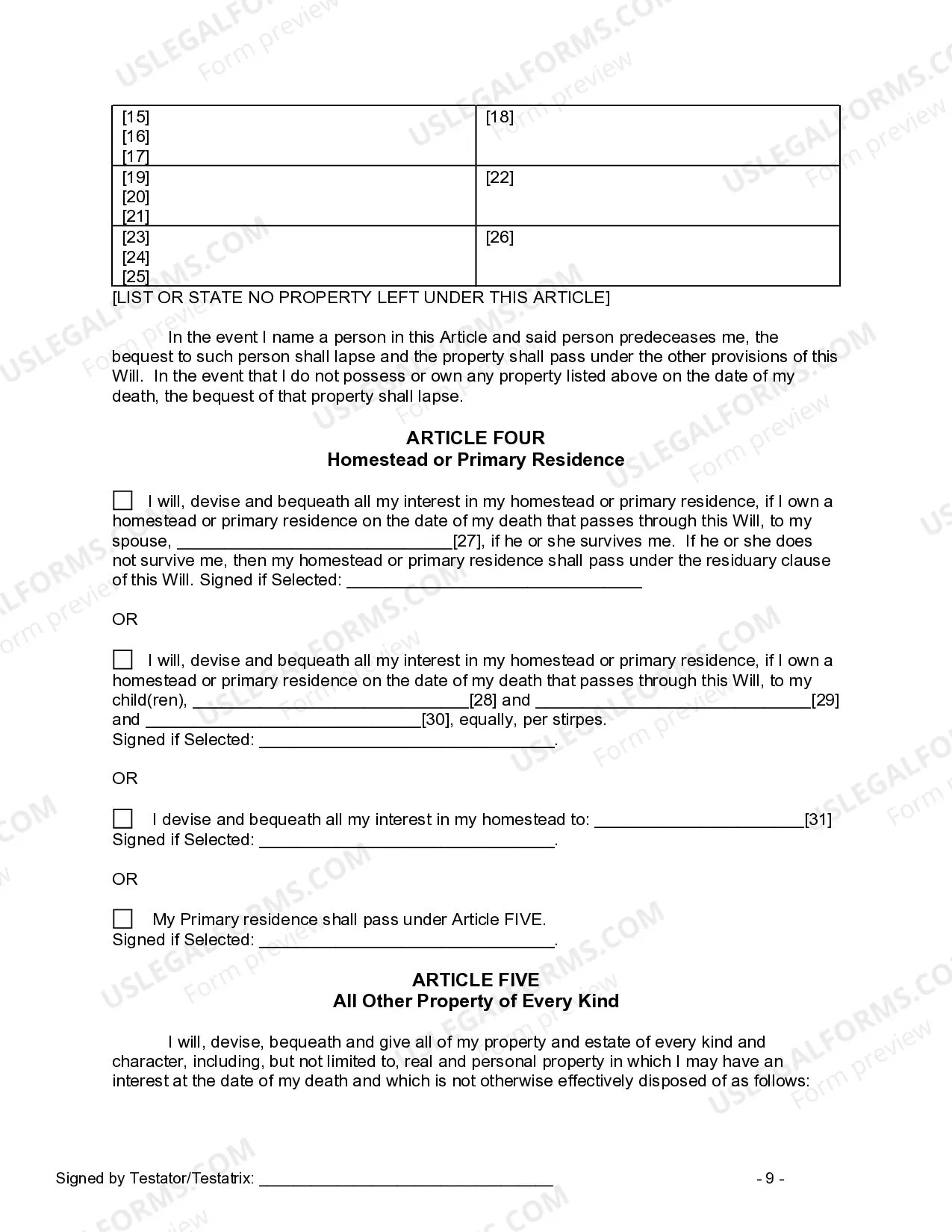
- Article Three: Allows you to designate specific property to go to named individuals.
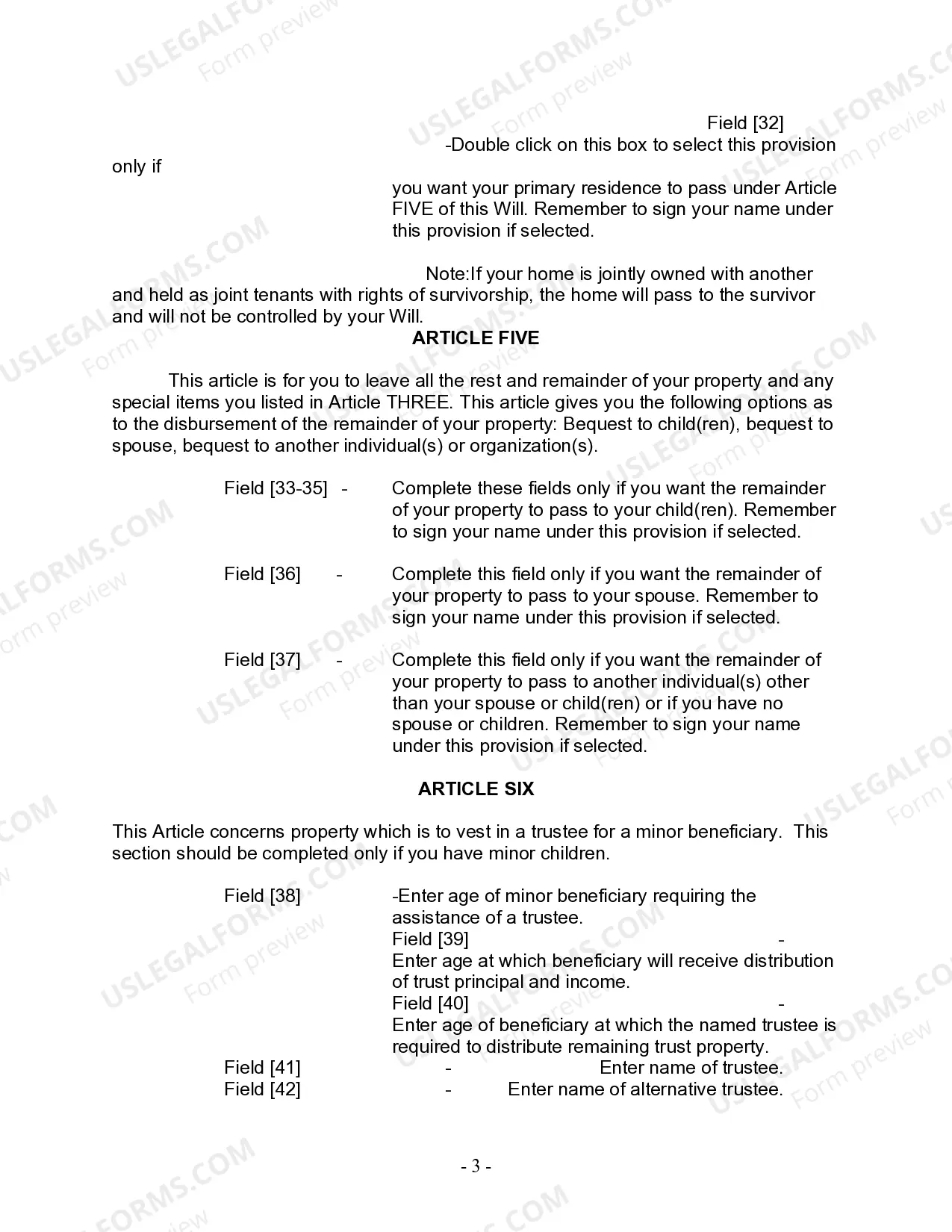
- Article Four: Provides options for distributing your homestead or primary residence.
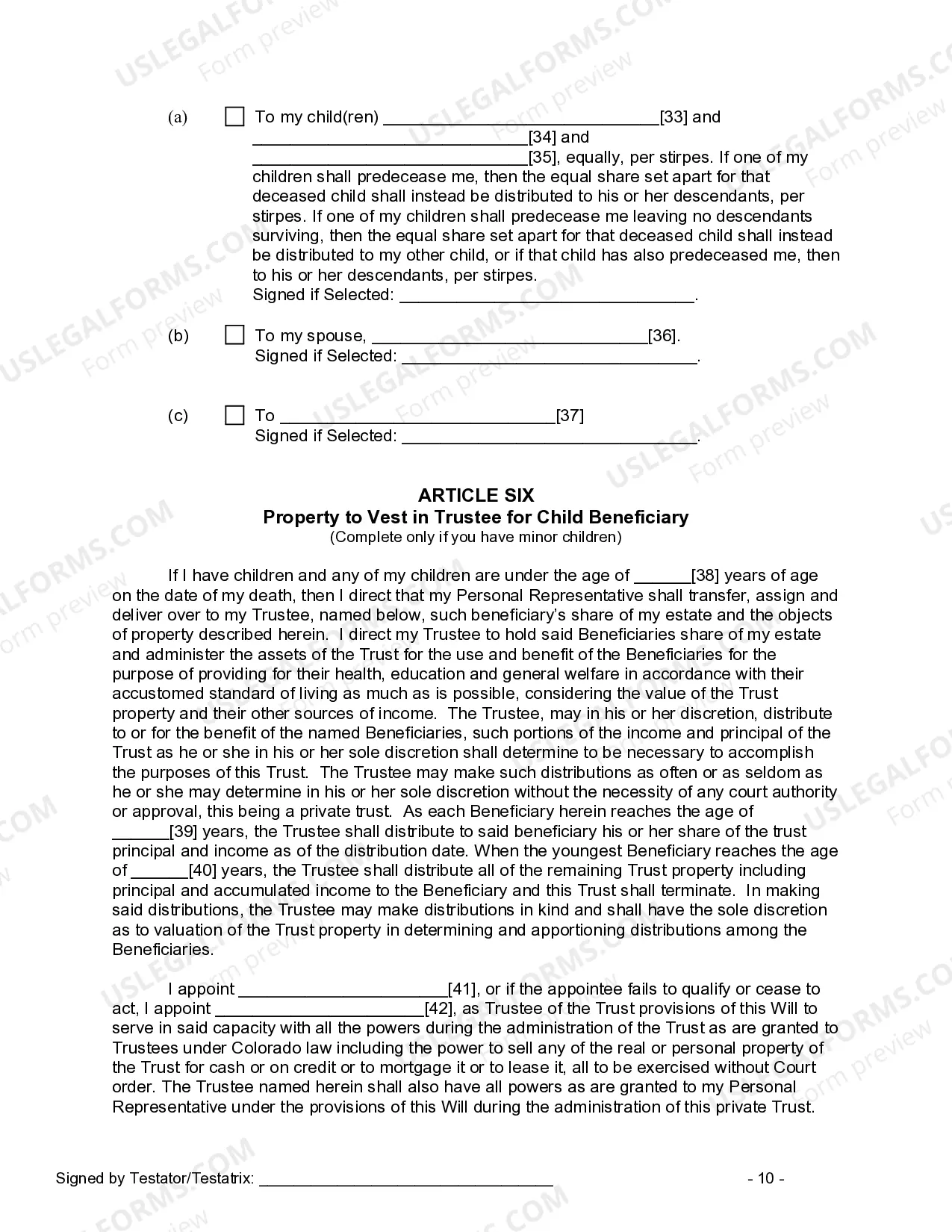
- Articles Five and Six: Address the disbursement of remaining property and the creation of trusts for minor beneficiaries.
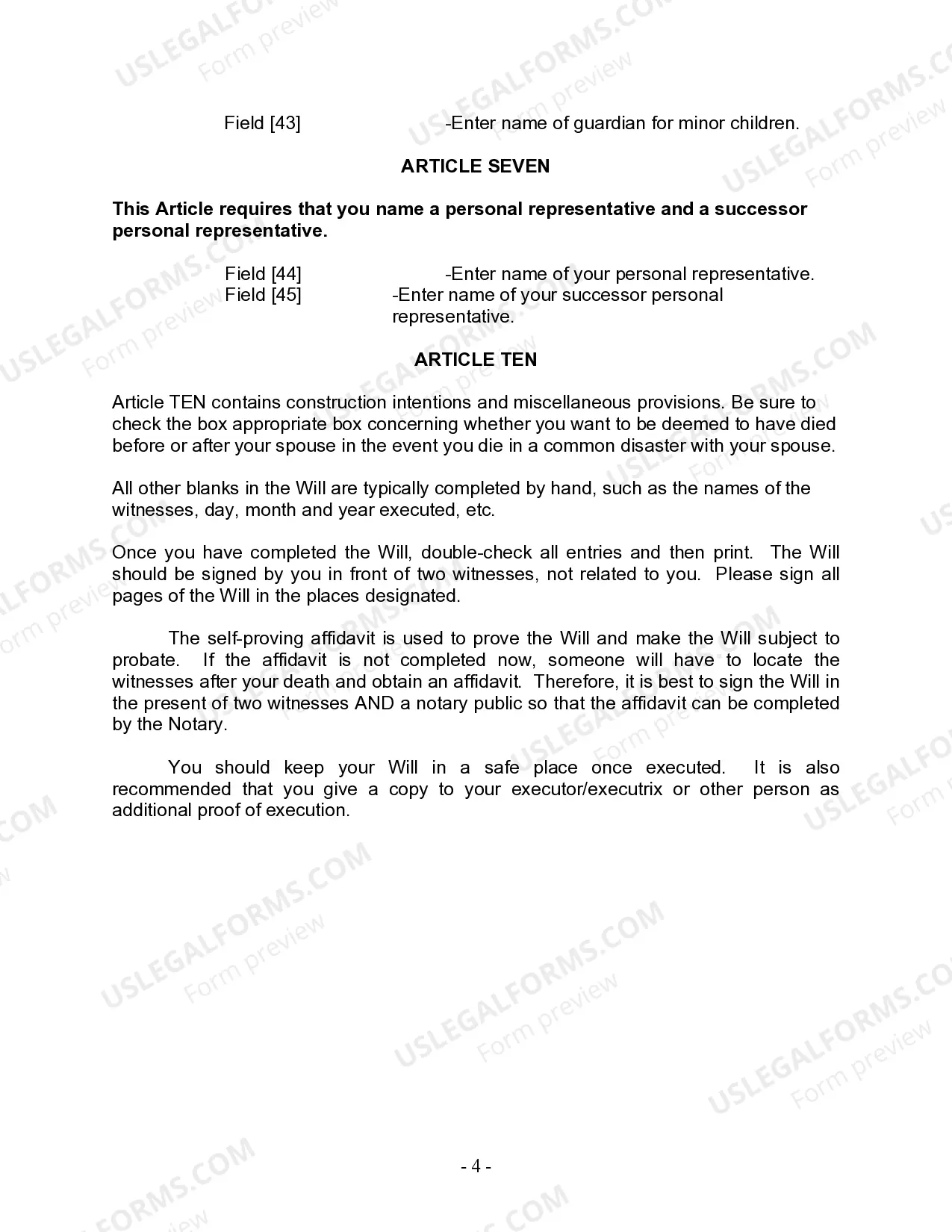
- Article Seven: Appoints a personal representative and a successor to handle your estate.
- Self-Proving Affidavit: Facilitates probate without needing witness verification after your death.





When to use this form
This form is necessary when you want to ensure that your assets and property are distributed according to your wishes after your passing. It is particularly useful if you are a Colorado resident seeking a straightforward way to articulate your estate plans and do not have an existing will. Whether you are a parent wanting to designate guardians for your children or an individual looking to specify the distribution of particular belongings, this Last Will and Testament is appropriate for your needs.
Who can use this document
- Individuals aged 18 years or older who are legally competent to make a will.
- Residents of Colorado who wish to outline their estate distribution.
- Parents wanting to designate guardians for minor children.
- Anyone without an existing will or those seeking to replace a previous one.
How to complete this form
- Begin by entering your full name and county of residence.
- Specify your marital status and list the names and birth dates of your children, if applicable, in Article One.
- Fill in the specific property designations and beneficiaries in Articles Three and Four.
- Complete Articles Five and Six to address the distribution of the remainder of your estate and any trusts for minor beneficiaries.
- Appoint a personal representative in Article Seven to manage your estate.
- Once completed, print the document, sign it in front of two witnesses, and ensure a notary public is present if applicable.
Notarization requirements for this form
Yes, this form must be notarized to be legally valid. Having the will notarized ensures that you and your witnesses are identified correctly, providing an added layer of security against any future disputes regarding its validity. US Legal Forms offers integrated online notarization for added convenience.
Get your form ready online
Our built-in tools help you complete, sign, share, and store your documents in one place.
Make edits, fill in missing information, and update formatting in US Legal Forms—just like you would in MS Word.
Download a copy, print it, send it by email, or mail it via USPS—whatever works best for your next step.
Sign and collect signatures with our SignNow integration. Send to multiple recipients, set reminders, and more. Go Premium to unlock E-Sign.
If this form requires notarization, complete it online through a secure video call—no need to meet a notary in person or wait for an appointment.
We protect your documents and personal data by following strict security and privacy standards.

Make edits, fill in missing information, and update formatting in US Legal Forms—just like you would in MS Word.

Download a copy, print it, send it by email, or mail it via USPS—whatever works best for your next step.

Sign and collect signatures with our SignNow integration. Send to multiple recipients, set reminders, and more. Go Premium to unlock E-Sign.

If this form requires notarization, complete it online through a secure video call—no need to meet a notary in person or wait for an appointment.

We protect your documents and personal data by following strict security and privacy standards.
Mistakes to watch out for
- Failing to properly sign the will in the presence of two witnesses, which may invalidate the document.
- Not naming a personal representative or guardian, leaving it up to the court to decide.
- Neglecting to keep the will in a safe place or failing to inform the executor where it is stored.
Why complete this form online
- Convenience of completing the form from home on your computer.
- Easy editability allows for quick adjustments before finalizing.
- Access to legally drafted documents that ensure compliance with Colorado law.
Key takeaways
- This Last Will and Testament outlines the distribution of your property and guardianship of minors.
- It is essential to ensure all fields are completed accurately to reflect your wishes.
- Notarization is required for the legal validity of the document.
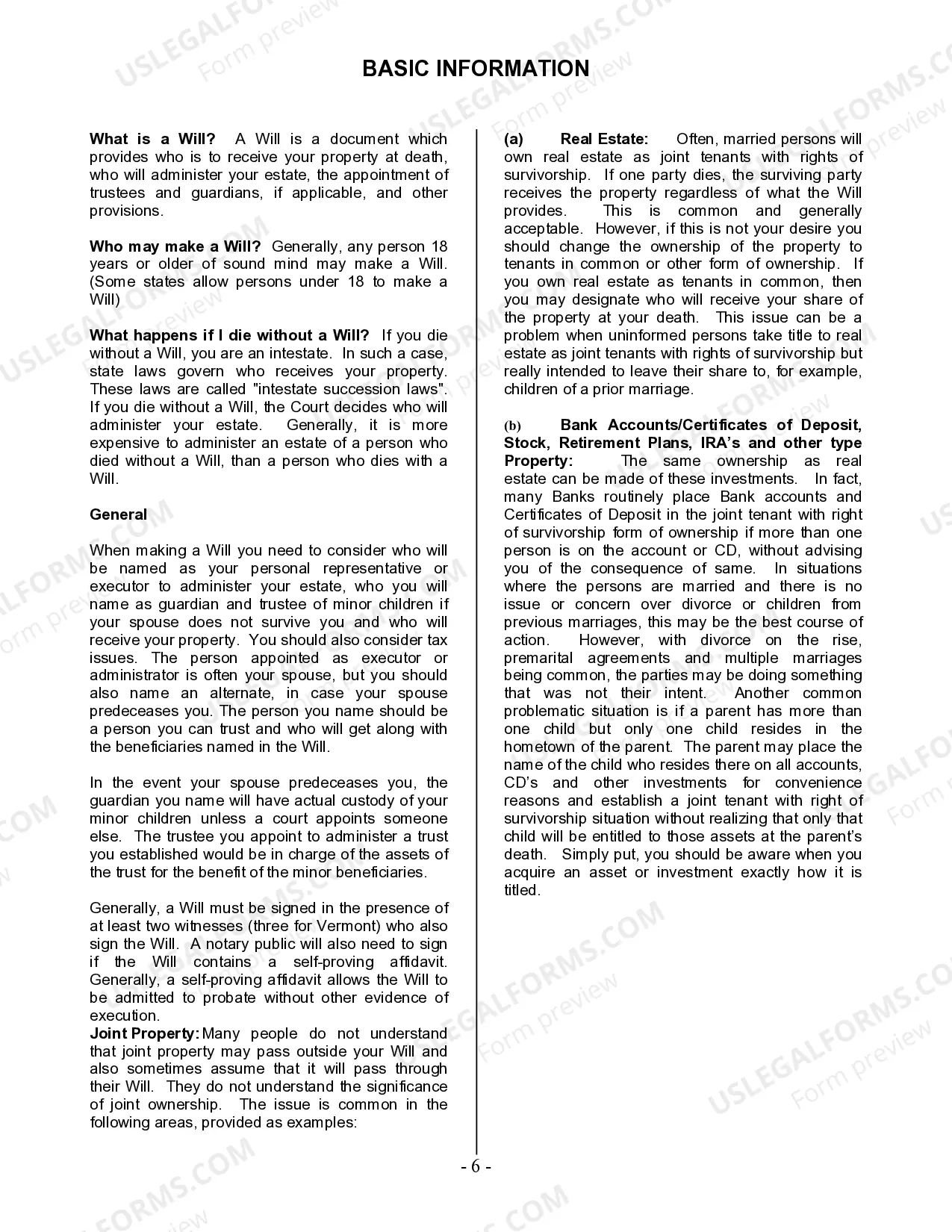
- Keep the signed will in a safe place and inform your executor where it can be found.
Looking for another form?

Form popularity
FAQ
This is a Colorado Last Will and Testament for Other Persons— a written template that lets you name beneficiaries, appoint a personal representative, and designate guardians for minor children. It also covers specific property allocations, the distribution of your homestead, provisions for trusts for minor beneficiaries, and includes a Self-Proving Affidavit to simplify probate.
The form is designed for Colorado residents aged 18 or older who are legally competent to make a will. It provides Articles One, Three, Four, Five and Six, Seven, and a Self-Proving Affidavit, allowing you to outline distributions, designate a personal representative, handle guardianship, and create trusts for minors, all via a computer-friendly template.
Yes, you can draft your own Will and have it notarized; this template is meant to be completed on your computer and includes a Self-Proving Affidavit to speed probate. However, ensure it complies with Colorado formalities and consider consulting a licensed attorney to confirm its acceptance.
Holographic wills, or handwritten wills, are treated differently under many state laws. This form is a typed document with defined articles and a Self-Proving Affidavit intended to meet formal execution typically required by probate, whereas handwritten versions may not be valid without meeting those standards.
Hand-written wills can be recognized in some states, but Colorado generally requires a properly executed written will like this template. This form is designed to be completed on a computer and includes sections for guardians, beneficiaries, and a Self-Proving Affidavit to facilitate probate.
This form is tailored for use with other persons or same-sex partners and includes explicit Articles for naming beneficiaries, distributing the homestead, appointing a personal representative, and creating trusts for minor beneficiaries, plus a Self-Proving Affidavit to speed probate, all in a computer-friendly format.