Colorado Last Will for a Widow or Widower with no Children
About this form
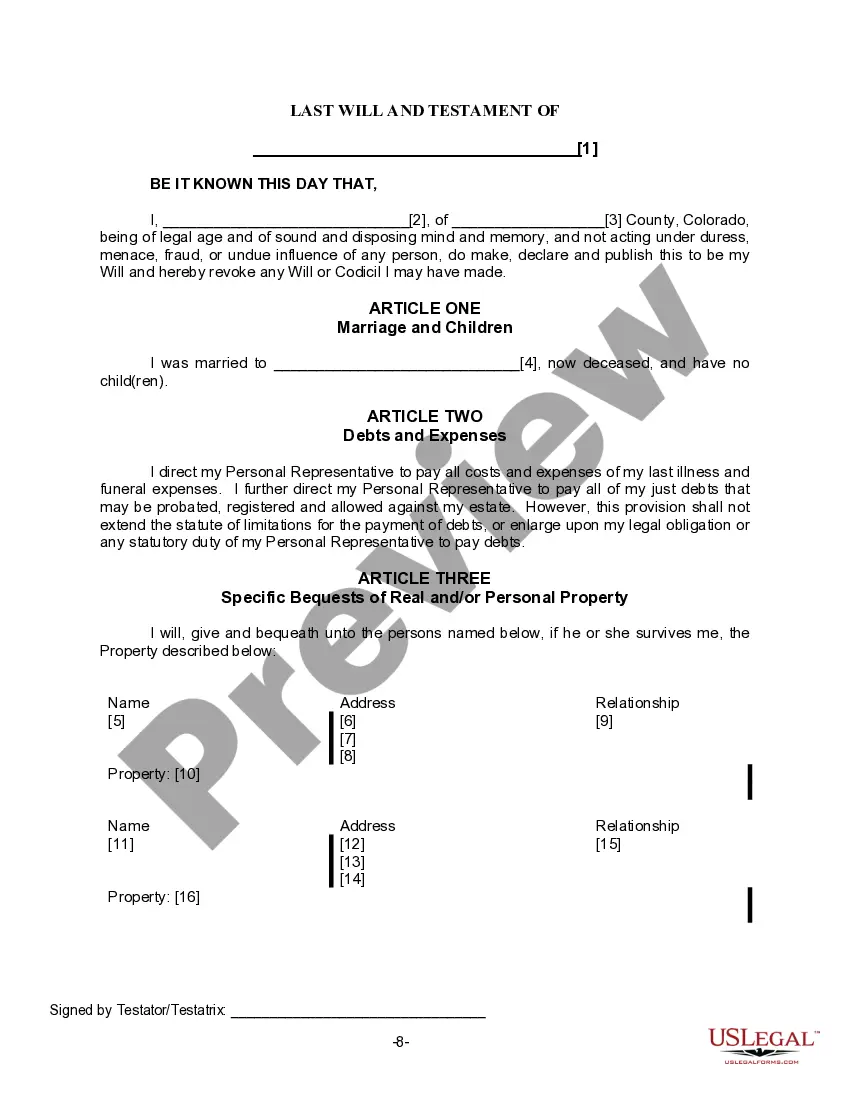
The Last Will for a Widow or Widower with No Children is a legal document that outlines how your assets will be distributed after your death. This will is specifically designed for individuals who are widowed and do not have children, allowing them to appoint an executor, designate beneficiaries, and make personal bequests. It ensures your wishes are clearly articulated and provides guidance on asset allocation, differentiating it from other wills that cater to individuals with dependents or larger family structures.
What’s included in this form
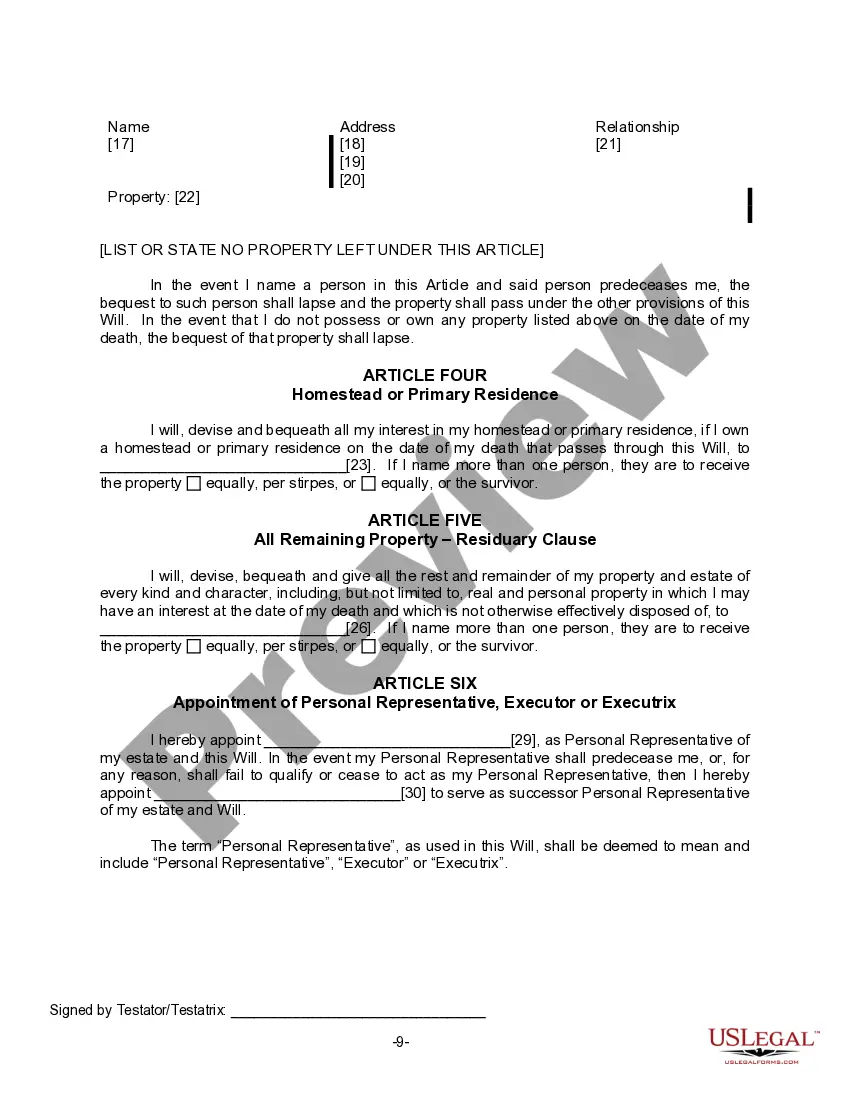
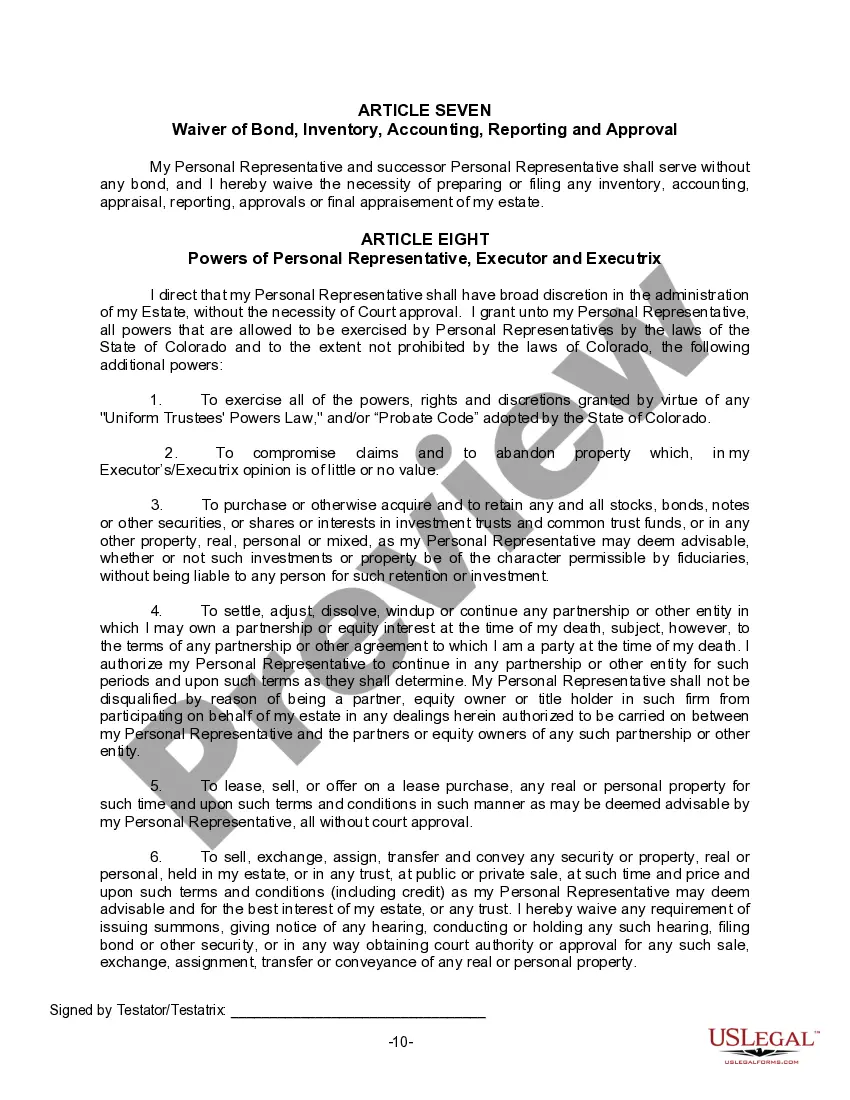
- Appointment of a personal representative or executor to manage your estate.
- Specification of how certain property items are to be distributed to named individuals.
- Directions for the handling of your homestead or primary residence.
- Instructions regarding the division of the remaining estate among beneficiaries.
- Options to waive bond requirements for the personal representative.
- Self-proving affidavit provision to streamline probate processes.



Situations where this form applies
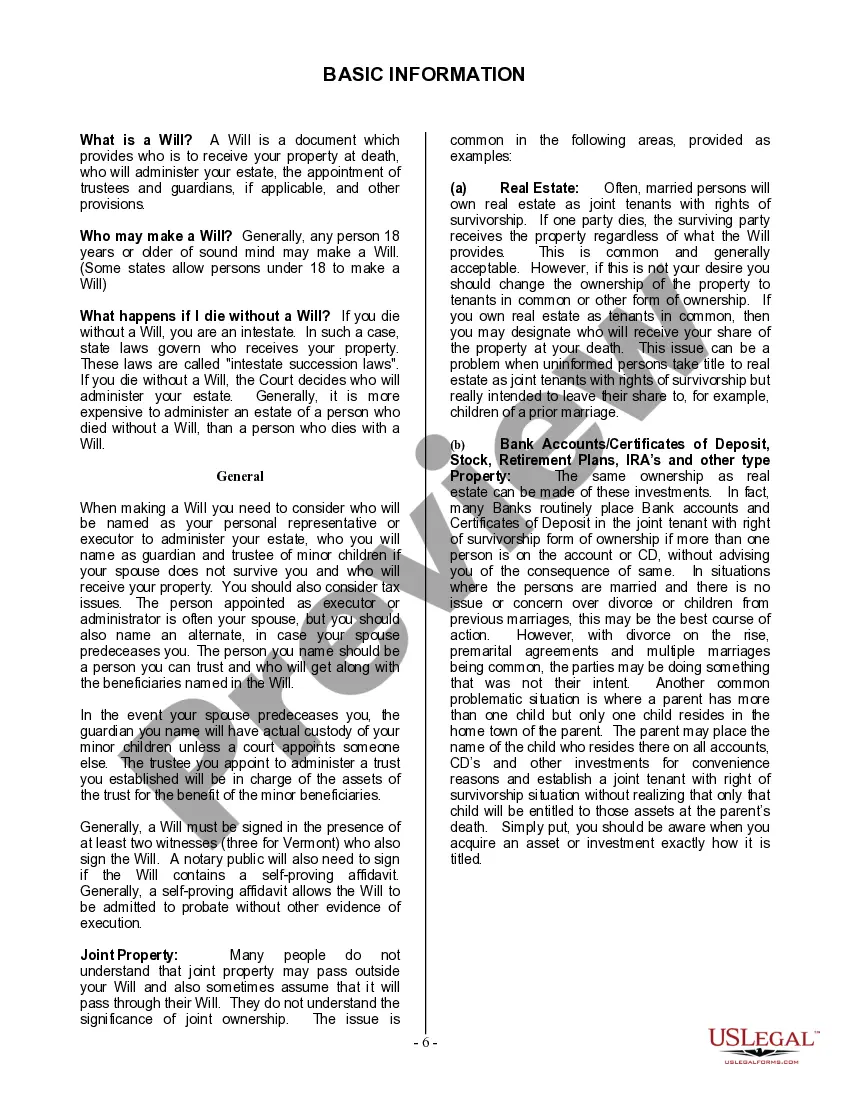
This form is useful when a widow or widower without children wants to ensure their assets are distributed according to their wishes after they pass away. It is particularly important for those who have specific gifts they want to leave to friends or other family members or for those who wish to designate a personal representative to handle their estate. It provides peace of mind that your property will be handled as you wish, eliminating uncertainty for your heirs.
Who needs this form
- Widows or widowers who do not have children.
- Individuals without a prior will looking to establish their final wishes.
- Those wishing to designate a personal representative to manage their estate.
- Anyone wanting to specify how particular items or property should be distributed.
Steps to complete this form
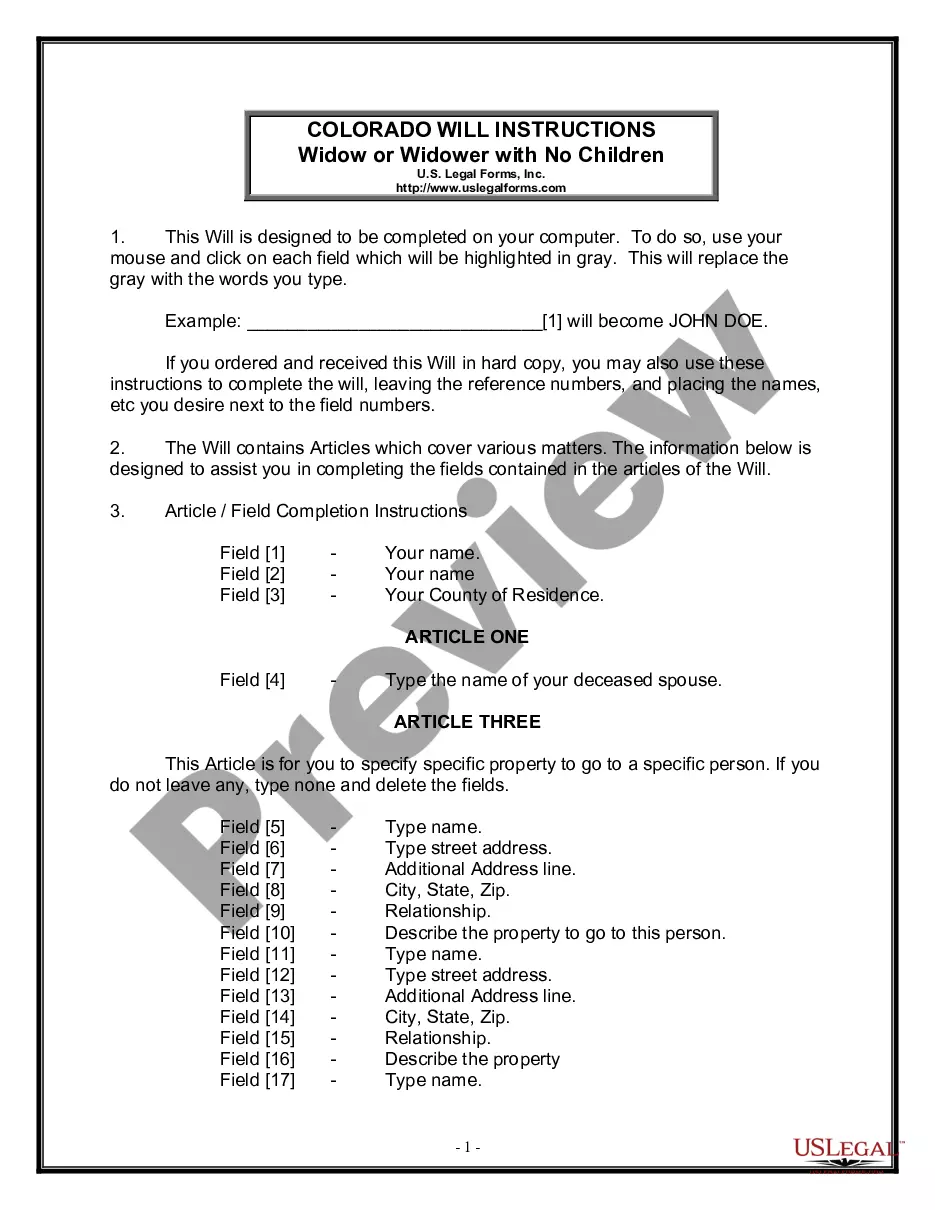
- Start by entering your full name and county of residence at the designated fields.
- List the name of your deceased spouse to acknowledge your marital status.
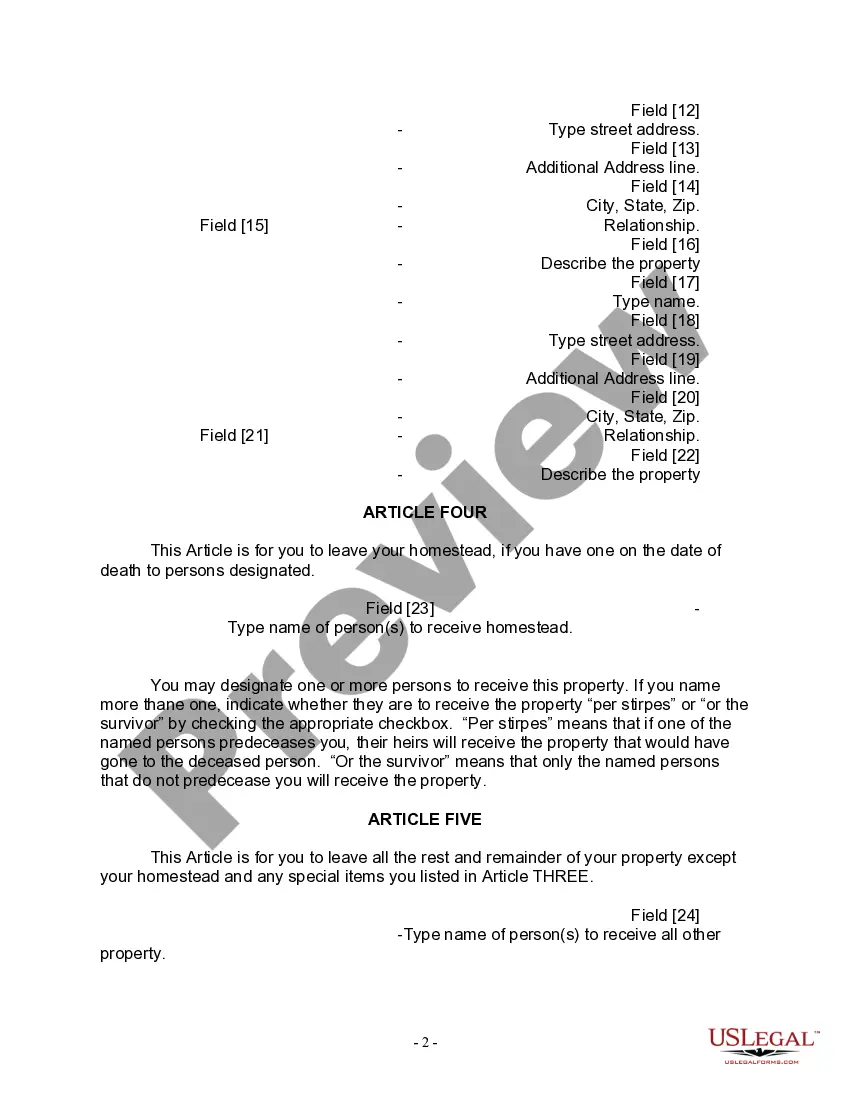
- Identify specific property to be distributed to specific individuals, typing their names and addresses accordingly.
- Designate who will receive your homestead, ensuring to specify if multiple beneficiaries will share the property.
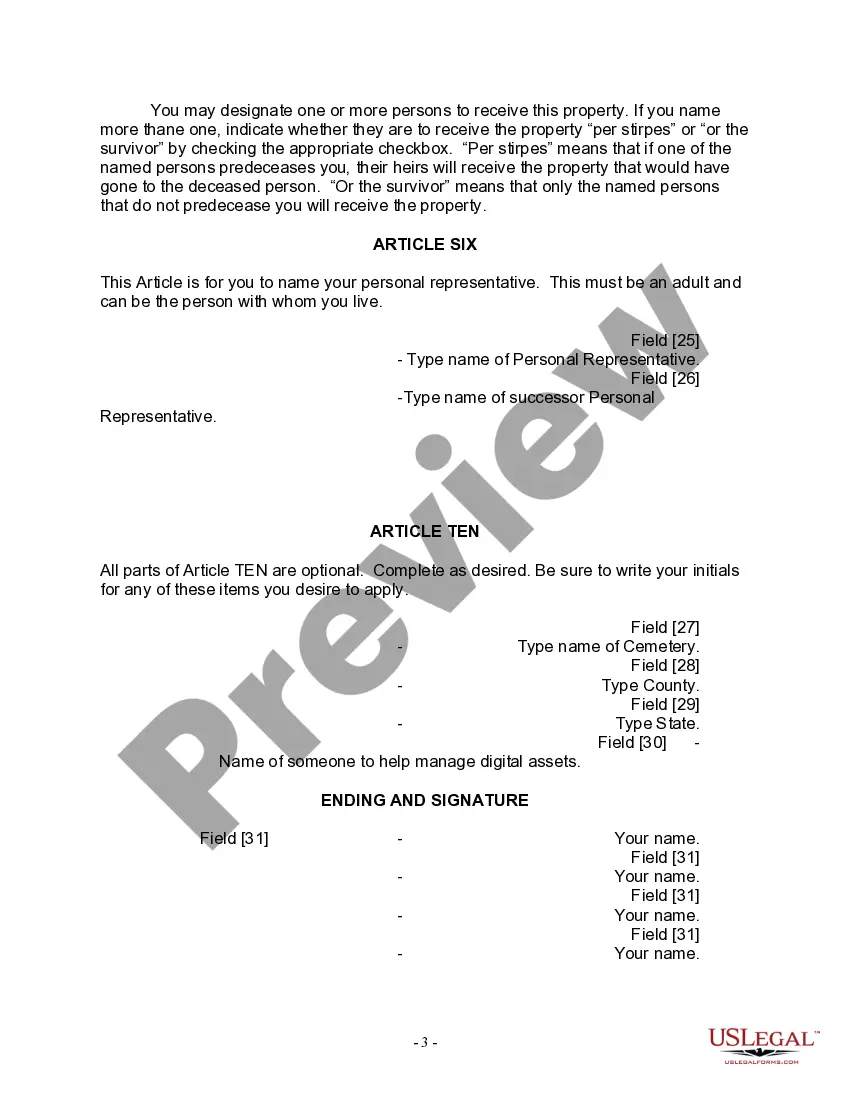
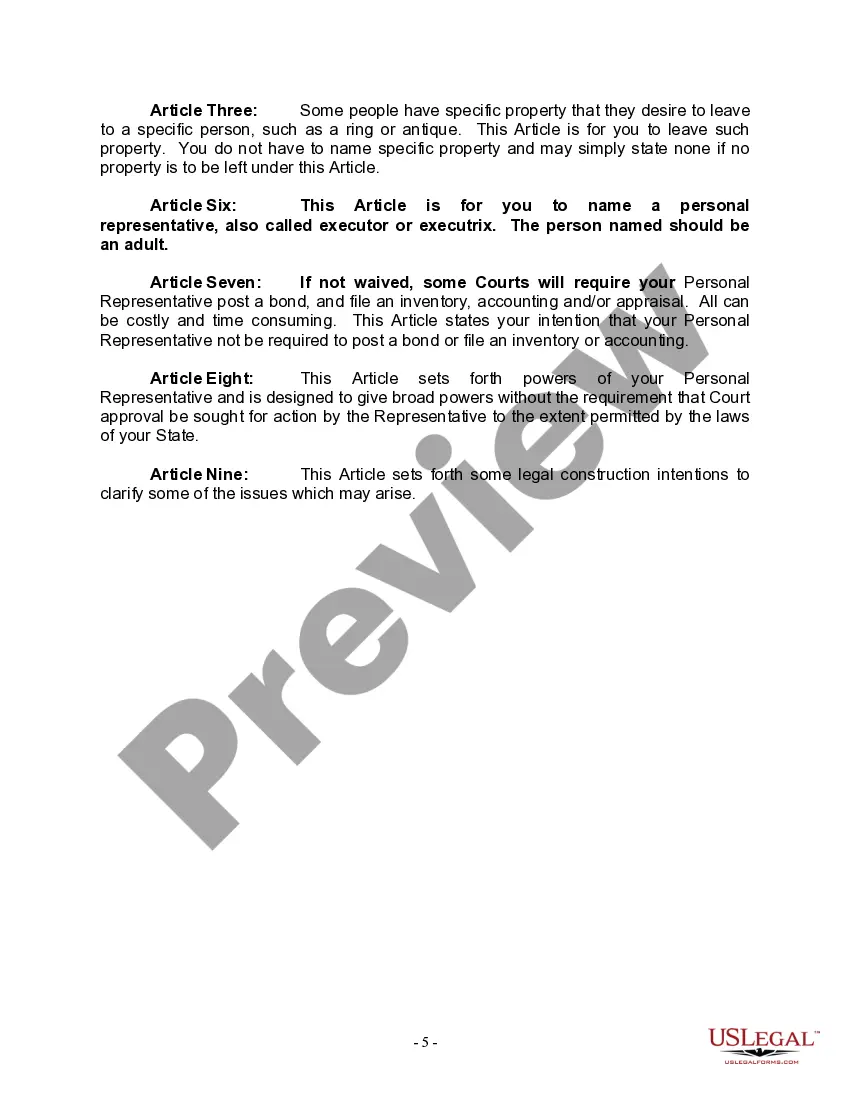
- Choose your personal representative, ensuring they are an adult who can manage your estate after your passing.
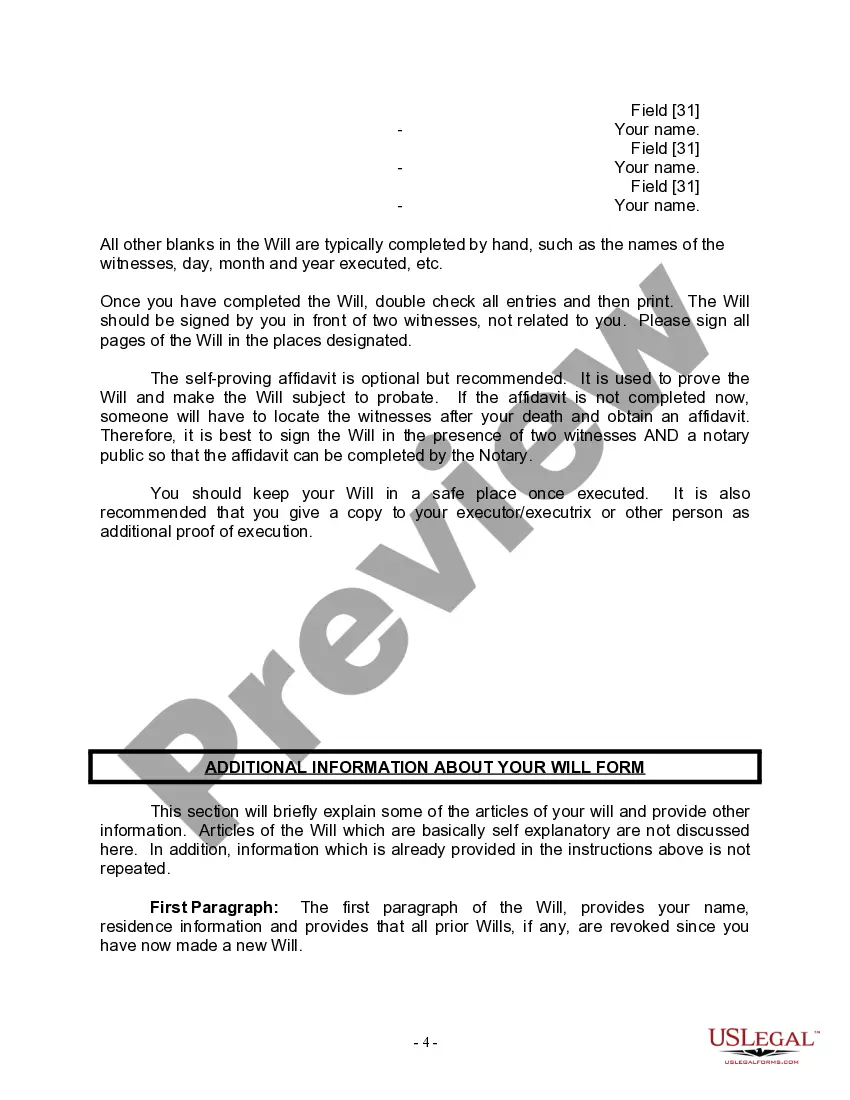
- Have the completed will signed in front of two witnesses who are not named in the will, following the specified signing guidelines.
Is notarization required?
Notarization is required for this form to take effect. Our online notarization service, powered by Notarize, lets you verify and sign documents remotely through an encrypted video session, available 24/7.
Get your form ready online
Our built-in tools help you complete, sign, share, and store your documents in one place.
Make edits, fill in missing information, and update formatting in US Legal Forms—just like you would in MS Word.
Download a copy, print it, send it by email, or mail it via USPS—whatever works best for your next step.
Sign and collect signatures with our SignNow integration. Send to multiple recipients, set reminders, and more. Go Premium to unlock E-Sign.
If this form requires notarization, complete it online through a secure video call—no need to meet a notary in person or wait for an appointment.
We protect your documents and personal data by following strict security and privacy standards.

Make edits, fill in missing information, and update formatting in US Legal Forms—just like you would in MS Word.

Download a copy, print it, send it by email, or mail it via USPS—whatever works best for your next step.

Sign and collect signatures with our SignNow integration. Send to multiple recipients, set reminders, and more. Go Premium to unlock E-Sign.

If this form requires notarization, complete it online through a secure video call—no need to meet a notary in person or wait for an appointment.

We protect your documents and personal data by following strict security and privacy standards.
Avoid these common issues
- Not having the document signed in front of the required witnesses.
- Failing to specify beneficiaries for all assets.
- Not updating the will after significant life changes.
- Overlooking the self-proving affidavit, which can complicate probate.');
Benefits of using this form online
- Convenience: Access and complete your will from home at your own pace.
- Editability: Make changes easily until you are completely satisfied.
- Compliance: Ensure your document meets legal standards with professionally drafted content.
- Security: Safeguard your personal and sensitive information during the process.
Quick recap
- The Last Will for a Widow or Widower with No Children is tailored for those without children who wish to allocate assets.
- Completing the will involves specifying beneficiaries, appointing an executor, and ensuring it is properly executed.
- Notarization may be needed to simplify the probate process, depending on state requirements.
- Using this form online offers ease, edits, and legal assurances.
Looking for another form?

Form popularity
FAQ
Wills in Colorado A will is the most common estate planning docu- ment that all individuals should create regardless of their financial status.The will must be witnessed by two uninterested parties or notarized by a Notary Public authorized to take acknowledgments.
A. You don't have to have a lawyer to create a basic will you can prepare one yourself. It must meet your state's legal requirements and should be notarized.A do-it-yourself will that's poorly drafted can save you money but create a mess for your heirs when you're gone.
Contrary to popular belief, you do not need to have an attorney draft a will for you. Anyone can write this document on their own, and as long as it meets all of the legal requirements of the state, courts will recognize one you wrote yourself.
In most situations, a will template is an easy and inexpensive way to make sure your wishes are known and carried out. Most people can get everything they need by using a will template, with little cost or hassle.
Include personal identifying information. Include a statement about your age and mental status. Designate an executor. Decide who will take care of your children. Choose your beneficiaries. List your funeral details. Sign and date your Last Will and Testament.
You can make your own will in Colorado, using Nolo's Quicken WillMaker & Trust. However, you may want to consult a lawyer in some situations. For example, if you think that your will might be contested or if you want to disinherit your spouse, you should talk with an attorney.
For a will to be valid in Colorado, it must be signed by a minimum of two witnesses. Witnesses may not be beneficiaries of the will. Testators may choose to attach a self-proving affidavit to the will that affirms that the will was properly executed.
The Free Last Will and Testament Template for Word is compatible with Word 2003 or later versions.
The form may be downloaded in fillable Adobe PDF, Rich Text Format, and Microsoft Word templates and should be signed by the testator and at least two (2) witnesses or a notary public (See your State's Probate Code).