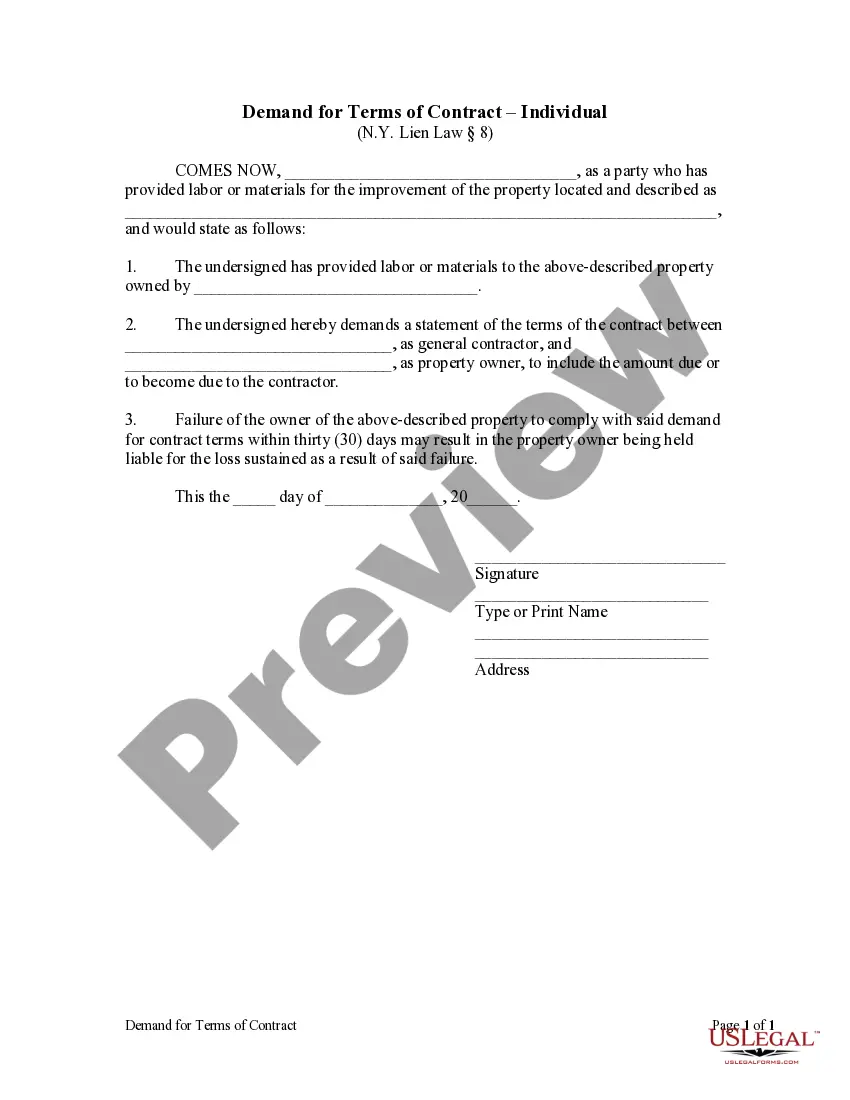
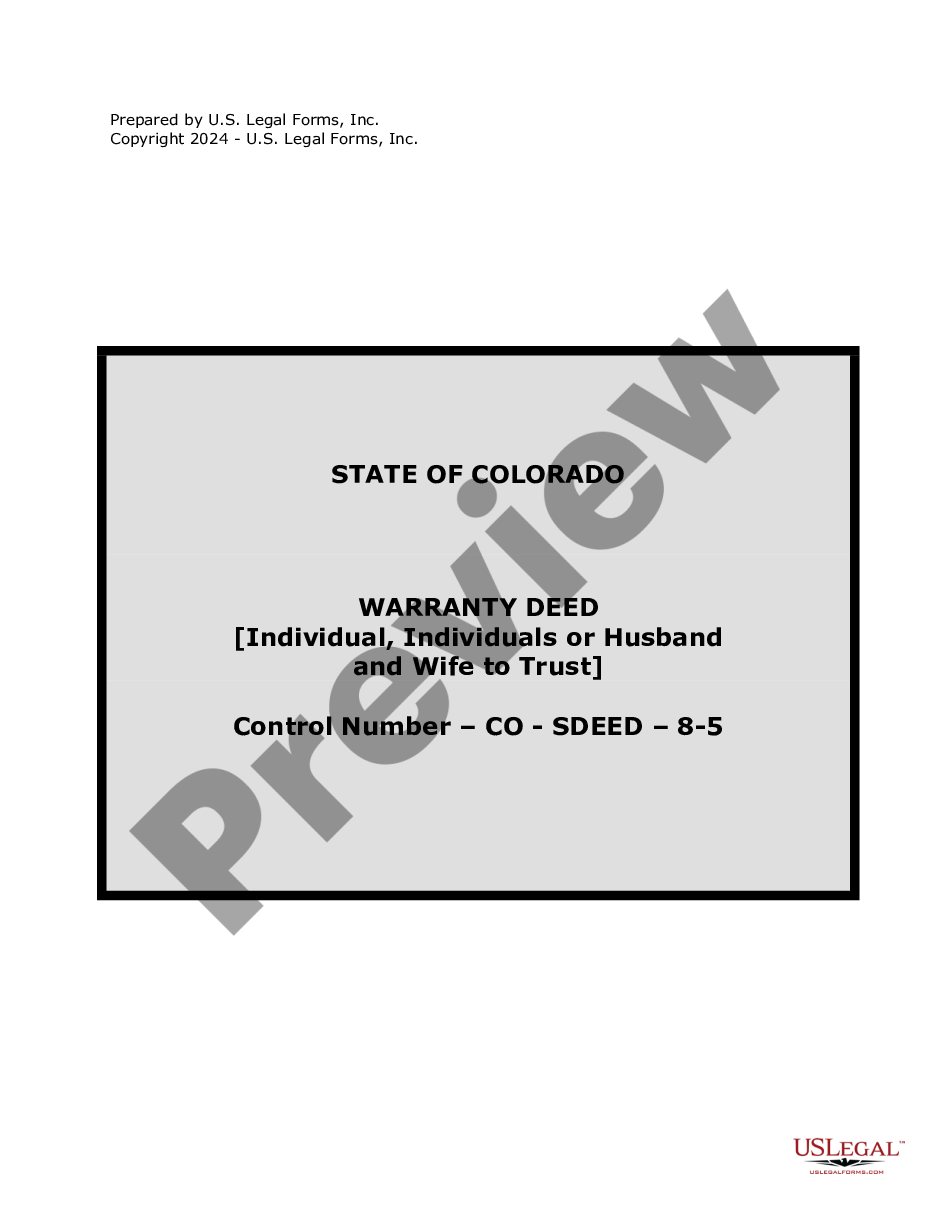
Colorado Warranty Deed from Individual, Individuals, or Husband and Wife to Trust
What this document covers
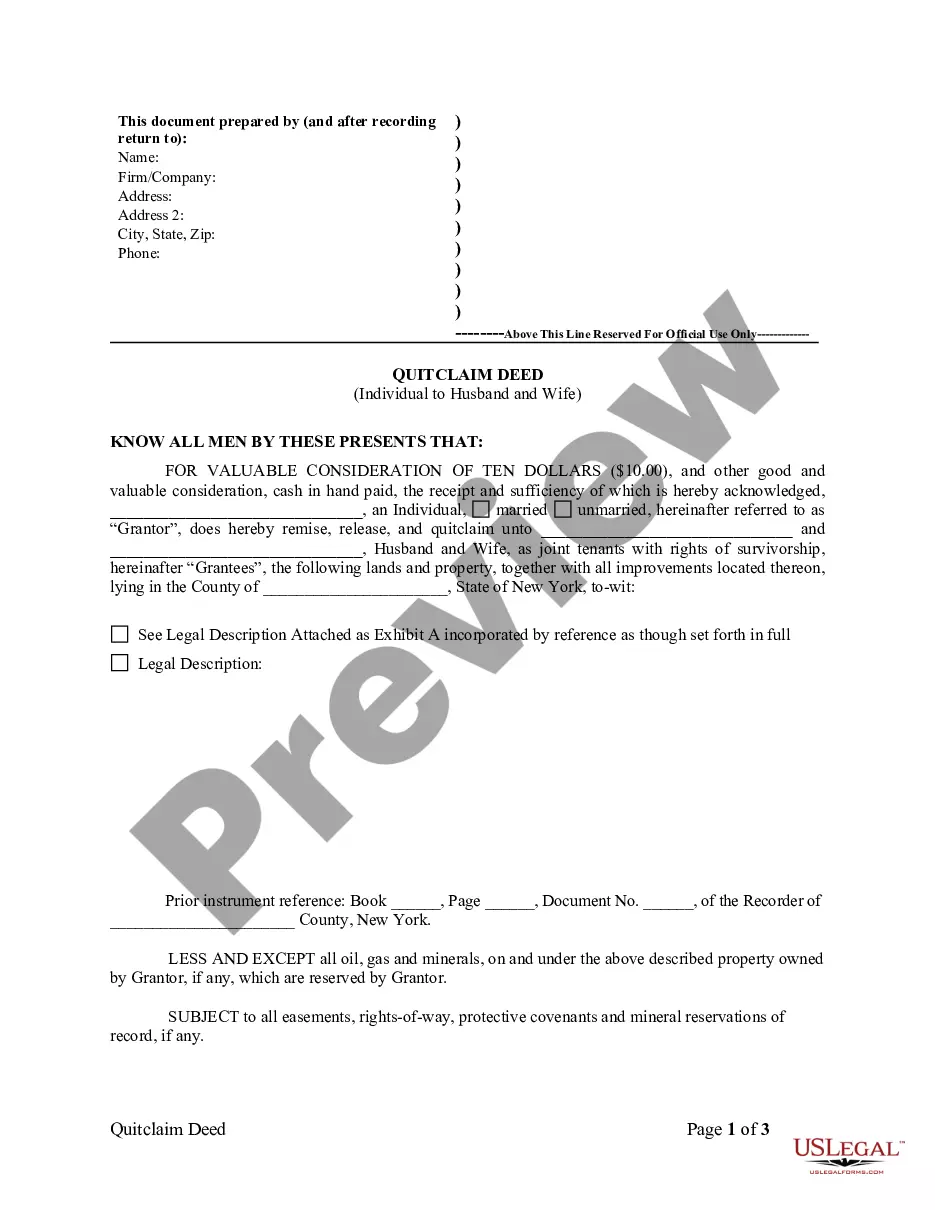
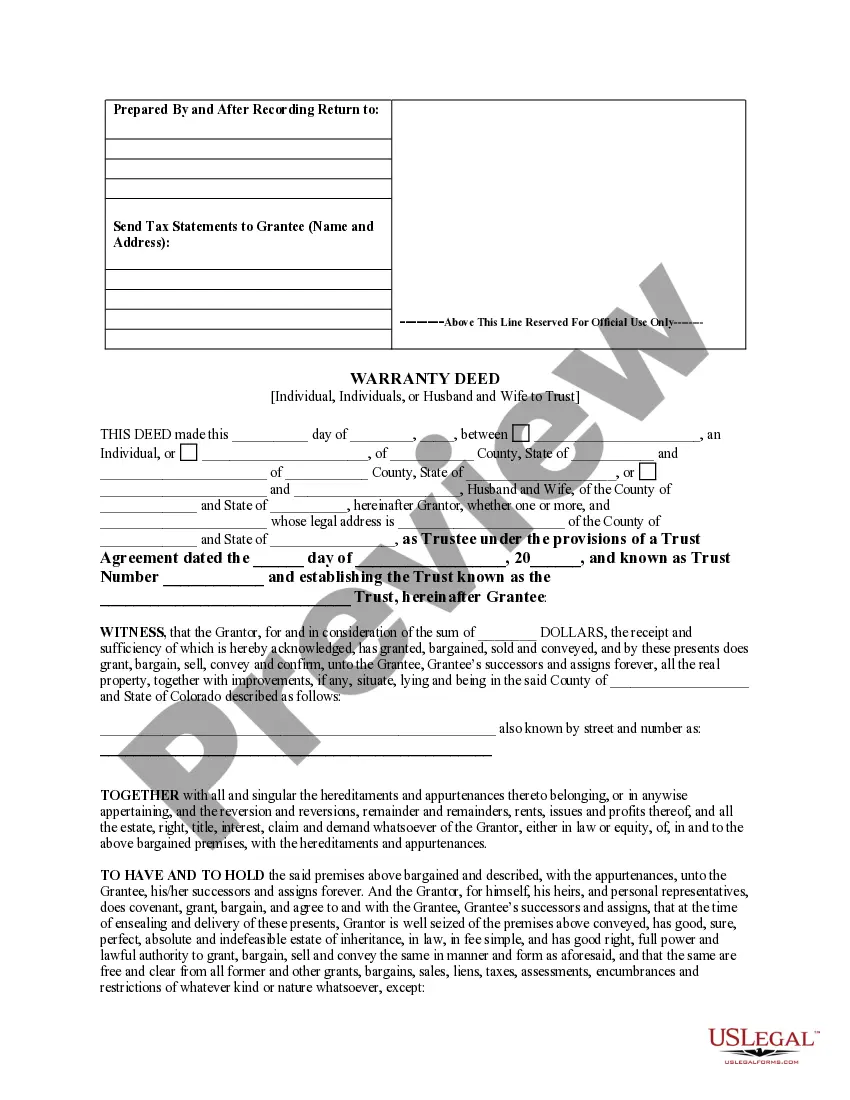
The Warranty Deed from Individual, Individuals, or Husband and Wife to Trust is a legal document used to transfer ownership of real estate from one or more individuals, including spouses, to a trust. Unlike other forms of property deeds, this deed specifically establishes a trust as the recipient, providing a structured way to manage and protect assets for beneficiaries. This is especially useful for estate planning and asset protection purposes.
Key components of this form
- Grantor(s) information, including names and marital status.
- Grantee's details, which consist of the trust's name and information.
- Description of the real property being conveyed, including its legal description and address.
- Consideration amount, reflecting the value exchanged for the property.
- Warranty clause ensuring the grantor's clear title to the property.
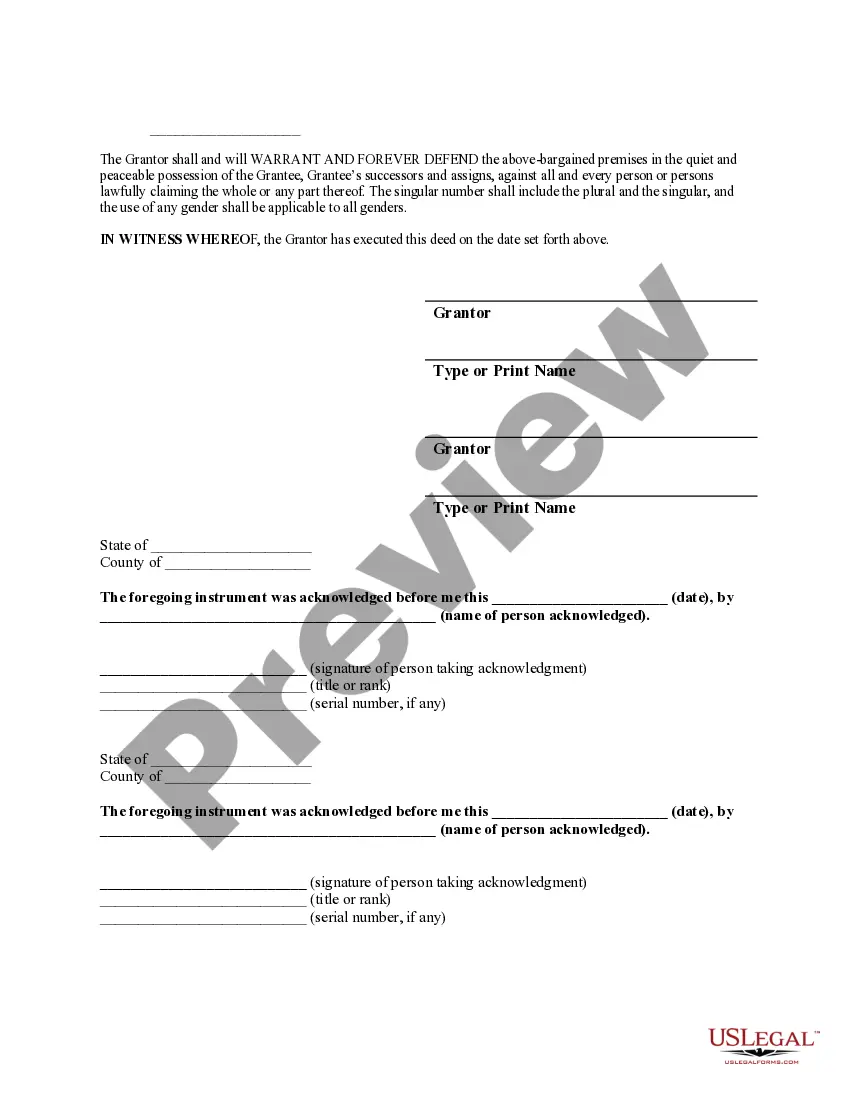
- Signatures of the grantor(s) and acknowledgment of the deed.




When to use this document
This form should be used when individuals or married couples wish to transfer ownership of real property to a trust. Common scenarios include setting up a trust for estate planning, protecting assets for minor children, or transferring property to a family trust to manage assets after death. It is essential when ensuring property is managed according to the grantor's wishes.
Who needs this form
- Individuals looking to transfer real property to a trust.
- Married couples wanting to establish a trust for estate management.
- Estate planners or individuals preparing for future asset distribution.
- Trustees charged with oversight of real estate assets in a trust.
Instructions for completing this form
- Identify the grantor(s) and provide their names and marital status.
- Input the name of the trust as the grantee and include necessary details.
- Describe the property accurately, including its physical address and legal description.
- Enter the consideration amount that reflects the value of the property being transferred.
- Ensure all grantor(s) sign the deed in the presence of a notary, if required.
Does this form need to be notarized?
This form must be notarized to be legally valid. Notarization provides an extra layer of authentication to the deed, ensuring that the signatures are verified and the document is executed properly. US Legal Forms offers integrated online notarization for 24/7 availability, providing a secure video call with a notary, ensuring your documents are valid without the need to travel.
Get your form ready online
Our built-in tools help you complete, sign, share, and store your documents in one place.
Make edits, fill in missing information, and update formatting in US Legal Forms—just like you would in MS Word.
Download a copy, print it, send it by email, or mail it via USPS—whatever works best for your next step.
Sign and collect signatures with our SignNow integration. Send to multiple recipients, set reminders, and more. Go Premium to unlock E-Sign.
If this form requires notarization, complete it online through a secure video call—no need to meet a notary in person or wait for an appointment.
We protect your documents and personal data by following strict security and privacy standards.

Make edits, fill in missing information, and update formatting in US Legal Forms—just like you would in MS Word.

Download a copy, print it, send it by email, or mail it via USPS—whatever works best for your next step.

Sign and collect signatures with our SignNow integration. Send to multiple recipients, set reminders, and more. Go Premium to unlock E-Sign.

If this form requires notarization, complete it online through a secure video call—no need to meet a notary in person or wait for an appointment.

We protect your documents and personal data by following strict security and privacy standards.
Common mistakes to avoid
- Failing to provide a detailed legal description of the property.
- Not including all grantors' names, especially for married couples.
- Overlooking the consideration amount, which can affect the validity of the deed.
- Neglecting to have the deed notarized when required.
Why use this form online
- Convenience of immediate access to the form and guidance on completion.
- Editable fields allow users to customize the document easily.
- Reliable and secure access to legal forms formatted according to state laws.
- No need for physical visits, as the form can be downloaded and completed at home.
Looking for another form?
Form popularity
FAQ
A warranty deed can be drawn up by an individual, attorney, or a legal service provider like USLegalForms. However, it is wise to enlist the help of a professional to ensure that the document adheres to local laws and regulations. This becomes especially crucial when creating a Colorado Warranty Deed from Individual, Individuals, or Husband and Wife to Trust, as improper preparation could lead to legal challenges. Therefore, choosing the right assistance can simplify the process immensely.
Typically, there are two parties involved in a warranty deed: the grantor and the grantee. The grantor is the individual or couple transferring the property rights, while the grantee is the trust or entity receiving those rights. When dealing with a Colorado Warranty Deed from Individual, Individuals, or Husband and Wife to Trust, it's vital to clearly identify both parties for legal clarity. This ensures smooth transitions and protect interests involved.
The responsibility for preparing a warranty deed often falls on the property owner or their attorney. In cases involving a Colorado Warranty Deed from Individual, Individuals, or Husband and Wife to Trust, using a qualified legal service can streamline the process. USLegalForms offers templates and guidance to make deed preparation easier and ensure compliance with Colorado laws. Always consider professional help for accuracy and peace of mind.
While anyone can technically prepare a warranty deed, it is advisable to seek assistance from a legal professional. Creating a Colorado Warranty Deed from Individual, Individuals, or Husband and Wife to Trust involves specific legal requirements and language. Missteps in the document can lead to complications in the future. Therefore, using a reliable service like USLegalForms can ensure your deed meets all legal standards.
Transferring ownership from husband to wife is straightforward with a warranty deed. You will need to create a new deed that indicates the transfer, and have it signed and notarized. Using a Colorado Warranty Deed from Individual, Individuals, or Husband and Wife to Trust can help you ensure the process is legally sound. After completing the deed, file it with your local office to confirm the ownership change.
Yes, you can add a name to a warranty deed. This process typically involves drafting and recording a new deed that includes the additional name. When considering a Colorado Warranty Deed from Individual, Individuals, or Husband and Wife to Trust, ensure that all parties understand the implications of the changes and consult legal resources if needed.
To transfer property into a trust in Colorado, you typically need to execute a new deed that conveys the property from the current owner to the trust. This deed must be properly signed, notarized, and recorded with the county clerk. It is advisable to consult professionals to ensure that you use a Colorado Warranty Deed from Individual, Individuals, or Husband and Wife to Trust appropriately, fulfilling all necessary legal requirements.
A notable disadvantage of a warranty deed is the potential for liability if any title issues arise after the transfer. If the deed provides a warranty and a title problem emerges, the grantor may face financial responsibility to resolve that issue. Hence, conducting thorough title research before proceeding with a Colorado Warranty Deed from Individual, Individuals, or Husband and Wife to Trust is necessary to mitigate risks.
In Colorado, a deed of trust must include specific elements to be valid. It requires the names of the borrower, lender, and trustee, along with a legal description of the property. Additionally, it must contain a provision for the payment of the debt and be signed by the borrower. If you're transitioning to a Colorado Warranty Deed from Individual, Individuals, or Husband and Wife to Trust, ensure all documentation meets these criteria.
Yes, two individuals can be on a warranty deed. In fact, many couples or partners choose to hold property jointly through such a deed. This arrangement ensures that both parties have clear ownership rights and protections. If you are considering a Colorado Warranty Deed from Individual, Individuals, or Husband and Wife to Trust, consulting legal resources can clarify the best options for joint ownership.