Colorado Letter from Tenant to Landlord containing Request for permission to sublease
What is this form?
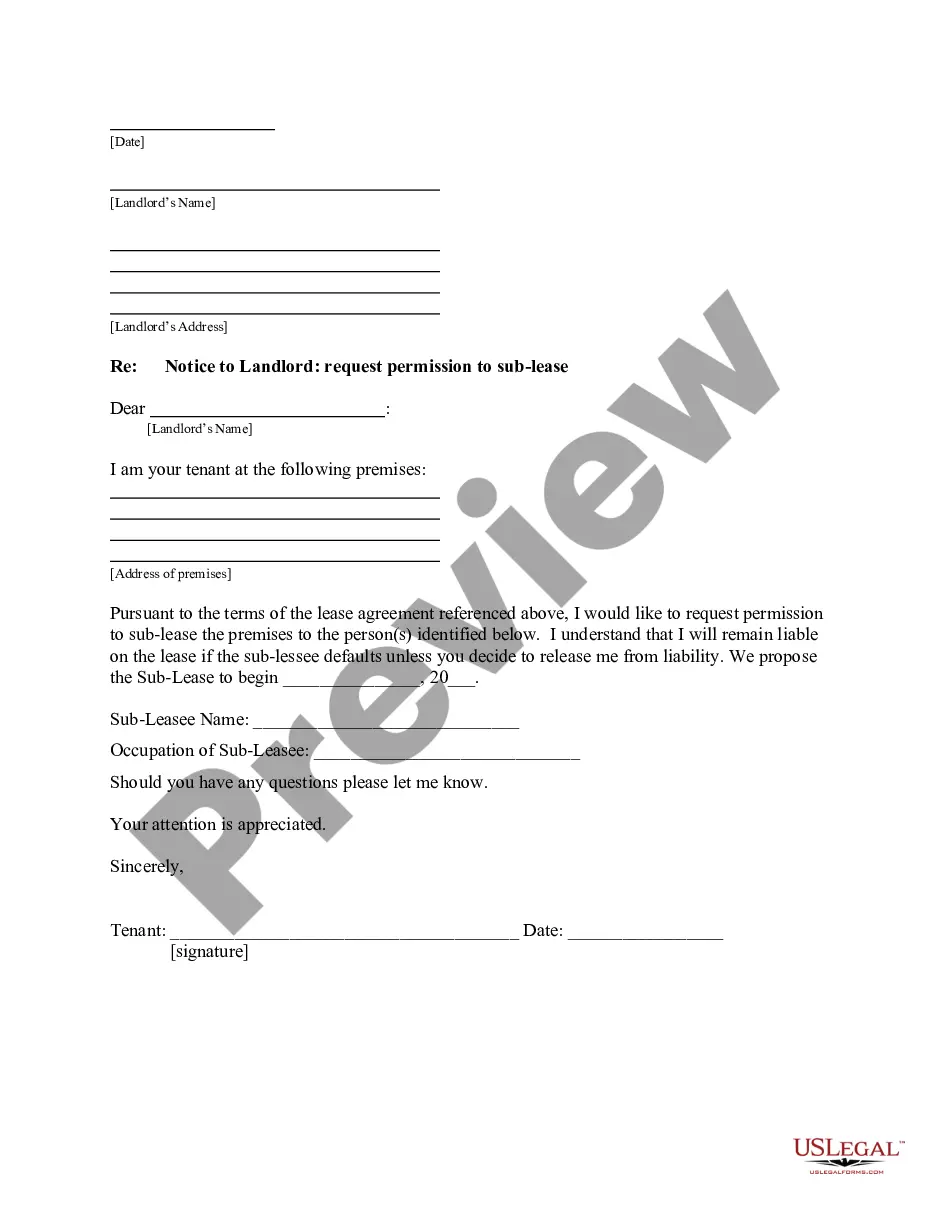
This form is a Letter from Tenant to Landlord containing a Request for Permission to Sublease. It allows a tenant to formally request the landlord's consent to sublet their rental space to another person. This form is essential for tenants who want to ensure they remain compliant with their lease terms while allowing others to occupy the property temporarily. The letter outlines that the tenant retains liability for the lease, even if the landlord accepts the subtenant.
Key components of this form
- Sub-Leasee Name: The name of the person who will rent the property from the tenant.
- Occupation of Sub-Leasee: The job or professional role of the proposed subtenant.
- Tenant's Signature: Acknowledgment of the request and the implications of subleasing.
- Date: The date when the letter is being sent to the landlord.
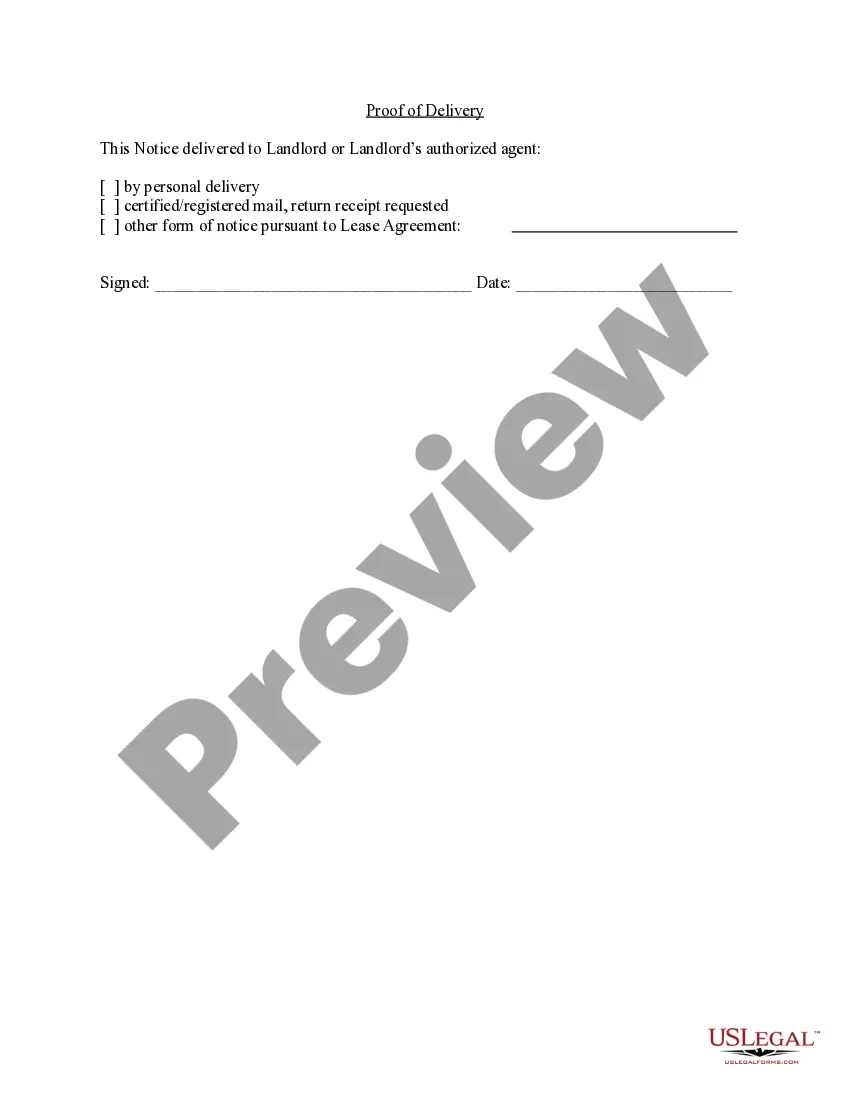
- Proof of Delivery: Confirmation that the notice was delivered to the landlord or their agent.
Situations where this form applies
This form should be used when a tenant wishes to sublease their rental property. It is applicable in situations where the tenant has found a suitable subtenant and seeks formal approval from the landlord to proceed legally. This request is usually necessary according to most rental agreements, which require tenants to obtain landlord consent before subletting.
Who can use this document
- Current tenants looking to sublease part or all of their rental unit.
- Tenants who need written permission from their landlord to comply with lease terms.
- Individuals seeking to ensure they remain liable for rent and damages when allowing another person to occupy the rented space.
Steps to complete this form
- Identify the sub-Leasee: Enter the full name of the person who will be subleasing the property.
- Provide occupation: Specify the job or profession of the sub-Leasee to give context to the landlord.
- Sign the letter: Ensure to sign the letter as the tenant to validate the request.
- Include the date: Clearly write the date on which you are submitting the request.
- Deliver the notice: Send the completed letter to the landlord or their authorized agent via a method that provides proof of delivery.
Notarization guidance
This form does not typically require notarization unless specified by local law. Always check local regulations to ensure compliance.
Get your form ready online
Our built-in tools help you complete, sign, share, and store your documents in one place.
Make edits, fill in missing information, and update formatting in US Legal Forms—just like you would in MS Word.
Download a copy, print it, send it by email, or mail it via USPS—whatever works best for your next step.
Sign and collect signatures with our SignNow integration. Send to multiple recipients, set reminders, and more. Go Premium to unlock E-Sign.
If this form requires notarization, complete it online through a secure video call—no need to meet a notary in person or wait for an appointment.
We protect your documents and personal data by following strict security and privacy standards.

Make edits, fill in missing information, and update formatting in US Legal Forms—just like you would in MS Word.

Download a copy, print it, send it by email, or mail it via USPS—whatever works best for your next step.

Sign and collect signatures with our SignNow integration. Send to multiple recipients, set reminders, and more. Go Premium to unlock E-Sign.

If this form requires notarization, complete it online through a secure video call—no need to meet a notary in person or wait for an appointment.

We protect your documents and personal data by following strict security and privacy standards.
Common mistakes
- Not providing complete information about the sub-Leasee.
- Failing to mention that the tenant will remain liable under the lease.
- Not delivering the request in a manner that provides proof.
- Ignoring state-specific laws and requirements regarding subleasing.
Benefits of using this form online
- Convenient access to legal templates, available for download anytime.
- Editable format allows for easy personalization to meet specific needs.
- Reliability, as forms are drafted by licensed attorneys to ensure legal compliance.
Looking for another form?


Form popularity
FAQ
Convincing your landlord to allow a sublet involves clear communication and reassurances. Highlight the credentials of your proposed subtenant, explain how you will handle the arrangement responsibly, and provide a completed Colorado Letter from Tenant to Landlord containing Request for permission to sublease. Building trust with your landlord can significantly impact their decision.
A sublease occurs when you rent your apartment or home to someone else while still maintaining responsibility to your landlord. For example, if you need to temporarily relocate for work, you might create a sublease agreement with a friend to take over your space. This process often requires a Colorado Letter from Tenant to Landlord containing Request for permission to sublease to keep everything transparent.
Yes, subleasing is generally allowed in Colorado, but it depends on your lease agreement. Most leases require tenants to get permission from the landlord before subleasing. You can clarify your rights and obligations by reviewing your lease and considering sending a Colorado Letter from Tenant to Landlord containing Request for permission to sublease.
To ask your landlord for permission, it's best to write a formal request. You can use a Colorado Letter from Tenant to Landlord containing Request for permission to sublease. This letter should clearly state your intentions, provide details about the potential subtenant, and assure your landlord that you will remain responsible for the lease terms.
An example of consent to a sublease could be a landlord's signed document stating, 'I give my consent for my tenant to sublease the apartment to a new tenant for the duration of the original lease.' This clear expression of agreement helps protect both the landlord and tenant. To formalize such requests, a Colorado Letter from Tenant to Landlord containing Request for permission to sublease is highly recommended.
To write a sublease agreement, make sure to include essential information, such as names of all parties, property address, and duration of the sublease. Clarify payment terms and any responsibilities for maintenance and utilities. It may also be beneficial to reference any pertinent lease agreements and ensure compliance with state regulations. A template or guidance from platforms like UsLegalForms can simplify this process.
Writing a sublease letter requires clarity and structure. Begin with your intent to sublease and provide details about the original lease and the subtenant. Remember to mention the necessity of obtaining permission from the landlord, often conveyed through a Colorado Letter from Tenant to Landlord containing Request for permission to sublease. Following these guidelines will help facilitate a smooth subleasing process.
To write a letter granting permission to a tenant, start with a clear subject line and greet the tenant by name. Then, specify the details of the permission, including any conditions or requirements. Utilizing a straightforward format will ensure clarity. Consider the legal aspects by reviewing the requirements in a Colorado Letter from Tenant to Landlord containing Request for permission to sublease when drafting your letter.
An example sentence for sublease could be, 'I am seeking a sublease for my apartment while I travel for the summer.' This statement makes it clear that the tenant is looking for temporary arrangements. For formal requests, using a Colorado Letter from Tenant to Landlord containing Request for permission to sublease can be particularly helpful.
A consent to sublease is a formal agreement from a landlord permitting a tenant to rent out their leased property to another individual. This consent often requires the tenant to provide certain information about the subtenant. Utilizing a Colorado Letter from Tenant to Landlord containing Request for permission to sublease helps clearly outline this request and helps avoid misunderstandings.