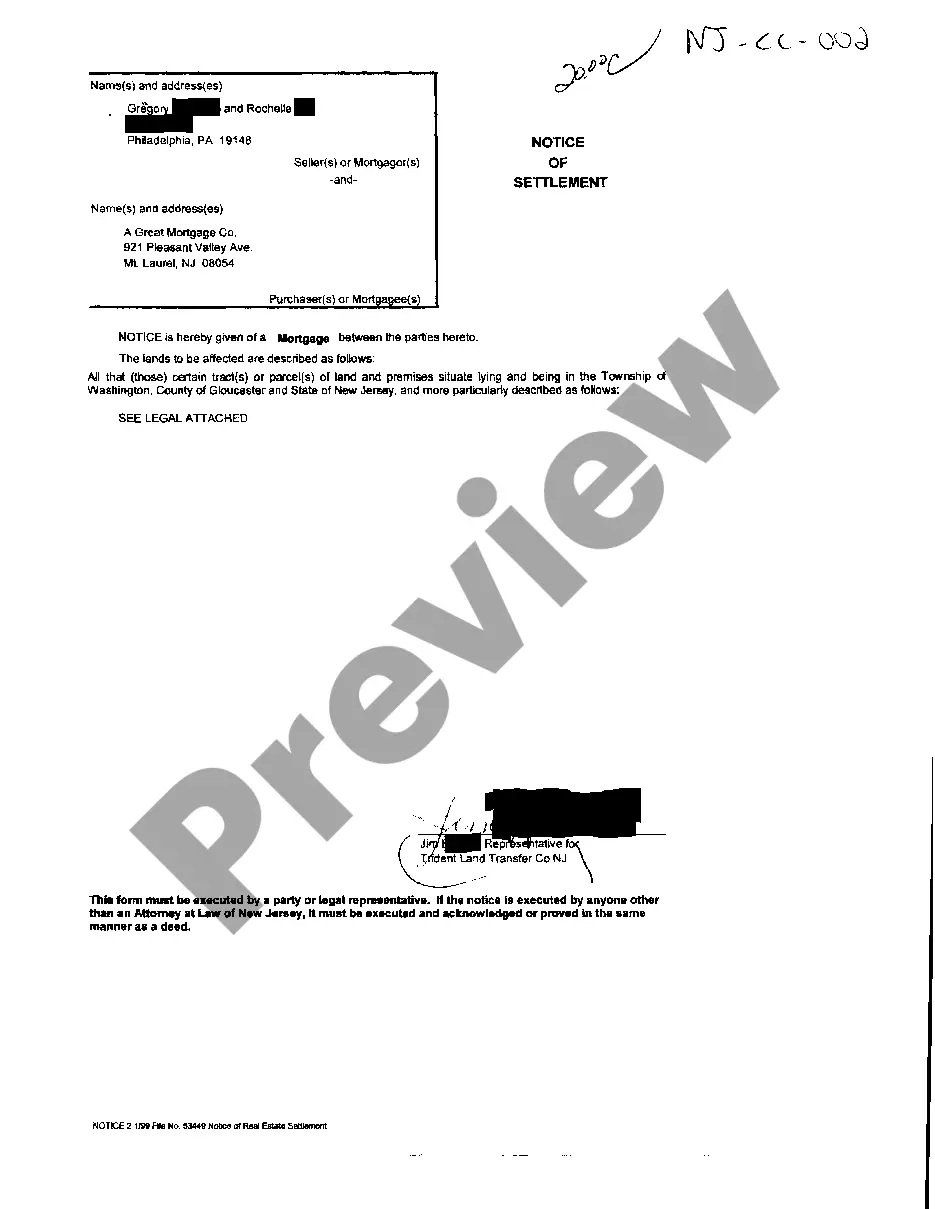
Colorado General Warranty Deed from Two Individuals / Husband and Wife to an Individual
Understanding this form
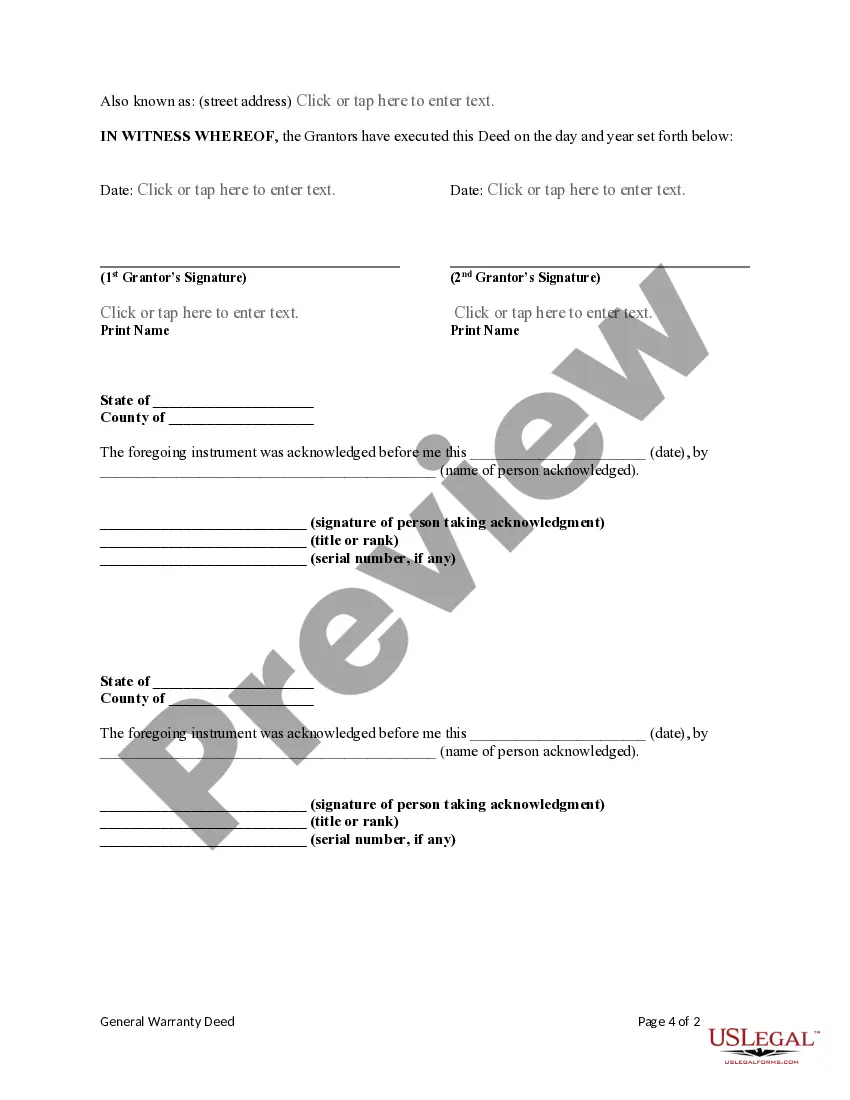
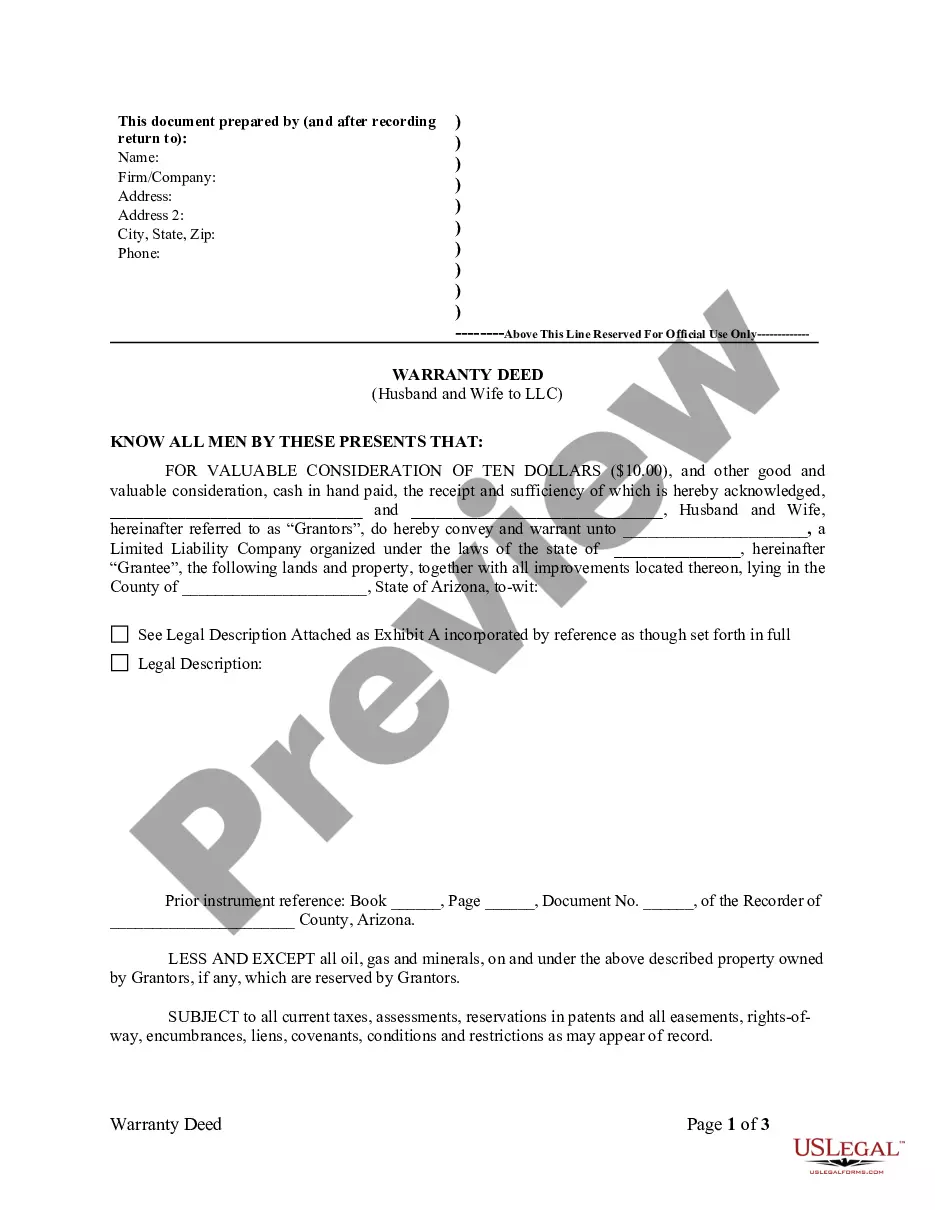
The General Warranty Deed from Two Individuals / Husband and Wife to an Individual is a legal document that allows a couple or two individuals (the Grantors) to transfer ownership of property to another individual (the Grantee). This form provides a comprehensive warranty that assures the Grantee of clear title to the property, meaning the property is free from claims or liens. This document is crucial for ensuring that the transfer of property is legally recognized and protects the Grantee's interests in the property.
Main sections of this form
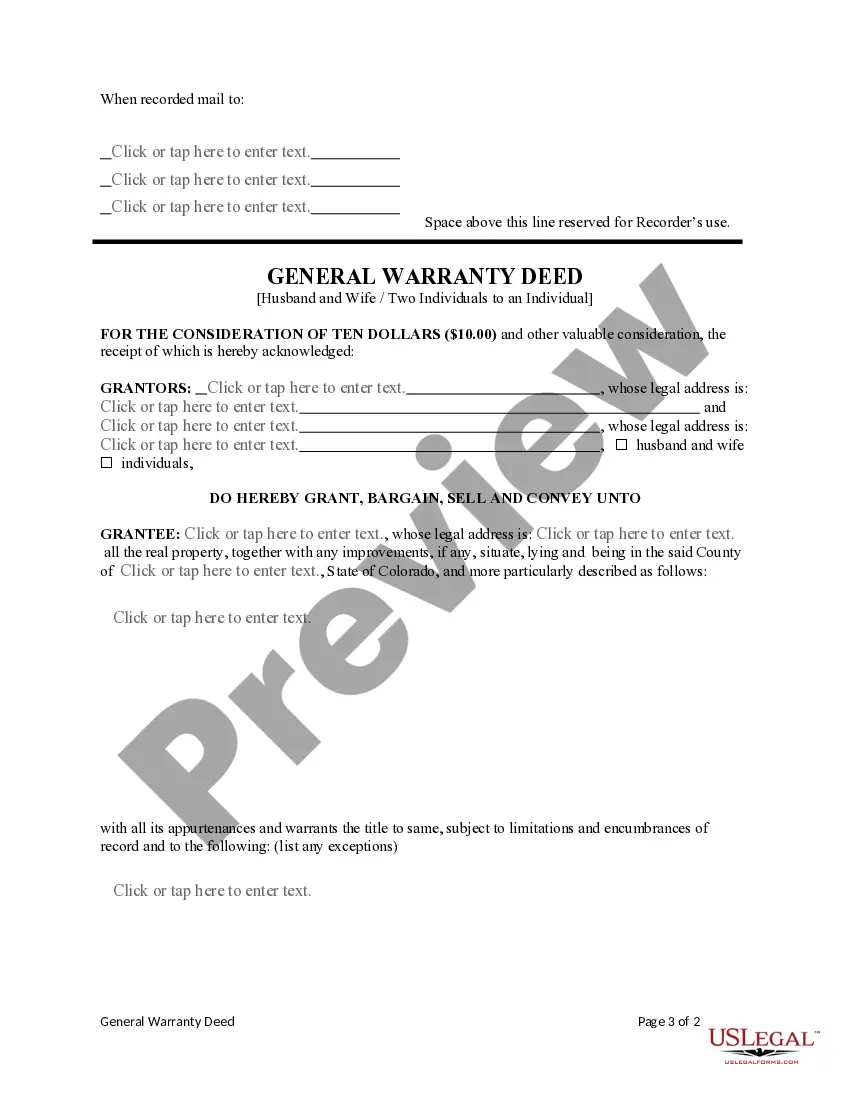
- Identification of Grantors: Details of the couple or two individuals transferring the property.
- Identification of Grantee: Information about the individual receiving the property.
- Description of Property: A clear statement detailing the property being transferred.
- Warranties: Clauses that affirm the Grantors' guarantee of ownership and freedom from disputes.
- Signatures: Spaces for all parties to sign, validating the document.




Situations where this form applies
This form is typically used when a married couple or two individuals wish to transfer their ownership of a property to another individual. This may occur in various situations including sales, gifts, or other transfers of property rights. The General Warranty Deed is necessary when the Grantors want to provide assurances to the Grantee about the title and legal standing of the property involved.
Who this form is for
This form is intended for:
- Married couples who wish to transfer property ownership.
- Two individuals who jointly own a property and want to convey it to another person.
- Individuals looking to ensure a legally binding transfer of property with warranties in place.
How to prepare this document
- Identify the parties: Enter the names and addresses of the Grantors and the Grantee.
- Specify the property: Clearly describe the property being transferred, including its legal description.
- Include warranties: Input any warranties or guarantees provided by the Grantors regarding the property title.
- Sign the document: Both Grantors must sign the form in the designated areas.
- Date the document: Include the date of the transfer to validate the deed.
Notarization guidance
Notarization is required for this form to take effect. Our online notarization service, powered by Notarize, lets you verify and sign documents remotely through an encrypted video session, available 24/7.
Get your form ready online
Our built-in tools help you complete, sign, share, and store your documents in one place.
Make edits, fill in missing information, and update formatting in US Legal Forms—just like you would in MS Word.
Download a copy, print it, send it by email, or mail it via USPS—whatever works best for your next step.
Sign and collect signatures with our SignNow integration. Send to multiple recipients, set reminders, and more. Go Premium to unlock E-Sign.
If this form requires notarization, complete it online through a secure video call—no need to meet a notary in person or wait for an appointment.
We protect your documents and personal data by following strict security and privacy standards.

Make edits, fill in missing information, and update formatting in US Legal Forms—just like you would in MS Word.

Download a copy, print it, send it by email, or mail it via USPS—whatever works best for your next step.

Sign and collect signatures with our SignNow integration. Send to multiple recipients, set reminders, and more. Go Premium to unlock E-Sign.

If this form requires notarization, complete it online through a secure video call—no need to meet a notary in person or wait for an appointment.

We protect your documents and personal data by following strict security and privacy standards.
Common mistakes
- Failing to properly notarize the document when required by local laws.
- Inaccurate property descriptions, leading to potential disputes over ownership.
- Not obtaining necessary approvals or signatures from all Grantors.
- Leaving out critical warranty clauses that protect the Grantee.
Benefits of using this form online
- Convenience: The form can be completed from home at any time.
- Editability: Easily fill out and modify the form as necessary before finalizing.
- Reliability: Generated by licensed attorneys and up-to-date with current law.
Legal use & context
- Securely transfers property ownership with legal warranties.
- Used in various real estate transactions to protect both parties.
- Documentation must comply with local regulations to be enforceable.
Key takeaways
- A General Warranty Deed is essential for transferring property from two individuals to one.
- Ensure all descriptions and warranties are accurate to avoid future disputes.
- Consult local laws to understand any unique requirements related to property transfers in your area.
Looking for another form?





Form popularity
FAQ
Transferring a warranty deed requires careful steps to ensure the transfer is valid and recognized. Begin by obtaining a Colorado General Warranty Deed from Two Individuals / Husband and Wife to an Individual form, filling it out with the necessary information. Both parties must sign the deed in the presence of a notary. Once completed, present the document to the appropriate county office for recording to finalize the transfer.
To transfer a property title to a family member in Colorado, use a Colorado General Warranty Deed from Two Individuals / Husband and Wife to an Individual. Firstly, ensure you have the property’s details, including its legal description. Next, complete the warranty deed form accurately and have it signed and notarized by both parties. Finally, file the completed deed with the county clerk and recorder to make the transfer official.
When two people are on the deed, both parties generally share ownership rights to the property. This can affect decisions regarding selling, improving, or renting out the home since both owners must usually agree on any changes. In the event of a dispute or one owner's passing, the terms of the deed and state laws will guide the next steps, which is why understanding your deed type is crucial.
Yes, you can have two names on a deed. This is common in situations such as spouses owning property together, particularly in a Colorado General Warranty Deed from Two Individuals / Husband and Wife to an Individual. Having two names on the deed clarifies ownership rights and can simplify transferring the property in the future.
Filling out a general warranty deed involves several key steps, ensuring that all required information is accurately included. Start with the names of the current owners and the new owner, then provide a legal description of the property. It's also essential to include the date of the transfer and have both parties sign the document in front of a notary public to make it legally binding.
Yes, you can add a name to a warranty deed, but the process requires proper documentation and legal procedures. If a property is currently held as a Colorado General Warranty Deed from Two Individuals / Husband and Wife to an Individual, both original owners must consent to the change. Typically, this is done through a new deed that reflects the updated ownership information.
A joint warranty deed is a legal document used to transfer property ownership from two individuals, such as a husband and wife, to one person. This type of deed offers protection to the new owner, ensuring that the transfer comes with a guarantee against any claims on the property. It is crucial when transferring property to ensure that the new owner has full rights and a clear title.
In Texas, it is not necessary to have a lawyer to transfer a deed, but it is strongly recommended. Understanding the implications of a deed transfer, such as a Colorado General Warranty Deed from Two Individuals / Husband and Wife to an Individual, can be complex. Consulting with legal professionals can help protect your interests and ensure all legal requirements are met.
To add a spouse to a deed in Colorado, you'll need to prepare a new deed that includes both names. A Colorado General Warranty Deed from Two Individuals / Husband and Wife to an Individual serves this purpose well. After signing the new deed, make sure to file it with the county clerk and recorder's office to ensure it is legally recognized.
Yes, a warranty deed can be transferred. This requires the current owner to execute a new deed, such as a Colorado General Warranty Deed from Two Individuals / Husband and Wife to an Individual. It is essential to follow your state's recording requirements to ensure the transfer is valid and publicly recognized.