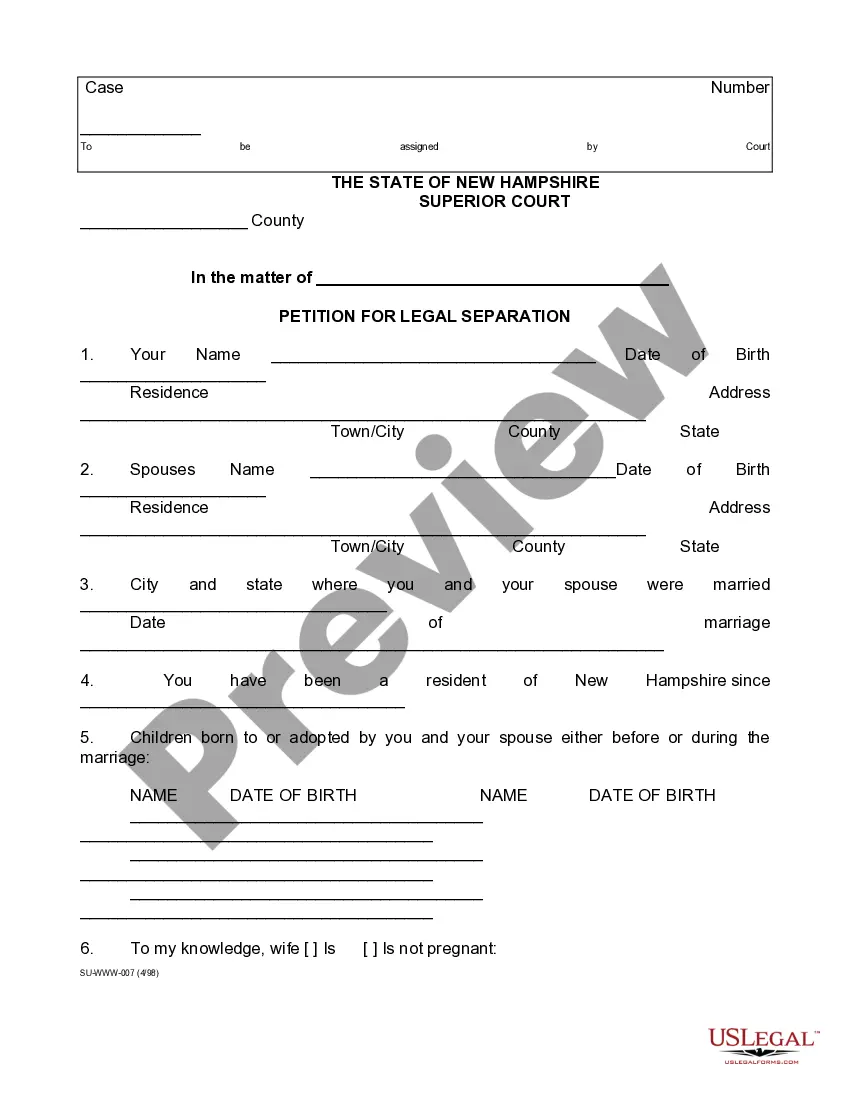
California Last Will for a Widow or Widower with no Children
What is this form?
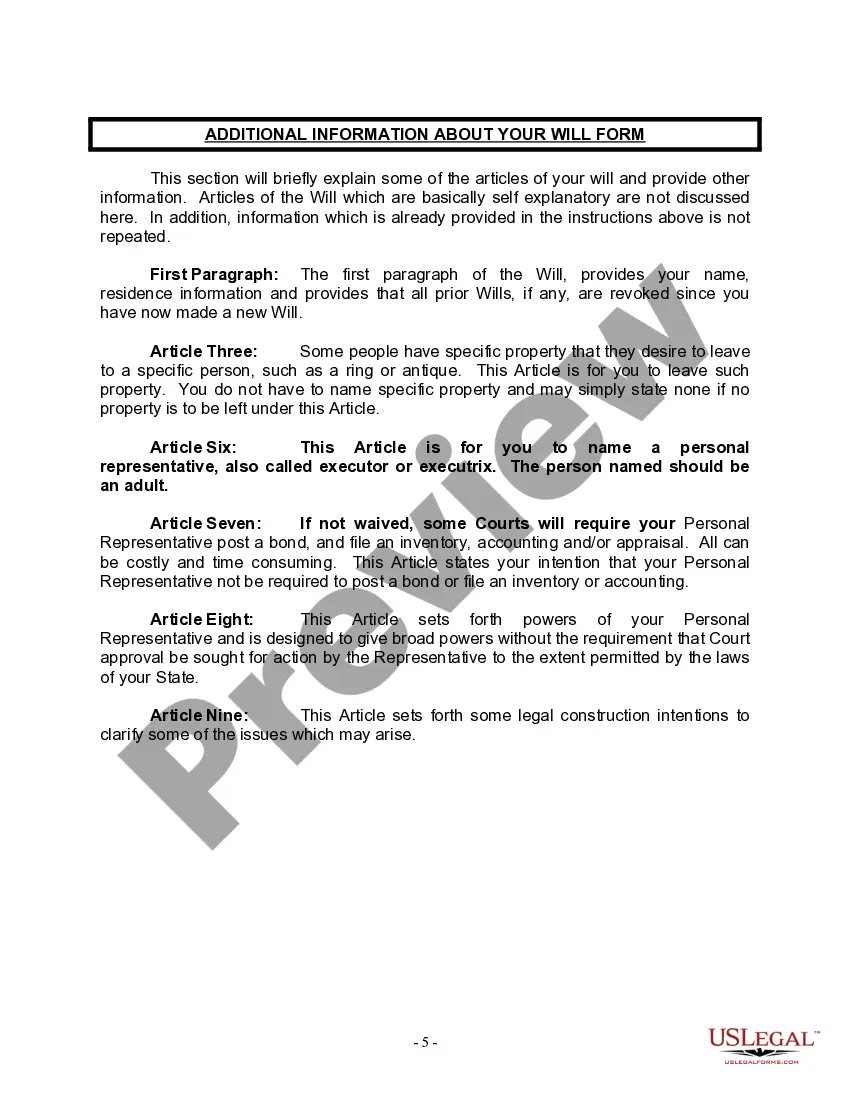
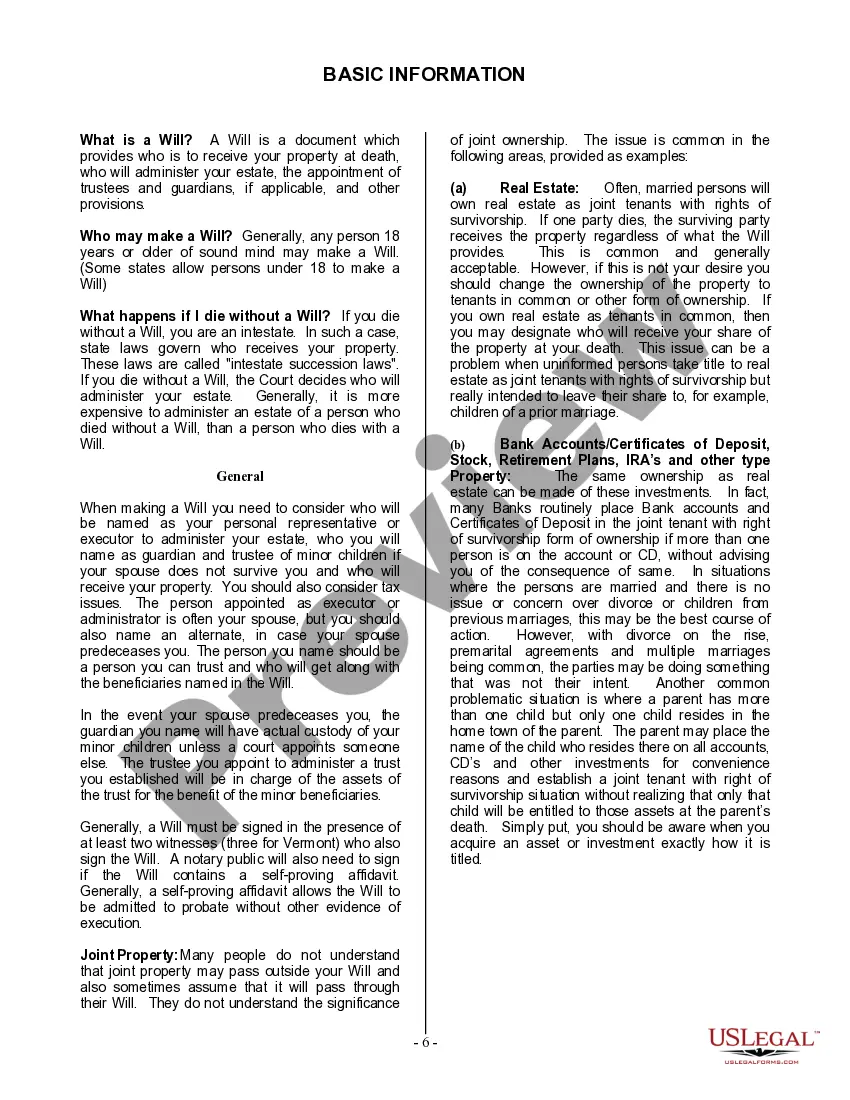
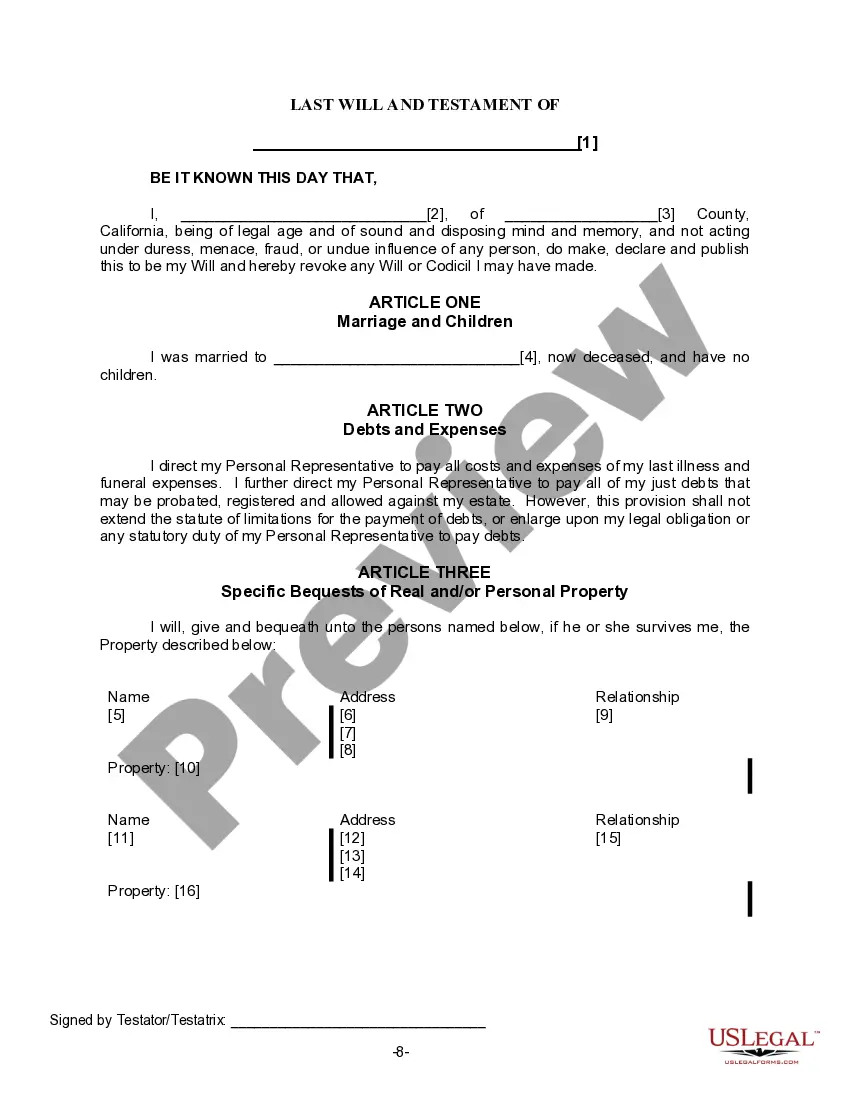
This Last Will for a Widow or Widower with No Children is a legal document that outlines how your assets will be distributed after your death. Designed specifically for individuals who are widowed and do not have children, this form allows you to appoint a personal representative, designate beneficiaries for your property, and set forth any additional wishes you may have. Unlike general wills, this form caters to your unique situation, ensuring that your estate is managed according to your specific preferences.
Form components explained
- Personal information: Your name and county of residence.
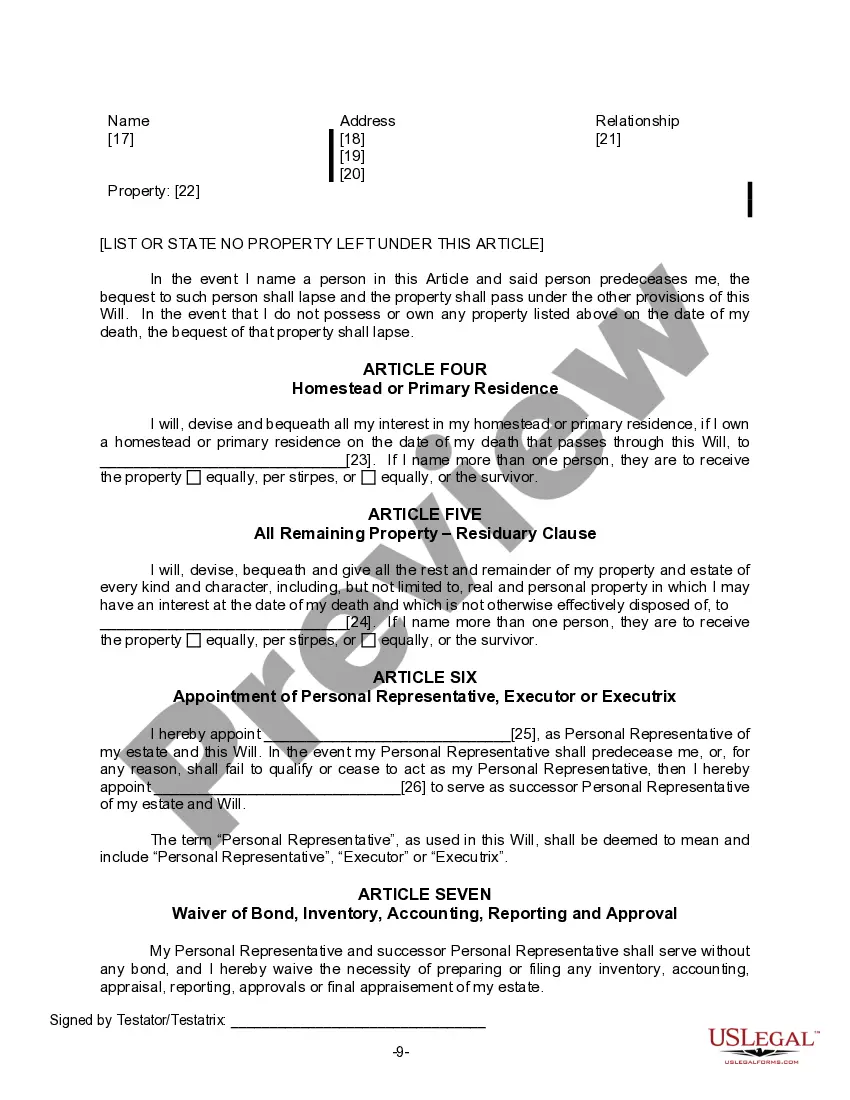
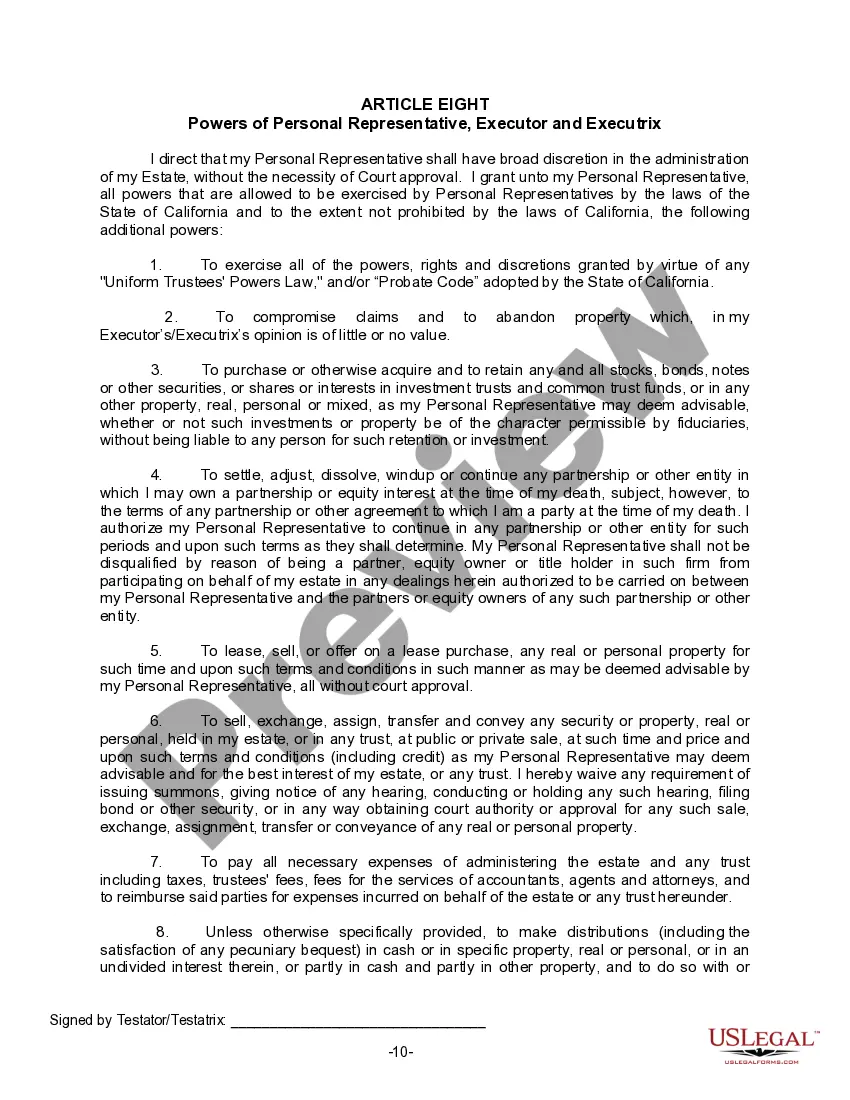
- Appointment of representative: Designation of a personal representative to manage your estate.
- Specific bequests: Instructions for distributing specific items to named beneficiaries.
- Homestead distribution: Designation of who will receive your primary residence.
- Residuary clause: Instructions for distributing all remaining property not specifically bequeathed.
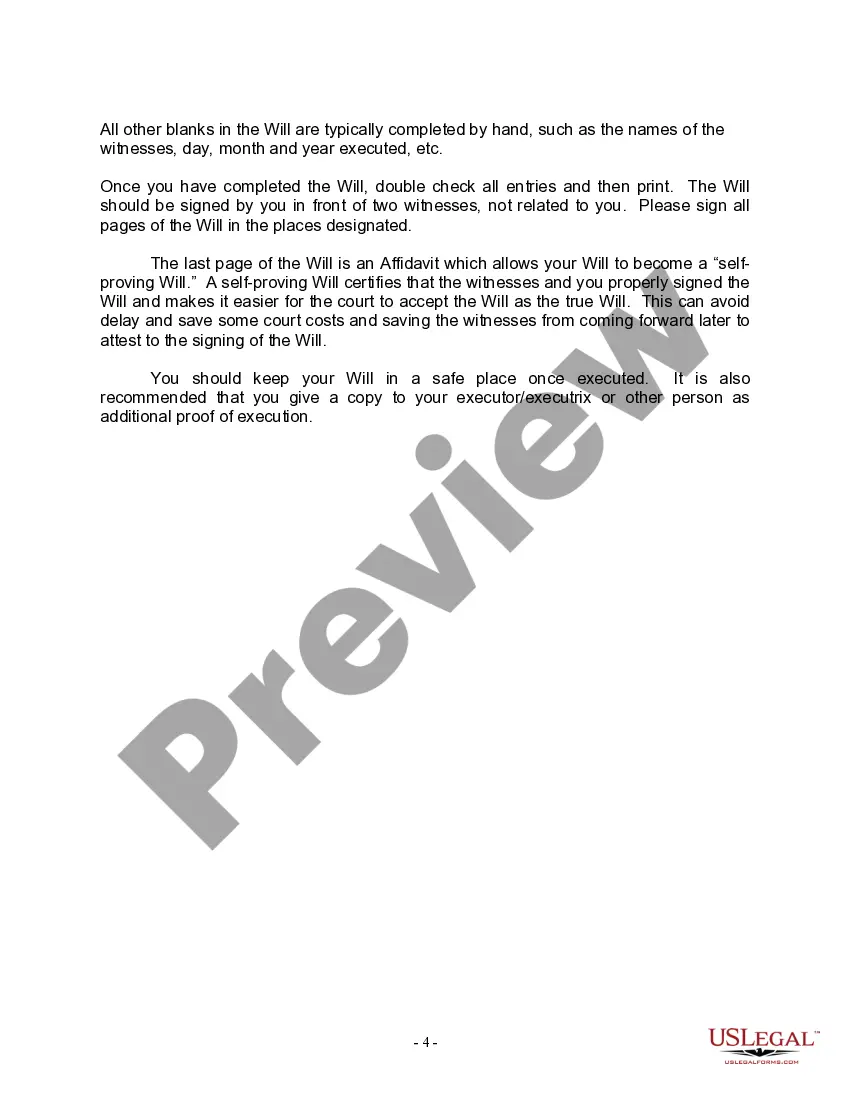
- Witness requirements: Specification of signing in front of two witnesses to validate the will.



Situations where this form applies
This form should be used when a widow or widower without children wants to clearly outline their final wishes regarding the distribution of their property and assets after their death. It is essential in situations where a person has specific property they wish to leave to others or when they simply want to ensure their wishes are documented to avoid confusion or legal disputes in the future.
Who needs this form
- Individuals who have recently lost their spouse and are without children.
- Widows or widowers wishing to clarify the inheritance of their property.
- Those wanting to appoint a trusted friend or relative as a personal representative.
- People seeking to make their estate plans simpler and reduce potential family disputes.
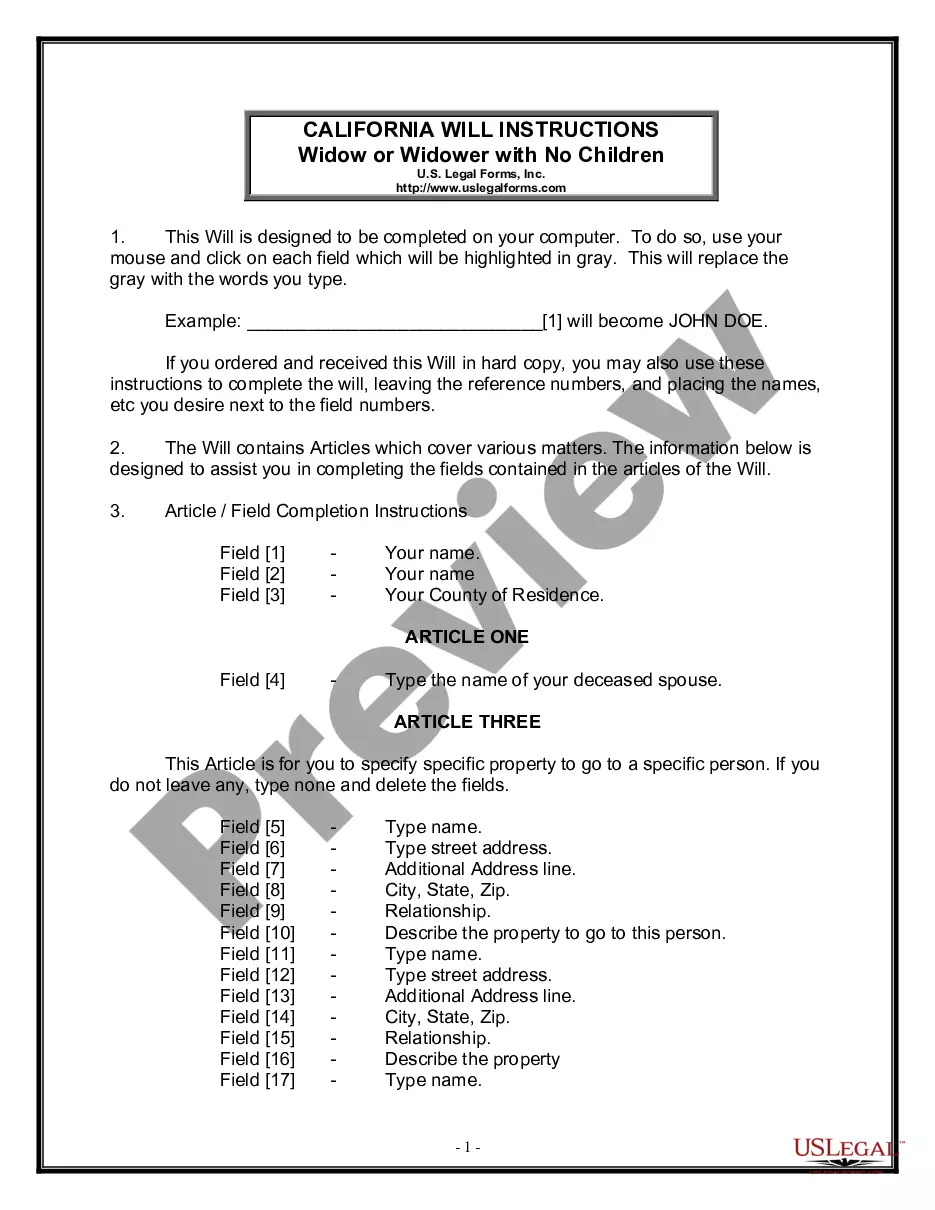
Instructions for completing this form
- Enter your name and county of residence in the designated fields.
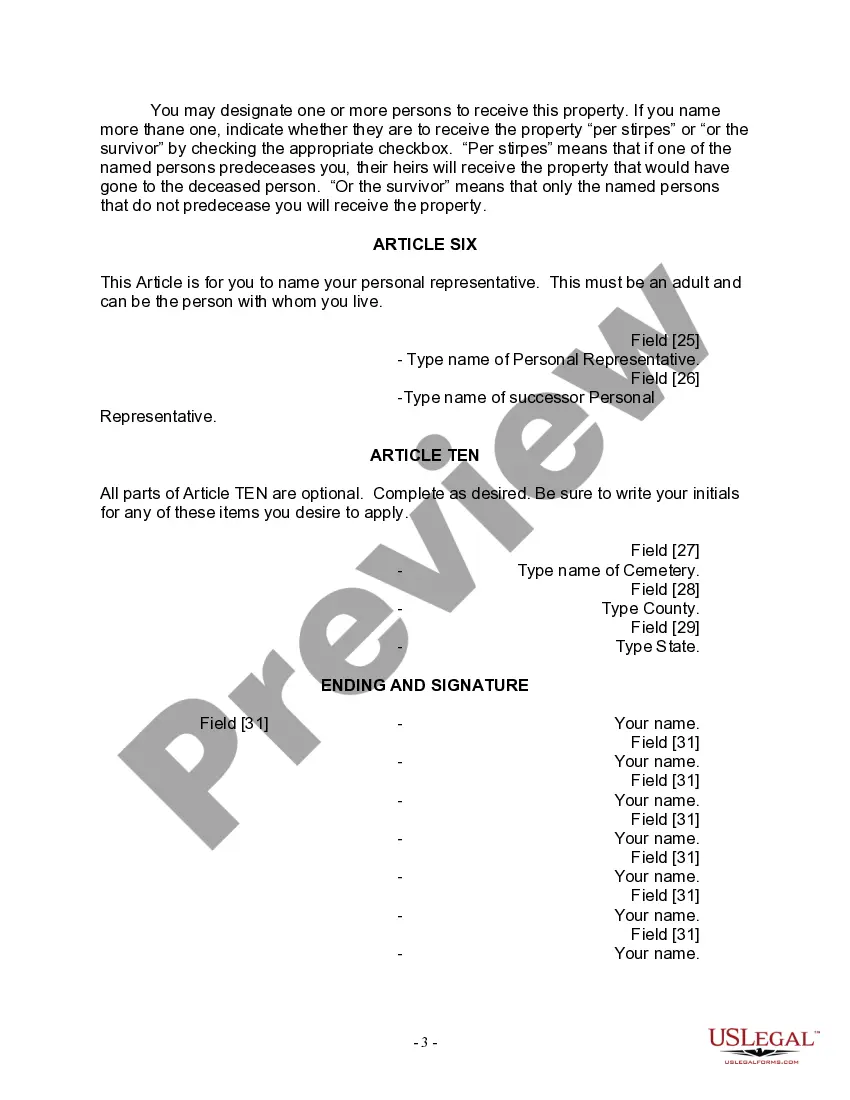
- Designate your personal representative and any successor representatives.
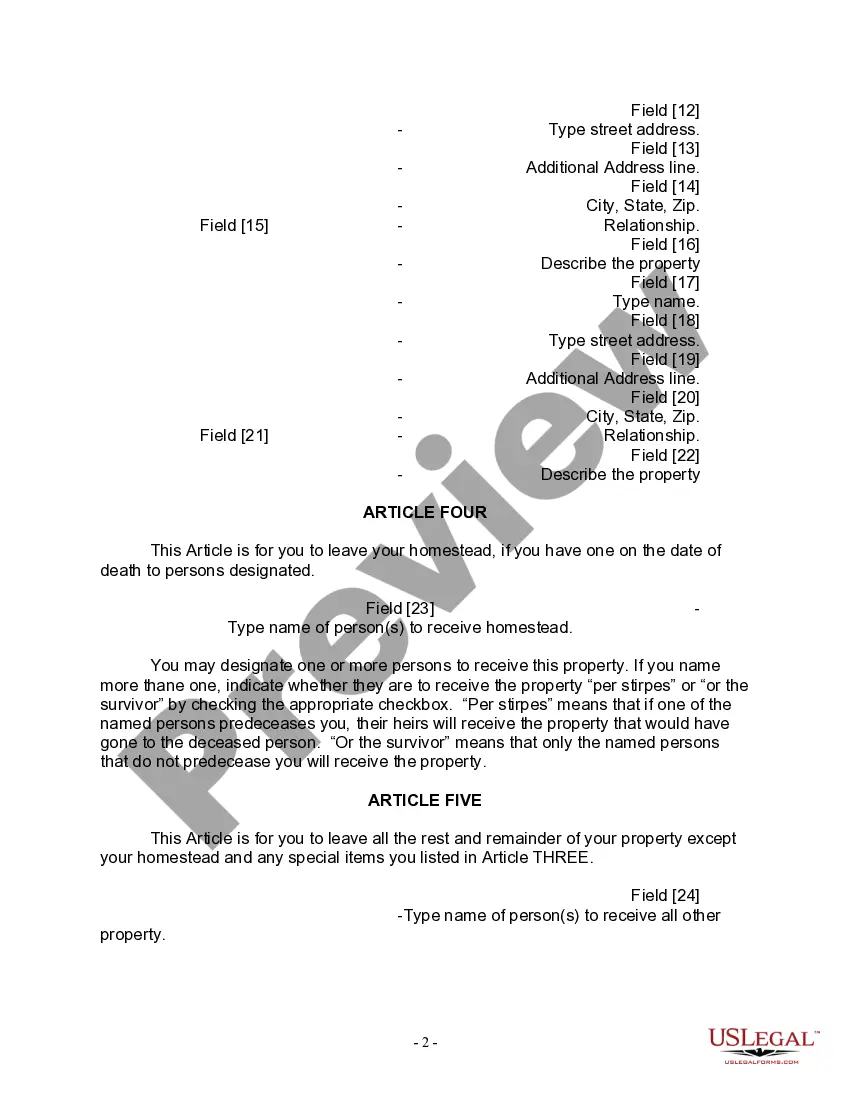
- Specify any specific items you wish to bequeath and their intended recipients.
- Indicate who will receive your homestead and any remaining property.
- Ensure you sign the will in the presence of two witnesses who are not beneficiaries.
Does this form need to be notarized?
Notarization is required for this form to take effect. Our online notarization service, powered by Notarize, lets you verify and sign documents remotely through an encrypted video session, available 24/7.
Get your form ready online
Our built-in tools help you complete, sign, share, and store your documents in one place.
Make edits, fill in missing information, and update formatting in US Legal Forms—just like you would in MS Word.
Download a copy, print it, send it by email, or mail it via USPS—whatever works best for your next step.
Sign and collect signatures with our SignNow integration. Send to multiple recipients, set reminders, and more. Go Premium to unlock E-Sign.
If this form requires notarization, complete it online through a secure video call—no need to meet a notary in person or wait for an appointment.
We protect your documents and personal data by following strict security and privacy standards.

Make edits, fill in missing information, and update formatting in US Legal Forms—just like you would in MS Word.

Download a copy, print it, send it by email, or mail it via USPS—whatever works best for your next step.

Sign and collect signatures with our SignNow integration. Send to multiple recipients, set reminders, and more. Go Premium to unlock E-Sign.

If this form requires notarization, complete it online through a secure video call—no need to meet a notary in person or wait for an appointment.

We protect your documents and personal data by following strict security and privacy standards.
Avoid these common issues
- Failing to sign the will in front of the required number of witnesses.
- Not designating a personal representative, leading to confusion in estate management.
- Leaving ambiguous language about property distribution, which can lead to disputes.
- Not updating the will after significant life changes or property acquisitions.
Advantages of online completion
- Convenient access: Download and complete the form from your home.
- Editability: Customize the will to reflect your specific wishes easily.
- Legal certainty: Ensure your will is drafted in compliance with applicable laws.
- Time-saving: Quickly create a legally binding document without the need for in-person appointments.
Key takeaways
- This form is specifically for widows or widowers without children.
- It's essential to review and ensure the form meets your state's legal requirements.
- Clear communication of your wishes can prevent disputes among beneficiaries.
- The process of creating and executing your will can be done online for convenience.
Looking for another form?
Form popularity
FAQ
If you find yourself in the situation of having no family, you can consider leaving your estate to close friends, charities, or organizations that hold personal significance for you. A California Last Will for a Widow or Widower with no Children enables you to express your wishes clearly, ensuring your assets go to those you care about. It is wise to think about the legacy you want to leave behind and how it aligns with your values. With the assistance of USLegalForms, you can create a thoughtful will that reflects your desires.
One of the most significant mistakes regarding California Last Will for a Widow or Widower with no Children is neglecting to update your will after major life events. For instance, if you experience changes in relationships or if your assets grow, it is essential to revise your will accordingly. Failure to do so can lead to unintended beneficiaries receiving your estate. Using platforms like USLegalForms can help you create an updated will that reflects your current intentions.
While a surviving spouse has significant rights to inheritance in California, they do not automatically inherit everything. If a valid California Last Will for a Widow or Widower with no Children exists, its terms will determine the distribution of assets. If there is no will, California law may provide rules that differ depending on the deceased’s family situation. Engaging with platforms like uslegalforms can help you navigate these complexities and establish a will that reflects your intentions.
When a husband dies, the distribution of his estate is influenced by various factors. If he had a valid California Last Will for a Widow or Widower with no Children, the terms of the will dictate the distribution of assets. In the absence of a will, the spouse may not automatically receive everything, especially if there are children or other beneficiaries involved. Therefore, creating a clear and concise will can prevent confusion and ensure fair distribution.
In California, a spouse does not automatically receive everything after their partner's death. The distribution of assets may depend on whether a valid California Last Will for a Widow or Widower with no Children exists. If there is no will, the state’s intestacy laws will apply, which can result in a different outcome. It is essential to understand your rights and consider creating a will to ensure your wishes are honored.
Generally, to be valid in California, the document must be in writing and signed by the testator, or the person making the document, and two witnesses. A last will and testament is a legal instrument that allows you to distribute property after your death to the people and organizations of your choosing.
It must be in writing. Generally, of course, wills are composed on a computer and printed out. The person who made it must have signed and dated it. A will must be signed and dated by the person who made it. Two adult witnesses must have signed it. Witnesses are crucial.
Notarization is not required in California to make your will legal.As long as you sign and witness your will correctly, your will does not have to be proved to the probate court, and there's no need to make a self-proving affidavit.
A handwritten will is also known as a holographic will in California. Under California Probate Code Section 6111, a handwritten will may be valid in California if the signature and material provisions of the will are in the handwriting of the person making the will.
A handwritten will is also known as a holographic will in California. Under California Probate Code Section 6111, a handwritten will may be valid in California if the signature and material provisions of the will are in the handwriting of the person making the will.