California Assignment of Lease and Rent from Borrower to Lender
Understanding this form
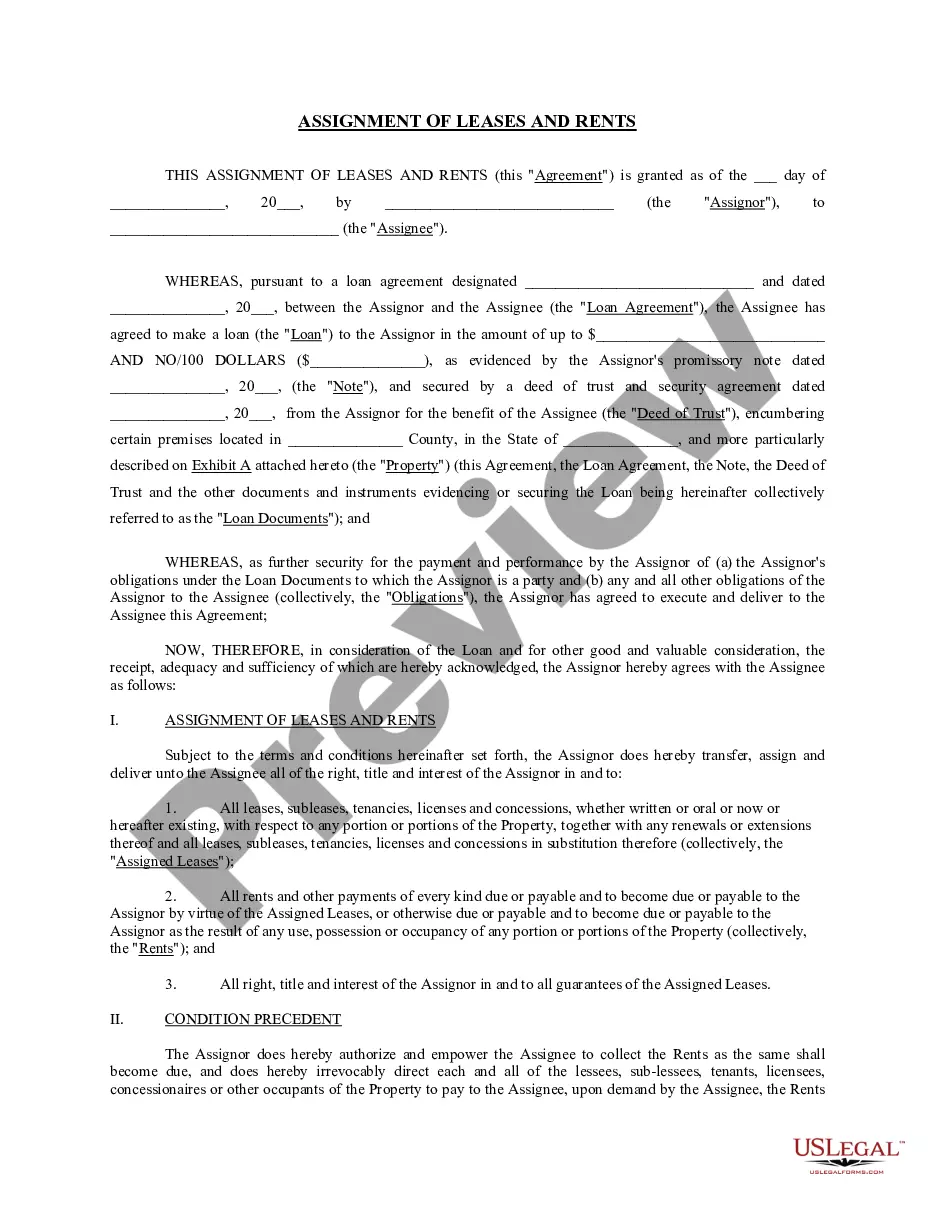
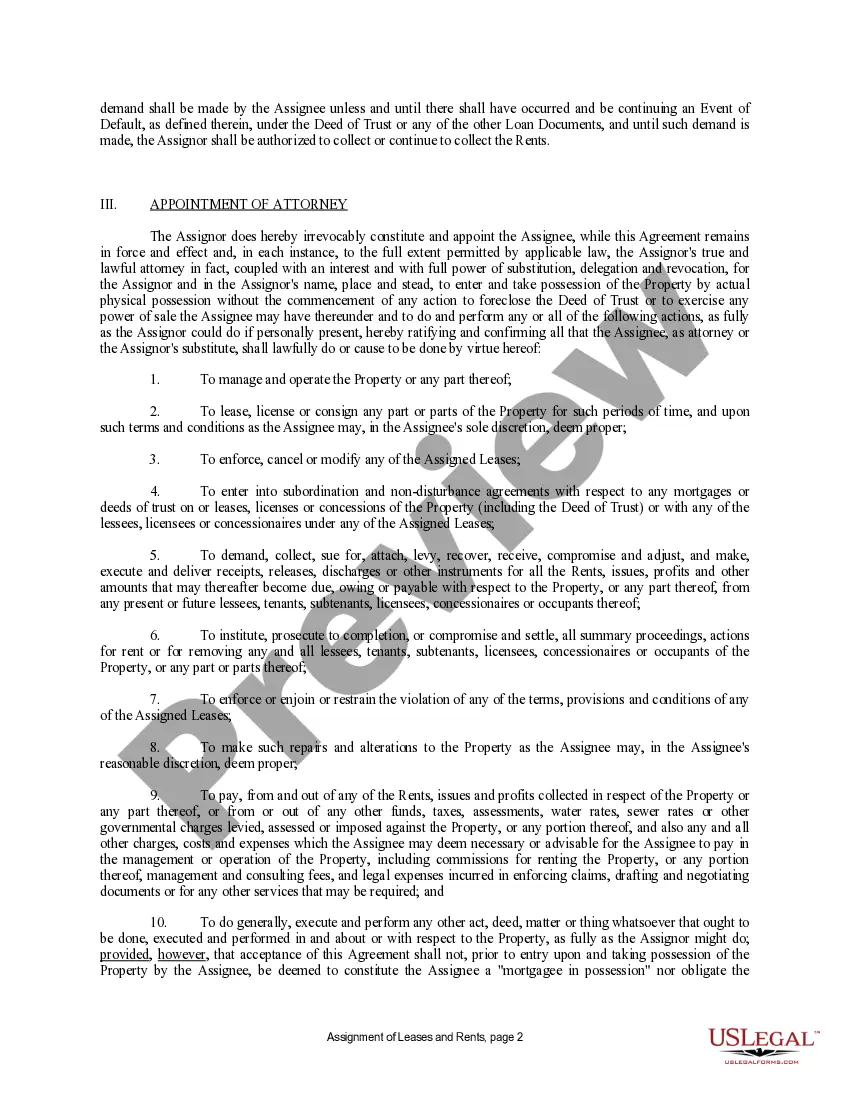
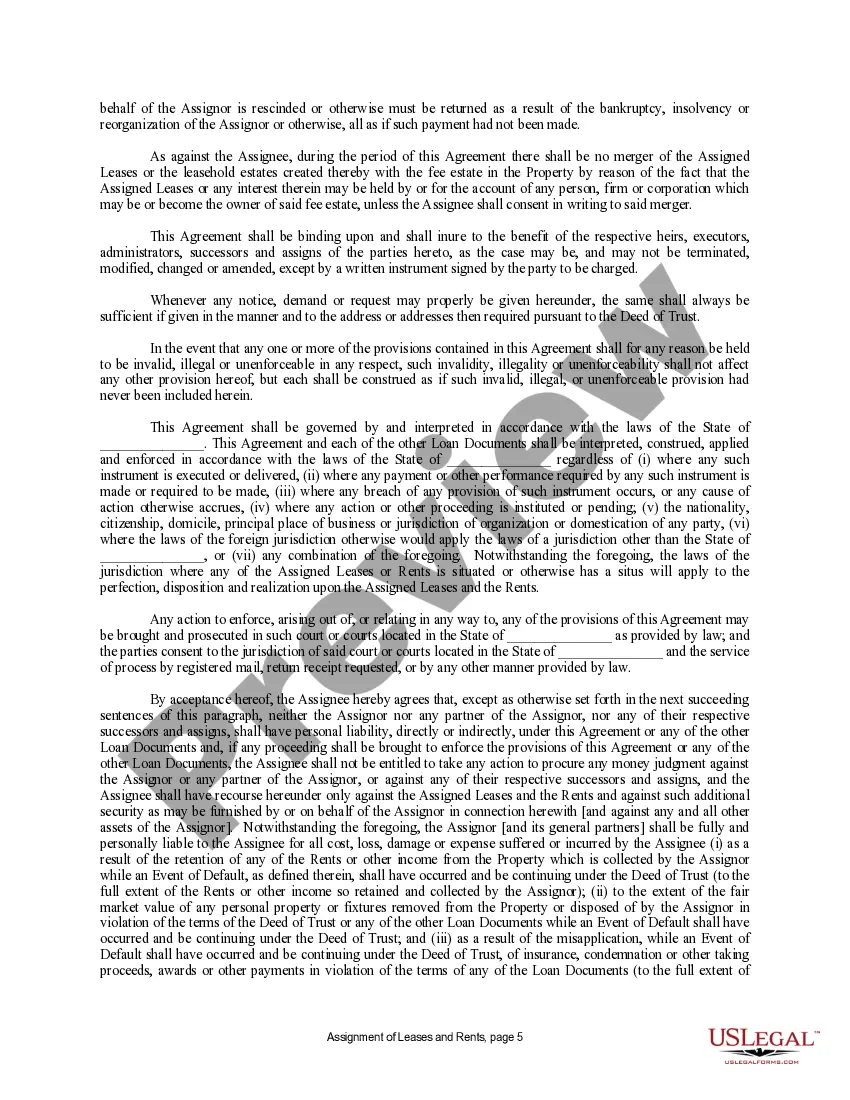
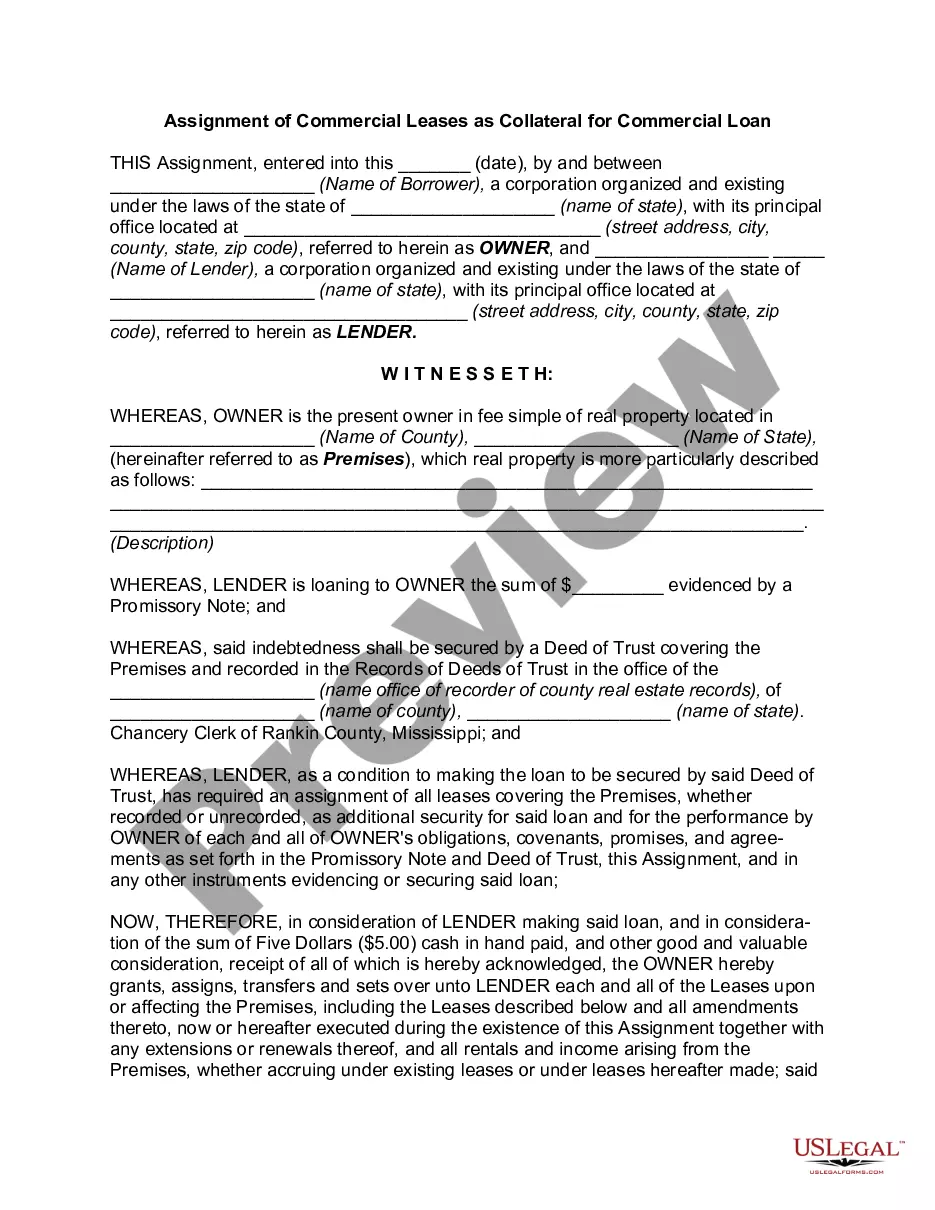
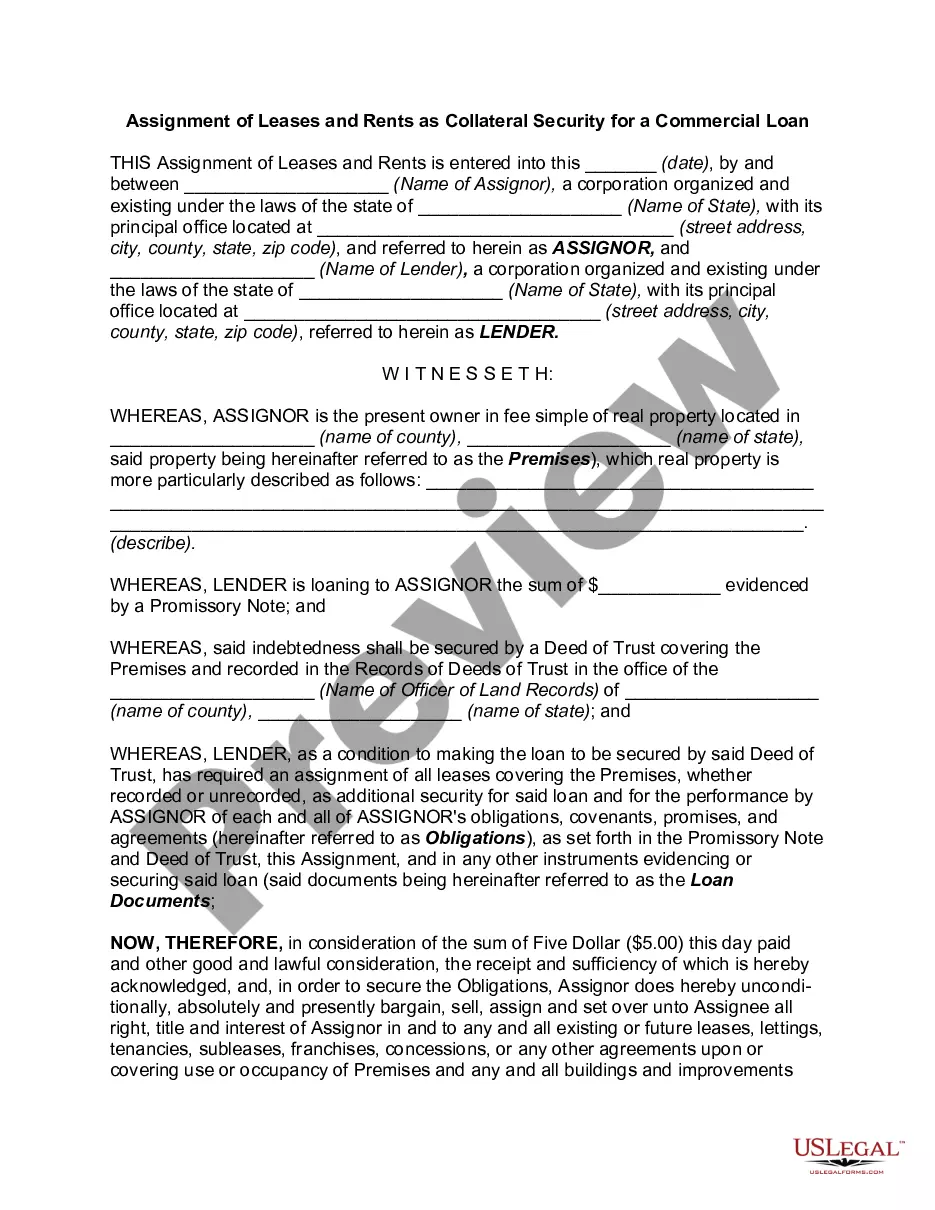
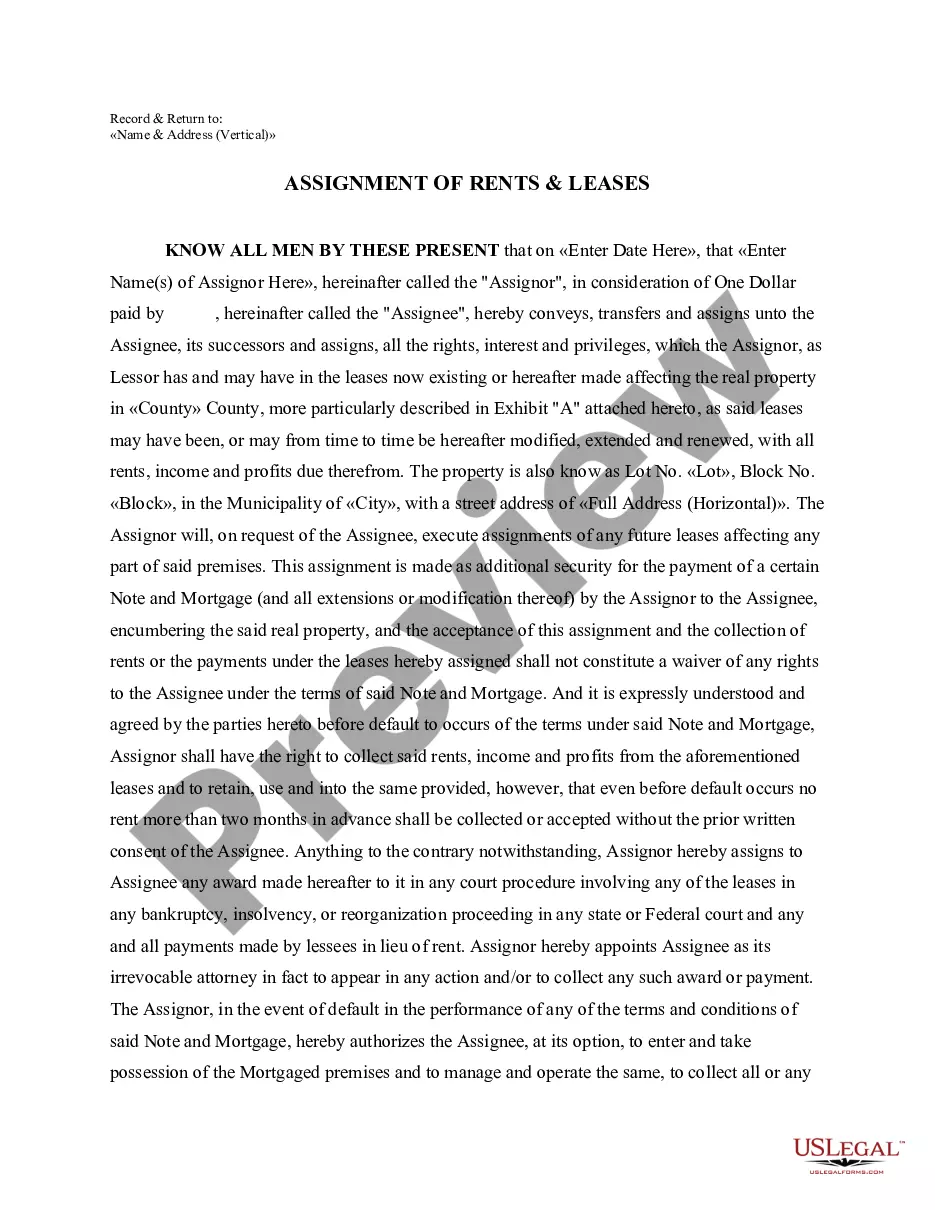
The Assignment of Lease and Rent from Borrower to Lender is a legal document that allows a borrower (the Assignor) to assign their leases and rental income to a lender (the Assignee) as collateral for a loan. This agreement is essential for borrowers who need to secure a loan using their rental properties, differentiating it from other property transfer agreements as it explicitly involves the transfer of rights to collect rental income rather than the property itself.
Key components of this form
- Identifying information for the Assignor and Assignee, including full names and addresses.
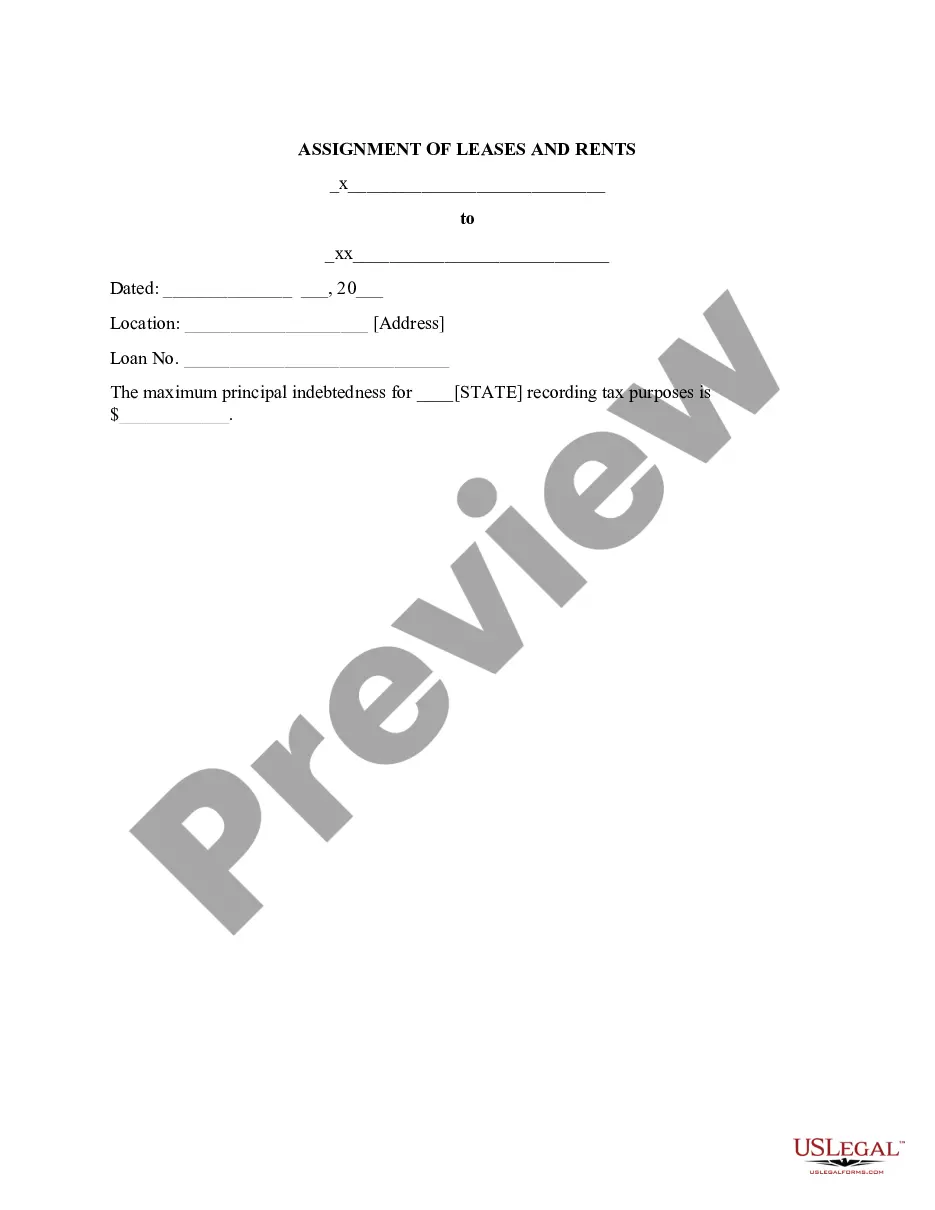
- Details of the loan agreement, including the loan amount and securing documents.
- Transfer of rights to all leases, rentals, and any guarantees related to the property.
- Authorized actions that the Assignee can take concerning the collection of rents.
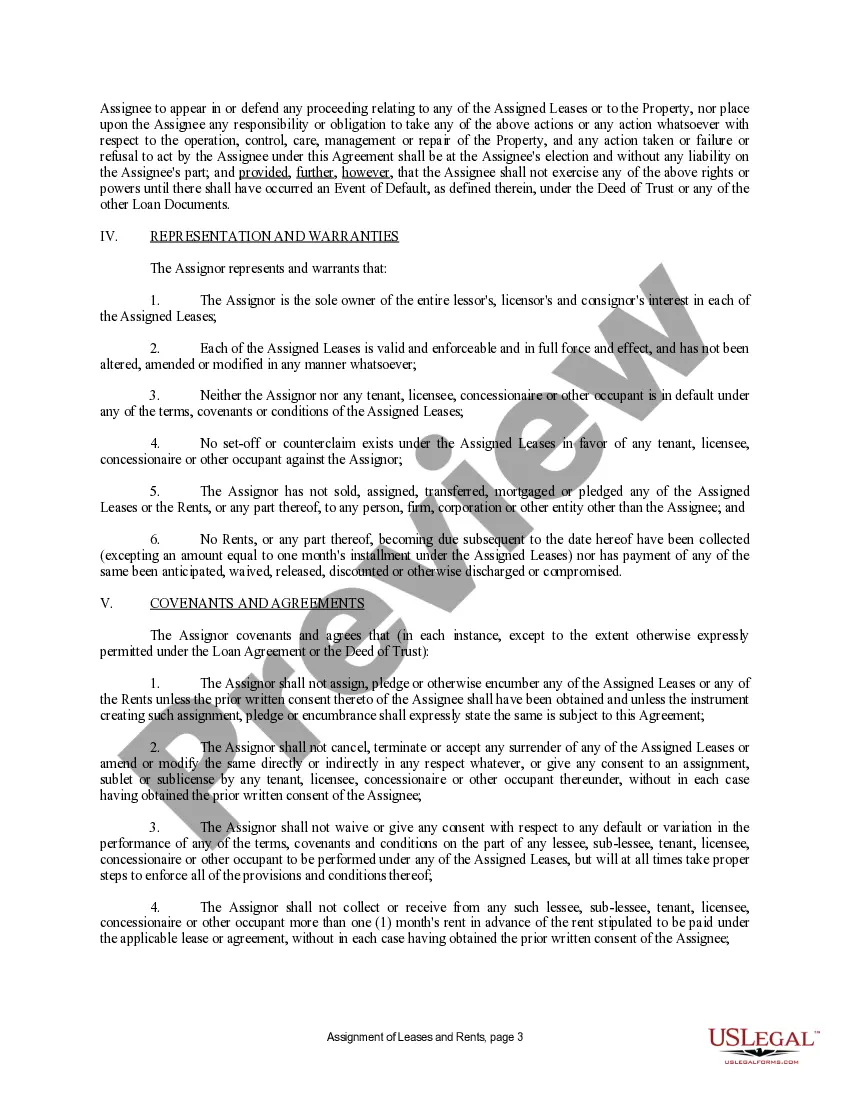
- Representations and warranties from the Assignor regarding the legality of the leases.
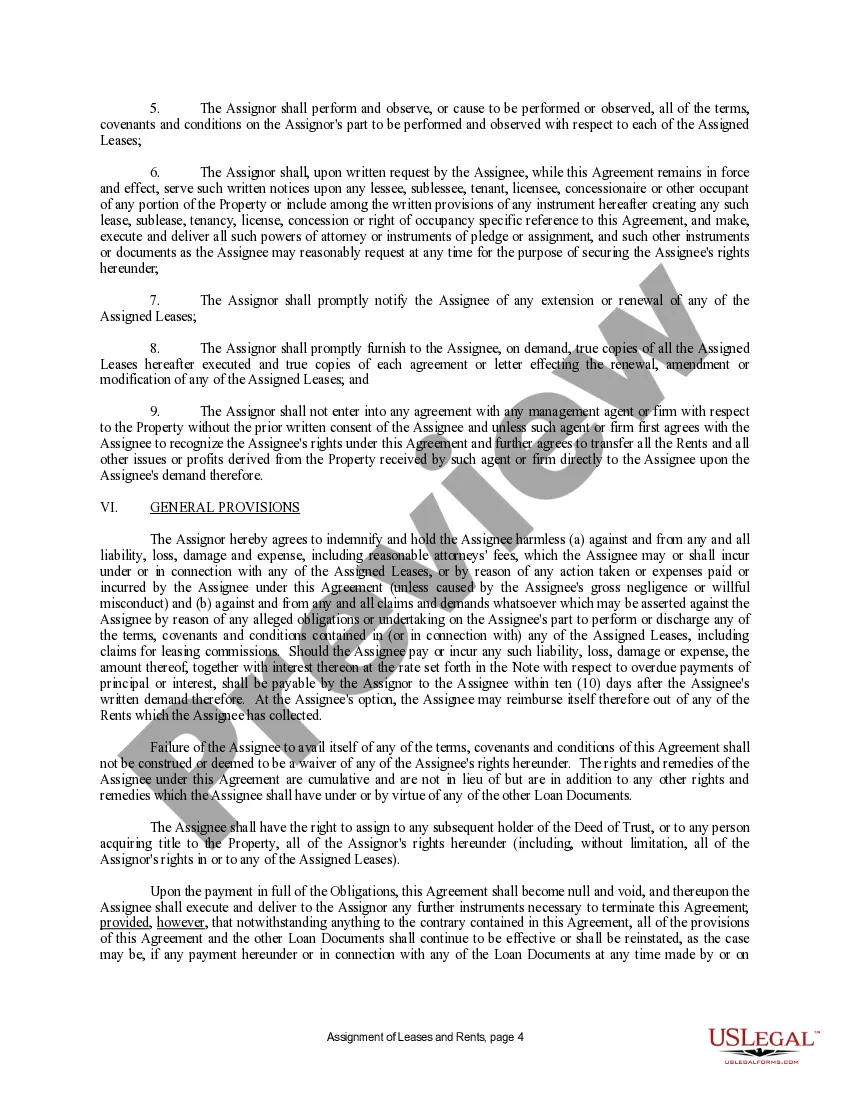
- Covenants and agreements governing the restrictions on the Assignor's actions regarding the leases.

Common use cases
This form is used when a borrower is seeking to secure a loan through their rental properties. It serves as a mechanism to assure the lender of the borrower's ability to repay the debt by granting them the right to collect rent from tenants. This agreement is particularly relevant in real estate transactions where the borrower has existing leases and wants to use future rental income as a source of repayment.
Who can use this document
- Property owners needing to obtain financing secured by their rental properties.
- Lenders looking for assurance of repayment through rental income from leased properties.
- Real estate investors managing multiple rental properties.
Steps to complete this form
- Identify the parties by filling in the names and addresses of the Assignor and Assignee.
- Specify the details of the loan, including the amount and the date of the loan agreement.
- List all applicable leases, ensuring they are current and enforceable.
- Include any necessary descriptions of the property and attached exhibits, if applicable.
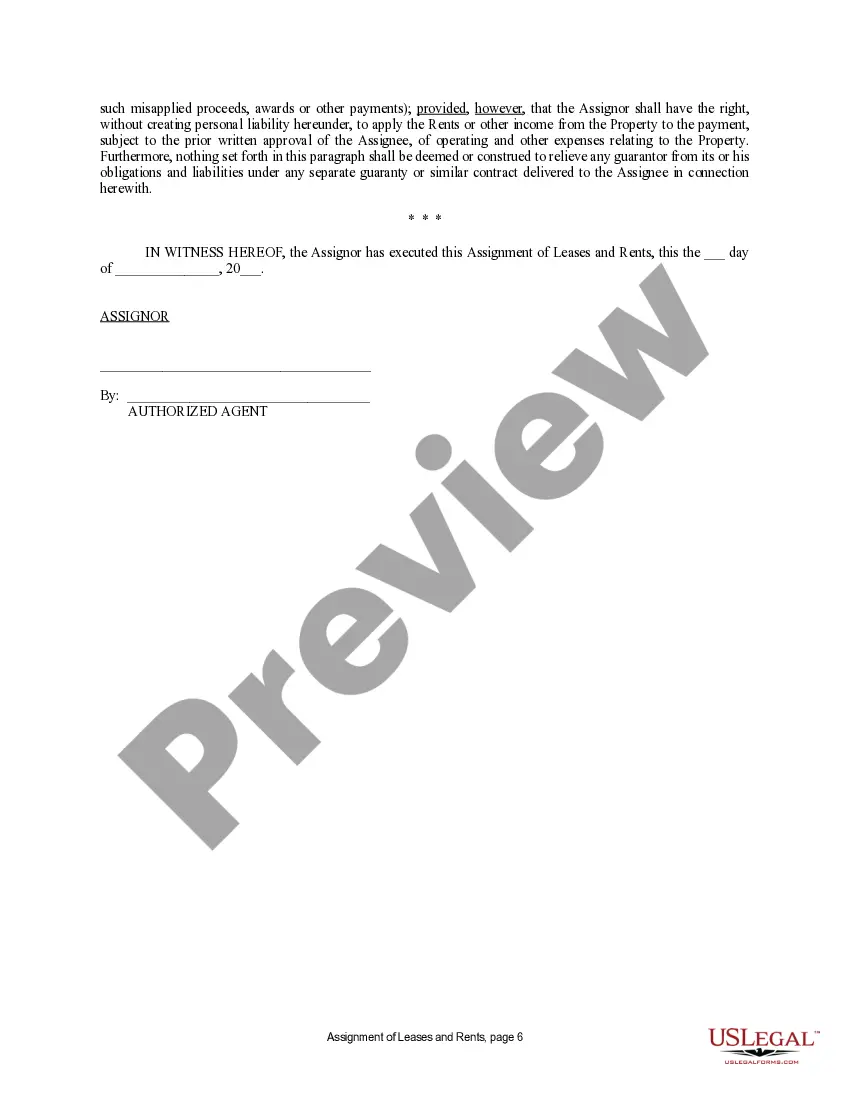
- Collect signatures from both parties, ensuring the document is dated correctly.
Does this document require notarization?
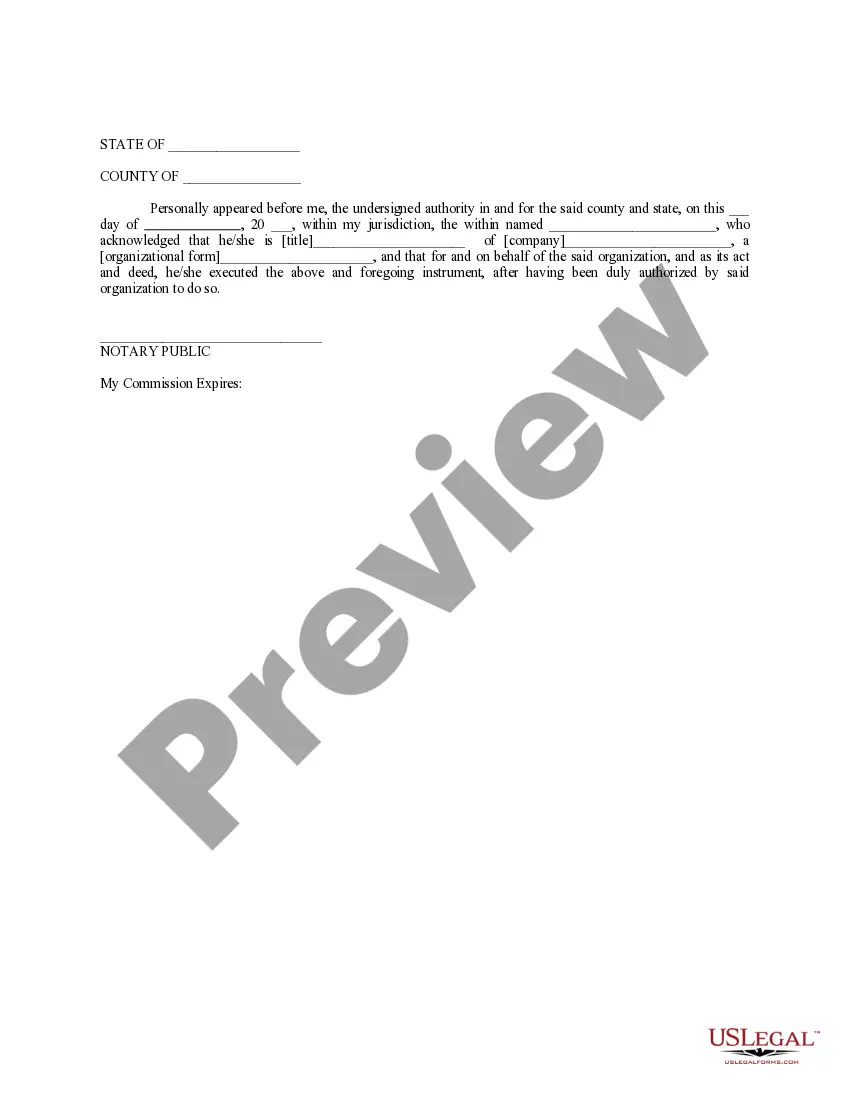
This form does not typically require notarization unless specified by local law. However, it is advisable to consult with a legal professional to ensure compliance with specific state regulations.
Get your form ready online
Our built-in tools help you complete, sign, share, and store your documents in one place.
Make edits, fill in missing information, and update formatting in US Legal Forms—just like you would in MS Word.
Download a copy, print it, send it by email, or mail it via USPS—whatever works best for your next step.
Sign and collect signatures with our SignNow integration. Send to multiple recipients, set reminders, and more. Go Premium to unlock E-Sign.
If this form requires notarization, complete it online through a secure video call—no need to meet a notary in person or wait for an appointment.
We protect your documents and personal data by following strict security and privacy standards.

Make edits, fill in missing information, and update formatting in US Legal Forms—just like you would in MS Word.

Download a copy, print it, send it by email, or mail it via USPS—whatever works best for your next step.

Sign and collect signatures with our SignNow integration. Send to multiple recipients, set reminders, and more. Go Premium to unlock E-Sign.

If this form requires notarization, complete it online through a secure video call—no need to meet a notary in person or wait for an appointment.

We protect your documents and personal data by following strict security and privacy standards.
Avoid these common issues
- Failing to accurately describe the property or include all relevant leases.
- Not obtaining required signatures from both parties before submission.
- Overlooking the need for local legal compliance based on state laws.
Why use this form online
- Convenience of downloading and completing the form at your own pace.
- Editability allows you to tailor the text to fit your specific needs.
- Access to legally vetted templates ensures reliability and compliance with legal standards.
What to keep in mind
- The Assignment of Lease and Rent allows borrowers to secure loans against rental income.
- Both parties must accurately fill out critical details to avoid legal complications.
- Consider notarization based on local laws for added legal protection.
- Understanding the terms is crucial for both lenders and borrowers before signing.
Looking for another form?

Form popularity
FAQ
An assignment of lease and rent involves transferring both the lease agreement and the right to collect rents from the tenant to another party. This process helps secure the financial interests of the lender when a borrower defaults. By understanding the California Assignment of Lease and Rent from Borrower to Lender, stakeholders can navigate these transactions effectively using resources like uslegalforms.
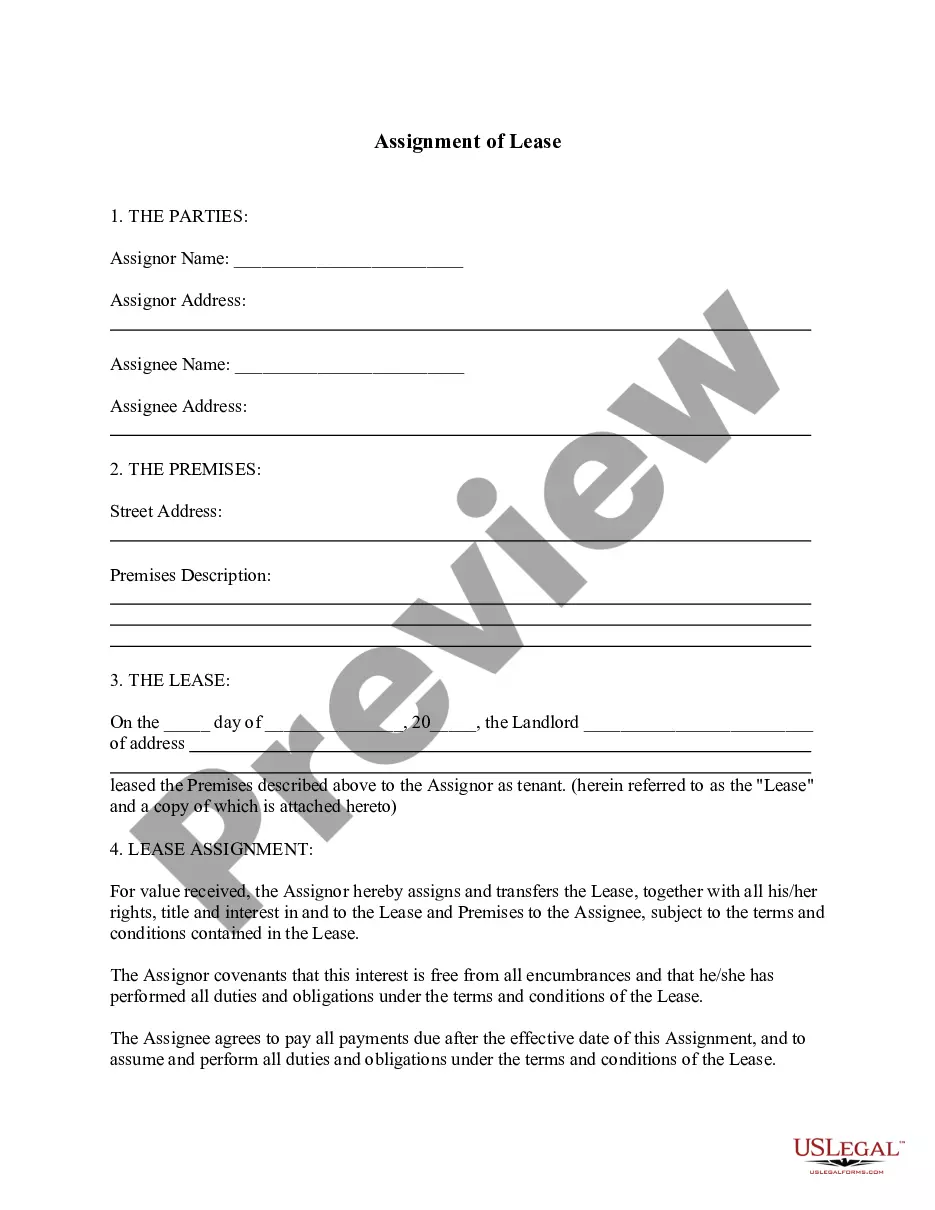
The assignment of lease refers to the process where a tenant legally transfers their lease agreement to a third party. The new tenant, often called the assignee, gains rights to occupy the premises while assuming responsibility for rent payments. This is crucial in a California Assignment of Lease and Rent from Borrower to Lender scenario, where the lender may seek assurance of rental income from the property.
A mortgage reassignment occurs when a lender transfers their rights and obligations under a mortgage to another lender or party. This process can involve the assignment of leases and rents, providing new lenders with immediate access to rental income. Understanding the nuances of the California Assignment of Lease and Rent from Borrower to Lender can help borrowers navigate these transitions smoothly. Uslegalforms provides valuable tools to assist both lenders and borrowers in managing reassignment efficiently.
The assignment of rents clause primarily benefits lenders because it ensures they receive rental income directly in case of default. This security allows lenders to feel more confident in their investment, knowing they have a reliable source of income. Tenants also benefit from having stability as their landlords maintain financial responsibility. Overall, the California Assignment of Lease and Rent from Borrower to Lender creates a balanced relationship between property owners and lenders.
To perfect the assignment of leases and rents, it's essential to follow legal protocols, which generally include providing notices to tenants. You should also ensure all paperwork is properly executed, including the original lease and assignment documents. Consulting with experts or using resources available through uslegalforms can help you navigate this process effectively, ensuring your California Assignment of Lease and Rent from Borrower to Lender is legally sound.
To assign a lease agreement, start by notifying your landlord and obtaining their written consent. Then, prepare a formal document that outlines the details of the assignment, including the new tenant's information. Both parties will need to sign this document to finalize the assignment, ensuring compliance with the California Assignment of Lease and Rent from Borrower to Lender regulations.
The assignment of leases entitles the lender to collect rents directly from tenants. This arrangement provides an income stream that secures the lender's investment. The lender also gains the right to enforce lease terms, ensuring compliance from tenants. Understanding this dynamic is essential for successful transactions in California Assignment of Lease and Rent from Borrower to Lender.
To assign a lease, begin by reviewing your current lease agreement for any restrictions. Next, obtain the consent of the landlord, as required, and draft an assignment agreement that both parties need to sign. This process confirms that the original tenant is not liable for future obligations under the lease. Consult uslegalforms for templates and samples to simplify the California Assignment of Lease and Rent from Borrower to Lender.
Yes, a landlord can refuse a lease assignment under certain circumstances. Typically, lease agreements contain provisions that allow landlords to deny an assignment if it does not meet specified criteria. It’s advisable to review your lease terms and consult legal resources for information specific to California Assignment of Lease and Rent from Borrower to Lender to understand your rights better.
To fill out a California residential lease agreement, begin by clearly stating the names of all parties involved. Include the property's address, rental amount, and lease duration. It's crucial to outline the terms regarding security deposits, maintenance responsibilities, and other essential clauses. Utilizing platforms like uslegalforms can provide templates and guidance to ensure you meet all legal requirements for your California Assignment of Lease and Rent from Borrower to Lender.