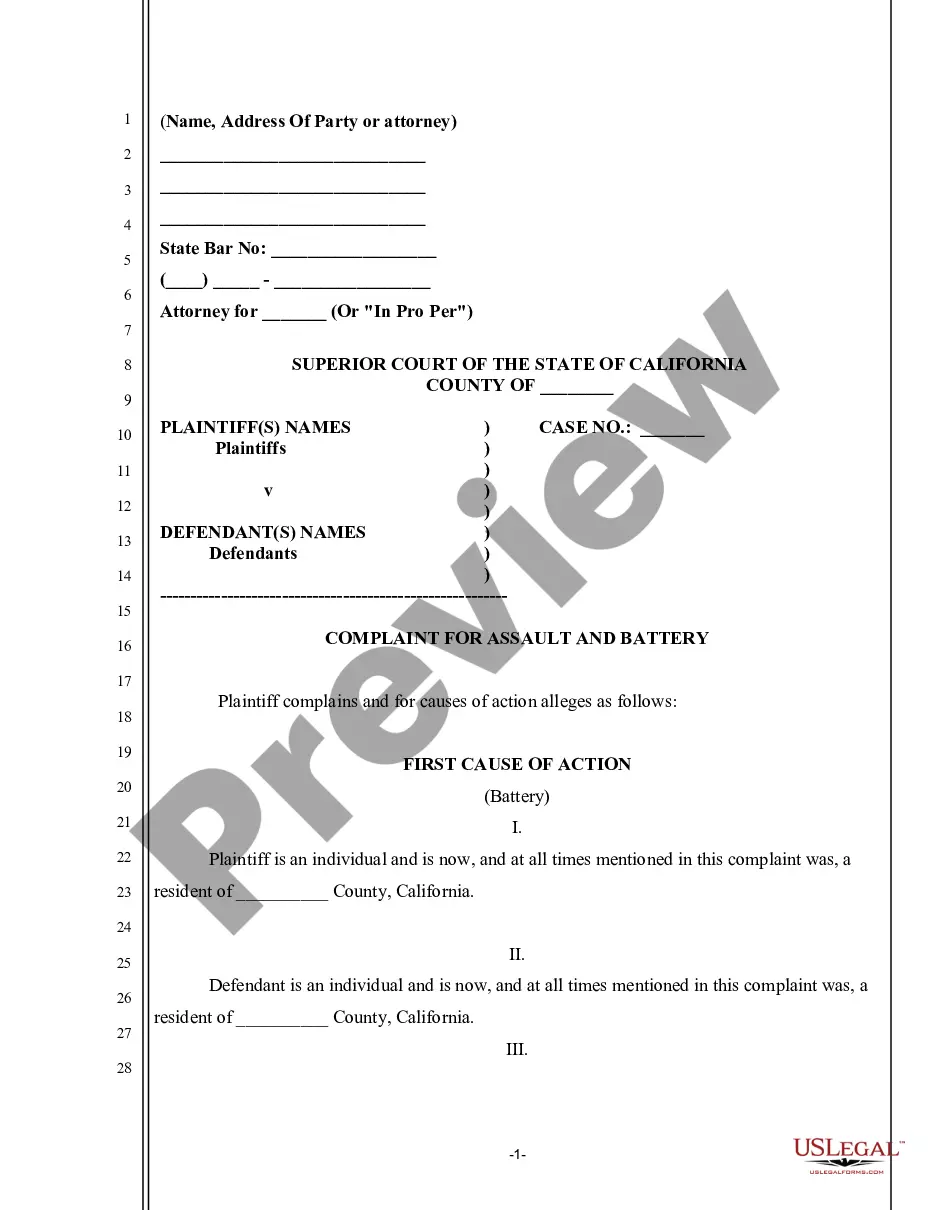
California Complaint for Assault and Battery
About this form
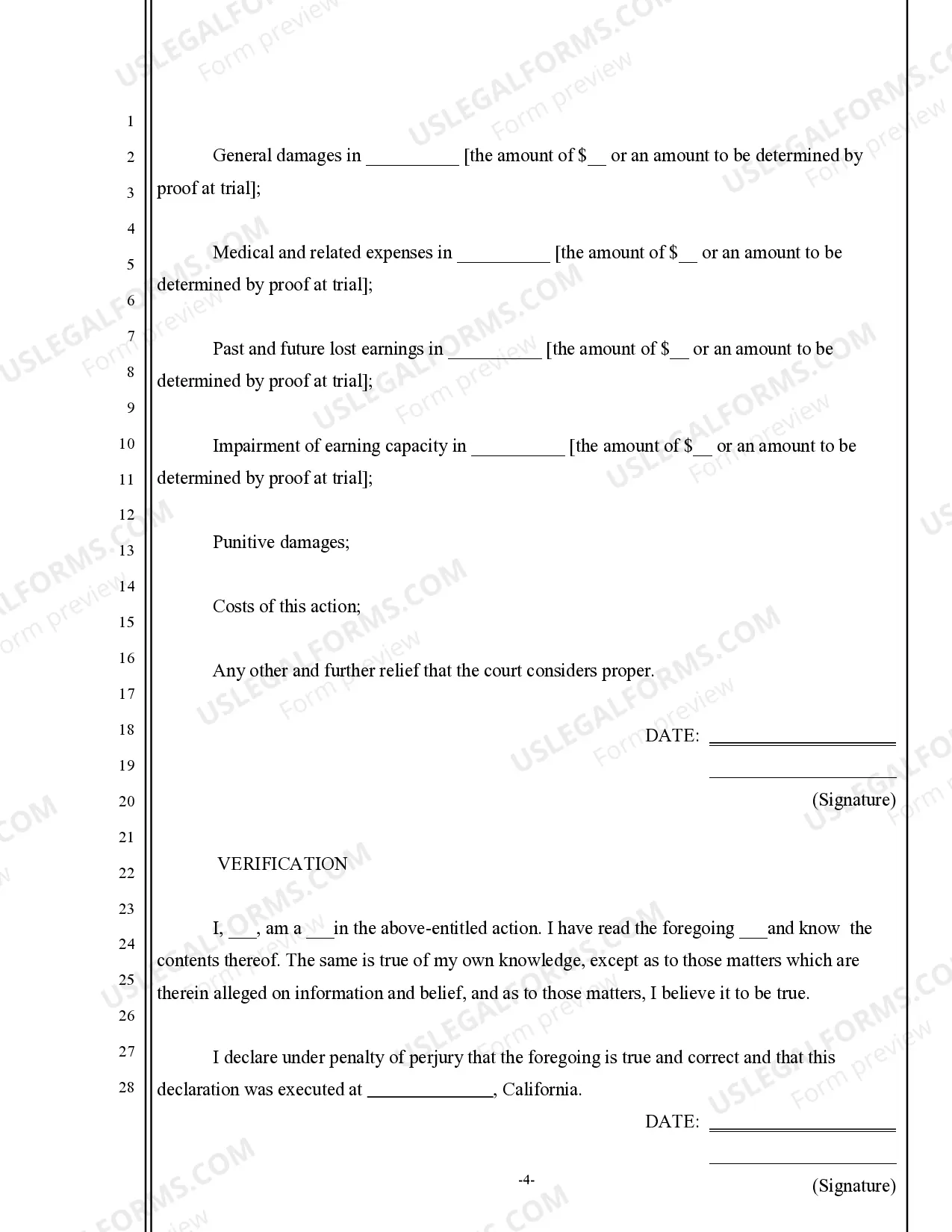
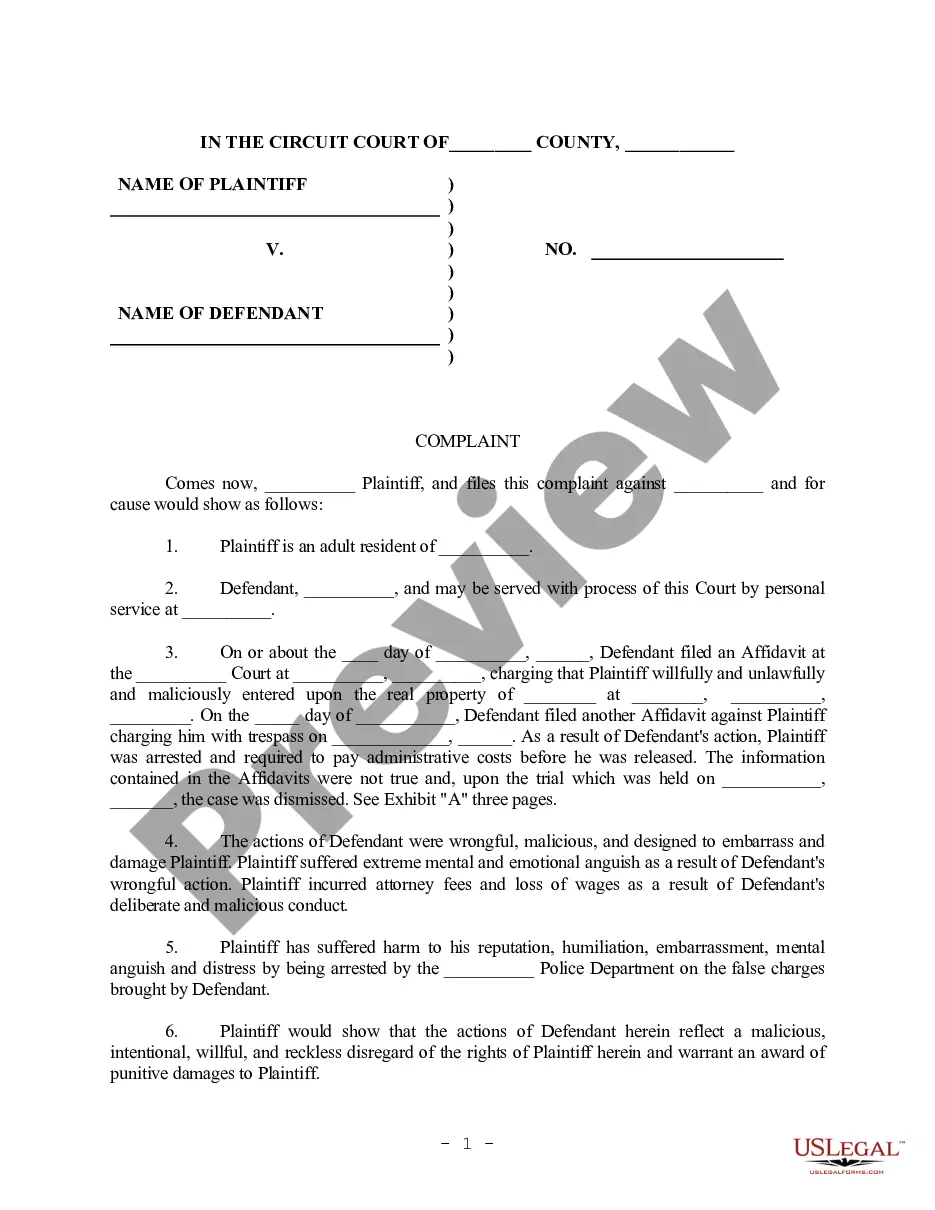
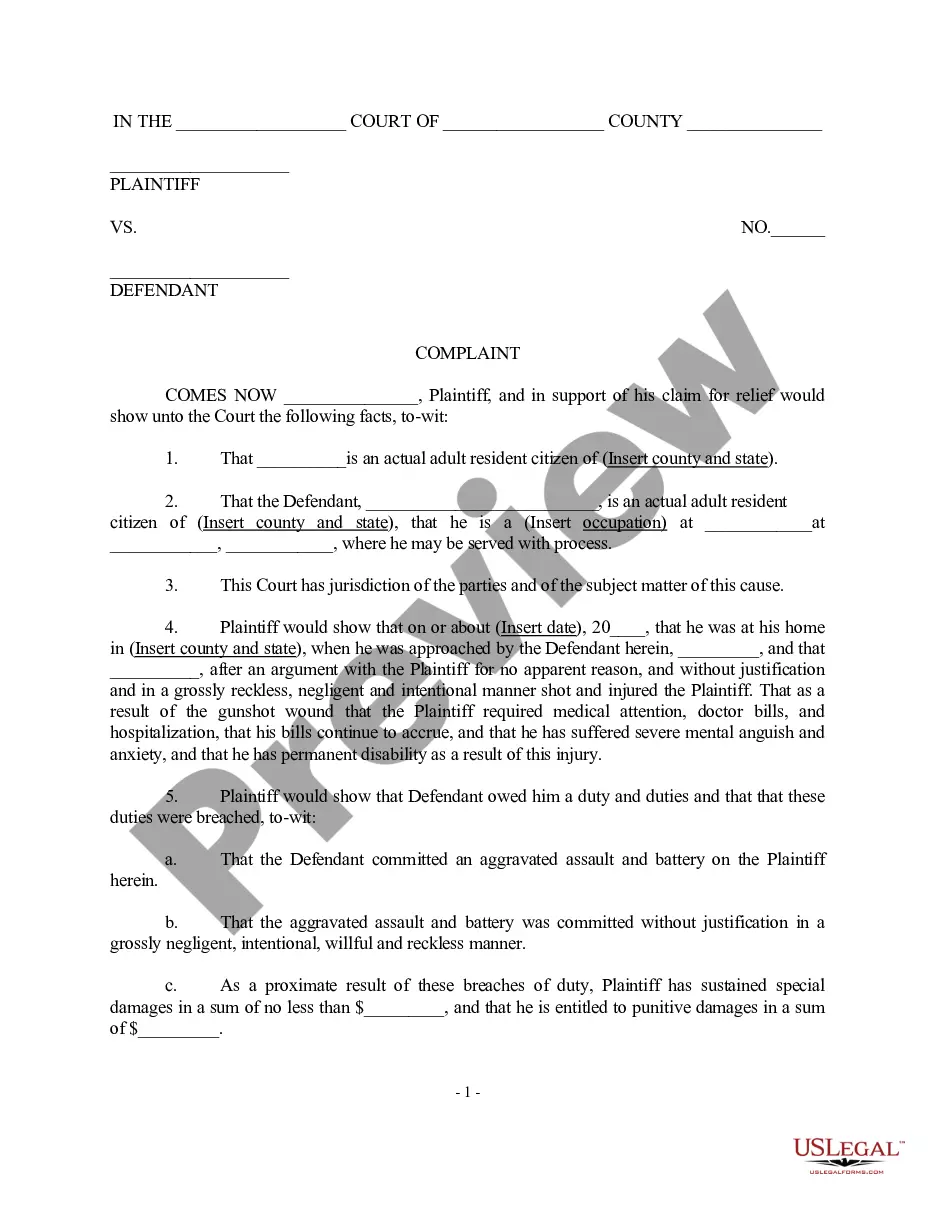
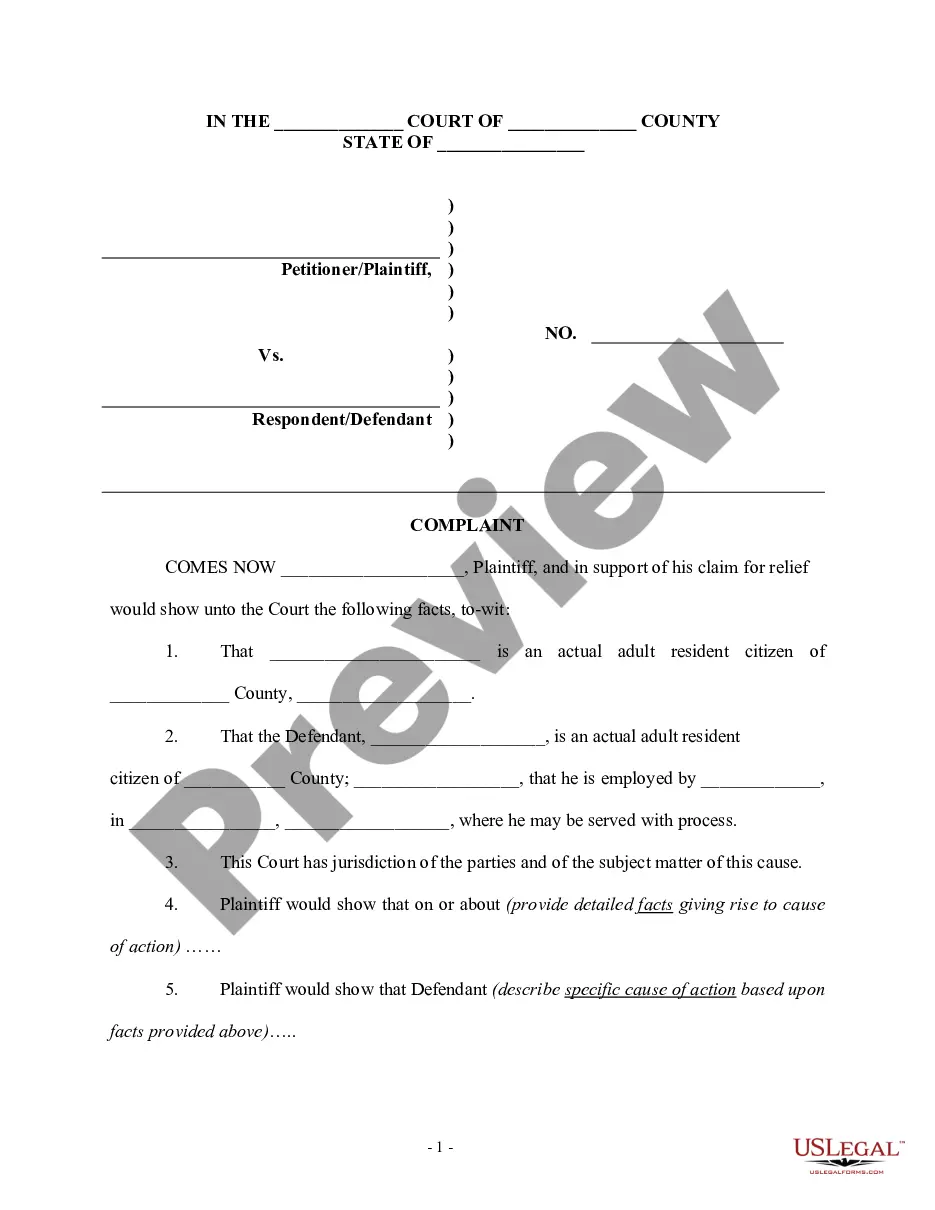
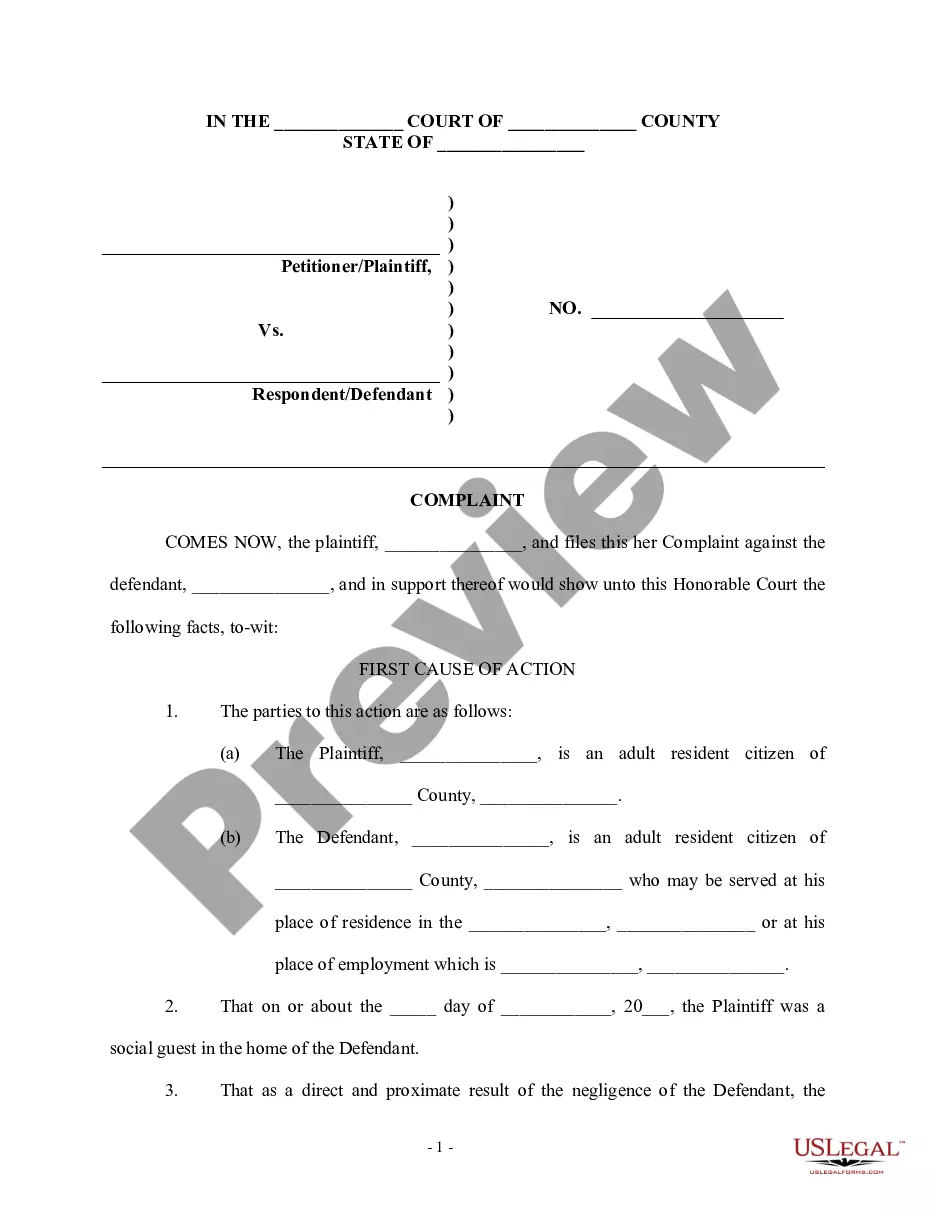
The Complaint for Assault and Battery is a legal document that allows a plaintiff to formally accuse a defendant of violent conduct resulting in physical harm and emotional distress. This form is essential for initiating a lawsuit to seek compensation for damages arising from the assault and battery, such as medical expenses, lost wages, and pain and suffering. Unlike other forms of civil complaints, this specific form addresses the wrongful acts of assault and battery, providing a structured way to present the case in court.
What’s included in this form
- Case identification section for plaintiffs and defendants.
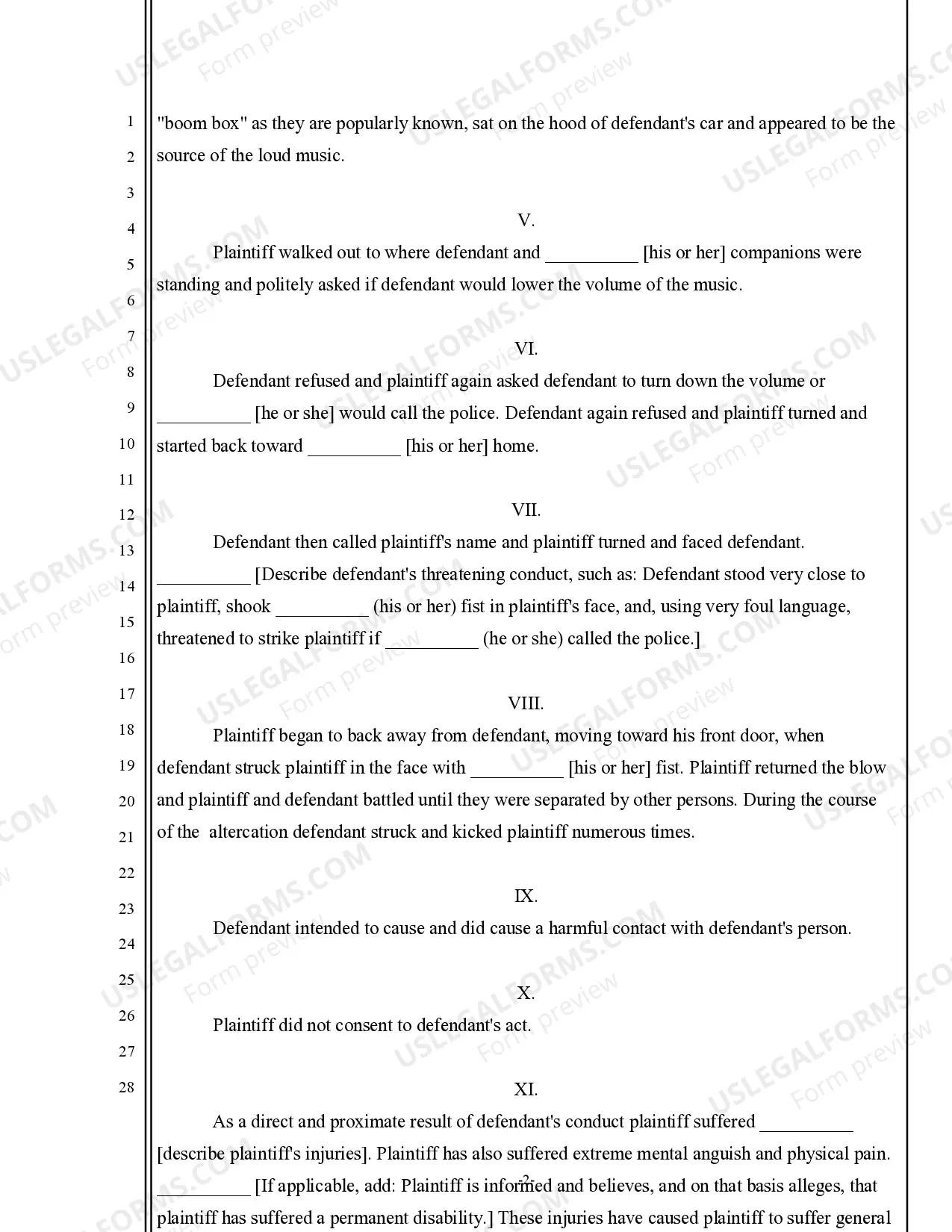
- Detailed description of the incident, including dates and times.
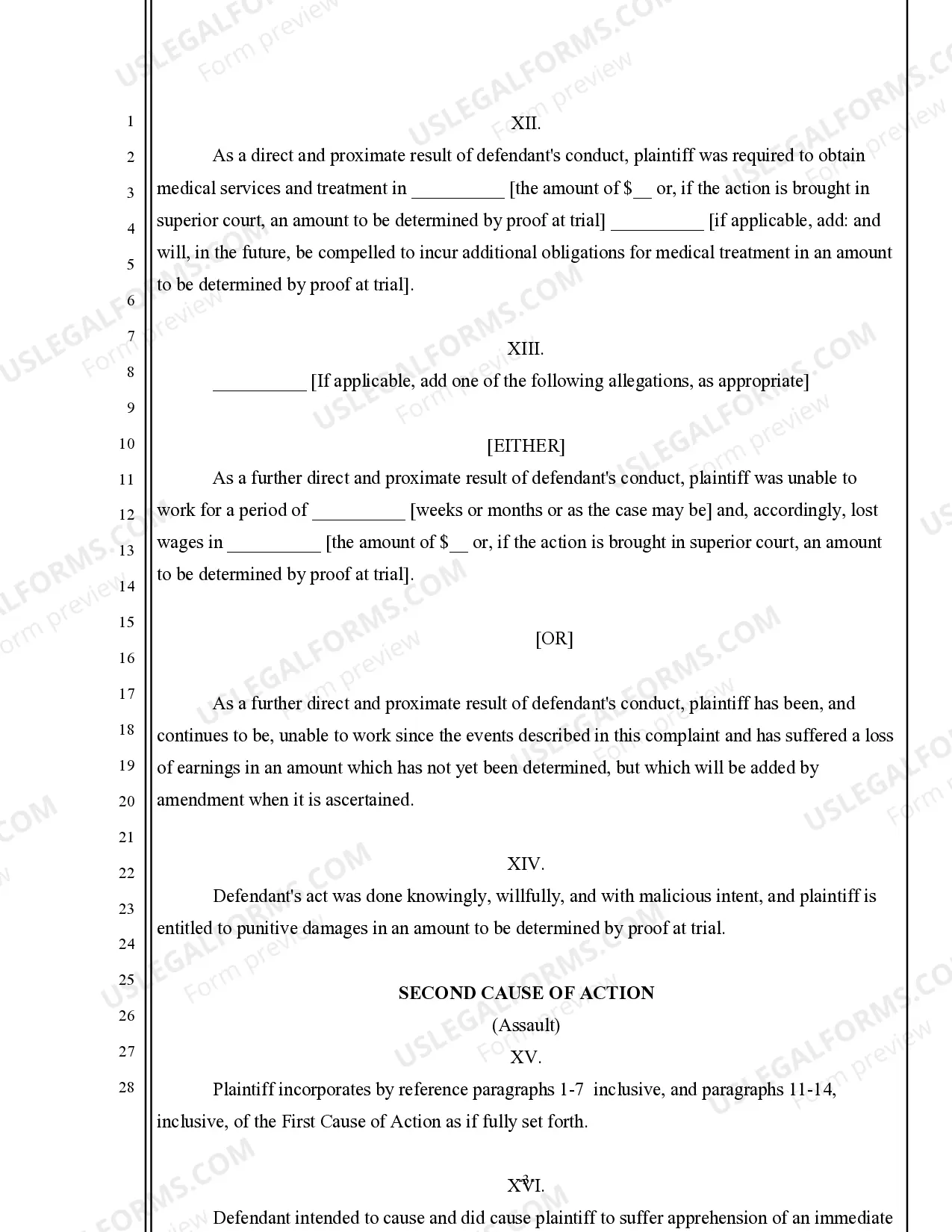
- Allegations of battery and assault, including injuries and damages suffered.
- Request for specific damages, such as medical expenses and punitive damages.
- Verification section confirming the truthfulness of the information provided.
When this form is needed
This form should be used when an individual has been the victim of assault and battery and seeks legal remedy through the court system. Situations may include physical altercations, threatening behavior, or any incidents leading to bodily harm or significant emotional distress. It is appropriate to file this form when you plan to pursue financial compensation for your injuries and losses related to such incidents.
Intended users of this form
This form is intended for individuals who:
- Have suffered physical harm due to another's intentional actions.
- Have experienced emotional distress as a result of the defendant's conduct.
- Wish to formally file a legal complaint in civil court for damages.
- Are representing themselves (pro per) or have legal representation.
Steps to complete this form
- Identify the plaintiff and defendant by entering their names and addresses.
- Provide detailed information about the incident, including date, time, and location.
- Describe the harmful actions of the defendant that led to the assault and/or battery.
- Specify the damages incurred, including medical expenses, lost wages, and emotional distress.
- Sign and date the verification section to attest to the truth of your claims.
Does this form need to be notarized?
This form does not typically require notarization unless specified by local law. It is important to check if your court has specific rules regarding notarization before submitting your complaint.
Get your form ready online
Our built-in tools help you complete, sign, share, and store your documents in one place.
Make edits, fill in missing information, and update formatting in US Legal Forms—just like you would in MS Word.
Download a copy, print it, send it by email, or mail it via USPS—whatever works best for your next step.
Sign and collect signatures with our SignNow integration. Send to multiple recipients, set reminders, and more. Go Premium to unlock E-Sign.
If this form requires notarization, complete it online through a secure video call—no need to meet a notary in person or wait for an appointment.
We protect your documents and personal data by following strict security and privacy standards.

Make edits, fill in missing information, and update formatting in US Legal Forms—just like you would in MS Word.

Download a copy, print it, send it by email, or mail it via USPS—whatever works best for your next step.

Sign and collect signatures with our SignNow integration. Send to multiple recipients, set reminders, and more. Go Premium to unlock E-Sign.

If this form requires notarization, complete it online through a secure video call—no need to meet a notary in person or wait for an appointment.

We protect your documents and personal data by following strict security and privacy standards.
Avoid these common issues
- Failing to provide sufficient details of the incident.
- Not listing all relevant medical expenses or damages.
- Omitting signatures or dates on the verification section.
- Incorrectly identifying the parties involved in the case.
- Submitting the form in the wrong court jurisdiction.
Benefits of using this form online
- Easy access to the form from any device at your convenience.
- Editable templates allow you to fill in your specific information accurately.
- Reliable and up-to-date legal content drafted by licensed attorneys.
- Reduced risk of errors that can occur with handwritten documents.
- Immediate downloads save time compared to obtaining paper forms.
Legal use & context
- Utilizing this form properly initiates legal proceedings for assault and battery claims.
- The form should be filed in the appropriate court, usually where the incident occurred.
- Filing the form correctly is essential for legal enforcement of claims.
Summary of main points
- The Complaint for Assault and Battery is crucial for seeking justice after an incident.
- Including detailed information increases the likelihood of a successful claim.
- Check state-specific legal requirements before filing your complaint.
Looking for another form?
Form popularity
FAQ
Filing a complaint with the California Department of Fair Employment and Housing (CRD) involves completing a specific form, which you can access through their website. Ensure that you provide all pertinent details regarding your situation for clarity. By filing a California Complaint for Assault and Battery through the CRD, you take an important step towards seeking justice. For assistance with the process, consider utilizing the resources offered by US Legal Forms.
To make a complaint with the Federal Trade Commission (FTC), visit their online complaint assistant, where you can fill out a form regarding your issue. The FTC addresses various consumer protection concerns, including fraud and identity theft. If your complaint involves a California Complaint for Assault and Battery, make sure to detail any fraudulent actions involved. US Legal Forms can help you gather necessary information to support your case.
The most common complaints filed with the CRD relate to discrimination in employment or housing. These complaints often involve allegations based on race, gender, or disability status. If you are considering a California Complaint for Assault and Battery, understanding the nature of frequent complaints can help frame your case. US Legal Forms provides valuable resources to assist you in preparing your complaint effectively.
To file a complaint with the California Department of Fair Employment and Housing (CRD), you need to complete a complaint form and submit it to the CRD office. You can find these forms on the CRD’s official website, where you'll also see instructions on how to proceed. Using proper channels for your California Complaint for Assault and Battery improves your chances of a timely response. Consider consulting with US Legal Forms for detailed instructions and templates.
In California, assault and battery involve actions that cause harm or the threat of harm to another person. Assault refers to the attempt or threat to inflict injury, while battery involves actual physical contact or violence against someone. Understanding these definitions is crucial, especially when considering filing a California Complaint for Assault and Battery. If you believe you have been a victim, it may be beneficial to consult resources available on US Legal Forms for guidance.
Writing a good legal complaint requires clarity, precision, and a structured format. Begin with an introduction of the parties involved, state the relevant facts, and clearly define the legal theories behind your claims. Using uslegalforms can streamline this process, helping you create an effective California Complaint for Assault and Battery that meets legal standards.
The punishment for battery in California can range from fines to imprisonment, depending on the severity of the case and prior convictions. Misdemeanor battery may result in up to six months in jail, while felony battery charges can lead to significant prison time. A California Complaint for Assault and Battery will outline the specifics of your case, aiding in your pursuit of justice.
To write a cause of action in a complaint, you should clearly state the facts that support your claim and indicate how the defendant's actions caused harm to you. A California Complaint for Assault and Battery should include the essential elements like intent, harm, and the context of the incident. Seeking help from uslegalforms can support you in drafting a strong complaint.
Yes, you can sue for assault in California. A successful lawsuit may involve filing a California Complaint for Assault and Battery. It's important to gather evidence and consult a legal expert to navigate the legal landscape effectively.
Battery is not classified as negligence; rather, it is considered an intentional tort. A California Complaint for Assault and Battery focuses on intentional harm, distinguishing it from negligence cases where harm results from careless actions. Understanding these differences can help clarify your legal options.