California Letter from Landlord to Tenant as Notice to Tenant of Tenant's Disturbance of Neighbors' Peaceful Enjoyment to Remedy or Lease Terminates
What this document covers
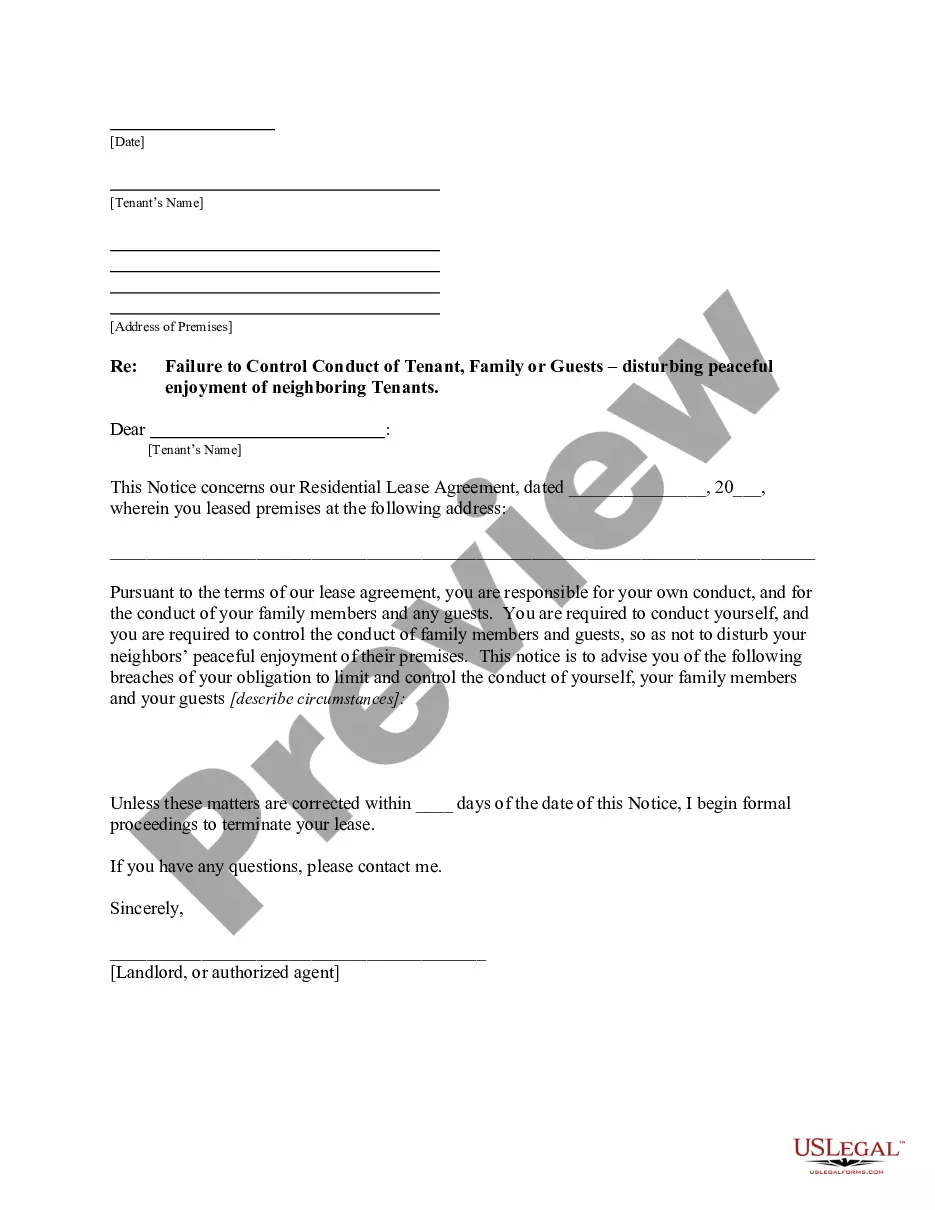
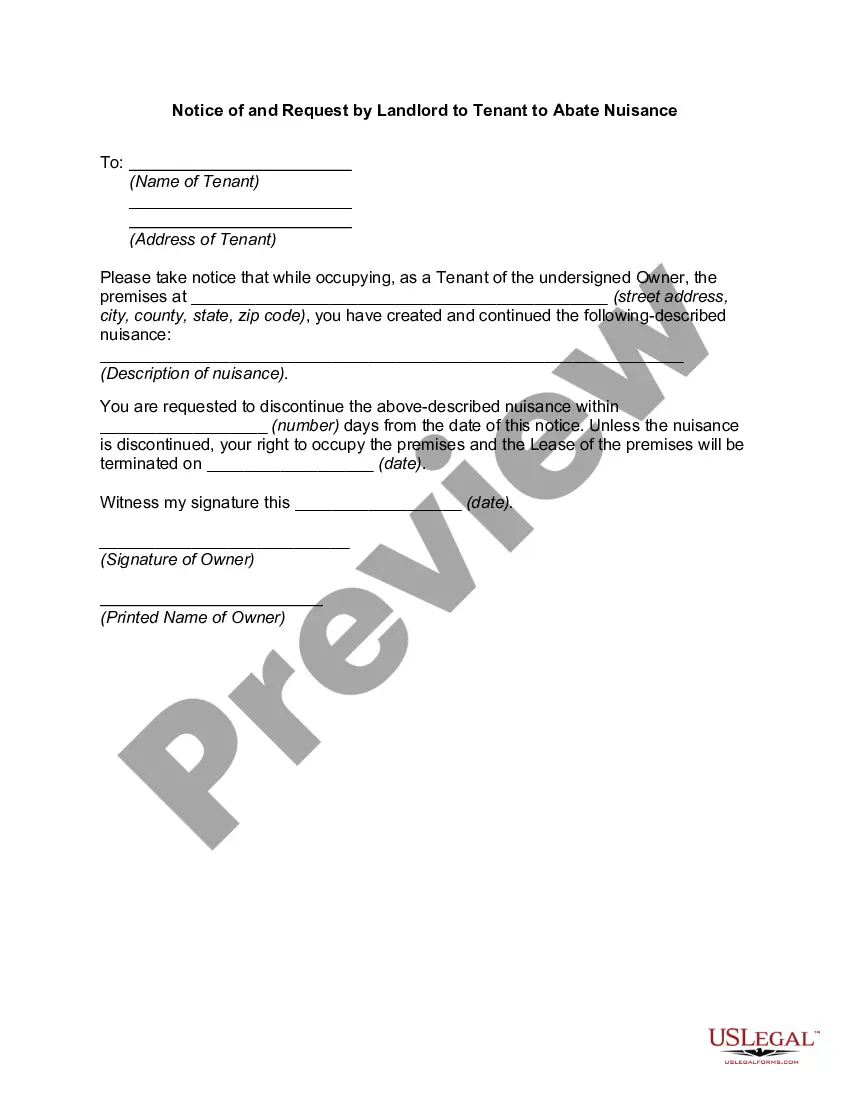
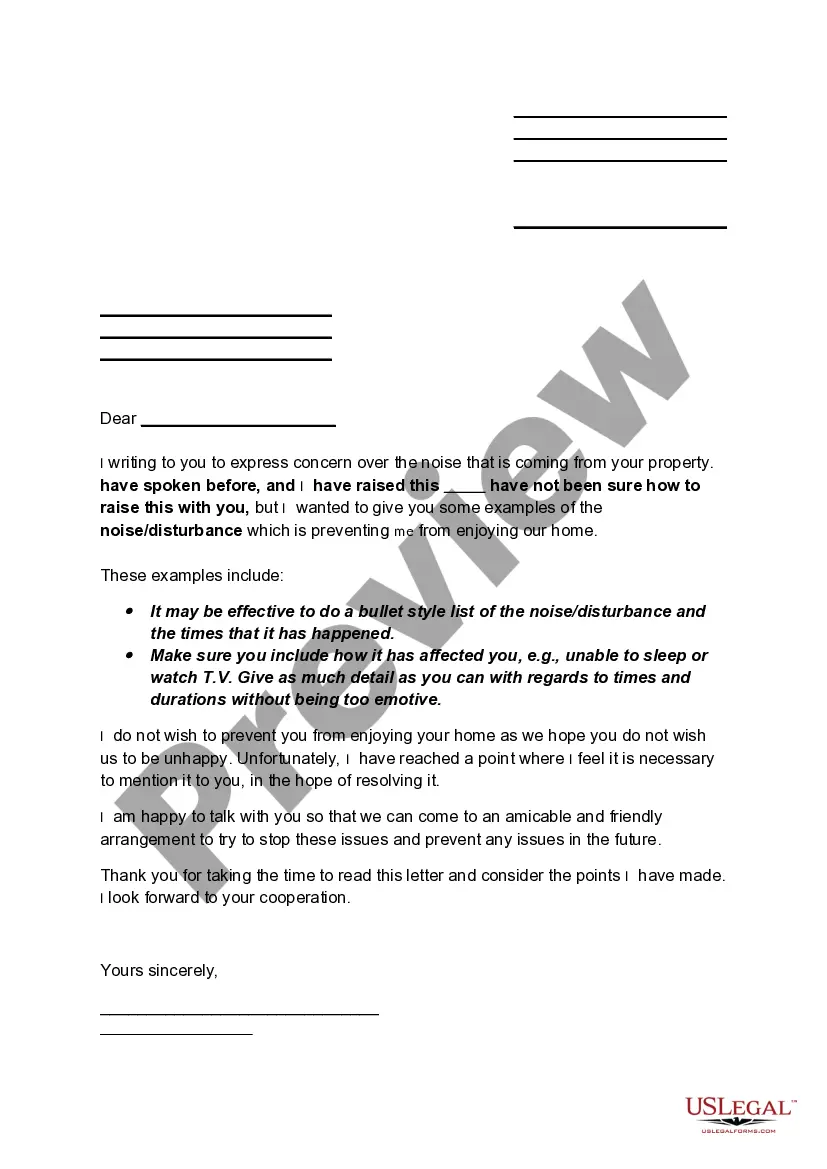
This form is a notice from the landlord to the tenant regarding disturbances caused by the tenant, their family members, or guests that affect the peaceful enjoyment of neighboring properties. This Letter from Landlord to Tenant serves to notify the tenant of their obligations under the lease agreement, specifically concerning the right of quiet enjoyment, which is fundamental to tenant rights. Unlike other notices related to eviction or lease violations, this notice emphasizes the need for the tenant to remedy disturbances before further action is taken.
Form components explained
- Identification of the parties involved, including the landlord and tenant.
- A detailed description of the disturbances and how they violate the tenant's obligations.
- Instructions for the tenant to remedy the situation to maintain their lease.
- Explicit mention of the repercussions if the disturbances are not resolved.
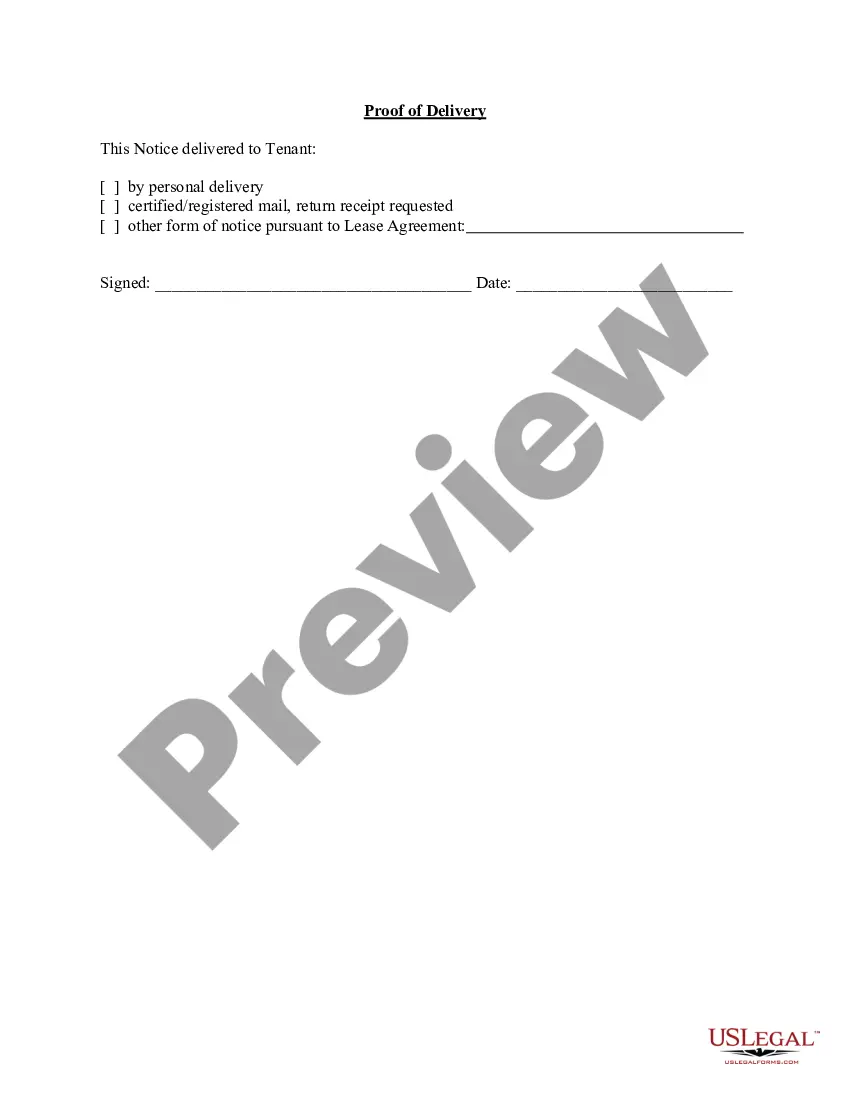
- Proof of delivery options for ensuring the tenant receives the notice.


When to use this form
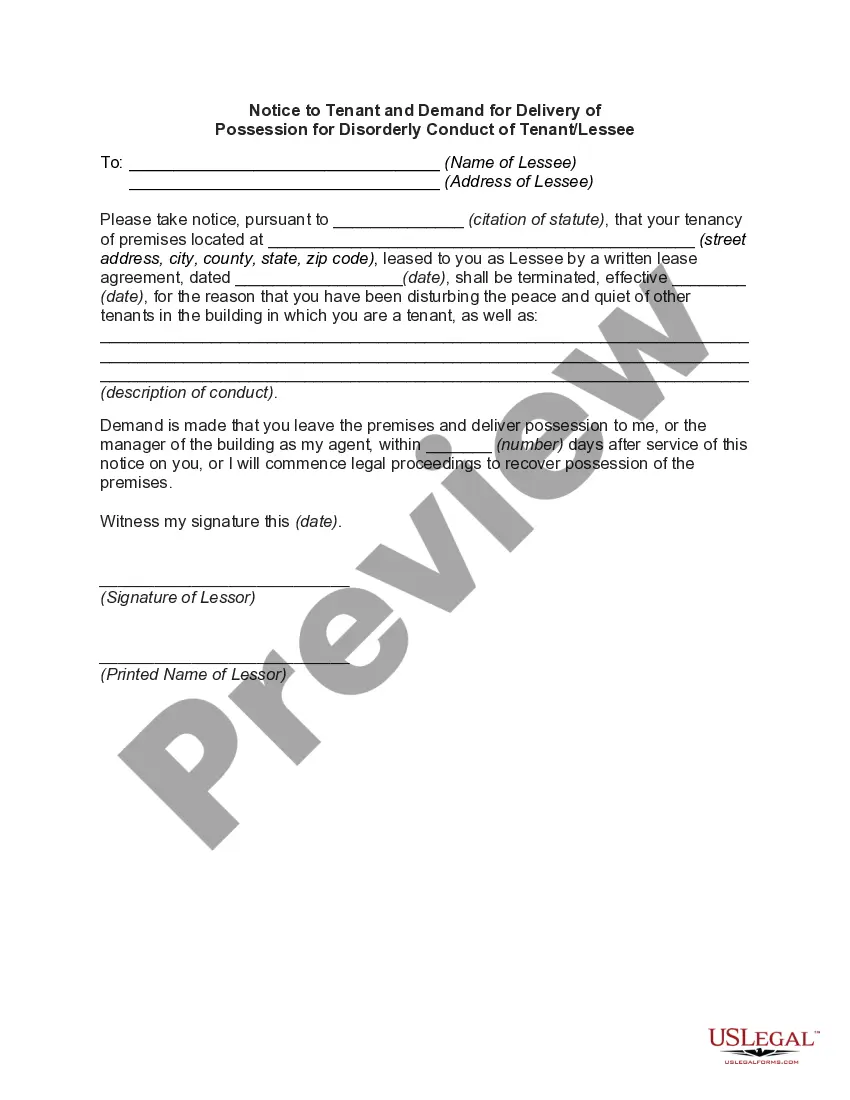
This notice should be used when a landlord needs to formally communicate to a tenant that their behavior is disturbing the peaceful enjoyment of nearby tenants. It is appropriate in situations where other attempts to address the issue informally have failed or when the landlord needs to document the complaint officially, potentially as a precursor to further action, such as lease termination.
Who can use this document
- Landlords who have tenants consistently causing disturbances to neighbors.
- Property managers acting on behalf of landlords to address tenant-related issues.
- Legal representatives preparing formal communications regarding tenant behavior.
Steps to complete this form
- Identify the landlord and tenant by entering their names and addresses at the top of the document.
- Describe the specific disturbances that the tenant has caused, referencing dates and instances if possible.
- Clearly state the expectations of the tenant to remedy the situation and the timeframe for compliance.
- Include a signature line for the landlord or authorized agent to sign and date the notice.
- Select the method of delivery for the notice and check appropriate boxes to confirm the delivery.
Does this document require notarization?
In most cases, this form does not require notarization. However, some jurisdictions or signing circumstances might. US Legal Forms offers online notarization powered by Notarize, accessible 24/7 for a quick, remote process.
Get your form ready online
Our built-in tools help you complete, sign, share, and store your documents in one place.
Make edits, fill in missing information, and update formatting in US Legal Forms—just like you would in MS Word.
Download a copy, print it, send it by email, or mail it via USPS—whatever works best for your next step.
Sign and collect signatures with our SignNow integration. Send to multiple recipients, set reminders, and more. Go Premium to unlock E-Sign.
If this form requires notarization, complete it online through a secure video call—no need to meet a notary in person or wait for an appointment.
We protect your documents and personal data by following strict security and privacy standards.

Make edits, fill in missing information, and update formatting in US Legal Forms—just like you would in MS Word.

Download a copy, print it, send it by email, or mail it via USPS—whatever works best for your next step.

Sign and collect signatures with our SignNow integration. Send to multiple recipients, set reminders, and more. Go Premium to unlock E-Sign.

If this form requires notarization, complete it online through a secure video call—no need to meet a notary in person or wait for an appointment.

We protect your documents and personal data by following strict security and privacy standards.
Common mistakes to avoid
- Failing to specify the nature of the disturbance clearly.
- Not allowing sufficient time for the tenant to address the issue before further action.
- Omitting the proof of delivery documentation, which is vital for legal processes.
Advantages of online completion
- Convenient access from anywhere, allowing for quick completion and download.
- Editability ensures that specific details can be tailored to the situation.
- Reliability in terms of legal compliance, as the form is drafted by licensed attorneys.
Looking for another form?

Form popularity
FAQ
Implied in all California leases is a covenant of quiet enjoyment. CAL. CIV.Landlords have a duty to ensure that tenants can peacefully possess their rental unit free of disturbances, and in extreme cases may take steps to evict bothersome tenants to abate a nuisance.
Whilst landlords aren't actually responsible for the noise their tenants make, it's always a good idea to try and 'keep the peace'.Limit noise at inconvenient hours. Look after any pets properly and clean up after them.
Whilst landlords aren't actually responsible for the noise their tenants make, it's always a good idea to try and 'keep the peace'.Limit noise at inconvenient hours.
If you're seeking damages for emotional distress caused by a landlord's discrimination, or punitive damages for especially blatant and intentional discrimination, a lawsuit may well be your best bet. Understand what's involved in suing your landlord. You may file a lawsuit in either federal or state court.
According to Nolo, quiet enjoyment is The right of a property owner or tenant to enjoy his or her property without interference.Leases and rental agreements often contain a covenant of quiet enjoyment, expressly obligating the landlord to ensure that tenants live undisturbed.
To enforce rights to peaceful enjoyment against noisy neighbors, tenants must notify their landlords of the excessive noise. Tenants can also contact local law enforcement and advise their landlords after contacting the local authorities.
Lack of Basic Services - If the landlord is responsible for utility bill payments and fails to pay them and any utilities are turned off, the tenant may claim a breach of the covenant of quiet enjoyment. This also includes any issues within common areas of a property.
What do the laws say in regard to bad tenants?While landlords have a difficult job in trying to make every tenant happy, they must at least make a good faith effort to resolve any problems you may be having. They must also be able to foresee certain situations. Otherwise, they can be sued and held liable.
A COVENANT that promises that the grantee or tenant of an estate in real property will be able to possess the premises in peace, without disturbance by hostile claimants. Quiet enjoyment is a right to the undisturbed use and enjoyment of real property by a tenant or landowner.