California Grant Deed from Husband and Wife to Husband and Wife
Overview of this form
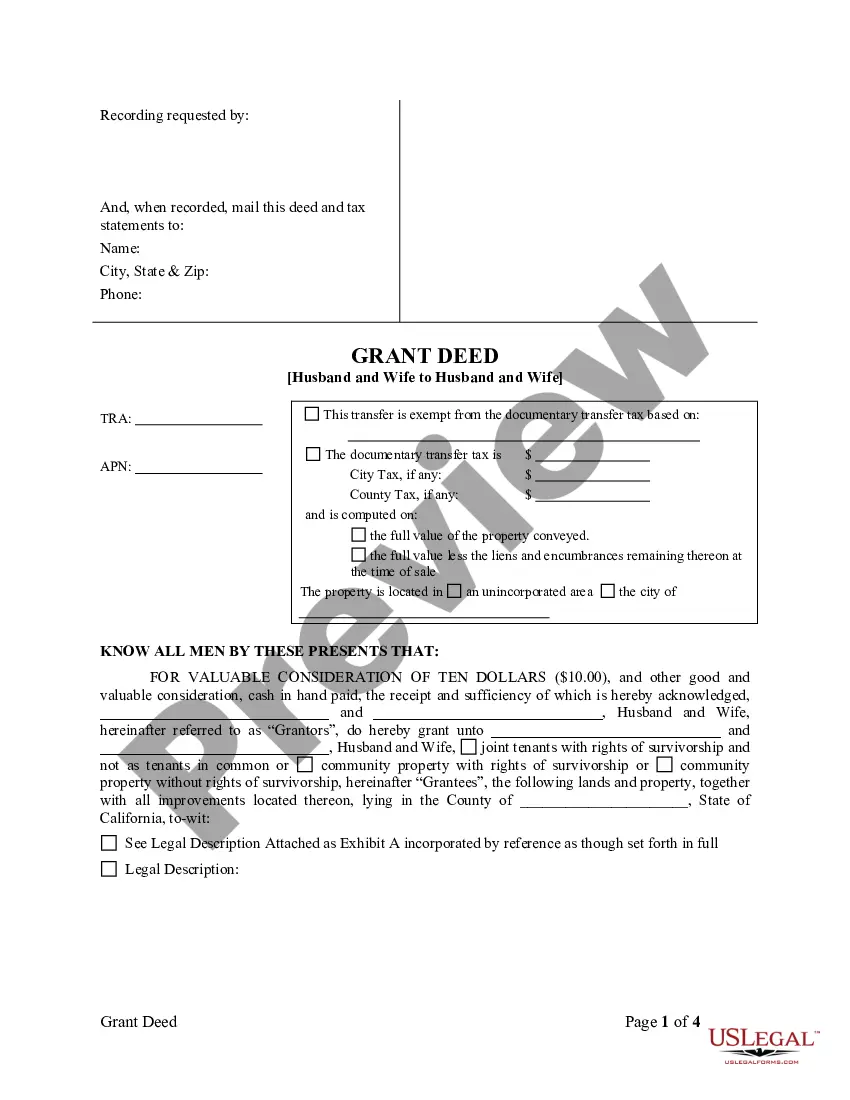
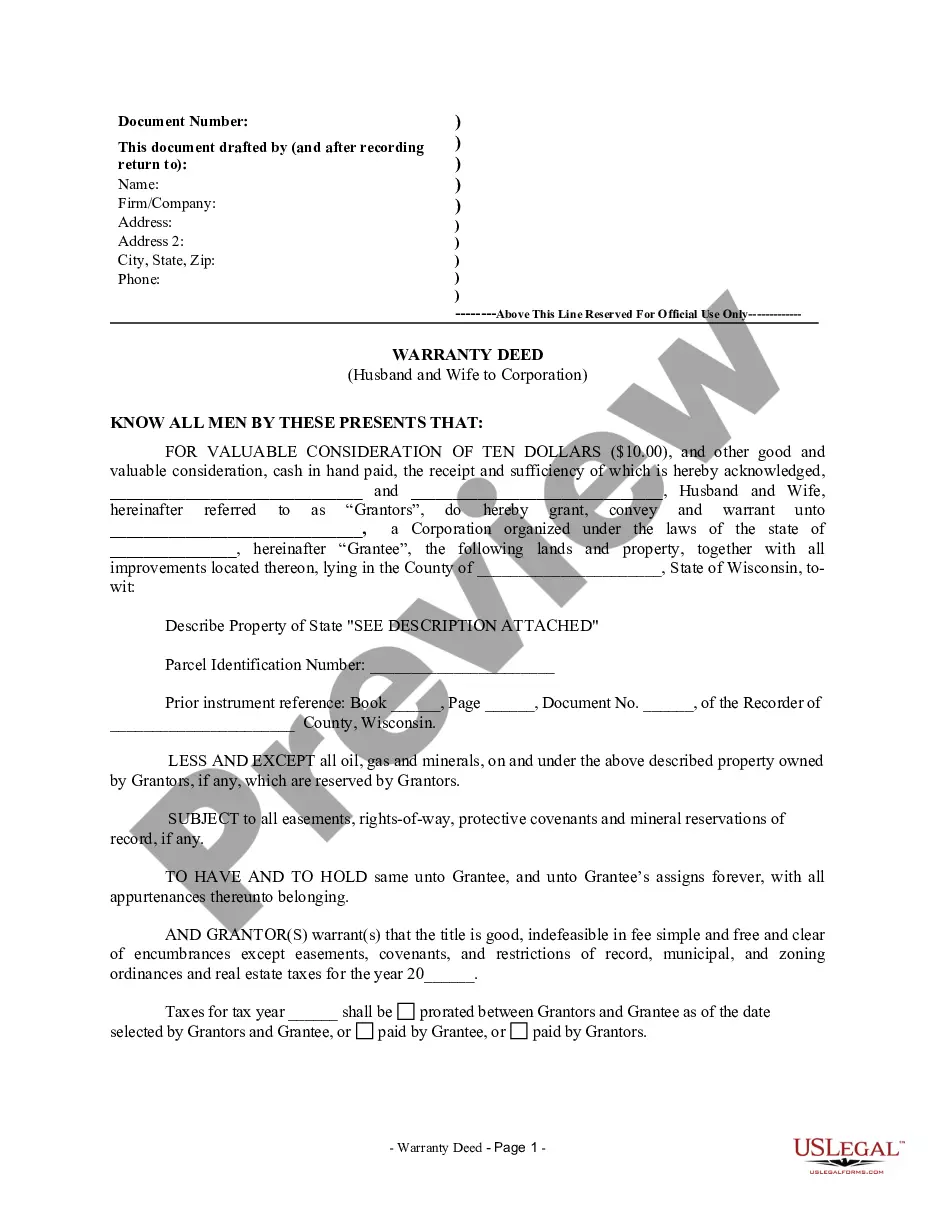
The Grant Deed from Husband and Wife to Husband and Wife is a legal document known as a Warranty Deed. It is used when a married couple (the grantors) wishes to transfer property ownership to themselves (the grantees) without changing any ownership interests. This deed provides a guarantee that the property is free from encumbrances unless otherwise stated, and it adheres to the relevant state laws.
Key components of this form
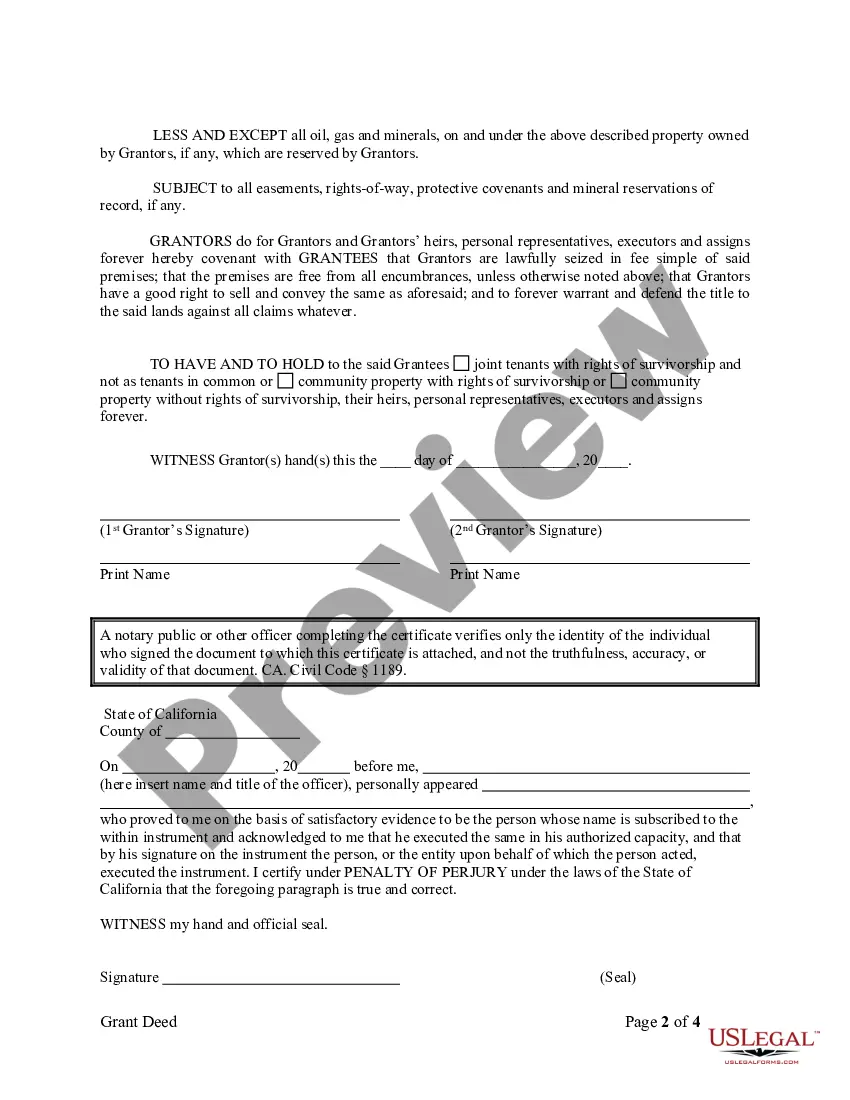
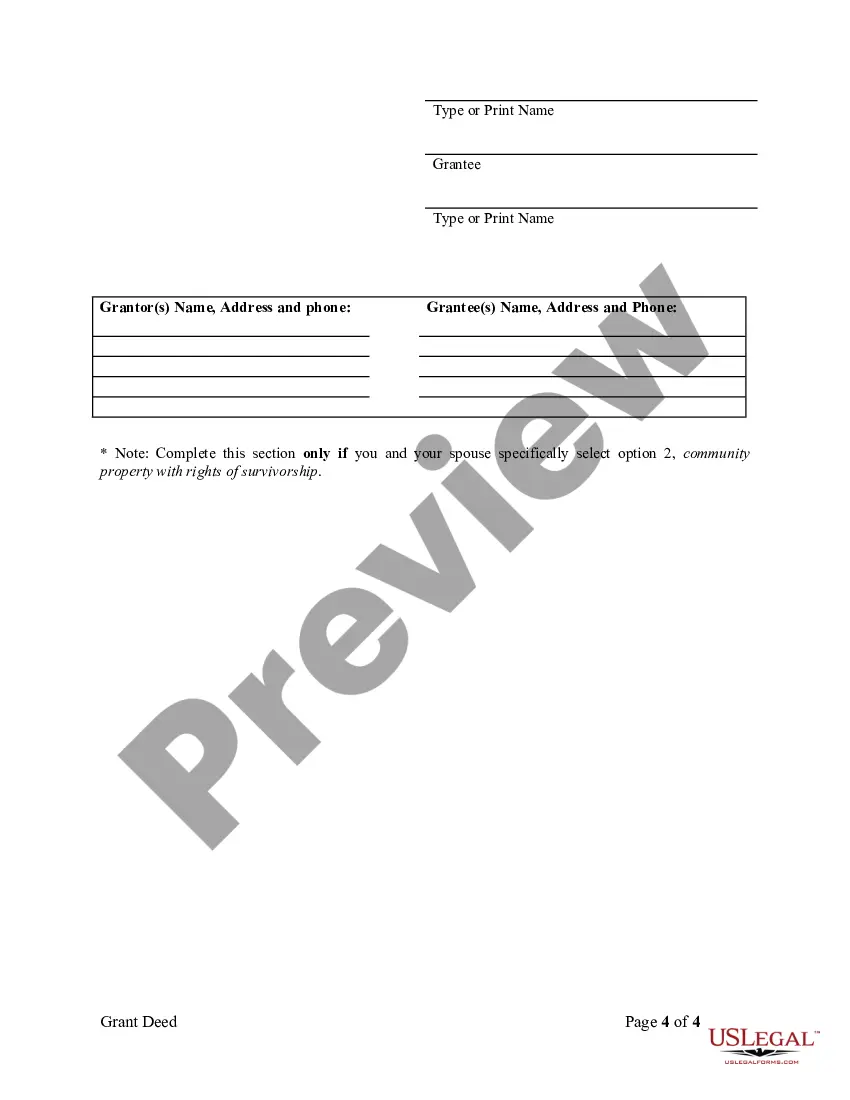
- Grantors' names and signatures
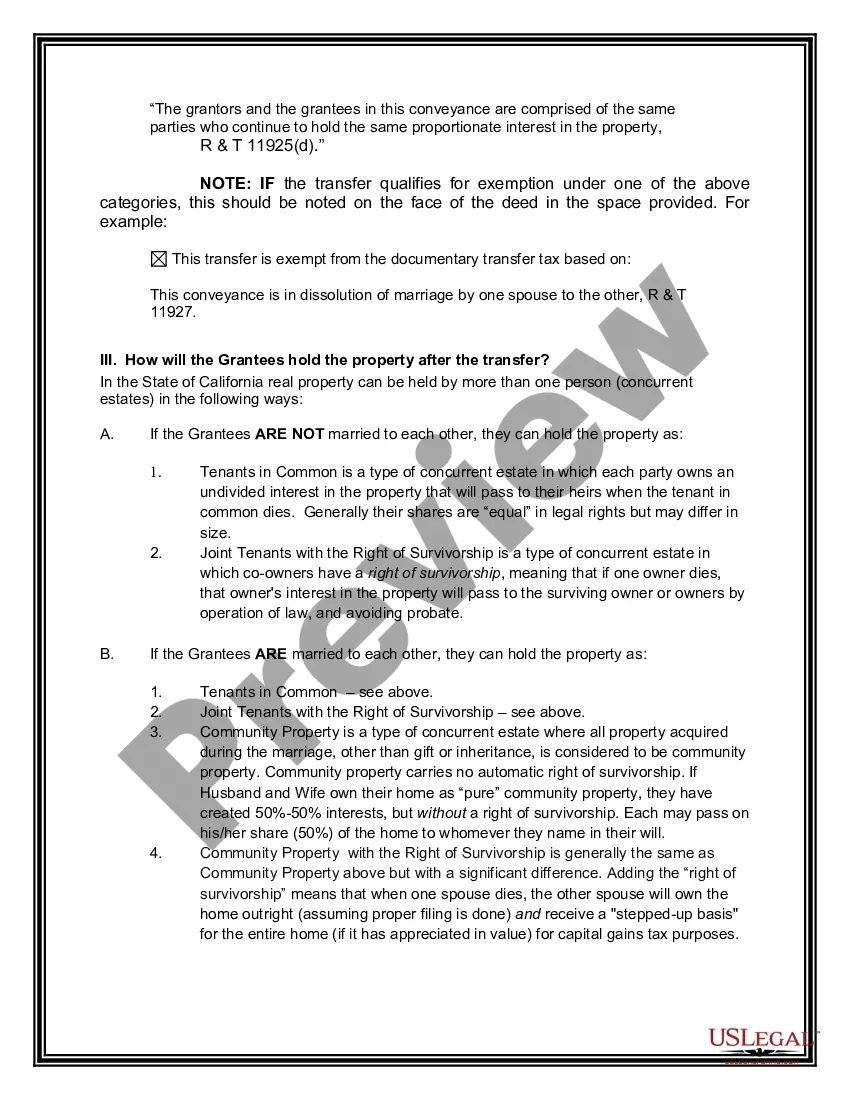
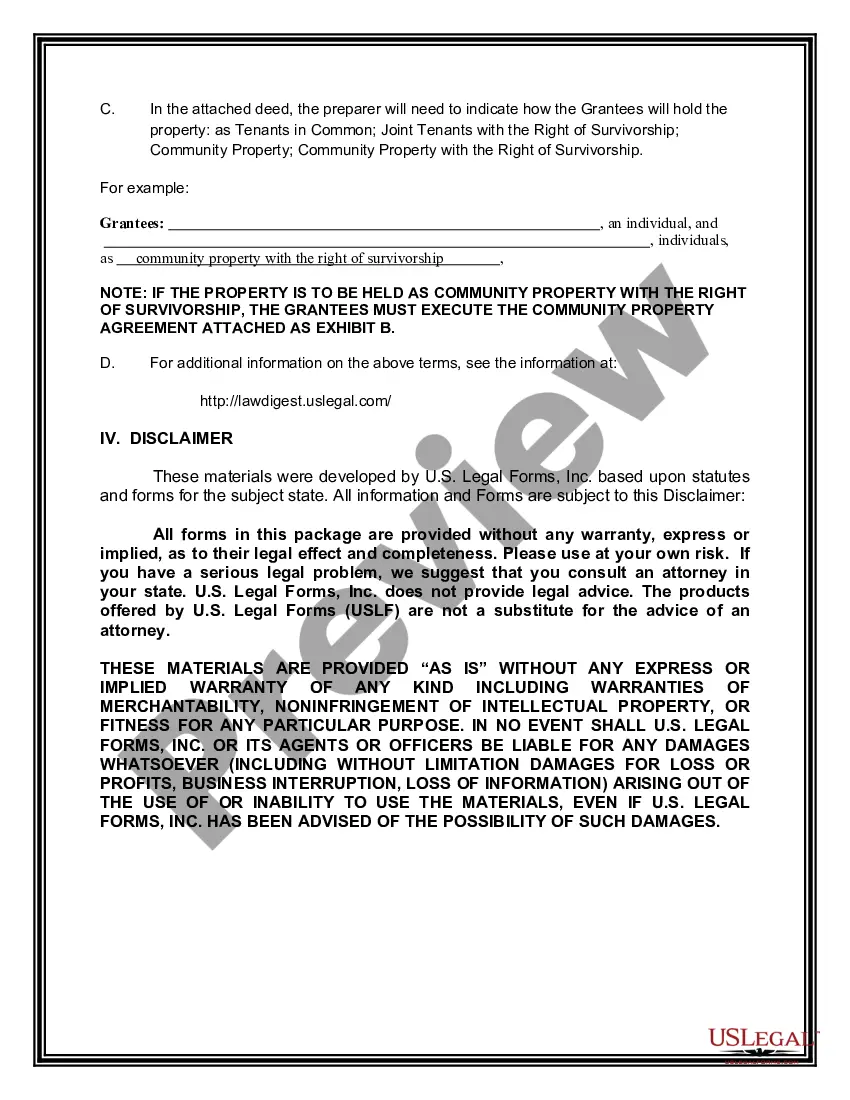
- Grantees' names and how they will hold the property
- Legal description of the property
- Reservation of oil, gas, and minerals, if applicable
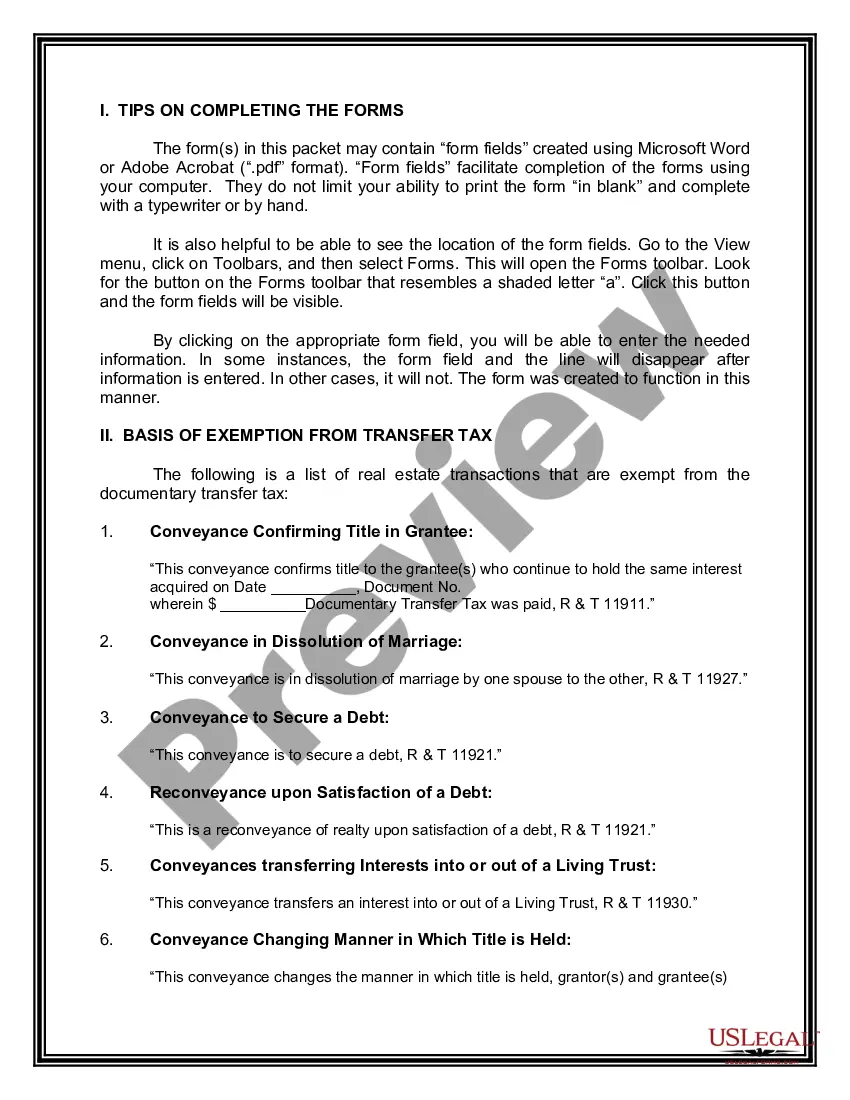
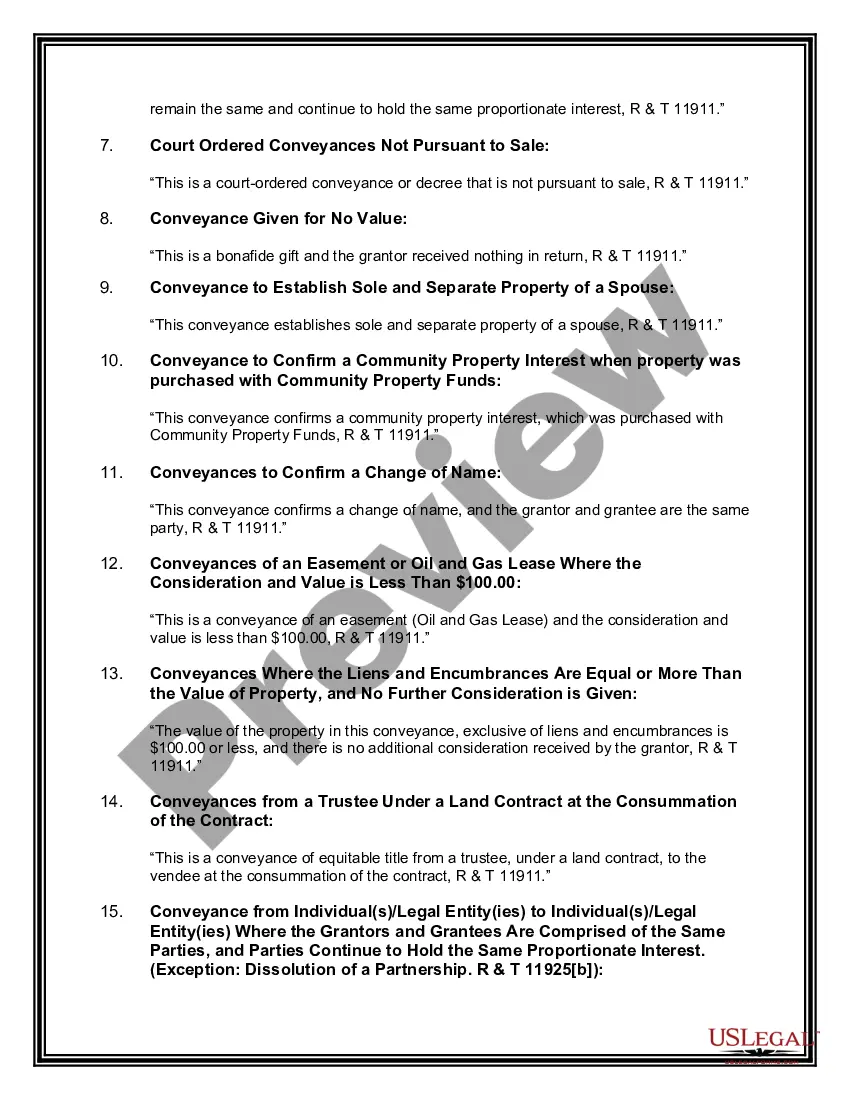
- Exemption from documentary transfer tax, if applicable

Common use cases
This form is typically used when a husband and wife want to formalize their ownership of real estate that they already co-own. This might occur for reasons such as simplifying ownership records, establishing rights of survivorship, or confirming their interests in the property without any sales involved.
Who this form is for
- Married couples looking to transfer property ownership between themselves
- Homeowners who wish to clarify how they hold title to their property
- Individuals involved in real estate transactions where simplifying title records is desired
How to complete this form
- Identify the grantors (husband and wife) and enter their names.
- Enter the names of the grantees (also husband and wife) and specify how they will hold the property.
- Provide a legal description of the property being conveyed.
- Include any reservations regarding oil, gas, and minerals, if necessary.
- Sign and date the document in the presence of a witness, if required by state law.
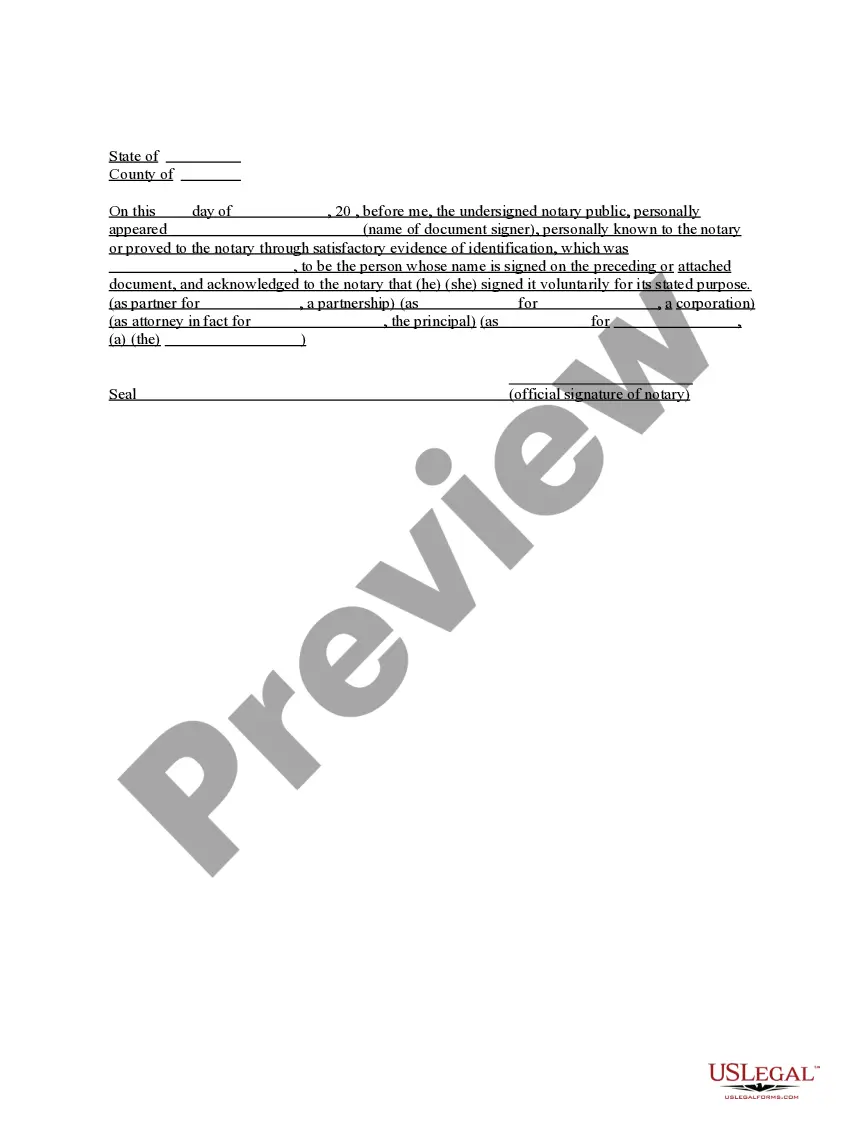
Does this form need to be notarized?
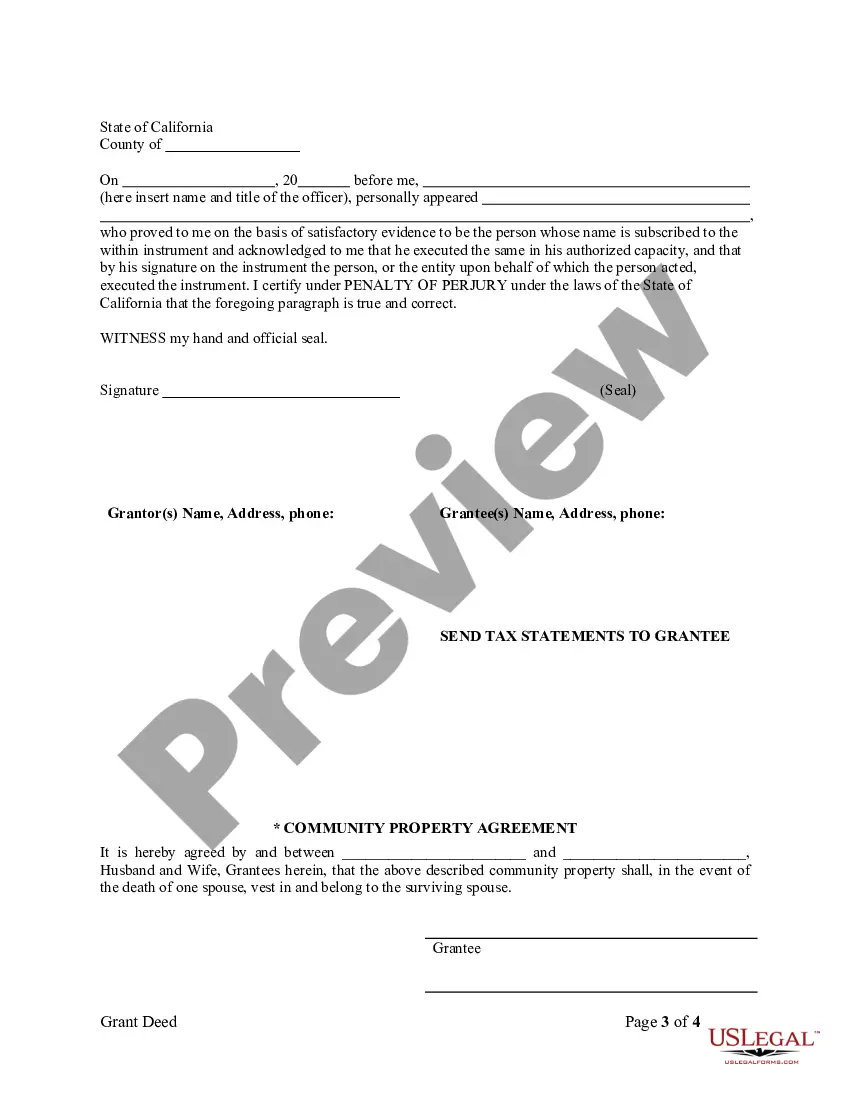
This form needs to be notarized to ensure legal validity. US Legal Forms provides secure online notarization powered by Notarize, allowing you to complete the process through a verified video call, available anytime.
Get your form ready online
Our built-in tools help you complete, sign, share, and store your documents in one place.
Make edits, fill in missing information, and update formatting in US Legal Forms—just like you would in MS Word.
Download a copy, print it, send it by email, or mail it via USPS—whatever works best for your next step.
Sign and collect signatures with our SignNow integration. Send to multiple recipients, set reminders, and more. Go Premium to unlock E-Sign.
If this form requires notarization, complete it online through a secure video call—no need to meet a notary in person or wait for an appointment.
We protect your documents and personal data by following strict security and privacy standards.

Make edits, fill in missing information, and update formatting in US Legal Forms—just like you would in MS Word.

Download a copy, print it, send it by email, or mail it via USPS—whatever works best for your next step.

Sign and collect signatures with our SignNow integration. Send to multiple recipients, set reminders, and more. Go Premium to unlock E-Sign.

If this form requires notarization, complete it online through a secure video call—no need to meet a notary in person or wait for an appointment.

We protect your documents and personal data by following strict security and privacy standards.
Common mistakes
- Failing to provide a complete legal description of the property.
- Not specifying how the grantees will hold the property.
- Missing signatures or dates, which can render the deed invalid.
- Overlooking any necessary reservations or exemptions that apply.
Why use this form online
- Convenience of accessing and downloading the form at any time.
- Editability to customize the template to meet specific needs.
- Reliability of using professionally drafted forms that comply with state laws.
Looking for another form?
Form popularity
FAQ
To obtain a copy of your grant deed in California, you must request it from your local county recorder's office. Many counties offer online services, allowing you to search and access your deed digitally. If you prefer, you can also visit the office in person or submit a formal request. This is a straightforward process that can help you manage your California Grant Deed from Husband and Wife to Husband and Wife efficiently.
Adding a name to a grant deed in California requires you to draft a new grant deed, which must include the current and new property owner's names. After preparing the deed, both the current owner and the new owner need to sign it in front of a notary public. Finally, submit the signed document to the county recorder's office for official recording. This change is important for updating your California Grant Deed from Husband and Wife to Husband and Wife.
To amend a grant deed in California, you need to create a new grant deed that reflects the changes you wish to make. This document must be completed, signed, and notarized just like the original. You then need to file the new deed with the county recorder's office. This process ensures that your latest changes are legally recognized, especially when dealing with a California Grant Deed from Husband and Wife to Husband and Wife.
When you add someone to your deed in California, it can affect property taxes. In many cases, transferring ownership might trigger a reassessment of the property, which could lead to higher taxes. However, if you are just adding your spouse, the transfer may qualify for an exclusion, helping to keep your property tax rate stable. It’s wise to consult a tax professional for advice tailored to your specific situation regarding a California Grant Deed from Husband and Wife to Husband and Wife.
In California, adding a spouse to a deed involves completing a new grant deed that lists both spouses as owners. You must fill out the grant deed form accurately, ensuring you include both names and their shares in the property. Once completed, sign the document in front of a notary public, and then record the new deed with the county recorder's office. This process effectively updates the ownership structure to reflect your California Grant Deed from Husband and Wife to Husband and Wife.
While adding a name to a deed can be beneficial, it also has potential drawbacks. For instance, it may complicate future property sales or refinancing processes, and could expose the property to the new owner's financial situations. It is wise to consider these factors and seek advice, perhaps from platforms like US Legal Forms, to make informed decisions.
Yes, you can add someone to a deed even if they are not on the mortgage. A California Grant Deed from Husband and Wife to Husband and Wife allows for this flexibility, as the deed and mortgage are separate instruments. However, keep in mind that the lender may still consider the added individual when making decisions about future financing.
To add your spouse to your deed without refinancing, you can complete a California Grant Deed from Husband and Wife to Husband and Wife. Fill out the appropriate form, sign it, and submit it to your local county recorder. Online services like US Legal Forms can help streamline this process and ensure you meet all legal requirements.
Adding a spouse to a deed is relatively straightforward when using a California Grant Deed from Husband and Wife to Husband and Wife. You typically need to fill out the grant deed form, have it signed, and file it with your county recorder's office. While the process is manageable, it's often beneficial to consult an attorney or use a reliable platform like US Legal Forms for the necessary documents and guidance.
Yes, you can transfer shares from husband to wife without significant legal barriers, but it must be done properly to ensure compliance with applicable laws. This may require documentation such as a stock transfer form along with board or company approval, depending on the business structure. It’s essential to understand the implications this transfer may have on taxes and ownership rights. Utilizing services like USLegalForms can clarify this process and guide you through related documentation.