Arizona Warranty Deed for Fiduciary
What this document covers
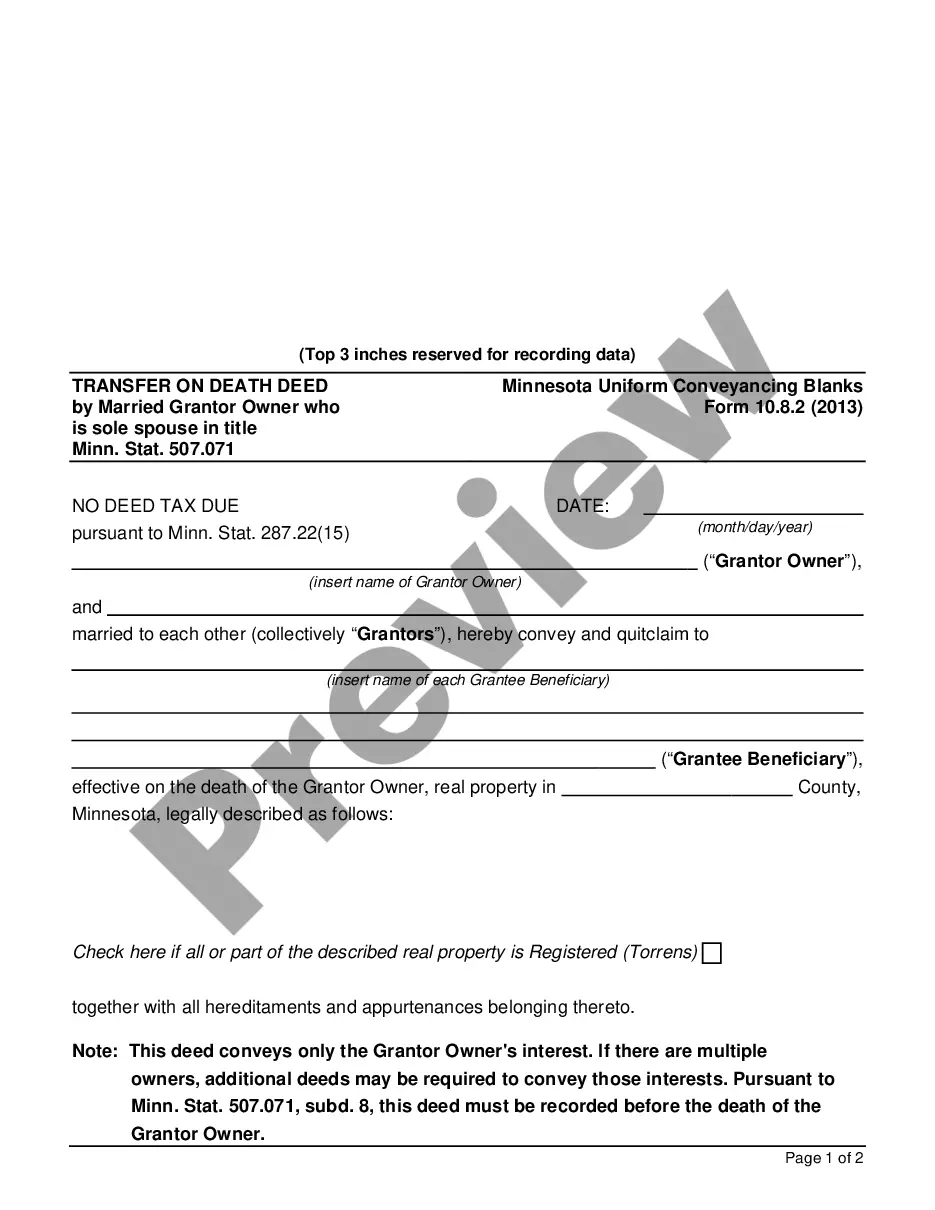
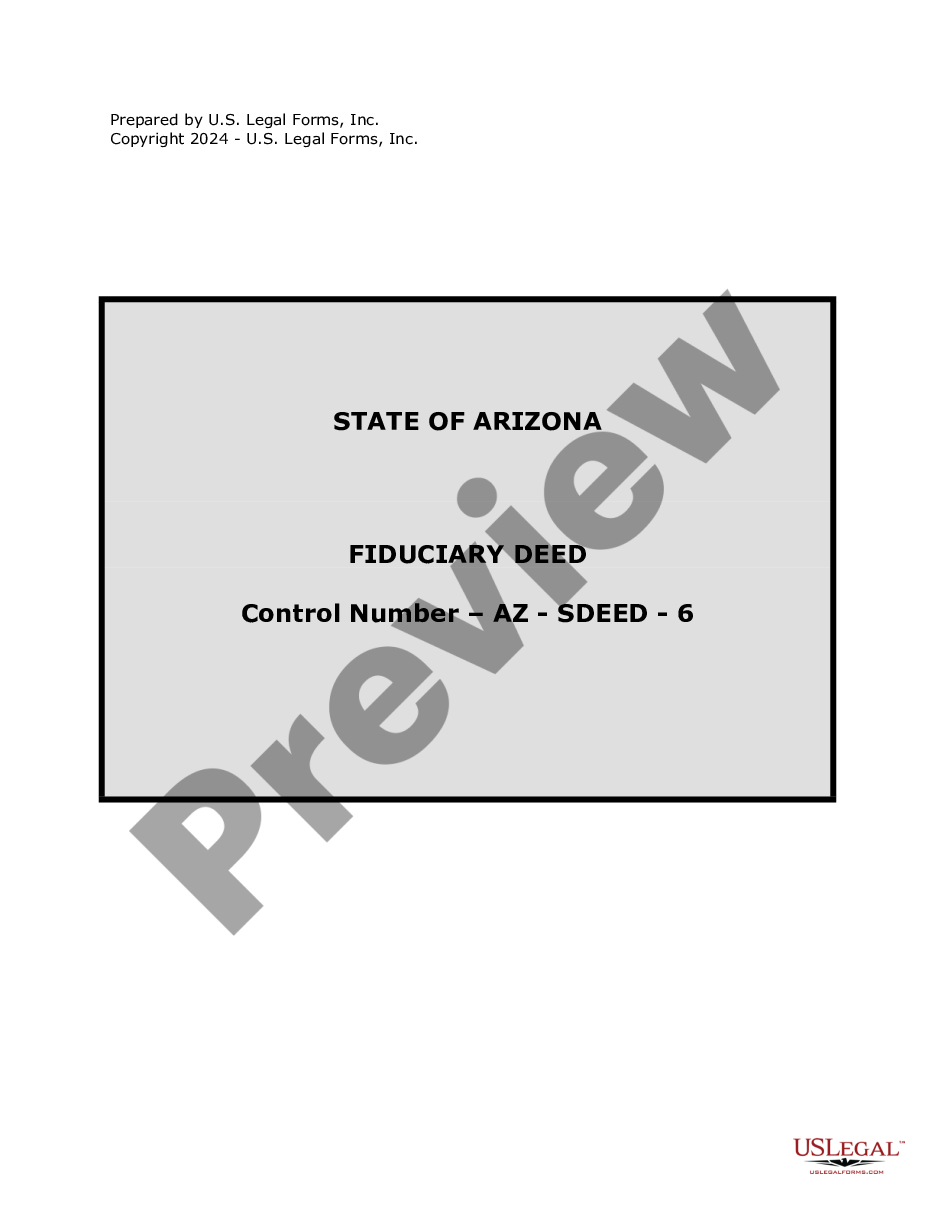
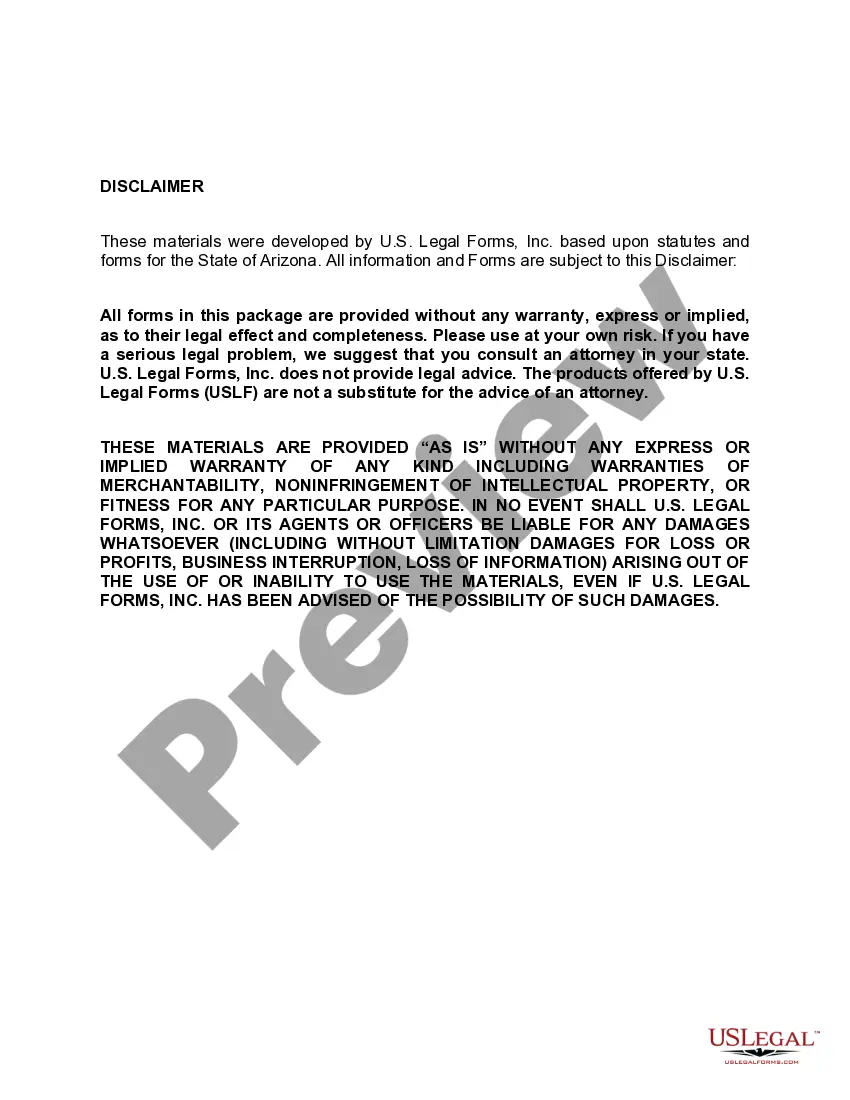
The Warranty Deed for Fiduciary is a legal document used to transfer property ownership from a fiduciary, such as an executor, trustee, guardian, or conservator, to an individual or entity. This form differs from standard warranty deeds because it specifically pertains to property transactions involving fiduciaries who act on behalf of another party, ensuring that the transaction is conducted legally and with the appropriate authority.
Key parts of this document
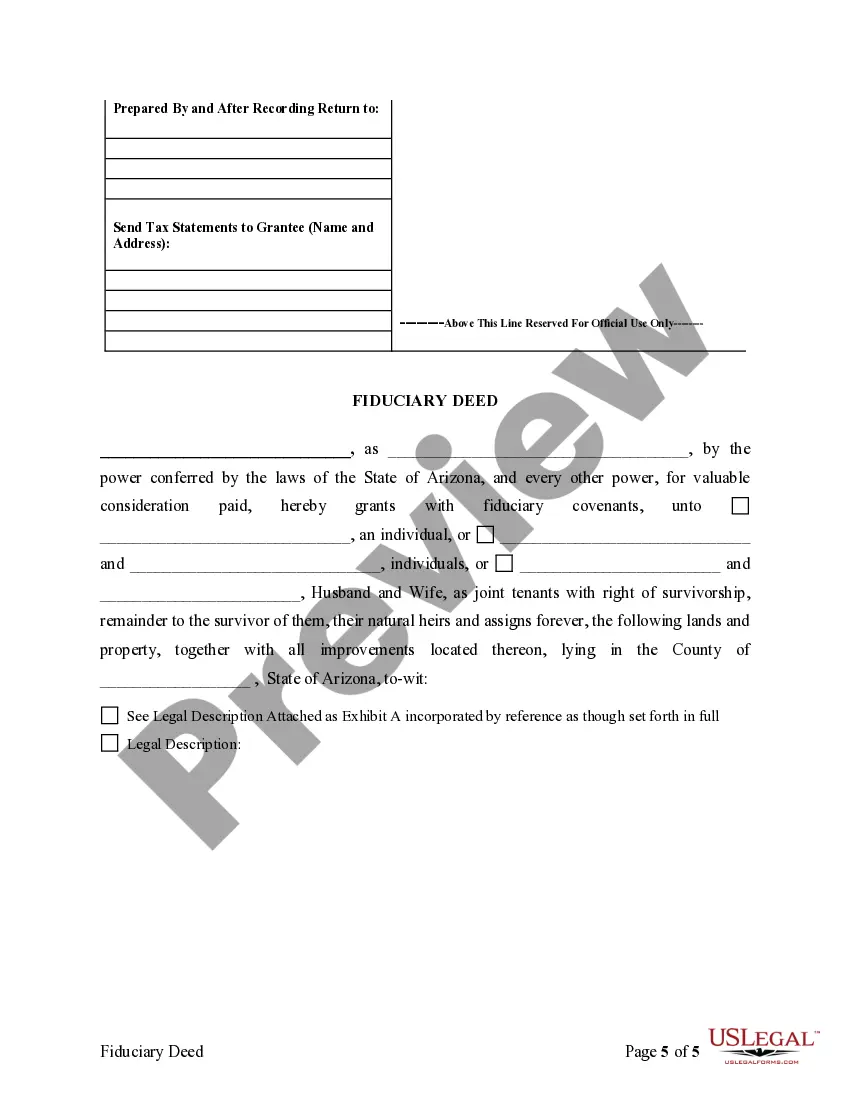
- Grantor and grantee information, identifying the fiduciary making the transfer and the individual or entity receiving the property.
- A detailed legal description of the property being transferred, ensuring clarity about what is included in the transaction.
- Fiduciary covenants that confirm the authority of the grantor to make the transfer.
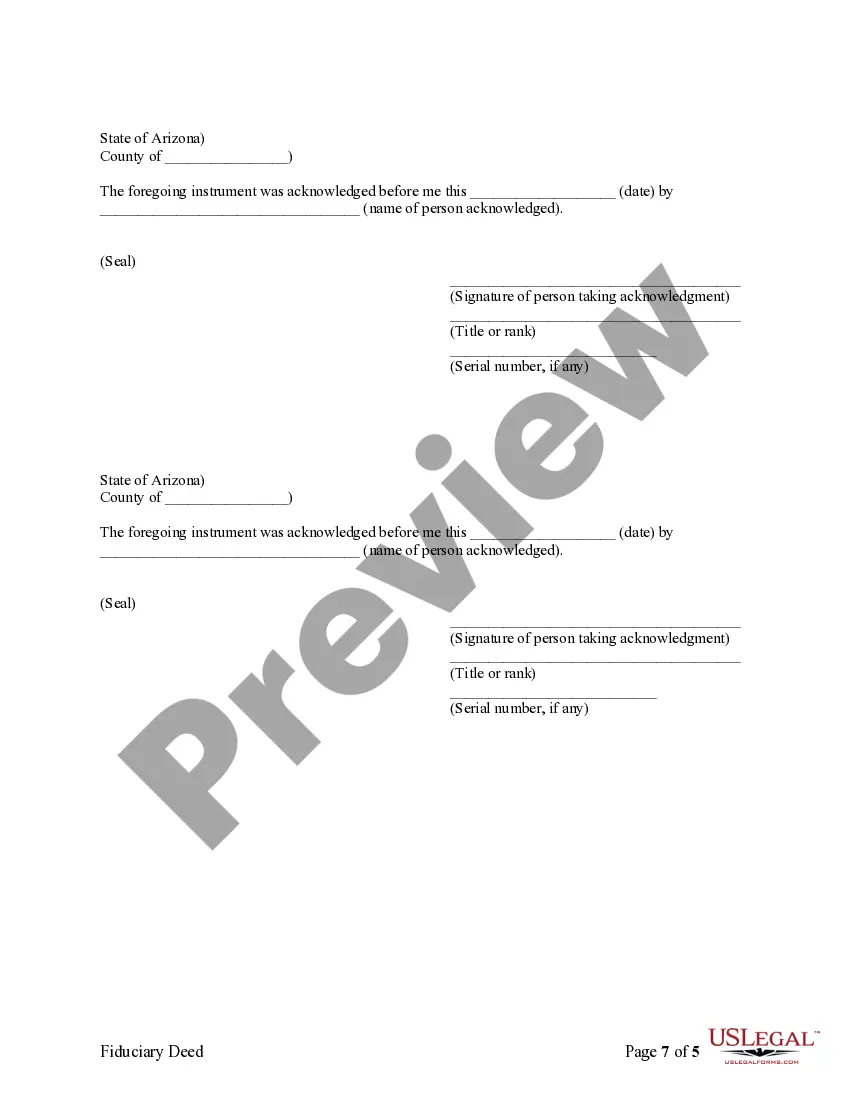
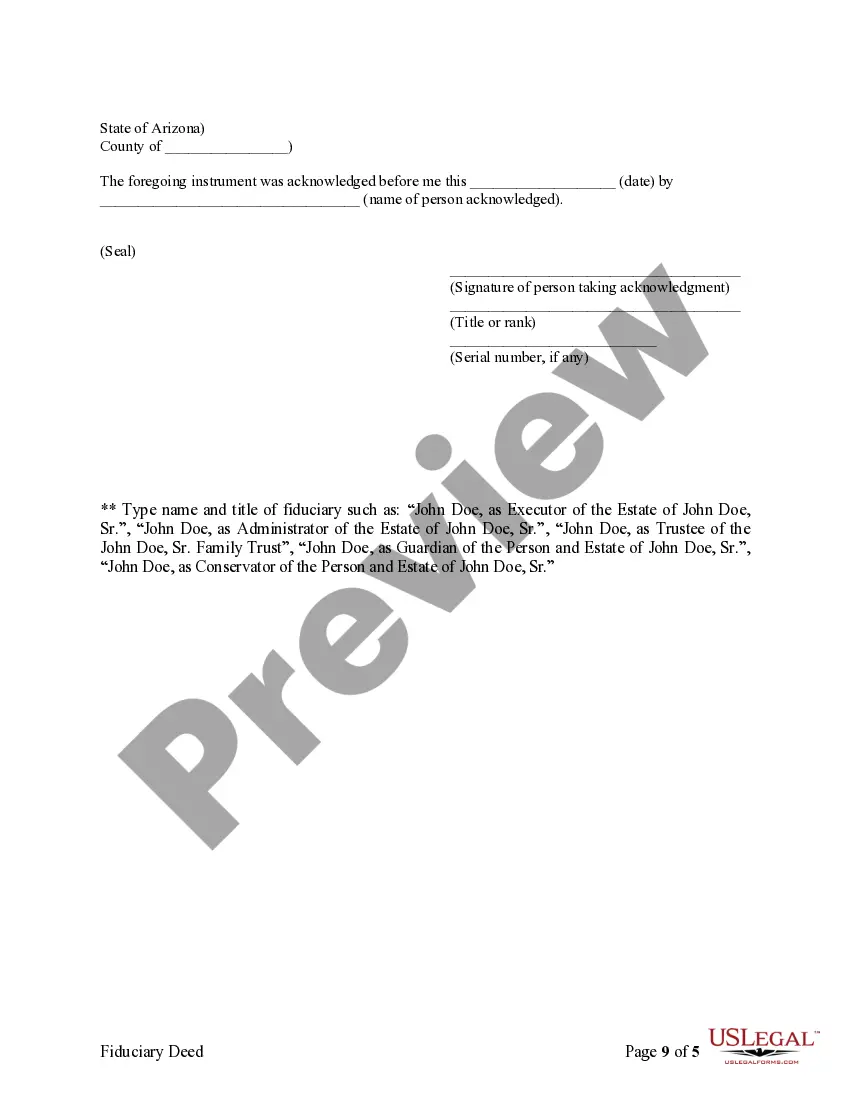
- Notary acknowledgment section to certify the authenticity of the signatures.
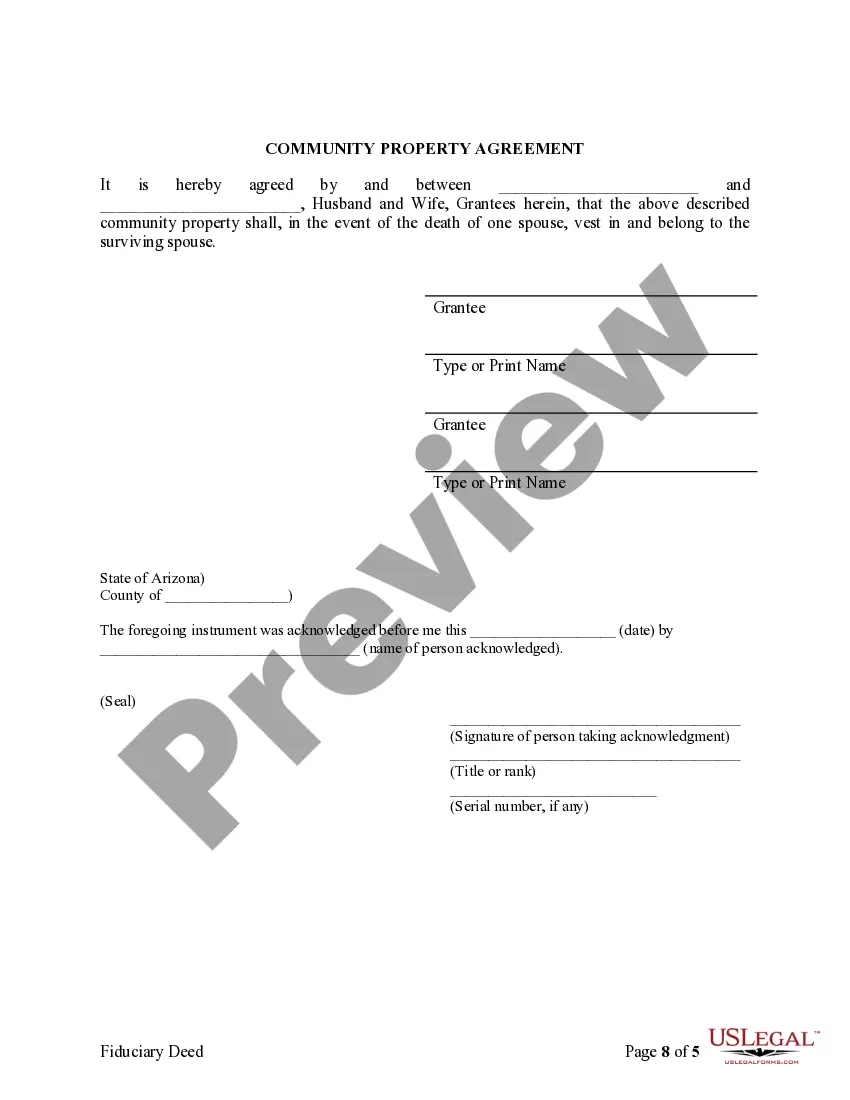
- Community property agreement option for married couples, clarifying ownership rights upon death.




When to use this form
This form should be used when a fiduciary needs to transfer property as part of their official duties. Typical scenarios include the execution of a will, administration of a trust, or management of a conservatorship. It is essential in transactions where a fiduciary holds the title to the property on behalf of another party and must ensure legal compliance in the transfer process.
Who this form is for
- Executors of a will tasked with transferring property to beneficiaries.
- Trustees managing property for the benefit of trust beneficiaries.
- Guardians or conservators acting on behalf of individuals unable to manage their affairs.
- Individuals involved in community property agreements related to the transfer of jointly held assets.
How to complete this form
- Identify the grantor: Input the name and capacity of the fiduciary transferring the property.
- Detail the grantee: Enter the name(s) of the individual(s) or entity receiving the property.
- Specify the property: Include a legal description of the property, referring to any attached exhibits if necessary.
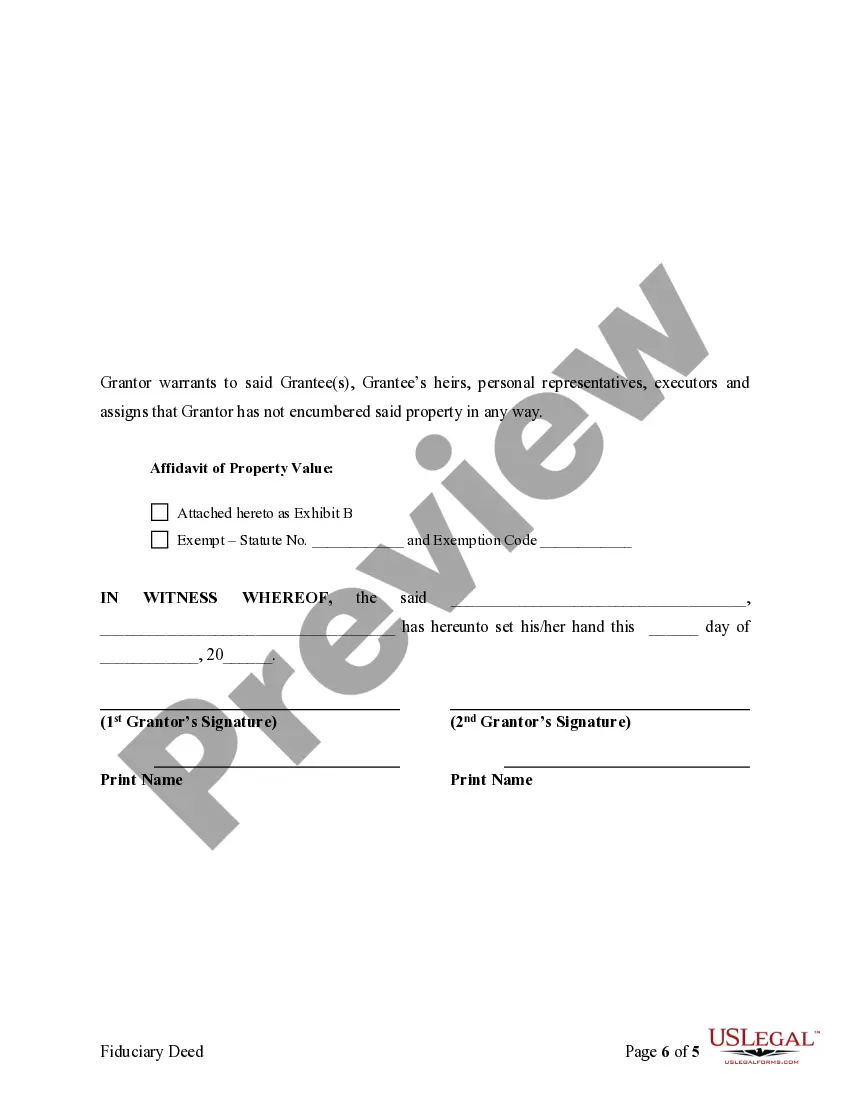
- Sign and date the form: Ensure that the fiduciary signs in the required section, along with the date.
- Obtain notarization: Have the document notarized to validate the signatures and the fiduciary's authority.
Notarization requirements for this form
Yes, this form must be notarized to be legally valid. This process confirms the identity of the signer and the authenticity of the signatures, ensuring that the document is executed correctly. U.S. Legal Forms offers integrated online notarization, allowing you to complete the notarization via secure video call, available 24/7.
Get your form ready online
Our built-in tools help you complete, sign, share, and store your documents in one place.
Make edits, fill in missing information, and update formatting in US Legal Forms—just like you would in MS Word.
Download a copy, print it, send it by email, or mail it via USPS—whatever works best for your next step.
Sign and collect signatures with our SignNow integration. Send to multiple recipients, set reminders, and more. Go Premium to unlock E-Sign.
If this form requires notarization, complete it online through a secure video call—no need to meet a notary in person or wait for an appointment.
We protect your documents and personal data by following strict security and privacy standards.

Make edits, fill in missing information, and update formatting in US Legal Forms—just like you would in MS Word.

Download a copy, print it, send it by email, or mail it via USPS—whatever works best for your next step.

Sign and collect signatures with our SignNow integration. Send to multiple recipients, set reminders, and more. Go Premium to unlock E-Sign.

If this form requires notarization, complete it online through a secure video call—no need to meet a notary in person or wait for an appointment.

We protect your documents and personal data by following strict security and privacy standards.
Mistakes to watch out for
- Failing to provide a complete legal description of the property.
- Not obtaining the necessary notarization before submitting the form.
- Forgetting to include all required signatures from relevant parties.
- Using incorrect capacity titles for the fiduciary, which can invalidate the transfer.
Benefits of using this form online
- Convenience of immediate access to legally compliant forms.
- Editability of the form allows for personalization without the hassle of printing and writing.
- Reliable resources provided by licensed attorneys ensure the accuracy of the document.
- Easy download options for immediate use in various situations.
Looking for another form?
Form popularity
FAQ
To record a new deed in Arizona, first ensure the deed is properly completed and signed by all parties involved. Then, bring the original deed to the appropriate county recorder’s office, where it will be officially stamped and recorded. Recording fees will apply. Using the Arizona Warranty Deed for Fiduciary can simplify this process, as it provides clarity and legal standing for trust-related property transfers.
In Arizona, a warranty deed offers more protection than a quit claim deed. A warranty deed guarantees that the grantor holds clear title to the property and will defend against claims. Conversely, a quit claim deed transfers whatever interest the grantor has without any guarantees. If you need to ensure protection for your property transfer, an Arizona Warranty Deed for Fiduciary is a stronger choice.
To transfer a deed to a trust in Arizona, you first need to obtain the current title to the property. Next, prepare a new Arizona Warranty Deed for Fiduciary, naming the trust as the grantee. After that, both the trust’s trustee and the property owner must sign the deed. Finally, record the new deed with the county recorder's office to complete the transfer.
Filling out an Arizona Warranty Deed for Fiduciary is straightforward but requires careful attention to detail. First, ensure you include the legal description of the property and the names of all parties involved. After that, you can utilize online platforms like US Legal Forms, which provide step-by-step instructions and templates to simplify the process. By following these guidelines, you can efficiently complete the deed correctly.
A fiduciary deed is specifically used when a fiduciary, such as an executor of an estate, transfers property on behalf of another party. In contrast, an Arizona Warranty Deed for Fiduciary guarantees the title and offers protections against any claims, just like a regular warranty deed. Understanding these distinctions helps ensure that you select the right deed for your situation, especially when dealing with estate settlements or trusts.
In Texas, a warranty deed provides a full guarantee against any title defects occurring during the entire history of the property, while a special warranty deed only covers defects that arose during the grantor's ownership. Therefore, when using an Arizona Warranty Deed for Fiduciary purposes, it’s essential to understand these differences, especially if you are purchasing property from different states. The choice of deed can significantly impact the assurances provided to the buyer.
The phrase 'in consideration of $10' in an Arizona Warranty Deed for Fiduciary indicates a nominal amount to establish a legal transaction. This nominal consideration allows for the transfer of property without necessarily indicating its fair market value. It is commonly used in family transfers or gifts where the actual value is not being disclosed. Thus, this practice does not affect the legal validity of the deed.
You can absolutely sell your property with a warranty deed in place. The warranty deed ensures that you hold clear title to the property, making it easier to transfer ownership to a new buyer. When selling, ensure all terms are adequately documented, and consider using services like USLegalForms to guide you through the process. With the right resources, you can successfully manage your Arizona Warranty Deed for Fiduciary.
Yes, a warranty deed serves as legal proof of ownership for a property. It confirms that the seller transferred the title to the buyer, ensuring the buyer receives all rights associated with the property. This makes an Arizona Warranty Deed for Fiduciary a crucial document in real estate transactions. Always keep it safe, as it validates your ownership in the eyes of the law.
A beneficiary deed in Arizona allows property owners to designate who will inherit their property upon passing. To create this deed, you must draft and record it with the county recorder's office. For assistance in drafting the beneficiary deed correctly, consider utilizing USLegalForms, which offers templates tailored for Arizona property laws. This ensures that your Arizona Warranty Deed for Fiduciary is executed according to your wishes.