Arizona Letter from Landlord to Tenant that Sublease granted - Rent Paid by Subtenant, but Tenant Still Liable for Rent and Damages
Overview of this form
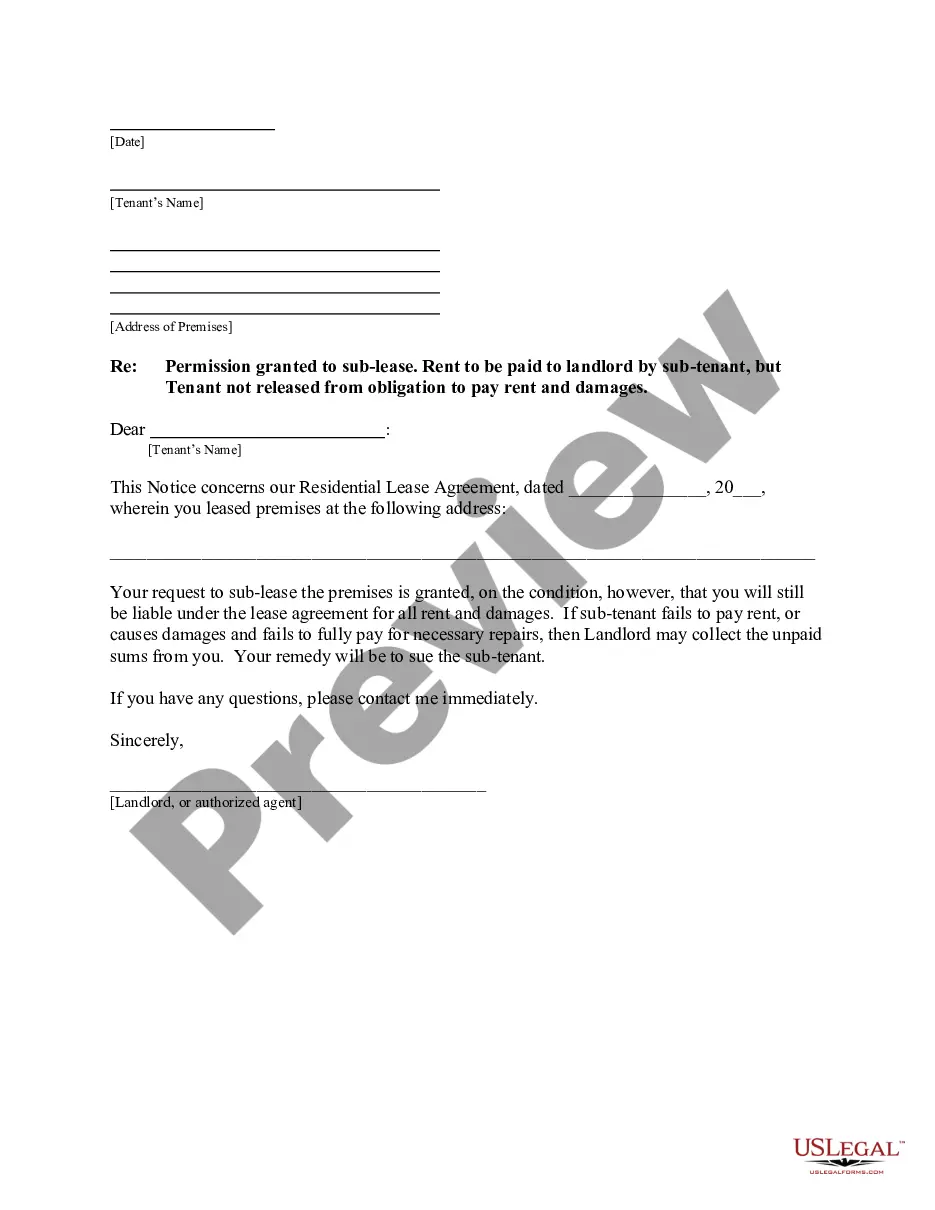
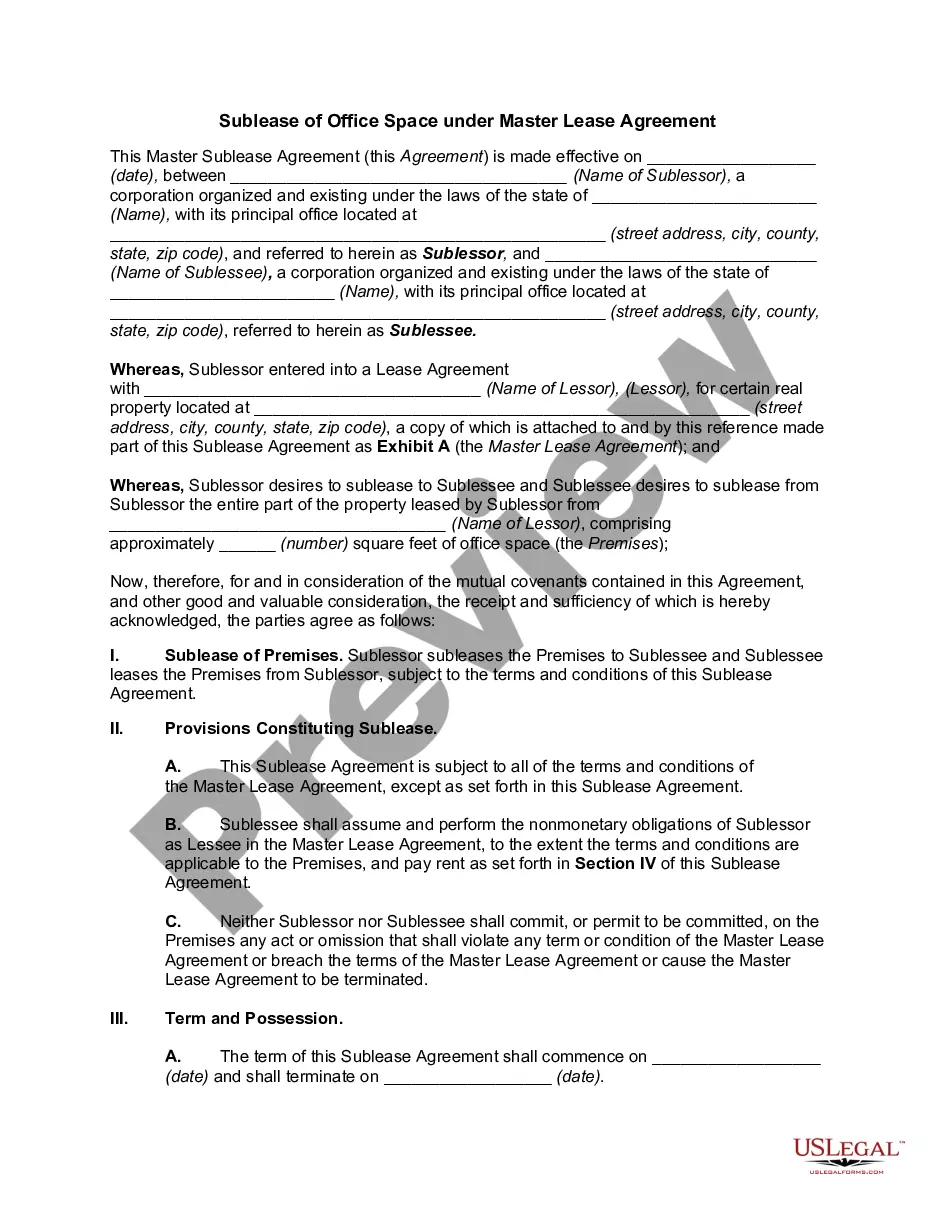
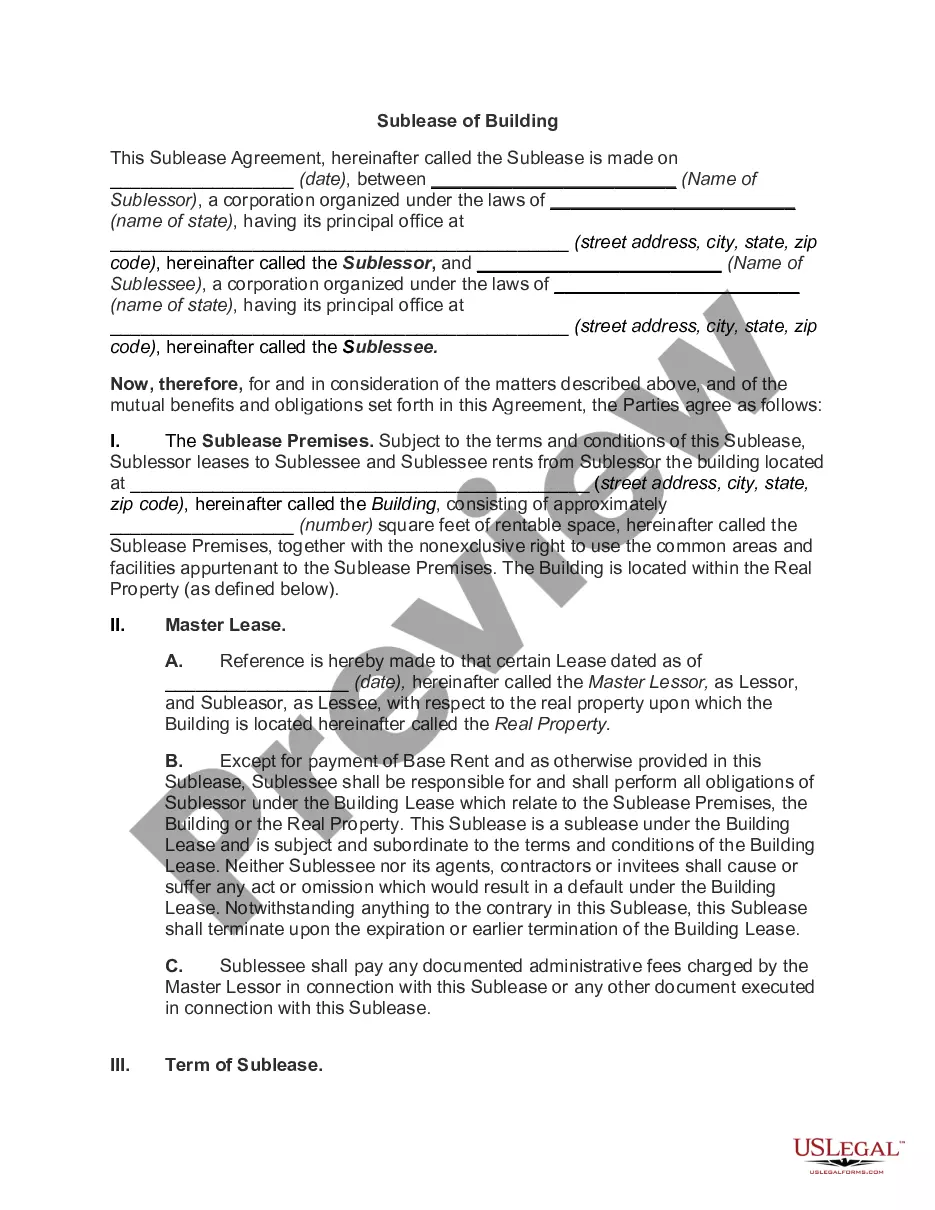
This form is a Letter from Landlord to Tenant that confirms a sublease has been granted. The sub-tenant will be responsible for rent payments; however, the tenant retains liability for all rent and damages under the original lease agreement. This form is essential in clearly communicating the responsibilities of both the tenant and the landlord regarding the sublease arrangement, distinguishing it from other landlord-tenant communications in its specific emphasis on liability and payment structure.
Form components explained
- Statement granting the sublease request.
- Clarification that the tenant remains liable for rent and damages.
- Details on the consequences if the sub-tenant fails to pay rent or causes damage.
- Contact information for the landlord or authorized agent.

When to use this form
This form is used when a tenant wishes to sublease a rented property and the landlord has agreed to the sublease. It is crucial to use this form when there are specific terms outlining the tenant's ongoing liabilities, particularly regarding unpaid rent or damages caused by the sub-tenant. Using this letter helps prevent disputes by clearly establishing responsibilities and expectations between all parties involved.
Who needs this form
- Landlords who approve a tenant's request to sublease their rental property.
- Tenants who wish to officially communicate the subleasing agreement to their landlord.
- Sub-tenants who want a formal acknowledgment of their rental responsibilities.
Instructions for completing this form
- Identify the parties involved: include the names of the landlord, tenant, and sub-tenant.
- State that the sublease request is granted.
- Clarify that the tenant remains liable for any unpaid rent or damages.
- Include contact information for future inquiries.
- Sign and date the letter to validate the agreement.
Is notarization required?
Notarization is generally not required for this form. However, certain states or situations might demand it. You can complete notarization online through US Legal Forms, powered by Notarize, using a verified video call available anytime.
Get your form ready online
Our built-in tools help you complete, sign, share, and store your documents in one place.
Make edits, fill in missing information, and update formatting in US Legal Forms—just like you would in MS Word.
Download a copy, print it, send it by email, or mail it via USPS—whatever works best for your next step.
Sign and collect signatures with our SignNow integration. Send to multiple recipients, set reminders, and more. Go Premium to unlock E-Sign.
If this form requires notarization, complete it online through a secure video call—no need to meet a notary in person or wait for an appointment.
We protect your documents and personal data by following strict security and privacy standards.

Make edits, fill in missing information, and update formatting in US Legal Forms—just like you would in MS Word.

Download a copy, print it, send it by email, or mail it via USPS—whatever works best for your next step.

Sign and collect signatures with our SignNow integration. Send to multiple recipients, set reminders, and more. Go Premium to unlock E-Sign.

If this form requires notarization, complete it online through a secure video call—no need to meet a notary in person or wait for an appointment.

We protect your documents and personal data by following strict security and privacy standards.
Common mistakes to avoid
- Failing to state the tenant's continued liability for rent and damages.
- Not providing contact information for the landlord or authorized agent.
- Leaving out the date of the agreement, which can lead to confusion.
Benefits of completing this form online
- Convenient access to downloadable legal templates anytime and anywhere.
- Editable format allows for easy customization to suit specific needs.
- Templates drafted by licensed attorneys ensure legal compliance and validity.
Legal use & context
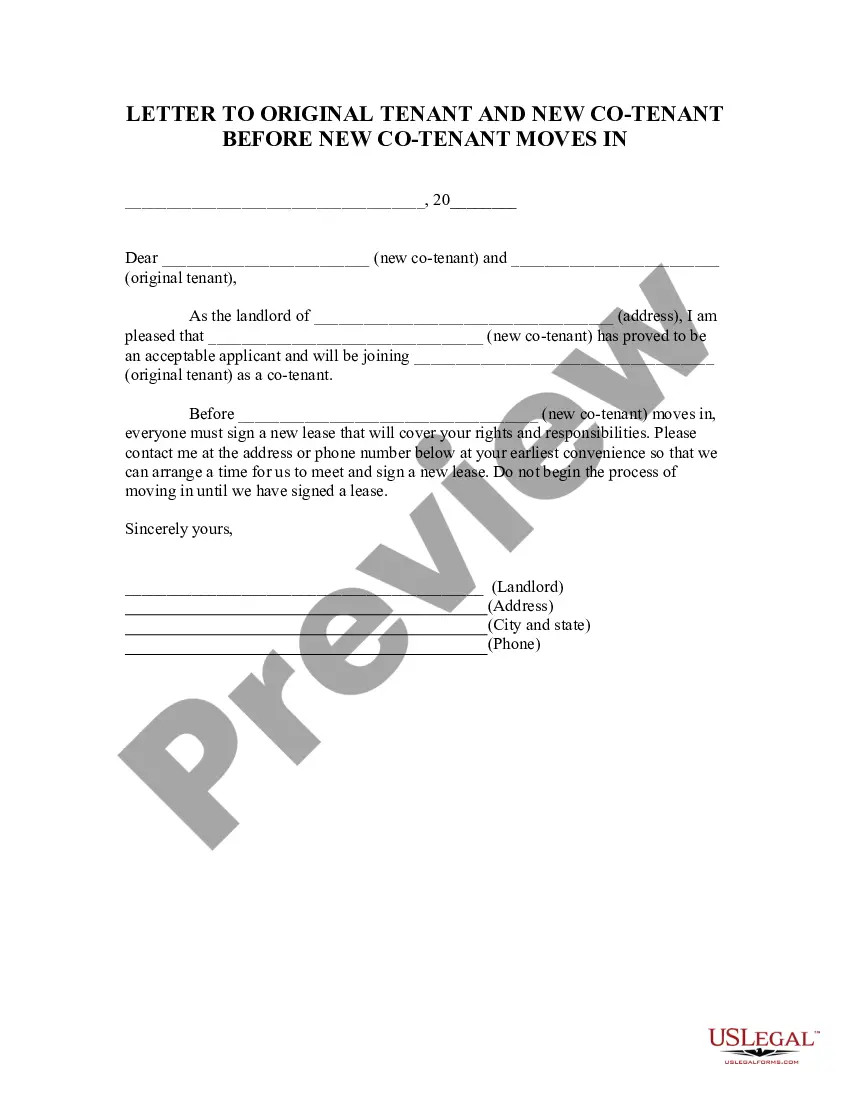
- This letter serves as a formal acknowledgment of the sublease from landlord to tenant.
- It establishes the legal framework regarding tenant liability, which is enforceable in case of disputes.
- The form supports clear communication, reducing the risk of misunderstandings between parties.
Key takeaways
- The form confirms sublease approval while maintaining the tenant's liability for rent and damages.
- Clear communication of responsibilities helps avoid future disputes.
- This document is customizable and can be used in various states with specific adaptations as needed.
Looking for another form?


Form popularity
FAQ
Subleasing in Arizona allows a tenant to rent out their living space to another individual, known as a subtenant. The original tenant must obtain permission from the landlord and ensure that the sublease complies with the original lease agreement. Keep in mind that even after subleasing, the tenant remains responsible for the property's rent and damages, as specified in section 33-1324-a.
Landlord harassment includes unwanted behavior by a landlord, such as frequent unannounced visits or threats of eviction without cause. Such actions can create a hostile living environment and violate tenant rights. Tenants who feel harassed may need to document incidents and seek legal protection.
Landlord retaliation occurs when a landlord takes adverse action against a tenant for exercising legal rights, such as making complaints about unsafe living conditions. This could include raising rent or evicting the tenant shortly after they speak out. If you suspect retaliatory actions, you might want to explore legal options available through platforms like US Legal Forms.
Section 33-1324-a outlines the conditions under which a tenant can sublet their rental property. It emphasizes that while a sublease can transfer some responsibilities to the subtenant, it does not relieve the original tenant of their obligations. Familiarity with this section is essential when dealing with subletting scenarios.
In Arizona, landlords cannot retaliate against tenants for exercising their rights. They are also prohibited from entering the rental property without proper notice and must maintain habitable living conditions. It's important for tenants to know their rights to ensure they are not subjected to unfair treatment.
A retaliatory notice is a legal document issued by a landlord in response to a tenant exercising their rights, such as reporting maintenance issues or joining a tenant's organization. In Arizona, this type of notice can be deemed illegal if it is proven to be retaliatory. If you receive a retaliatory notice, consider consulting legal resources or platforms like US Legal Forms for assistance.
If you have any questions or concerns, please call (602) 771-1000.
The landlord can then immediately go to court and file an eviction lawsuit against the tenant. Because the unconditional quit notice is immediate and the tenant cannot correct the situation, it can only be used in the following situations: discharging a weapon.
What is the Law? In California, there is no legal definition for unsafe living conditions. Generally, the rule of thumb is that if your living environment affects your health or safety, then it can be considered an unsafe living condition.
Withhold Rent for Repairs Under Arizona statute, a tenant has the right to withhold rent or make deductions from their monthly rent if certain repair requests are not met by the landlord or completed in a timely manner.