Arizona Final Notice of Default for Past Due Payments in connection with Contract for Deed
Overview of this form
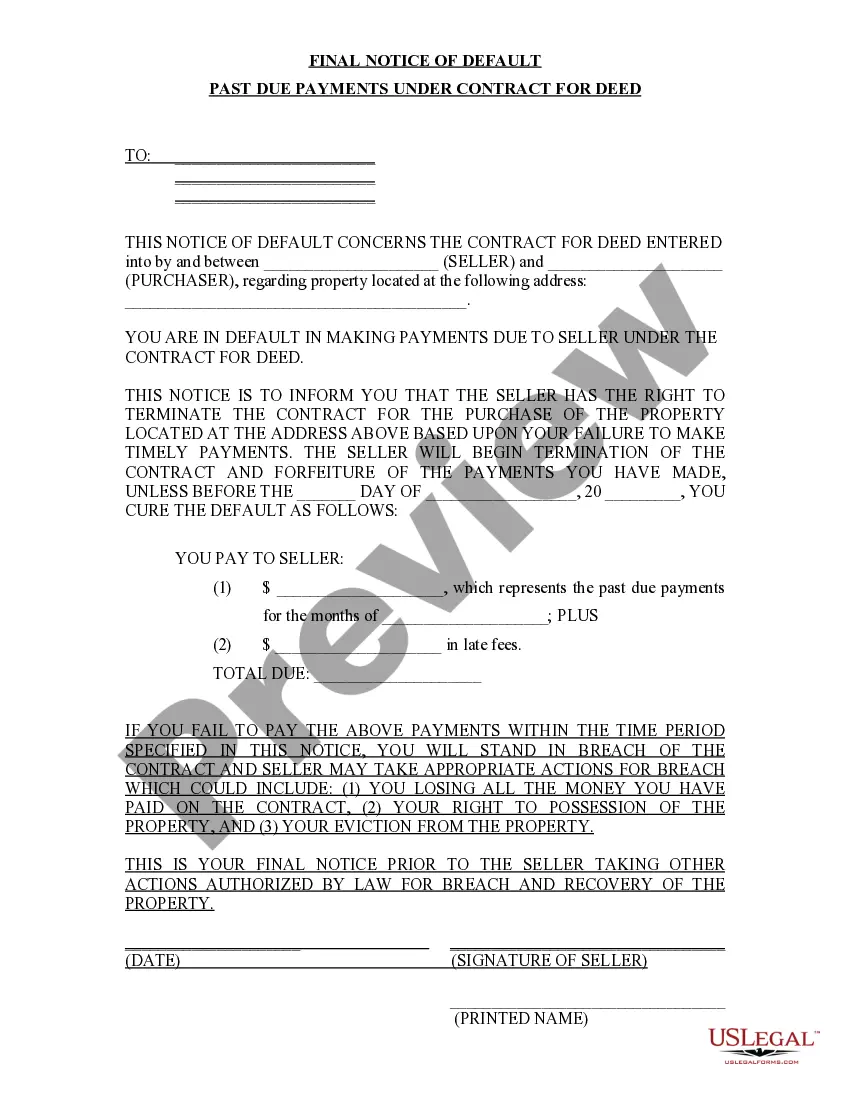
The Final Notice of Default for Past Due Payments in connection with Contract for Deed is a formal document used by a seller to notify a purchaser about their failure to make timely payments on a contract for deed property. This notice serves as the seller's final warning, indicating that if payment is not made by the specified date, the contract will be considered in default, potentially leading to the loss of the property and any payments made.
What’s included in this form
- Parties involved: Identification of the seller and purchaser.
- Property address: Specific location of the property related to the contract.
- Details of the default: Explanation of payment failures and amounts owed.
- Deadline for payment: A specified date by which the purchaser must cure the default.
- Consequences of non-payment: Explanation of potential actions the seller may take, including eviction.
- Seller's signature and date: Authentication of the notice by the seller.

Situations where this form applies
This form should be used when a purchaser under a contract for deed has missed multiple payments, and the seller wishes to give a final notice before taking legal action. It serves as the last opportunity for the purchaser to remedy the situation by making the overdue payments to avoid losing the property and any invested funds.
Who can use this document
- Property sellers who have entered into a contract for deed.
- Purchasers who have failed to make timely payments under the contract.
- Legal professionals advising clients on property transactions.
How to prepare this document
- Identify the parties: Enter the names of the seller and purchaser.
- Specify the property: Provide the full address of the property involved in the contract.
- Detail the default: Clearly state the amount of overdue payments and any late fees applicable.
- Set the payment deadline: Indicate the specific date for payment to be made to avoid default.
- Obtain the seller's signature: Ensure the seller signs and dates the notice to validate it.
Notarization requirements for this form
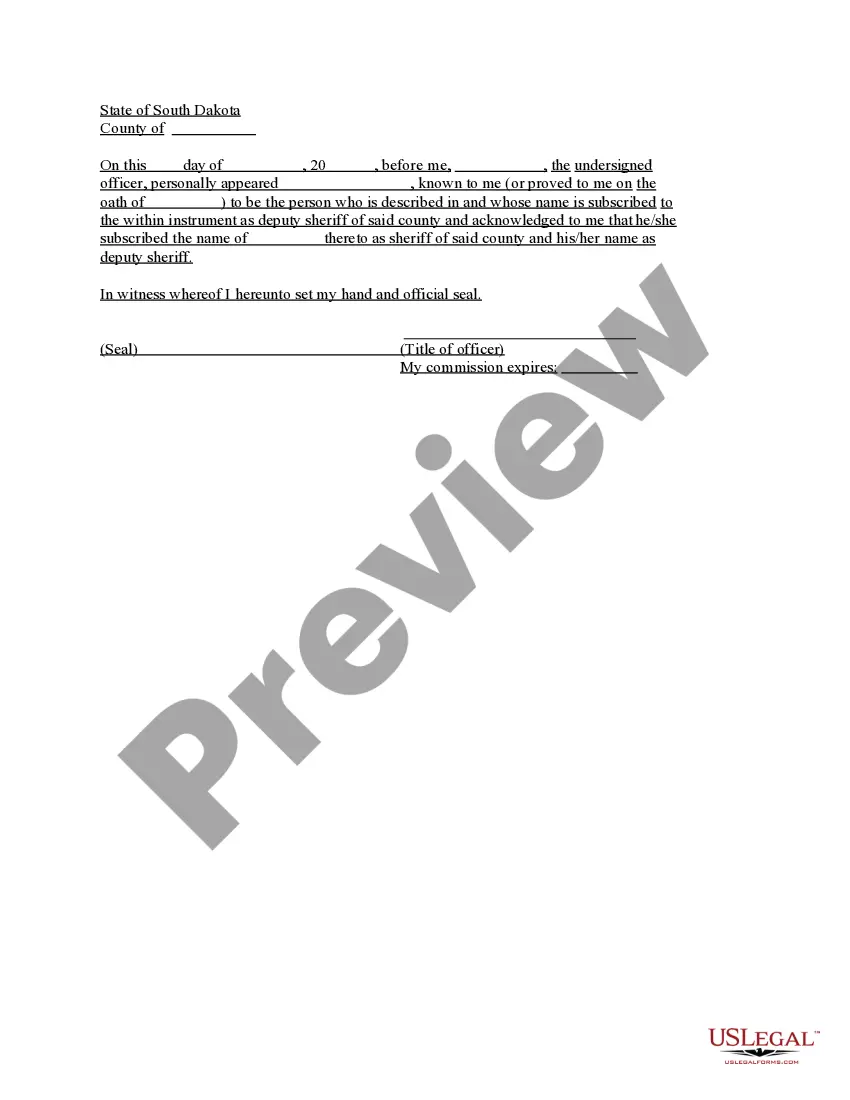
This form needs to be notarized to ensure legal validity. US Legal Forms provides secure online notarization powered by Notarize, allowing you to complete the process through a verified video call, available anytime.
Get your form ready online
Our built-in tools help you complete, sign, share, and store your documents in one place.
Make edits, fill in missing information, and update formatting in US Legal Forms—just like you would in MS Word.
Download a copy, print it, send it by email, or mail it via USPS—whatever works best for your next step.
Sign and collect signatures with our SignNow integration. Send to multiple recipients, set reminders, and more. Go Premium to unlock E-Sign.
If this form requires notarization, complete it online through a secure video call—no need to meet a notary in person or wait for an appointment.
We protect your documents and personal data by following strict security and privacy standards.

Make edits, fill in missing information, and update formatting in US Legal Forms—just like you would in MS Word.

Download a copy, print it, send it by email, or mail it via USPS—whatever works best for your next step.

Sign and collect signatures with our SignNow integration. Send to multiple recipients, set reminders, and more. Go Premium to unlock E-Sign.

If this form requires notarization, complete it online through a secure video call—no need to meet a notary in person or wait for an appointment.

We protect your documents and personal data by following strict security and privacy standards.
Common mistakes to avoid
- Failing to specify the exact amount due, including late fees.
- Not providing the correct property address.
- Missing the deadline for the purchaser to cure the default.
- Not signing or dating the document, which can invalidate the notice.
Why use this form online
- Convenience of accessing and downloading the form from any location.
- Editable templates to tailor the document for your specific circumstances.
- Instant access to professionally drafted forms by licensed attorneys.
Looking for another form?

Form popularity
FAQ
The term 'terminated by default' means that a contract has been ended due to a party’s failure to meet their obligations. This situation often arises when payments are overdue, leading to a contract's termination without further action required by the other party. Understanding this concept is important, especially when dealing with an Arizona Final Notice of Default for Past Due Payments in connection with a Contract for Deed.
A notice of default and termination combines two important alerts regarding a contract. This document notifies the party of their default status, as well as the termination of their agreement if the issue is not resolved. Specifically, an Arizona Final Notice of Default for Past Due Payments serves as a last opportunity for resolution before the contractual relationship concludes.
A notice of default indicates that a party has failed to adhere to the terms of their contract, usually regarding financial obligations. In the context of real estate, it often warns the borrower about their overdue payments. This notice is vital for understanding potential consequences, such as receiving an Arizona Final Notice of Default for Past Due Payments in connection with a Contract for Deed.
A default or termination notice serves as a formal communication to a party that they have not fulfilled their contractual obligations. In the case of a Contract for Deed, this notice often signals an impending action due to unpaid payments. Receiving an Arizona Final Notice of Default for Past Due Payments is a crucial step in the process that outlines the next steps available to both parties.
Default and termination are related but not identical concepts. Default refers to a failure to meet the obligations outlined in the contract, such as making payments. Termination, on the other hand, occurs when the contract is officially ended due to a default, particularly in the context of an Arizona Final Notice of Default for Past Due Payments in connection with a Contract for Deed.
Yes, many Arizona real estate contracts are assignable unless specified otherwise. This means you can transfer your rights and obligations to another party, which can be especially useful in specific situations. If you are navigating any complications, such as receiving an Arizona Final Notice of Default for Past Due Payments in connection with Contract for Deed, consider utilizing resources from uslegalforms for clarity.
A contract may be signed as a deed to create a binding agreement that provides more certainty and enforceability. This occurs mainly in property transactions, granting rights to the parties without needing a formal closing process. Understanding this can help you navigate any issues regarding an Arizona Final Notice of Default for Past Due Payments in connection with Contract for Deed.
When writing a default letter, start by clearly stating the reason for the default and including relevant details from the contract. Be sure to mention the specific terms that were not met, and provide a timeline for correcting the situation. This approach is helpful if you're dealing with an Arizona Final Notice of Default for Past Due Payments in connection with Contract for Deed.
For a contract to be valid in Arizona, it must include an offer, acceptance, consideration, and the capacity of parties to contract. Additionally, the contract should comply with applicable laws and not involve illegal activities. These elements are important to ensure that your agreement, including anything related to an Arizona Final Notice of Default for Past Due Payments in connection with Contract for Deed, can be enforced.
A letter of default serves as a formal notice that a party has failed to fulfill their obligations under a contract. In the context of a contract for deed, this letter may indicate missed payments. Understanding this letter is crucial, especially if you're facing an Arizona Final Notice of Default for Past Due Payments in connection with Contract for Deed.