Arkansas Last Will and Testament for Divorced Person Not Remarried with Adult and Minor Children
What this document covers
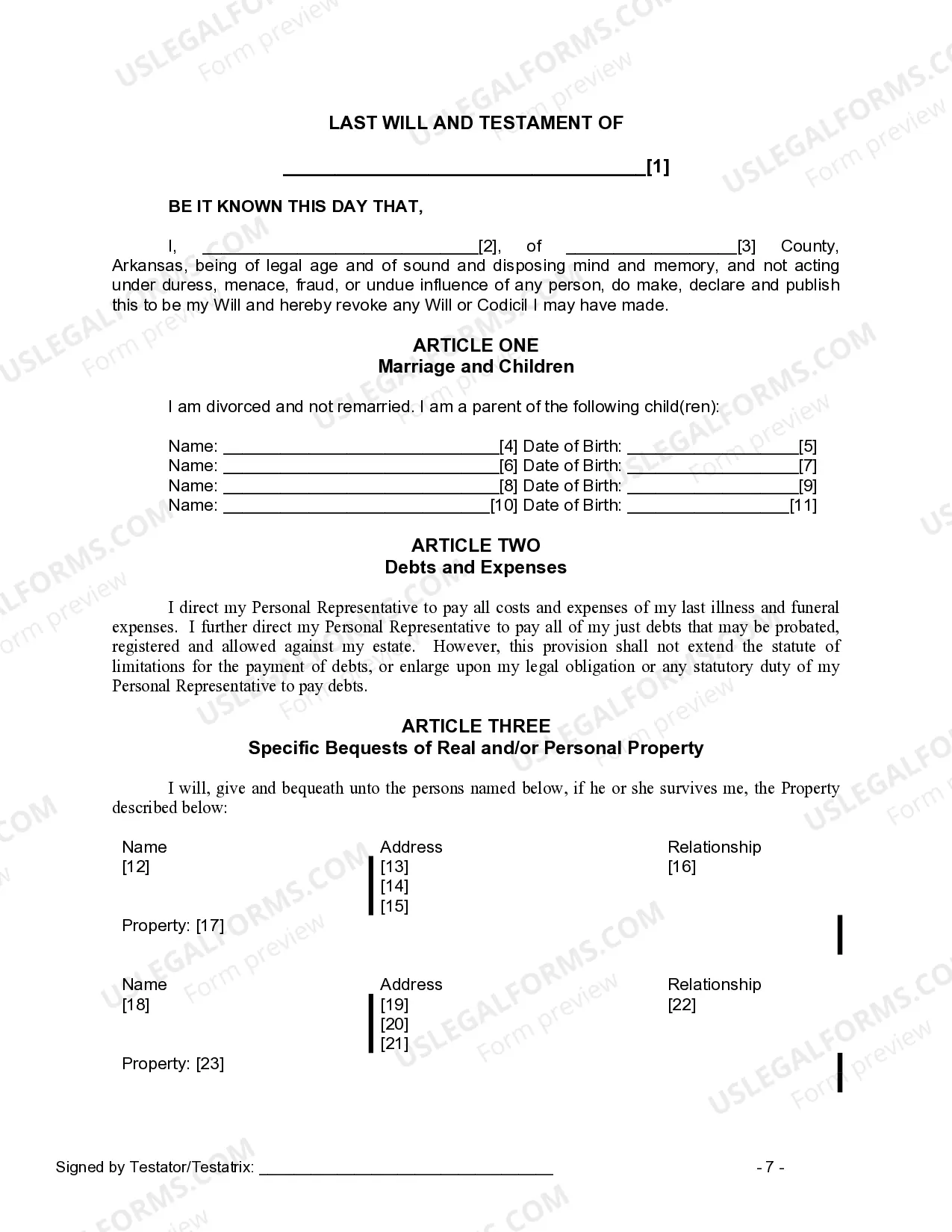
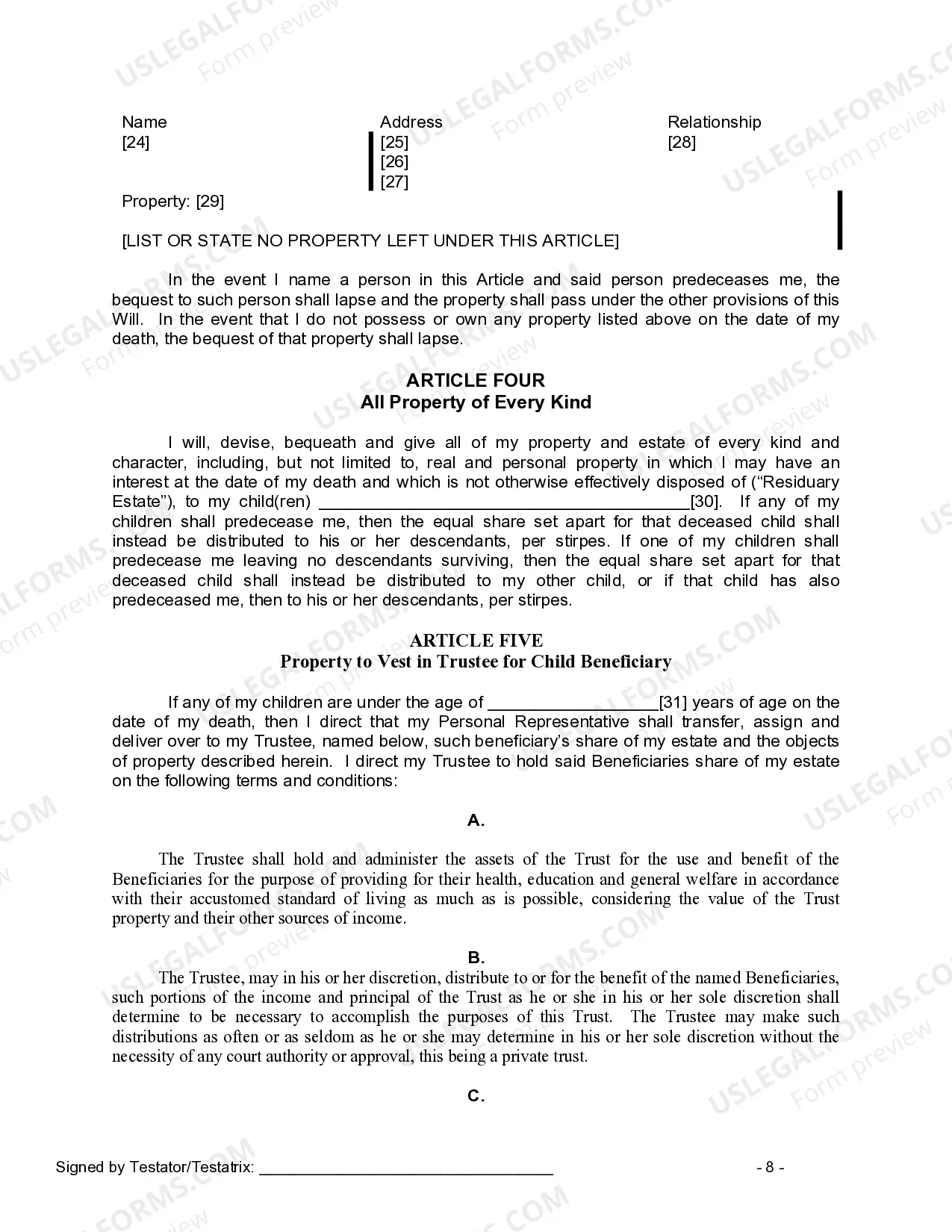
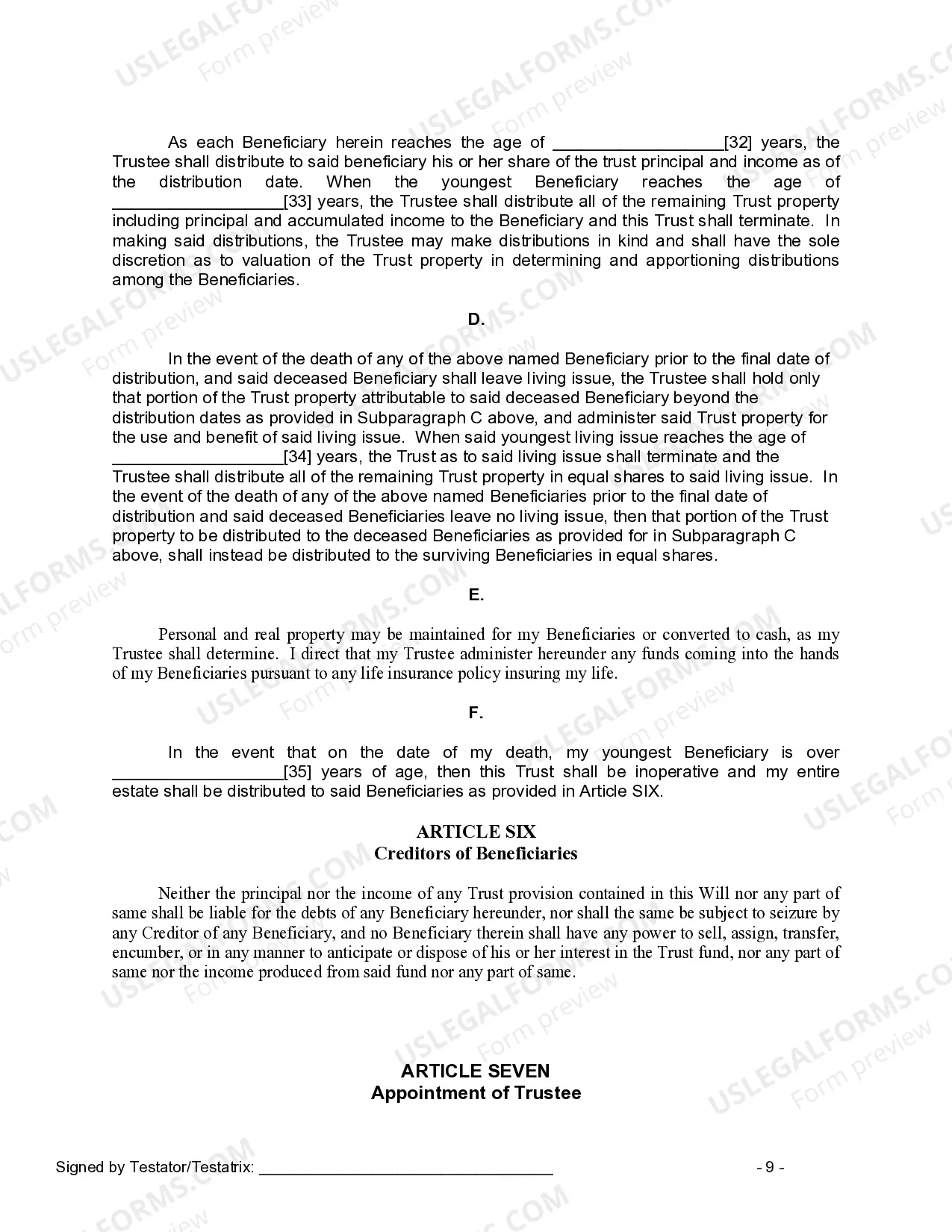
This Last Will and Testament is specifically designed for a divorced individual who has not remarried and has both adult and minor children. It outlines how the individual wishes to allocate their property, appoint a personal representative, and establish a trust for minor children. This form is essential for ensuring that your estate is distributed according to your wishes after your passing, particularly when you have both adult and minor children to consider.
Key parts of this document
- Appointment of a personal representative who will manage the estate.
- Specification of assets and how they will be distributed among beneficiaries.
- Formation of a trust for any minor children, detailing how their shares will be managed until they reach a specific age.
- Guardianship appointment for minor children if necessary.
- Provisions for paying debts and expenses from the estate.




When this form is needed
This Last Will and Testament should be used in situations where a divorced individual has not remarried but wishes to ensure legal clarity in the distribution of their estate, particularly in families with both adult and minor children. It is particularly important to prepare this document if you want to designate guardianship for minor children or ensure their inheritance is protected through a trust.
Who this form is for
- Individuals who are divorced and have not remarried.
- Parents of both adult and minor children.
- Individuals seeking to specify how their assets should be distributed after death.
- Those who want to establish a trust for minor children to manage their inheritance.
How to prepare this document
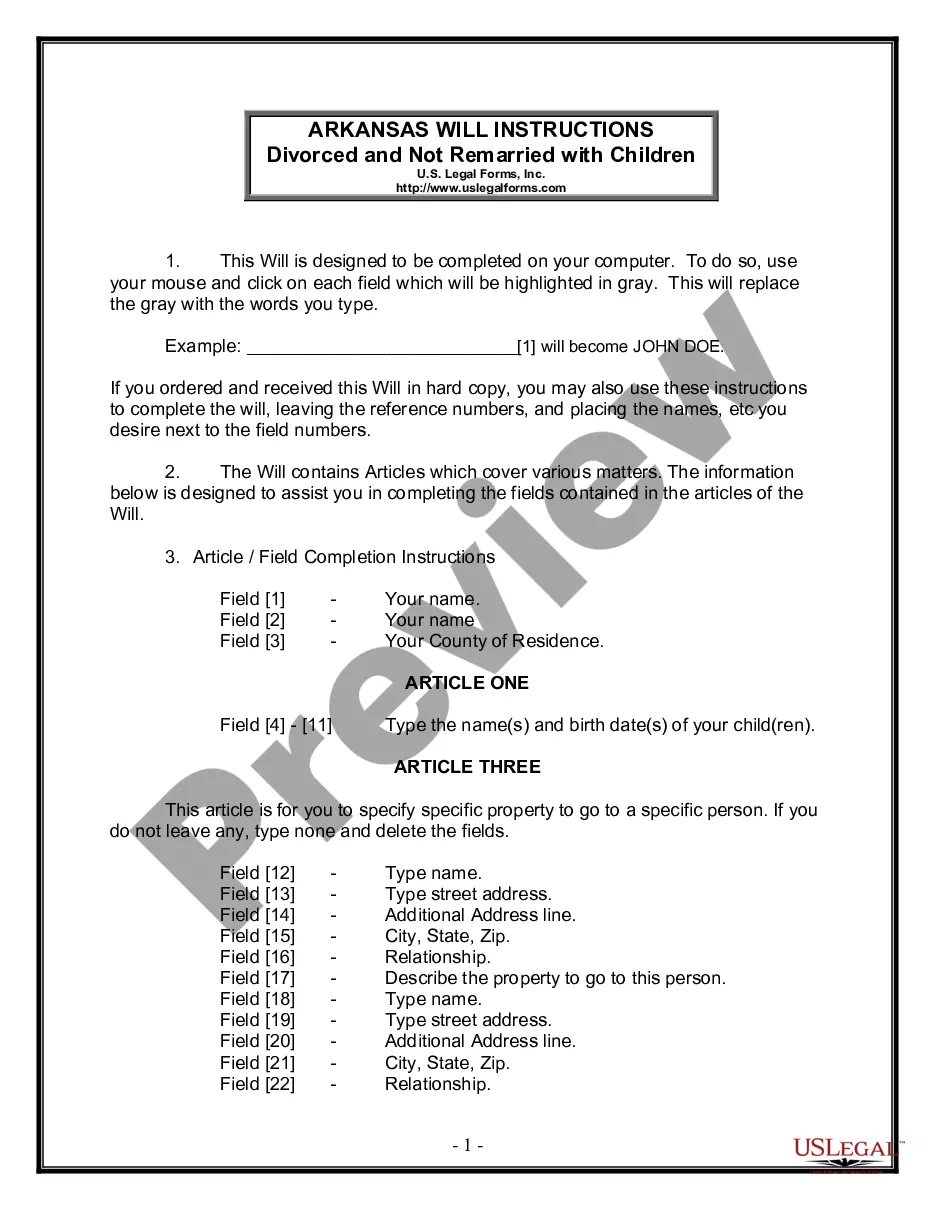
- Identify yourself as the testator by entering your full name and county.
- List your children, including their names and dates of birth.
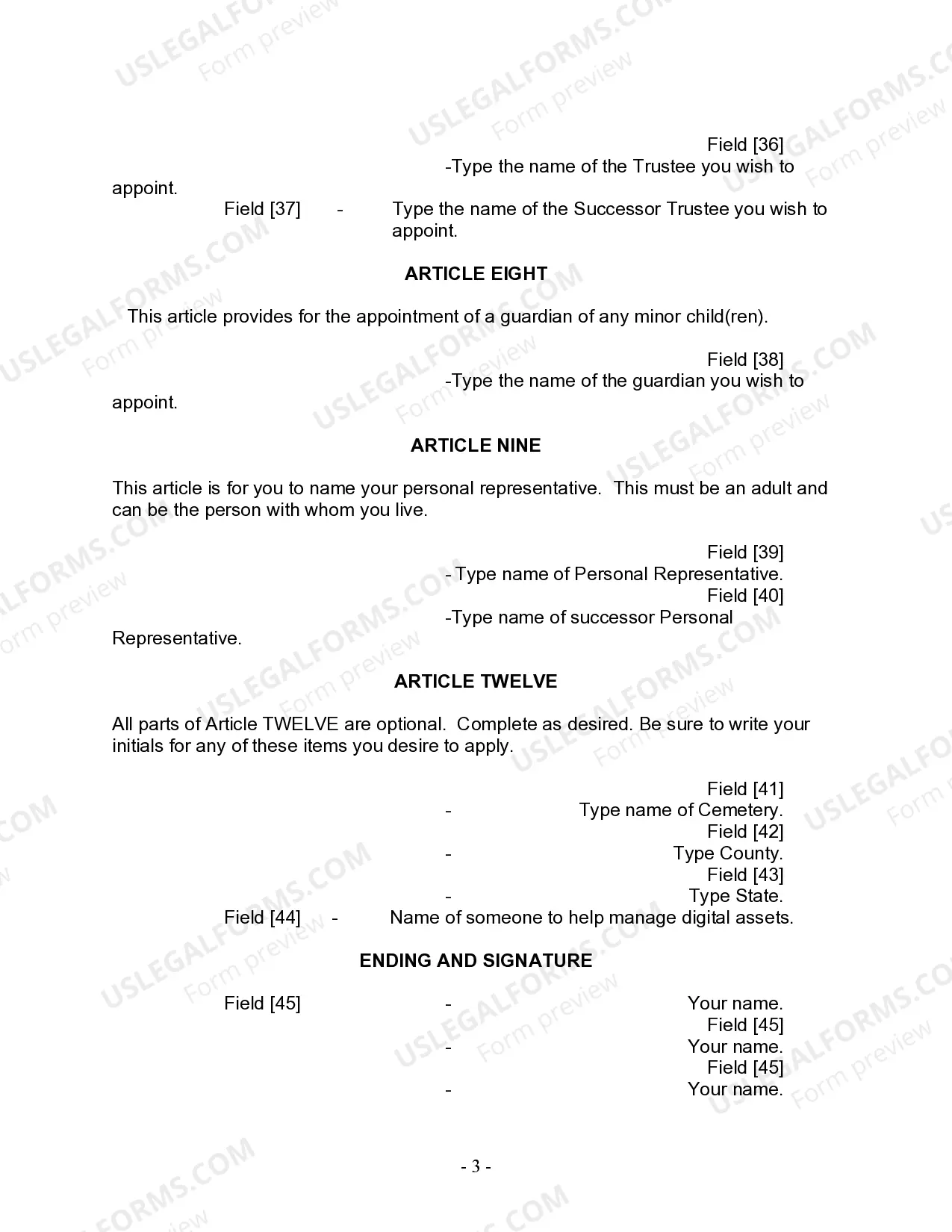
- Designate your personal representative and any alternate representatives.
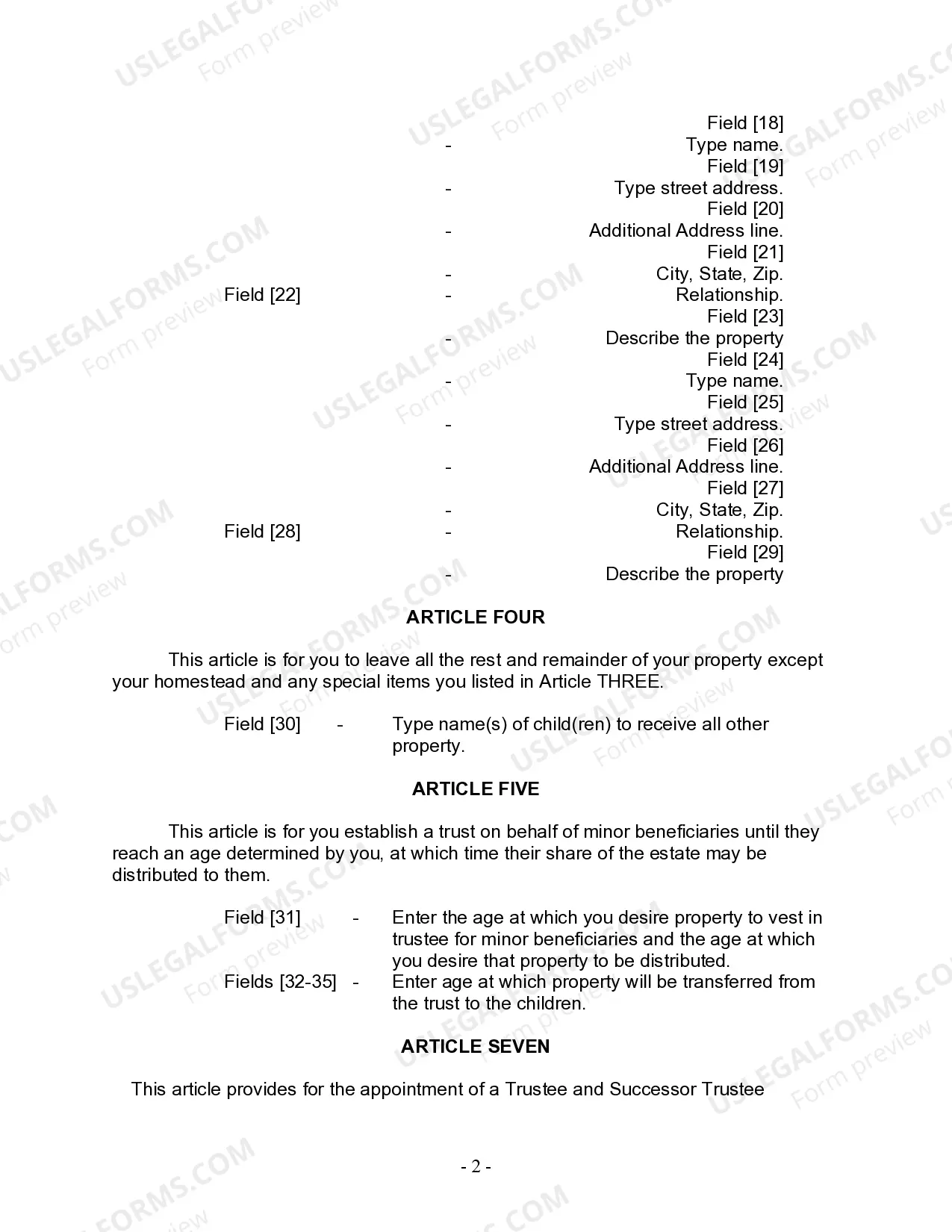
- Specify how you want your assets distributed among beneficiaries and establish a trust for your minor children.
- Include any specific bequests of property and appoint a guardian if necessary.
- Sign the will in the presence of two witnesses and have it notarized if required.
Is notarization required?
Yes, this form must be notarized to be legally valid. A notary public will verify your identity and witness your signature, ensuring the authenticity of the will. US Legal Forms provides integrated online notarization, making it easy to complete this step securely via a video call.
Get your form ready online
Our built-in tools help you complete, sign, share, and store your documents in one place.
Make edits, fill in missing information, and update formatting in US Legal Forms—just like you would in MS Word.
Download a copy, print it, send it by email, or mail it via USPS—whatever works best for your next step.
Sign and collect signatures with our SignNow integration. Send to multiple recipients, set reminders, and more. Go Premium to unlock E-Sign.
If this form requires notarization, complete it online through a secure video call—no need to meet a notary in person or wait for an appointment.
We protect your documents and personal data by following strict security and privacy standards.

Make edits, fill in missing information, and update formatting in US Legal Forms—just like you would in MS Word.

Download a copy, print it, send it by email, or mail it via USPS—whatever works best for your next step.

Sign and collect signatures with our SignNow integration. Send to multiple recipients, set reminders, and more. Go Premium to unlock E-Sign.

If this form requires notarization, complete it online through a secure video call—no need to meet a notary in person or wait for an appointment.

We protect your documents and personal data by following strict security and privacy standards.
Typical mistakes to avoid
- Failing to name a personal representative or guardian for minor children.
- Not having the will signed by the required number of witnesses.
- Neglecting to regularly update the will after major life changes.
- Not specifying how debts and expenses will be paid from the estate.
Benefits of completing this form online
- Convenient download and editing options to tailor the document to your needs.
- Access guidance from licensed attorneys, ensuring that the form meets legal standards.
- Quick and easy access to the form from anywhere, eliminating the need for in-person consultations.
Summary of main points
- This Last Will and Testament is specifically for divorced individuals with children.
- It allows you to designate a personal representative and guardian for minor children.
- Ensure compliance with state-specific witnessing and notarization requirements.
- Clearly outline your wishes regarding asset distribution to avoid family disputes.
Looking for another form?
Form popularity
FAQ
Yes, you can write your own will in Arkansas without an attorney; however, it is essential to adhere to legal standards. Your will must be signed, dated, and witnessed to be valid. When preparing your Arkansas Last Will and Testament for Divorced Person Not Remarried with Adult and Minor Children, ensure you cover all important aspects to avoid any potential disputes.
You can create your own will in Arkansas by clearly stating your intentions regarding your estate. Be sure to include key details about your assets and the beneficiaries, along with your signature and date. Utilizing platforms like US Legal Forms can simplify the process when formulating your Arkansas Last Will and Testament for Divorced Person Not Remarried with Adult and Minor Children.
Yes, online wills are considered legal in Arkansas as long as they comply with state laws. You should ensure that your online will is executed properly, including the necessary signatures. Creating an Arkansas Last Will and Testament for Divorced Person Not Remarried with Adult and Minor Children online can be a convenient option for many individuals seeking to manage their estate.
In Arkansas, notarization is not a requirement for a will to be valid. However, having a will notarized can provide additional credibility and may streamline the probate process. It is especially beneficial for your Arkansas Last Will and Testament for Divorced Person Not Remarried with Adult and Minor Children, ensuring your wishes are clearly documented and respected.
A will becomes legal in Arkansas when it is written, signed by the testator, and witnessed by at least two individuals who are not beneficiaries. This is particularly important for an Arkansas Last Will and Testament for Divorced Person Not Remarried with Adult and Minor Children. The presence of witnesses helps to confirm that the will reflects your true intentions and that you were of sound mind when creating it. For added peace of mind, consider drafting with professional resources to ensure compliance with state laws.
To avoid probate in Arkansas, you can create living trusts, designate beneficiaries on accounts, or hold property jointly. These strategies work well for an Arkansas Last Will and Testament for Divorced Person Not Remarried with Adult and Minor Children. By planning ahead and using these methods, you can simplify the transfer of your assets and minimize potential complications. Consider using platforms like UsLegalForms to guide you through creating documents that can help avoid probate.
Yes, in Arkansas, you must file a will with the probate court after the death of the individual. This step is essential for any Arkansas Last Will and Testament for Divorced Person Not Remarried with Adult and Minor Children. Filing the will begins the probate process, allowing the court to validate it and authorizing the executor to distribute assets accordingly. Ensuring your will is filed properly can help streamline the distribution of your estate.
In Arkansas, a living will does not need to be notarized to be valid, but having it notarized can add an extra layer of security. This is especially pertinent for individuals preparing an Arkansas Last Will and Testament for Divorced Person Not Remarried with Adult and Minor Children. Notarization can help verify your identity and ensure that your wishes are respected. By choosing to notarize your documents, you may ease the concerns of your loved ones during a difficult time.