Arkansas Warranty Deed from Limited Partnership or LLC is the Grantor, or Grantee
Overview of this form
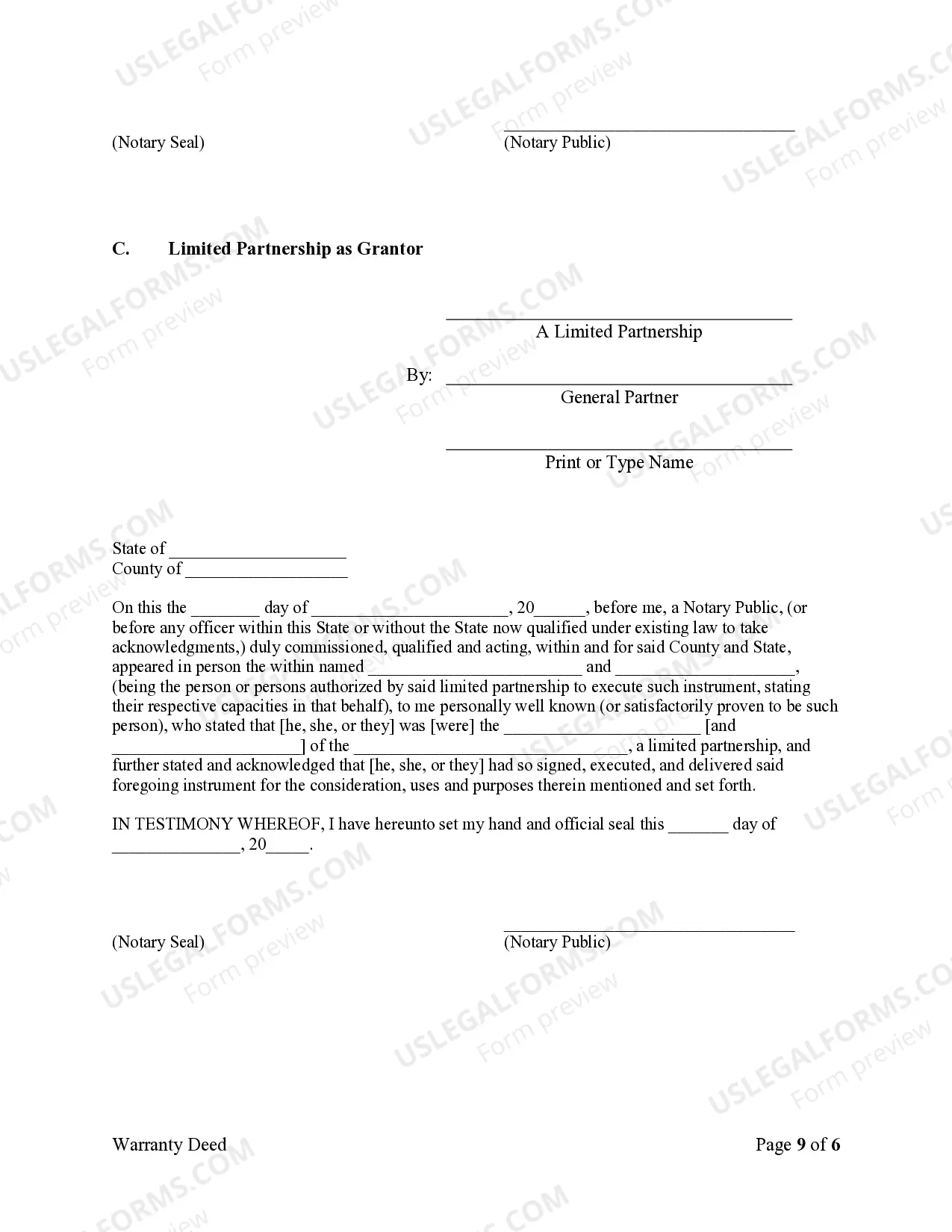
The Warranty Deed from Limited Partnership or LLC is a legal document used to transfer property ownership from a limited partnership or Limited Liability Company (LLC) to another party. This form includes warranties, providing assurances about the property's title and the grantor's ability to transfer ownership. Unlike a quitclaim deed, which offers no warranties, a warranty deed ensures that the title is free from liens or claims. This form is essential for maintaining clear property ownership and is often used in real estate transactions involving business entities.
What’s included in this form
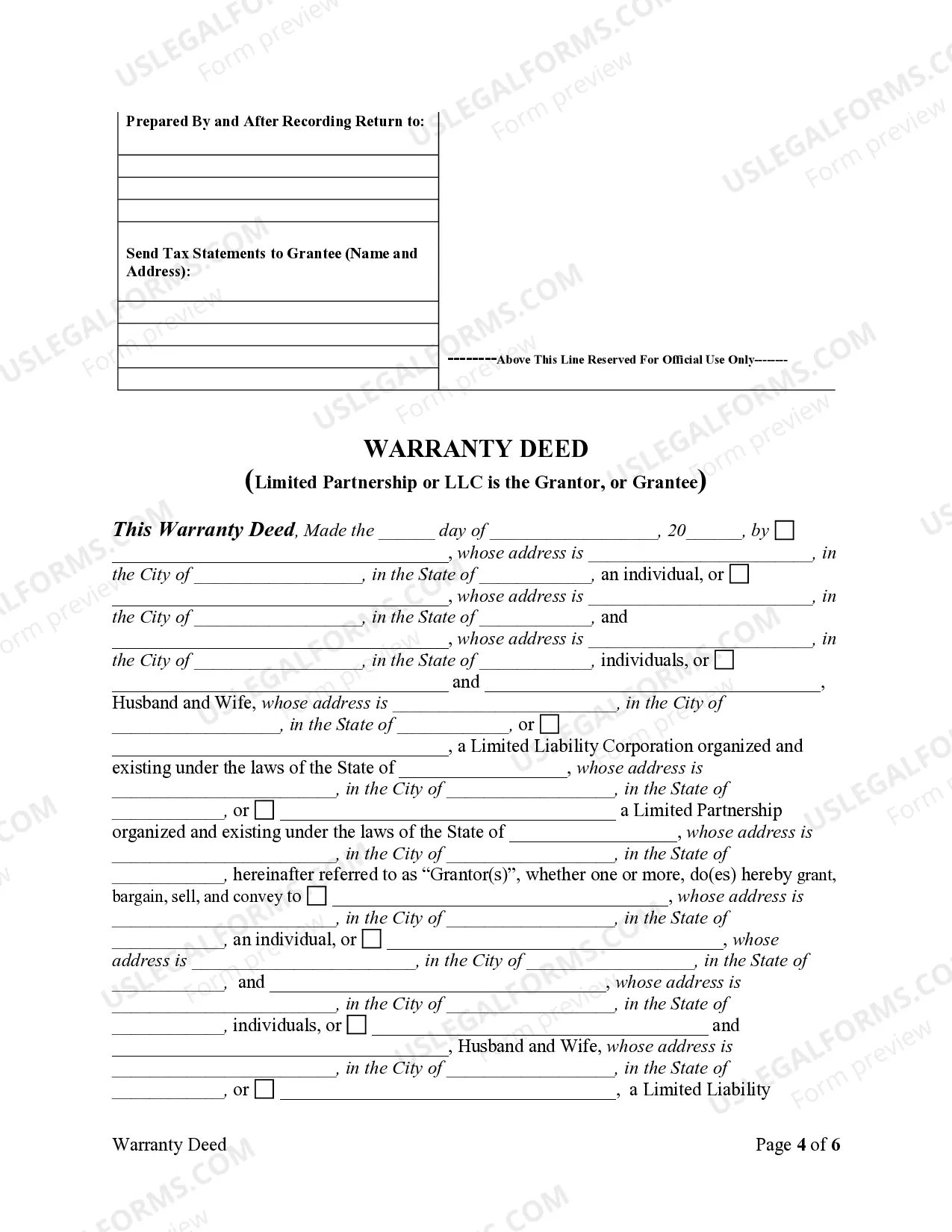
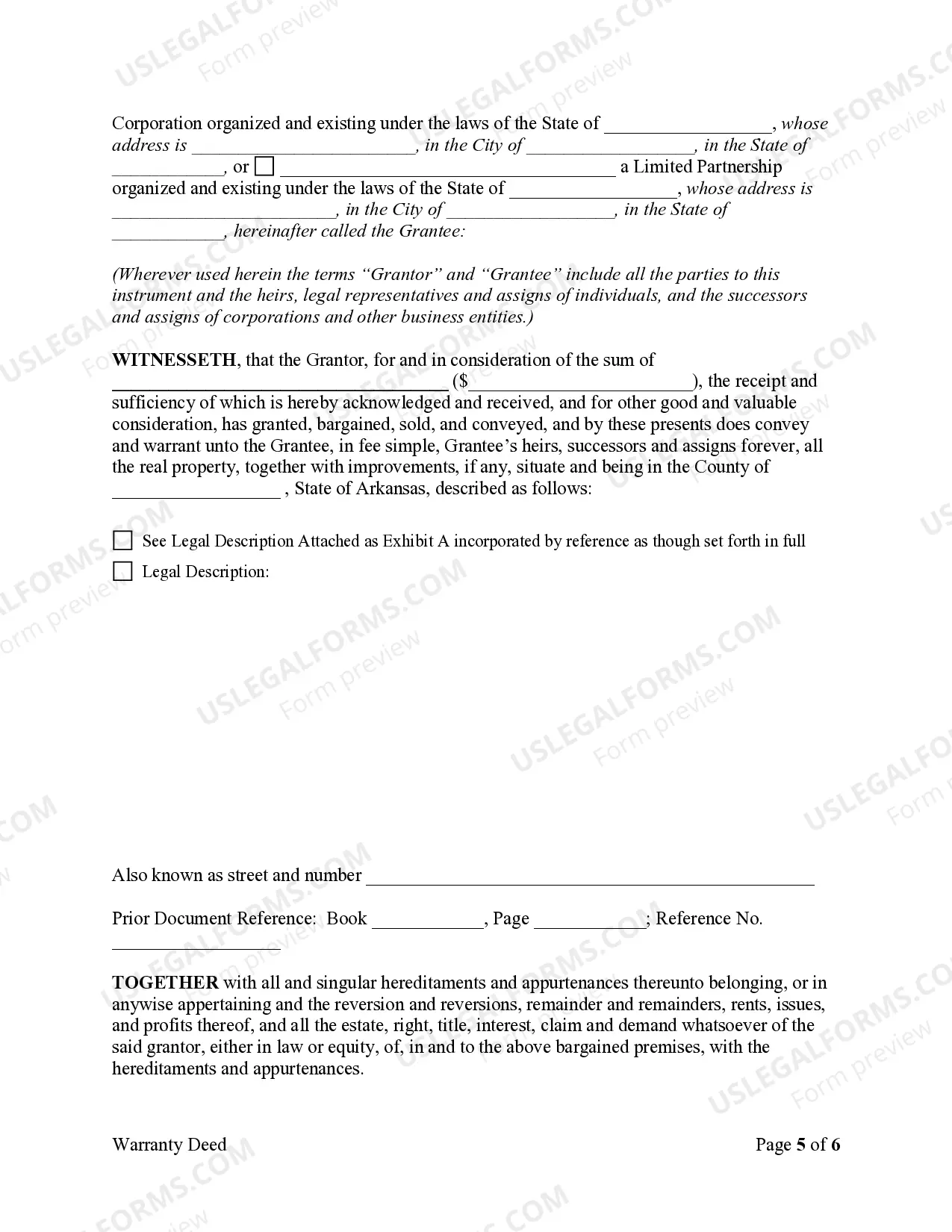
- Identification of the grantor (limited partnership or LLC) and grantee.
- Legal description of the property being transferred.
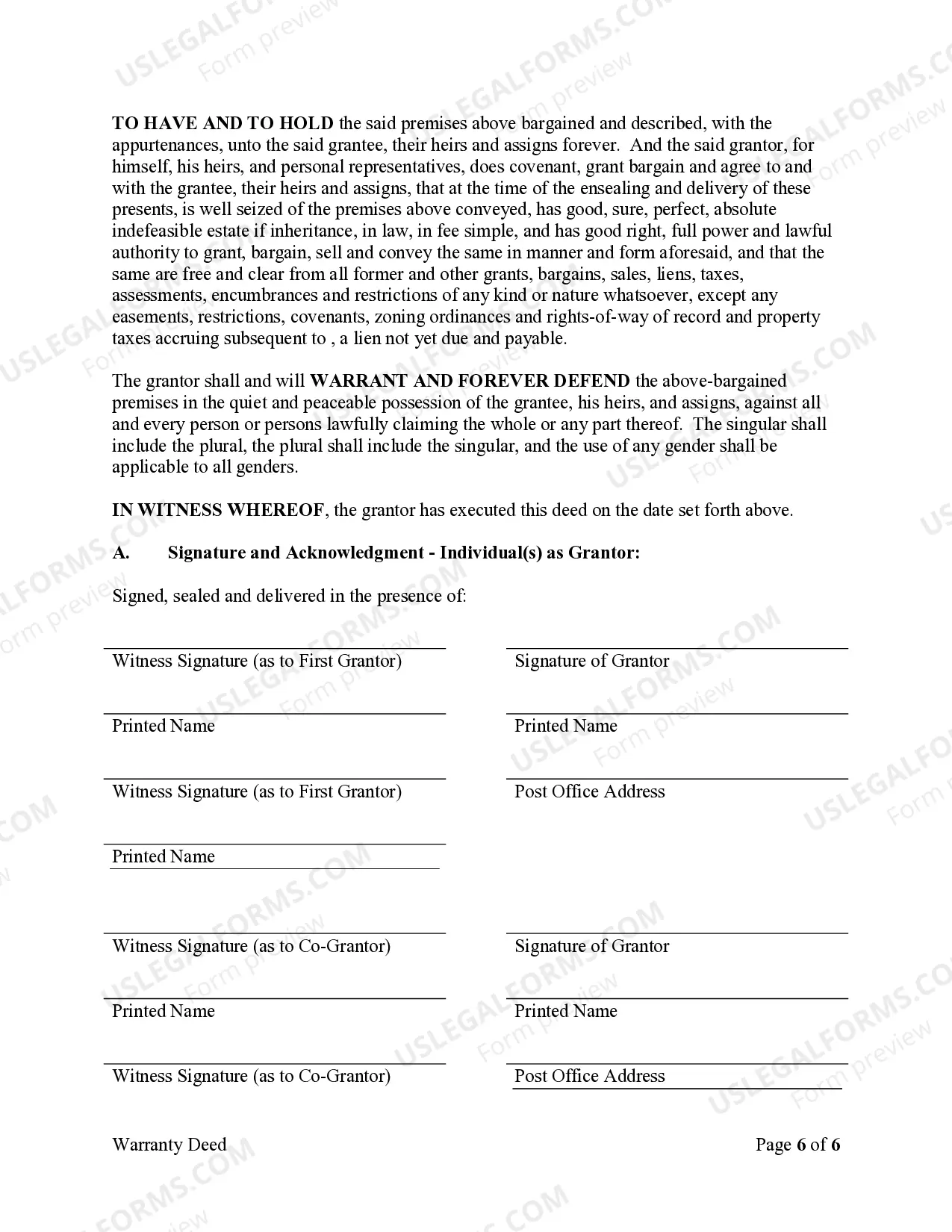
- Warranties about the title and the grantor's authority to convey the property.
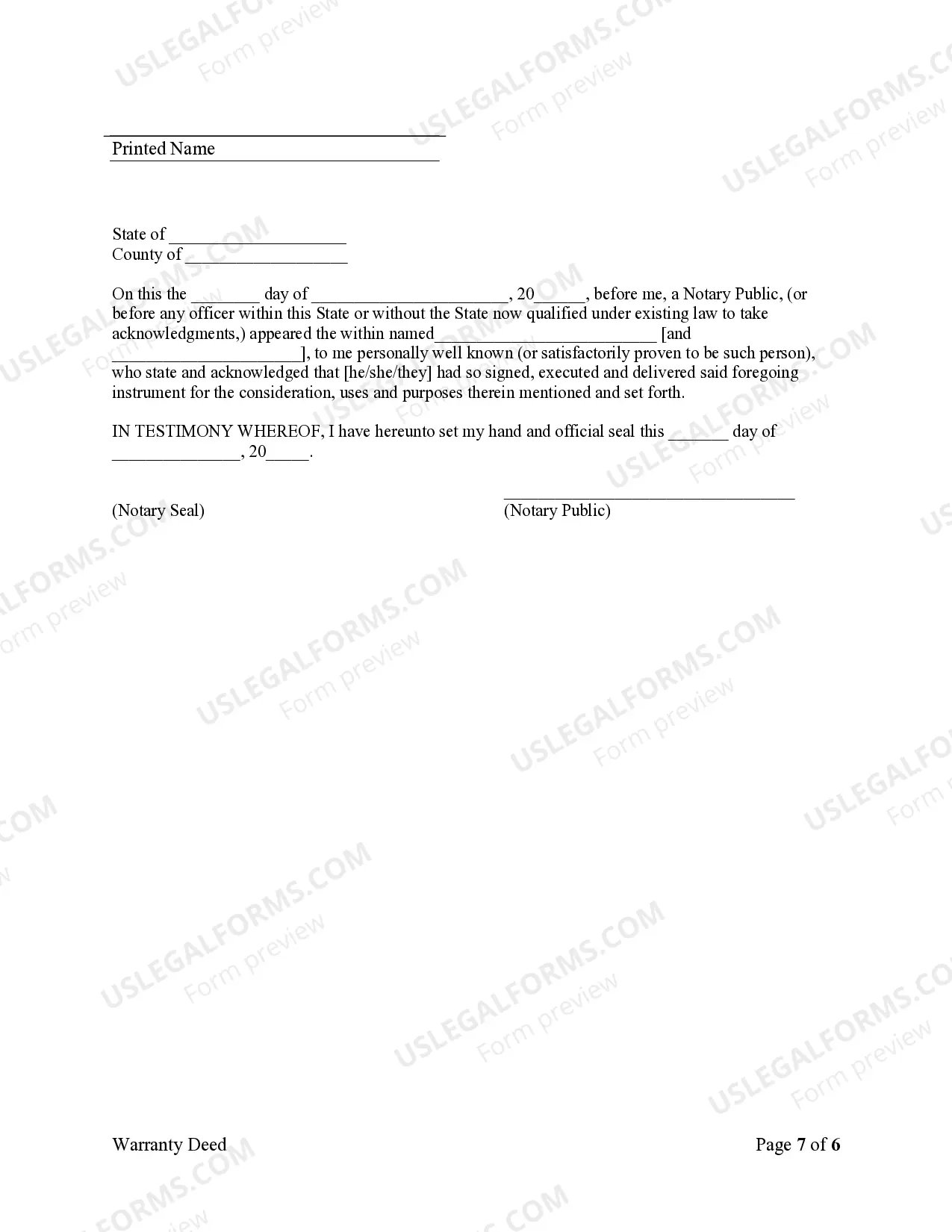
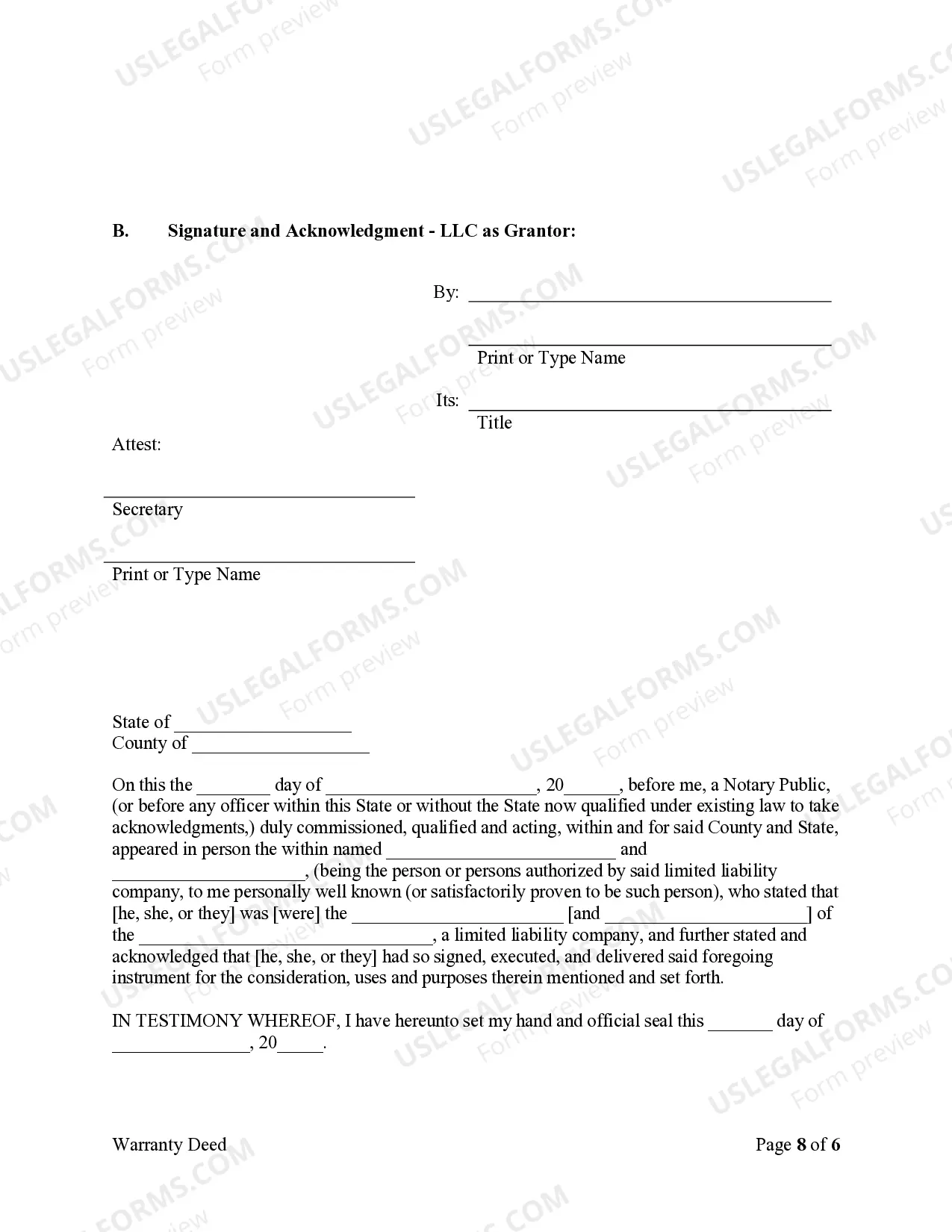
- Signatures of the grantor and a notary public for validity.
- Consideration amount (the value exchanged for the property).





Common use cases
This form should be used when a limited partnership or LLC needs to transfer ownership of real property to another entity or individual. Common scenarios include the sale of business property, transferring property into another business structure, or gifting property between business partners. It is also applicable when ensuring that future property claims are safeguarded through formal documentation.
Intended users of this form
This form is intended for:
- Limited partnerships or LLCs looking to transfer property rights.
- Real estate agents facilitating property transactions involving business entities.
- Property owners who are part of a limited partnership or LLC.
- Legal professionals involved in real estate or business law.
How to complete this form
- Identify the parties involved (grantor and grantee).
- Specify the property by including its legal description.
- Enter the consideration amount being exchanged.
- Sign the document in the presence of a notary public.
- Ensure all required fields are filled out correctly before submission.
Does this form need to be notarized?
Yes, this form must be notarized to be legally valid. Notarization ensures the authenticity of the signatures and the execution of the document. US Legal Forms offers integrated online notarization services, allowing you to complete this process quickly and securely via a video call without needing to travel.
Get your form ready online
Our built-in tools help you complete, sign, share, and store your documents in one place.
Make edits, fill in missing information, and update formatting in US Legal Forms—just like you would in MS Word.
Download a copy, print it, send it by email, or mail it via USPS—whatever works best for your next step.
Sign and collect signatures with our SignNow integration. Send to multiple recipients, set reminders, and more. Go Premium to unlock E-Sign.
If this form requires notarization, complete it online through a secure video call—no need to meet a notary in person or wait for an appointment.
We protect your documents and personal data by following strict security and privacy standards.

Make edits, fill in missing information, and update formatting in US Legal Forms—just like you would in MS Word.

Download a copy, print it, send it by email, or mail it via USPS—whatever works best for your next step.

Sign and collect signatures with our SignNow integration. Send to multiple recipients, set reminders, and more. Go Premium to unlock E-Sign.

If this form requires notarization, complete it online through a secure video call—no need to meet a notary in person or wait for an appointment.

We protect your documents and personal data by following strict security and privacy standards.
Common mistakes
- Failing to provide a complete legal description of the property.
- Not obtaining the necessary notarization before executing the deed.
- Leaving out the consideration amount or entering an incorrect figure.
- Using incorrect names for the grantor or grantee.
Benefits of using this form online
- Convenience of filling out forms from the comfort of your home.
- Editability allows for accurate completion without reprinting.
- Fast access to professionally drafted legal documents.
- Secure storage and the ability to retrieve your documents as needed.
Looking for another form?

Form popularity
FAQ
The main difference between a warranty deed and a quitclaim deed in Arkansas lies in the guarantees provided. A warranty deed assures the Grantee that the Grantor holds clear title to the property, while a quitclaim deed carries no such guarantees. If you are handling an Arkansas Warranty Deed from Limited Partnership or LLC as the Grantor or Grantee, recognizing these differences is crucial for a smooth transaction.
A limited warranty deed in Arkansas only guarantees that the Grantor has not encumbered the property during their ownership. It differs from a full warranty deed, which offers more extended protections to the Grantee. When dealing with an Arkansas Warranty Deed from Limited Partnership or LLC, understanding this distinction can help clarify your rights.
A warranty deed in Arkansas must include the names of the Grantor and Grantee, a legal description of the property, and be signed by the Grantor. Additionally, notarization is required for the deed to be valid. If the Grantor is a Limited Partnership or LLC, confirm that all relevant documentation is also in order.
To acquire a warranty deed in Arkansas, you will need to complete the necessary paperwork and file it at the county clerk's office. You may also use online services, like US Legal Forms, to download a template and fill it out. Ensure you note if an Arkansas Warranty Deed from Limited Partnership or LLC is the Grantor, or Grantee to streamline the process.
You can get the warranty deed for your property through your local county clerk's office. They maintain all property records, including warranty deeds. For properties where an Arkansas Warranty Deed from Limited Partnership or LLC is involved, ensure you have the necessary details to aid the process.
To obtain the deed to your property in Arkansas, start by locating the county clerk's office where your property is situated. You can request the deed directly, often by providing details about the property. If your property involves an Arkansas Warranty Deed from Limited Partnership or LLC as the Grantor or Grantee, be sure to mention this when inquiring.
Limited Warranty Deeds. While a general warranty deed guarantees against all encumbrances and claims to title, a limited warranty deed protects only against claims made after the seller obtained title to the property.
In a Warranty Deed, the grantee is the person who the interest in a property is being transferred to. For example, if you are buying a property from someone else, you are the grantee, and the person selling it is the grantor.
A limited warranty deed is a legal document that transfers ownership of real property from one person or organization, known as the grantor, to another, the grantee.The deed does not offer any guarantees about the condition of the title from the time period before the grantor took ownership.
No, California does not require that the Grantee sign a warranty deed. However, some states and counties require that the deed be signed by the Grantee in addition to the Grantor.