Arkansas Landlord Tenant Lease Co-Signer Agreement
What is this form?
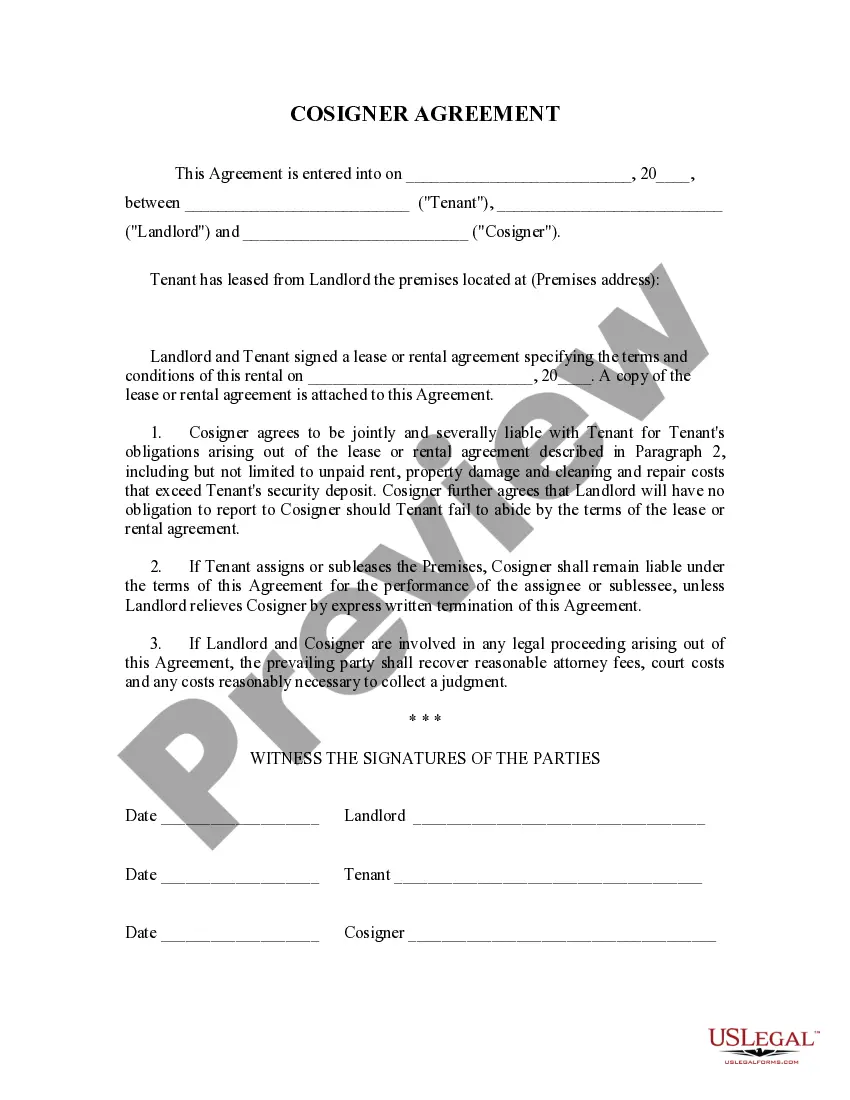
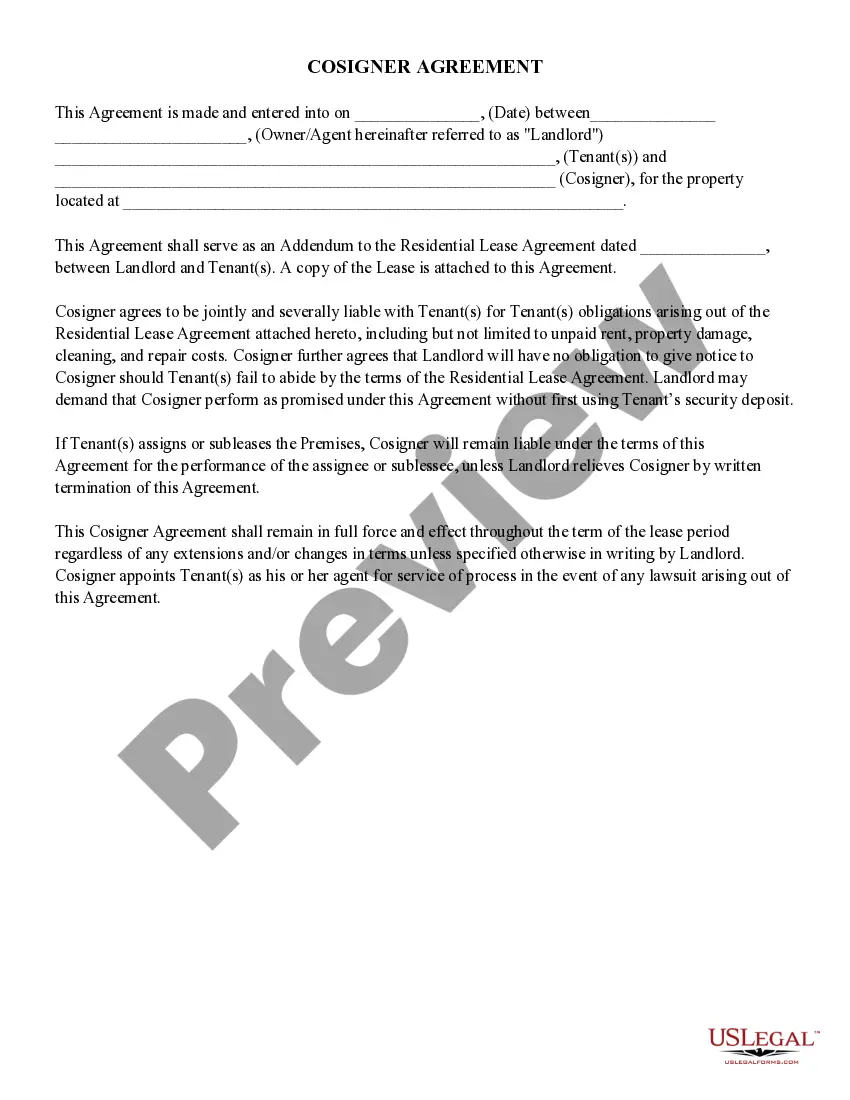
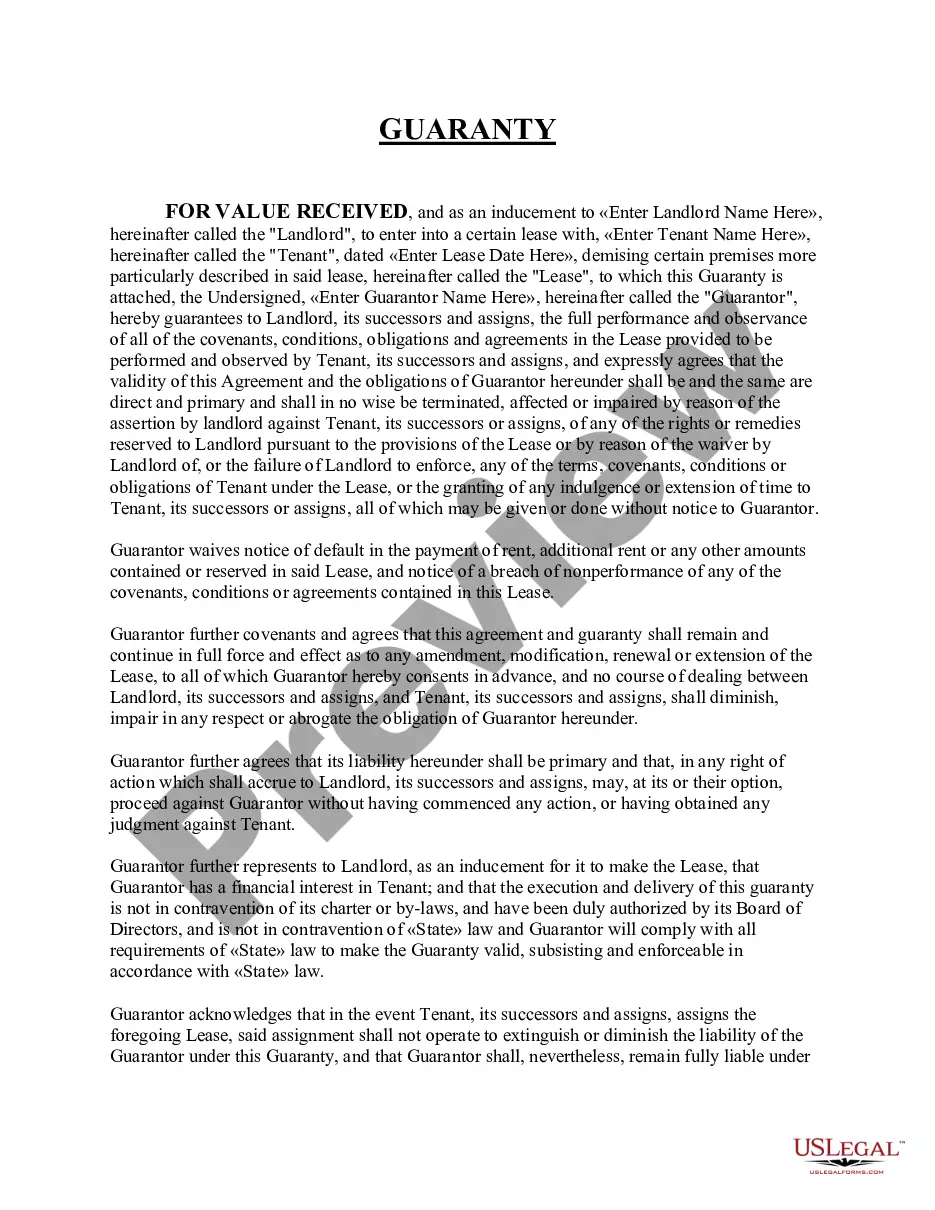
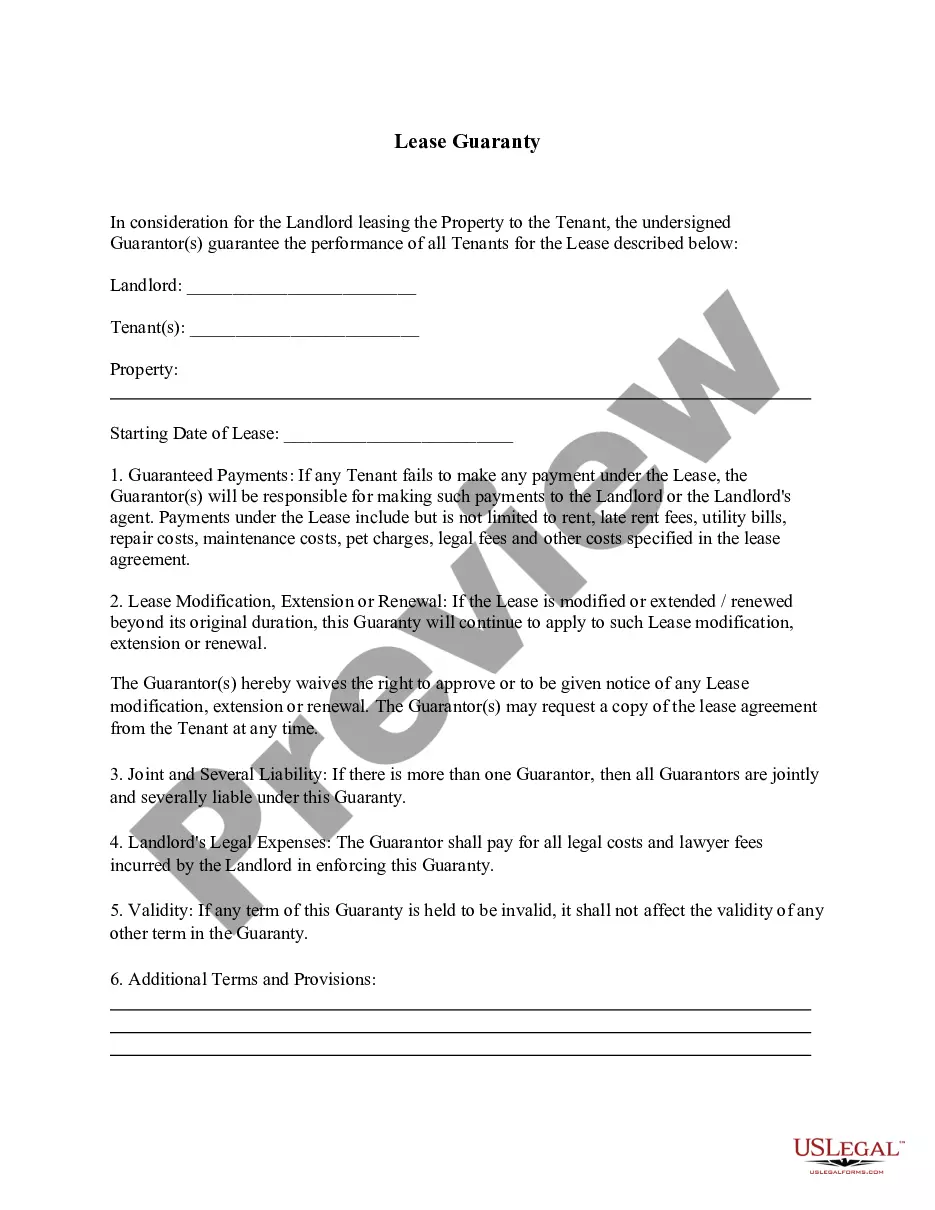
The Landlord Tenant Lease Co-Signer Agreement is a legal document used by landlords to establish a contractual relationship with a co-signer. This agreement ensures that the co-signer is responsible for any unpaid rent, damages, or other obligations if the tenant fails to fulfill their lease responsibilities. The co-signer, sometimes referred to as a guarantor, provides an additional layer of security for the landlord, offering peace of mind regarding the tenant's lease obligations.
Main sections of this form
- Parties involved: Identifies the tenant, landlord, and co-signer.
- Lease details: Specifies the property address being leased.
- Co-signer obligations: Clarifies the financial responsibilities of the co-signer.
- Legal proceedings clause: Outlines attorney fees and costs associated with disputes.
- Signatures: Requires signatures and dates from the landlord, tenant, and co-signer.
Situations where this form applies
This form is particularly useful in situations where a tenant lacks sufficient credit history or income to secure a rental property on their own. If a landlord requires additional security, they may ask for a co-signer to ensure rent will be paid. This agreement is often used in residential leases and helps landlords mitigate financial risks associated with renting to tenants who may not meet standard leasing requirements.
Who should use this form
Consider using this form if you are:
- A landlord seeking additional security for a rental agreement.
- A tenant who wants to include a co-signer to help secure a lease.
- A co-signer who agrees to take financial responsibility for the lease obligations of the tenant.
Instructions for completing this form
- Identify the parties: Fill in the full names of the tenant, landlord, and co-signer.
- Specify the property: Enter the address of the leased premises.
- Include relevant dates: Write the date of the agreement and the appropriate signature dates.
- Clarify obligations: Ensure the co-signer understands and agrees to their responsibilities under the agreement.
- Obtain signatures: Each party must sign and date the agreement to make it legally binding.
Does this form need to be notarized?
In most cases, this form does not require notarization. However, some jurisdictions or signing circumstances might. US Legal Forms offers online notarization powered by Notarize, accessible 24/7 for a quick, remote process.
Get your form ready online
Our built-in tools help you complete, sign, share, and store your documents in one place.
Make edits, fill in missing information, and update formatting in US Legal Forms—just like you would in MS Word.
Download a copy, print it, send it by email, or mail it via USPS—whatever works best for your next step.
Sign and collect signatures with our SignNow integration. Send to multiple recipients, set reminders, and more. Go Premium to unlock E-Sign.
If this form requires notarization, complete it online through a secure video call—no need to meet a notary in person or wait for an appointment.
We protect your documents and personal data by following strict security and privacy standards.

Make edits, fill in missing information, and update formatting in US Legal Forms—just like you would in MS Word.

Download a copy, print it, send it by email, or mail it via USPS—whatever works best for your next step.

Sign and collect signatures with our SignNow integration. Send to multiple recipients, set reminders, and more. Go Premium to unlock E-Sign.

If this form requires notarization, complete it online through a secure video call—no need to meet a notary in person or wait for an appointment.

We protect your documents and personal data by following strict security and privacy standards.
Typical mistakes to avoid
- Failing to include all necessary parties in the agreement.
- Not clearly defining the responsibilities of the co-signer.
- Omitting property details or using incorrect addresses.
- Neglecting to obtain signatures from all parties involved.
Advantages of online completion
- Convenient download: Access the form anytime, from anywhere.
- Editability: Customize the agreement to meet your needs easily.
- Reliability: Forms are drafted by licensed attorneys to ensure legal compliance.
Looking for another form?

Form popularity
FAQ
In addition to creditworthiness and income, landlords look for a positive rental history and overall reliability in a co-signer. They appreciate co-signers who demonstrate their commitment to supporting the tenant's rental obligations. This evaluation is crucial in the context of an Arkansas Landlord Tenant Lease Co-Signer Agreement.
When writing a lease with a co-signer, include specific terms outlining the co-signer's obligations and responsibilities. Clearly detail the financial responsibilities and how they relate to the tenant's lease. Use a customized Arkansas Landlord Tenant Lease Co-Signer Agreement template from uslegalforms to ensure all necessary information is included.
Landlords generally check credit scores, income statements, and rental history for co-signers. They want to ensure the co-signer can financially support the lease if needed. Providing accurate and up-to-date information during the Arkansas Landlord Tenant Lease Co-Signer Agreement process improves the chances of approval.
While some landlords request that co-signers have an income five times the rent, this is not always the case. Requirements vary by landlord and property. Each Arkansas Landlord Tenant Lease Co-Signer Agreement may have different criteria, so it’s essential to confirm specific guidelines.
Yes, you can still be denied an apartment even with a co-signer. Landlords may deny an application based on factors such as credit scores, income levels, or background checks. It’s important for both the tenant and co-signer to present a strong application in the Arkansas Landlord Tenant Lease Co-Signer Agreement.
Landlords typically seek co-signers who have a strong credit history, stable income, and a positive rental history. They want assurance that the co-signer can financially support the tenant if necessary. A co-signer's financial reliability provides peace of mind, particularly in an Arkansas Landlord Tenant Lease Co-Signer Agreement.
ACT 1052 is the state legislation that outlines the rights and responsibilities for landlords and tenants in Arkansas. This act includes essential details regarding lease agreements, security deposits, and eviction procedures. Familiarizing yourself with ACT 1052 is vital for anyone entering into an Arkansas Landlord Tenant Lease Co-Signer Agreement, ensuring you're aware of your legal rights.
In Arkansas, there are no state laws that limit how much a landlord can increase rent, but they must provide notice to tenants. The notice period generally depends on the lease terms or state regulations, usually 30 days for month-to-month agreements. Knowing how rent increases align with the terms of your Arkansas Landlord Tenant Lease Co-Signer Agreement can prevent misunderstandings.
Landlords are not legally obligated to accept co-signers; it generally depends on their policies and the specifics of the Arkansas Landlord Tenant Lease Co-Signer Agreement. While many landlords welcome co-signers to mitigate risk, preferences can vary. Always check the rental agreement and discuss this with your landlord to ensure clarity on their requirements.
Act 1052 is legislation in Arkansas that governs landlord-tenant relationships. This law outlines various rights and responsibilities for both landlords and tenants in rental agreements. Understanding the provisions of Act 1052 is crucial for anyone entering into an Arkansas Landlord Tenant Lease Co-Signer Agreement, ensuring both parties know their obligations.