Arkansas Notice of Default on Residential Lease
Understanding this form
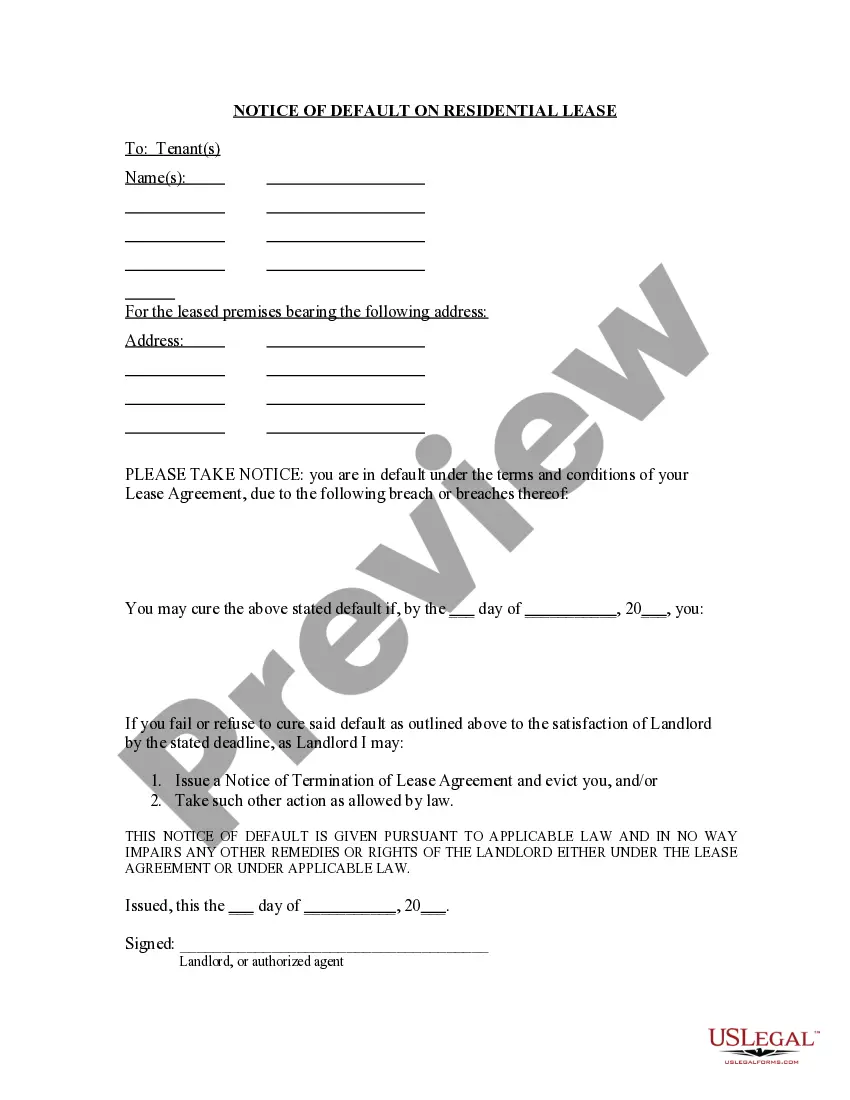
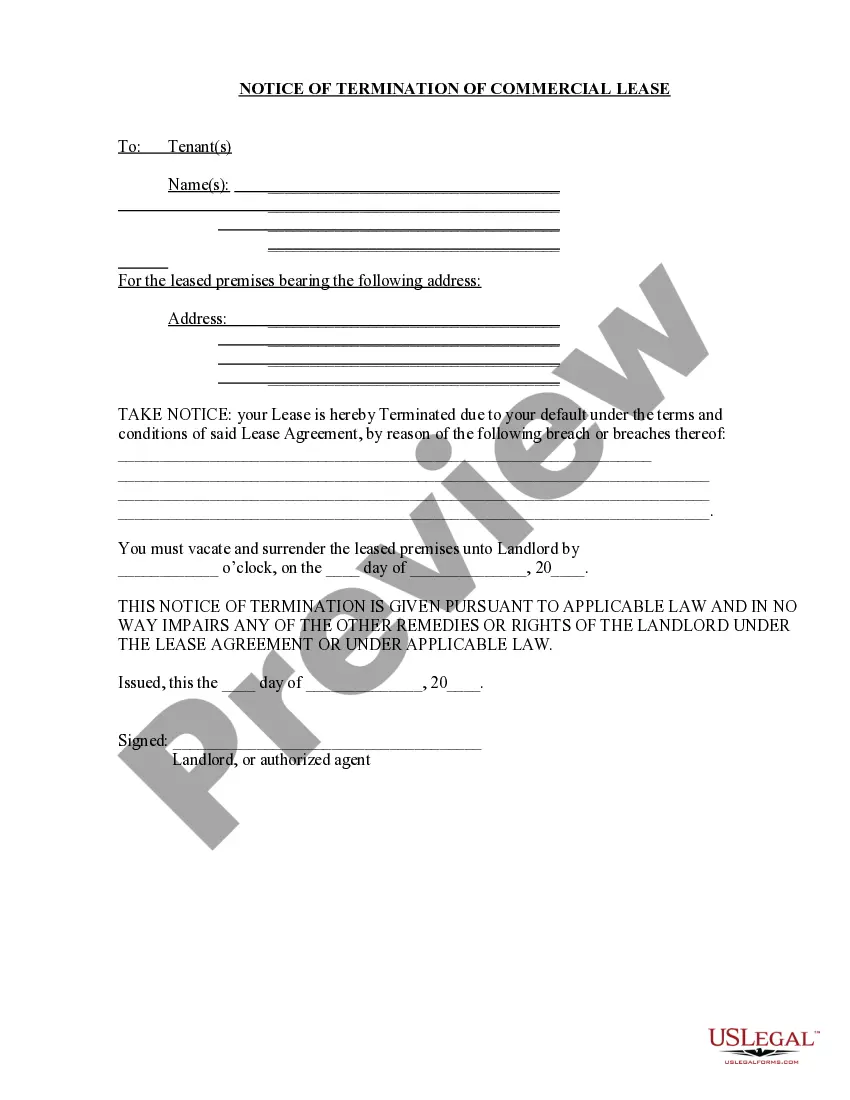
The Notice of Default on Residential Lease is a legal document used by landlords to formally notify tenants of a default in their lease agreement, typically related to the failure to pay rent. This document outlines specific reasons for the default, sets a deadline for the tenant to remedy the issue, and provides a framework for potential eviction or other legal actions if the tenant fails to comply. Unlike general lease agreements, this notice serves as a critical step in the eviction process, ensuring that landlords follow legal protocols before taking further action.
Key components of this form
- Specific reasons for default outlined in clear language
- Deadline date for the tenant to cure the default
- Landlord's signature and date of issuance
- Legal references ensuring compliance with applicable laws
- Statement of potential actions by the landlord if the tenant does not remedy the default


Common use cases
This form should be used when a tenant is in default of their lease agreement, such as failing to pay rent on time. It is an important tool for landlords to officially notify tenants of their missed obligations and to provide them an opportunity to remedy the situation before the landlord may take further legal action, such as eviction proceedings. Using this notice correctly can help landlords comply with legal requirements and protect their rights in a rental agreement.
Who this form is for
- Landlords with residential properties who need to notify tenants of lease defaults
- Property management companies acting on behalf of landlords
- Real estate professionals involved in rental agreements
How to complete this form
- Identify the parties involved: landlord and tenant's names
- Specify the property address on which the lease is based
- Enter the specific reasons for the default, such as unpaid rent
- Set and clearly state the deadline date for the tenant to cure the default
- Sign and date the notice to formalize it
Notarization guidance
This form does not typically require notarization to be legally valid. However, some jurisdictions or document types may still require it. US Legal Forms provides secure online notarization powered by Notarize, available 24/7 for added convenience.
Get your form ready online
Our built-in tools help you complete, sign, share, and store your documents in one place.
Make edits, fill in missing information, and update formatting in US Legal Forms—just like you would in MS Word.
Download a copy, print it, send it by email, or mail it via USPS—whatever works best for your next step.
Sign and collect signatures with our SignNow integration. Send to multiple recipients, set reminders, and more. Go Premium to unlock E-Sign.
If this form requires notarization, complete it online through a secure video call—no need to meet a notary in person or wait for an appointment.
We protect your documents and personal data by following strict security and privacy standards.

Make edits, fill in missing information, and update formatting in US Legal Forms—just like you would in MS Word.

Download a copy, print it, send it by email, or mail it via USPS—whatever works best for your next step.

Sign and collect signatures with our SignNow integration. Send to multiple recipients, set reminders, and more. Go Premium to unlock E-Sign.

If this form requires notarization, complete it online through a secure video call—no need to meet a notary in person or wait for an appointment.

We protect your documents and personal data by following strict security and privacy standards.
Common mistakes
- Failing to provide a specific deadline for remedying the default
- Not including clear reasons for the default
- Incorrectly identifying the parties or property involved
- Overlooking local legal requirements in the notice format
Why complete this form online
- Convenient access to legally sound templates prepared by licensed attorneys
- Editable online forms that can be customized to specific situations
- Quick download and printing options for immediate use
Quick recap
- The Notice of Default on Residential Lease helps landlords formally communicate tenant violations.
- It is an essential step before eviction proceedings can begin.
- Ensure compliance with local regulations when using this form.
Looking for another form?









Form popularity
FAQ
Breaking up with a partner on a shared lease can complicate your housing situation. You may need to discuss options with your ex-partner and potentially use the Arkansas Notice of Default on Residential Lease to address any lease violations. Utilizing platforms like US Legal Forms can help you navigate this transition smoothly and legally.
Defaulting on a lease occurs when a tenant fails to meet their obligations, such as not paying rent or violating other lease terms. In Arkansas, this triggers legal procedures, including issuing an Arkansas Notice of Default on Residential Lease to the tenant. It's crucial to understand your rights and responsibilities, which can be clarified through resources like US Legal Forms.
Kicking someone out of a lease requires a clear understanding of the lease agreement and local laws. Typically, you would start by issuing an Arkansas Notice of Default on Residential Lease if they fail to comply with lease terms. Engaging with a legal platform like US Legal Forms can streamline this process and provide necessary documentation.
To remove someone from a lease following a breakup, you must communicate openly with your ex-partner and review the lease agreement. You may need to provide an Arkansas Notice of Default on Residential Lease if there are grounds for termination. Ensure you follow legal protocols and consider using services like US Legal Forms for effective solutions.
Removing someone from a lease without their consent is generally not permissible unless specific conditions are met. If both tenants signed the lease, the Arkansas Notice of Default on Residential Lease typically requires mutual agreement or legal grounds to proceed. It is advisable to consult legal resources or platforms like US Legal Forms for guidance on managing lease changes.
The new renters law in Arkansas focuses on enhancing tenant rights while ensuring landlords fulfill their obligations. This includes providing clear guidelines for issuing notices, such as the Arkansas Notice of Default on Residential Lease. It aims to promote transparency in rental agreements and protect both parties in a lease.
In Arkansas, the notice period a landlord must provide a tenant depends on the lease agreement and the reason for termination. Typically, landlords must give at least 30 days' notice if terminating a month-to-month lease. If there’s a violation of the lease, the Arkansas Notice of Default on Residential Lease requires the landlord to notify tenants accordingly. Understanding these requirements can help you plan your next steps and ensure a smooth transition.
If you encounter issues with your landlord in Arkansas, you can report them to the Arkansas Attorney General's Office or your local housing authority. They can assist you in situations concerning the Arkansas Notice of Default on Residential Lease. Additionally, you may seek help from tenant advocacy groups, which can provide valuable resources and advice. Exploring these options can help ensure your rights as a tenant are protected.
The default clause on a residential lease outlines what constitutes a default and the subsequent actions a landlord may take. This clause is crucial for both tenants and landlords as it defines the rights and responsibilities in case of non-compliance. Keeping the Arkansas Notice of Default on Residential Lease in mind helps ensure that all parties understand their duties and can act accordingly.
A notice of default on a house is a formal notification indicating that a homeowner has failed to meet one or more obligations associated with their mortgage or lease. In the context of rental properties, this notice can indicate potential eviction proceedings. Understanding the implications of the Arkansas Notice of Default on Residential Lease can help tenants respond appropriately and maintain their housing.