Arkansas Quitclaim Deed from Husband and Wife to LLC
Overview of this form
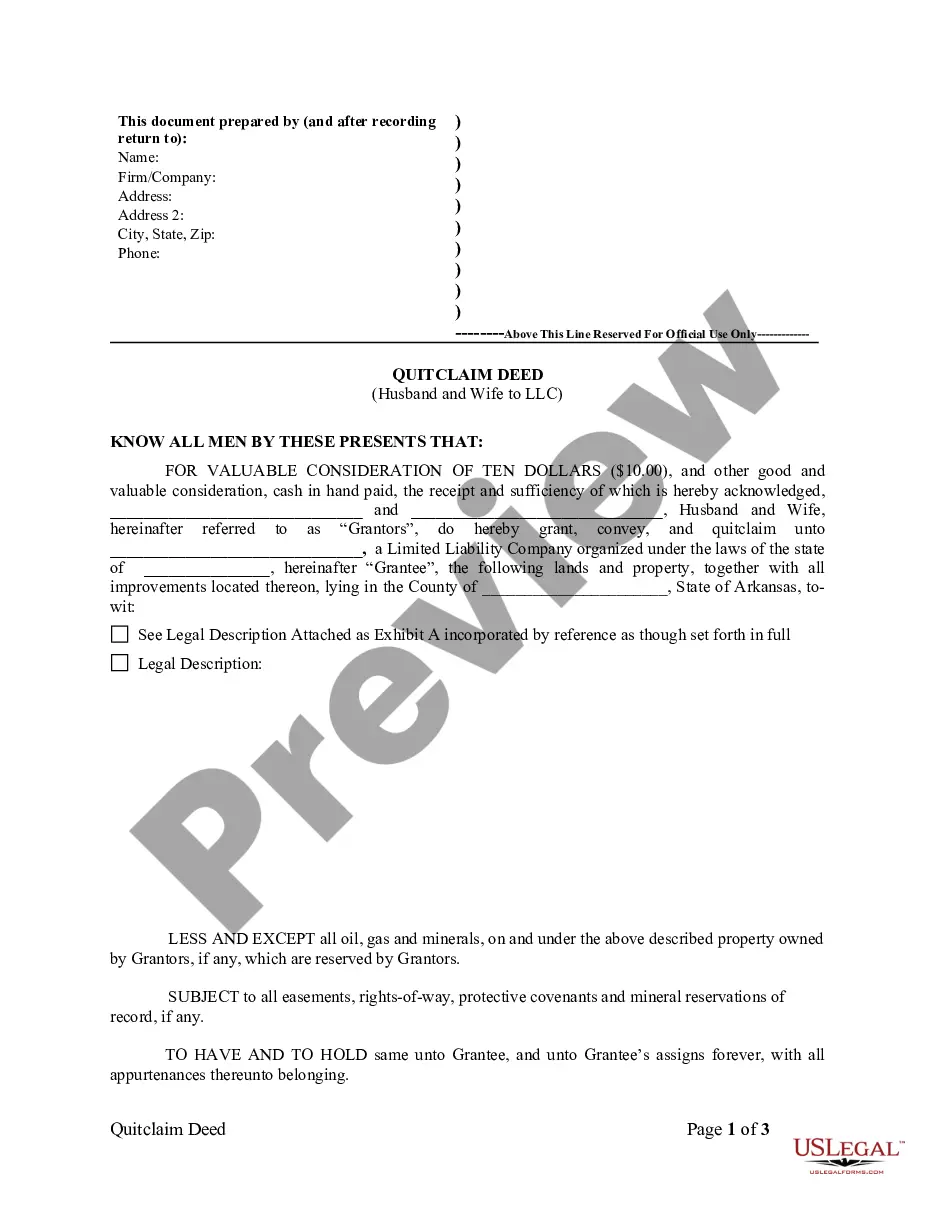
The Quitclaim Deed from Husband and Wife to LLC is a legal document used to transfer ownership of property from a married couple to a limited liability company. This form allows the grantors, who are usually the husband and wife, to relinquish any claims to the property without guaranteeing clear title. Unlike other types of deeds, a quitclaim deed does not affirm the legitimacy of the title, making it a straightforward option for property transfers among family members or businesses.
Main sections of this form
- Identification of the grantors (husband and wife) and grantee (LLC).
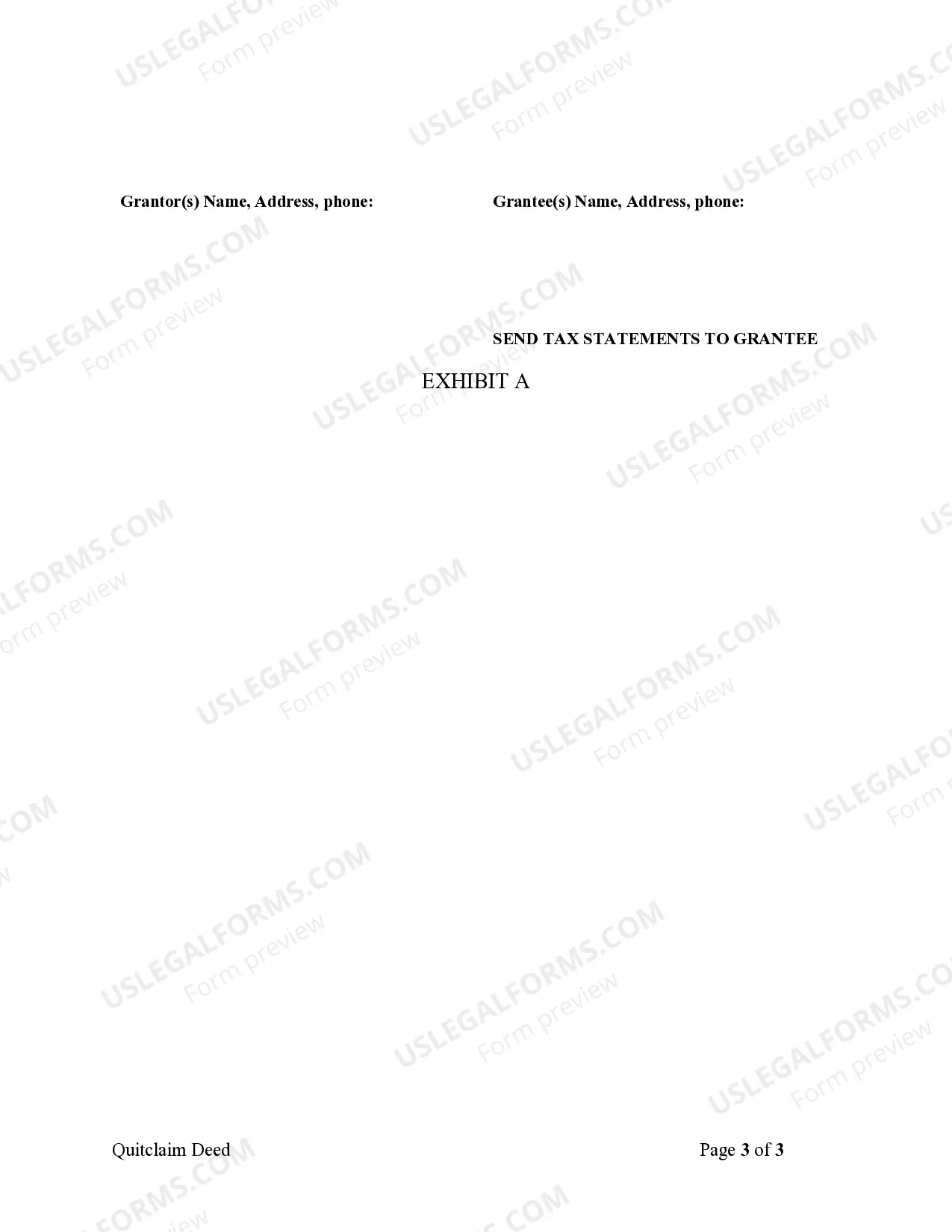
- Legal description of the property being transferred, referenced as Exhibit A.
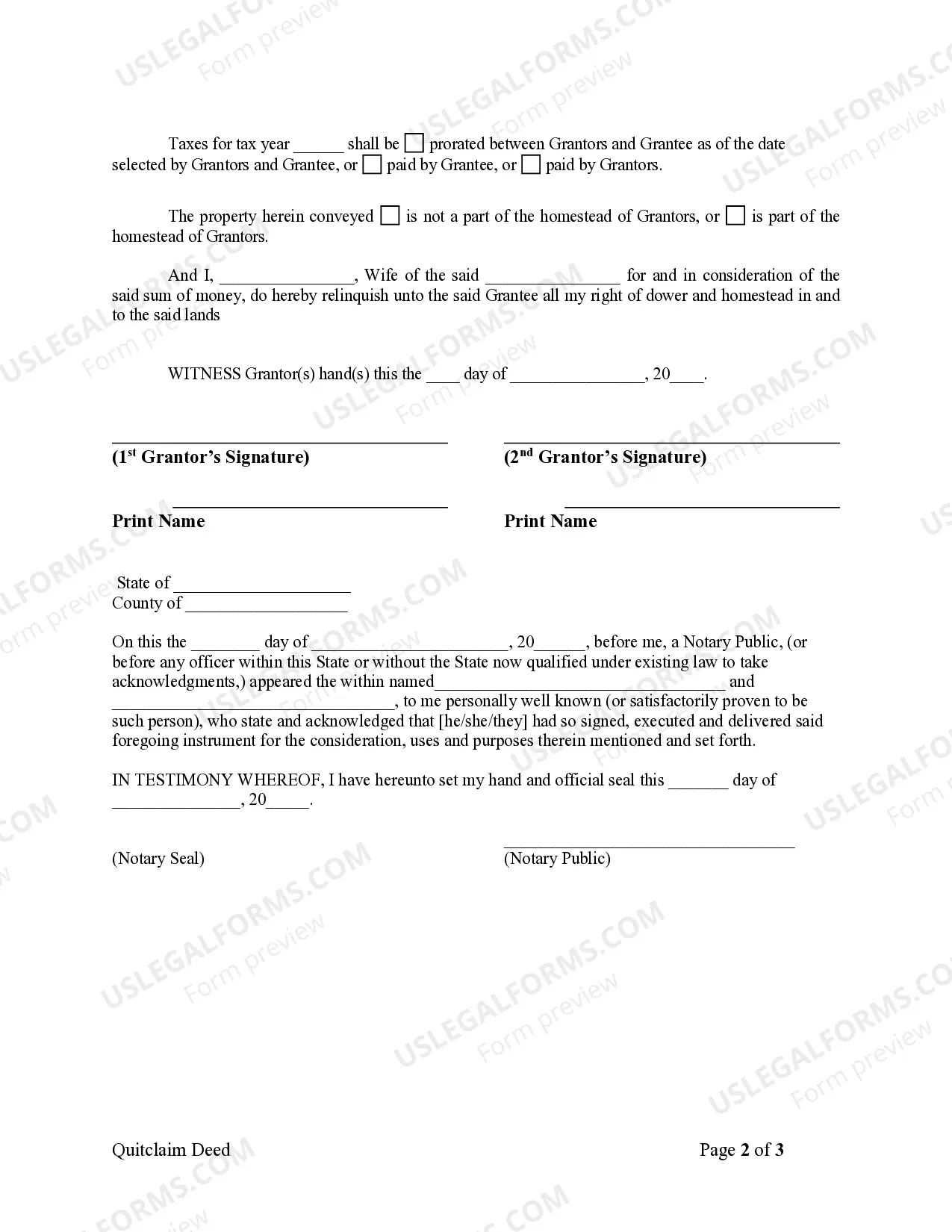
- Tax allocation for the property for the current tax year.
- Statement on the property's status regarding the homestead exemption.
- Signatures of both grantors, along with notarization details if applicable.





Situations where this form applies
This quitclaim deed is ideal for situations where a husband and wife wish to transfer property to an LLC, often for business or estate planning purposes. It can be used when the couple is converting personal property into business assets or when simplifying asset management for estate purposes. Using this form can help avoid potential disputes over property claims in the future.
Who this form is for
- Married couples who jointly own property and want to transfer it to their LLC.
- Business owners who are restructuring ownership and moving assets into a business entity.
- Individuals involved in estate planning who need to designate an LLC as the property owner.
Completing this form step by step
- Identify the grantors (husband and wife) by entering their full names.
- Specify the LLC's name as the grantee.
- Provide the legal description of the property as stated in Exhibit A.
- Indicate how property taxes will be managed for the current tax year.
- Both grantors should sign the document in the presence of a notary public.
Does this form need to be notarized?
Yes, this form must be notarized to be legally valid. Notarization ensures that the signatures are authenticated and adds an additional layer of legitimacy to the document. US Legal Forms offers integrated online notarization services, allowing you to complete this process easily and securely through a video call.
Get your form ready online
Our built-in tools help you complete, sign, share, and store your documents in one place.
Make edits, fill in missing information, and update formatting in US Legal Forms—just like you would in MS Word.
Download a copy, print it, send it by email, or mail it via USPS—whatever works best for your next step.
Sign and collect signatures with our SignNow integration. Send to multiple recipients, set reminders, and more. Go Premium to unlock E-Sign.
If this form requires notarization, complete it online through a secure video call—no need to meet a notary in person or wait for an appointment.
We protect your documents and personal data by following strict security and privacy standards.

Make edits, fill in missing information, and update formatting in US Legal Forms—just like you would in MS Word.

Download a copy, print it, send it by email, or mail it via USPS—whatever works best for your next step.

Sign and collect signatures with our SignNow integration. Send to multiple recipients, set reminders, and more. Go Premium to unlock E-Sign.

If this form requires notarization, complete it online through a secure video call—no need to meet a notary in person or wait for an appointment.

We protect your documents and personal data by following strict security and privacy standards.
Mistakes to watch out for
- Failing to include the legal description of the property.
- Not obtaining a notarization for the signatures, which can affect validity.
- Leaving the tax allocation section blank or incorrectly filled out.
Benefits of using this form online
- Convenient access to legal templates drafted by licensed attorneys.
- Editable formats allow you to tailor the document to your specific needs.
- Reliable, up-to-date information that complies with current laws.
Legal use & context
- The quitclaim deed is legally recognized in all states for property transfers.
- It is commonly used in real estate transactions but does not guarantee a clear title.
- Use of this form effectively informs the public of ownership changes.
Key takeaways
- The Quitclaim Deed from Husband and Wife to LLC transfers property rights without title guarantees.
- Ensure all required information is accurate and complete before notarization.
- Consider the implications of transferring property ownership to an LLC for liability protection and business flexibility.
Looking for another form?


Form popularity
FAQ
To add a spouse via a quitclaim deed, prepare an Arkansas Quitclaim Deed from Husband and Wife to LLC. Indicate both spouses' names as grantors and specify the property in question. Ensure to include the spouse's name clearly in the document and have both spouses sign in front of a notary. Filing the completed deed with the county records will finalize this addition legally.
Yes, you can create a quitclaim deed yourself, but it requires attention to detail. Using an Arkansas Quitclaim Deed from Husband and Wife to LLC template can simplify the process significantly. Just ensure you include all pertinent information and follow legal signing and filing procedures. For added assurance, you might consider using platforms like USLegalForms to access templates and guides.
Filling out an Arkansas Quitclaim Deed from Husband and Wife to LLC requires specific information. Start by entering the names and addresses of the grantors and grantee, along with a legal description of the property. Clearly indicate the nature of the transfer and ensure all parties sign the document. This ensures legality and a smooth transfer of ownership.
Transferring a deed from personal ownership to an LLC involves executing an Arkansas Quitclaim Deed from Husband and Wife to LLC. First, complete the quitclaim deed form with accurate details about the property and the LLC. Ensure both spouses sign the document in front of a notary, as this adds legal validity. Finally, file the deed with the county recorder's office to finalize the transfer.
To place your property in an LLC, you will need to execute an Arkansas Quitclaim Deed from Husband and Wife to LLC. Start by acquiring the necessary deed form and filling it out with precise property details. Then, sign and file the deed with your county office, and ensure that your LLC is properly formed to hold the property.
Transferring a deed to an LLC requires you to complete an Arkansas Quitclaim Deed from Husband and Wife to LLC. First, make sure you draft the document correctly, including all relevant information about the property and the LLC. After both spouses sign the deed, file it with the appropriate local authorities to finalize the transfer.
To efficiently transfer the deed of a house to an LLC, begin by obtaining the Arkansas Quitclaim Deed from Husband and Wife to LLC form. Fill it out with accurate property details and ensure both spouses sign it. Once completed, file the deed with your county's recorder or registrar of deeds for official recognition of the transfer.
One notable disadvantage of placing a property in an LLC involves potential tax implications. When you use an Arkansas Quitclaim Deed from Husband and Wife to LLC, the property may be subject to different tax rates. Additionally, transferring property into an LLC can complicate your personal liability status and may hinder financing options in the future.
In Arkansas, a quitclaim deed serves as a simple way to transfer property ownership between individuals. This type of deed does not require a title search or guarantee, making it an efficient choice for spouses who want to transfer property rights. When executing an Arkansas Quitclaim Deed from Husband and Wife to LLC, it’s essential to follow state regulations to ensure the transfer is lawful and recognized properly.
A quitclaim deed from one spouse to another is a legal document that transfers ownership of real property without guaranteeing the title. This means that one spouse conveys their interest in the property to the other, often during divorce or property settlements. When it comes to the Arkansas Quitclaim Deed from Husband and Wife to LLC, this process can help streamline the transfer of property to a business entity, ensuring proper ownership without complications.