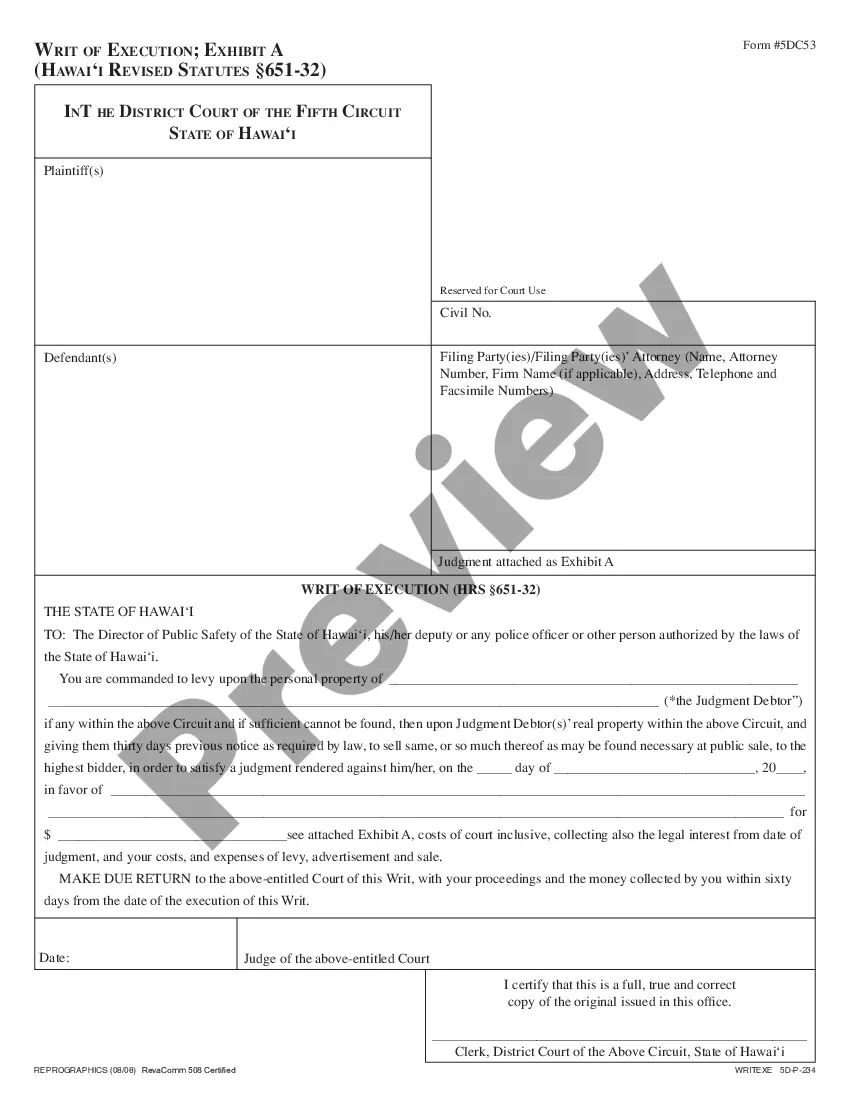
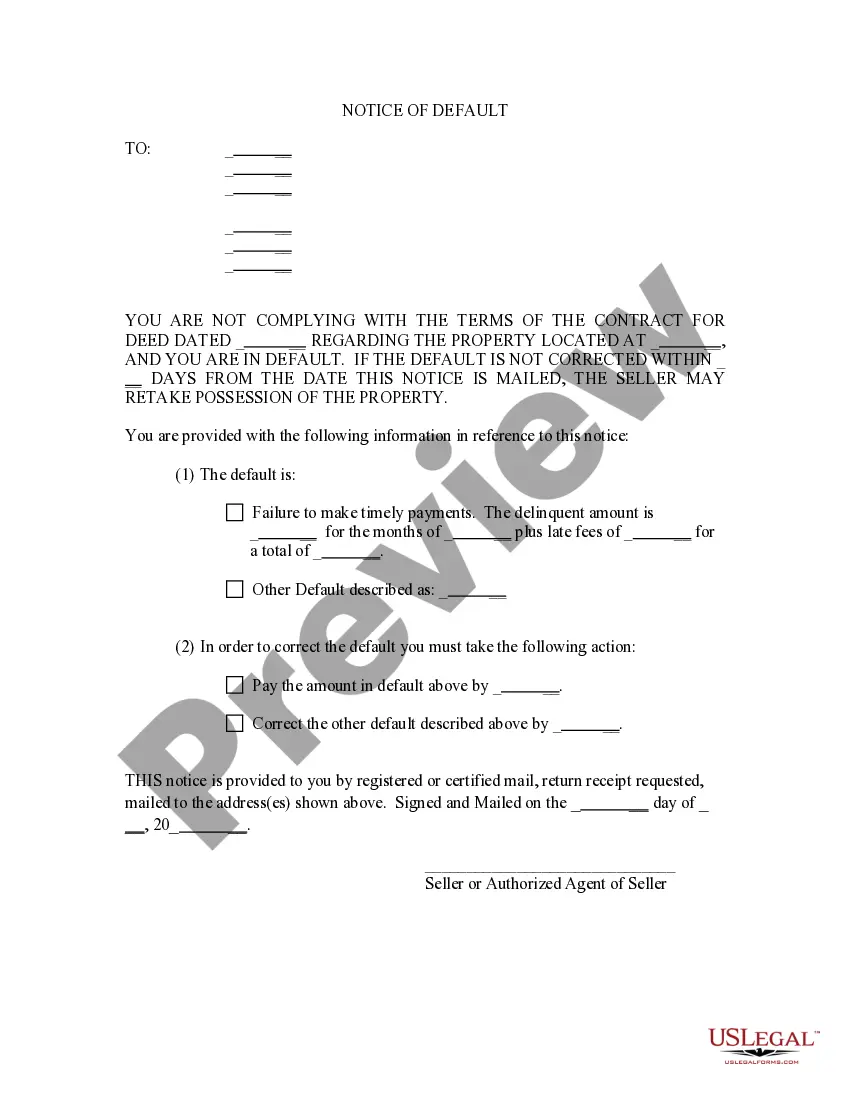
Arkansas General Notice of Default for Contract for Deed
Overview of this form
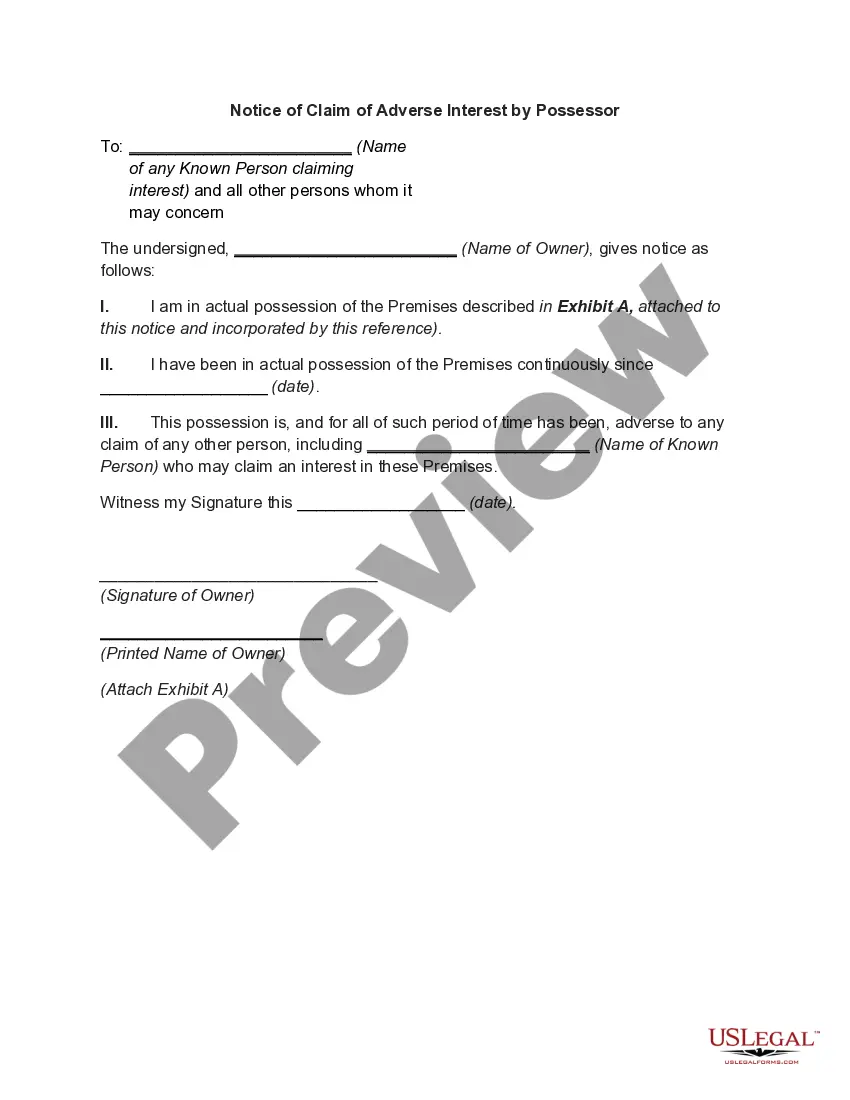
The General Notice of Default for Contract for Deed is a legal document used by sellers to formally notify purchasers that they are in default on a contract for deed. This notice outlines the reasons for the default, the actions required to remedy the situation, and the potential consequences if the purchaser fails to address the default. This document is essential in ensuring that both parties understand their obligations and the steps needed to resolve issues amicably.
What’s included in this form
- Identification of the seller and purchaser.
- Detailed reasons for default, such as missed payments or non-compliance with contract terms.
- Specific performance required by the purchaser to cure the default.
- Potential remedies the seller may pursue if the default is not resolved.
Situations where this form applies
This form is typically used when a purchaser under a contract for deed has failed to meet their obligations, prompting the seller to formally notify them of the default. It is important to use this form to clearly communicate the issues and outline the necessary steps to rectify the situation, helping to avoid further legal complications.
Who this form is for
- Sellers who have entered into a contract for deed and need to notify a purchaser about their default.
- Purchasers who need to understand their obligations under the contract and the consequences of default.
- Real estate professionals assisting clients with contract for deed agreements.
Completing this form step by step
- Identify the parties involved: the seller and the purchaser.
- Clearly state the reasons for the default.
- Specify what the purchaser needs to do to cure the default.
- Outline the seller's intended remedy if the default is not cured.
- Sign and date the notice appropriately to validate the document.
Does this document require notarization?
To make this form legally binding, it must be notarized. Our online notarization service, powered by Notarize, lets you verify and sign documents remotely through an encrypted video session.
Get your form ready online
Our built-in tools help you complete, sign, share, and store your documents in one place.
Make edits, fill in missing information, and update formatting in US Legal Forms—just like you would in MS Word.
Download a copy, print it, send it by email, or mail it via USPS—whatever works best for your next step.
Sign and collect signatures with our SignNow integration. Send to multiple recipients, set reminders, and more. Go Premium to unlock E-Sign.
If this form requires notarization, complete it online through a secure video call—no need to meet a notary in person or wait for an appointment.
We protect your documents and personal data by following strict security and privacy standards.

Make edits, fill in missing information, and update formatting in US Legal Forms—just like you would in MS Word.

Download a copy, print it, send it by email, or mail it via USPS—whatever works best for your next step.

Sign and collect signatures with our SignNow integration. Send to multiple recipients, set reminders, and more. Go Premium to unlock E-Sign.

If this form requires notarization, complete it online through a secure video call—no need to meet a notary in person or wait for an appointment.

We protect your documents and personal data by following strict security and privacy standards.
Avoid these common issues
- Failing to provide specific reasons for the default, which can lead to disputes.
- Not clearly outlining the actions required to cure the default.
- Omitting to sign and date the form, which can invalidate the notice.
Why use this form online
- Easy to download and customize according to specific needs.
- Access to forms drafted by licensed attorneys, ensuring legal compliance.
- Convenient and efficient with the ability to fill out and print from home.
Legal use & context
- This form serves as a legal notice ensuring that the seller has fulfilled their obligation to inform the purchaser.
- Failure to use this notice may result in legal uncertainties or the inability to pursue further action.
Main things to remember
- The General Notice of Default is a crucial step in addressing defaults in contracts for deed.
- It provides a clear outline of default reasons and required actions.
Looking for another form?
Form popularity
FAQ
Structuring a contract for a deed requires attention to several critical components, including the buyer and seller’s responsibilities, payment schedules, and terms of the title transfer. Clearly outline the consequences of default and ensure there are provisions for repairs and maintenance. A well-structured contract protects both parties; thus, consider seeking assistance from platforms like US Legal Forms to customize your agreement effectively. This can be particularly useful when handling matters related to the Arkansas General Notice of Default for Contract for Deed.
Writing up a contract for deed involves including all essential elements like the buyer and seller details, property description, payment structure, and any contingencies. It’s also important to specify the terms of default and what will happen in case of non-payment. Consider consulting templates or services, such as those offered by US Legal Forms, to ensure compliance with local laws. Following these steps will help you create a solid foundation for your Arkansas General Notice of Default for Contract for Deed.
To execute a contract as a deed in Arkansas, both parties must sign the document in front of a notary public. It’s crucial that the contract clearly outlines the terms of the agreement, including payment details and property descriptions. Once signed, you should record the deed with the local county recorder’s office to validate the transaction. This process aligns well with the Arkansas General Notice of Default for Contract for Deed, ensuring that your interests are safeguarded.
In Arkansas, land contracts do not legally have to be recorded, but it is highly recommended. Recording a land contract provides public notice of the agreement, which can protect your rights should a dispute arise. Moreover, having a recorded contract helps establish priority in case the property changes hands or if another creditor claims an interest. If you are working with an Arkansas General Notice of Default for Contract for Deed, proper recording can significantly benefit your situation.
A contract for deed can be a beneficial option if you seek flexible financing and easier access to home ownership. It allows buyers to secure a property without the immediate need for traditional financing. However, it's essential to be aware of potential risks and legal implications, such as the Arkansas General Notice of Default for Contract for Deed, which outlines the repercussions if payments are missed.
Usually, a real estate attorney or a qualified professional prepares a contract for deed. This ensures the document meets all legal requirements and adequately protects your rights. If you're unsure where to start, uslegalforms offers templates and guidance tailored to the Arkansas General Notice of Default for Contract for Deed, making it easier for you to create a valid contract.
Yes, a contract for deed typically needs to be notarized in Arkansas to ensure its legal validity. Notarization helps to certify that both parties have agreed to the terms and adds a layer of security. This aspect is particularly important when dealing with the Arkansas General Notice of Default for Contract for Deed, as it ensures all parties fulfill their obligations.
To record a contract for a deed in Arkansas, you need to prepare the document and then submit it to the local county recorder's office. This step is crucial for making the contract enforceable and protecting your interests, especially regarding the Arkansas General Notice of Default for Contract for Deed. You may want to consult with a legal professional for guidance on the necessary requirements and ensure everything is in order.