Alabama Last Will and Testament with All Property to Trust called a Pour Over Will
Overview of this form
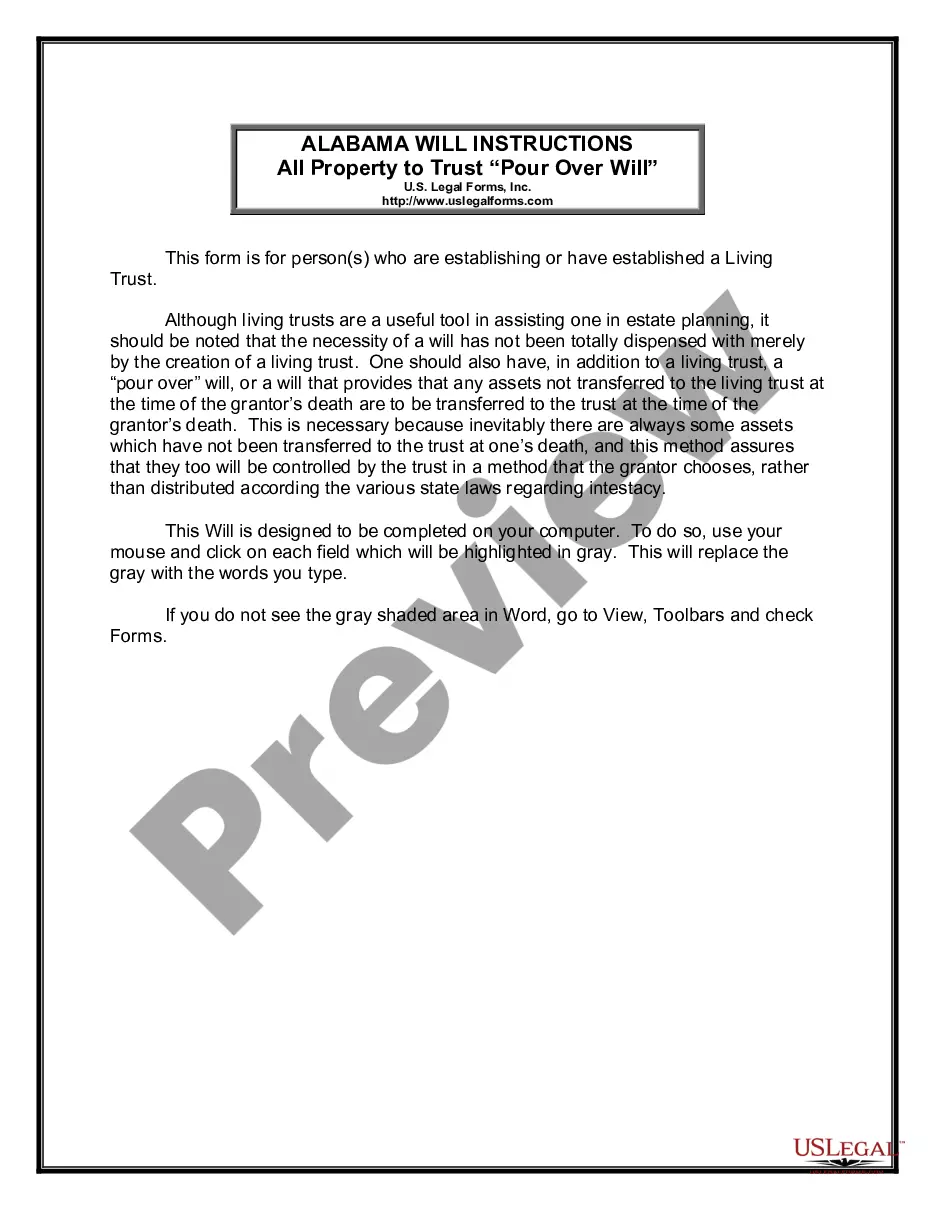
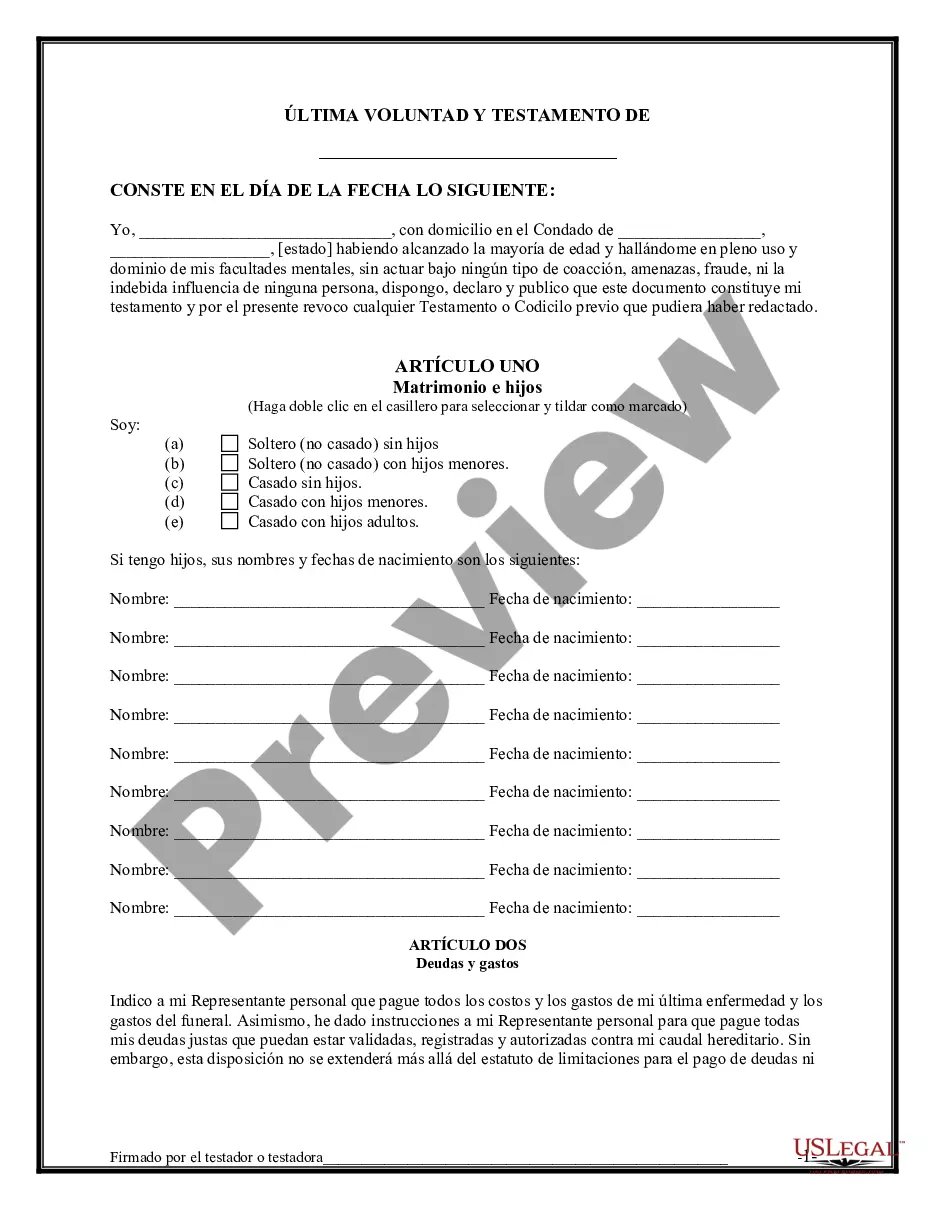
This Last Will and Testament with All Property to Trust, commonly referred to as a Pour Over Will, is a legal document that ensures any property not already transferred to your trust is directed to it upon your death. Designed for individuals with a Living Trust, this will functions alongside the trust, allowing for seamless estate planning by "pouring over" any remaining assets into the trust. This provides clear instructions on how your assets will be managed rather than leaving them subject to state intestacy laws.
Form components explained
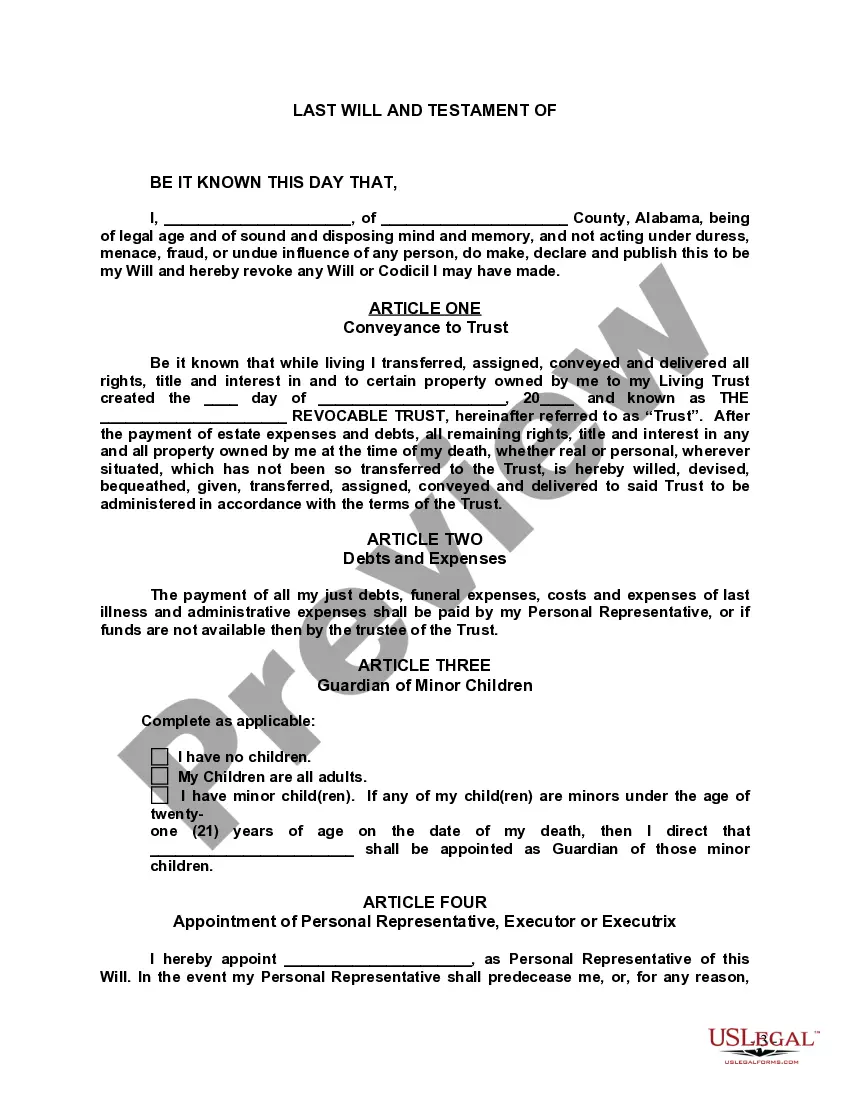
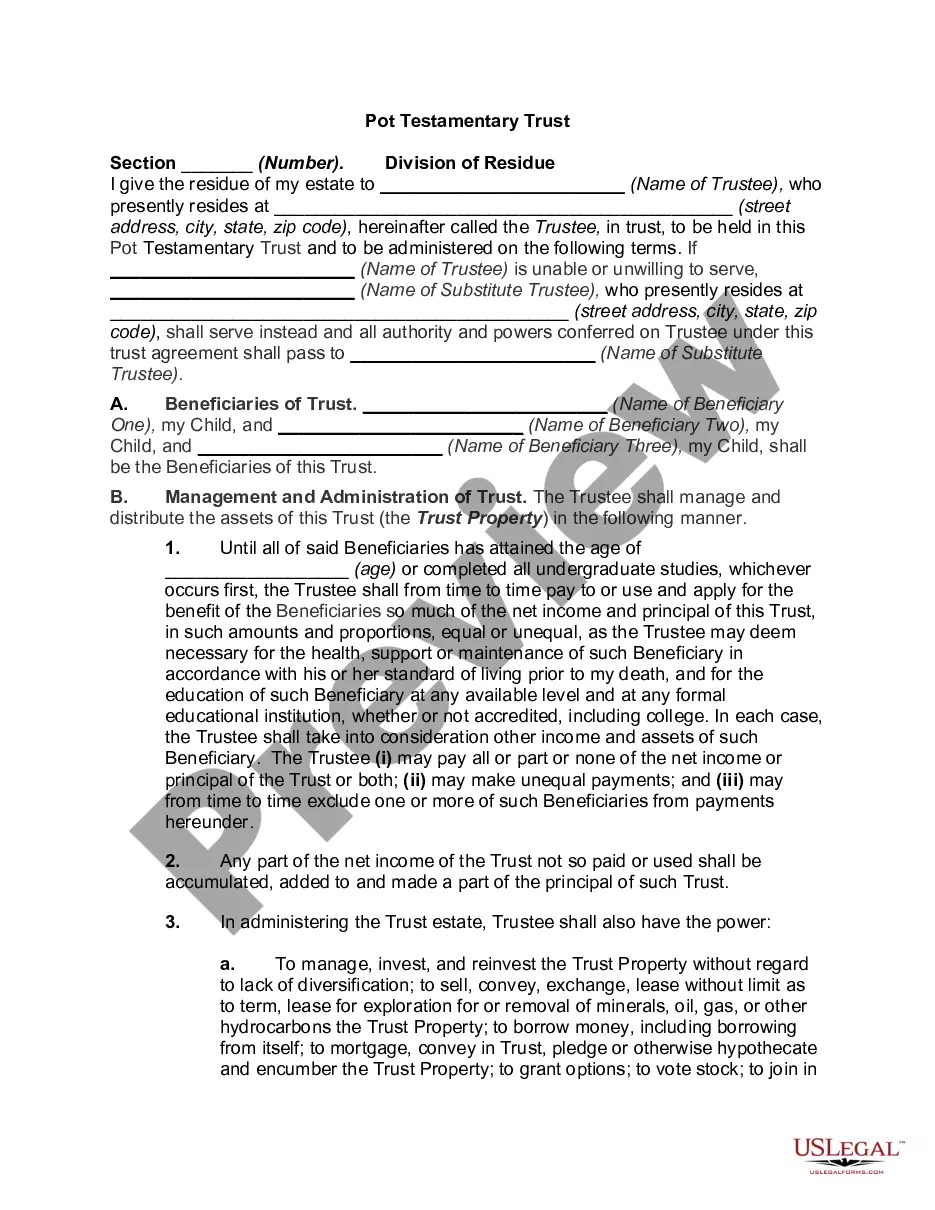
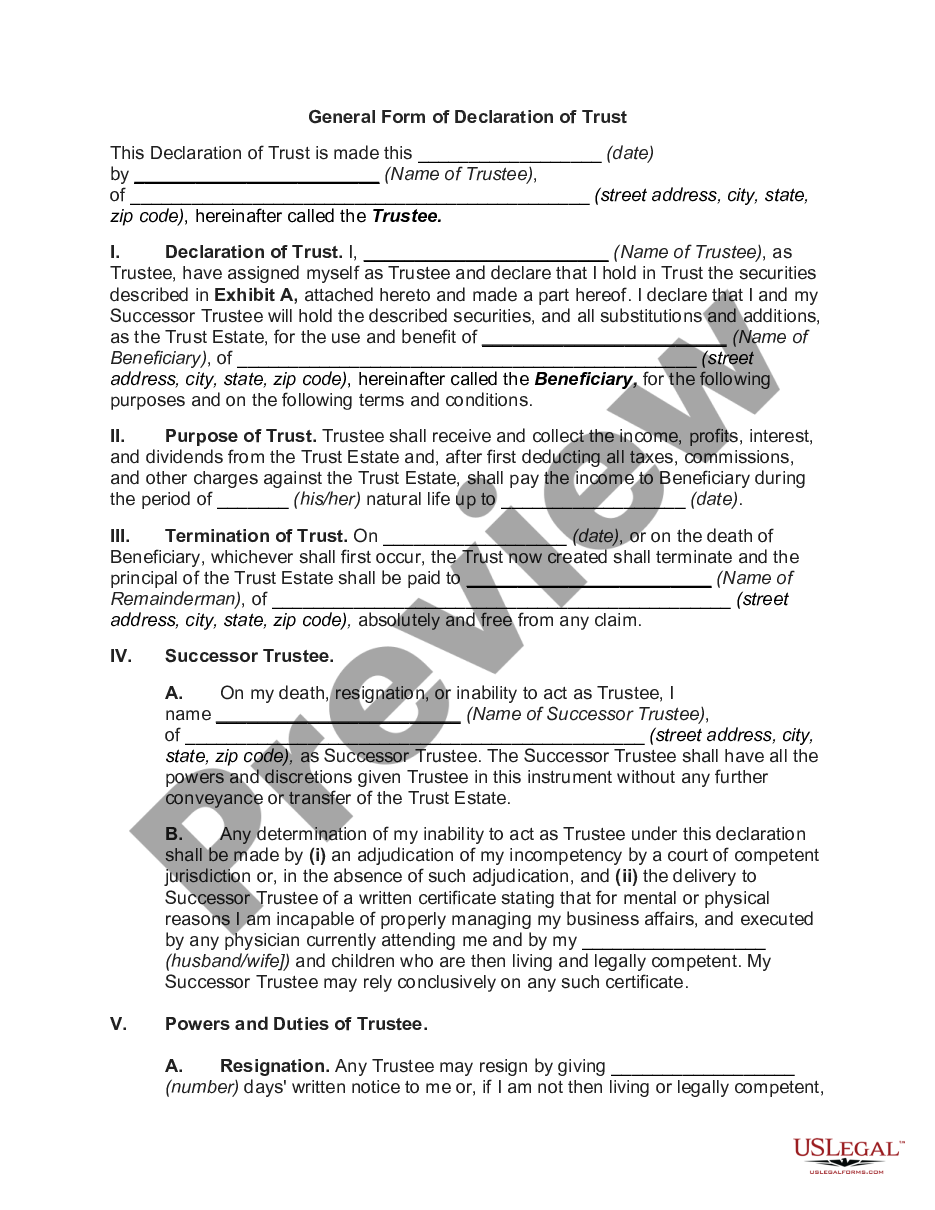
- Conveyance to Trust: Specifies how all property not yet transferred to the Living Trust will be allocated after death.
- Guardian of Minor Children: Allows you to name a guardian for minor children.
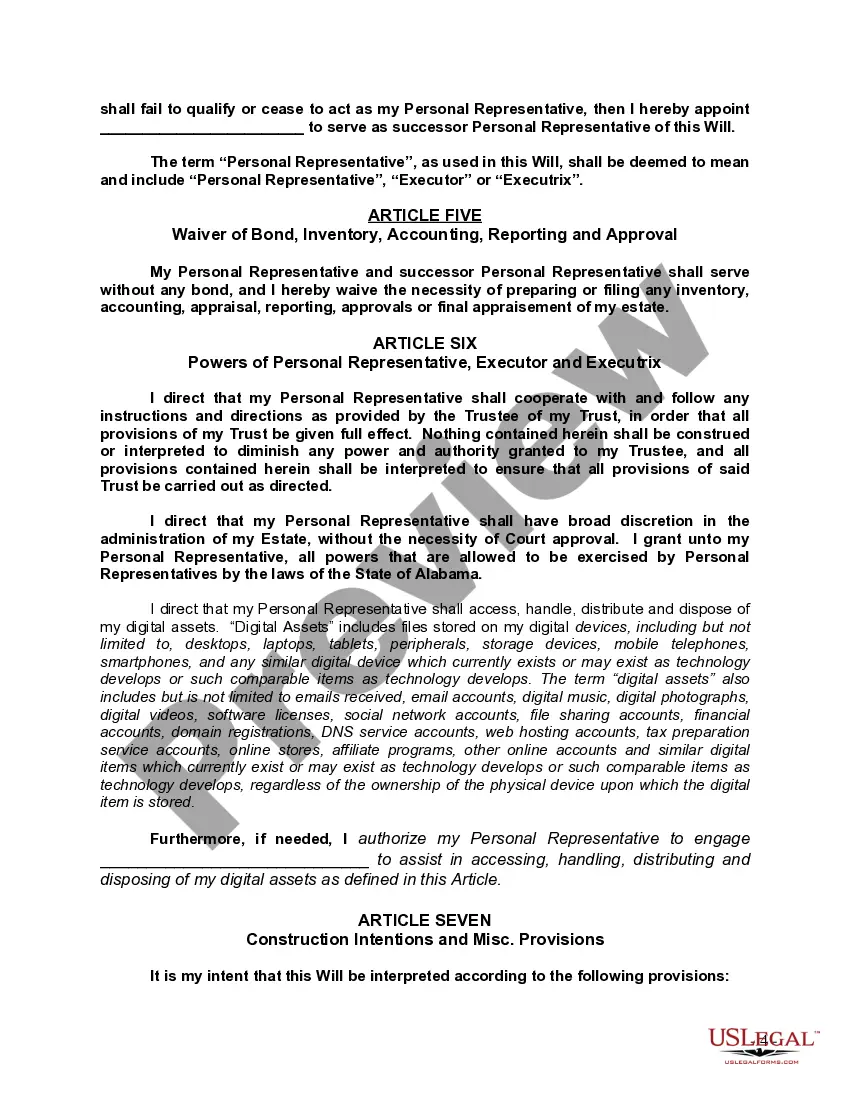
- Appointment of Personal Representative: Designates an individual to manage the estate and execute the will's terms.
- Waiver of Bond: Waives the requirement for a bond for the Personal Representative.
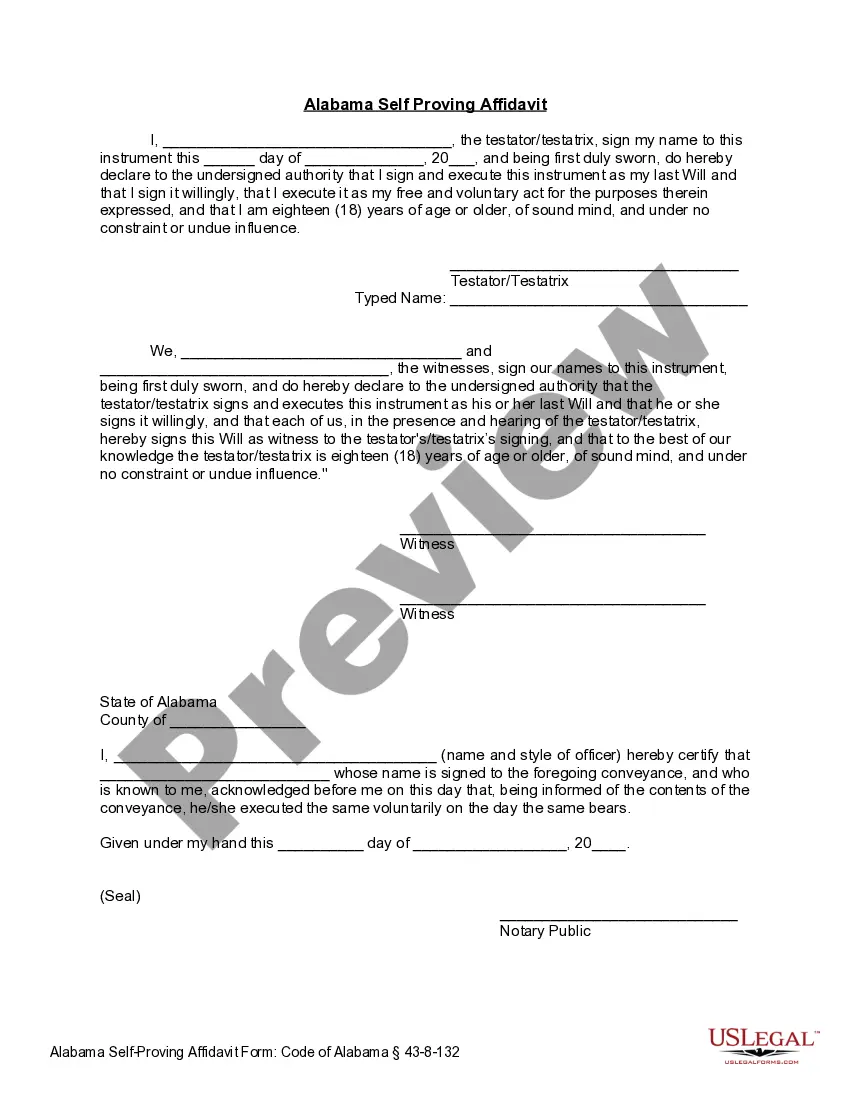
- Self-Proving Affidavit: Confirms the validity of the will in front of witnesses and notaries.



Situations where this form applies
This form is particularly useful when you have established a Living Trust but have not placed all of your assets into the trust before your death. It ensures that any remaining assets are still distributed according to your wishes and in alignment with the terms of your trust, avoiding potential disputes or complications that may arise from intestacy laws.
Who should use this form
- Individuals who have established a Living Trust and want to secure their remaining assets.
- Parents with minor children wishing to designate guardians.
- Anyone seeking to simplify their estate distribution without complications.
- People looking to ensure that their property is managed according to their specific desires rather than state laws.
How to prepare this document
- Identify the parties involved, including yourself, your Living Trust, and any designated guardians.
- Specify the property that you are including in your trust and any remaining assets not yet transferred.
- Fill in the personal representativeâs name who will execute the will.
- Complete the guardian designation for any minor children, if applicable.
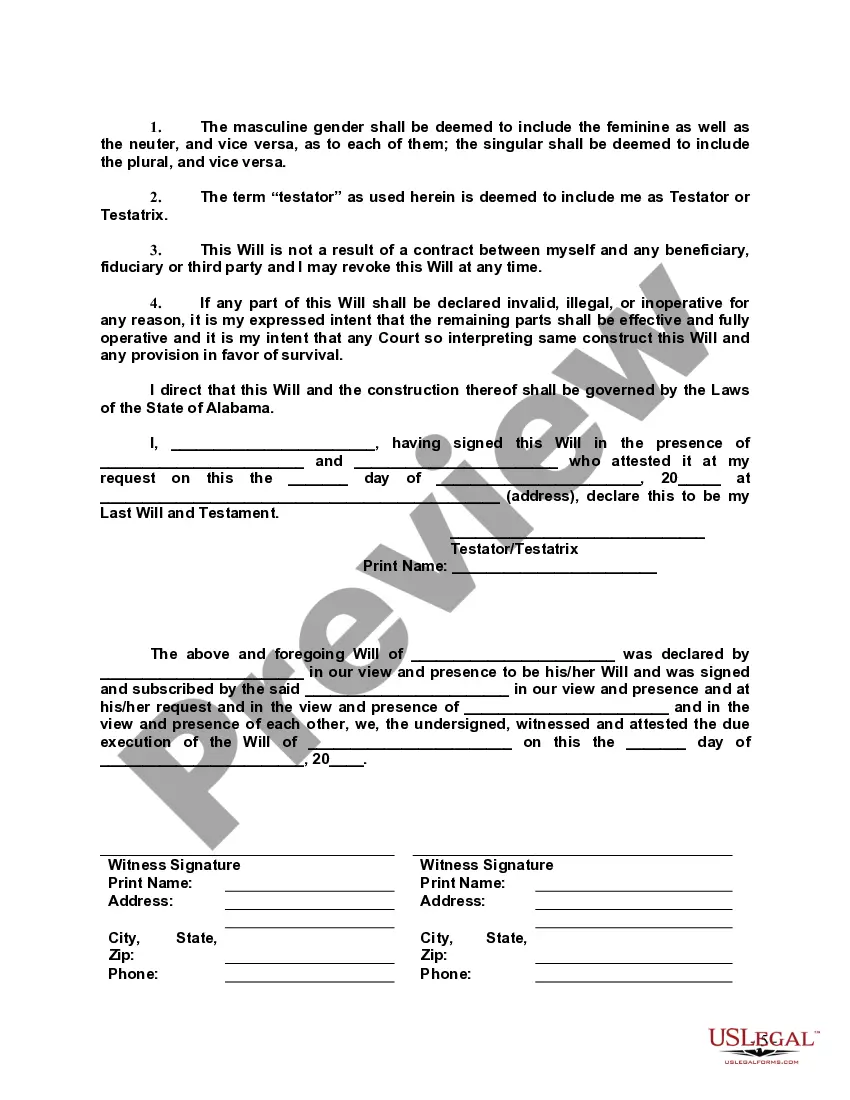
- Ensure the will is signed in the presence of witnesses according to Alabama law.
Does this form need to be notarized?
This form does not typically require notarization unless specified by local law. However, having it notarized can further validate the document and streamline the probate process.
Get your form ready online
Our built-in tools help you complete, sign, share, and store your documents in one place.
Make edits, fill in missing information, and update formatting in US Legal Forms—just like you would in MS Word.
Download a copy, print it, send it by email, or mail it via USPS—whatever works best for your next step.
Sign and collect signatures with our SignNow integration. Send to multiple recipients, set reminders, and more. Go Premium to unlock E-Sign.
If this form requires notarization, complete it online through a secure video call—no need to meet a notary in person or wait for an appointment.
We protect your documents and personal data by following strict security and privacy standards.

Make edits, fill in missing information, and update formatting in US Legal Forms—just like you would in MS Word.

Download a copy, print it, send it by email, or mail it via USPS—whatever works best for your next step.

Sign and collect signatures with our SignNow integration. Send to multiple recipients, set reminders, and more. Go Premium to unlock E-Sign.

If this form requires notarization, complete it online through a secure video call—no need to meet a notary in person or wait for an appointment.

We protect your documents and personal data by following strict security and privacy standards.
Avoid these common issues
- Failing to transfer all assets to the Living Trust before passing away.
- Not including a guardian for minor children when applicable.
- Omitting the signatures of witnesses, which could invalidate the will.
- Neglecting to keep the will updated after major life changes.
Why use this form online
- Convenience of downloading the form at any time without needing to visit a lawyer.
- Editability allows for easy adjustments before finalizing your wishes.
- Reliable templates drafted by licensed attorneys ensure that your legal needs are met.
- Secure storage of the completed forms for easy access when needed.
Legal use & context
- The Pour Over Will ensures that all assets not in the trust are accounted for according to the trust's terms.
- It complements a Living Trust and does not replace the need for a will.
Summary of main points
- The Pour Over Will ensures any assets not transferred to your Living Trust are still designated to it.
- This form is important for individuals with a Living Trust to avoid state intestacy laws.
- It is essential for naming guardians for minors and appointing personal representatives.
- Proper execution and witness signatures are critical to avoid legal complications.
Looking for another form?


Form popularity
FAQ
An example of a pour-over will is a legal document that ensures all your assets are transferred into a trust upon your passing. For instance, if you have created a trust to manage your estate, your Alabama Last Will and Testament with All Property to Trust called a Pour Over Will will direct that any remaining assets after your death should be poured over into that trust. This helps to streamline the distribution of your property according to your wishes. Utilizing tools like US Legal Forms can make creating your pour-over will straightforward and effective.
Yes, a pour-over will is closely tied to a trust. It acts as a safety net that ensures any assets not already placed in the trust during your lifetime are transferred to it upon your passing. The Alabama Last Will and Testament with All Property to Trust called a Pour Over Will is particularly effective for this purpose. By using our platform, you can easily create this type of will to ensure a smooth transition of your assets into your trust.
In Alabama, a deed can take precedence over a will. If you transfer property through a deed, that property is no longer considered part of your estate and thus not governed by your will. Therefore, if you have established an Alabama Last Will and Testament with All Property to Trust called a Pour Over Will, you should be mindful of how your deeds are structured so that your intentions are clearly reflected.
In general, a will does not override a trust. Instead, a will and a trust serve different purposes in estate planning. The Alabama Last Will and Testament with All Property to Trust called a Pour Over Will ensures that any assets not included in the trust are transferred to it upon your death. This means that while your will doesn't override your trust, it complements it by funneling assets into the trust.
Beneficiaries do indeed have priority regarding distributions from an Alabama Last Will and Testament with All Property to Trust called a Pour Over Will, but it can vary with trust terms. Generally, if a trust is properly established, the trustee is obligated to follow the trust's instructions, regardless of the beneficiaries' preferences. Understanding the roles of beneficiaries and trustees can clarify how assets are managed and distributed.
Individuals might choose to establish a trust over an Alabama Last Will and Testament with All Property to Trust called a Pour Over Will for several key reasons. Trusts provide immediate access to assets upon death, avoiding the lengthy probate process. They also allow for precise control over how and when beneficiaries receive their inheritance, making them a strategic choice for complex family situations.
Determining whether an Alabama Last Will and Testament with All Property to Trust called a Pour Over Will is more powerful than a trust depends on individual circumstances. Generally, trusts offer more control over asset distribution while avoiding probate, therefore providing greater privacy and efficiency. However, wills are simpler and can be easier to execute when each case is straightforward.
Wills must be filed with the probate court in Alabama to ensure their legal enforceability. This requirement applies to any will, including an Alabama Last Will and Testament with All Property to Trust called a Pour Over Will. By filing your will, you're taking an essential step in protecting your legacy and ensuring your wishes are honored after your passing.
Yes, it is mandatory to file a will in Alabama after the testator's death. This legal requirement is essential for the validity of your wishes as outlined in your Alabama Last Will and Testament with All Property to Trust called a Pour Over Will. Filing the will with the probate court allows for the proper administration of your estate and helps prevent any disputes among heirs.
over will works hand in hand with a trust, acting as a safety net for any assets not transferred to the trust during your lifetime. When you establish an Alabama Last Will and Testament with All Property to Trust called a Pour Over Will, any remaining assets not already in the trust will "pour over" into the trust upon your death. This ensures your trust is funded and that your assets are distributed according to your wishes.