Alabama Last Will and Testament for a Widow or Widower with Adult and Minor Children
Understanding this form
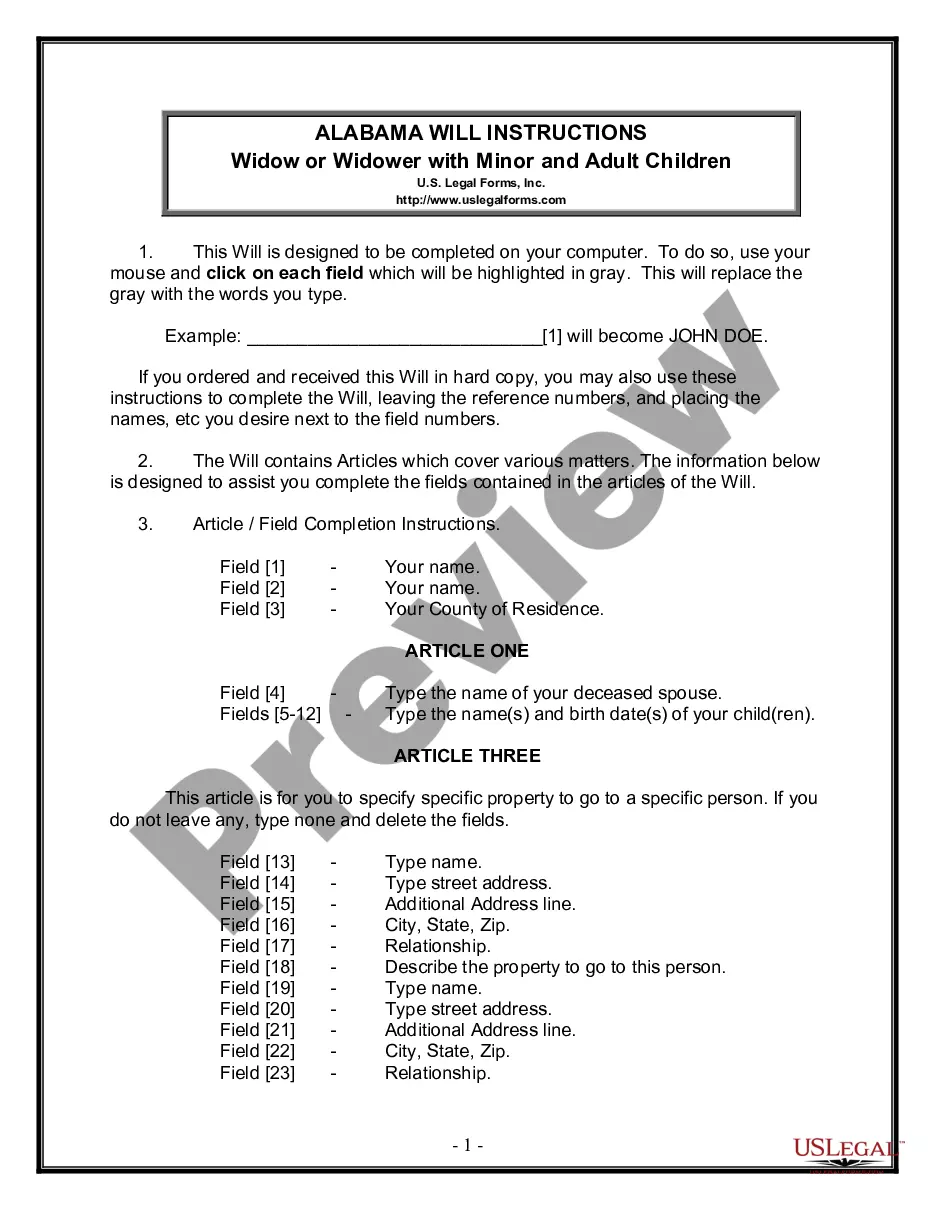
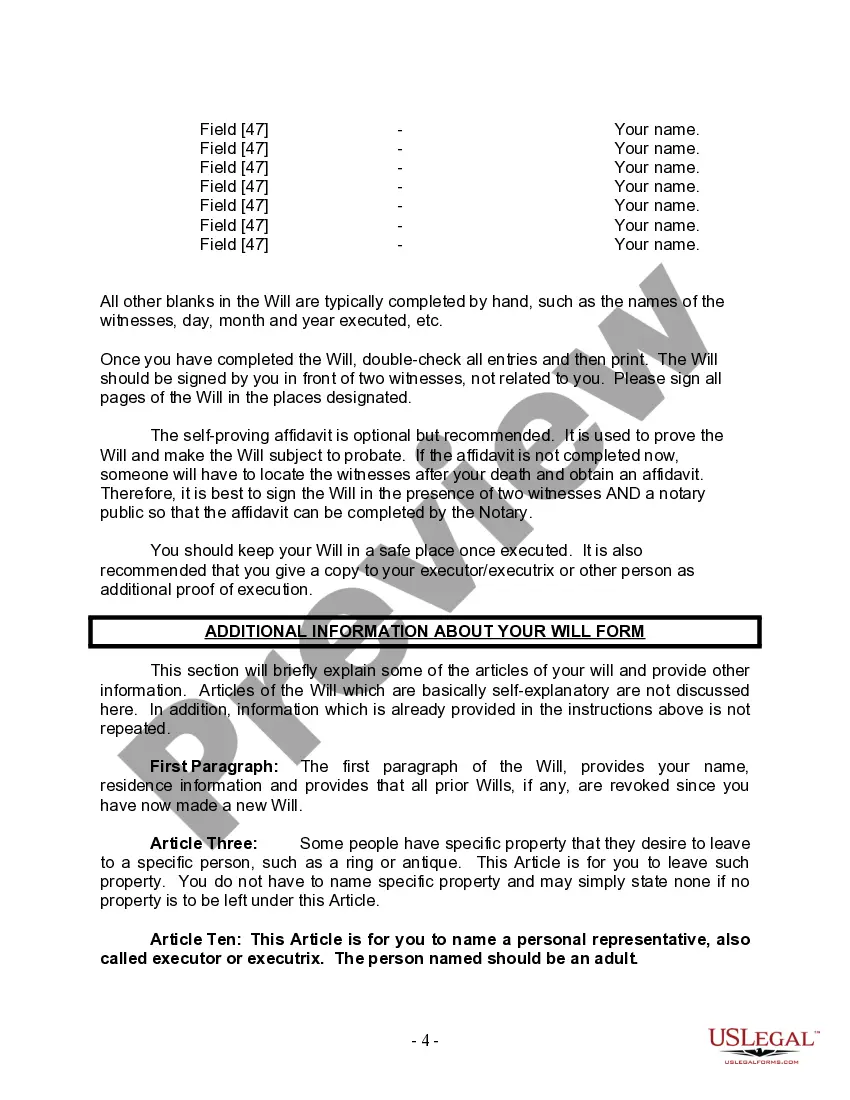
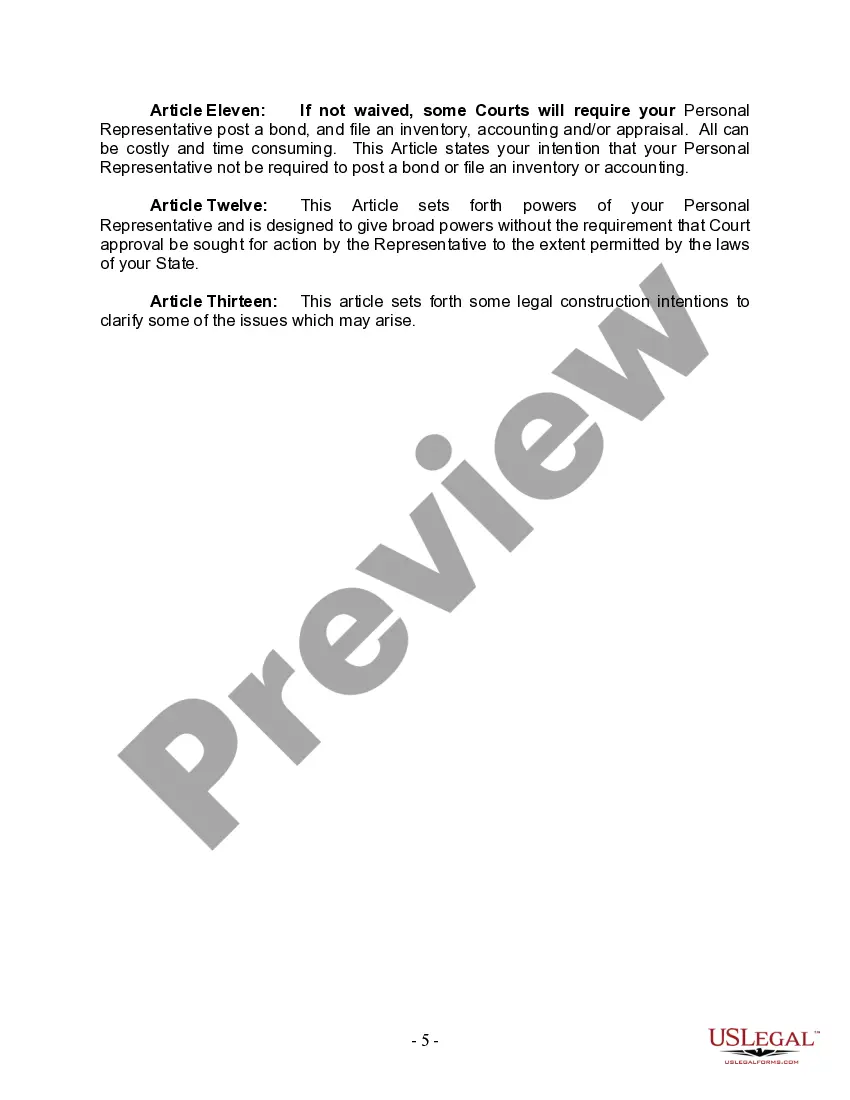
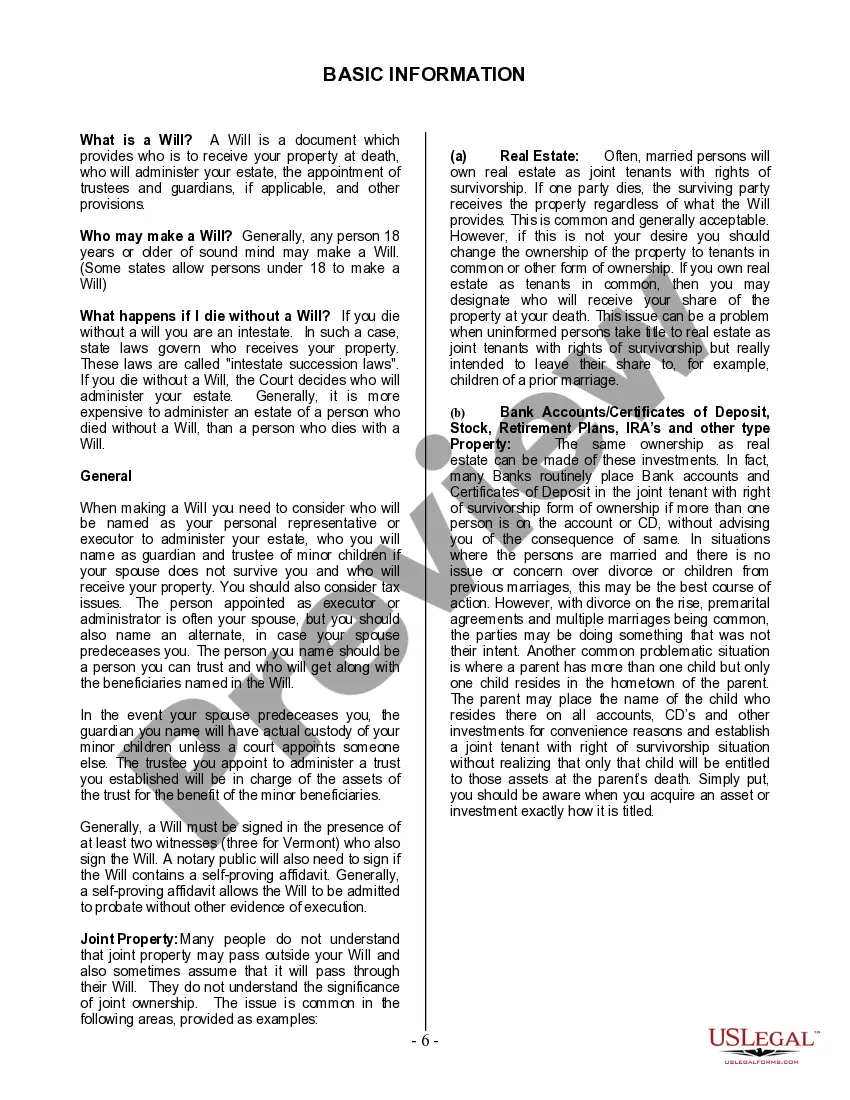
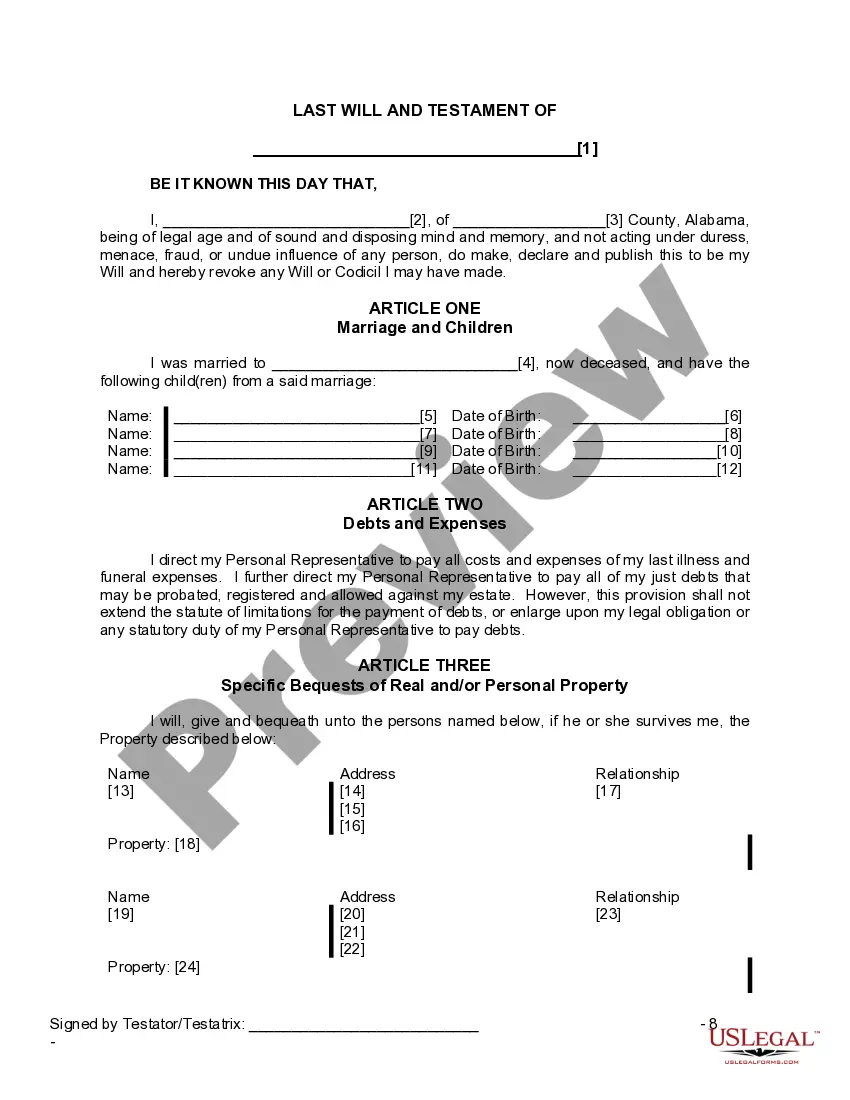
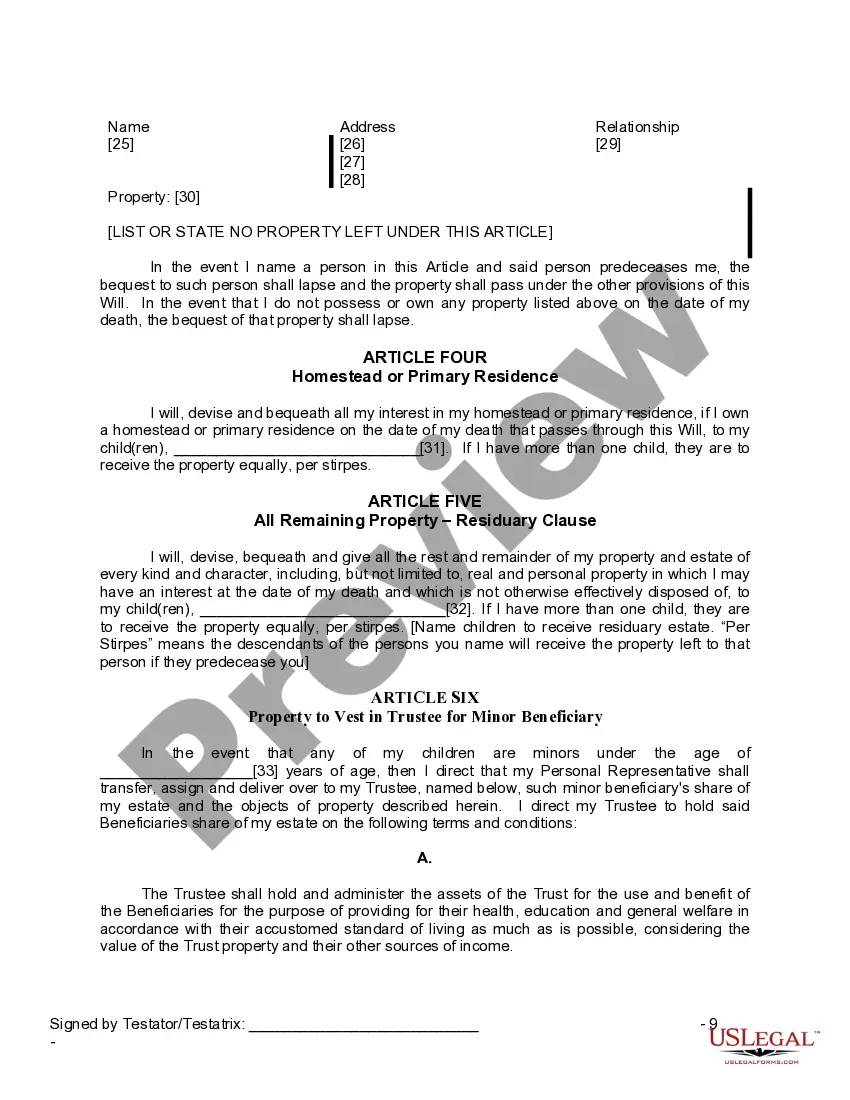
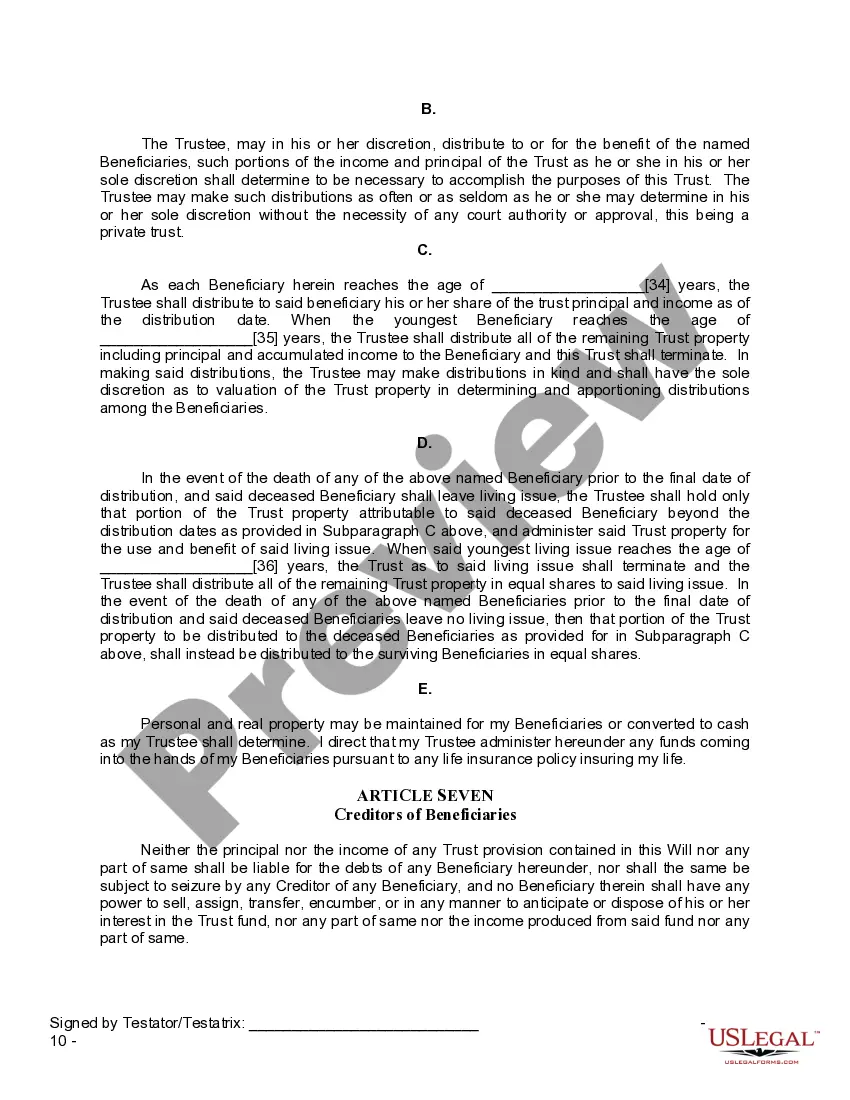
The Last Will and Testament for a Widow or Widower with Adult and Minor Children is a legal document that outlines how a widow or widower wishes to distribute their property upon death, particularly when they have both adult and minor children. This form not only allows for the designation of heirs but also enables the appointment of a personal representative, trustee for minor children, and the specification of guardianship. It serves as an essential tool for ensuring that your wishes are honored and can prevent familial disputes after your passing.
Form components explained
- Appointment of personal representative or executor.
- Distribution of property to adult and minor children.
- Creation of a trust for assets designated for minor children.
- Designation of guardians for minor children.
- Provisions for specific bequests of property.
- Self-proving affidavit for streamlined probate process, if applicable.



When to use this document
This form is typically used by widows or widowers who have experienced the death of a spouse and need to formalize their wishes for their estate, especially when they have both adult and minor children. It is applicable in scenarios such as planning the distribution of assets, specifying guardianship for minor children, or ensuring that any special wishes regarding property are legally documented.
Who needs this form
- Widows or widowers who need to establish legal arrangements for their estate.
- Individuals with both adult and minor children.
- Those looking to clearly outline their wishes regarding property distribution and guardianship.
- Anyone wishing to avoid potential disputes among heirs after their passing.
Instructions for completing this form
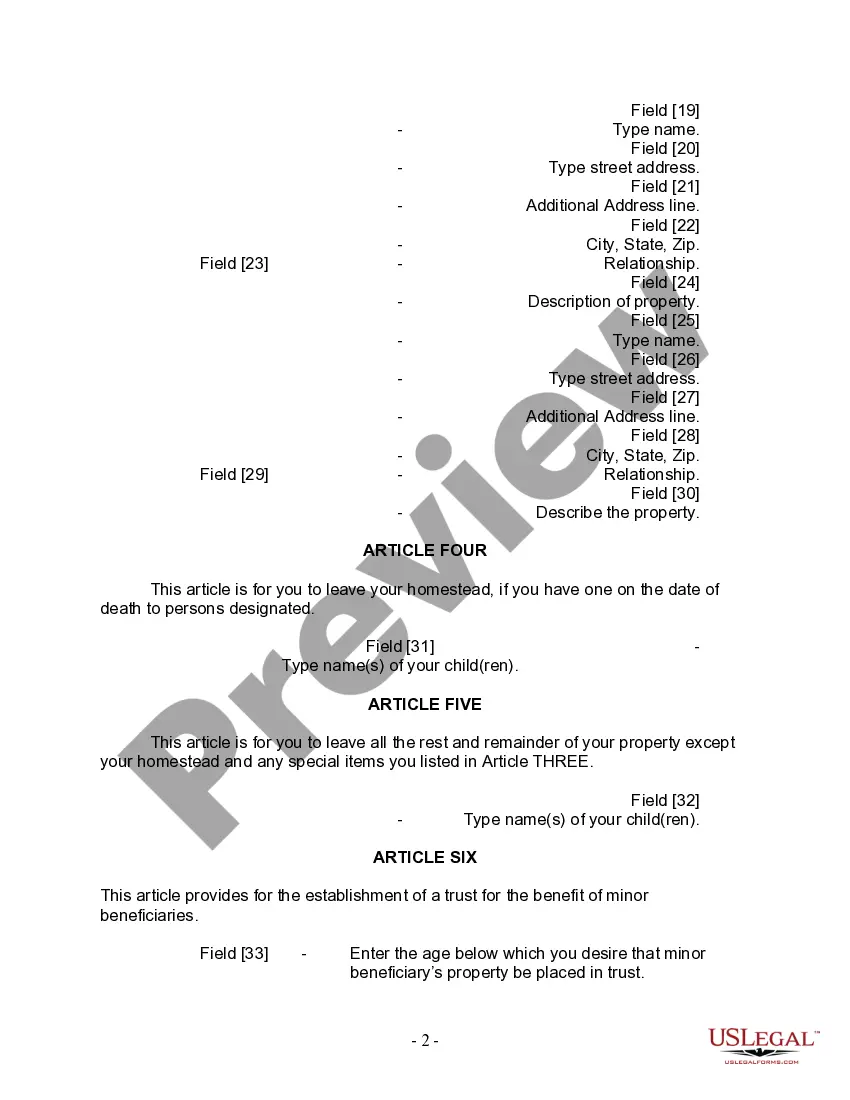
- Start by entering your name and county of residence in the designated fields.
- Include the name of your deceased spouse and the names and birth dates of your children.
- Specify any particular properties you wish to leave to individuals outside of your children.
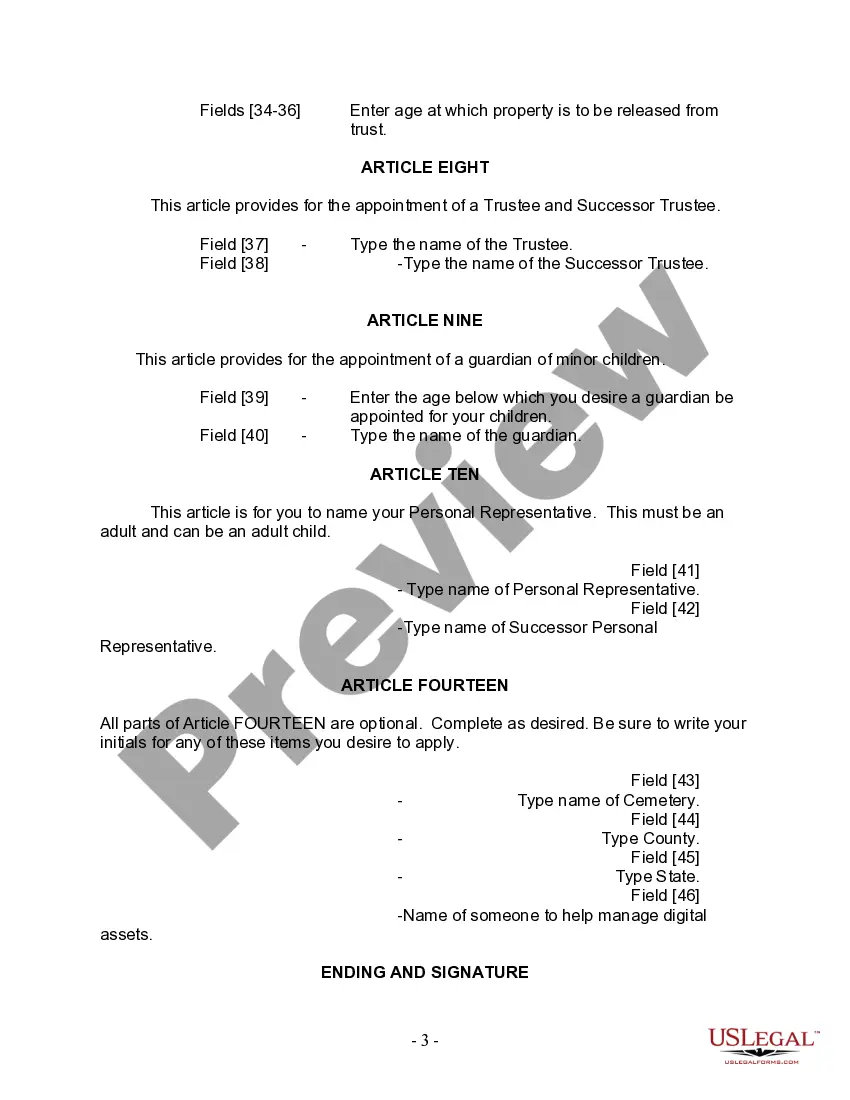
- Designate a trustee for any assets left to minor children and specify the age at which trust assets can be released.
- Select a guardian for your minor children in case you are unable to care for them.
- Sign the will in the presence of two witnesses, ensuring all pages are appropriately signed.
Does this form need to be notarized?
To make this form legally binding, it must be notarized. Our online notarization service, powered by Notarize, lets you verify and sign documents remotely through an encrypted video session.
Get your form ready online
Our built-in tools help you complete, sign, share, and store your documents in one place.
Make edits, fill in missing information, and update formatting in US Legal Forms—just like you would in MS Word.
Download a copy, print it, send it by email, or mail it via USPS—whatever works best for your next step.
Sign and collect signatures with our SignNow integration. Send to multiple recipients, set reminders, and more. Go Premium to unlock E-Sign.
If this form requires notarization, complete it online through a secure video call—no need to meet a notary in person or wait for an appointment.
We protect your documents and personal data by following strict security and privacy standards.

Make edits, fill in missing information, and update formatting in US Legal Forms—just like you would in MS Word.

Download a copy, print it, send it by email, or mail it via USPS—whatever works best for your next step.

Sign and collect signatures with our SignNow integration. Send to multiple recipients, set reminders, and more. Go Premium to unlock E-Sign.

If this form requires notarization, complete it online through a secure video call—no need to meet a notary in person or wait for an appointment.

We protect your documents and personal data by following strict security and privacy standards.
Typical mistakes to avoid
- Failing to have the will signed by the required witnesses.
- Not specifying alternate beneficiaries in case primary ones predecease you.
- Neglecting to update the will after significant life changes, such as remarriage or new children.
- Assuming that a verbal agreement is sufficient without written documentation.
Why complete this form online
- Convenience of filling out the form at your own pace.
- Ability to edit and customize according to your specific needs.
- Access to forms drafted by licensed attorneys to ensure legal compliance.
- Quick download for immediate use, without waiting for mailing or shipping.
Looking for another form?
Form popularity
FAQ
In Alabama, a child is entitled to a portion of a deceased parent's estate, traditionally known as the right to inherit. This includes both adult and minor children, who may receive a share as dictated by the will or Alabama intestacy laws if there is no will. When drafting an Alabama Last Will and Testament for a Widow or Widower with Adult and Minor Children, it's crucial to specify the shares to avoid confusion and ensure fair distribution.
A handwritten will, or holographic will, can be valid in Alabama if it meets specific criteria. However, challenges often arise regarding its creation and interpretation. It is usually safer to create a formal Alabama Last Will and Testament for a Widow or Widower with Adult and Minor Children, as this minimizes the risk of disputes and ensures clarity in your intentions. Using US Legal Forms can help you draft a more legally sound document.
In Alabama, a last will and testament does not override a marriage. Generally, if you marry after making your will, your spouse may have rights to your estate regardless of what's in the document. When creating an Alabama Last Will and Testament for a Widow or Widower with Adult and Minor Children, it’s essential to consider your spouse's rights to ensure your will aligns with your overall estate planning goals.
Yes, you can write your own will in Alabama. However, to ensure your Alabama Last Will and Testament for a Widow or Widower with Adult and Minor Children is valid, you must follow specific legal requirements, such as having it signed and witnessed. While DIY wills can work, consider using a professional service like US Legal Forms to ensure that your will meets all legal standards and truly reflects your wishes.
If there is no will, Alabama's intestacy laws come into play, determining who inherits your estate. Typically, the surviving spouse and children have the primary claim to the inherited assets. However, without an Alabama Last Will and Testament for a Widow or Widower with Adult and Minor Children, your wishes may not be fulfilled, and disputes could arise among family members. To prevent these issues, using platforms like uslegalforms can guide you in creating a solid estate plan that reflects your desires.
In Alabama, a spouse is generally entitled to a portion of the deceased partner's estate, which can include property, bank accounts, and other assets. This entitlement can vary based on whether there are children and if a will exists. For those without a comprehensive estate plan, an Alabama Last Will and Testament for a Widow or Widower with Adult and Minor Children can clarify these rights and ensure your spouse receives what you intend. Proper planning helps avoid legal complications during a difficult time.
The order of inheritance in Alabama follows specific laws if someone dies without a Last Will and Testament. Typically, a surviving spouse will inherit a significant portion of the estate, often alongside children. In cases without children, the spouse may inherit the entirety of the estate. Understanding this process emphasizes the importance of drafting an Alabama Last Will and Testament for a Widow or Widower with Adult and Minor Children to specify your desired distribution of assets.
In Alabama, property does not automatically go to a spouse unless there is a Last Will and Testament in place. This means that if you want your assets to transfer directly to your spouse upon your death, creating an Alabama Last Will and Testament for a Widow or Widower with Adult and Minor Children is essential. Without such a will, other laws may dictate how your property is distributed. Therefore, it is crucial to plan accordingly to ensure your wishes are honored.
Alabama does not require a will to be notarized, but notarization can provide an extra layer of validity. If you choose to notarize your last will and testament, it may help simplify the probate process. For those writing an Alabama Last Will and Testament for a Widow or Widower with Adult and Minor Children, using reliable forms from US Legal Forms can guide you through this process effectively.
You do not need a lawyer to create a will in Alabama, as many individuals successfully draft their own last will and testament. However, consulting a lawyer can provide peace of mind and ensure that your document meets all legal requirements. Using US Legal Forms gives you access to comprehensive resources and templates for an Alabama Last Will and Testament for a Widow or Widower with Adult and Minor Children, making the process smoother.