Alabama Last Will and Testament for Single Person with Adult Children
What this document covers
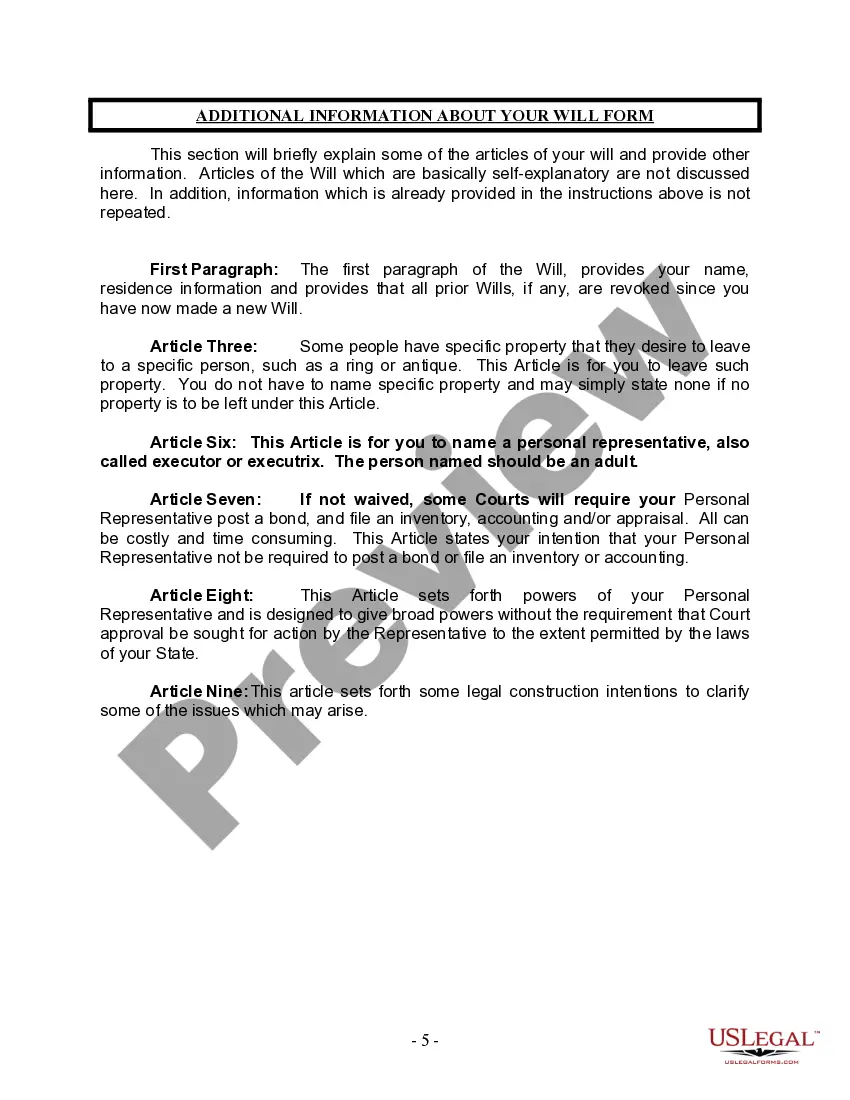
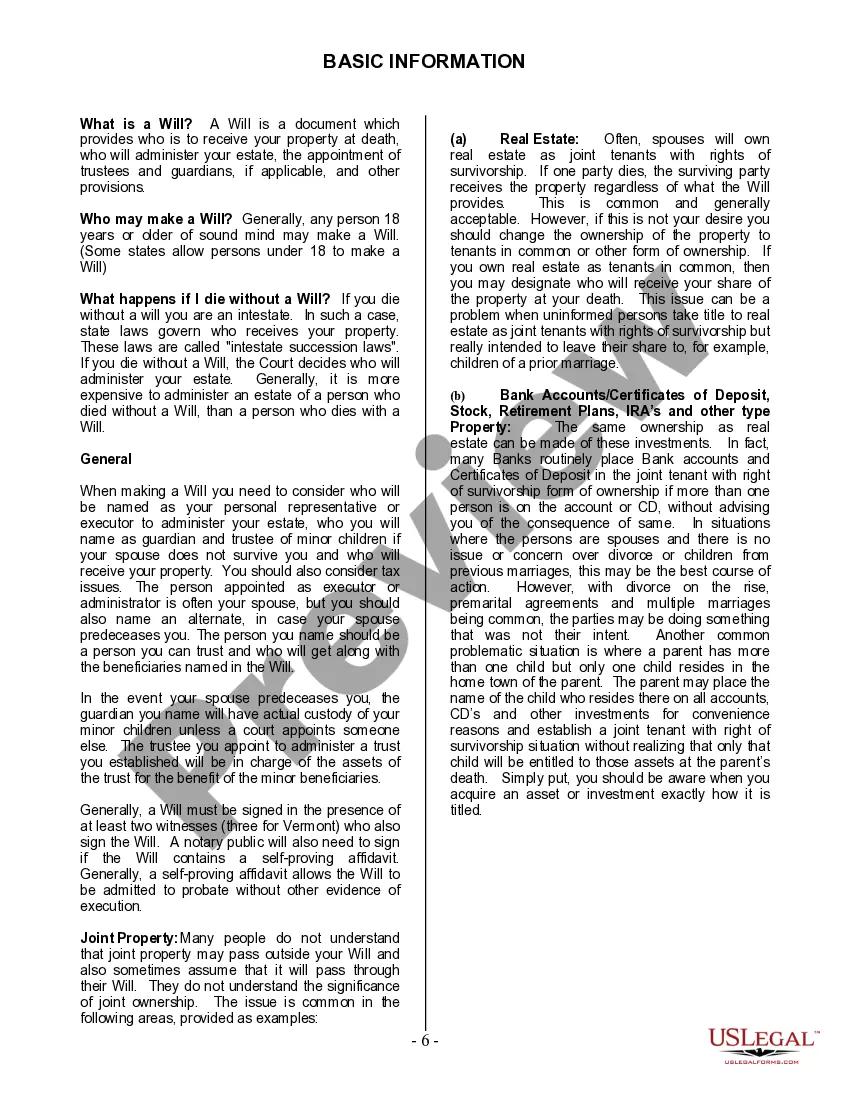
The Last Will and Testament for a Single Person with Adult Children is a legal document that specifies how a single individual wishes to distribute their assets after their death. Unlike a standard will, this form is tailored for those who have never been married and have adult children. It allows the individual to appoint an executor, designate beneficiaries for property and other assets, and outline specific wishes for their estate.
Key parts of this document
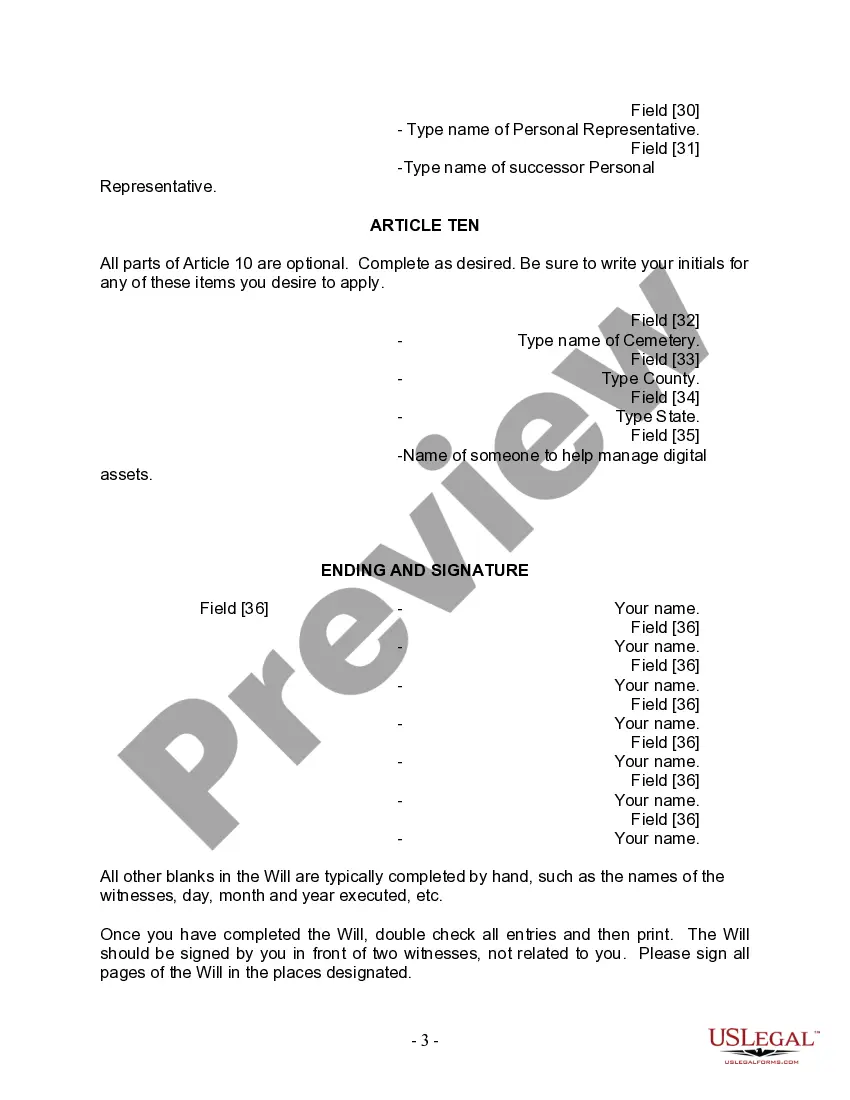
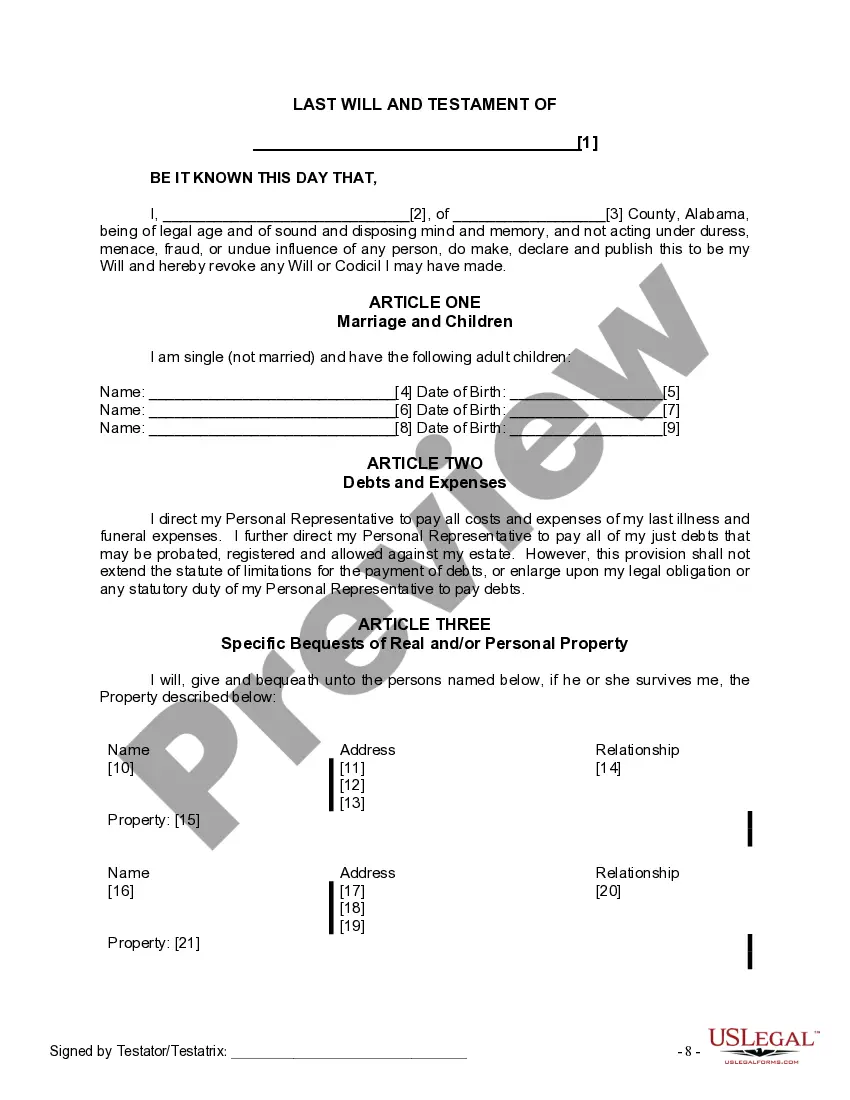
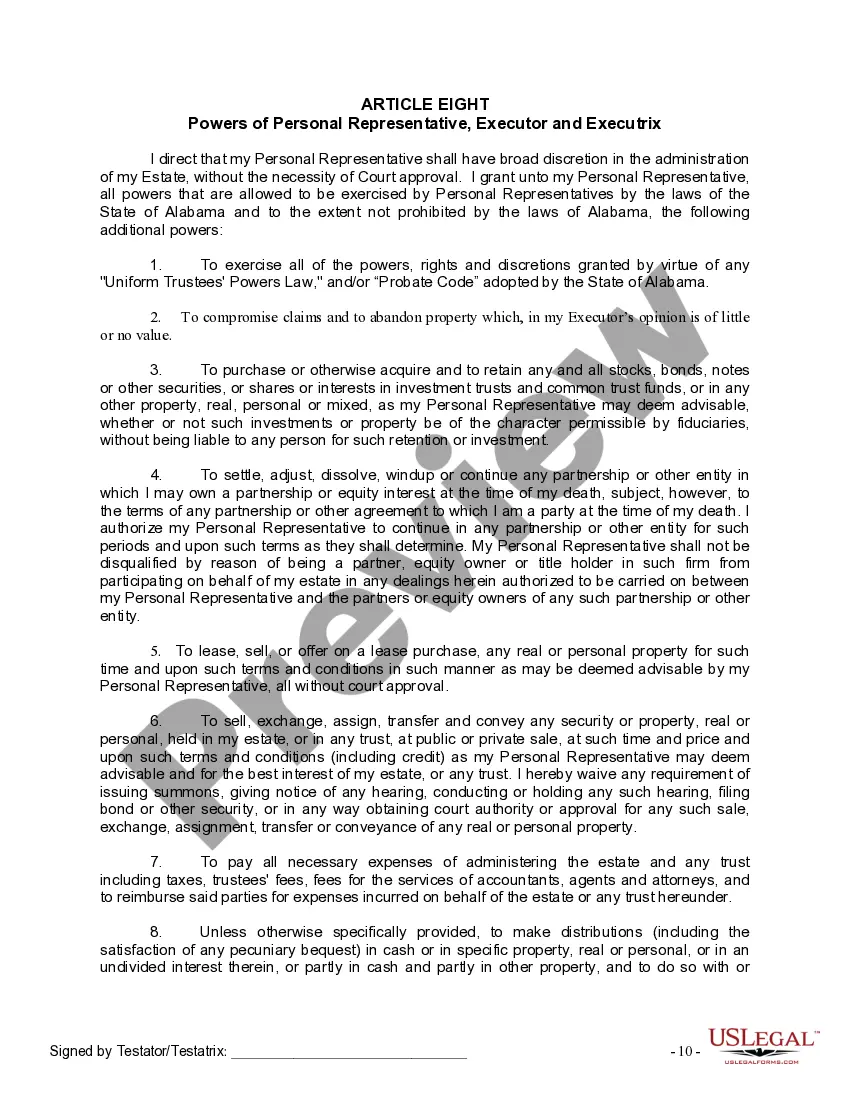
- Appointment of a personal representative or executor to manage the estate.
- Specific bequests detailing how personal property should be distributed.
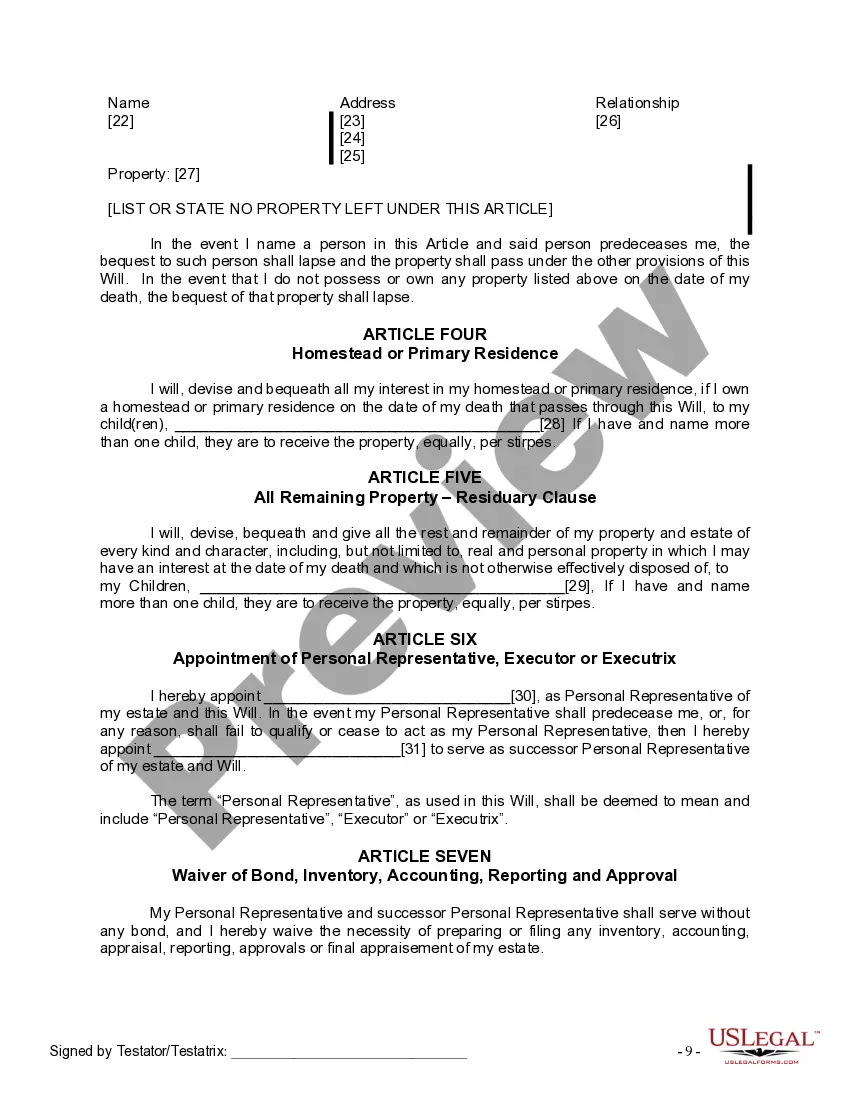
- Provisions for the homestead or primary residence distribution.
- General distribution of remaining assets among beneficiaries.
- Spaces for witness signatures and notarization if applicable.





Situations where this form applies
This form is ideal for individuals who are single, have adult children, and want to ensure their assets are distributed according to their wishes after their death. It is particularly useful for those who wish to avoid intestacy laws, which can dictate asset distribution in the absence of a will.
Who this form is for
- Single individuals with no spouse.
- Parents with adult children needing to specify asset distribution.
- Individuals wanting to appoint an executor for their estate.
- Those wishing to make specific bequests to particular family members or friends.
Completing this form step by step
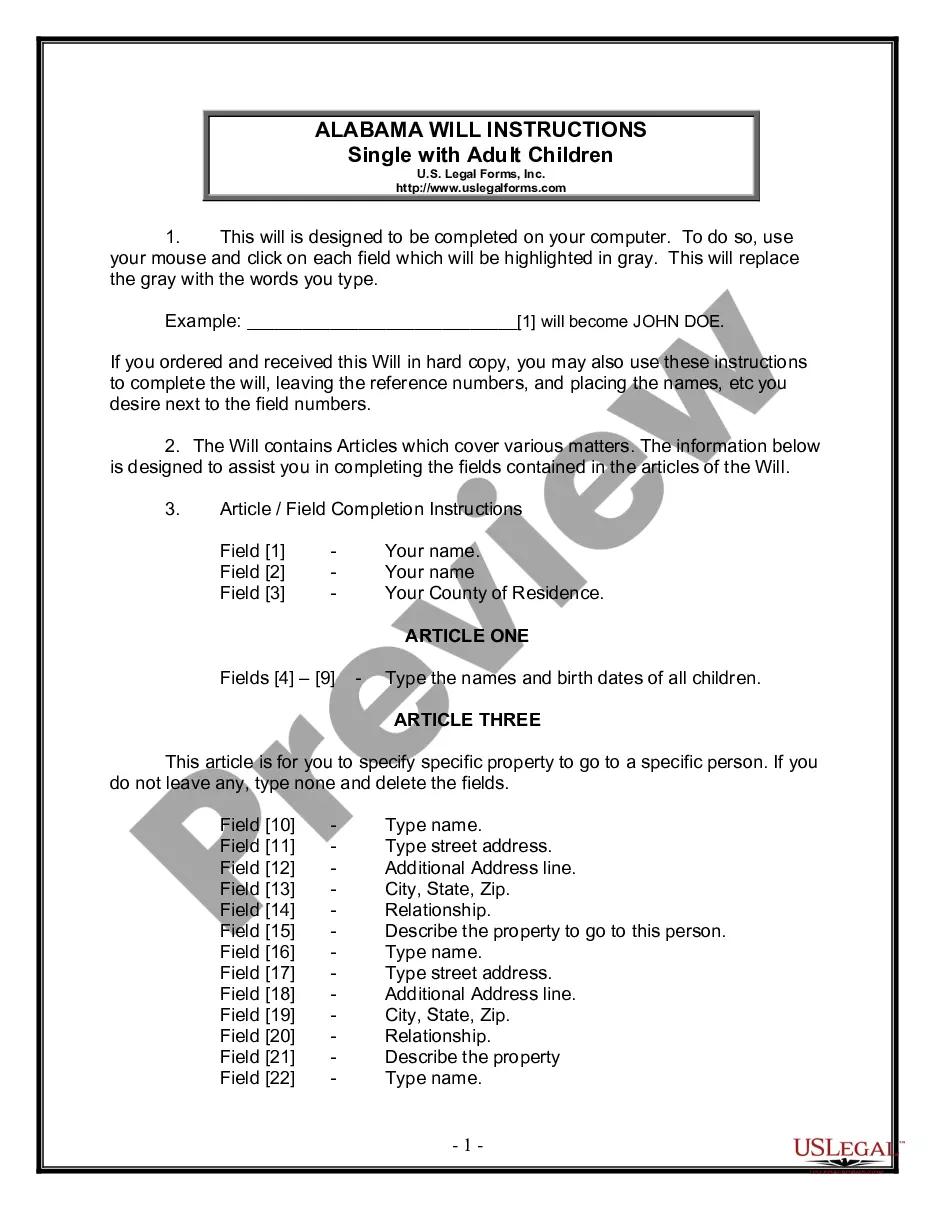
- Enter your full name and county of residence.
- List the names and birth dates of your adult children.
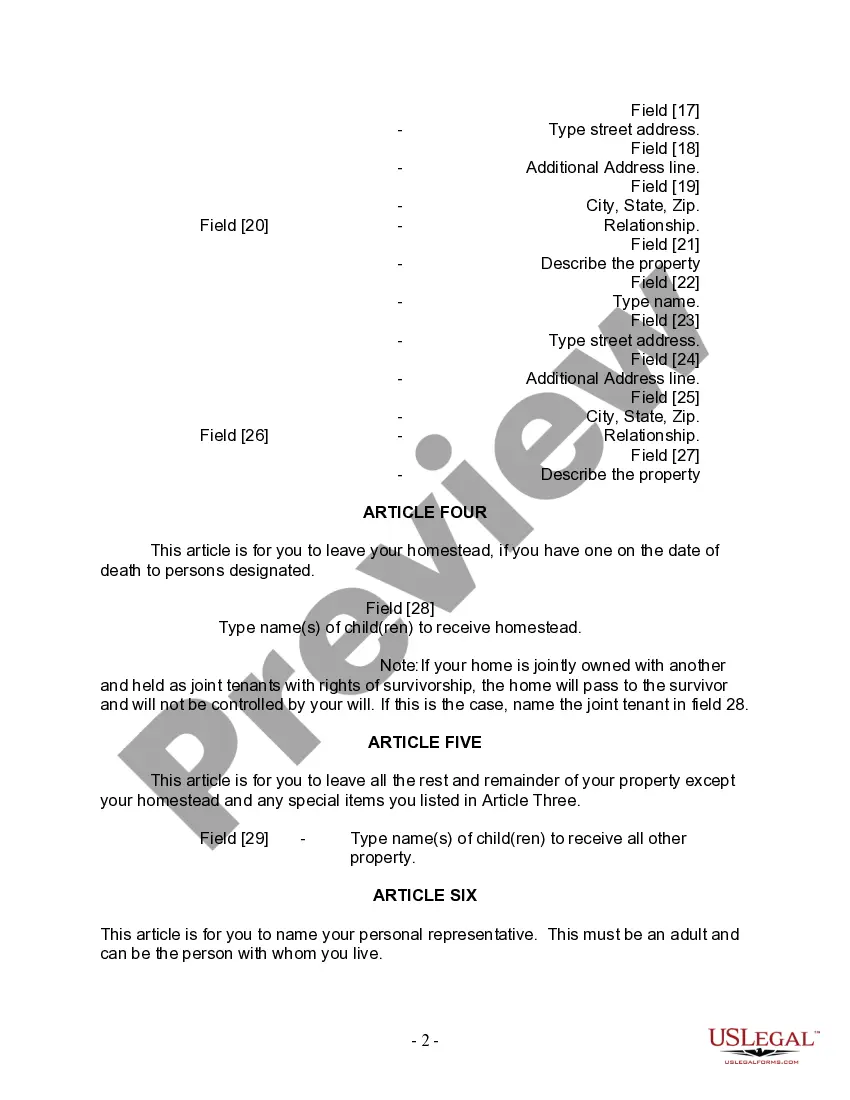
- Specify any particular assets you want to bequeath to designated individuals.
- Indicate who will receive your homestead and any leftover property.
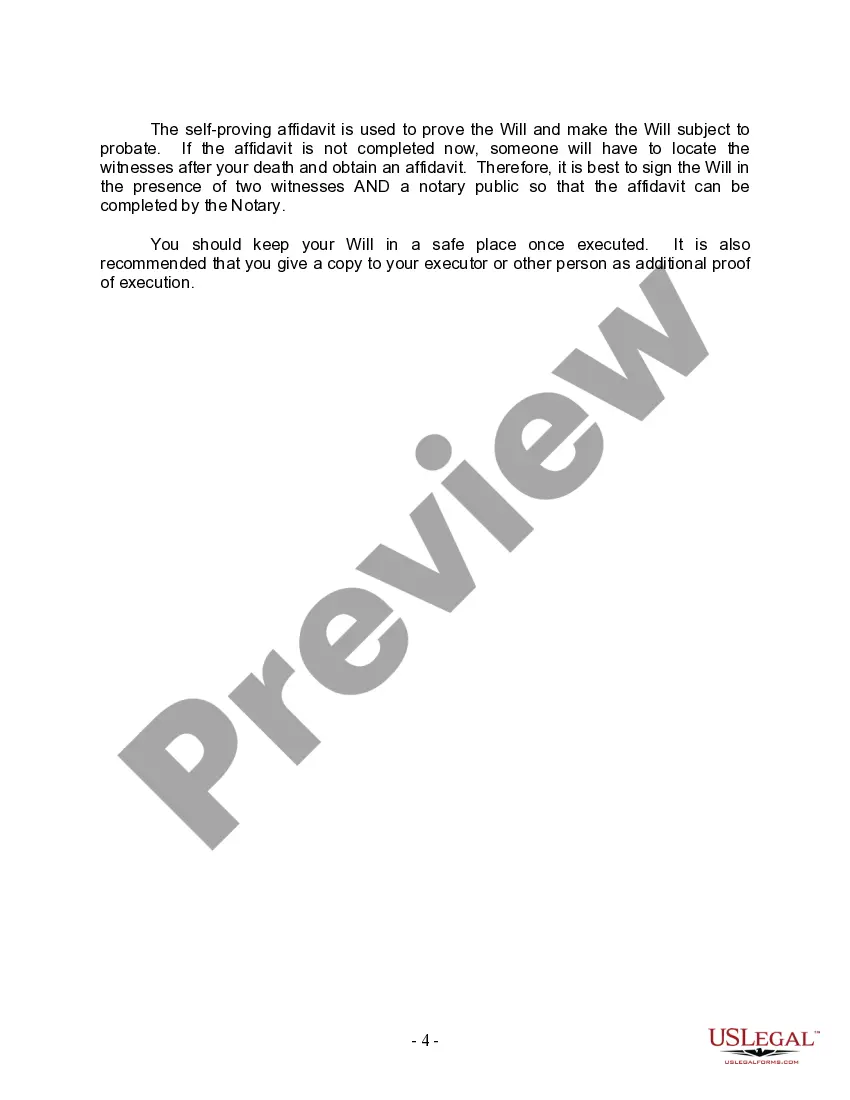
- Sign the document in the presence of two witnesses and have it notarized if required.
Does this form need to be notarized?
Yes, this form must be notarized to be legally valid if it includes a self-proving affidavit. Using an online notary service can be a convenient option, allowing you to complete the process securely and efficiently without travel.
Get your form ready online
Our built-in tools help you complete, sign, share, and store your documents in one place.
Make edits, fill in missing information, and update formatting in US Legal Forms—just like you would in MS Word.
Download a copy, print it, send it by email, or mail it via USPS—whatever works best for your next step.
Sign and collect signatures with our SignNow integration. Send to multiple recipients, set reminders, and more. Go Premium to unlock E-Sign.
If this form requires notarization, complete it online through a secure video call—no need to meet a notary in person or wait for an appointment.
We protect your documents and personal data by following strict security and privacy standards.

Make edits, fill in missing information, and update formatting in US Legal Forms—just like you would in MS Word.

Download a copy, print it, send it by email, or mail it via USPS—whatever works best for your next step.

Sign and collect signatures with our SignNow integration. Send to multiple recipients, set reminders, and more. Go Premium to unlock E-Sign.

If this form requires notarization, complete it online through a secure video call—no need to meet a notary in person or wait for an appointment.

We protect your documents and personal data by following strict security and privacy standards.
Common mistakes
- Failing to sign the will in the presence of the required number of witnesses.
- Not including a self-proving affidavit if required by state law.
- Leaving out crucial details about specific bequests.
- Not updating the will after significant life changes.
Why use this form online
- Convenient access to legally vetted templates from your home.
- Edit and complete the form on your computer, ensuring accuracy.
- Print and sign the document at your convenience.
- Save time and reduce costs associated with legal consultations.
Quick recap
- Your Last Will and Testament outlines how you want your assets distributed after your death.
- Always sign your Will in front of two disinterested witnesses and consider notarization.
- Keep your Will updated to reflect current relationships and assets.
- Using this form online provides convenience and efficiency in estate planning.
Looking for another form?
Form popularity
FAQ
Including your adult children in your will is not mandatory in Alabama. You have the freedom to decide who receives your assets in your Alabama Last Will and Testament for Single Person with Adult Children. If you choose not to include them, it can be helpful to document your reasoning to support your decisions and avoid potential disagreements in the future.
Yes, a single person should strongly consider having a will. A well-drafted Alabama Last Will and Testament for Single Person with Adult Children can help specify your wishes regarding asset distribution and guardianship of dependents. Creating a will ensures that your assets are managed according to your intentions, providing peace of mind for you and your loved ones.
In Alabama, adult children do not automatically inherit if there is a valid will in place. The distribution of your estate will follow the instructions laid out in your Alabama Last Will and Testament for Single Person with Adult Children. If no will exists, Alabama's intestate succession laws will dictate how your assets are divided among your heirs.
Yes, you can exclude your parents from your will if you wish. In Alabama, you have the right to decide how to distribute your assets, making your Alabama Last Will and Testament for Single Person with Adult Children a personalized document. However, keep in mind that excluding family members may lead to emotional conflicts later, so it’s essential to consider your choices carefully.
Yes, you can leave children out of your will in Alabama, but this decision should be made carefully. If you choose not to include your adult children in your Alabama Last Will and Testament for Single Person with Adult Children, you may want to specify your reasons or clearly state your intentions. This can help prevent potential disputes or misunderstandings among family members.
For a will to be valid in Alabama, it must meet three key requirements: first, the testator must be at least 18 years old; second, the will must be in writing; and third, it must be signed by the testator in the presence of two witnesses. These witnesses must also sign the will in the testator's presence. It’s essential for your Alabama Last Will and Testament for Single Person with Adult Children to meet these criteria to ensure its legality.
In Minnesota, wills do not necessarily need to be notarized as long as they meet the state's signing and witnessing requirements. However, notarization can offer additional proof of authenticity. If you are considering drafting an Alabama Last Will and Testament for Single Person with Adult Children, focus on the specific laws in Alabama when preparing your document.
While you cannot draft a will on your family member's behalf, you can certainly help them through the process. Guide them in articulating their wishes and reviewing the documentation. Using US Legal Forms can be beneficial, offering templates specifically designed for an Alabama Last Will and Testament for Single Person with Adult Children.
For a will to be valid in Alabama, it must be in writing, signed by the testator, and witnessed by at least two individuals. The witnesses must be present at the same time when the will is signed. Ensuring compliance with these requirements is crucial when creating your Alabama Last Will and Testament for Single Person with Adult Children.
While a family member can assist in writing a will, they cannot legally create it on behalf of someone else. The individual must personally sign the will to validate it. However, you can get support in drafting an Alabama Last Will and Testament for a Single Person with Adult Children using resources like US Legal Forms that provide guidance for your needs.