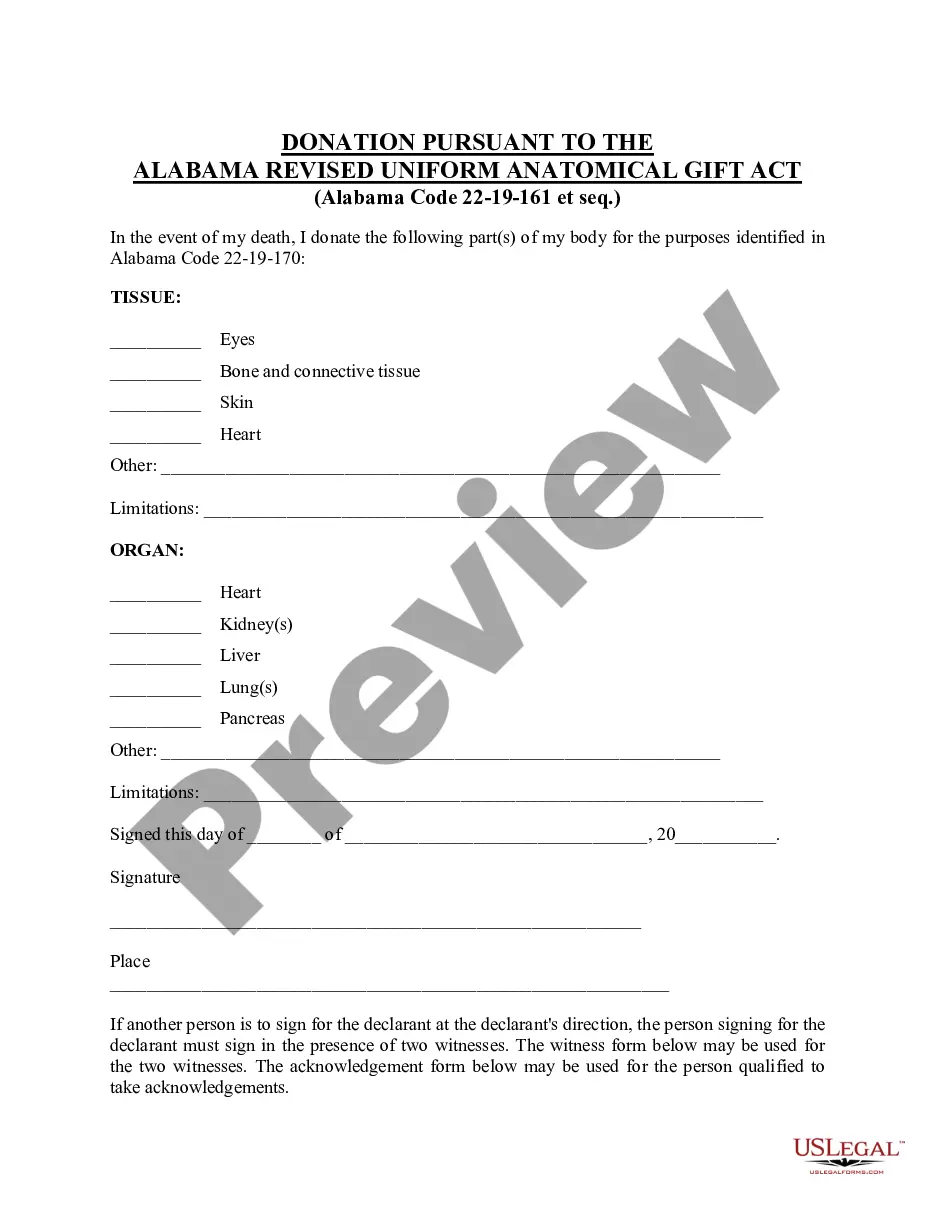
Donation Pursuant to the Alabama Revised Uniform Anatomical Gift Act
Understanding this form
The Donation Pursuant to the Alabama Revised Uniform Anatomical Gift Act form allows individuals to specify which body parts or organs they wish to donate upon their death. This document ensures that the donor's intentions are clearly articulated, distinguishing it from other types of legal documents that may address health care decisions or estate matters.
Main sections of this form
- Identification of the specific organs and tissues the donor wishes to donate.
- Signature of the donor along with the date of signing.
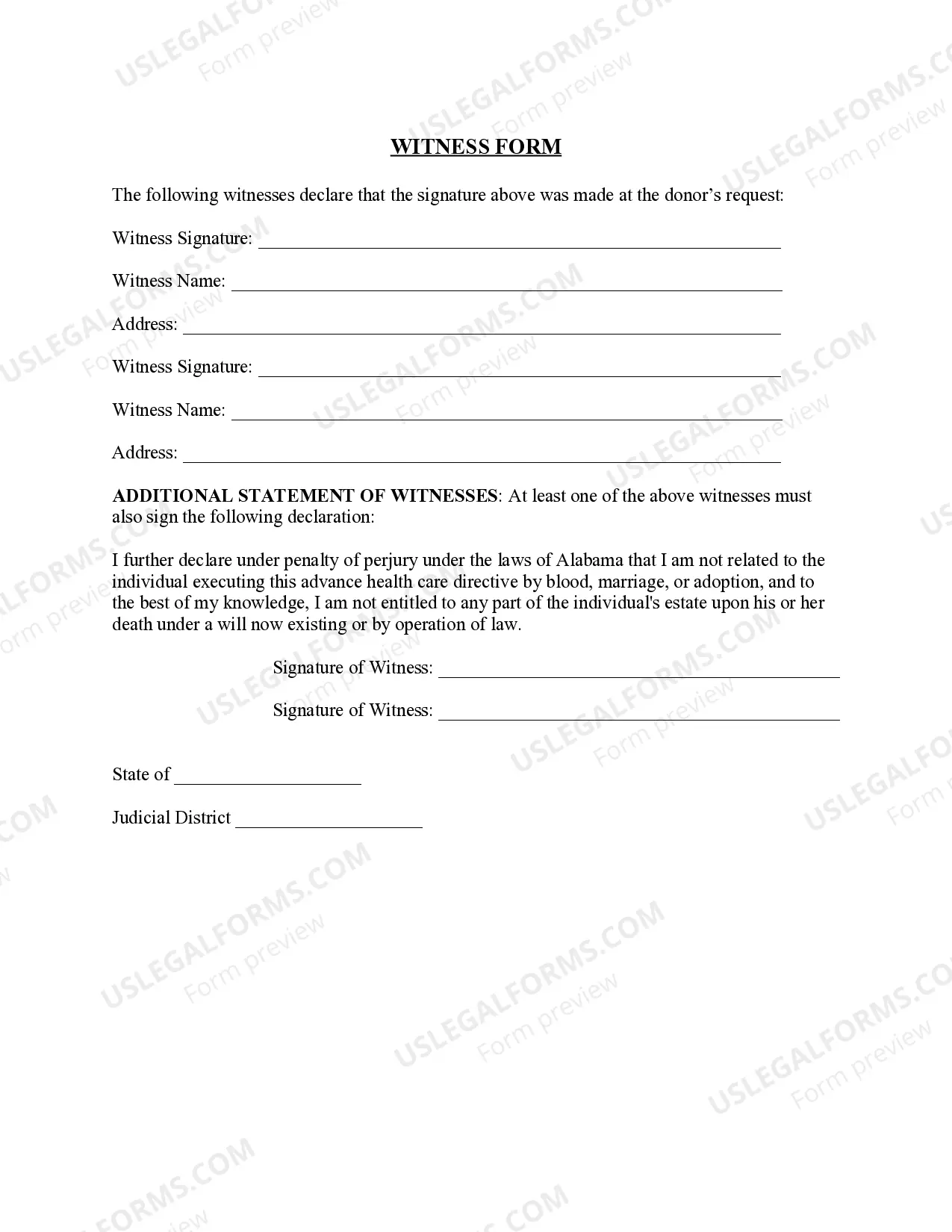
- Witness signatures, confirming that the donor's signature was made in their presence.
- A statement from witnesses declaring no relation to the donor, ensuring impartiality.
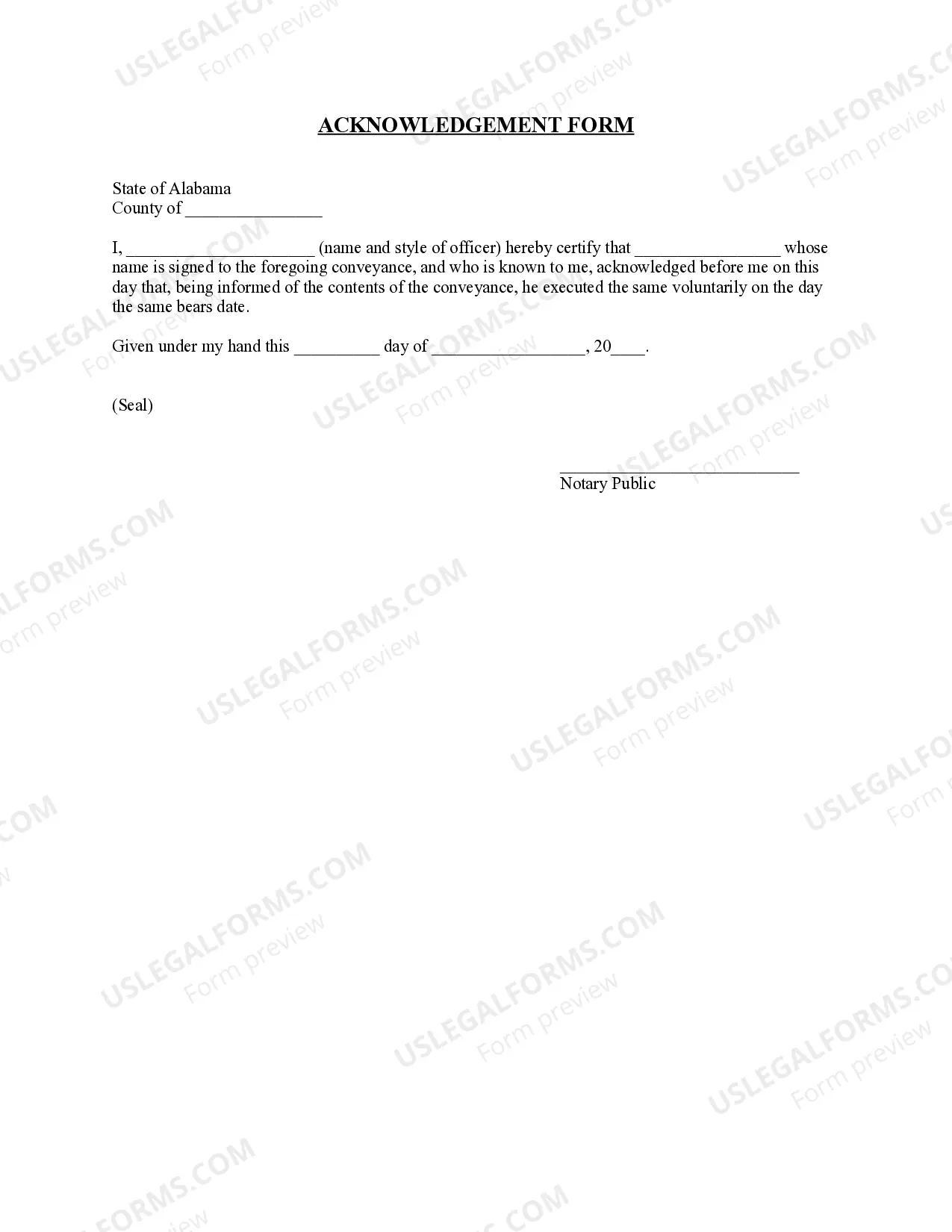
- A notarization section to verify authenticity and legality.

When this form is needed
This form should be used when an individual wishes to make a legal anatomical gift of their body parts or organs after their death. It is particularly relevant for those who have made personal decisions regarding organ donation and want to ensure their wishes are respected in accordance with Alabama state law.
Intended users of this form
- Individuals aged 18 and older who wish to donate organs or tissues after death.
- Emancipated individuals or minors who are authorized to apply for a driver's license.
- Agents acting on behalf of a donor, provided there are no restrictions in the power of attorney.
- Parents of unemancipated minors who want to facilitate their donation wishes.
- Guardians of individuals who are unable to make the decision themselves.
How to prepare this document
- Clearly state the body parts and organs you wish to donate in the designated sections.
- Sign the form on the indicated date to confirm your intentions.
- Ensure that your signature is witnessed by two individuals present at the time of signing.
- Have at least one witness sign the additional statement confirming relatedness.
- Complete the notarization section to authenticate the document.
Is notarization required?
Yes, this form must be notarized to be legally valid. The notarization process confirms your identity and the authenticity of your signature, providing legal security for your wishes regarding anatomical gifts.
Get your form ready online
Our built-in tools help you complete, sign, share, and store your documents in one place.
Make edits, fill in missing information, and update formatting in US Legal Forms—just like you would in MS Word.
Download a copy, print it, send it by email, or mail it via USPS—whatever works best for your next step.
Sign and collect signatures with our SignNow integration. Send to multiple recipients, set reminders, and more. Go Premium to unlock E-Sign.
If this form requires notarization, complete it online through a secure video call—no need to meet a notary in person or wait for an appointment.
We protect your documents and personal data by following strict security and privacy standards.

Make edits, fill in missing information, and update formatting in US Legal Forms—just like you would in MS Word.

Download a copy, print it, send it by email, or mail it via USPS—whatever works best for your next step.

Sign and collect signatures with our SignNow integration. Send to multiple recipients, set reminders, and more. Go Premium to unlock E-Sign.

If this form requires notarization, complete it online through a secure video call—no need to meet a notary in person or wait for an appointment.

We protect your documents and personal data by following strict security and privacy standards.
Typical mistakes to avoid
- Failing to have the form witnessed properly, which can invalidate the document.
- Not specifying all desired organs or tissues clearly.
- Neglecting the notarization step, leaving the form open to challenges regarding authenticity.
- Not understanding the implications of the gift, leading to misunderstandings about the donation process.
Benefits of using this form online
- Easy and convenient access to the form, allowing for quick completion and submission.
- Editable fields to personalize your donation preferences without any hassle.
- Reliable drafting that adheres to legal standards, ensuring compliance with state law.
Quick recap
- The form allows individuals to express their wishes regarding anatomical gifts.
- It is essential to follow the legal requirements to ensure the formâs validity.
- Proper witnessing and notarization are crucial steps in the completion process.
Looking for another form?


Form popularity
FAQ
The Revised Uniform Anatomical Gift Act is a set of laws that governs organ and tissue donation in the United States. It outlines how individuals can make donations during their lifetime or postmortem. Specifically, the Act ensures that donation pursuant to the Alabama Revised Uniform Anatomical Gift Act is conducted with respect to the donor's wishes. This legislation emphasizes the importance of donation and aims to increase awareness about the impact of organ donation on saving lives.
The Uniform Anatomical Gifts Act lays down a legal framework for the donation of organs following death. It ensures that individuals can express their wishes regarding organ donation through clear consent. Under the Act, donation pursuant to the Alabama Revised Uniform Anatomical Gift Act allows for the postmortem transfer of organs to those in need. This process promotes ethical practices and protects the rights of both donors and recipients.
Making an anatomical gift means voluntarily deciding to donate your body, or parts of your body, for healthcare education and research purposes. This selfless act can help improve medical practices, educate healthcare professionals, and potentially save lives. It's important to inform loved ones of your decision and complete the necessary documentation. Through the Donation Pursuant to the Alabama Revised Uniform Anatomical Gift Act, you can ensure that your gift is handled with the utmost respect and care.
The legal document that applies to anatomical gifts is typically a signed consent form, often recognized under the Donation Pursuant to the Alabama Revised Uniform Anatomical Gift Act. This document outlines the individual's wishes regarding body donation and is crucial for ensuring those wishes are respected after death. Understanding and preparing this document is essential for those considering donation, as it provides legal clarity and helps medical institutions follow the donor's desires.
DBD stands for Donation after Brain Death, while DCD refers to Donation after Cardiac Death. In DBD, organ donation occurs after a person is declared brain dead, with the organs typically remaining in good condition for transplantation. DCD happens when a person dies due to cardiac arrest, and there are clear protocols for retrieval after death is confirmed. Both processes align with the principles outlined in the Donation pursuant to the Alabama Revised Uniform Anatomical Gift Act.
Organ donation involves the transfer of specific organs like the heart, liver, or kidneys to individuals in need of transplants. In contrast, body donation involves donating the entire body for medical education or research. Both processes aim to save lives, but they serve different purposes within the medical community. Understanding these distinctions is essential when considering donation pursuant to the Alabama Revised Uniform Anatomical Gift Act.
Anatomical body donation refers to the process where individuals donate their bodies for educational and scientific purposes after their death. This practice supports medical education by helping students and professionals learn about human anatomy. By participating in this, donors contribute to the advancement of healthcare, making significant impacts on future generations. Donation pursuant to the Alabama Revised Uniform Anatomical Gift Act ensures that the process is handled with respect and in accordance with state laws.
A common misconception is that the Uniform Anatomical Gift Act only applies in cases of organ donation for transplantation. However, this act indeed covers a wider scope, including anatomical gifts for medical education and research. By understanding the full range of options provided under the donation pursuant to the Alabama Revised Uniform Anatomical Gift Act, individuals can ensure their decisions align with their values and contribute effectively to healthcare advancements.
The Uniform Anatomical Gift Act is applicable when individuals wish to make anatomical gifts, which can include donations of organs, tissues, and sometimes the entire body. It governs the legalities surrounding these donations, ensuring they are carried out in accordance with the donor's wishes. Understanding the implications of the donation pursuant to the Alabama Revised Uniform Anatomical Gift Act can help individuals make informed decisions and ease the process for their loved ones.
The Uniform Anatomical Gift Act provides a legal framework for individuals to donate their bodies or specific body parts for medical research, education, and transplantation. This act allows donors to specify the type of donation, whether it's whole body or particular organs and tissues. Engaging with the donation pursuant to the Alabama Revised Uniform Anatomical Gift Act means you contribute to advancing medical knowledge while helping others in critical need.