Alabama Conversion of Property or Money Complaint
About this form
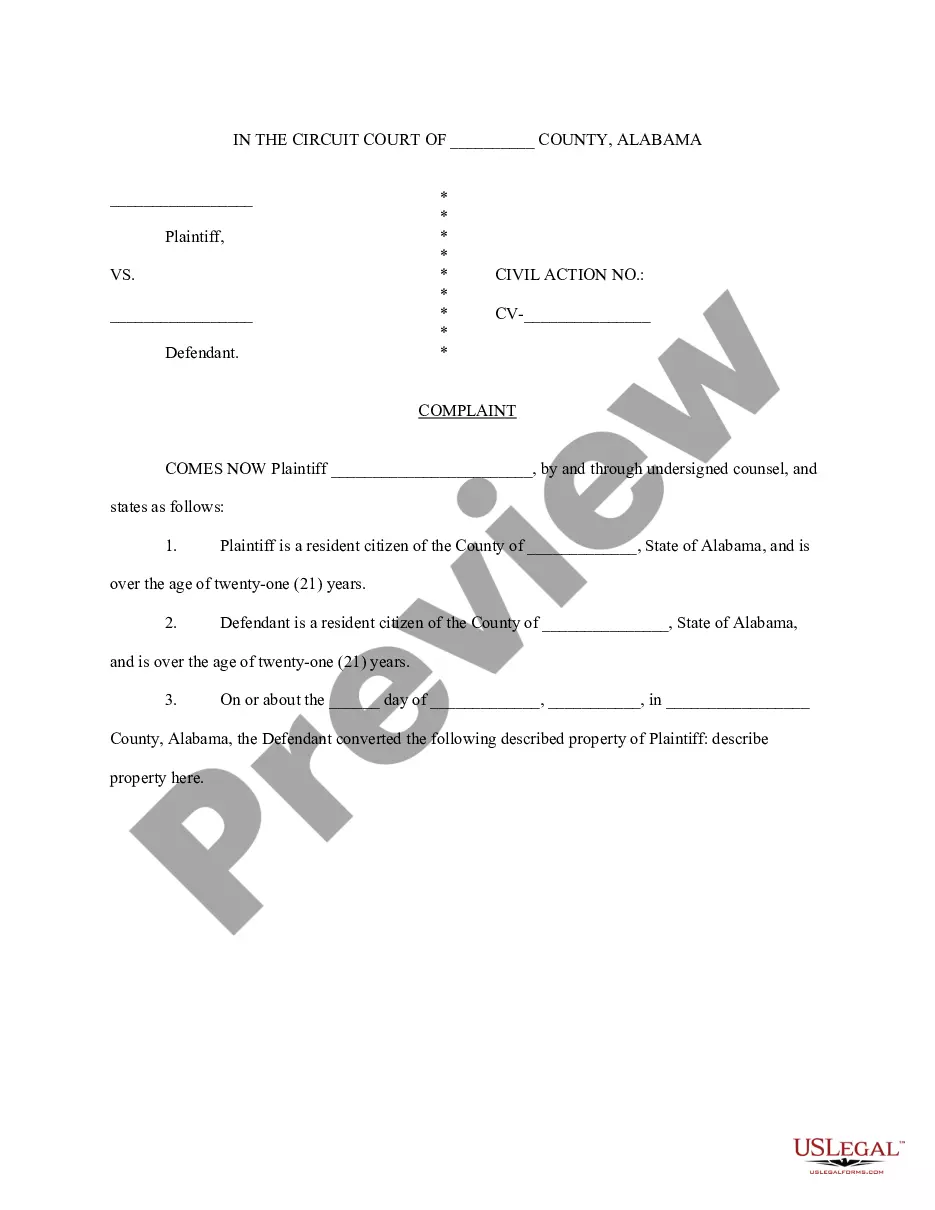
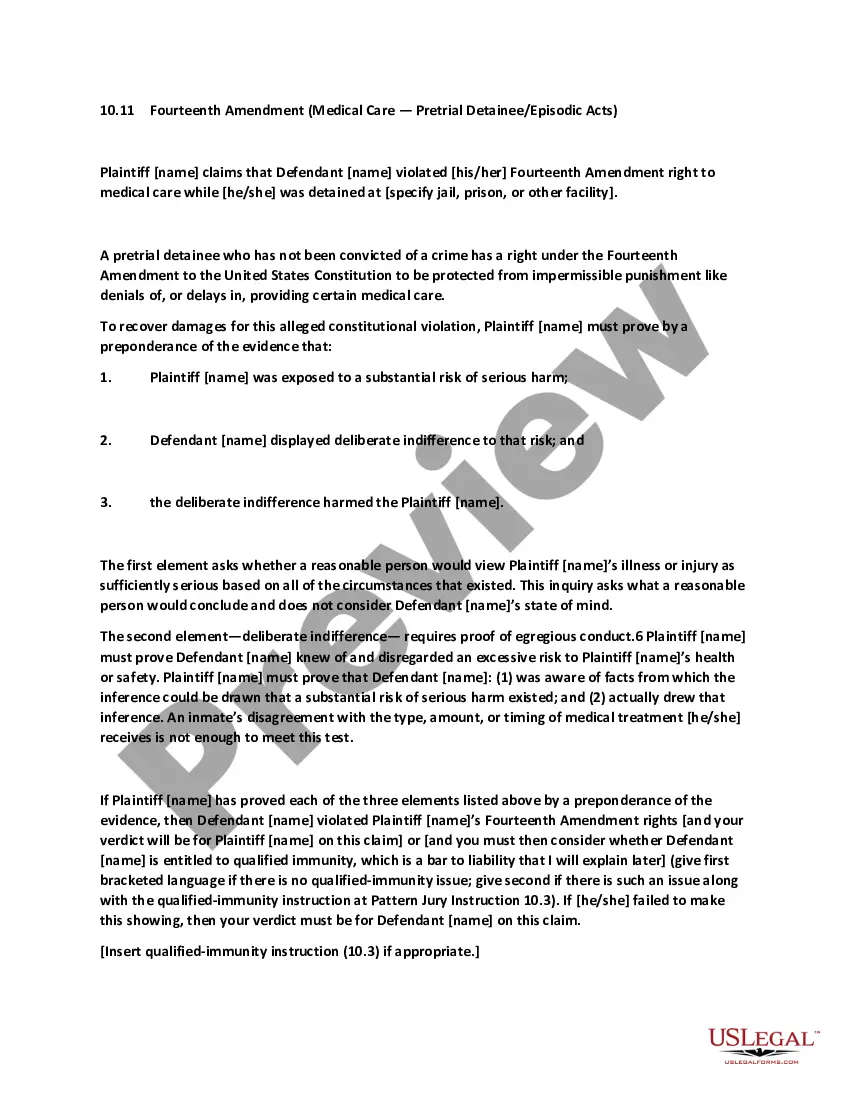
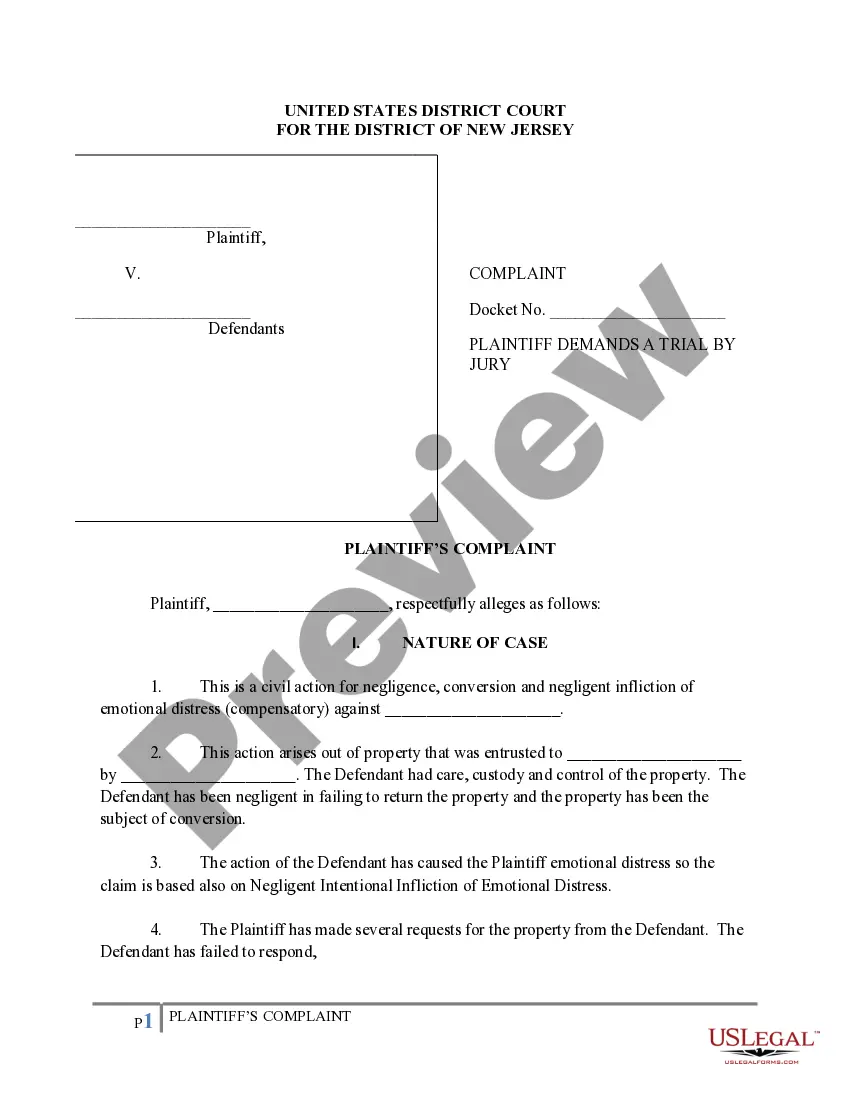
The Conversion of Property or Money Complaint is a legal document used to initiate a lawsuit when a person believes their property or funds have been wrongfully taken or used by another party. This form allows the plaintiff to formally accuse the defendant of converting their property without permission. Unlike other legal complaints, this specific complaint focuses on cases involving lost or unlawfully taken items rather than general disputes or claims.
Main sections of this form
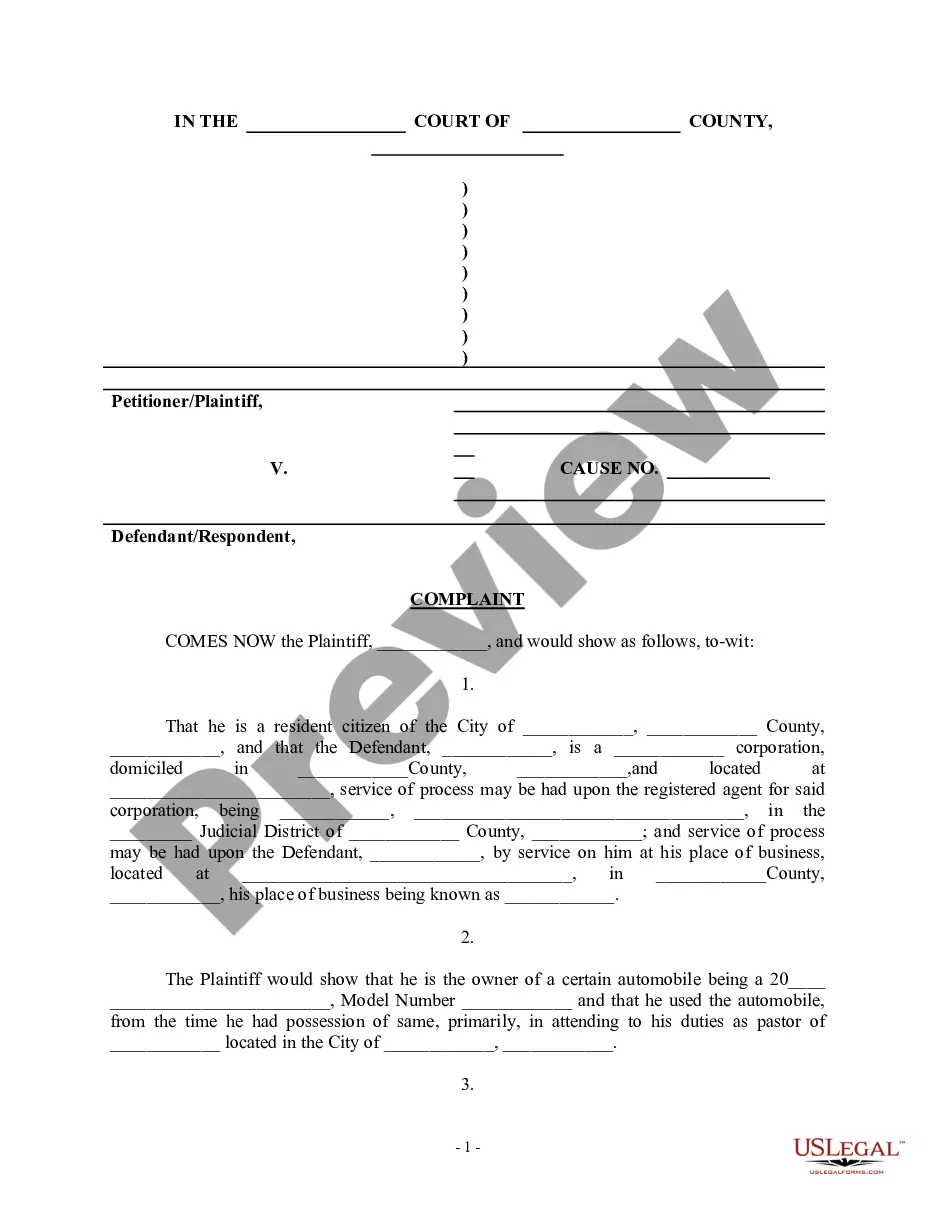
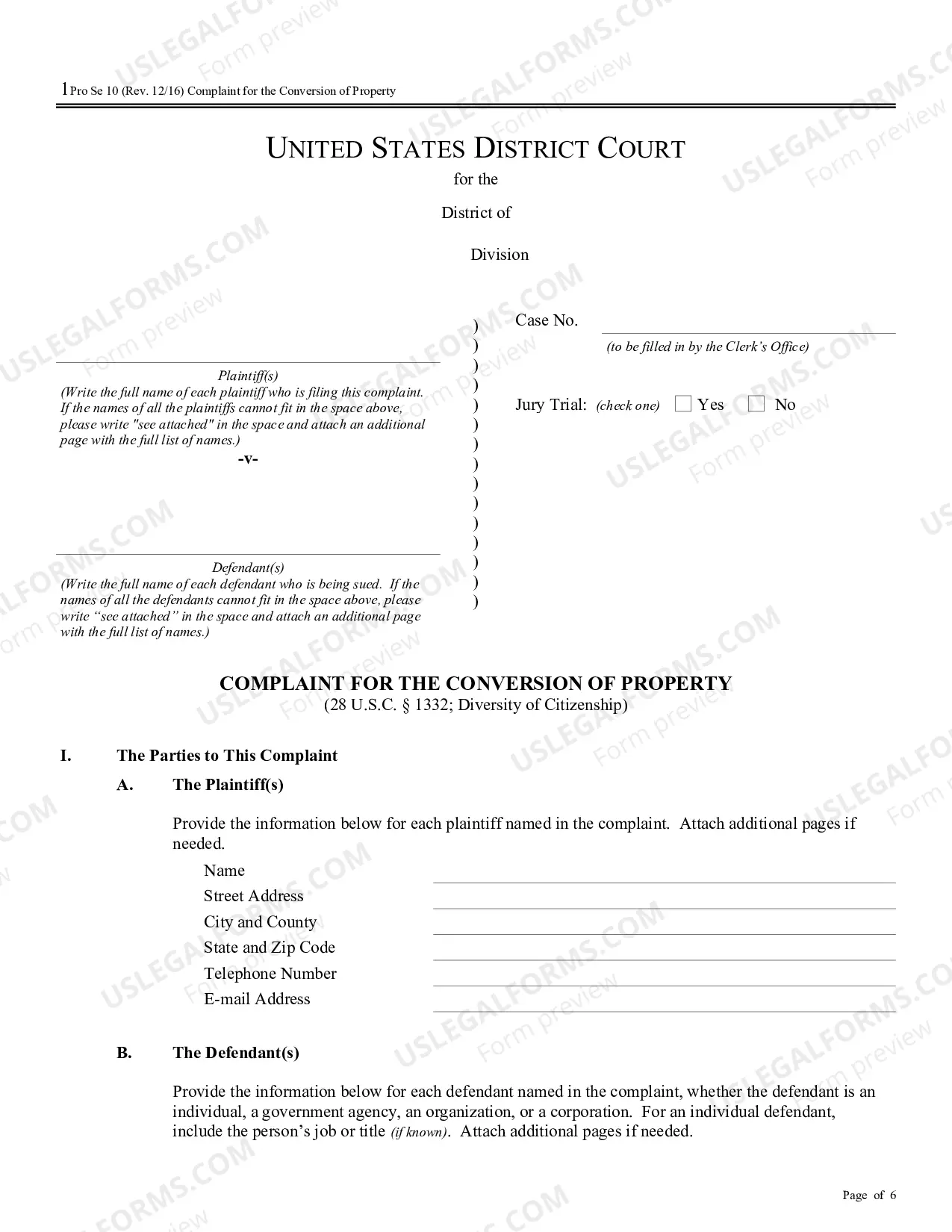
- Case Caption: Identifies the court, parties involved, and case number.
- Pleadings: Statement of facts outlining the plaintiff's claims against the defendant.
- Property Description: Details of the property or money converted by the defendant.
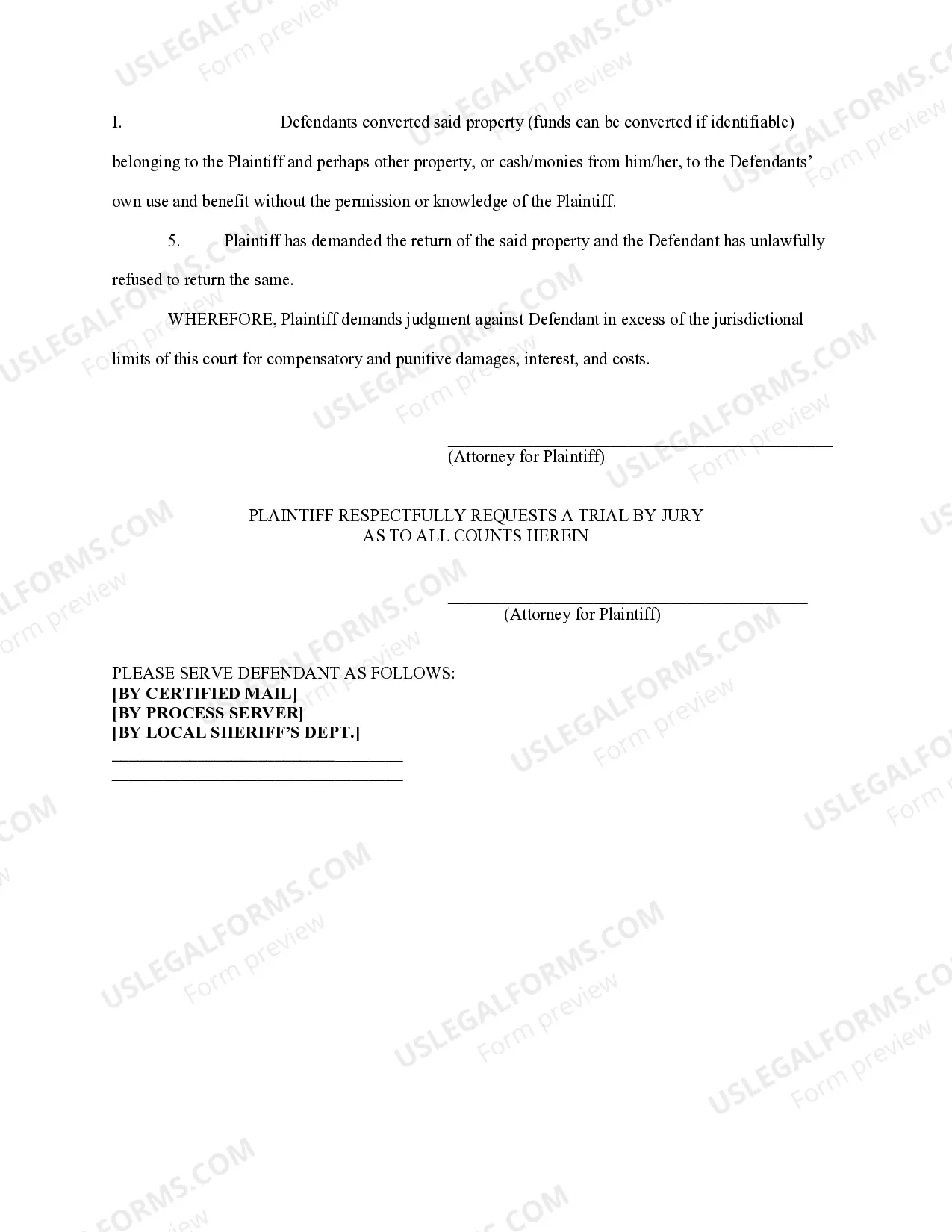
- Demands: Includes a request for the return of the property and potential damages.
- Jury Trial Request: Indicates whether the plaintiff requests a trial by jury.
When to use this document
This form should be used when an individual believes that their property, such as personal belongings or money, has been unlawfully taken or used by another person. It is applicable in scenarios like disputes over personal property in small business settings, theft of funds in financial transactions, or cases where borrowed items were not returned. If you have made requests for the return of your property and those requests were denied, this form can be a vital step in seeking legal recourse.
Intended users of this form
- Individuals who have had their property or money converted unlawfully.
- Parties seeking to recover damages or compensation for their lost property.
- Residents of Alabama who need to file a complaint in the Circuit Court regarding property disputes.
Steps to complete this form
- Identify the parties: Fill in the names of the plaintiff and defendant along with their respective counties.
- Describe the property: Provide a detailed description of the property or funds that were converted.
- Specify the date and circumstances: Enter the date when the conversion occurred and any relevant details.
- List your demands: State what you are seeking, including the return of the property and any damages.
- Include signatures: Ensure that both the plaintiff and attorney (if applicable) sign the complaint.
Does this document require notarization?
This form does not typically require notarization unless specified by local law. However, ensuring that the document is properly executed and filed according to local court rules is essential to its validity.
Get your form ready online
Our built-in tools help you complete, sign, share, and store your documents in one place.
Make edits, fill in missing information, and update formatting in US Legal Forms—just like you would in MS Word.
Download a copy, print it, send it by email, or mail it via USPS—whatever works best for your next step.
Sign and collect signatures with our SignNow integration. Send to multiple recipients, set reminders, and more. Go Premium to unlock E-Sign.
If this form requires notarization, complete it online through a secure video call—no need to meet a notary in person or wait for an appointment.
We protect your documents and personal data by following strict security and privacy standards.

Make edits, fill in missing information, and update formatting in US Legal Forms—just like you would in MS Word.

Download a copy, print it, send it by email, or mail it via USPS—whatever works best for your next step.

Sign and collect signatures with our SignNow integration. Send to multiple recipients, set reminders, and more. Go Premium to unlock E-Sign.

If this form requires notarization, complete it online through a secure video call—no need to meet a notary in person or wait for an appointment.

We protect your documents and personal data by following strict security and privacy standards.
Common mistakes to avoid
- Failing to provide enough detail about the property or circumstances of the conversion.
- Not including all necessary signatures on the document.
- Incorrectly filling out the case caption or court details.
Benefits of completing this form online
- Convenient access to a ready-to-use template that can be downloaded and completed at your convenience.
- Editable format allows you to personalize the form easily without complex legal jargon.
- Reliable legal content drafted by experienced attorneys to ensure compliance with state laws.
Legal use & context
- This complaint is a formal request to the court to address the unlawful conversion of property, which is a valid legal claim.
- Filing this complaint properly initiates the legal process to recover your property and seek potential damages.
- Understanding the specific legal terms and requirements of Alabama law is crucial for a successful outcome.
Quick recap
- The Conversion of Property or Money Complaint is a vital legal tool for addressing unlawful property takings in Alabama.
- Completing the form accurately is crucial for a successful case.
- Using this form online provides convenience and access to professional legal resources.
Looking for another form?

Form popularity
FAQ
A person who knowingly or intentionally exerts unauthorized control over property of another person commits criminal conversion.
Conversion is a tort that exposes you to liability for damages in a civil lawsuit. It applies when someone intentionally interferes with personal property belonging to another person.
Generally, punitive damages may be allowed when the conversion involves elements of fraud, ill will, malice, recklessness, wantonness, oppression, insult, willful, conscious disregard of the plaintiff's rights, or other aggravating circumstancesxii.
By tortuous taking; by any use or appropriation of the use of the person in possession, indicating a claim of right in opposition to rights of the owner; or. refusal to give up possession to the owner on demand.
Conversion is a tort that exposes you to liability for damages in a civil lawsuit. It applies when someone intentionally interferes with personal property belonging to another person.
Criminal Conversion: A person who knowingly or intentionally exerts unauthorized control over the property of another person commits criminal conversion.
When you want to reclaim the value of your personal property that was damaged or altered by some else's unauthorized use, you can file a lawsuit for conversion. This intentional tort is the civil law equivalent of a criminal theft charge.