Alabama Warning of Default on Residential Lease
What this document covers
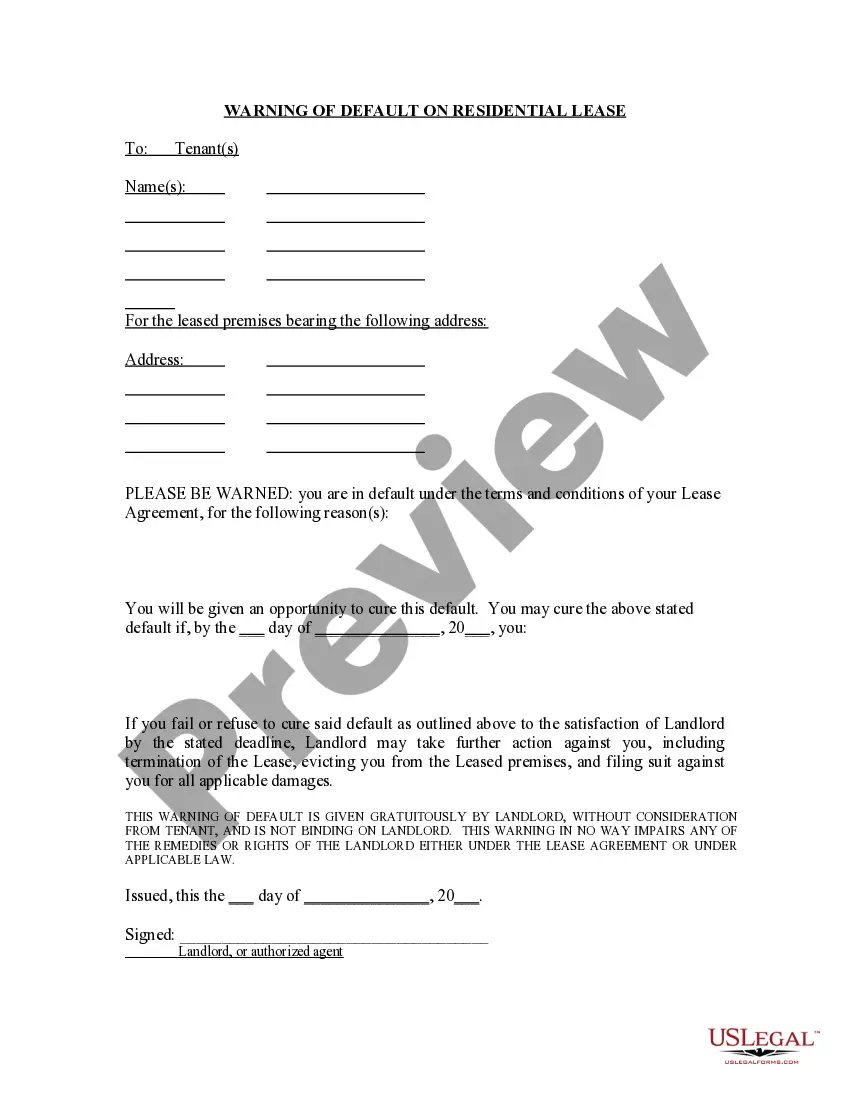
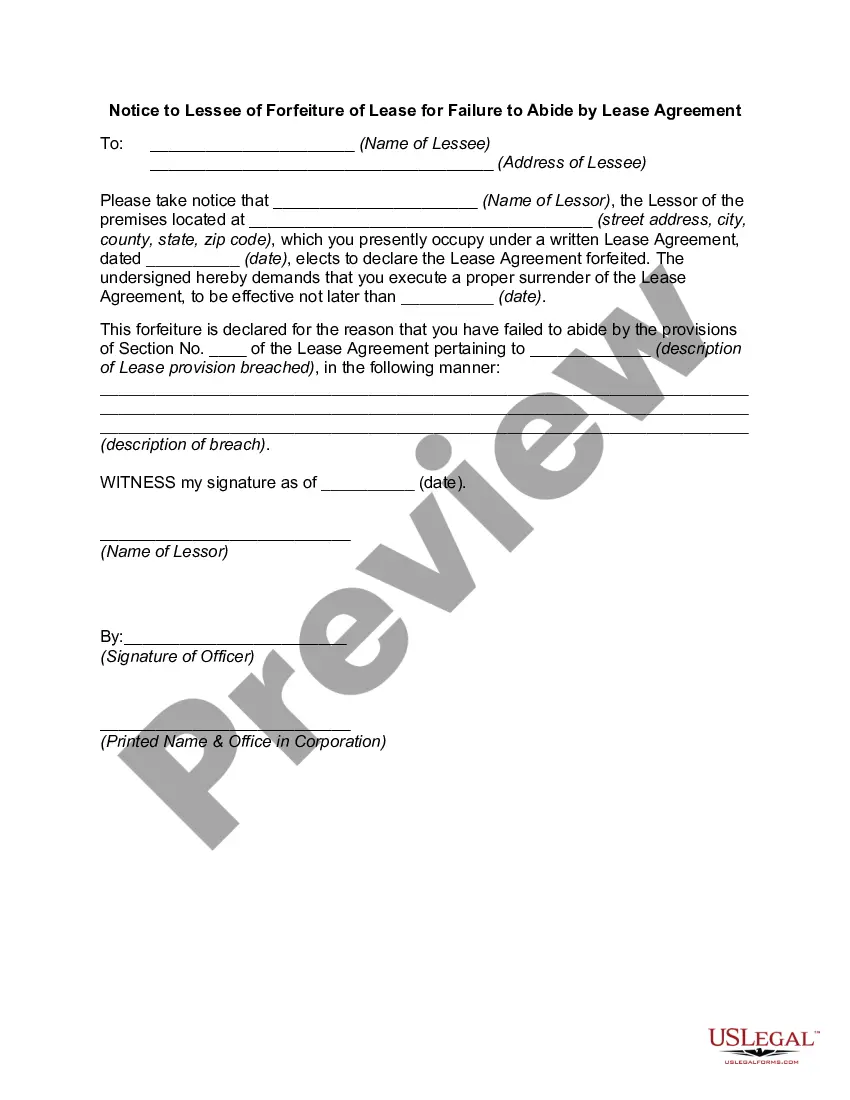
The Warning of Default on Residential Lease is a formal notice from a landlord to a tenant. This document alerts the tenant to specific conditions that, if not addressed, could lead to a default under the lease agreement. It serves as a proactive communication tool and helps differentiate itself from eviction notices by focusing on remedying the situation rather than immediate termination of the lease. This warning is crucial in maintaining clear communication and records in landlord-tenant relationships.
What’s included in this form
- Date of issuance: Specifies when the notice is given.
- Landlord's signature: Indicates the authorization behind the warning.
- Conditions of default: Details the specific issues that need to be remedied by the tenant.
- Disclaimer of binding obligations: Clarifies that this warning is not legally binding and does not limit landlord rights.


When to use this form
This form should be used when a landlord identifies breaches in a residential lease agreement that could lead to a default. Common scenarios include failure to pay rent on time, improper maintenance of the property, or violation of lease terms. By issuing this warning, landlords aim to provide tenants an opportunity to correct these issues before taking more serious actions, such as eviction.
Who needs this form
- Landlords who lease residential properties.
- Property managers acting on behalf of landlords.
- Tenants who wish to understand potential lease violations and remedies.
How to complete this form
- Enter the date the warning is issued.
- Specify the conditions of default clearly and concisely.
- Sign the document to validate it as the landlord or authorized agent.
- Distribute the completed form to the tenant, following any relevant state guidelines for service.
Does this document require notarization?
This form does not typically require notarization unless specified by local law. Always check local regulations to confirm requirements in your jurisdiction. However, if you need notarization, US Legal Forms offers integrated online notarization services for added convenience.
Get your form ready online
Our built-in tools help you complete, sign, share, and store your documents in one place.
Make edits, fill in missing information, and update formatting in US Legal Forms—just like you would in MS Word.
Download a copy, print it, send it by email, or mail it via USPS—whatever works best for your next step.
Sign and collect signatures with our SignNow integration. Send to multiple recipients, set reminders, and more. Go Premium to unlock E-Sign.
If this form requires notarization, complete it online through a secure video call—no need to meet a notary in person or wait for an appointment.
We protect your documents and personal data by following strict security and privacy standards.

Make edits, fill in missing information, and update formatting in US Legal Forms—just like you would in MS Word.

Download a copy, print it, send it by email, or mail it via USPS—whatever works best for your next step.

Sign and collect signatures with our SignNow integration. Send to multiple recipients, set reminders, and more. Go Premium to unlock E-Sign.

If this form requires notarization, complete it online through a secure video call—no need to meet a notary in person or wait for an appointment.

We protect your documents and personal data by following strict security and privacy standards.
Avoid these common issues
- Failing to specify the default conditions clearly, which can lead to confusion.
- Not signing the form, making it invalid.
- Forgetting to document the date of issuance, which is crucial for timelines.
Benefits of completing this form online
- Convenient access and download options for quick use.
- Editability allows customization to fit specific lease requirements.
- Prepared by licensed attorneys, ensuring reliability and legal accuracy.
Quick recap
- A Warning of Default on Residential Lease alerts tenants to potential lease violations.
- Proper usage helps prevent future legal issues between landlords and tenants.
- Always document communications for clear records.
Looking for another form?
Form popularity
FAQ
To write a violation notice, begin with a clear statement outlining the specific violation under the lease agreement. Include relevant lease dates and provisions, along with the Alabama Warning of Default on Residential Lease if it is pertinent. Present any required actions that need to be taken and set a deadline for compliance. This structured approach will help address the issue effectively while maintaining a record.
If a landlord violates a lease agreement, document the violation and communicate your concerns directly with the landlord. Reference the Alabama Warning of Default on Residential Lease if applicable, to assert your rights. If the issue is unresolved, you can seek legal assistance or consult your local housing authority for further guidance. Taking proactive steps can help protect your rights as a tenant.
When writing a letter to your landlord about breaking the lease, start with a respectful greeting and clearly state your intention. Include the specific terms of the lease you wish to terminate and reference the Alabama Warning of Default on Residential Lease if it applies. Express your reasons for breaking the lease and request any necessary actions to proceed. Keeping the tone professional fosters a better relationship during this process.
To write a lease violation, begin by outlining the specific lease terms that have been breached. Clearly state the nature of the violation, referencing the Alabama Warning of Default on Residential Lease when applicable. Include relevant dates and any actions you have taken to address the issue. This clarity helps ensure that both parties understand the concerns.
The default clause in real estate specifies the actions that can be taken when one party fails to meet their obligations under the agreement. This clause protects the rights of the landlord or seller by outlining what constitutes a default scenario. In the context of the Alabama Warning of Default on Residential Lease, it helps tenants understand the importance of fulfilling their lease terms to avoid potential eviction. Knowing the details of this clause can save both parties from significant legal issues down the line.
In Alabama, landlords cannot ask for information that discriminates against tenants or violates fair housing laws. For example, they cannot request details about a tenant's race, religion, or marital status. If a landlord's requests make you uncomfortable, refer to the Alabama Warning of Default on Residential Lease for guidance on your rights. Remaining informed can help you navigate your landlord-tenant relationship confidently.
The default clause in a residential lease outlines the conditions under which a tenant may be considered in default or breach of contract. This clause may include issues like non-payment of rent or violations of lease terms. Receiving an Alabama Warning of Default on Residential Lease indicates that the landlord believes these conditions have been met. Understanding this clause helps you navigate potential disputes effectively.
Landlord harassment in Alabama includes actions that intimidate or coerce a tenant, such as excessive communication or threats. It can also involve attempts to pressure tenants into vacating the property unlawfully. If you experience harassment, you may need to reference the Alabama Warning of Default on Residential Lease for legal recourse. It’s vital to document such behavior and seek support if needed.
Landlords in Alabama are prohibited from retaliating against tenants for exercising their legal rights, such as filing complaints or requesting repairs. They also cannot discriminate based on race, color, national origin, or disability. Receiving an Alabama Warning of Default on Residential Lease does not exempt landlords from adhering to tenant protection laws. Staying informed about your rights helps ensure that you feel secure in your home.
No, in Alabama, landlords cannot enter your property without proper notice or permission, except in emergencies. Typically, they must provide advance notice for repairs or inspections, respecting your right to privacy. If a landlord violates this, it may be deemed an infringement under rental law. Understanding your boundaries helps you maintain a peaceful living situation.