Alabama Mutual Wills or Last Will and Testaments for Man and Woman living together, not Married with Adult Children
What this document covers
This form includes mutual wills specifically designed for a man and woman living together, who are not married and have adult children. It allows both parties to express their wishes regarding the distribution of their assets upon death, ensuring that their property will benefit each other and their children. Unlike standard wills, these mutual wills emphasize the shared intent of both partners, which can help avoid complications during estate administration.
Form components explained
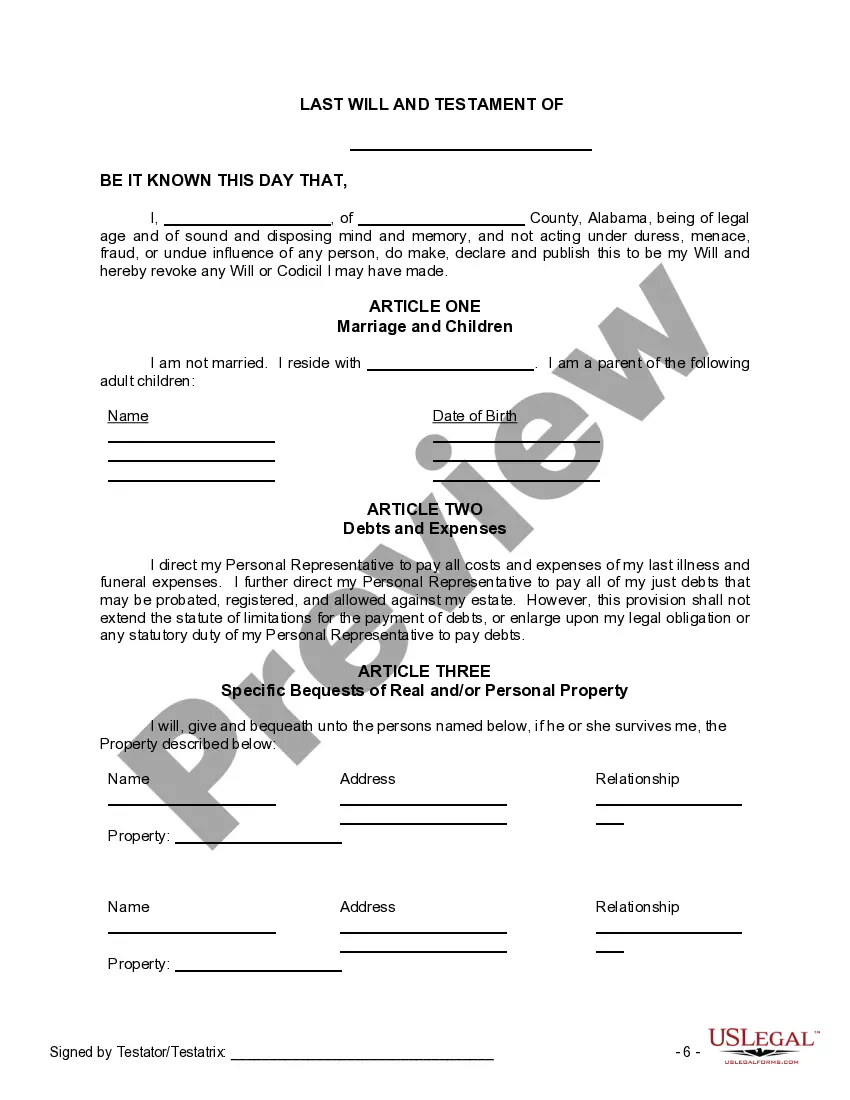
- Identification of the testators and their residency.
- Provision for heirs, including adult children.
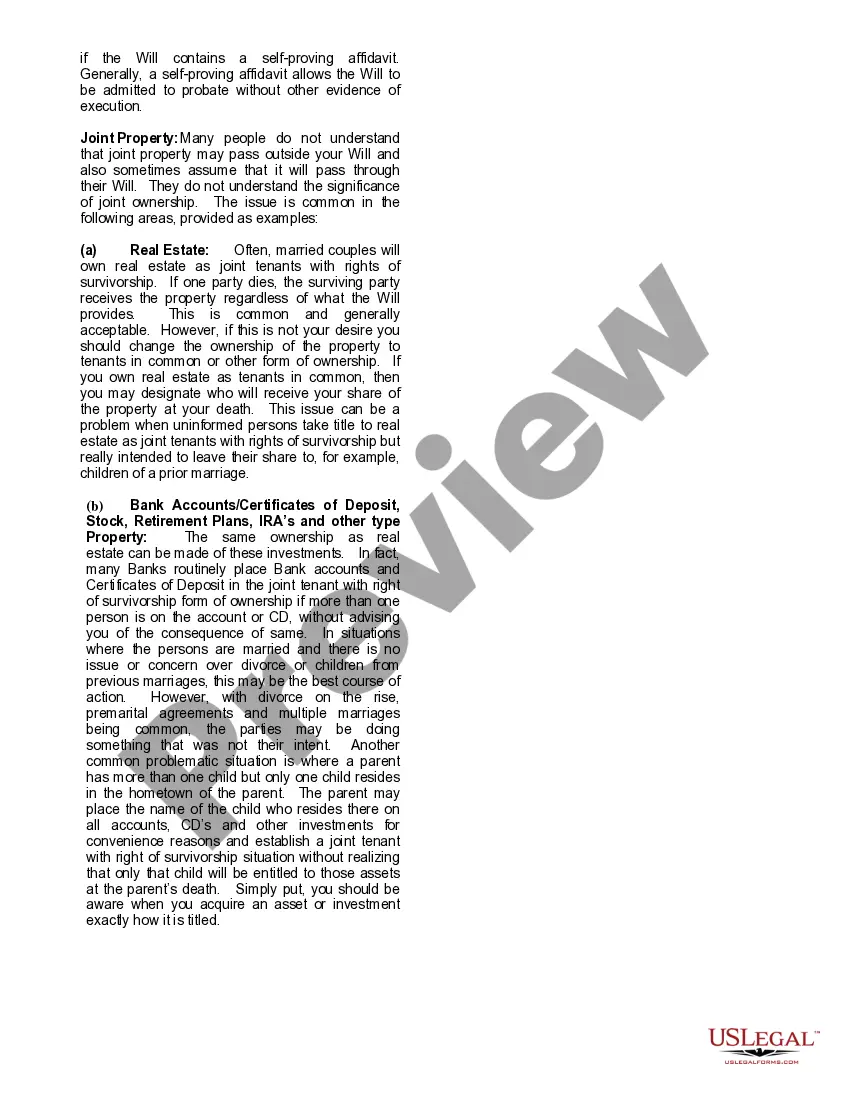
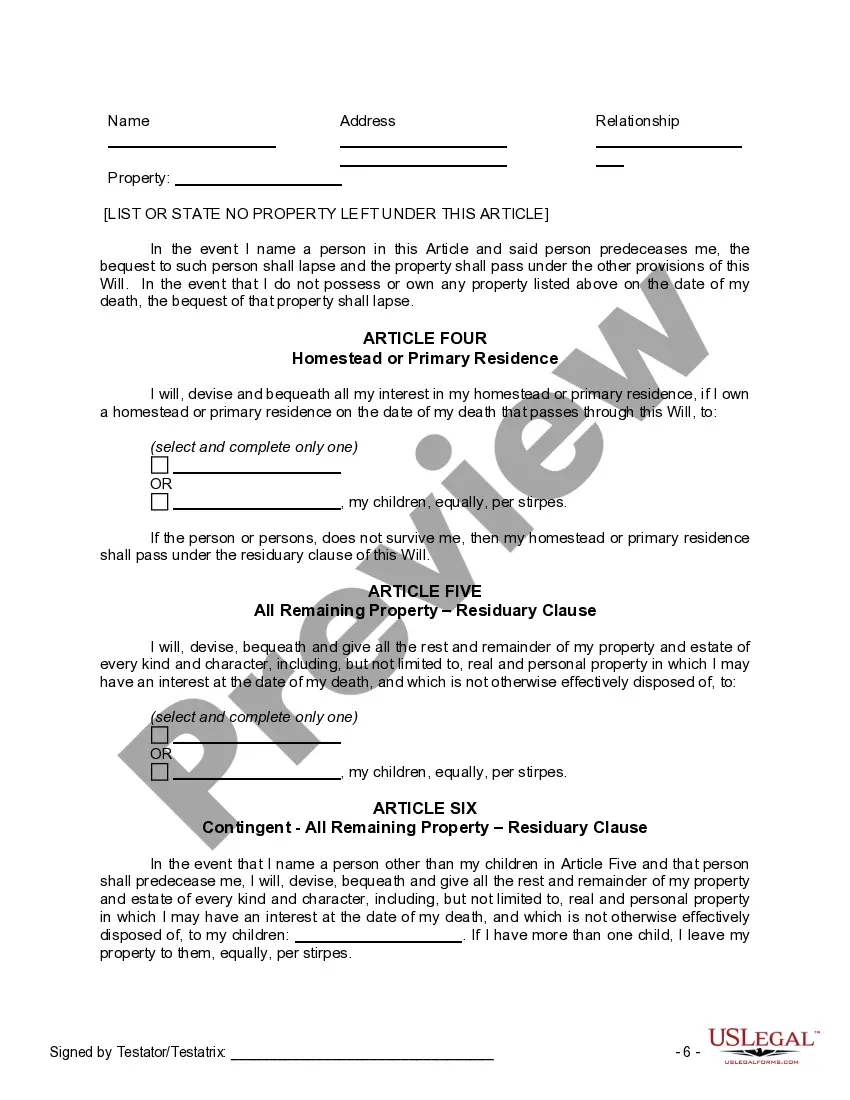
- Specifications for real and personal property bequests.
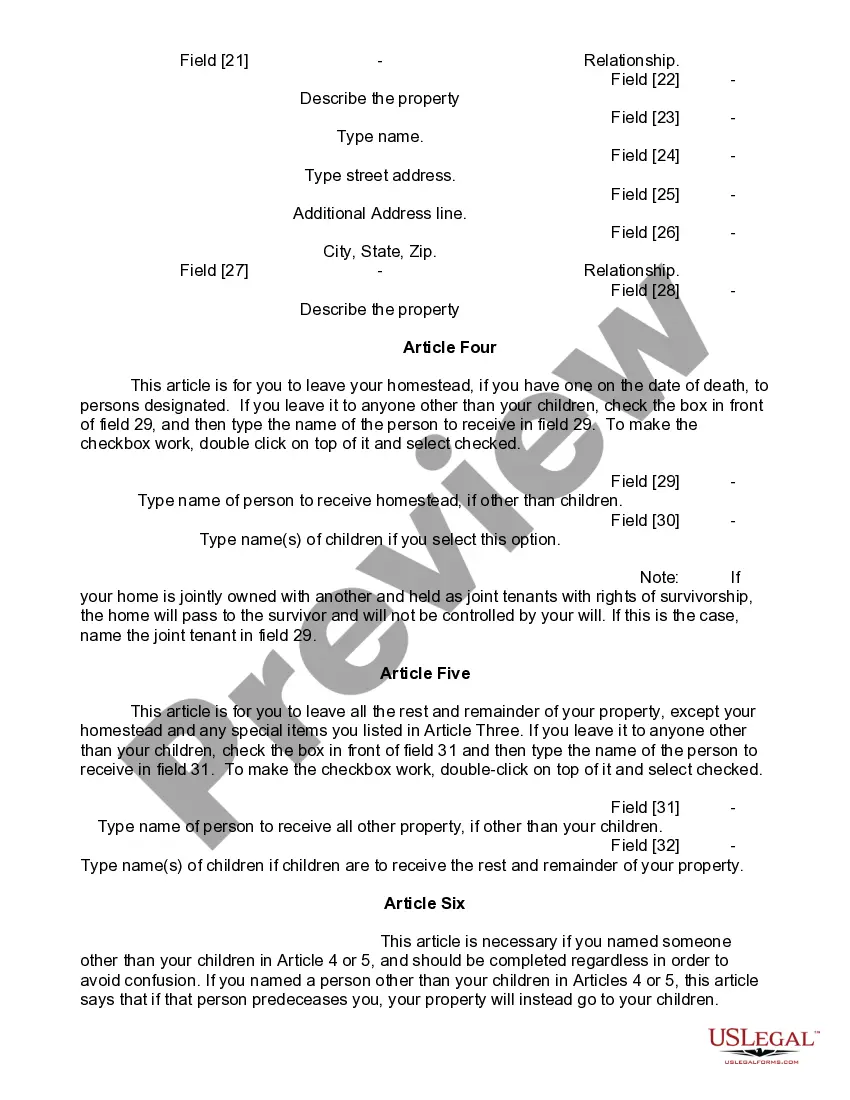
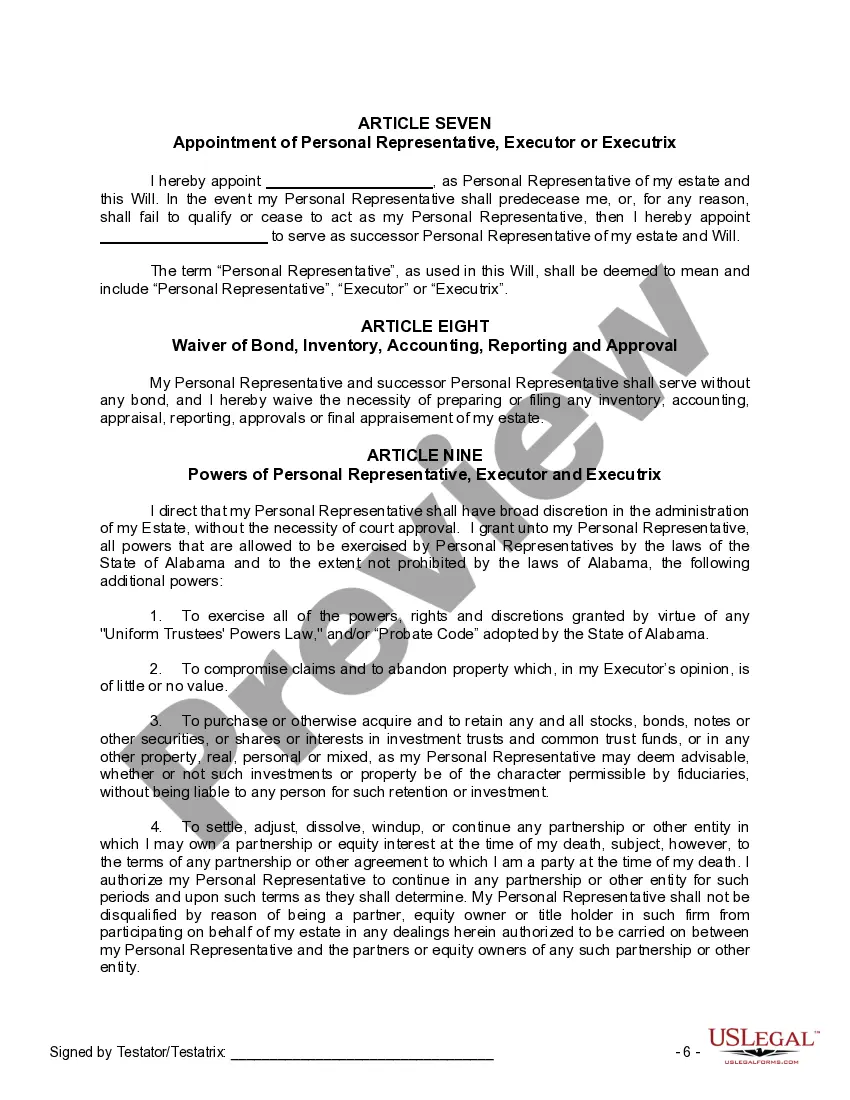
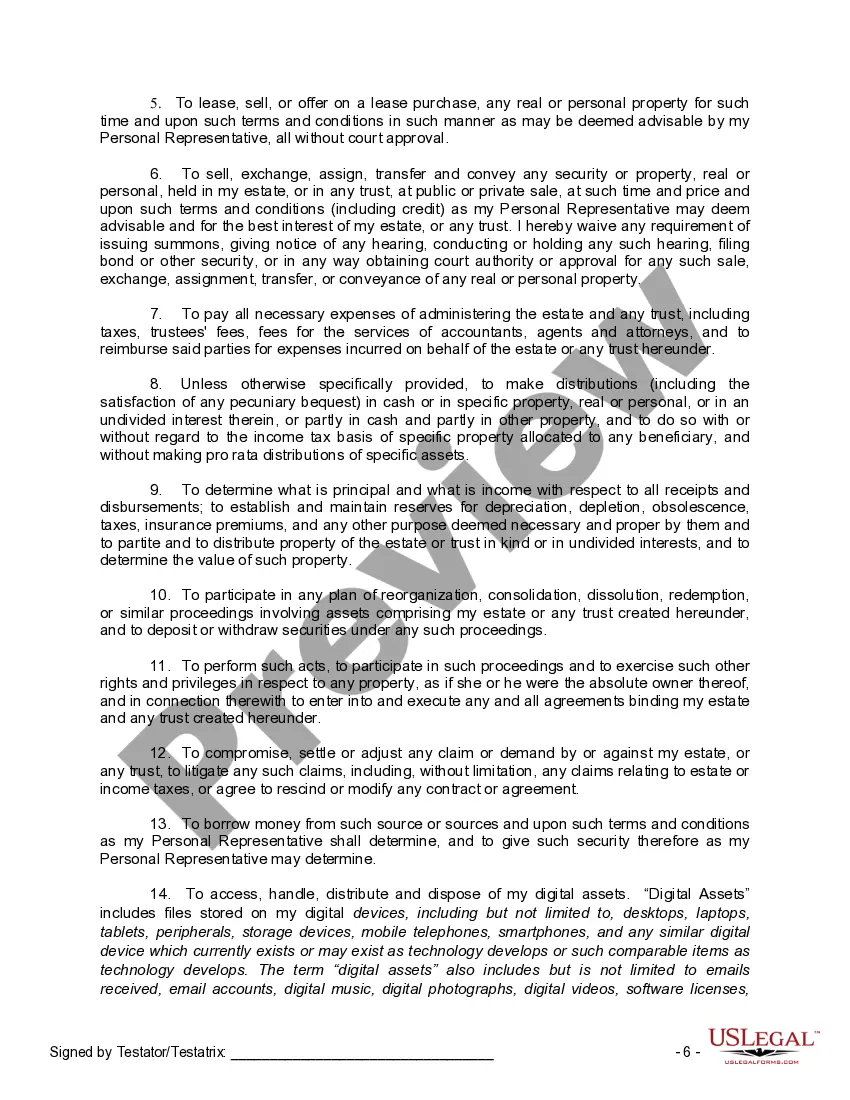
- Appointment of a personal representative to manage the estate.
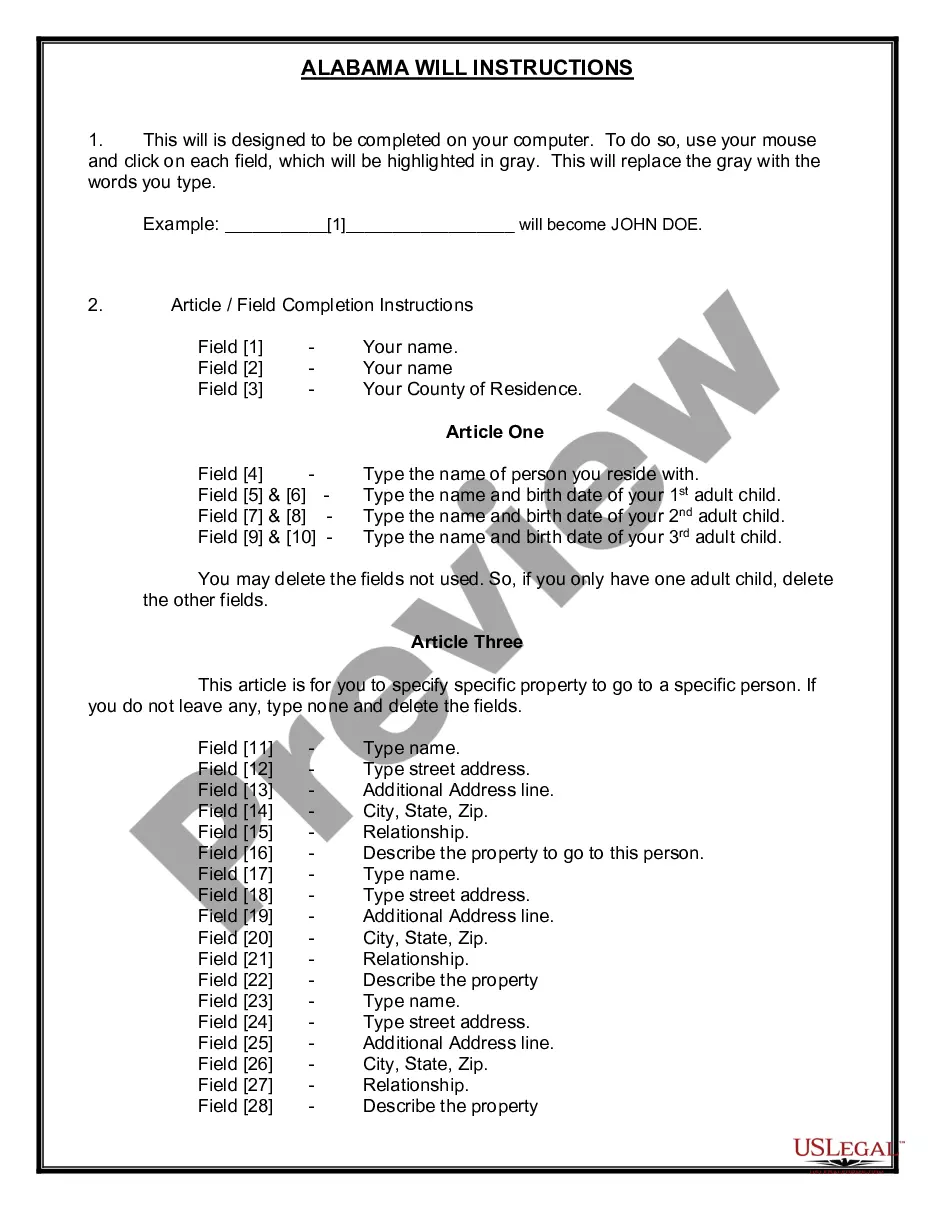
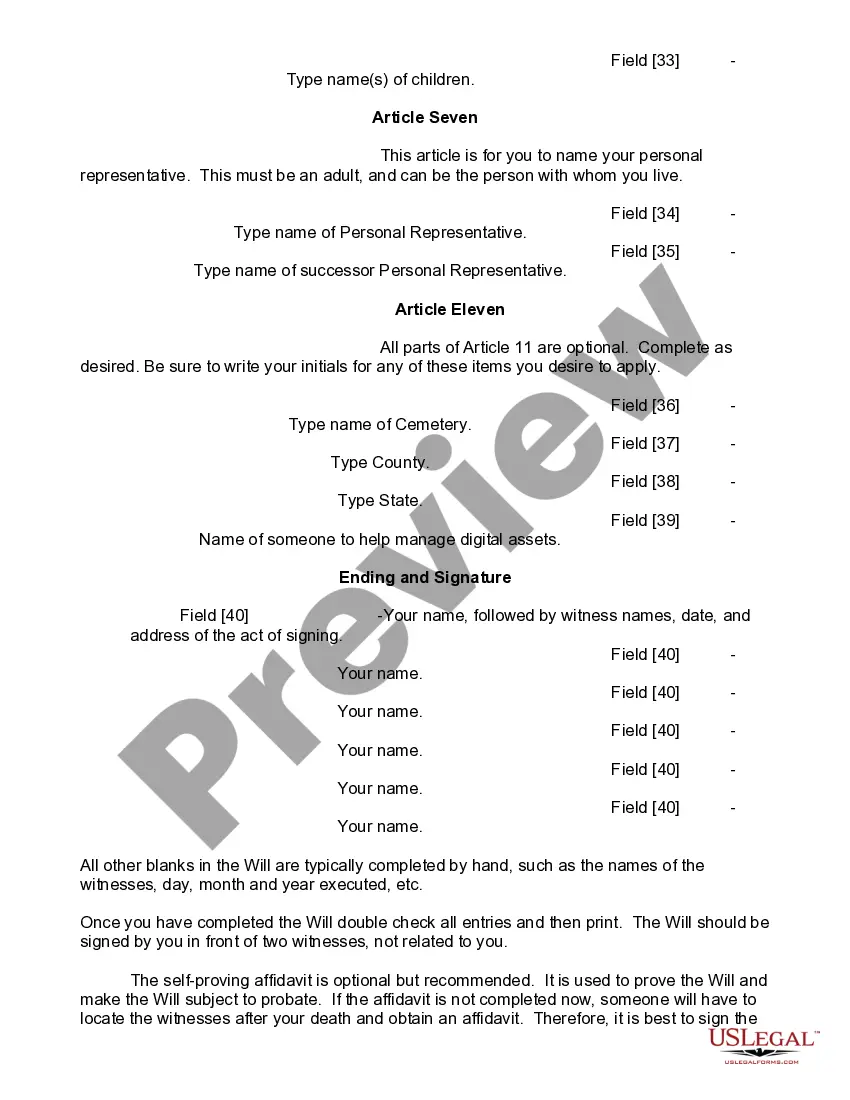
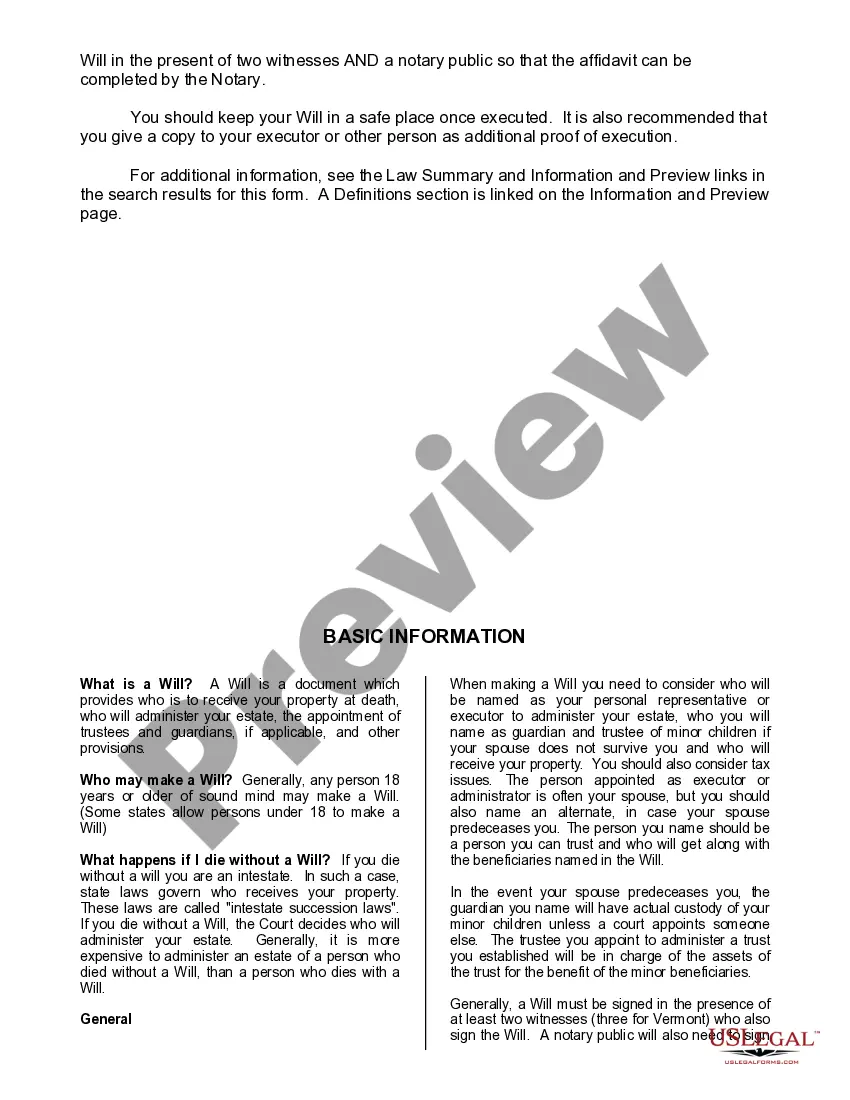
- Instructions for signing and witnessing the will.
- Optional self-proving affidavit for easier probate.




Situations where this form applies
This form is ideal for couples who have chosen not to marry but want to ensure mutual protection and care in their estate planning. It is particularly beneficial for situations where both partners have adult children and wish to include them in their estate decisions. You may want to use this form when you want to secure your partnerâs rights to inherit and clarify asset distribution after your passing.
Who should use this form
- Cohabitating couples without a legal marriage.
- Couples who wish to create mutual protections for each other in their estate plans.
- Individuals with adult children wanting to include them in inheritance plans.
- Those seeking a clear and enforceable agreement regarding asset distribution upon death.
How to prepare this document
- Identify yourself and your partner by entering your names and county of residence.
- List your adult children along with their birth dates.
- Specify any specific property bequests and identify recipients by entering their names and addresses.
- Appoint a personal representative to manage your estate and a successor if needed.
- Ensure the document is signed in front of two witnesses, then consider completing the self-proving affidavit.
Does this document require notarization?
Yes, this form must be notarized to be legally valid. Completing the self-proving affidavit with a notary public simplifies the probate process by eliminating the need for witness testimonies in court. You can take advantage of US Legal Forms' integrated online notarization service, which is available 24/7 through secure video calls, ensuring convenience and efficiency.
Get your form ready online
Our built-in tools help you complete, sign, share, and store your documents in one place.
Make edits, fill in missing information, and update formatting in US Legal Forms—just like you would in MS Word.
Download a copy, print it, send it by email, or mail it via USPS—whatever works best for your next step.
Sign and collect signatures with our SignNow integration. Send to multiple recipients, set reminders, and more. Go Premium to unlock E-Sign.
If this form requires notarization, complete it online through a secure video call—no need to meet a notary in person or wait for an appointment.
We protect your documents and personal data by following strict security and privacy standards.

Make edits, fill in missing information, and update formatting in US Legal Forms—just like you would in MS Word.

Download a copy, print it, send it by email, or mail it via USPS—whatever works best for your next step.

Sign and collect signatures with our SignNow integration. Send to multiple recipients, set reminders, and more. Go Premium to unlock E-Sign.

If this form requires notarization, complete it online through a secure video call—no need to meet a notary in person or wait for an appointment.

We protect your documents and personal data by following strict security and privacy standards.
Mistakes to watch out for
- Failing to have the wills signed in front of the required number of witnesses.
- Not including all properties intended for bequest.
- Leaving out the self-proving affidavit, which can complicate probate.
- Not reviewing the completed wills for accuracy before signing.
Benefits of completing this form online
- Convenient access to legally binding forms at any time.
- Edit and customize the form easily to meet your specific needs.
- Prepared by licensed attorneys to ensure legal compliance and security.
- Accessible instructions to guide you through each section of the form.
Looking for another form?
Form popularity
FAQ
A mutual will is a formal legal arrangement between two individuals, wherein they express a shared intent regarding the distribution of their estate after death. They are particularly suitable for partners, like a man and a woman living together but not married, who wish to create a cohesive estate plan. The Alabama Mutual Wills offer security by ensuring that both parties honor the terms outlined, providing peace of mind to couples with adult children. Utilizing platforms like uslegalforms can simplify this process and ensure all legal aspects are properly addressed.
Mutual wills are legal documents that reflect a shared agreement between two individuals on how their assets will be distributed after both pass away. This often serves individuals living together but not married who want to ensure their wishes are upheld. In Alabama, creating mutual wills requires both parties to commit to the same terms, providing certainty in how their estate will be handled. This feature can be particularly beneficial for couples with adult children to protect.
While Alabama Mutual Wills provide a solid framework for estate planning, they come with potential downsides. One primary disadvantage is the binding nature, which can limit changes in the future as circumstances evolve. Additionally, if one party passes away, the surviving party might find themselves in a difficult position if they wish to alter the will. It's essential to weigh these factors when considering mutual wills versus other estate planning options.
A joint will and testament is a single document created by two individuals outlining their wishes for asset distribution after death. It typically applies to couples who want a unified approach to their estate planning. Unlike Alabama Mutual Wills, joint wills do not bind one party to the decisions made by the other, allowing for more flexibility in future changes. Clarity regarding your wishes can lead to a more straightforward estate settlement.
In Alabama, you do not need a lawyer to create a will; however, consulting one can help ensure that your Last Will and Testament for Man and Woman living together, not Married with Adult Children meets legal requirements. A legal professional can guide you through the specific stipulations needed for mutual wills. While DIY options exist, a lawyer can prevent potential issues in the future.
In general, a will cannot override marital laws in Alabama, as certain assets may automatically pass to a spouse regardless of the will's terms. However, Alabama Mutual Wills or Last Will and Testaments for Man and Woman living together, not Married with Adult Children allow individuals to express specific wishes that may not align with traditional marital expectations. Consulting legal guidance can help clarify how your intentions can coexist with marriage laws.
To ensure a will is valid in Alabama, it must meet key criteria such as being written, signed by the person creating the will, and witnessed by two individuals. This is particularly relevant for couples considering Alabama Mutual Wills or Last Will and Testaments for Man and Woman living together, not Married with Adult Children. By following these requirements, you increase the likelihood of your wishes being honored.
For a will to be valid in Alabama, it must be in writing, signed by the testator, and witnessed by at least two individuals. These requirements help ensure that Alabama Mutual Wills or Last Will and Testaments for Man and Woman living together, not Married with Adult Children reflect the true intentions of the person making the will. Adhering to these guidelines can help prevent any future disputes.
A will may be deemed invalid in Alabama if it does not meet certain legal requirements. Factors that can lead to invalidation include lack of proper signing, absence of witnesses, or if the testator is not of sound mind. Understanding these aspects is essential for ensuring that your Alabama Mutual Wills or Last Will and Testaments for Man and Woman living together, not Married with Adult Children are enforceable.
In Alabama, wills are not required to be filed with the court until after the person's death. This includes Alabama Mutual Wills or Last Will and Testaments for Man and Woman living together, not Married with Adult Children. However, filing can streamline the probate process, ensuring that your wishes are honored swiftly and efficiently.