Alabama Letter from Tenant to Landlord containing Notice to landlord to withdraw retaliatory rent increase
What this document covers
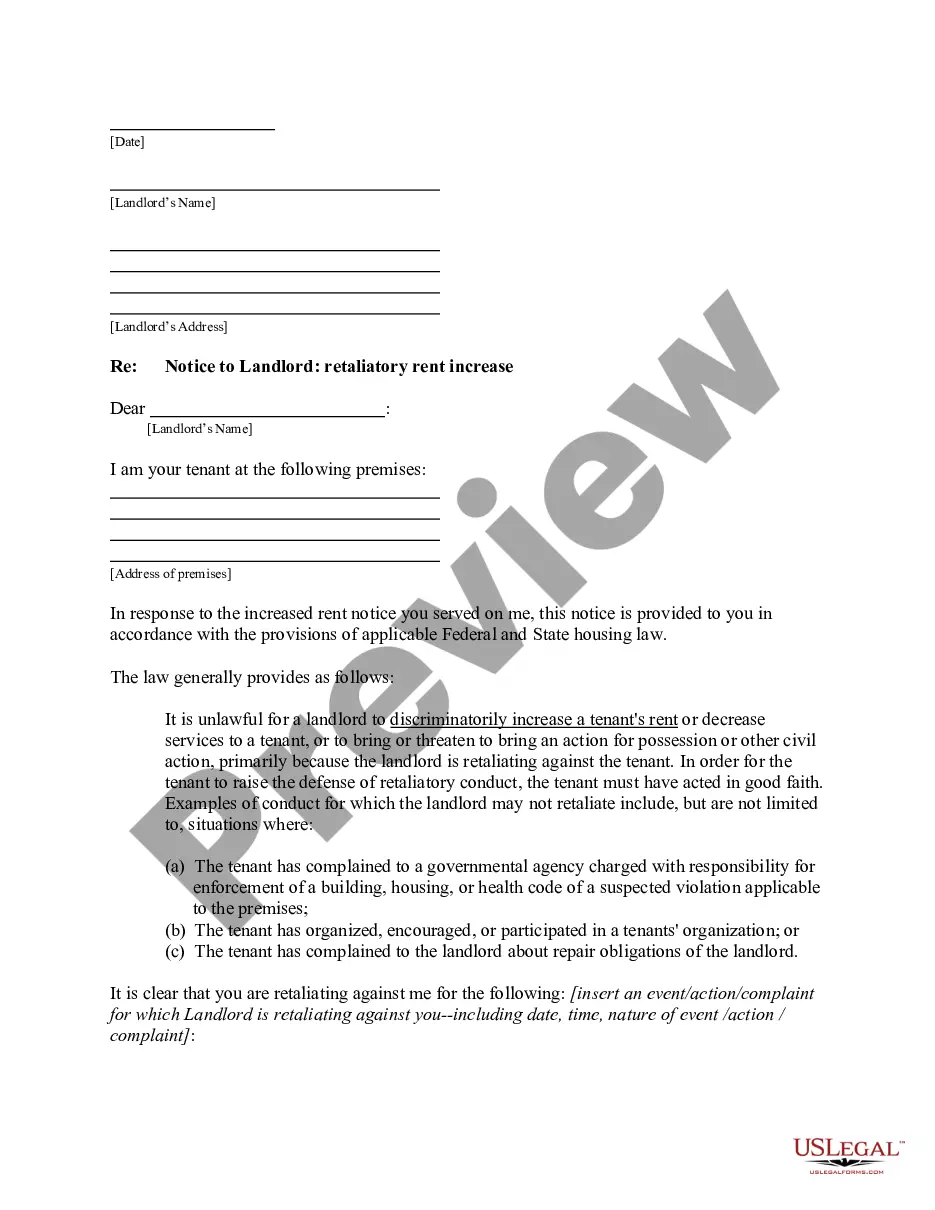
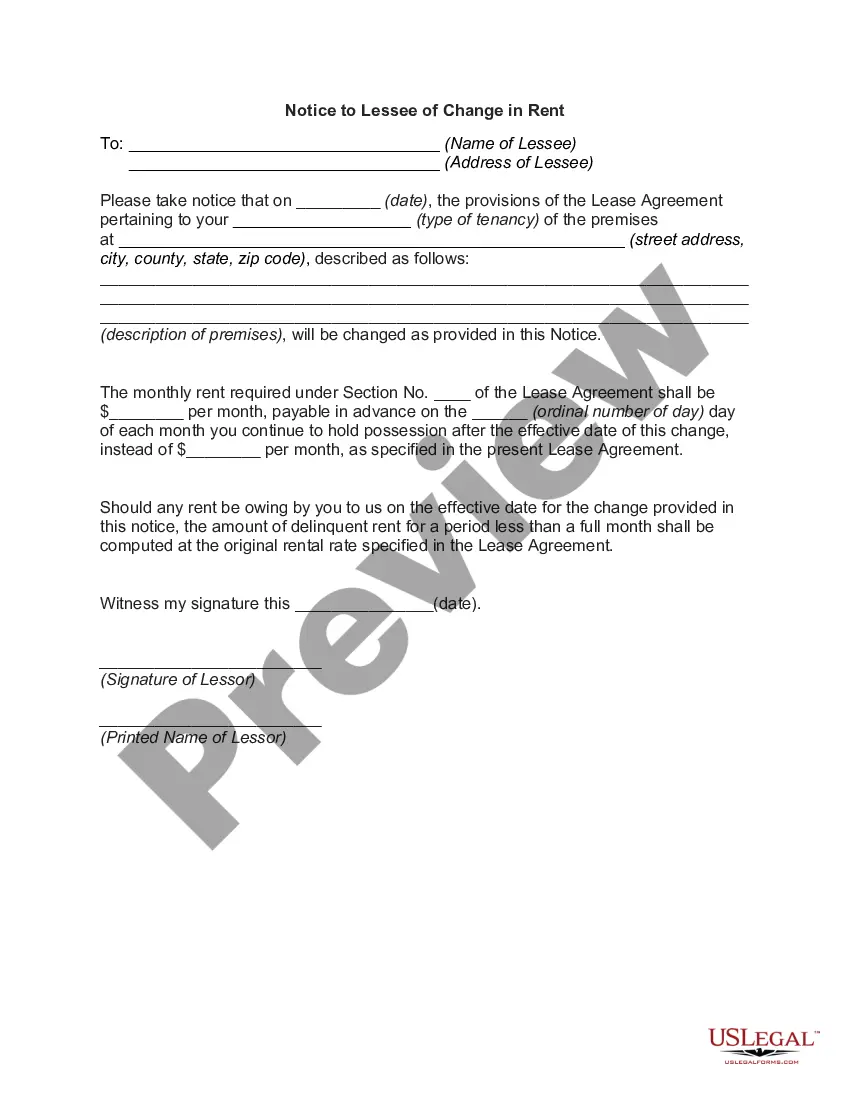
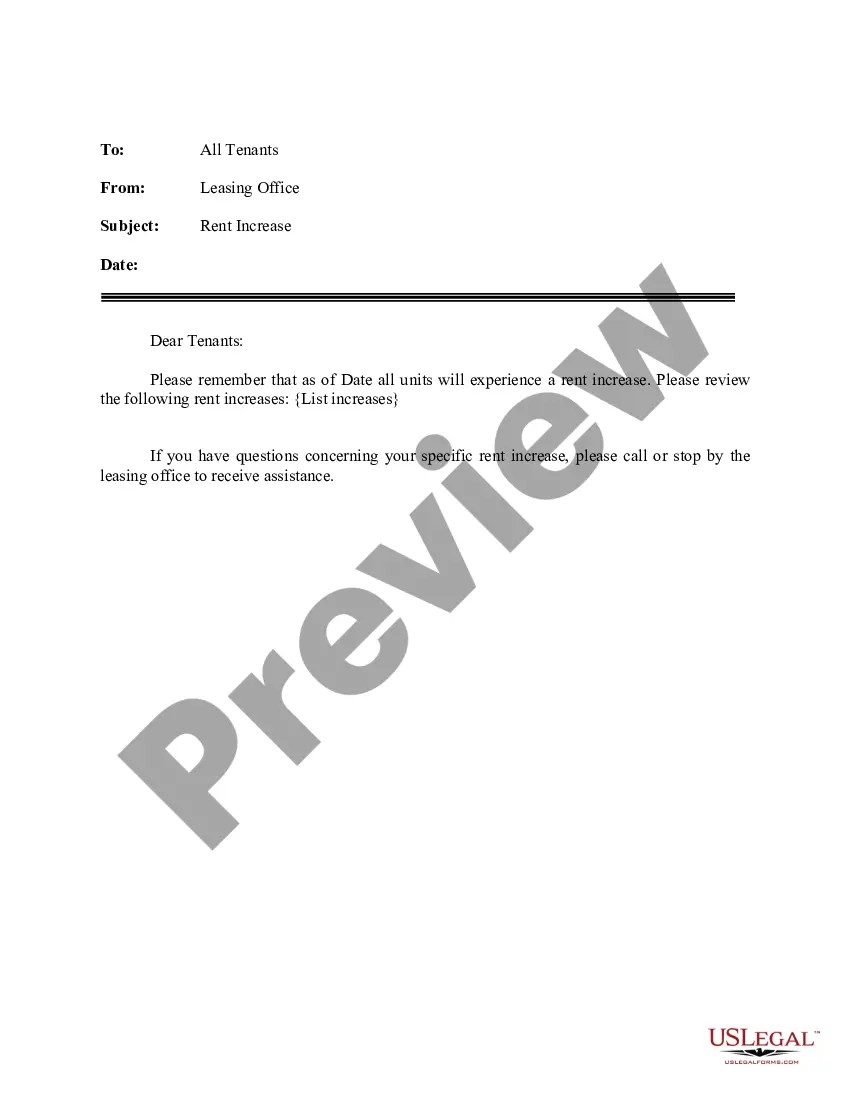
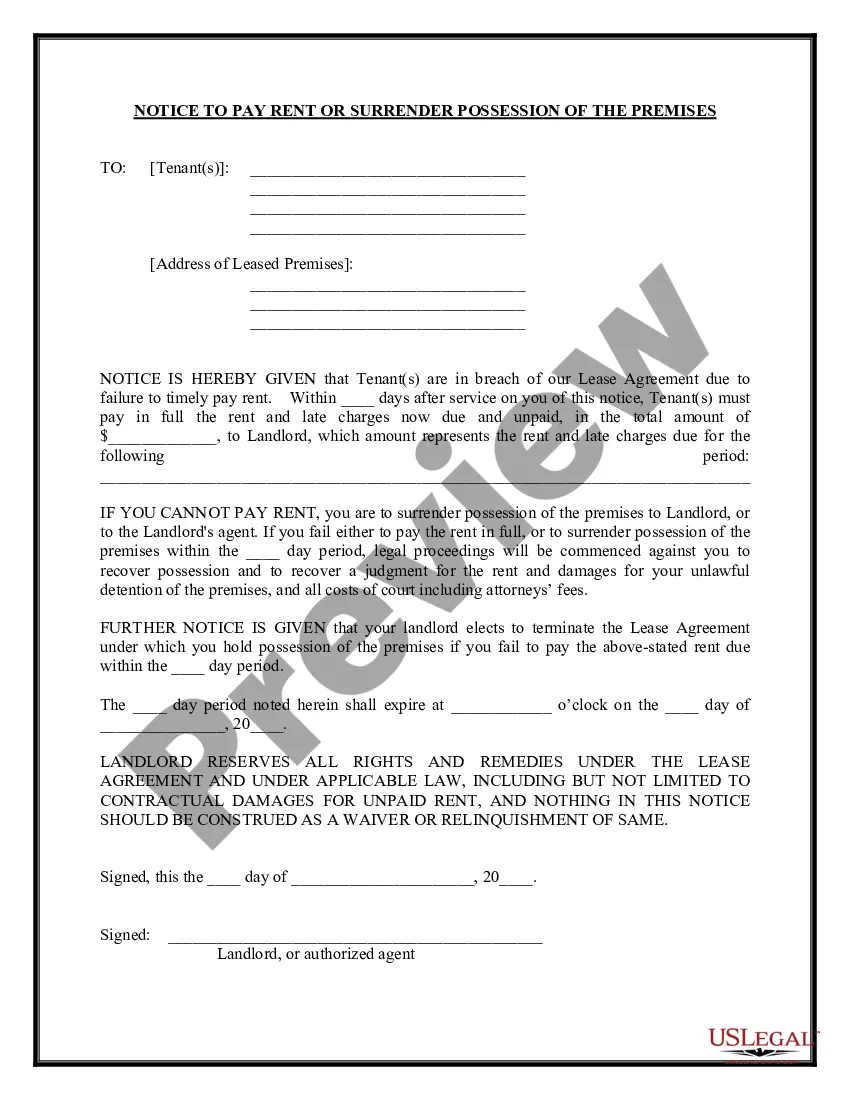
This letter from tenant to landlord containing notice to withdraw retaliatory rent increase is a legal document that informs the landlord that they are prohibited from increasing a tenant's rent in retaliation for the tenant's actions. This form is crucial for tenants who believe that a rent increase is a retaliatory response to their complaints or actions regarding housing conditions or legal rights.
Form components explained
- Tenant's information: Includes name and contact details of the tenant.
- Landlord's information: Name and address of the landlord.
- Date of notice: The date when the letter is issued.
- Statement of rights: Explanation of the tenant's rights under state housing laws.
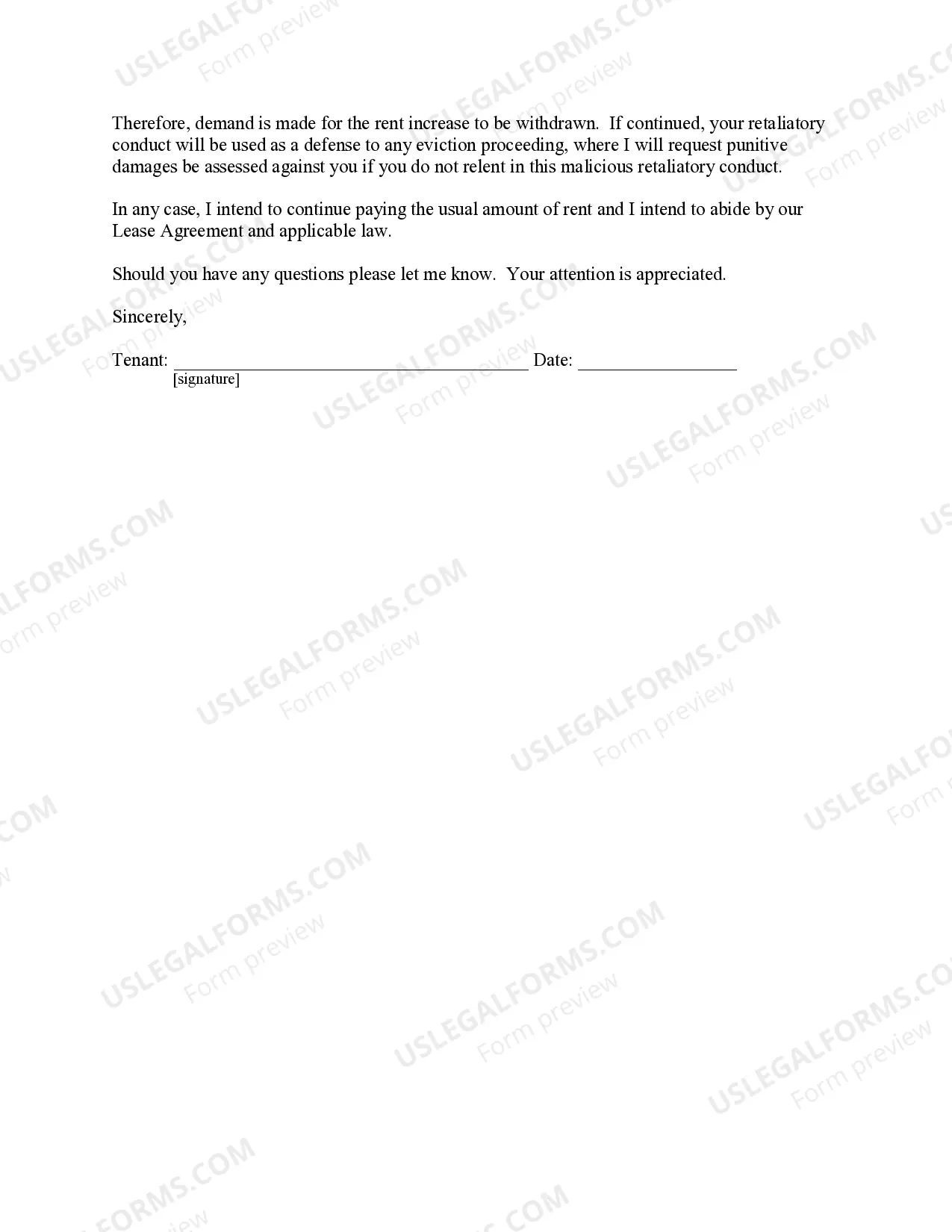
- Intent to pay rent: Affirmation that the tenant plans to continue paying rent as per the lease agreement.
- Signature: Space for tenant's signature and date to finalize the notice.
When this form is needed
You should use this form when you receive a notice of a rent increase that you suspect is retaliation for your complaints about housing conditions or participation in tenant rights activities. This form allows you to formally communicate your objections and protect your rights as a tenant.
Who can use this document
- Current tenants who have experienced retaliatory rent increases.
- Individuals involved in tenant organizations advocating for housing rights.
- Tenants who have reported housing code violations to government agencies.
Instructions for completing this form
- Enter your name and contact information at the beginning of the letter.
- Provide the landlordâs name and address clearly.
- Indicate the date of the notice for record keeping.
- Clearly state your intention to contest the rent increase due to perceived retaliatory motives.
- Sign and date the letter to validate your notice.
Does this document require notarization?
This form does not typically require notarization to be legally valid. However, some jurisdictions or document types may still require it. US Legal Forms provides secure online notarization powered by Notarize, available 24/7 for added convenience.
Get your form ready online
Our built-in tools help you complete, sign, share, and store your documents in one place.
Make edits, fill in missing information, and update formatting in US Legal Forms—just like you would in MS Word.
Download a copy, print it, send it by email, or mail it via USPS—whatever works best for your next step.
Sign and collect signatures with our SignNow integration. Send to multiple recipients, set reminders, and more. Go Premium to unlock E-Sign.
If this form requires notarization, complete it online through a secure video call—no need to meet a notary in person or wait for an appointment.
We protect your documents and personal data by following strict security and privacy standards.

Make edits, fill in missing information, and update formatting in US Legal Forms—just like you would in MS Word.

Download a copy, print it, send it by email, or mail it via USPS—whatever works best for your next step.

Sign and collect signatures with our SignNow integration. Send to multiple recipients, set reminders, and more. Go Premium to unlock E-Sign.

If this form requires notarization, complete it online through a secure video call—no need to meet a notary in person or wait for an appointment.

We protect your documents and personal data by following strict security and privacy standards.
Common mistakes to avoid
- Failing to clearly state the retaliatory actions taken by the landlord.
- Not including the date of the notice.
- Leaving out necessary signatures.
- Failing to make a copy for your records.
Why complete this form online
- Immediate access and convenience to fill out the form at your own pace.
- Editable format allows you to customize the letter according to your situation.
- Reliability from using templates drafted by licensed attorneys.
Legal use & context
- This form serves as evidence of your notification to the landlord about the retaliatory rent increase.
- Using this form may help protect your rights as a tenant under state laws regarding unlawful rental practices.
Summary of main points
- The form addresses retaliatory rent increases and asserts tenant rights.
- It is essential for tenants to document any communication regarding rent issues.
- Understanding local regulations can help ensure appropriate use of this form.
Looking for another form?
Form popularity
FAQ
Month-to-month If rent is paid on a month-to-month basis, a landlord must provide the tenant with a 30-Day Notice to Quit. Week-to-week If rent is paid on a week-to-week basis, a landlord must provide the tenant with a 7-Day Notice to Quit.
Research the Rental Market. Rental markets rise and fall and with it rent prices go up and down. Consider the Season. Calculate If It's Financially Worth It to Negotiate Rent. Consider How Close You Are to a Vacancy. Offer Incentives Instead. Next Steps.
The Alabama Landlord Notice to Vacate does not evict the tenant or terminate the Alabama Lease Agreement.In most states, a 30 Day Notice to Vacate is sufficient if the tenant does not have a lease.
I am writing to make you a request to reduce my rental obligation each month until the economy improves. Honestly, it would be very difficult for me to continue doing business with the current rent and would be highly grateful if you could consider my request.
Tenants in the state of Alabama have the right to freedom from discrimination in housing-related activities. However, unlike most states, there is no statewide fair housing law that specifically protects tenants in Alabama. Instead, Alabama tenants must rely on protection under the Federal Fair Housing Act.
Step 1: Write a Cover Letter. Step 2: Provide a Summary of the Proposal. Step 3: Specify the Operations of the Tenant. Step 4: Present the Cost Summary. Step 5: List the Terms of the Contract. Step 6: Mention the Benefits.
Dear (property manager's name), I wanted to contact you today to ask if we could discuss lowering my rent. I love living here but lately, finances have been difficult and a slight reduction in rent would go a long way in helping. It's important to me to be a good and responsible tenant.
Ask the landlord if rent price is open to discussion. Highlight your strengths as a tenant. Inquire about extending the lease. Offer to end the lease in the summer. Research the property's value. Be open to compromise. Negotiate directly, follow up in writing.
If you think your landlord is violating the Fair Housing Act, you can get that landlord in trouble by filing a complaint at HUD.gov. Your remedy for breach of quiet enjoyment is to terminate the lease and move or sue in small claims court.