Alaska Last Will and Testament with All Property to Trust called a Pour Over Will
What is this form?
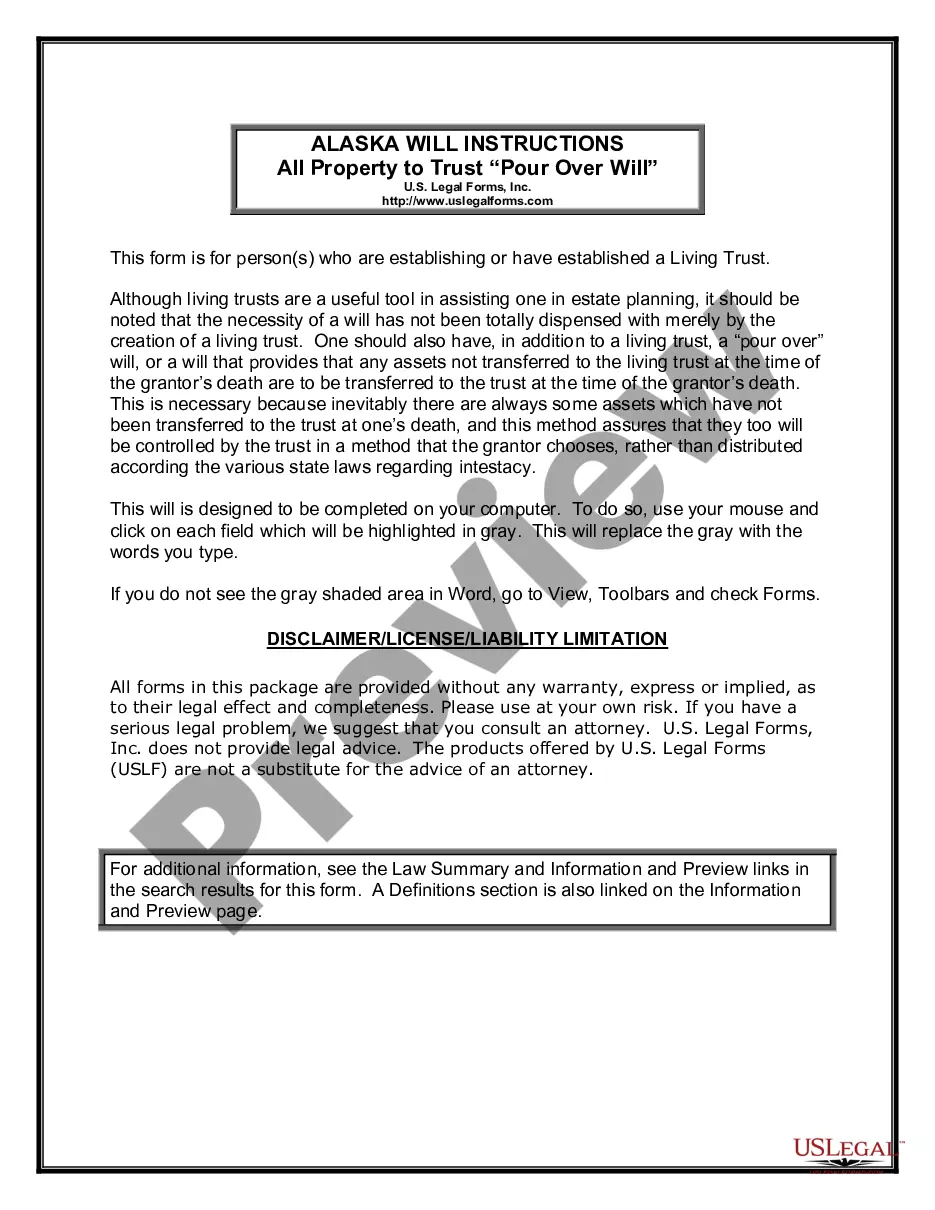
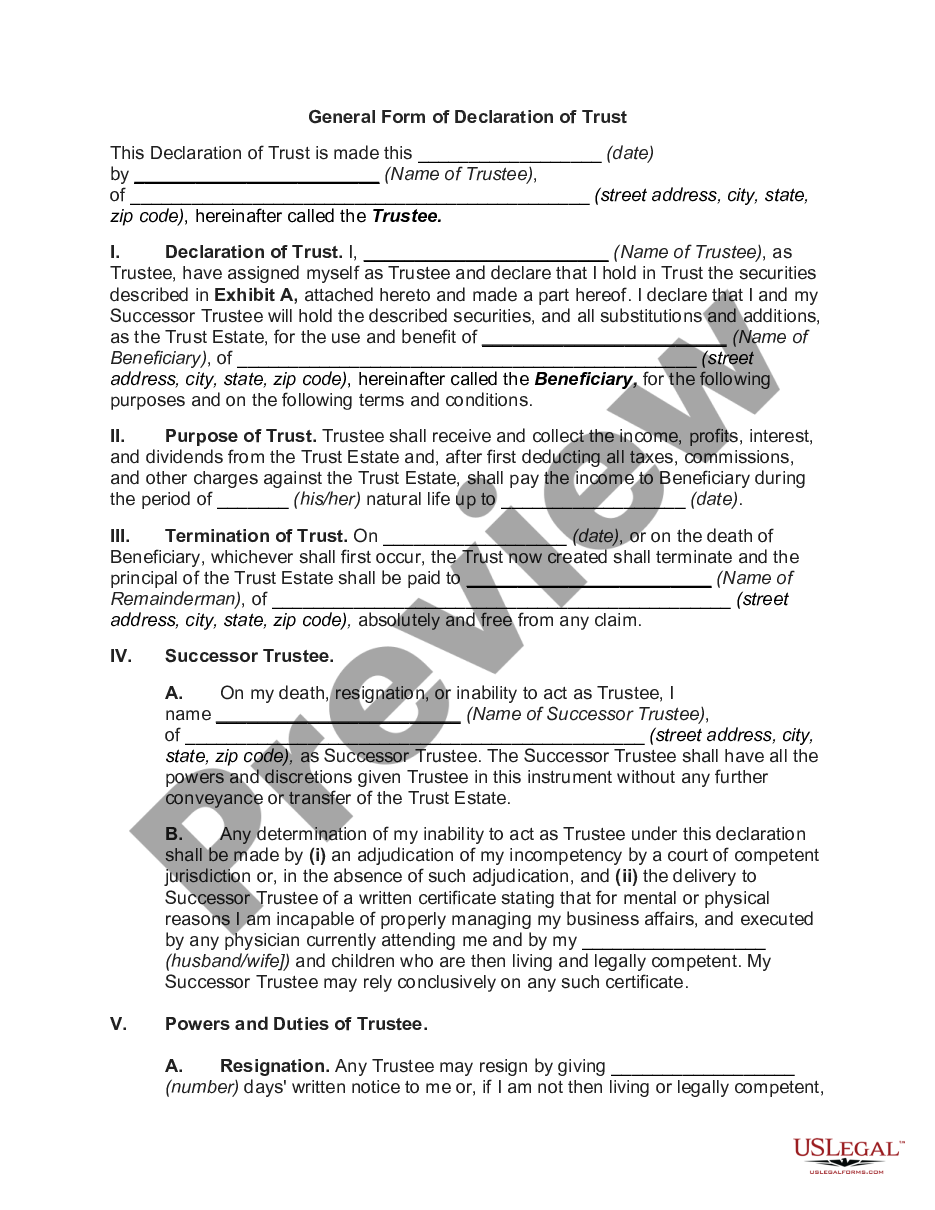
The Last Will and Testament with All Property to Trust, commonly known as a Pour Over Will, is a legal document that directs any assets not already transferred to a living trust to be passed to that trust upon your death. This form complements a living trust, ensuring that any property you own at the time of your death automatically transfers into the trust, facilitating smoother estate management and avoiding intestate distribution laws.
Form components explained
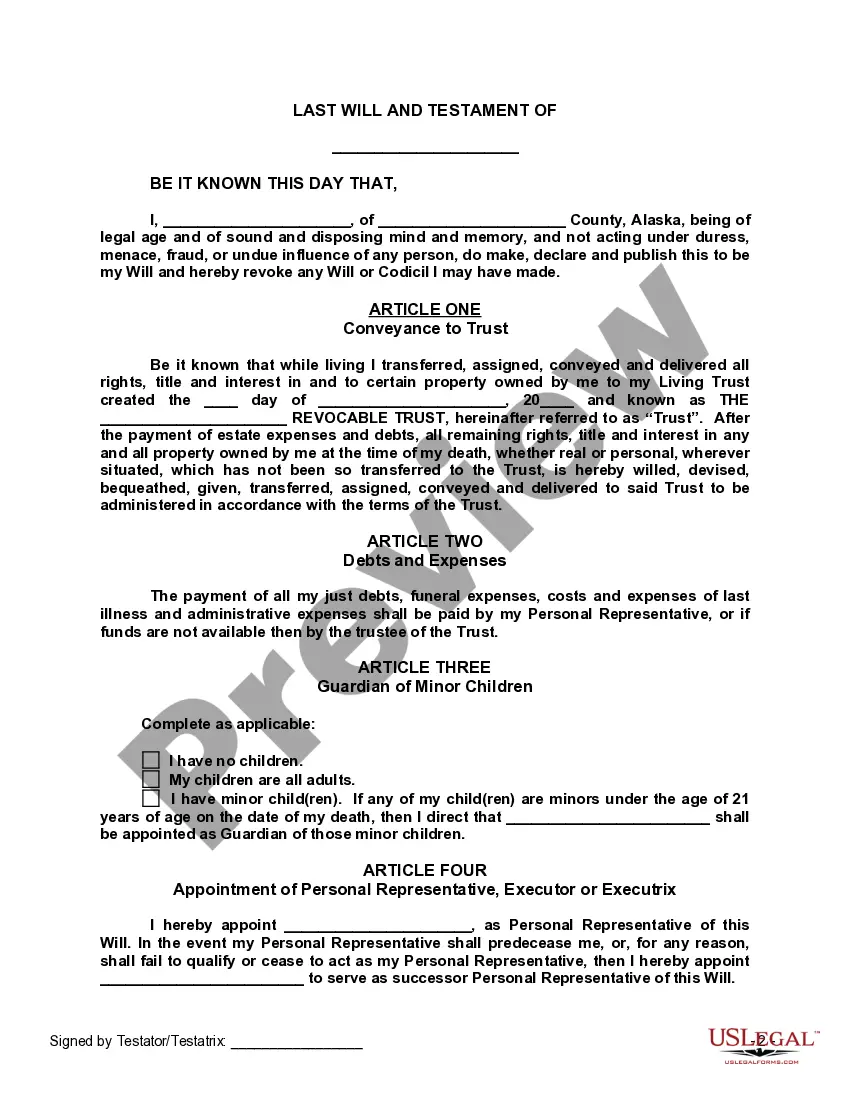
- Conveyance to Trust: Specifies that all assets should be transferred to the living trust upon death.
- Debts and Expenses: Outlines how debts and final expenses will be paid from the estate.
- Guardian of Minor Children: Designates guardianship provisions for any minor children.
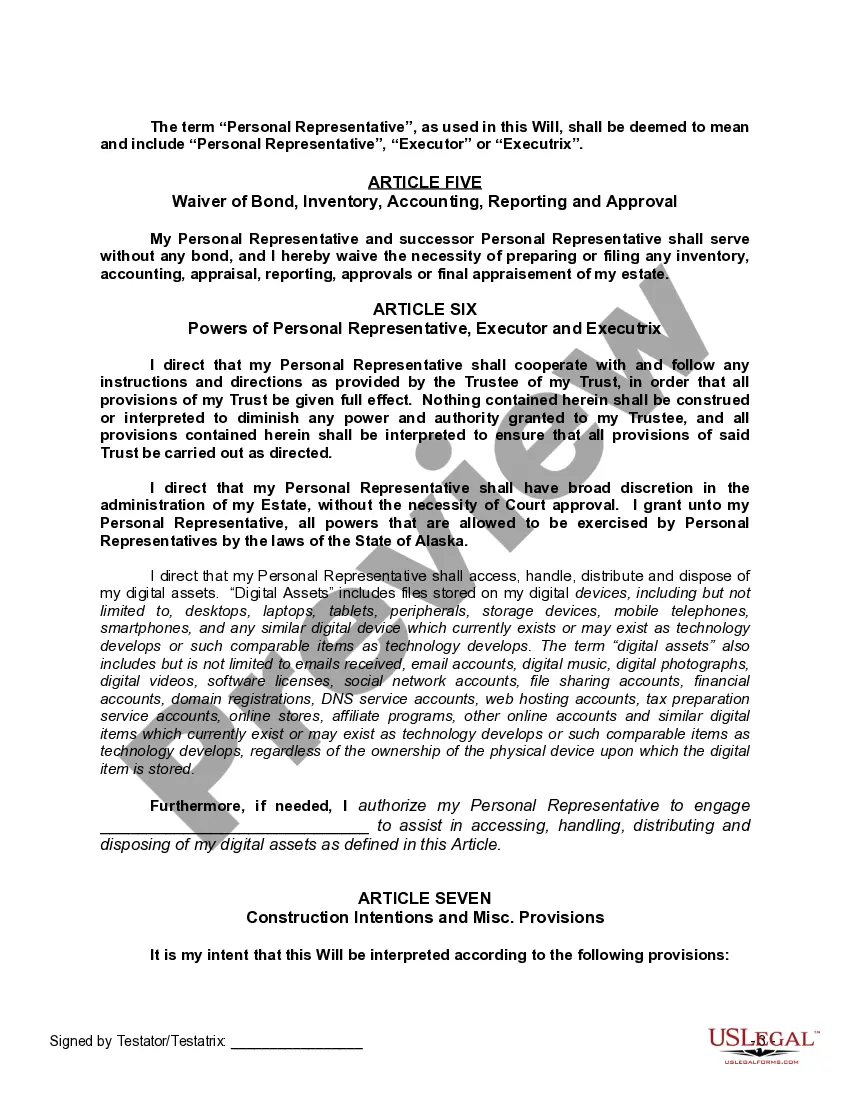
- Appointment of Personal Representative: Names the individual responsible for managing the estate.
- Waiver of Bond: Waives the requirement for bond and inventory by the Personal Representative.
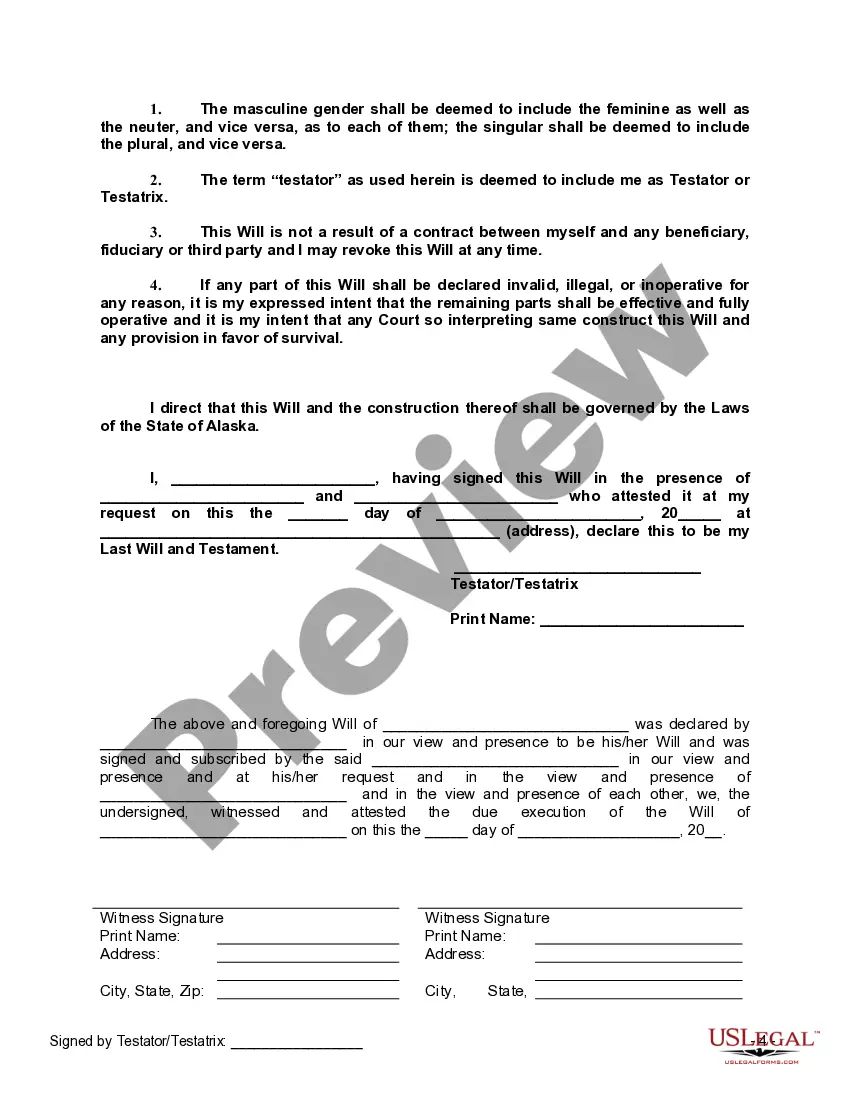
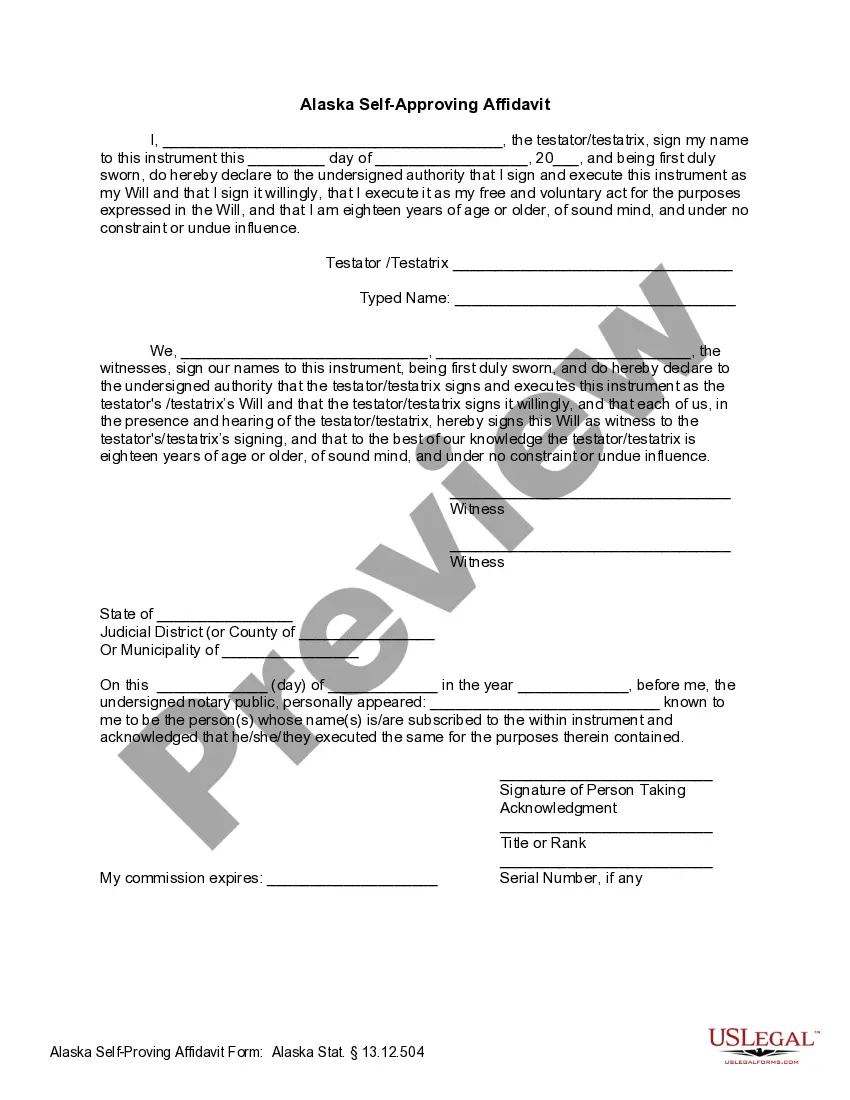
- Self-Proving Affidavit: Allows the will to be validated without requiring the witnesses to appear in court.




When to use this form
This form is appropriate when you have established or are in the process of creating a living trust. It ensures that any unused or overlooked assets will be directed into your trust following your death, thus maintaining the trust's control over your estate and avoiding potential legal complications that may arise from state intestacy laws.
Who needs this form
- Individuals who have created or are planning to create a living trust.
- People wanting to ensure all property is managed according to their wishes after death.
- Those looking for a simple and effective way to manage estate assets and responsibilities.
Steps to complete this form
- Identify the parties involved, including the testator and the trust.
- Fill in the specified details in each section, including property descriptions and personal representative information.
- Designate guardians for any minor children, if applicable.
- Sign the document in front of witnesses, as required by the laws of your state.
- Consider having the form notarized to further validate its authenticity.
Does this form need to be notarized?
This document requires notarization to meet legal standards. US Legal Forms provides secure online notarization powered by Notarize, allowing you to complete the process through a verified video call, available 24/7.
Get your form ready online
Our built-in tools help you complete, sign, share, and store your documents in one place.
Make edits, fill in missing information, and update formatting in US Legal Forms—just like you would in MS Word.
Download a copy, print it, send it by email, or mail it via USPS—whatever works best for your next step.
Sign and collect signatures with our SignNow integration. Send to multiple recipients, set reminders, and more. Go Premium to unlock E-Sign.
If this form requires notarization, complete it online through a secure video call—no need to meet a notary in person or wait for an appointment.
We protect your documents and personal data by following strict security and privacy standards.

Make edits, fill in missing information, and update formatting in US Legal Forms—just like you would in MS Word.

Download a copy, print it, send it by email, or mail it via USPS—whatever works best for your next step.

Sign and collect signatures with our SignNow integration. Send to multiple recipients, set reminders, and more. Go Premium to unlock E-Sign.

If this form requires notarization, complete it online through a secure video call—no need to meet a notary in person or wait for an appointment.

We protect your documents and personal data by following strict security and privacy standards.
Typical mistakes to avoid
- Failing to keep the living trust and will updated with any changes in assets or family dynamics.
- Not completing the form in full, leaving out necessary details.
- Neglecting to sign the document with witnesses present, which could invalidate the will.
Benefits of using this form online
- Convenient access to legal form templates that can be customized to your needs.
- Step-by-step instructions to guide you through the completion process.
- Ability to download and store documents securely, ensuring easy retrieval.
Summary of main points
- A Pour Over Will ensures that all of your assets are directed to your living trust upon death.
- It is an essential part of estate planning that works in conjunction with a living trust.
- Complete it carefully, ensuring all necessary information is provided and witnessed properly.
Looking for another form?








Form popularity
FAQ
Contrary to popular belief, you do not need to have an attorney draft a will for you. Anyone can write this document on their own, and as long as it meets all of the legal requirements of the state, courts will recognize one you wrote yourself.
A handwritten or typed will can be created at no cost. Many online services set a price at less than $100 for a will. Most estate planners charge more than your average do-it-yourself service, Farrell says. For help with a will, an attorney will likely charge several hundred dollars or more.
Yes! Your Free Will Kit will be delivered to you at no-cost, no purchase necessary.
Include personal identifying information. Include a statement about your age and mental status. Designate an executor. Decide who will take care of your children. Choose your beneficiaries. List your funeral details. Sign and date your Last Will and Testament.
Find an online template or service. Make a list of your assets. Be specific about who gets what. If you have minor children, choose a guardian. Give instructions for your pet. Choose an executor. Name a 'residuary beneficiary' List your funeral preferences.
Choose an online legal services provider or locate a will template. Carefully consider your distribution wishes. Identify a personal representative/executor. Understand the requirements to make your will legal. Make sure someone else knows about your will. Consult a lawyer if you have a more complicated estate.
In most situations, a will template is an easy and inexpensive way to make sure your wishes are known and carried out. Most people can get everything they need by using a will template, with little cost or hassle.
The Free Last Will and Testament Template for Word is compatible with Word 2003 or later versions.
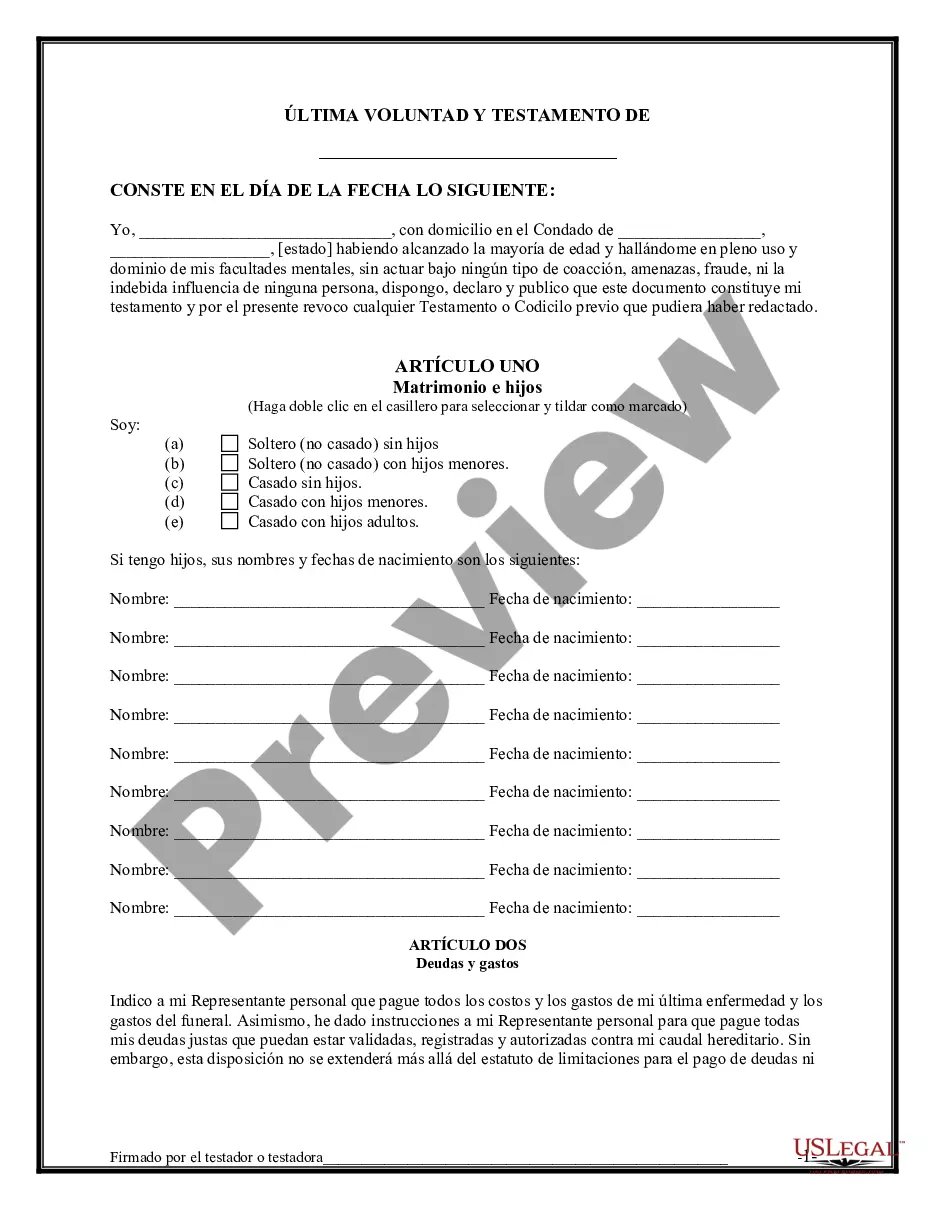
The form may be downloaded in fillable Adobe PDF, Rich Text Format, and Microsoft Word templates and should be signed by the testator and at least two (2) witnesses or a notary public (See your State's Probate Code).