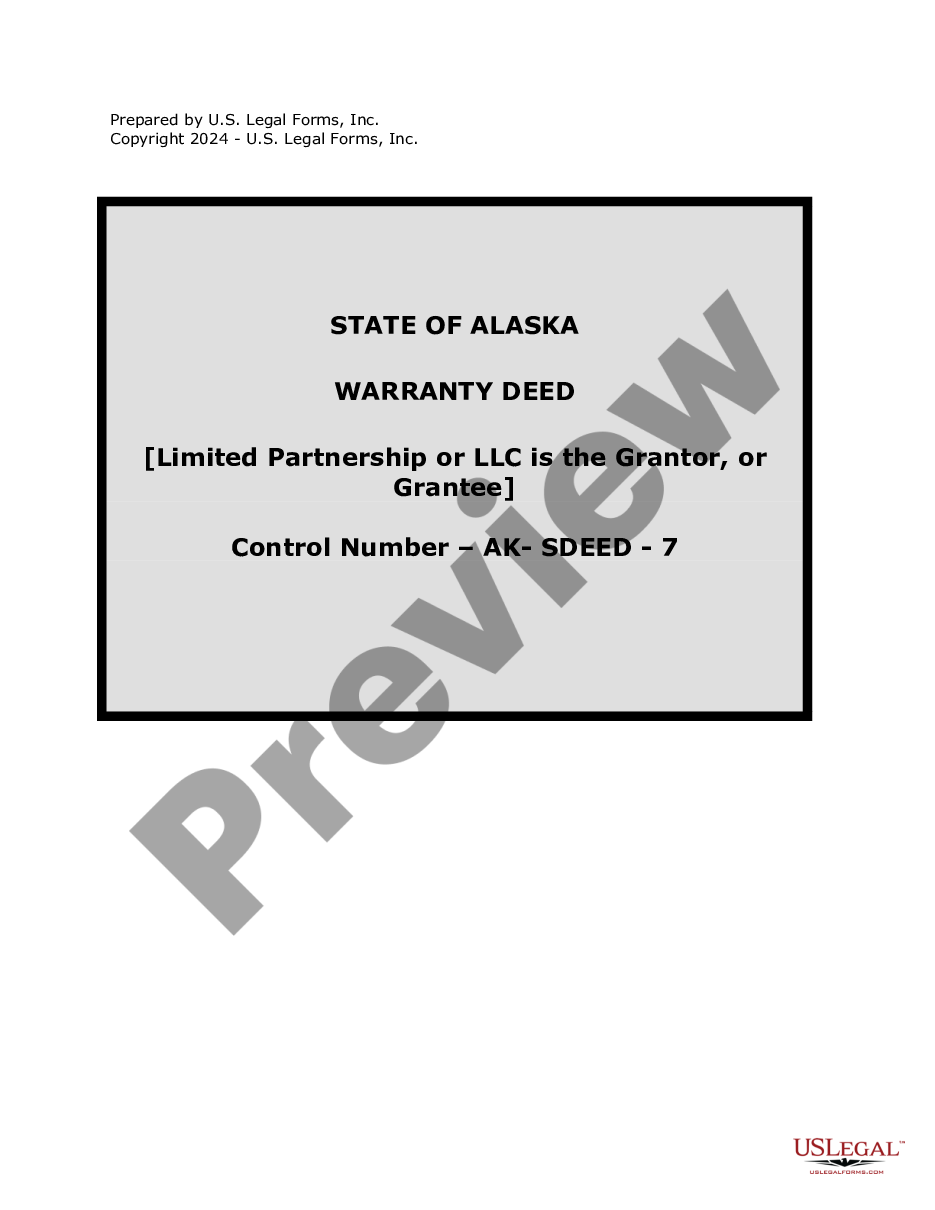
Alaska Warranty Deed from Limited Partnership or LLC is the Grantor, or Grantee
What is this form?
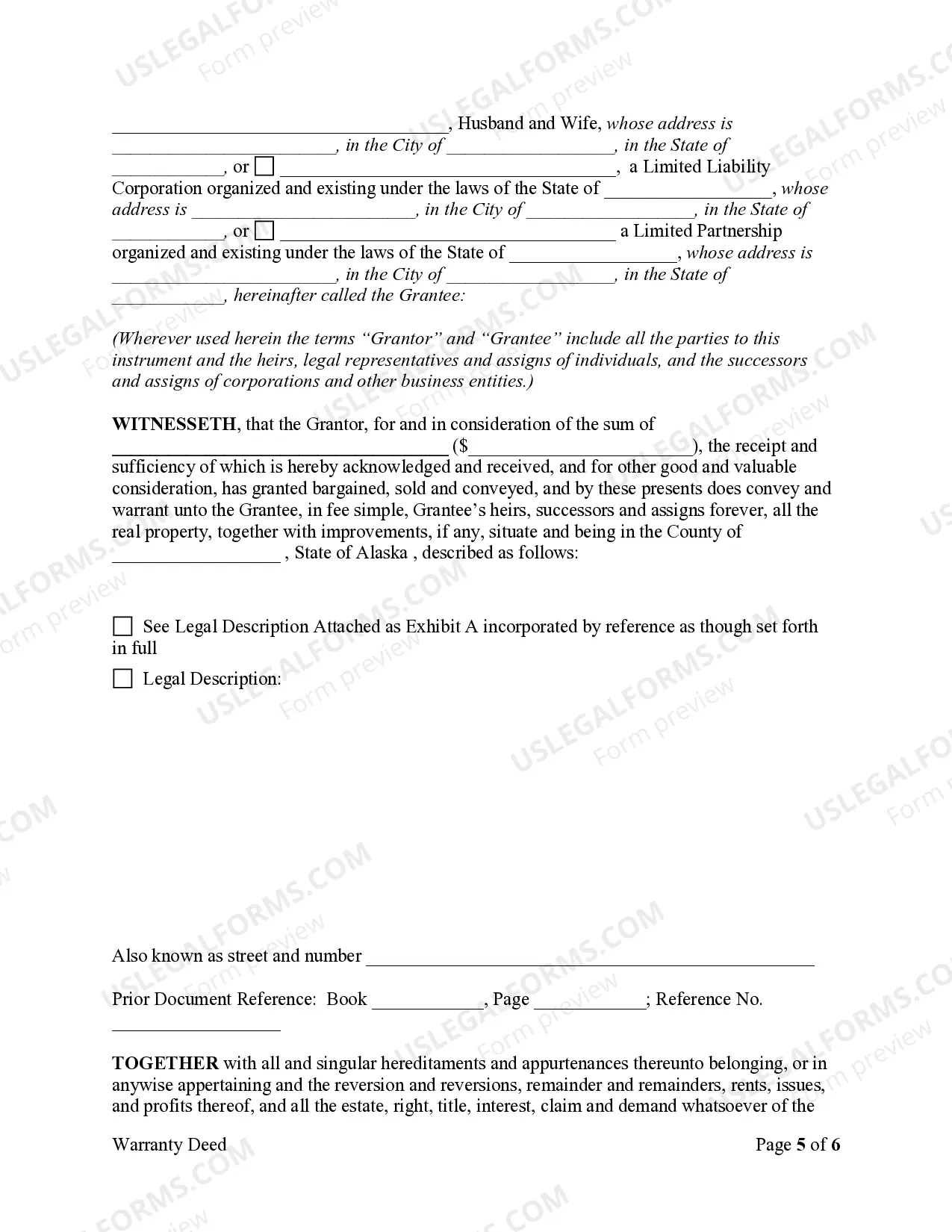
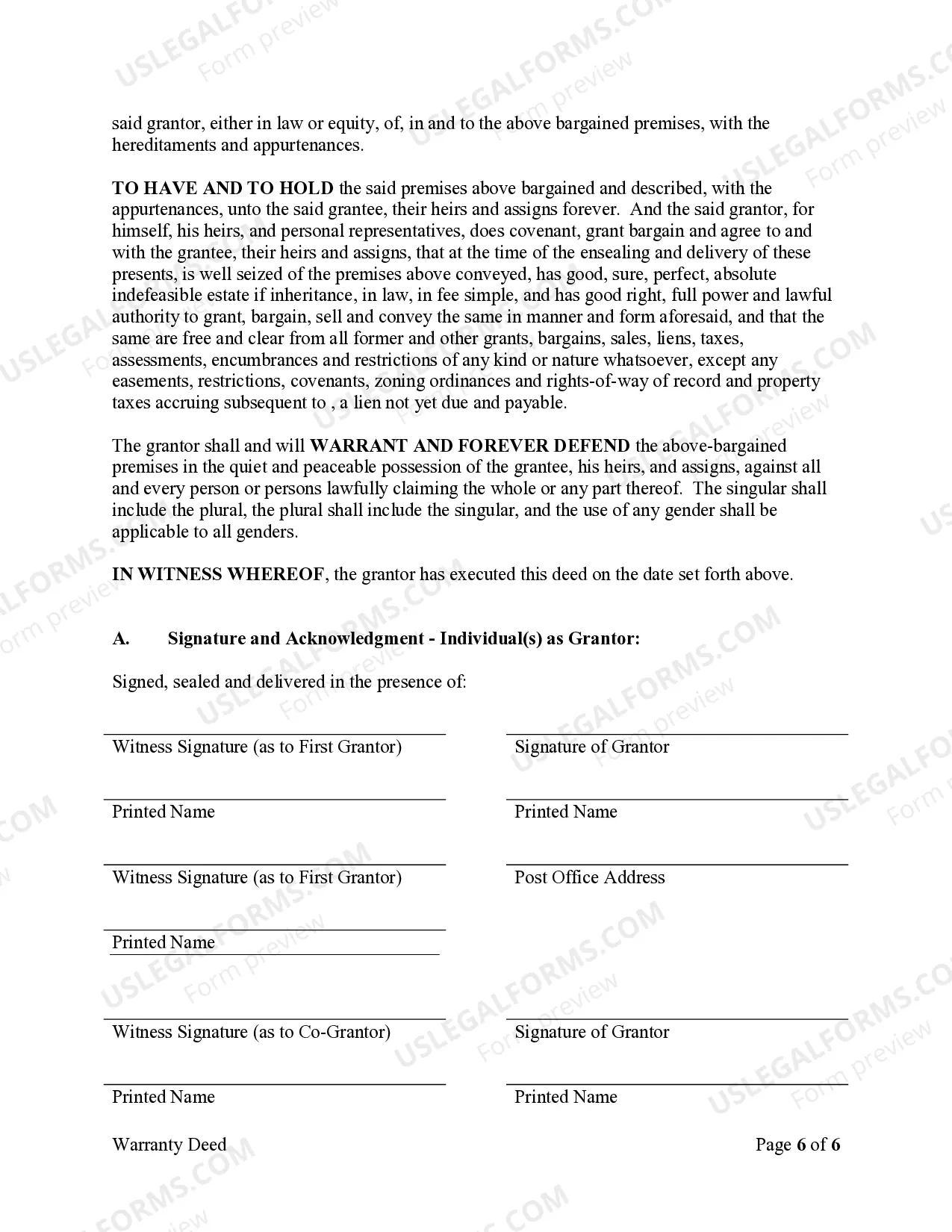
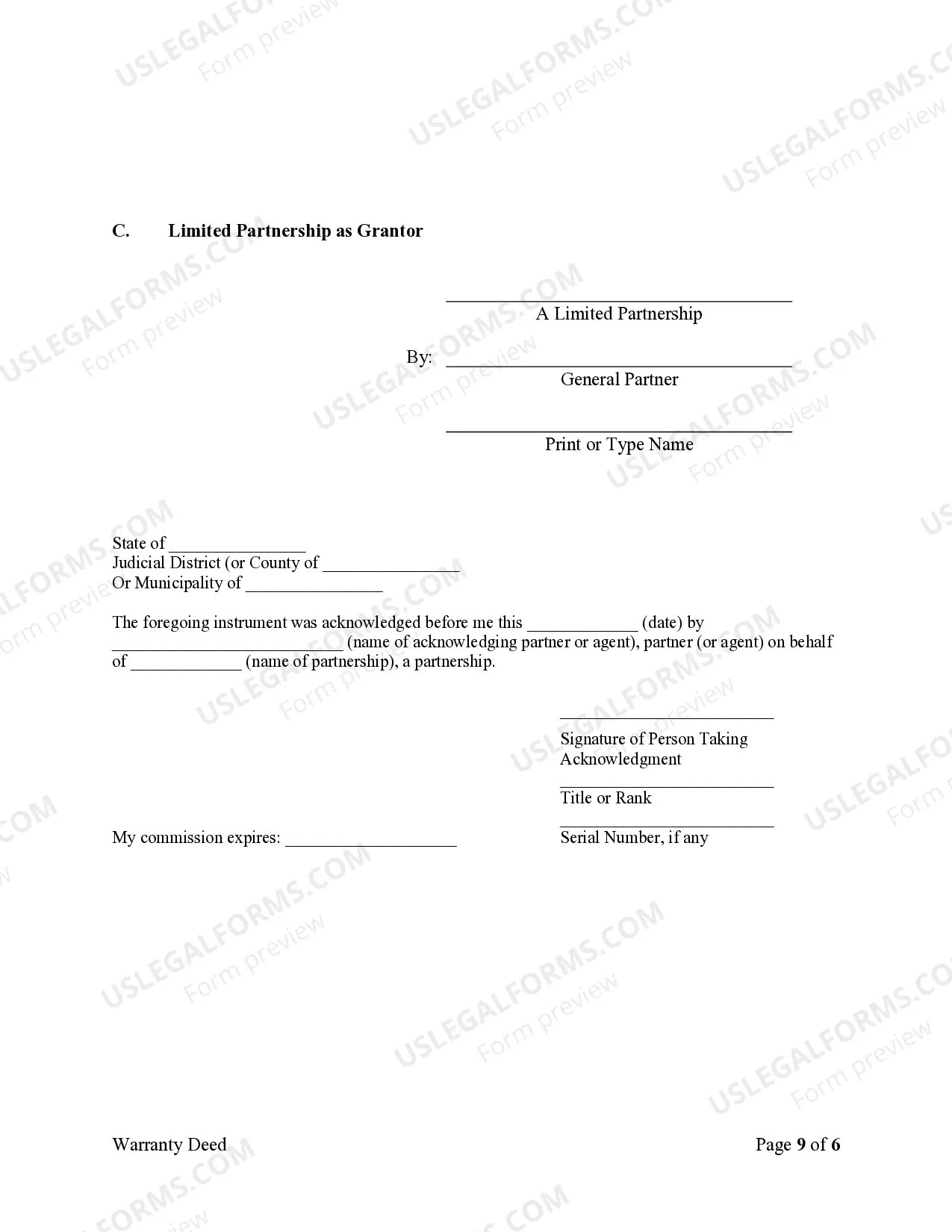
This Warranty Deed is a legal document used to transfer ownership of real property from a grantor, which may be a limited partnership or limited liability company (LLC), to a grantee. This form is essential for ensuring that the grantee receives clear title to the property, free of any encumbrances, thus providing them with legal protection against future claims. Unlike other property transfer forms, the Warranty Deed offers a guarantee regarding the ownership rights of the grantor.
What’s included in this form
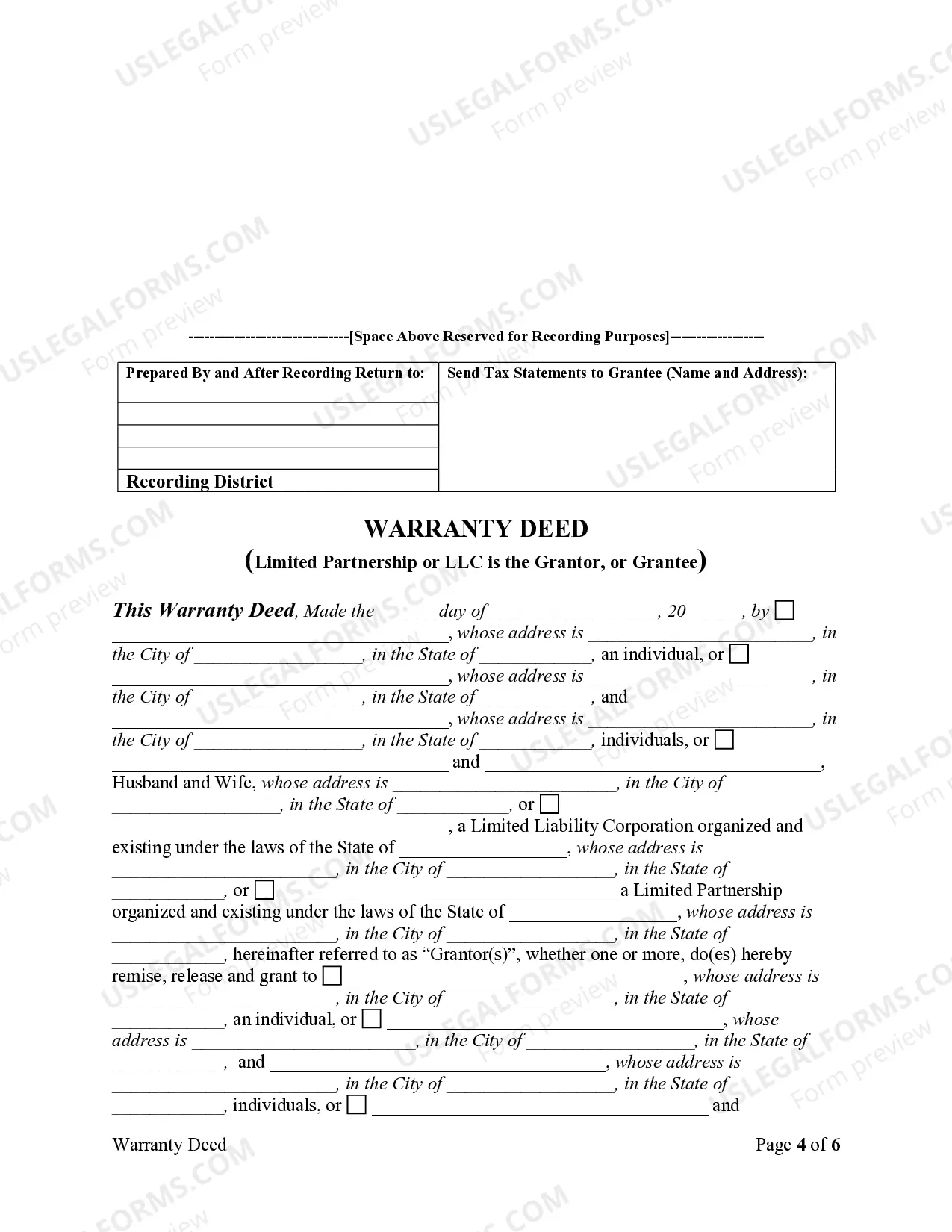
- Identification of the grantor(s) and grantee(s), including their addresses.
- Legal description of the property being conveyed, attached as an exhibit.
- Consideration amount that the grantor receives for the property.
- Warranties made by the grantor regarding the title of the property.
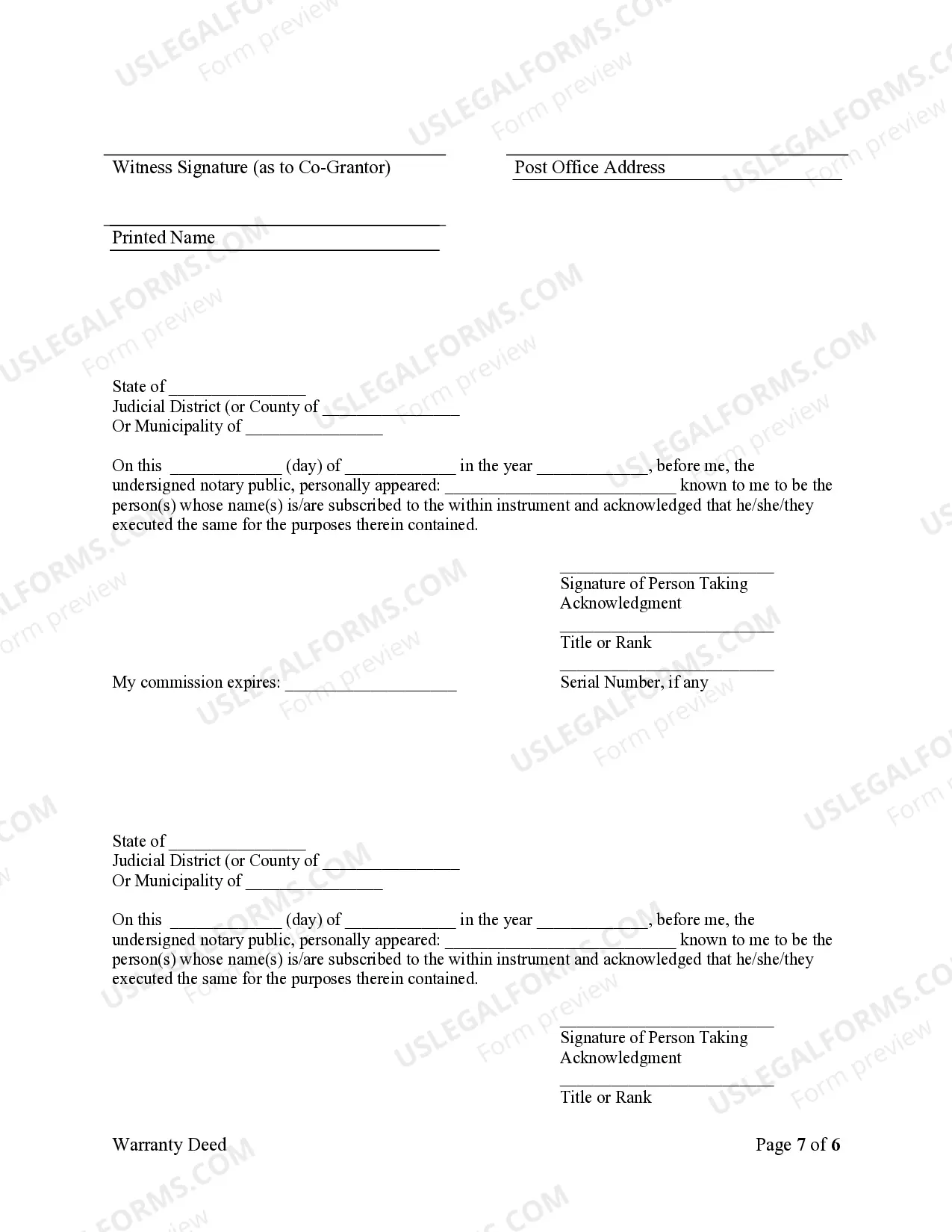
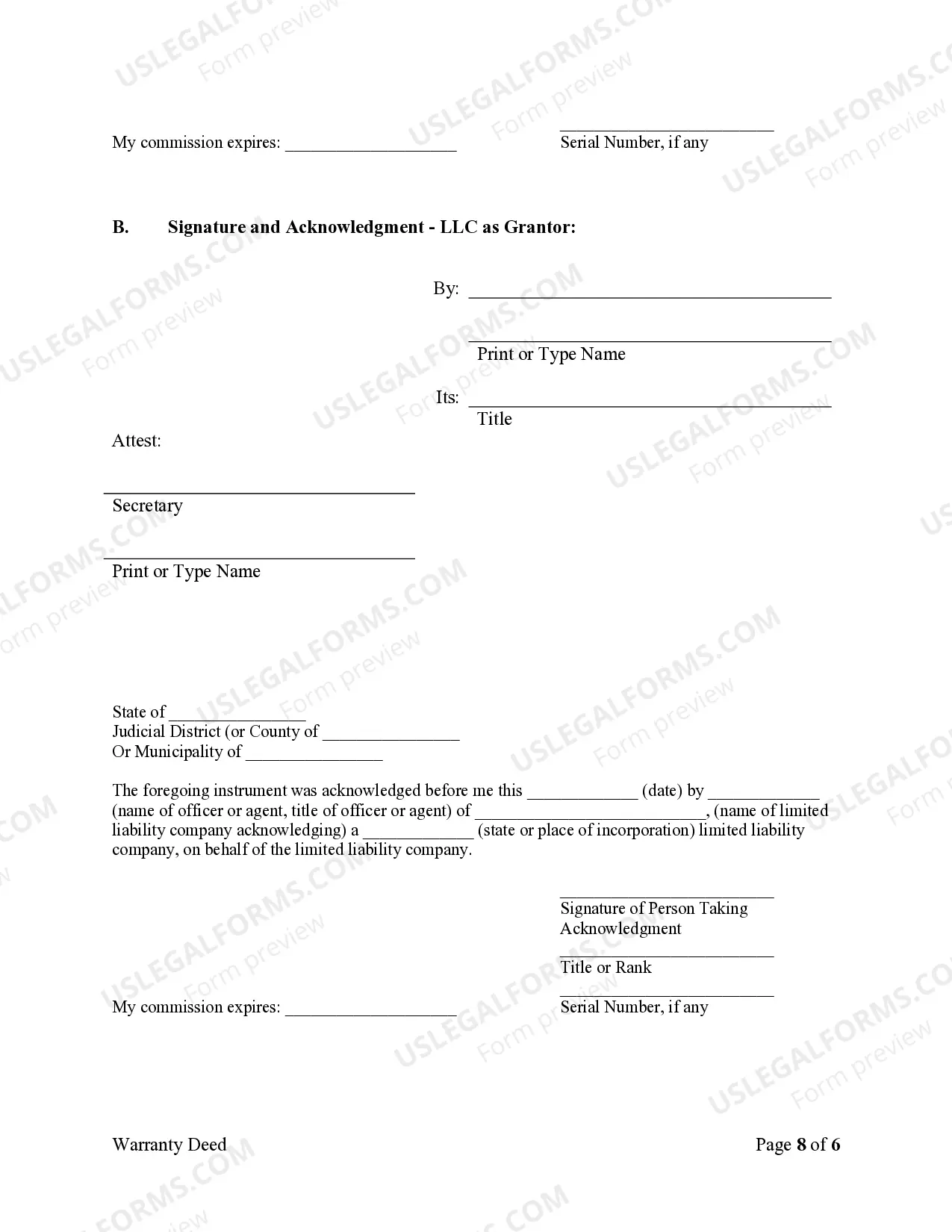
- Signatures of the grantor(s) along with witnesses, where applicable.




Situations where this form applies
This Warranty Deed should be used when a limited partnership or LLC is transferring ownership of real estate to another individual or entity. Common scenarios include property sales, inheritance settlements involving business entities, or the restructuring of ownership within a partnership or LLC. It is crucial to use this form when you want to ensure the grantee receives definitive protection against legal claims related to the property.
Intended users of this form
This Warranty Deed is intended for:
- Limited partnerships and LLCs that are transferring property ownership.
- Individuals or entities purchasing real estate from businesses.
- Real estate professionals involved in property transactions.
Completing this form step by step
- Identify and enter the names and addresses of the grantor(s) and grantee(s).
- Specify the property by including its legal description or attaching it as an exhibit.
- Fill in the date of the transaction and the consideration amount.
- Ensure all parties sign the document in front of a witness if required.
- File the completed Warranty Deed with the appropriate state or county office to record the transfer.
Does this document require notarization?
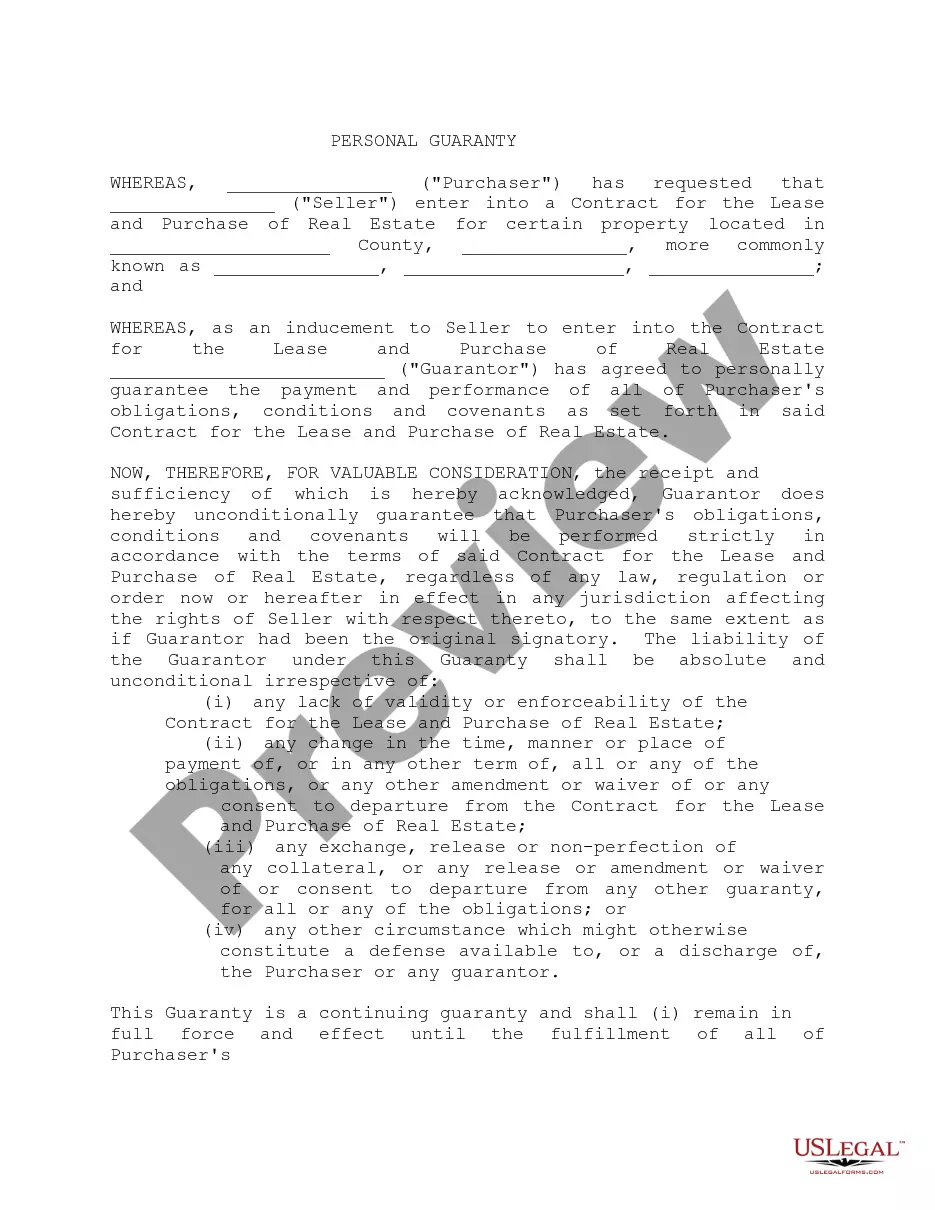
This form must be notarized to be legally valid. US Legal Forms provides secure online notarization powered by Notarize, allowing you to complete the process through a verified video call.
Get your form ready online
Our built-in tools help you complete, sign, share, and store your documents in one place.
Make edits, fill in missing information, and update formatting in US Legal Forms—just like you would in MS Word.
Download a copy, print it, send it by email, or mail it via USPS—whatever works best for your next step.
Sign and collect signatures with our SignNow integration. Send to multiple recipients, set reminders, and more. Go Premium to unlock E-Sign.
If this form requires notarization, complete it online through a secure video call—no need to meet a notary in person or wait for an appointment.
We protect your documents and personal data by following strict security and privacy standards.

Make edits, fill in missing information, and update formatting in US Legal Forms—just like you would in MS Word.

Download a copy, print it, send it by email, or mail it via USPS—whatever works best for your next step.

Sign and collect signatures with our SignNow integration. Send to multiple recipients, set reminders, and more. Go Premium to unlock E-Sign.

If this form requires notarization, complete it online through a secure video call—no need to meet a notary in person or wait for an appointment.

We protect your documents and personal data by following strict security and privacy standards.
Common mistakes
- Failing to include the legal description of the property, which can invalidate the deed.
- Not obtaining the necessary signatures from all grantors.
- Inadequately formatting the form, making it difficult to read or understand.
- Not recording the deed with the appropriate local authority, resulting in potential disputes.
Benefits of using this form online
- Convenience of downloading and completing the form from home or office.
- Editability allows for quick corrections and adjustments as needed.
- Access to attorney-drafted forms ensures reliability and compliance with legal standards.
- Immediate availability eliminates waiting for paperwork, enabling faster property transactions.
Looking for another form?



Form popularity
FAQ
The grantor is the person who is giving away the title or interest in the real property the borrower. The grantee is the person receiving the property.
Typically, the lender will provide you with a copy of the deed of trust after the closing. The original warranty deeds are often mailed to the grantee after they are recorded. These are your original copies and should be kept in a safe place, such as a fireproof lockbox or a safe deposit box at a financial institution.
No a will does not override a deed. A will only acts on death. The deed must be signed during the life of the owner. The only assets that pass through the will are assets that are in the name of the decedent only.
The grantor is the owner, and the grantee is the buyer who is acquiring an equitable interest but not bare legal interest in a property. It's essential that a deed clearly states the grantee, grantor, and a description of the property involved in the transaction.
A warranty deed can be revoked. In most situations, the person signing the deed needs the cooperation of the person who received the deed to revoke it.If the deed was prepared for a property transfer as part of a typical sale, though, you probably will have to take legal action to revoke the deed.
The grantee is the party who receives the transfer of the property after, in the case of sale, a closing occurs.
A statutory warranty deed is different from a warranty deed because it is a shorter form made available through your state's statutes and it may not outright list the promise that the title is guaranteed to be clear. Instead, because it is a statutory form, this guarantee is implied and is still legally enforceable.
A grantee is the recipient of a grant, scholarship, or some other asset such as real estate property. In contrast, a grantor is a person or entity that conveys ownership of an asset to another person or entity: the grantee.
The Grantor is any person conveying or encumbering, whom any Lis Pendens, Judgments, Writ of Attachment, or Claims of Separate or Community Property shall be placed on record. The Grantor is the seller (on deeds), or borrower (on mortgages). The Grantor is usually the one who signed the document.