Alaska Complex Will with Credit Shelter Marital Trust for Large Estates
Understanding this form
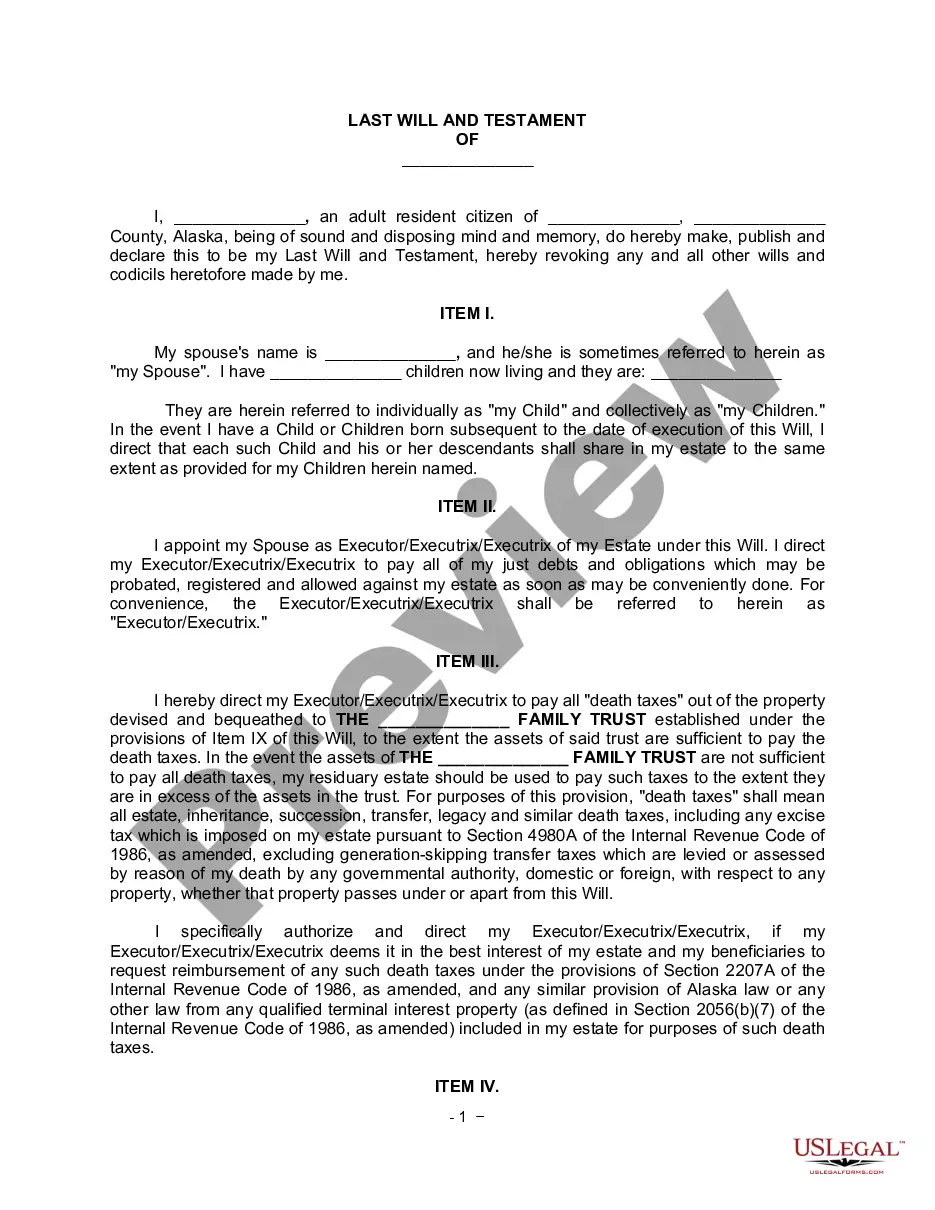
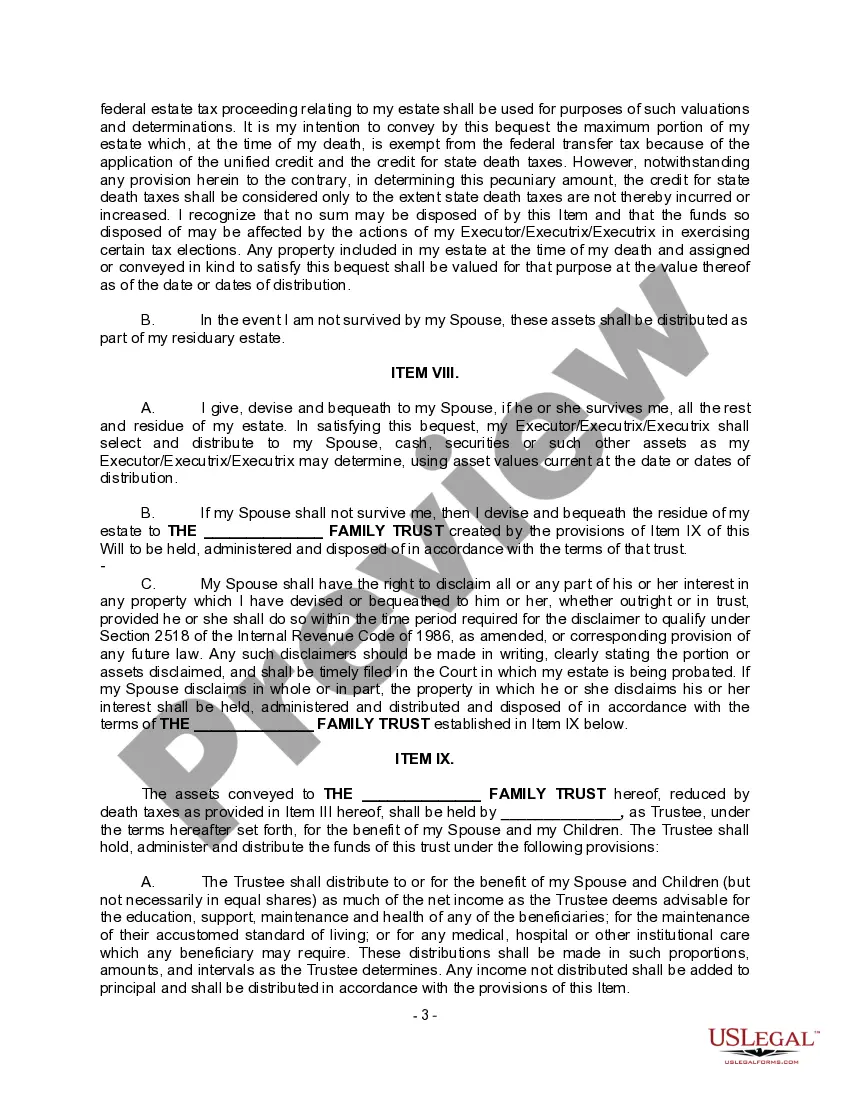
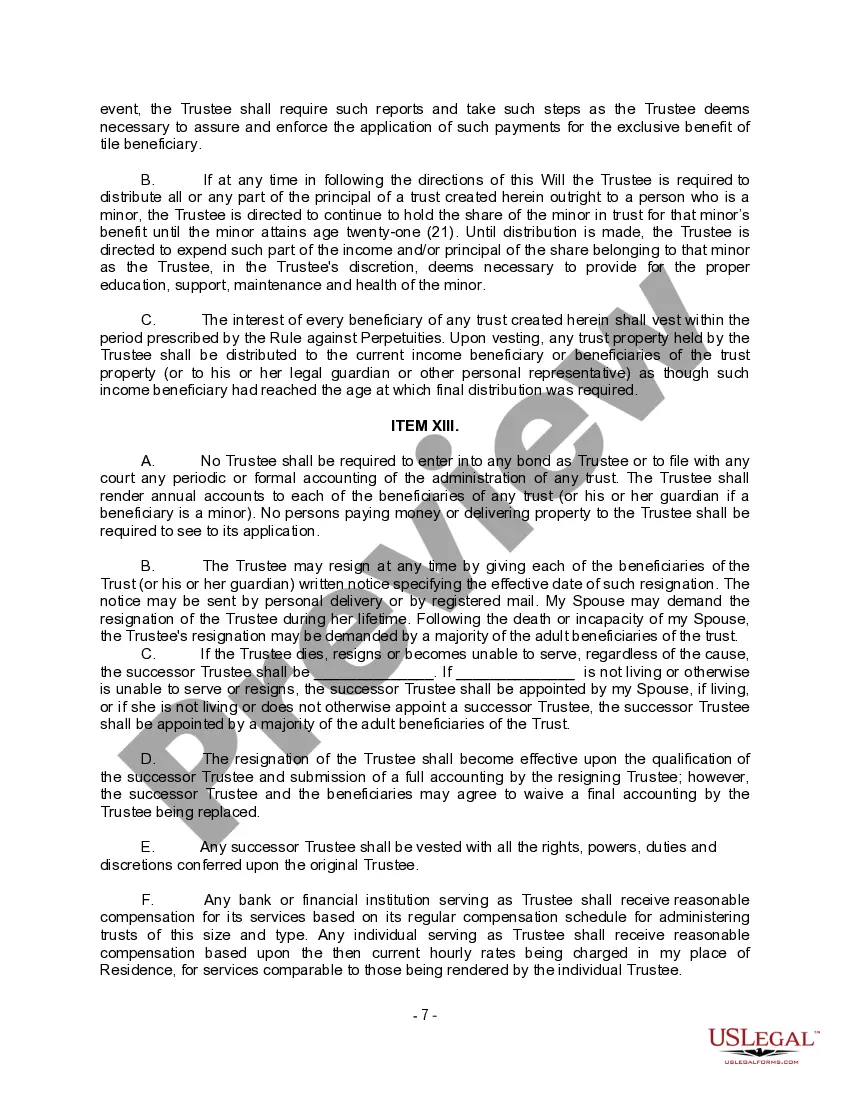
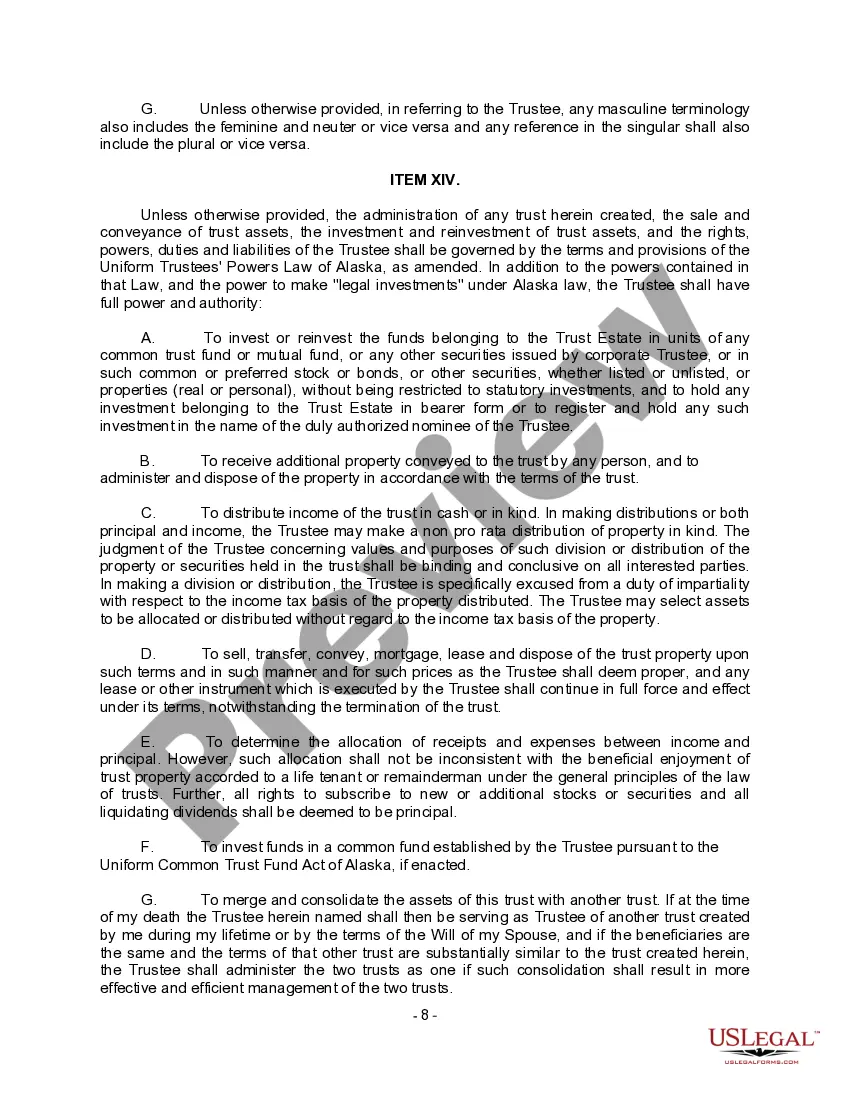
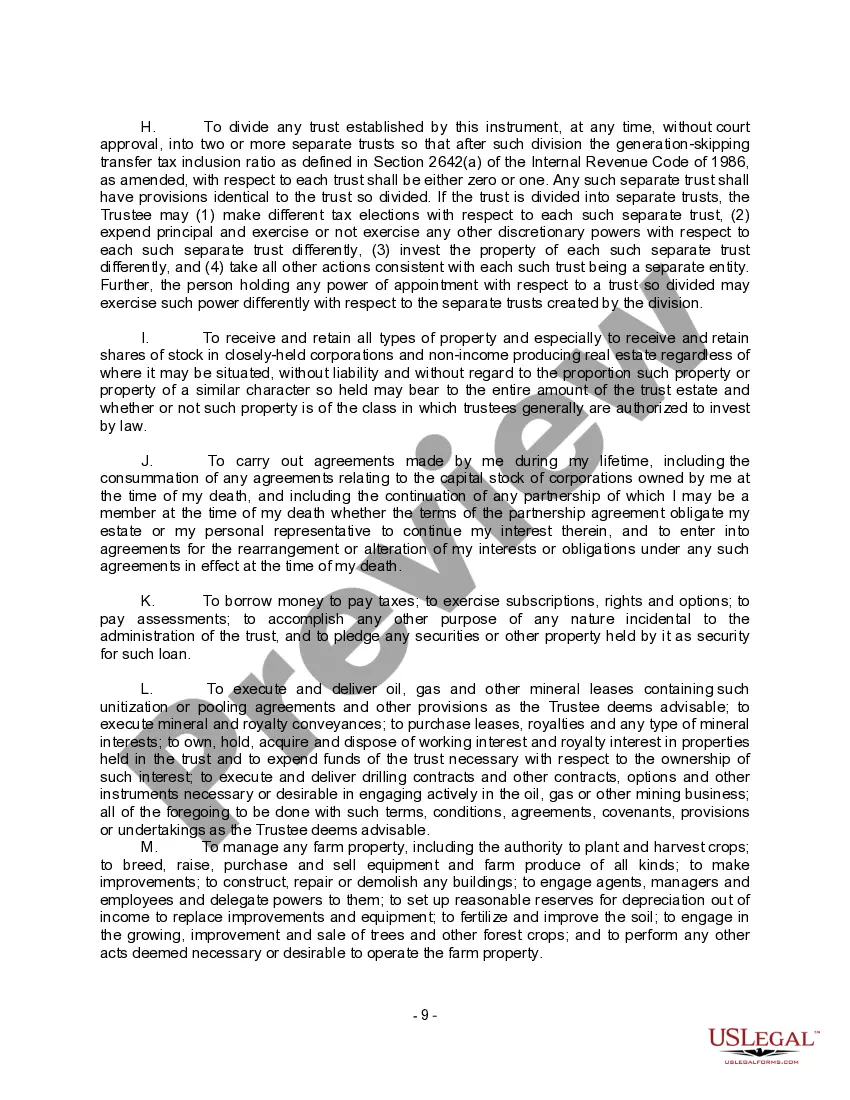
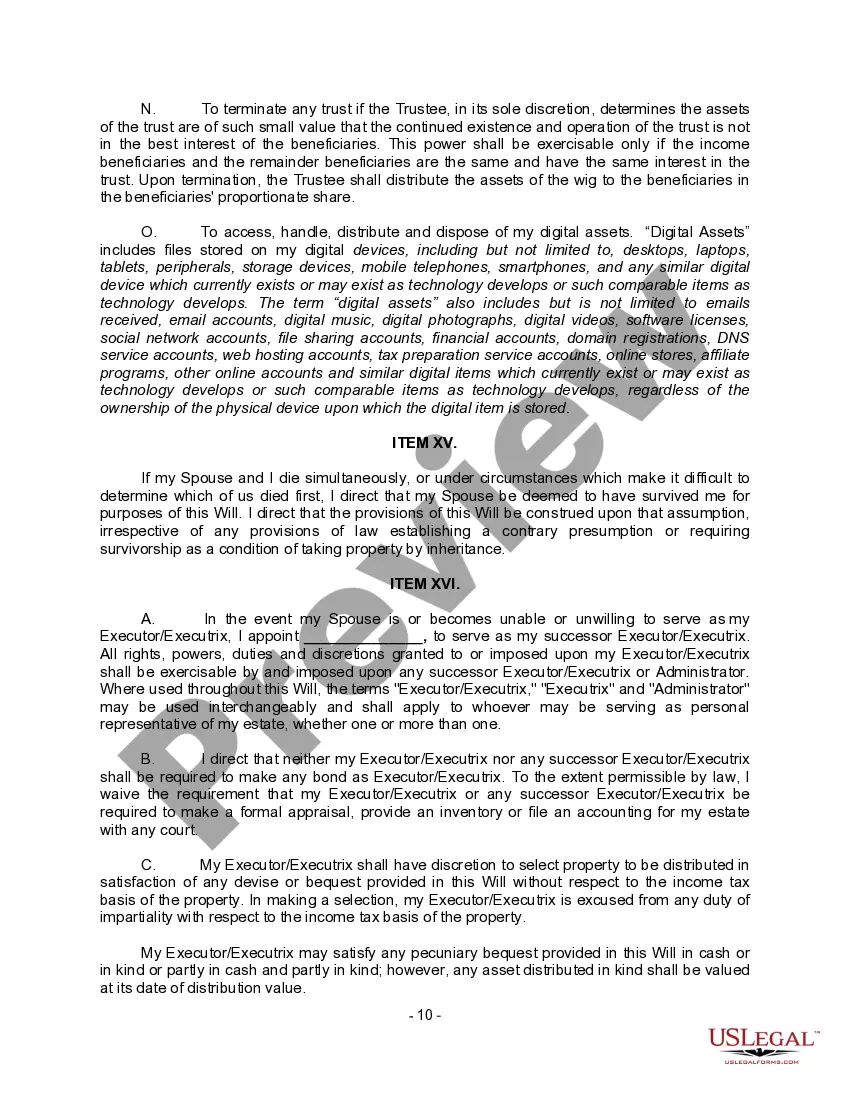
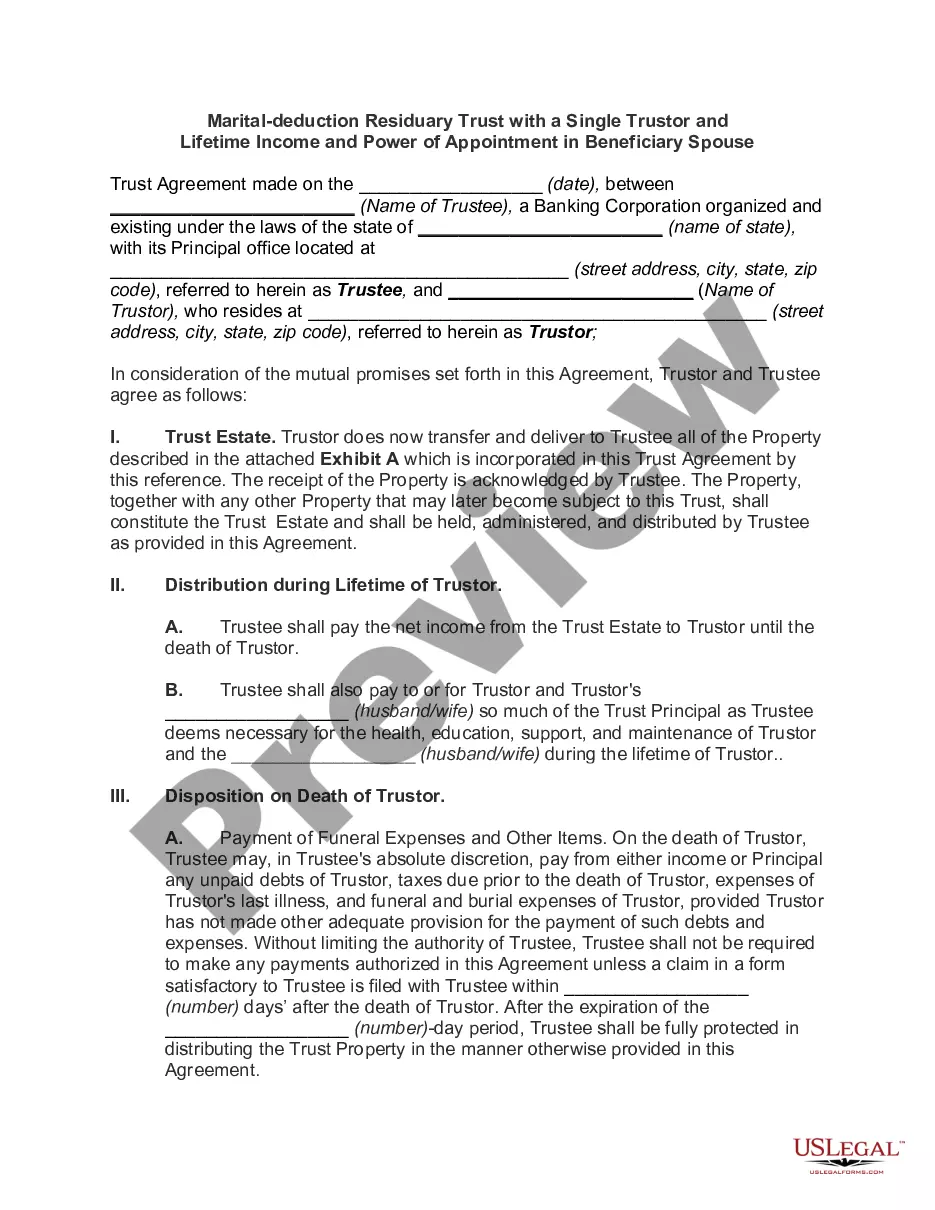
The Complex Will with Credit Shelter Marital Trust for Large Estates is a comprehensive legal document designed for couples seeking to manage their estate in a tax-efficient manner. This form allows individuals to maximize the property that can pass to their heirs without incurring estate taxes. By establishing a credit shelter trust, a designated amount of the estate can be set aside tax-free, benefiting both the surviving spouse and the children. This form differentiates itself by combining an advanced estate distribution strategy with a trust arrangement, facilitating better financial legacies for families with significant assets.
Key components of this form
- Identification of the Testator and their family details, including spouse and children.
- Appointment of an executor to manage the estate after death.
- Directives on payment of debts and death taxes from the estate.
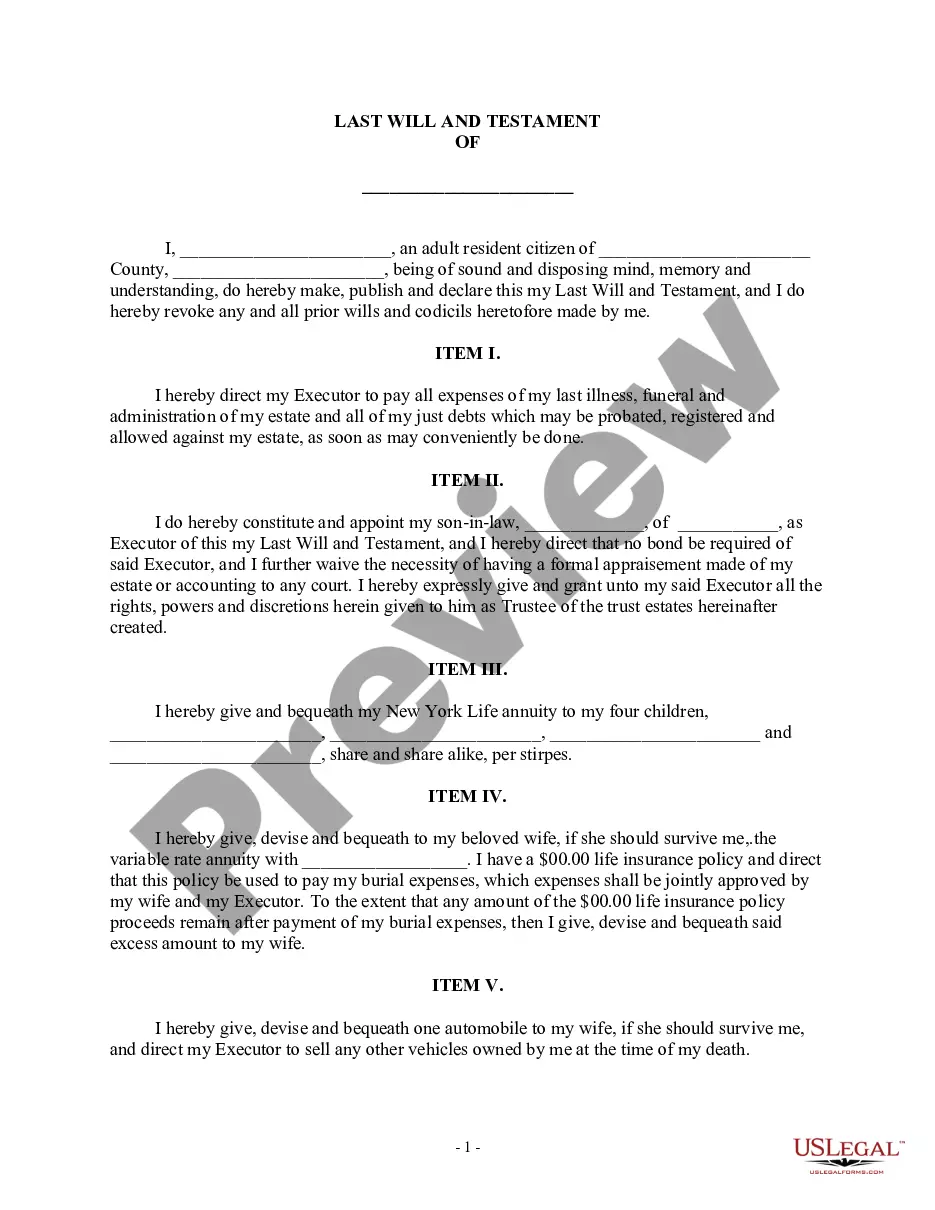
- Bequests of specific assets, including property and personal belongings.
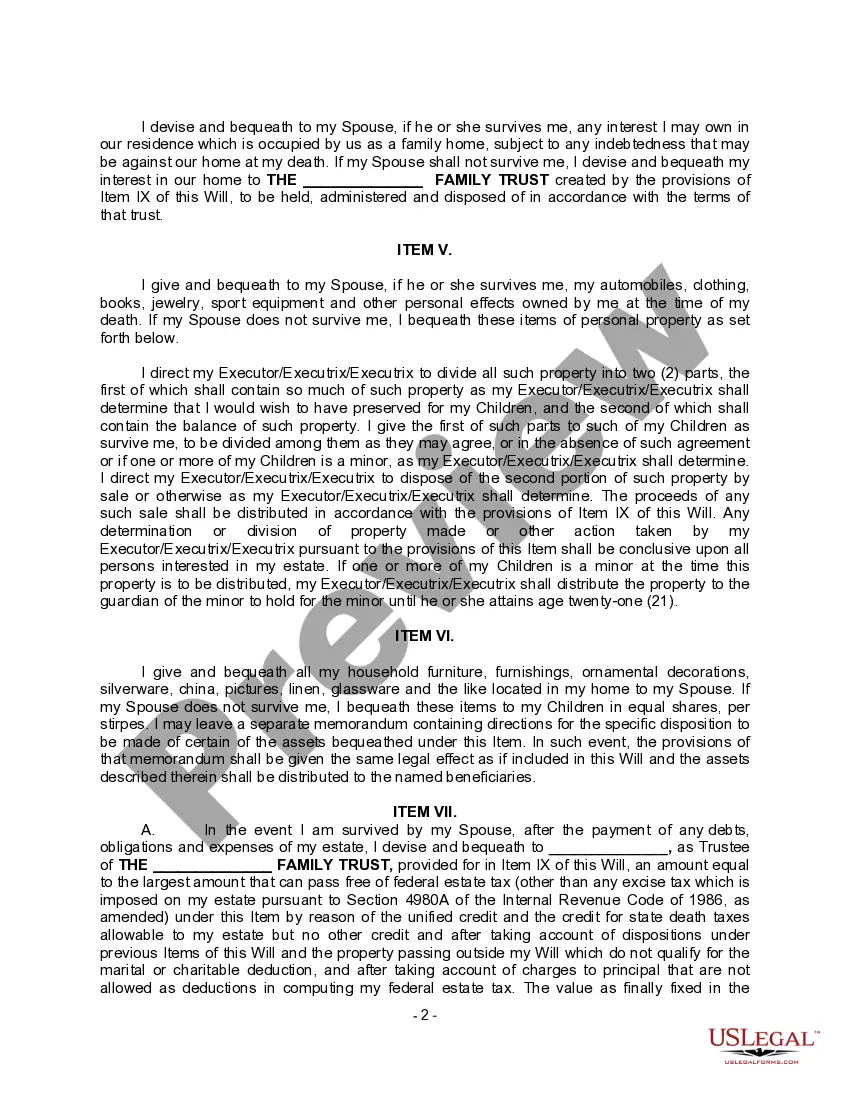
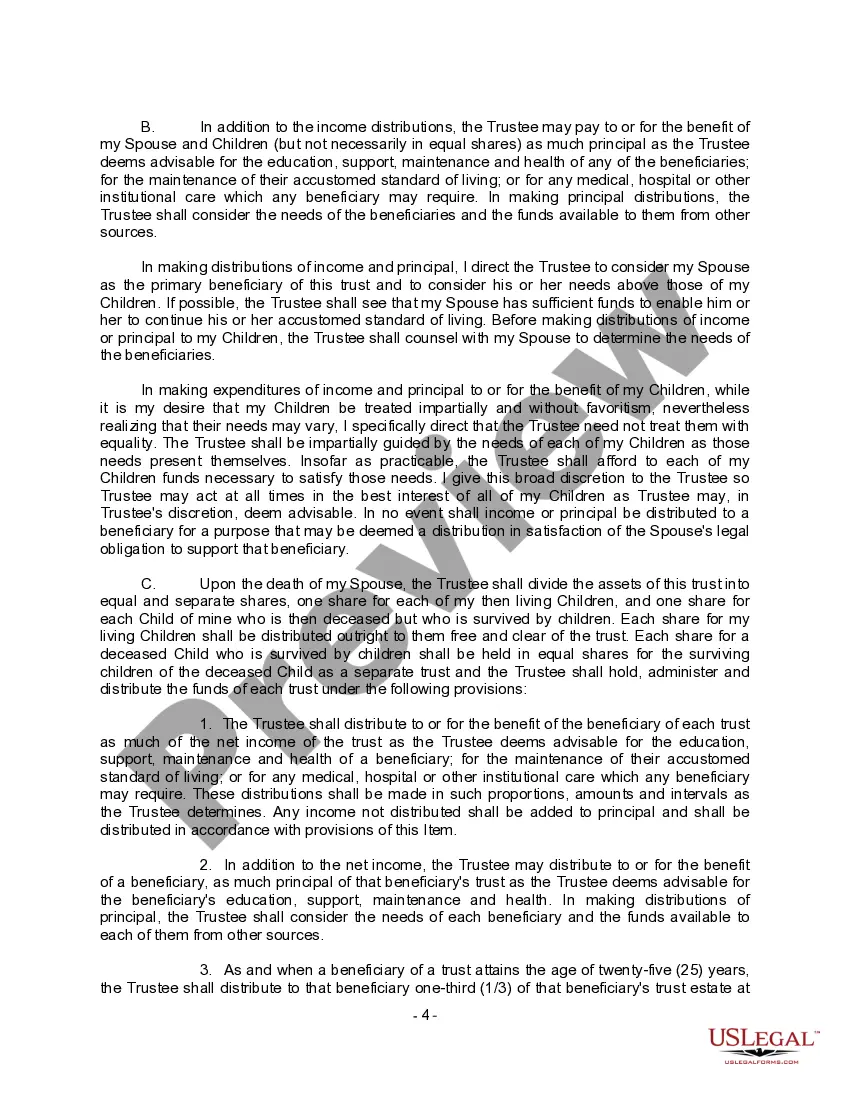
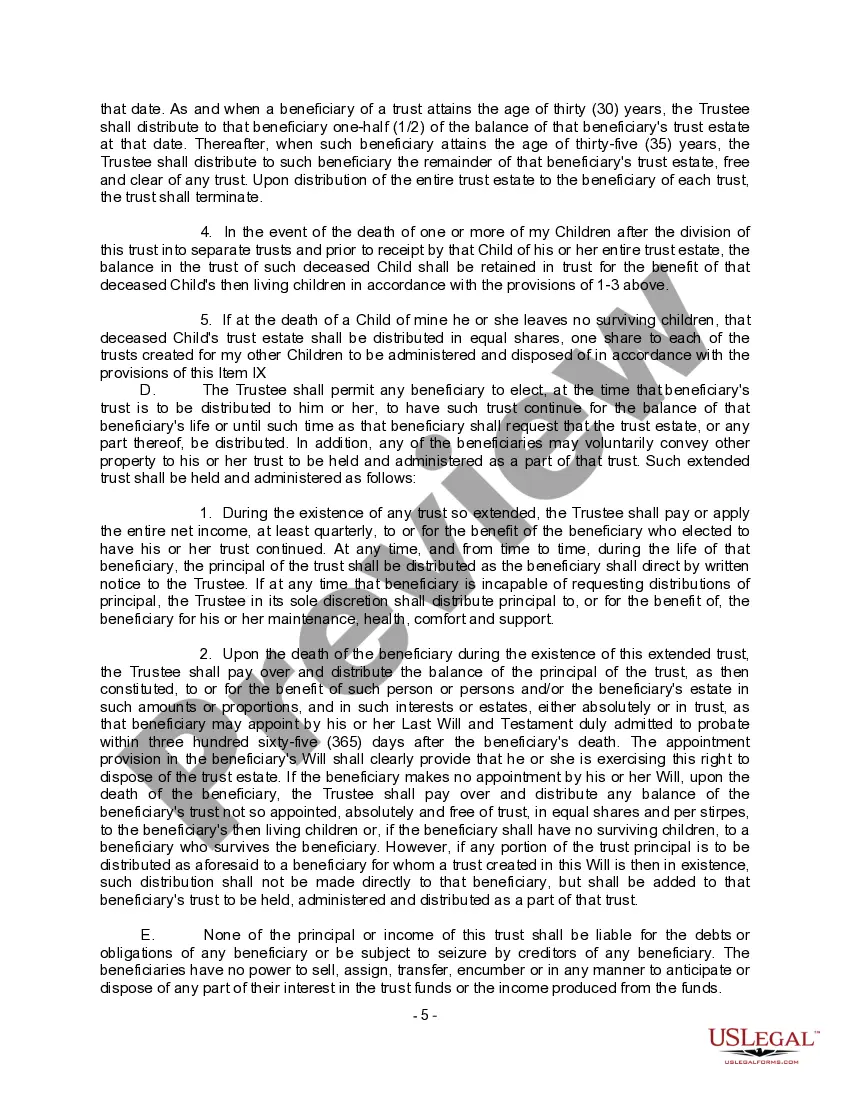
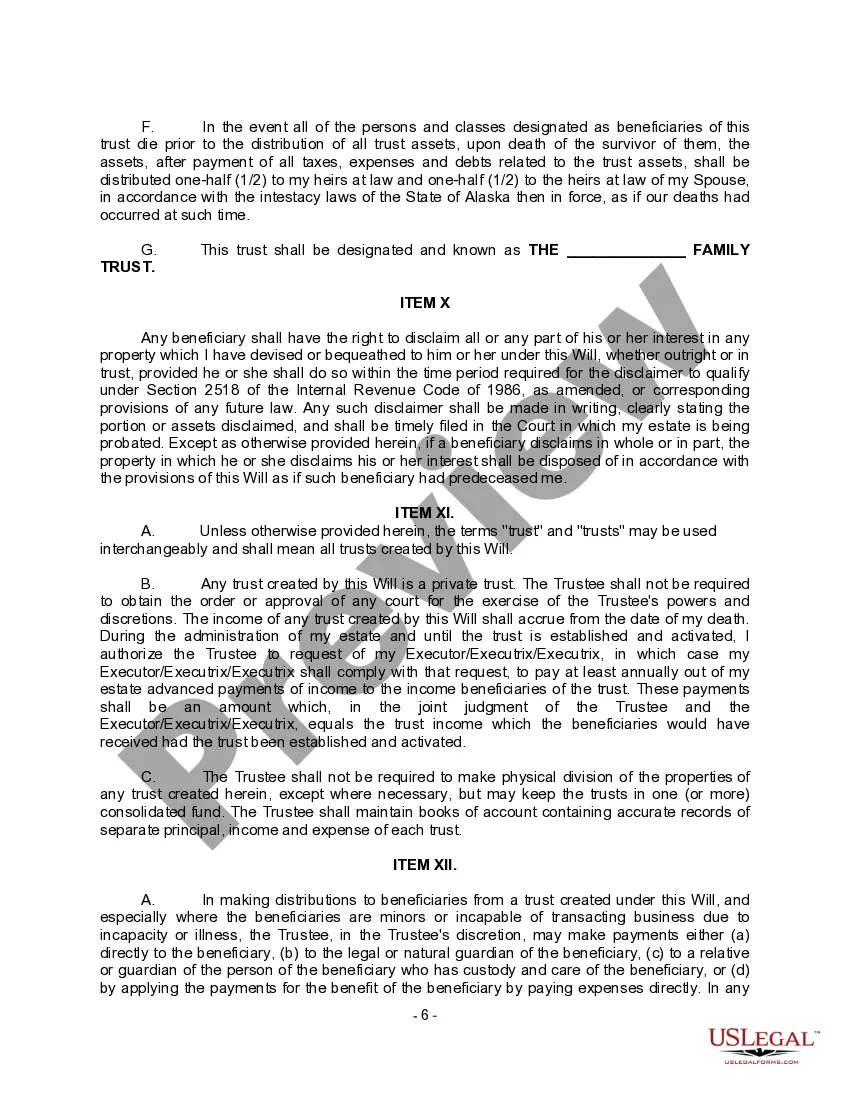
- Establishment of a family trust for wealth management and distribution to heirs.
- Provisions for managing and distributing income and principal from the trust.




When to use this form
This form is particularly useful for married couples or individuals with significant assets who want to ensure that their estate is transferred to heirs with minimal tax implications. It is ideal for those who anticipate having more than one million dollars in taxable estate and wish to provide for their spouse's financial security while also benefiting their children. Situations that may require this complex will include planning for retirement, multi-property ownership, or where estate tax implications could significantly impact the heirsâ inheritance.
Intended users of this form
- Married couples with considerable joint assets.
- Individuals planning estates estimated to exceed the federal estate tax exemption limit.
- Parents wanting to provide for their children while ensuring tax efficiency.
- People with complex financial situations involving trusts and multiple beneficiaries.
- Individuals seeking to establish long-term wealth protection through trusts.
Instructions for completing this form
- Identify the testator by entering the full name and address at the top of the document.
- Complete the spouse and childrenâs names in the designated sections to clarify the heirs.
- Assign an executor by filling in the name of the chosen representative of the estate.
- Detail the desired distribution of assets, including specific bequests to an identified trust.
- Review the trust provisions to ensure they reflect your intentions for income and principal distribution.
- Sign and date the document in the presence of witnesses to validate it legally.
Is notarization required?
This form does not typically require notarization unless specified by local law. However, signing the will in the presence of witnesses is essential to ensure its legal validity. Consult with local regulations to verify if additional requirements apply.
Get your form ready online
Our built-in tools help you complete, sign, share, and store your documents in one place.
Make edits, fill in missing information, and update formatting in US Legal Forms—just like you would in MS Word.
Download a copy, print it, send it by email, or mail it via USPS—whatever works best for your next step.
Sign and collect signatures with our SignNow integration. Send to multiple recipients, set reminders, and more. Go Premium to unlock E-Sign.
If this form requires notarization, complete it online through a secure video call—no need to meet a notary in person or wait for an appointment.
We protect your documents and personal data by following strict security and privacy standards.

Make edits, fill in missing information, and update formatting in US Legal Forms—just like you would in MS Word.

Download a copy, print it, send it by email, or mail it via USPS—whatever works best for your next step.

Sign and collect signatures with our SignNow integration. Send to multiple recipients, set reminders, and more. Go Premium to unlock E-Sign.

If this form requires notarization, complete it online through a secure video call—no need to meet a notary in person or wait for an appointment.

We protect your documents and personal data by following strict security and privacy standards.
Mistakes to watch out for
- Failing to update the will after significant life changes, such as marriage or the birth of children.
- Not appointing an executor or not discussing the role with the chosen individual.
- Neglecting to consider state-specific laws that may affect the will's validity.
- Ignoring the necessity of having witnesses sign the document to ensure legal recognition.
- Not adequately funding the trust described in the will, leading to unintended tax consequences.
Why complete this form online
- Convenience of completing the form from anywhere, at any time.
- Editable templates allow you to customize entries to fit your specific needs.
- Access to legal support and guidance through the process.
- Free from potential errors that can occur with handwritten documents.
- Secure means of handling sensitive information compared to traditional paper methods.
Looking for another form?


Form popularity
FAQ
An estate trust is a type of marital deduction trust requiring that when the surviving spouse dies, all remaining trust principal must go into his/her estate. This means the surviving spouse gets to choose the final beneficiaries, by will or within a living trust.
Yes, the surviving spouse may serve as trustee of the credit shelter trust.All of the assets in the credit shelter trust, including any appreciation in value during the surviving spouse's lifetime, pass free of estate tax to the beneficiaries.
Assets That May Not Be Eligible for a Step-Up in Basis 401(k) accounts. Pensions. Tax deferred annuities. Certificates of deposit.
A bypass trust, or AB trust, is a legal arrangement that allows married couples to avoid estate tax on certain assets when one spouse passes away.The first part is the marital trust, or A trust. The second is a bypass, family or B trust. The marital trust is a revocable trust that belongs to the surviving spouse.
The trust qualifies for the marital deduction. In a QTIP trust, the surviving spouse must receive all income generated by the trust property for life, paid at least annually.After the surviving spouse's death, the property passes to the remainder beneficiaries of the trust, who usually are the children of the couple.
It applies to investment assets passed on in death. When someone inherits capital assets such as stocks, mutual funds, bonds, real estate and other investment property, the IRS steps up the cost basis of those properties.
I live in California, a community property state.Federal tax code section 1014(b)(6) provides that community property assets step up 100 percent in basis at the death of one spouse (even though the other spouse survives).
First, in a standard credit shelter trust, there is no step-up in basis at the death of the surviving spouse.Second, the credit shelter trust is a separate taxpayer and requires its own tax return, Form 1041.
Assets that have been conveyed into a revocable living trust do get a step-up in basis when they are distributed to the beneficiaries after the passing of the grantor. We should point out the fact that the beneficiaries would be responsible for any future appreciation from a capital gains perspective.