Alaska Letter from Tenant to Landlord containing Notice of wrongful deductions from security deposit and demand for return
What this document covers
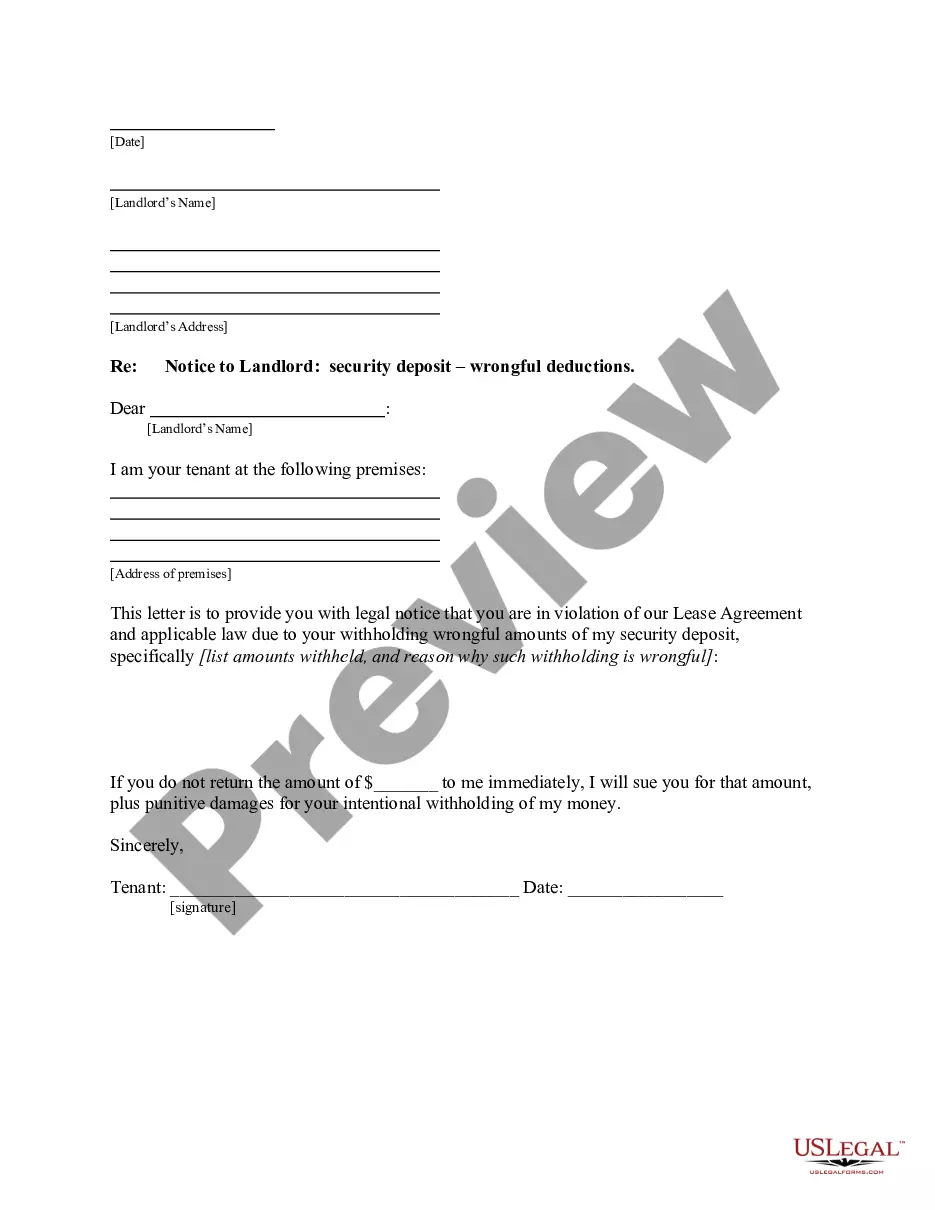
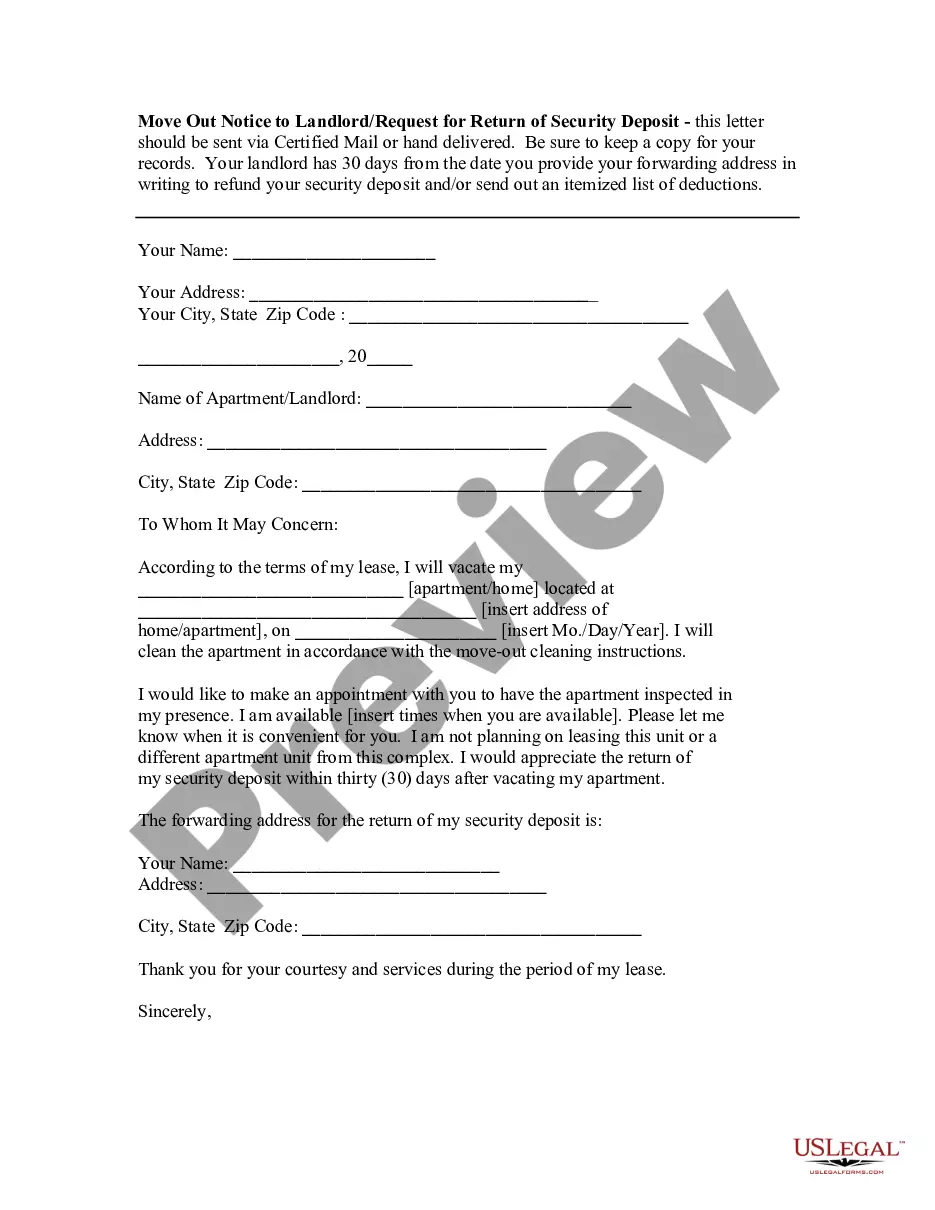
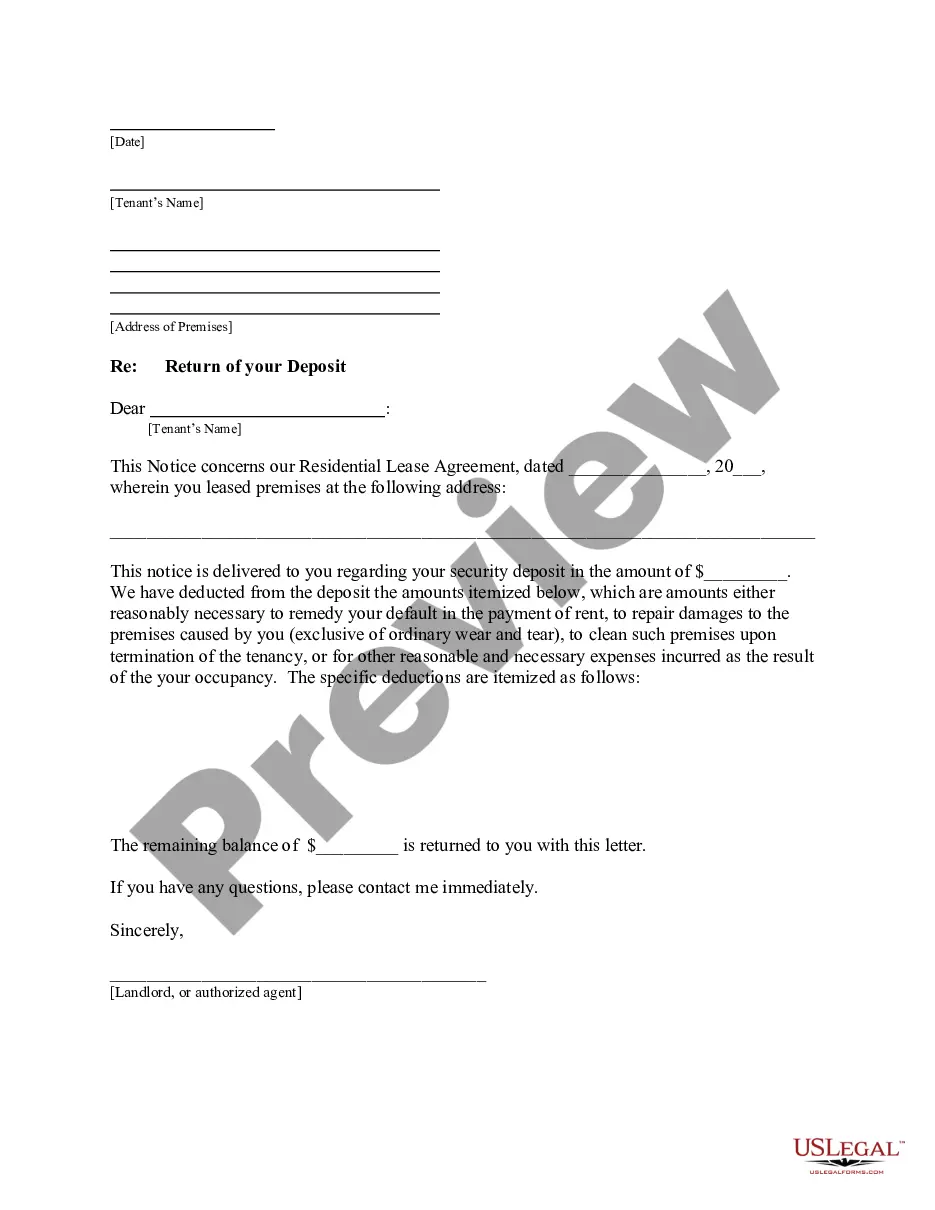
This letter from tenant to landlord outlines wrongful deductions taken from a security deposit and demands their return. It serves as a formal communication to address disputes regarding security deposit deductions and is compliant with state statutory law. This form is essential for tenants seeking to resolve financial discrepancies with their landlord in a straightforward manner.
Form components explained
- Tenant's name and contact information
- Landlord's name and address
- Statement of wrongful deductions from the security deposit
- Demand for the return of the deducted amount
- Date of delivery and signature of the tenant
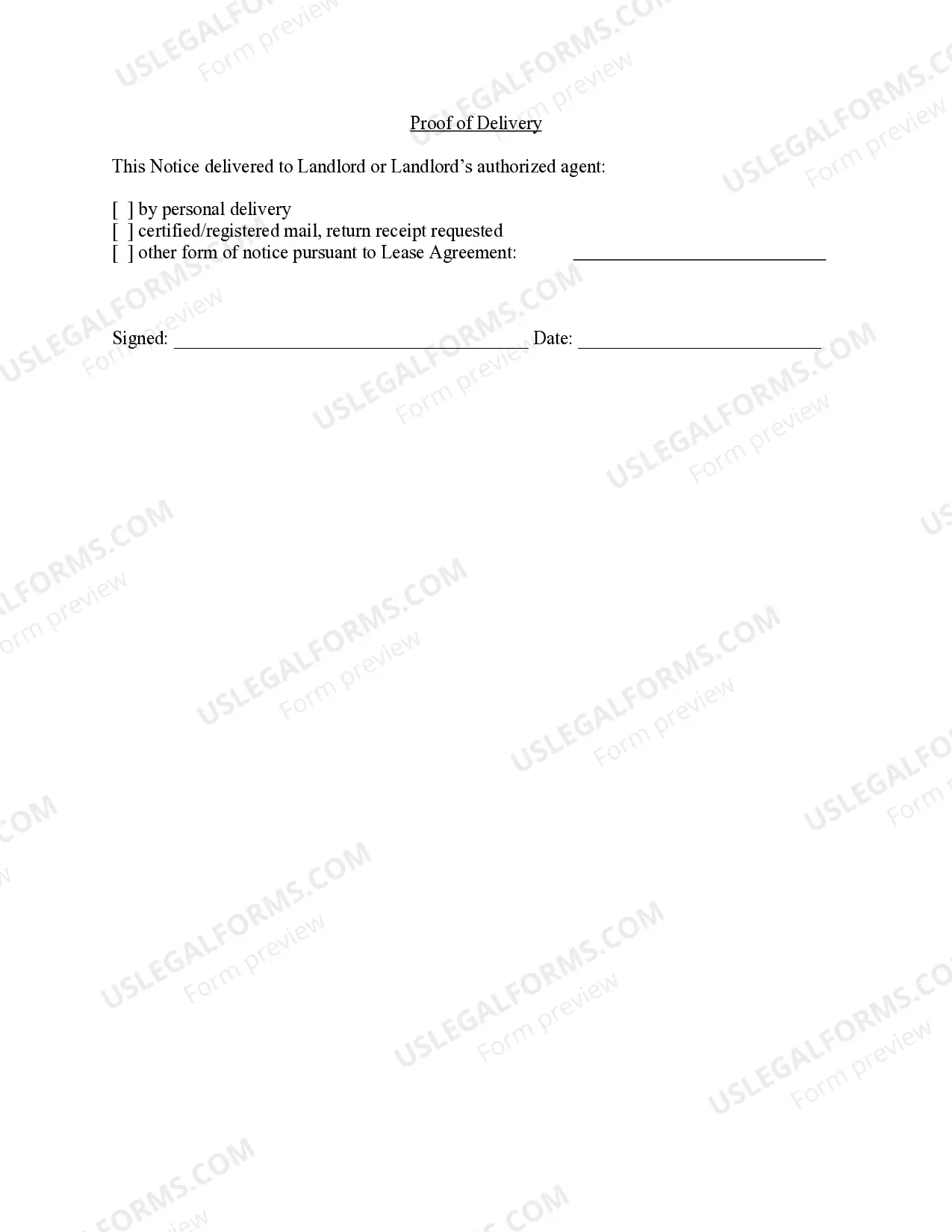
- Proof of delivery method to the landlord


Situations where this form applies
Use this form when you, as a tenant, believe that your landlord has wrongfully deducted funds from your security deposit. This letter can be utilized to formally notify your landlord of these deductions and to demand the return of the funds, providing a clear record of your request that may be necessary for future legal action if your landlord does not comply.
Who can use this document
This form is intended for:
- Tenants who have rented residential properties.
- Individuals seeking to address disputes regarding security deposits.
- Those requiring a formal written demand for return of funds from a landlord.
Completing this form step by step
- Identify the parties involved: Insert your name and address as the tenant and the landlord's name and address.
- Detail the wrongful deductions: Clearly state the specific amounts that were improperly taken from your security deposit.
- Include a demand for repayment: Specify the total amount you are requesting to be returned.
- Sign and date the letter: Provide your signature and the date of the letter to validate your request.
- Choose a delivery method: Indicate how you will deliver this notice to your landlord, ensuring proof of delivery is documented.
Does this form need to be notarized?
This form does not typically require notarization unless specified by local law. It is important to check your state regulations to ensure compliance.
Get your form ready online
Our built-in tools help you complete, sign, share, and store your documents in one place.
Make edits, fill in missing information, and update formatting in US Legal Forms—just like you would in MS Word.
Download a copy, print it, send it by email, or mail it via USPS—whatever works best for your next step.
Sign and collect signatures with our SignNow integration. Send to multiple recipients, set reminders, and more. Go Premium to unlock E-Sign.
If this form requires notarization, complete it online through a secure video call—no need to meet a notary in person or wait for an appointment.
We protect your documents and personal data by following strict security and privacy standards.

Make edits, fill in missing information, and update formatting in US Legal Forms—just like you would in MS Word.

Download a copy, print it, send it by email, or mail it via USPS—whatever works best for your next step.

Sign and collect signatures with our SignNow integration. Send to multiple recipients, set reminders, and more. Go Premium to unlock E-Sign.

If this form requires notarization, complete it online through a secure video call—no need to meet a notary in person or wait for an appointment.

We protect your documents and personal data by following strict security and privacy standards.
Avoid these common issues
- Failing to clearly specify the wrongful deductions.
- Not including the date or signature.
- Using informal language instead of a professional tone.
- Neglecting to document the proof of delivery.
Benefits of using this form online
- Easy access to professionally drafted templates.
- Edit and customize the letter to your specific situation.
- Download and print instantly for immediate use.
- Cost-effective solution for legal documentation needs.
Legal use & context
- This form supports tenants in asserting their rights regarding security deposit disputes.
- It creates a legal record of the tenantâs attempt to resolve the issue, which may be useful in further proceedings.
Summary of main points
- Use this form to officially notify your landlord of wrongful deductions from your security deposit.
- Ensure that all necessary details and a signature are included for the letter to be valid.
- Understand and comply with your specific state laws regarding security deposits.
Looking for another form?
Form popularity
FAQ
Your landlord can only do this if you left your tenancy early. Your landlord may try to withhold some or all of your deposit for a different reason, such as having a noisy party in the property. Your landlord cannot do this. Landlords can only take money for any financial loss they have suffered.
Concisely review the main facts and lay out the reasons your landlord owes you money. Include copies of relevant letters and agreements, such as your notice to move out. Ask for exactly what you want, such as the full amount of your deposit within ten days. Cite state security deposit law.
Moving In. In Alberta, most landlords require a tenant to pay a security deposit or damage deposit before moving in. A security deposit is a one-time only payment and cannot be more than one month's rent. A landlord must place a security deposit in a trust account within two days of receiving it.
If your deposit didn't need to be protected and your landlord refuses to give it back, you might have to take them to court.You'll need to take your landlord to the small claims court to get your money back.
Fill out the Request for Return of Security Deposit form (not interactive; you must print, then fill out the form). Send the form to your former landlord. Keep a photo-copy of the form for yourself. Hold on to the Return Receipt when it comes back in the mail.
Your Landlord is legally obligated to return your deposit within 10 days of you both agreeing how much you'll get back (after the tenancy has ended, of course).
Section 5 of the Rental Housing Act, No 50 of 1999 allows a landlord to take a deposit from a tenant prior to the tenant moving into the property. The amount of the deposit must be stipulated in the lease agreement. It is conventional practice to pay an amount equal to one-month's rent as a deposit.