Alaska Letter from Landlord to Tenant as Notice to remove unauthorized pets from premises
What this document covers
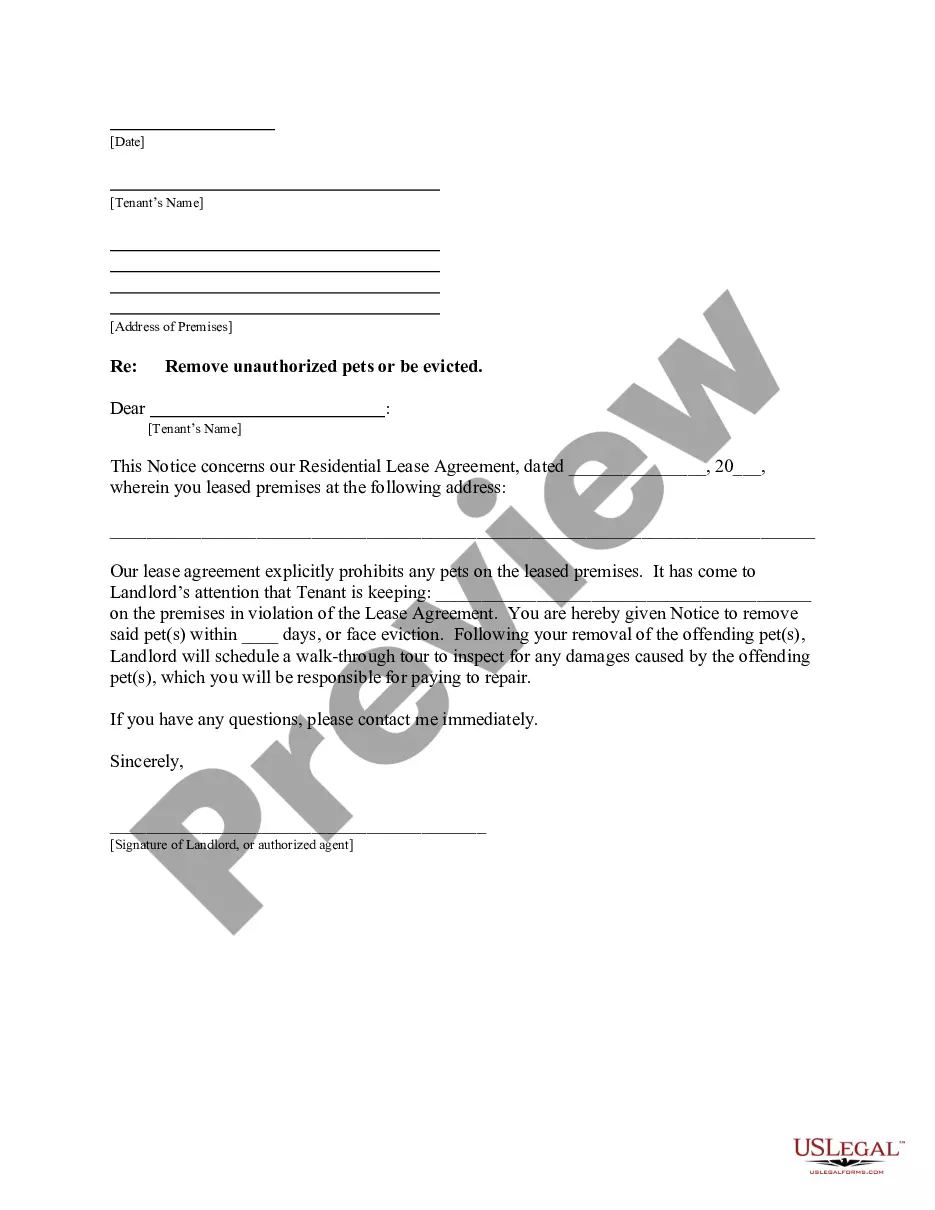
This Letter from Landlord to Tenant as Notice to Remove Unauthorized Pets from Premises is a legal document used by landlords to formally notify tenants about the presence of unauthorized pets in a rental property. This form emphasizes the breach of the Lease Agreement and notifies the tenant of the need to remove any pets within a specified time frame. It differs from other notices by focusing specifically on the issue of unauthorized pets and the potential consequences, such as eviction, for non-compliance.
Form components explained
- Date of the lease agreement.
- Address of the leased property.
- Description of unauthorized pet(s).
- Deadline for pet removal.
- Landlordâs contact information for any questions.
- Signature of the landlord or authorized agent.
Situations where this form applies
This form should be used when a landlord becomes aware that a tenant is keeping a pet on the premises in violation of the lease agreement. If pets are explicitly prohibited in the rental contract, this notice serves as an essential step before any potential eviction proceedings. It effectively communicates the seriousness of the breach and sets a timeline for compliance.
Who this form is for
- Landlords managing rental properties who have a no-pets policy.
- Property managers acting on behalf of landlords.
- Tenants who have received a notice about unauthorized pets and need to understand their obligations.
How to prepare this document
- Identify the date of the original lease agreement.
- Specify the exact address of the rental property.
- Clearly describe the unauthorized pet(s) being kept on the premises.
- Enter the number of days the tenant has to comply and remove the pets.
- Sign the letter as the landlord or authorized representative.
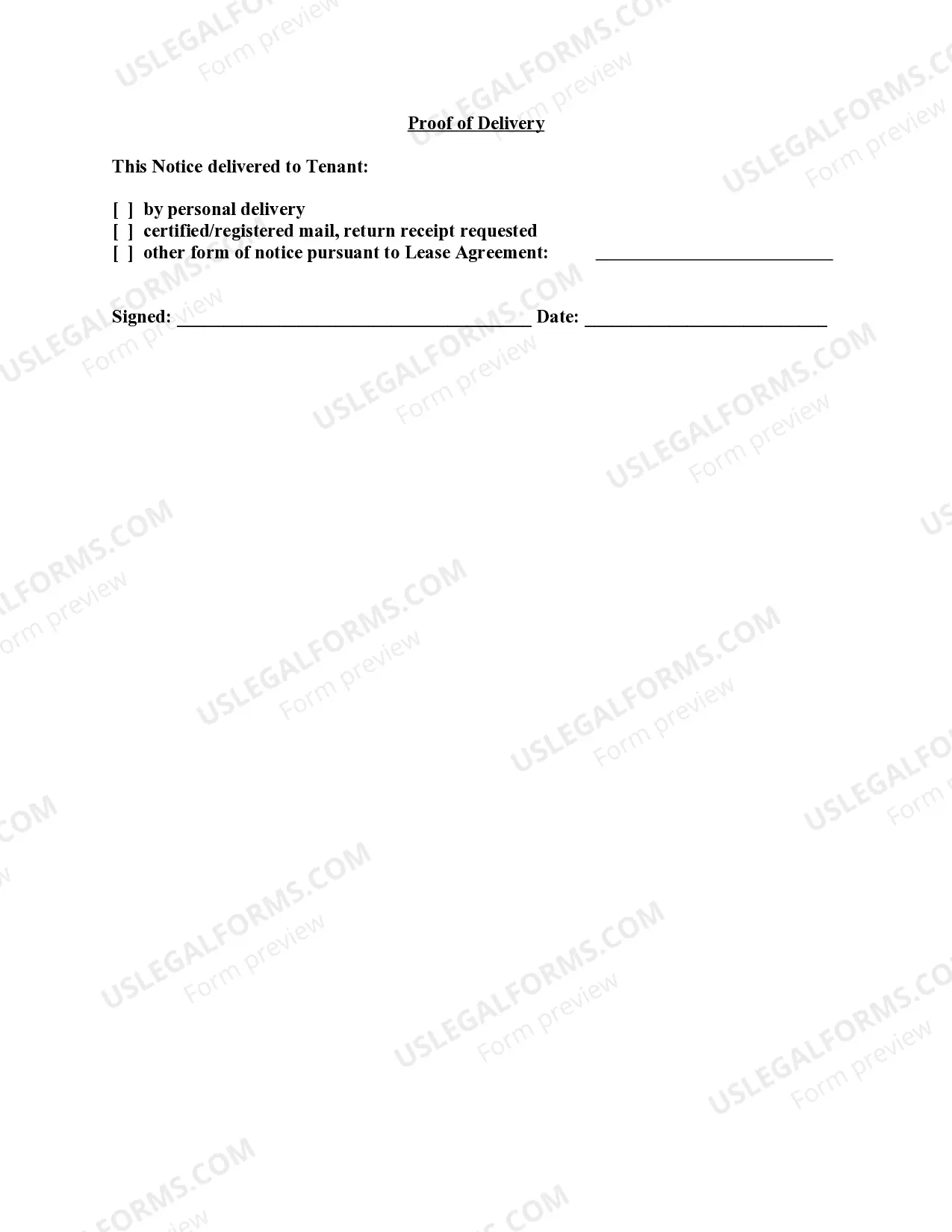
- Keep a copy for your records and ensure proof of delivery.
Does this form need to be notarized?
This form does not typically require notarization unless specified by local law. However, it is essential to deliver the notice appropriately and keep records of the communication for legal purposes.
Get your form ready online
Our built-in tools help you complete, sign, share, and store your documents in one place.
Make edits, fill in missing information, and update formatting in US Legal Forms—just like you would in MS Word.
Download a copy, print it, send it by email, or mail it via USPS—whatever works best for your next step.
Sign and collect signatures with our SignNow integration. Send to multiple recipients, set reminders, and more. Go Premium to unlock E-Sign.
If this form requires notarization, complete it online through a secure video call—no need to meet a notary in person or wait for an appointment.
We protect your documents and personal data by following strict security and privacy standards.

Make edits, fill in missing information, and update formatting in US Legal Forms—just like you would in MS Word.

Download a copy, print it, send it by email, or mail it via USPS—whatever works best for your next step.

Sign and collect signatures with our SignNow integration. Send to multiple recipients, set reminders, and more. Go Premium to unlock E-Sign.

If this form requires notarization, complete it online through a secure video call—no need to meet a notary in person or wait for an appointment.

We protect your documents and personal data by following strict security and privacy standards.
Common mistakes
- Failing to list all unauthorized pets.
- Not specifying the timeline for pet removal.
- Omitting important contact information for follow-up.
- Not signing the letter before sending it.
Benefits of completing this form online
- Immediate access to a legally compliant form tailored for your needs.
- Easy to download and customize for specific situations.
- Reduces the likelihood of errors by providing a clear template.
- Ensures that all necessary legal elements are included.
Legal use & context
- The notice serves as evidence of the landlord's attempt to resolve a lease violation.
- Failure to comply with this notice may result in legal action, including eviction.
- It reinforces the terms outlined in the Lease Agreement, protecting the landlord's rights.
What to keep in mind
- This form is crucial for landlords who need to enforce pet policies in rental agreements.
- Proper use of this notice can help avoid legal disputes and clarify consequences for tenants.
- Always ensure your communication is clear and documented to protect both parties' interests.
Looking for another form?
Form popularity
FAQ
Fundamental responsibilities of landlords include: providing and maintaining the property in a clean and reasonable standard; giving proper receipts and maintaining records of all transactions pertaining to the tenancy; paying council rates and taxes; maintaining locks to ensure the property's security; and lodging the
A landlord cannot evict a tenant without an adequately obtained eviction notice and sufficient time. A landlord cannot retaliate against a tenant for a complaint. A landlord cannot forego completing necessary repairs or force a tenant to do their own repairs.A landlord cannot remove a tenant's personal belongings.
Month-to-month tenants must be given written notice that their landlord is terminating their tenancy before the end of the rental period. In most cities in Washington State, the landlord must give the tenant at least 20 days' notice before termination.
When there is no lease agreement (like in the case of weekly rentals), you can instead use the Alaska Notice to Vacate to inform the other party in advance that you wish to end the tenancy agreement and vacate the premises.
Trouble is there is no way of knowing for sure which tenants are bad and which are good until you run a tenant background check. Don't be left in the dark. Make sure you verify all the information in the rental application, run a credit check, and speak with the references, including the previous landlords.
State law requires both landlords and renters to be reasonable about seeking and granting access to a rental unit (RCW 59.18.A landlord cannot enter a renter's home without the occupant's consent. A landlord has a right to enter the renter's home for necessary or agreed repairs and inspections.
State law regulates several rent-related issues, including late and bounced-check fees, the amount of notice (at least 30 days in Washington) landlords must give tenants to raise the rent and how much time (three days in Washington) a tenant has to pay rent or move before a landlord can file for eviction.
The tenant does indeed make the income that they claim to make (ideally no less than two-and-a-half times the rental price); The tenant has a good credit history; The tenant has a good rental history that can be verified by previous landlords.
Rent Increases: RCW 59.18. 140 requires landlords to give tenants 60 Days' notice before increasing the rent. In a month-to-month rental, the landlord must give you 60 Days' written notice before each rent increase (except in certain subsidized rental units, the landlord must give you at least 30 days written notice).