Vermont Renunciation And Disclaimer of Property received by Intestate Succession
Understanding this form
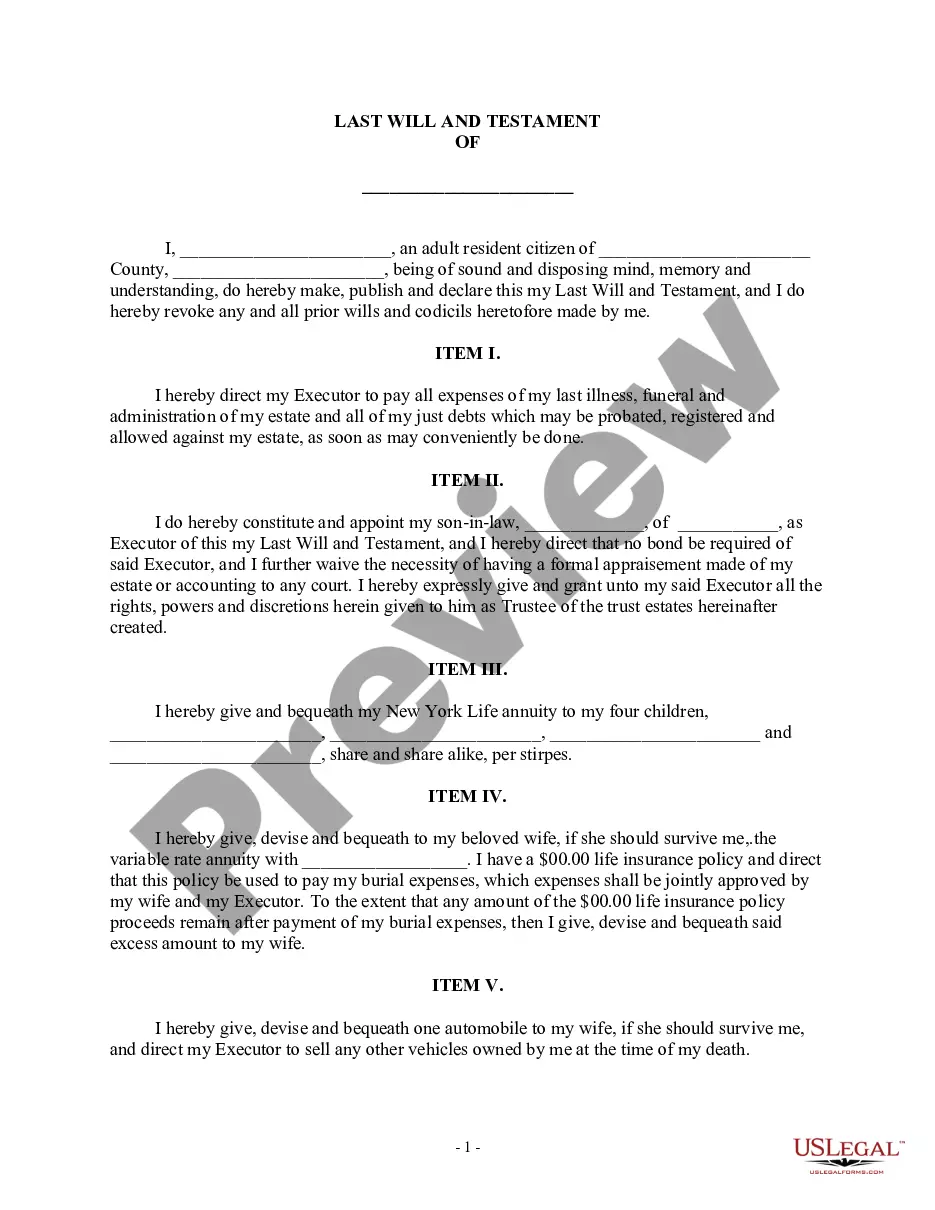
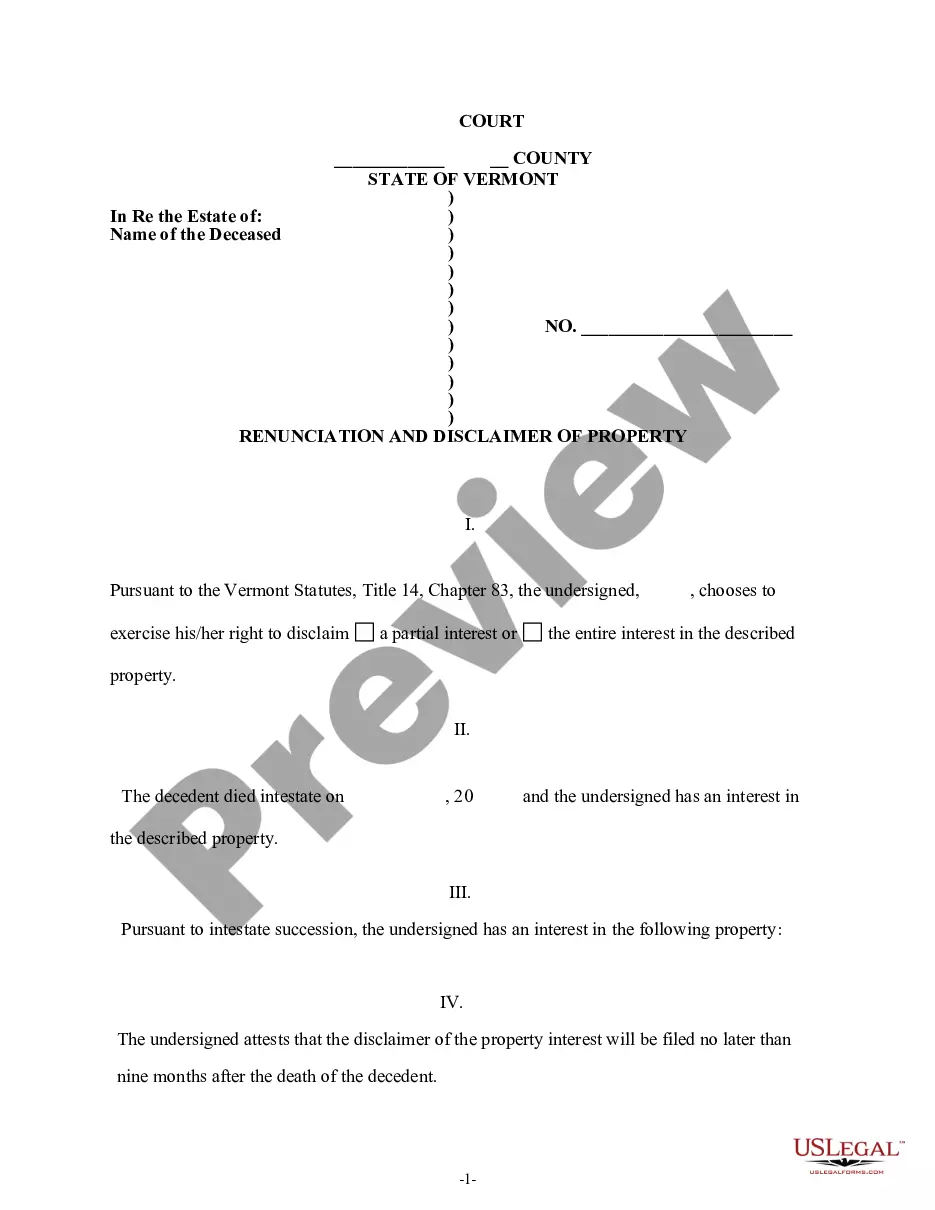
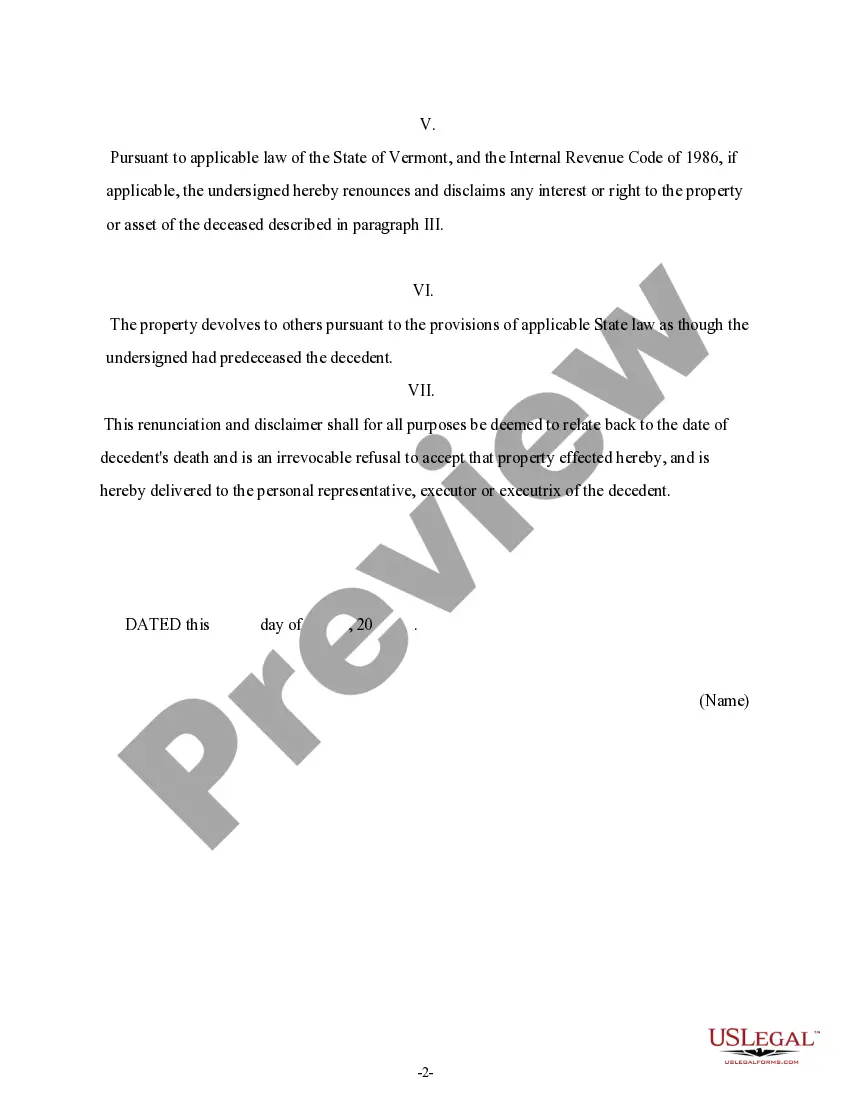
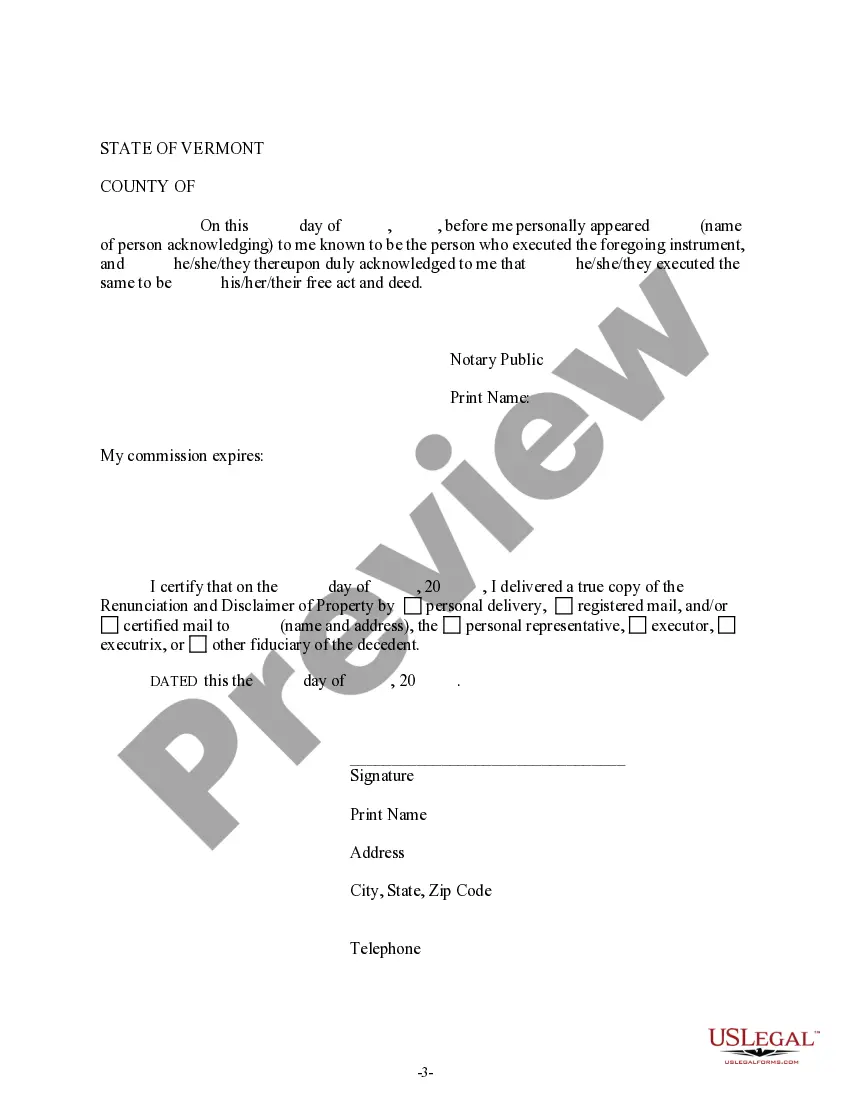
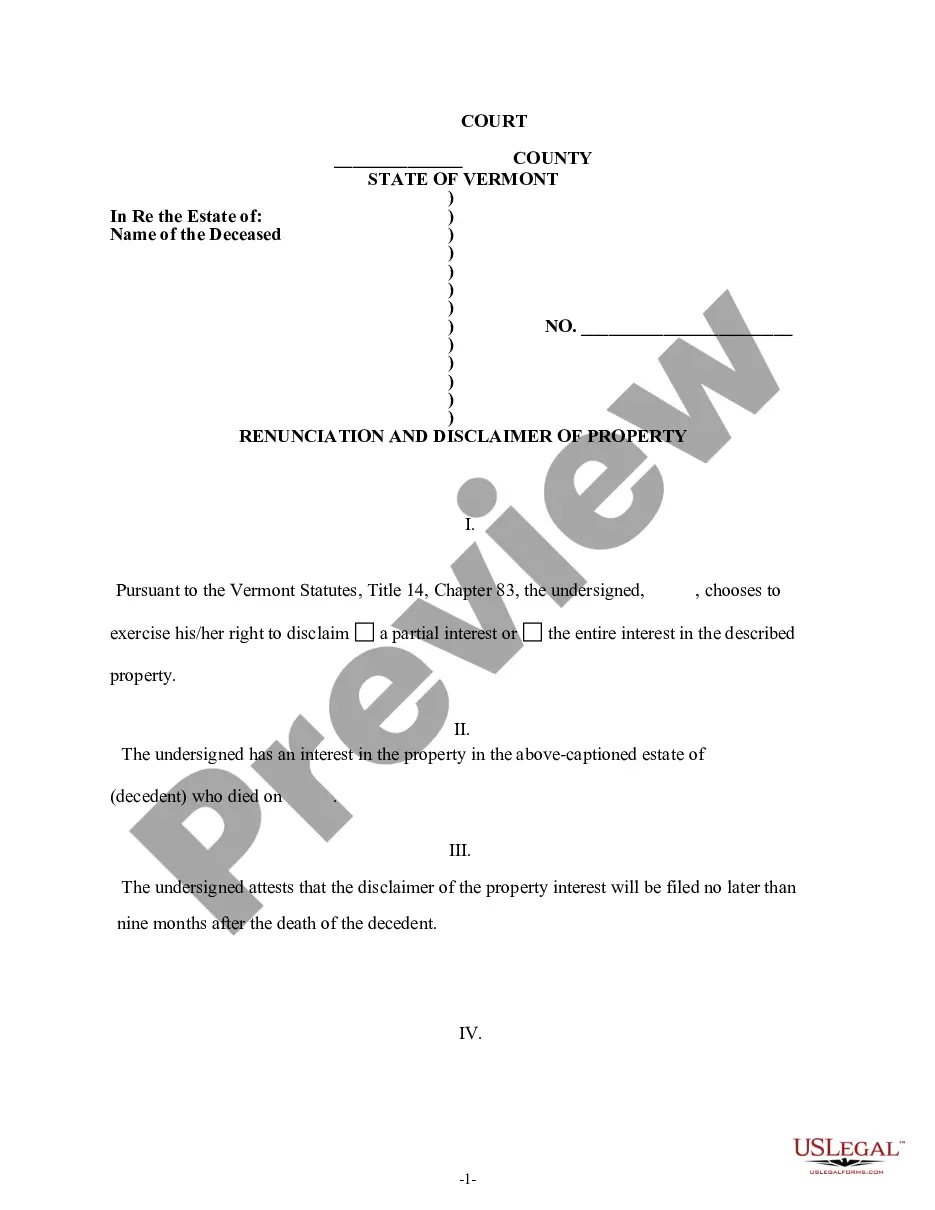
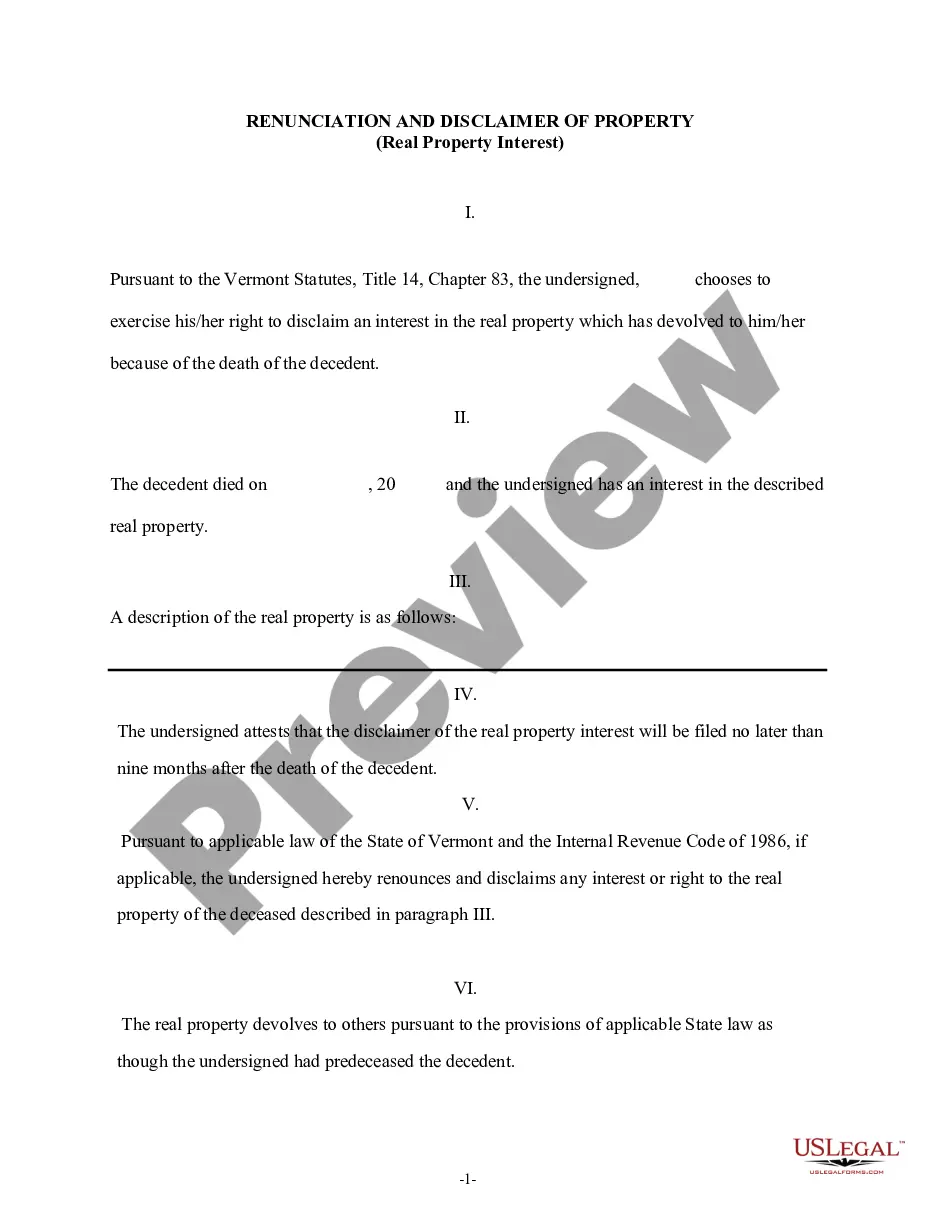
This form is a Renunciation and Disclaimer of Property received by intestate succession. It allows an heir to formally refuse their inherited property when a decedent has passed away without a will. This document ensures that the property is redistributed according to state law, as if the heir had predeceased the decedent.
What’s included in this form
- Identification of the disclaiming heir
- Details regarding the decedent and the property being disclaimed
- A statement of renunciation and disclaimer
- Legal references to state laws governing intestate succession
- Signature and date lines for the disclaiming heir
When to use this document
This form is useful in situations where an heir inherits property from a family member who died without a will and wishes to refuse the inheritance. This could occur when the inherited property is encumbered by debt, when the heir is unable to maintain the property, or when the heir prefers for the property to go to other beneficiaries as determined by state inheritance laws.
Intended users of this form
- Heirs who have received property through intestate succession
- Individuals who do not wish to inherit property from a decedent
- Those seeking to clarify their disinterest in the property before it is redistributed
Completing this form step by step
- Identify the heir who is disclaiming the property.
- Provide details about the deceased, including their name and date of death.
- Describe the property being disclaimed.
- Include a clear statement expressing the intent to renounce and disclaim the property.
- Sign and date the form in the designated areas.
Notarization requirements for this form
This form needs to be notarized to ensure legal validity. US Legal Forms provides secure online notarization powered by Notarize, allowing you to complete the process through a verified video call, available anytime.
Get your form ready online
Our built-in tools help you complete, sign, share, and store your documents in one place.
Make edits, fill in missing information, and update formatting in US Legal Forms—just like you would in MS Word.
Download a copy, print it, send it by email, or mail it via USPS—whatever works best for your next step.
Sign and collect signatures with our SignNow integration. Send to multiple recipients, set reminders, and more. Go Premium to unlock E-Sign.
If this form requires notarization, complete it online through a secure video call—no need to meet a notary in person or wait for an appointment.
We protect your documents and personal data by following strict security and privacy standards.

Make edits, fill in missing information, and update formatting in US Legal Forms—just like you would in MS Word.

Download a copy, print it, send it by email, or mail it via USPS—whatever works best for your next step.

Sign and collect signatures with our SignNow integration. Send to multiple recipients, set reminders, and more. Go Premium to unlock E-Sign.

If this form requires notarization, complete it online through a secure video call—no need to meet a notary in person or wait for an appointment.

We protect your documents and personal data by following strict security and privacy standards.
Mistakes to watch out for
- Failing to specify the property to be disclaimed.
- Not including the necessary legal references specific to state law.
- Incorrectly completing signature and date lines.
Benefits of using this form online
- Quick and easy access to legal forms drafted by licensed attorneys.
- Convenience of downloading and completing the form at your own pace.
- Editable templates that can be tailored to fit unique situations.
Key takeaways
- The Renunciation and Disclaimer of Property is essential for heirs who do not wish to inherit property.
- Proper completion ensures compliance with intestate succession laws.
- Be cautious to avoid common mistakes to ensure the validity of the form.
Looking for another form?
Form popularity
FAQ
In the law of inheritance, wills and trusts, a disclaimer of interest (also called a renunciation) is an attempt by a person to renounce their legal right to benefit from an inheritance (either under a will or through intestacy) or through a trust.A disclaimer of interest is irrevocable.
These documents can include the will, death certificate, transfer of ownership forms and letters from the estate executor or probate court.If you received the inheritance in the form of cash, request a copy of the bank statement that reflects the deposit.
Disclaim Inheritance, Definition In a nutshell, it means you're refusing any assets that you stand to inherit under the terms of someone's will, a trust or, in the case of a person who dies intestate, the inheritance laws of your state.
The disclaimer must be in writing: A signed letter by the person doing the disclaiming, identifying the decedent, describing the asset to be disclaimed, and the extent and amount, percentage or dollar amount, to be disclaimed, must be delivered to the person in control of the estate or asset, such as an executor,
When you relinquish property, you don't get any say in who inherits in your place. If you want to control who gets the inheritance, you must accept it and give it to that person. If you relinquish the property and the deceased didn't name a back-up heir, the court will apply state law to decide who inherits.
Put the disclaimer in writing. Deliver the disclaimer to the person in control of the estate usually the executor or trustee. Complete the disclaimer within nine months of the death of the person leaving the property. Do not accept any benefit from the property you're disclaiming.
A qualified disclaimer is a part of the U.S. tax code that allows estate assets to pass to a beneficiary without being subject to income tax. Legally, the disclaimer portrays the transfer of assets as if the intended beneficiary never actually received them.
Disclaim, in a legal sense, refers to the renunciation of an interest in, or an acceptance of, inherited assets, such as property, by way of a legal instrument.A gift, bequest, or other interest or obligation may be disclaimed via a written disclaimer of interest.
In your disclaimer, cover any and all liabilities for the product or service that you provide. You should warn consumers of any dangers or hazards posed by your product. You should list specific risks while at the same time acknowledging that the list is not exhaustive. For example, you could write, NOTICE OF RISK.