Release of Lien for Deed of Trust
Overview of this form
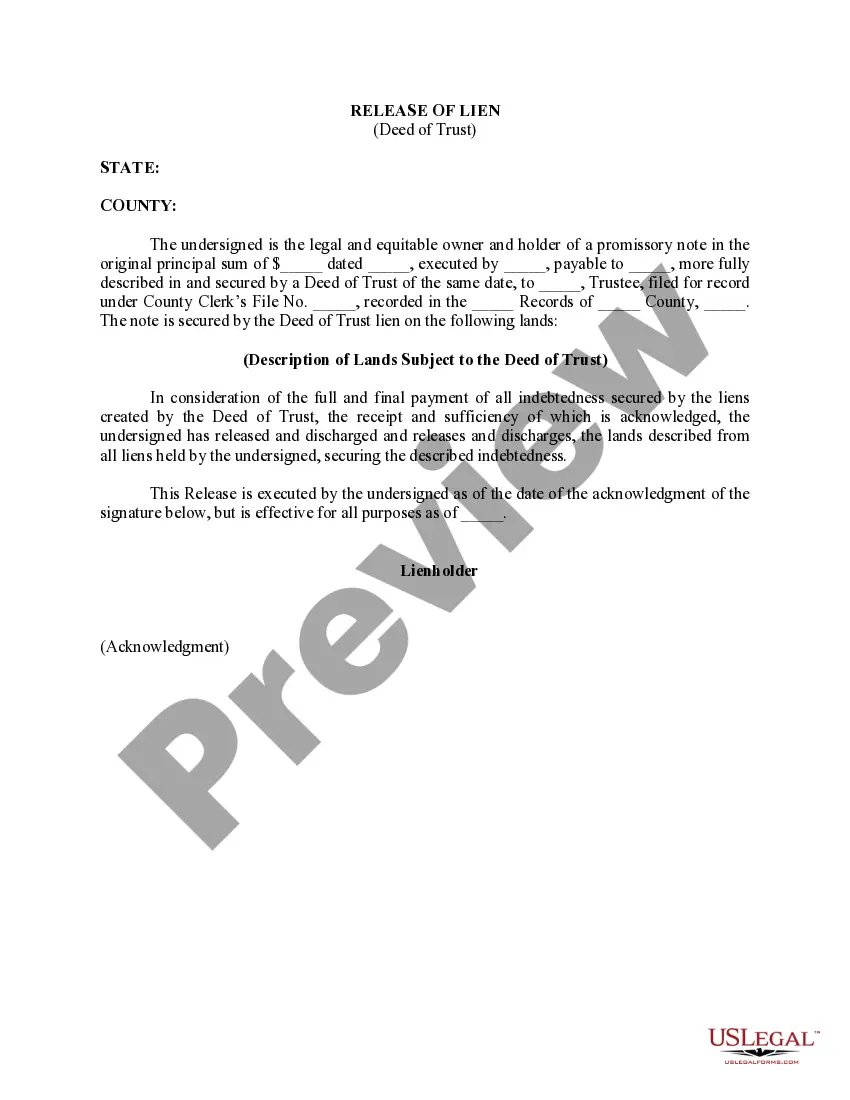
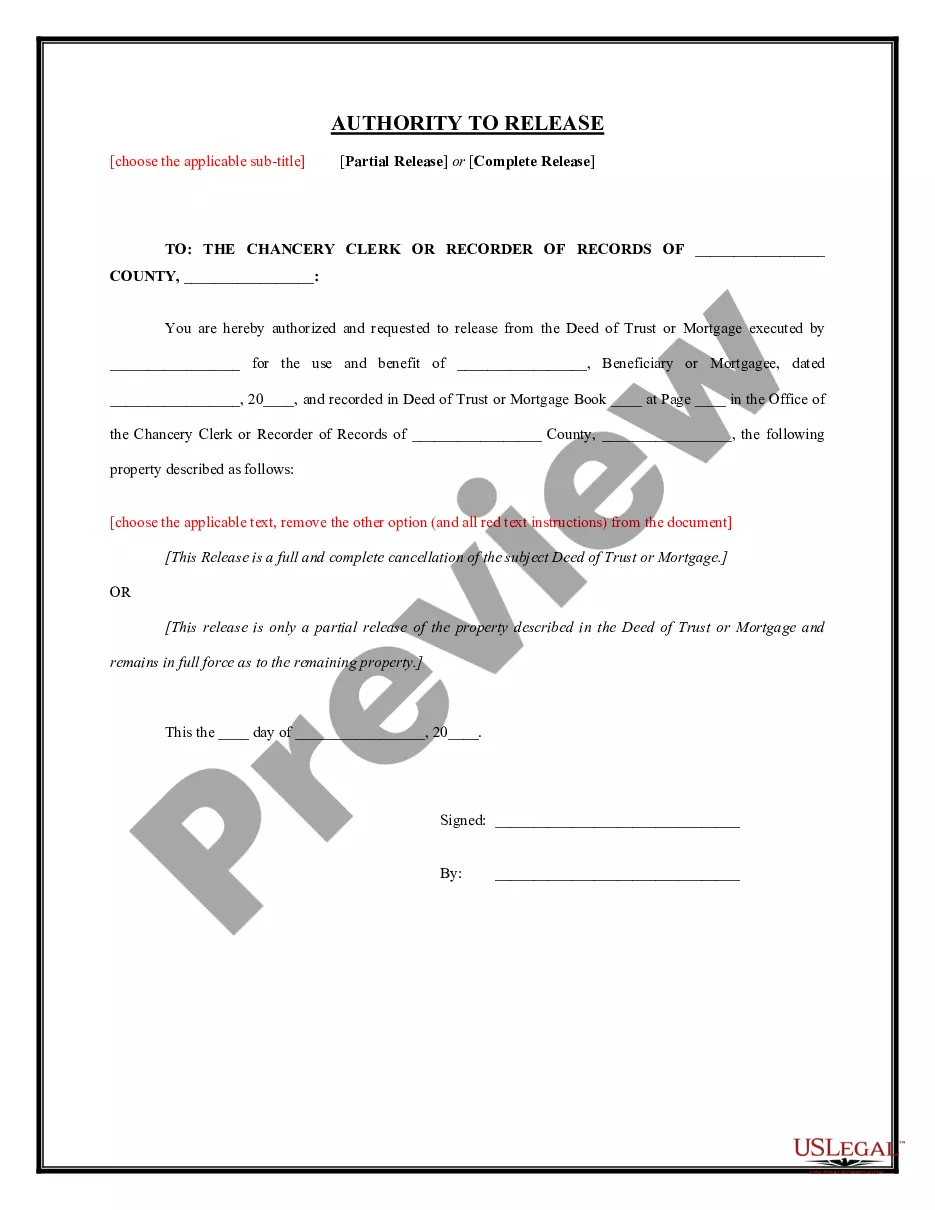
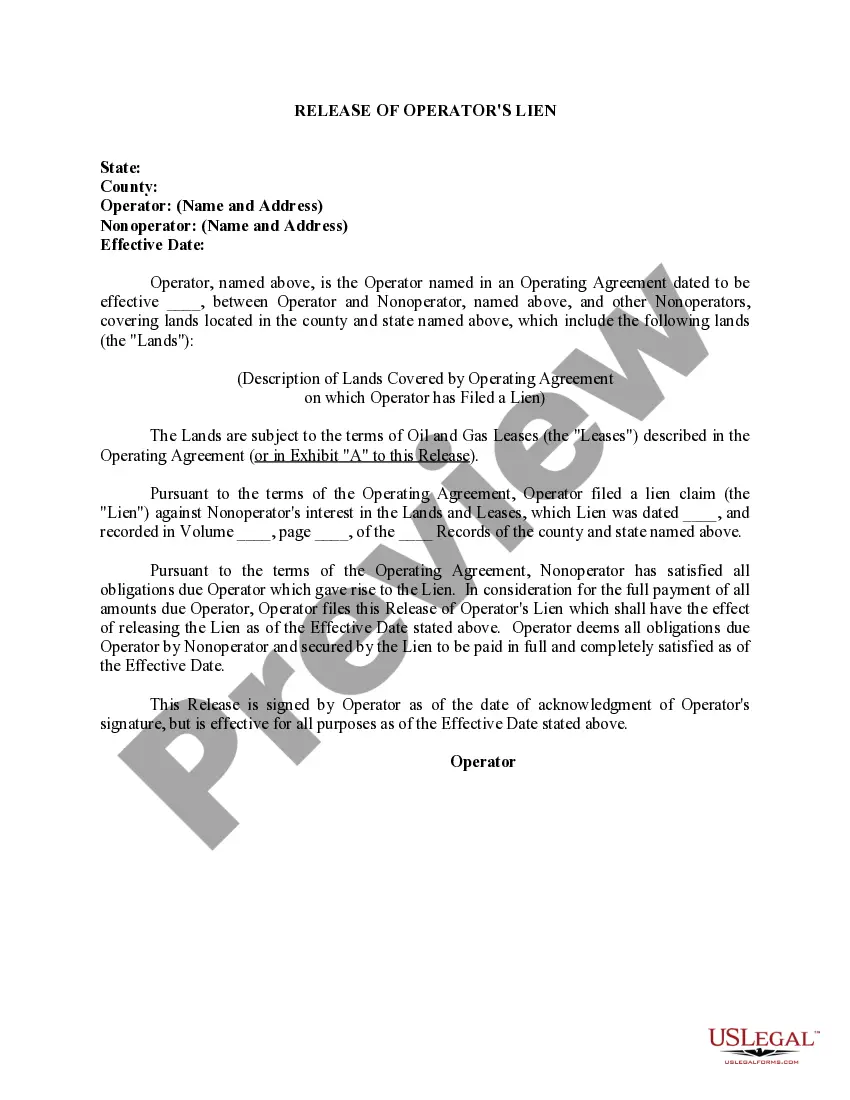
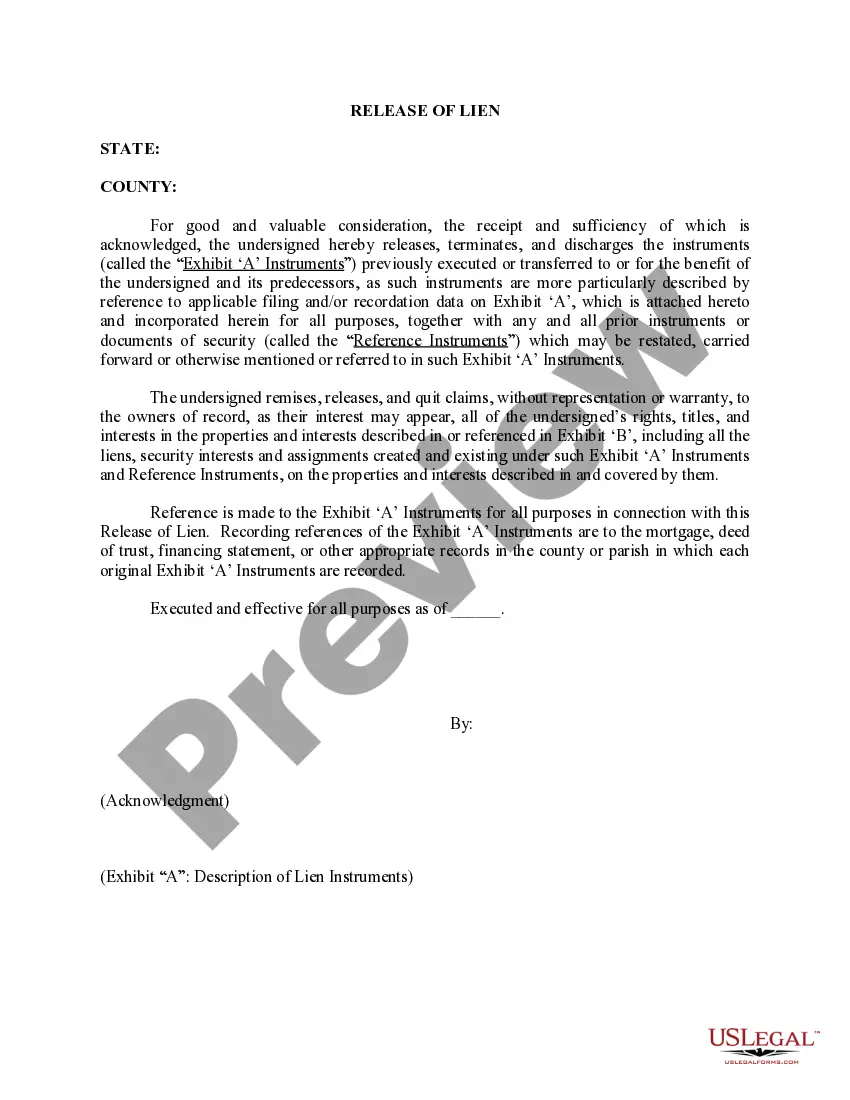
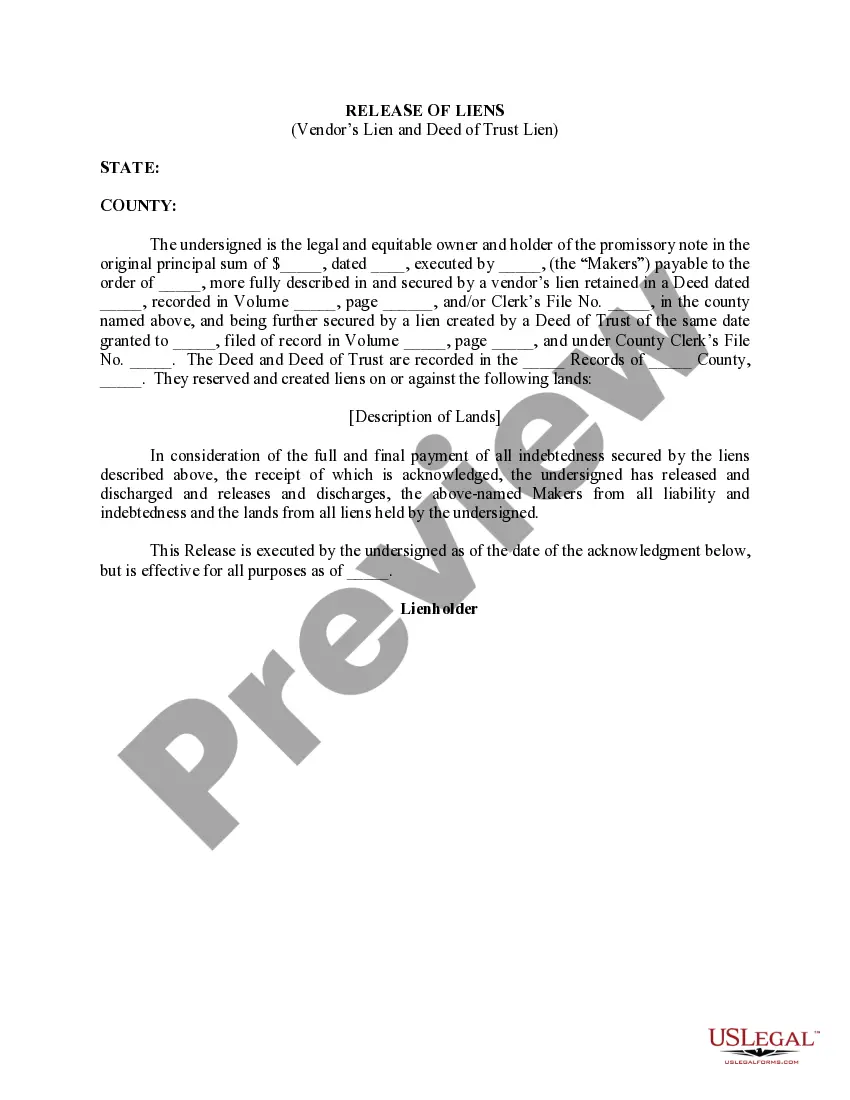
The Release of Lien for Deed of Trust is a legal document used to formally extinguish a lien on a property that was previously secured by a Deed of Trust. This form signifies that the lender has received full payment on the debt and releases their claim over the property. Unlike other forms related to real estate transactions, the Release of Lien specifically confirms the satisfaction of the debt obligation and the lifting of the associated lien from the land title.
Key components of this form
- Identification of the lienholder and borrower, including their legal names.
- Details of the promissory note, including the original principal amount and execution date.
- Description of the property subject to the Deed of Trust.
- Confirmation of full payment and discharge of the lien.
- Effective date of the lien release.
When this form is needed
This form should be used when the borrower has paid off their mortgage or other debts secured by a Deed of Trust. By completing the Release of Lien, the borrower ensures that the lender no longer has any claim on their property, which is crucial for clear title transfer or future transactions involving the property.
Who can use this document
This form is intended for:
- Property owners who have finalized payment on their mortgage or liens.
- Lenders or lienholders needing to formally acknowledge the payment and relinquish their claim on the property.
- Trustees involved in managing and executing the Deed of Trust.
How to prepare this document
- Identify the lienholder and the borrower by entering their full legal names.
- Provide details of the promissory note, including the original principal amount and the date it was executed.
- Describe the property that is subject to the Deed of Trust, including its location and any legal descriptions necessary.
- Confirm that the full amount of the debt has been paid and include the effective date for the release.
- Have the necessary parties sign the document and ensure it is notarized if required by state law.
Notarization guidance
To make this form legally binding, it must be notarized. Our online notarization service, powered by Notarize, lets you verify and sign documents remotely through an encrypted video session.
Get your form ready online
Our built-in tools help you complete, sign, share, and store your documents in one place.
Make edits, fill in missing information, and update formatting in US Legal Forms—just like you would in MS Word.
Download a copy, print it, send it by email, or mail it via USPS—whatever works best for your next step.
Sign and collect signatures with our SignNow integration. Send to multiple recipients, set reminders, and more. Go Premium to unlock E-Sign.
If this form requires notarization, complete it online through a secure video call—no need to meet a notary in person or wait for an appointment.
We protect your documents and personal data by following strict security and privacy standards.

Make edits, fill in missing information, and update formatting in US Legal Forms—just like you would in MS Word.

Download a copy, print it, send it by email, or mail it via USPS—whatever works best for your next step.

Sign and collect signatures with our SignNow integration. Send to multiple recipients, set reminders, and more. Go Premium to unlock E-Sign.

If this form requires notarization, complete it online through a secure video call—no need to meet a notary in person or wait for an appointment.

We protect your documents and personal data by following strict security and privacy standards.
Avoid these common issues
- Failing to fully describe the property subject to the lien.
- Not entering the correct names of the parties involved.
- Neglecting to sign the form or have it notarized when necessary.
- Leaving out the effective date of the release.
Benefits of using this form online
- Convenient access to legal forms 24/7, allowing for immediate use.
- Editable templates that can be personalized to fit unique situations.
- Reliability, as forms are prepared by licensed attorneys to ensure compliance with legal standards.
Looking for another form?
Form popularity
FAQ
In order to clear the Deed of Trust from the title to the property, a Deed of Reconveyance must be recorded with the Country Recorder or Recorder of Deeds. If the Trustee/Beneficiary fails to record a satisfaction within the set time limits, the Trustee/Beneficiary may be responsible for damages as set out by statute.
The release of lien is then recorded by the title company in the real property records at the county recorder's office. The fee is generally included in your settlement costs or as a separate lien release fee paid at closing. Your new mortgage company places a mortgage lien on the home and records it.
With a deed of trust, you temporarily give control of the title to your property to the lender for security purposes. Once you pay off the debt, the lender conveys that temporary control back to you.
Name of Claimant. This is the name the party to be paid, and the party who will be signing the lien waiver document. Name of Customer. Job Location. Owner. Exceptions. Claimant's Signature. Claimant's Title. Date of Signature.
It basically states that you've paid the subcontractor what is owed, they accept the payment in full, and they waive the right to put a lien on your property. Simply present this form to the subcontractor with your payment and ask them to sign it. Make sure you get their signature!
A deed of release literally releases the parties to a deal from previous obligations, such as payments under the term of a mortgage because the loan has been paid off. The lender holds the title to real property until the mortgage's terms have been satisfied when a deed of release is commonly entered into.
Make sure the debt the lien represents is valid. Pay off the debt. Fill out a release-of-lien form. Have the lien holder sign the release-of-lien form in front of a notary. File the lien release form. Ask for a lien waiver, if appropriate. Keep a copy.
Write your name and return address in the top three lines of the letter. Insert the complete date (month, day, year). Enter the recipient's name, title, company name and address on the next five lines. Greet the reader by writing "Dear (recipient's name):" Skip two lines. State the subject in a subject line.
The property's title remains in the trust until the loan is paid off, or satisfied, then it is released from the trust. To complete the release, the lender prepares a deed of reconveyance. It's signed by a representative of the lender and notarized, like other types of deeds.