Bill of Sale and Quitclaim by Surface Owner of All Interest in Equipment Deemed Abandoned on Surface Owner's Lands - Abandonment
What is this form?
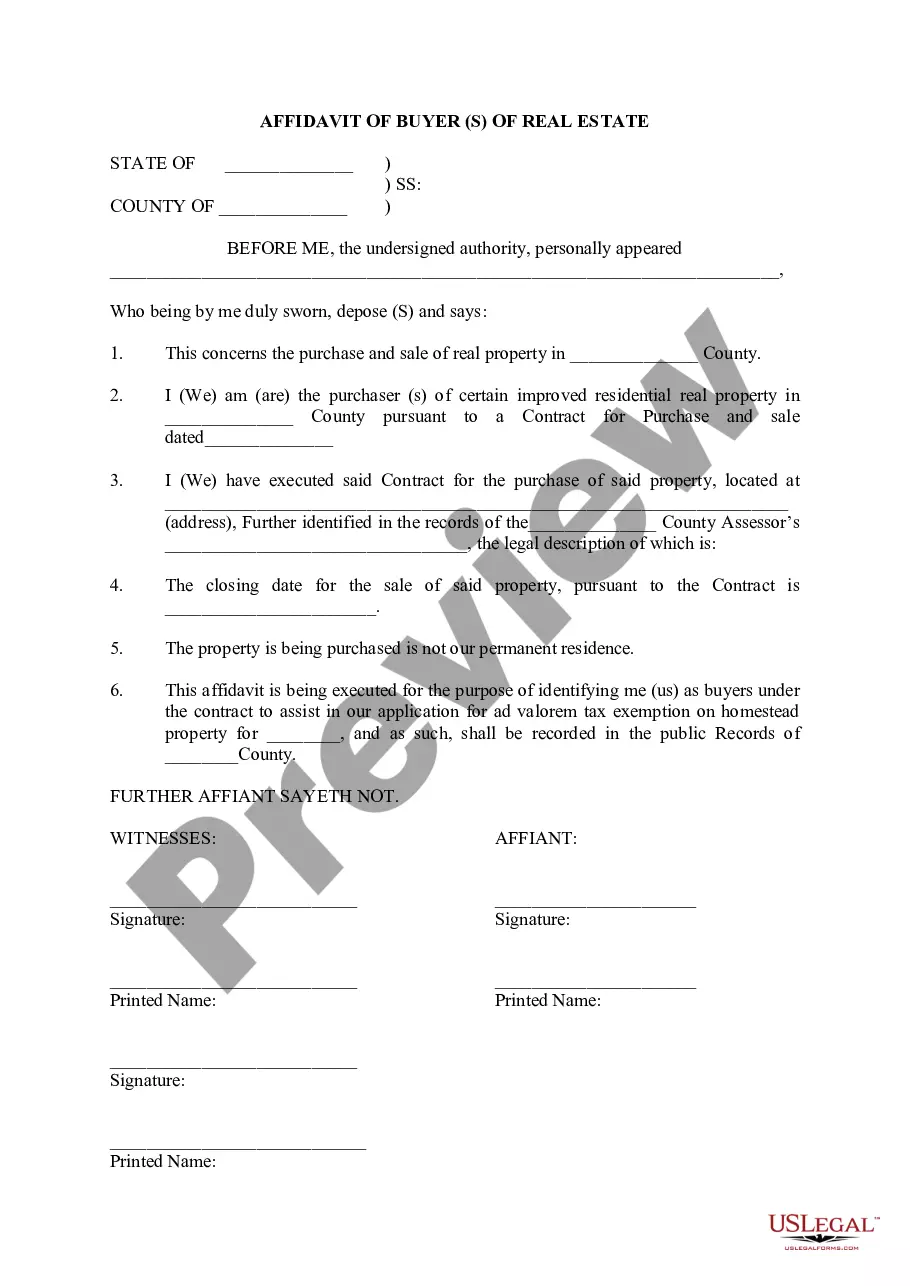
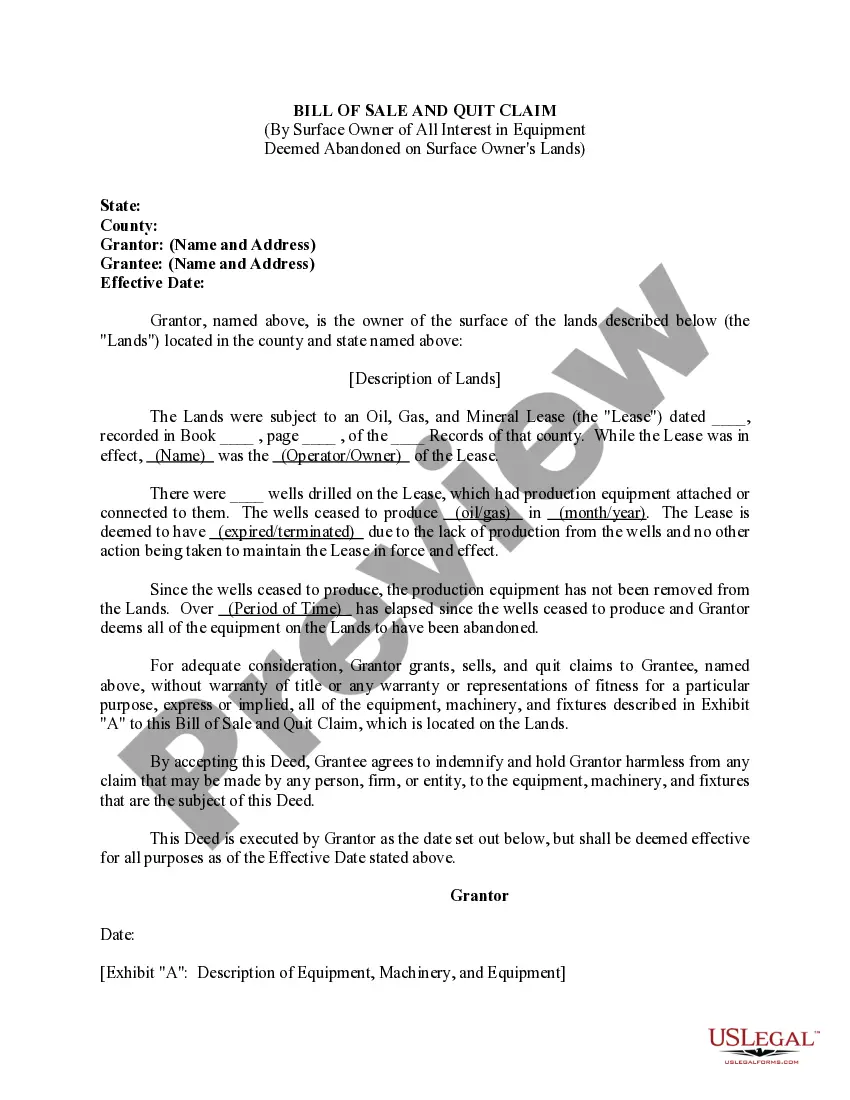
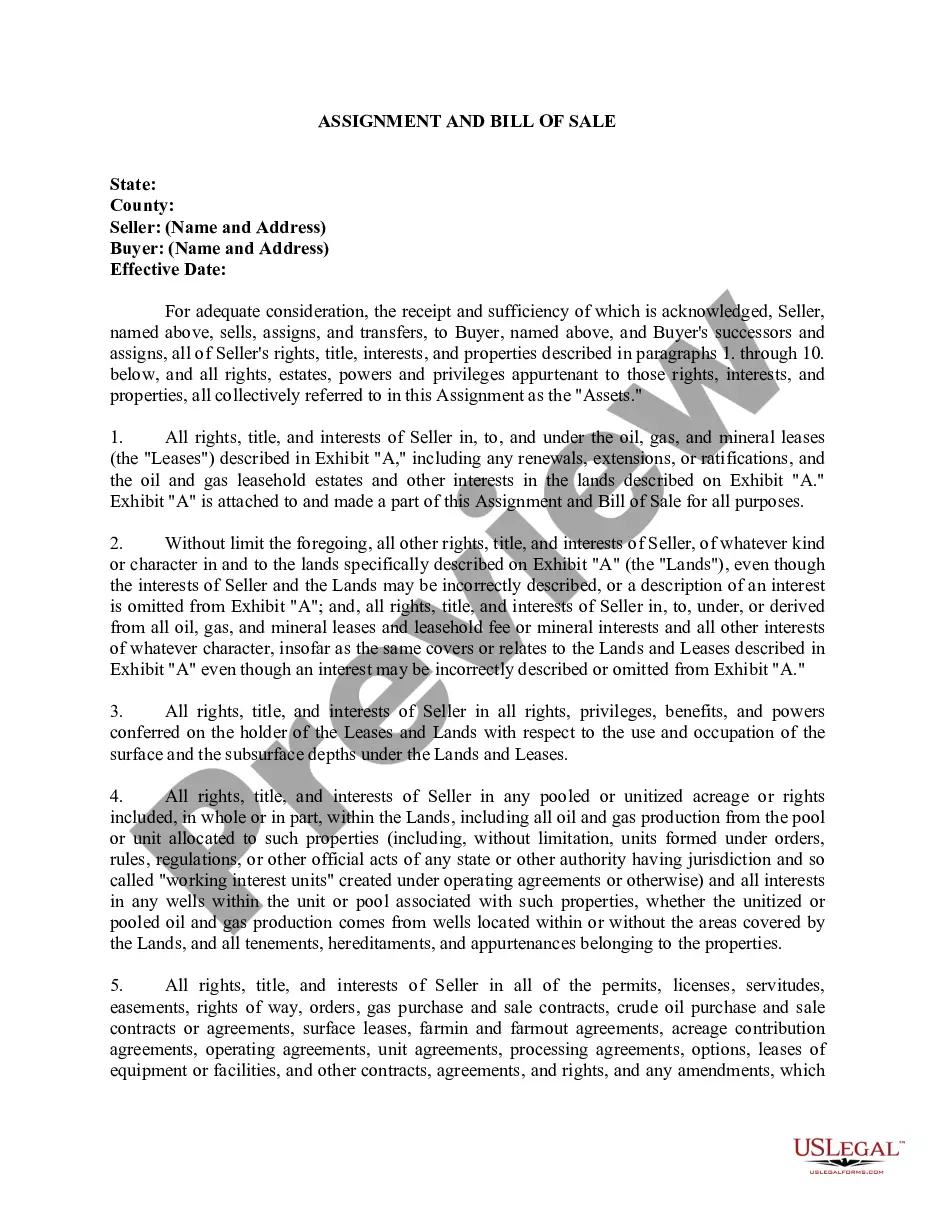
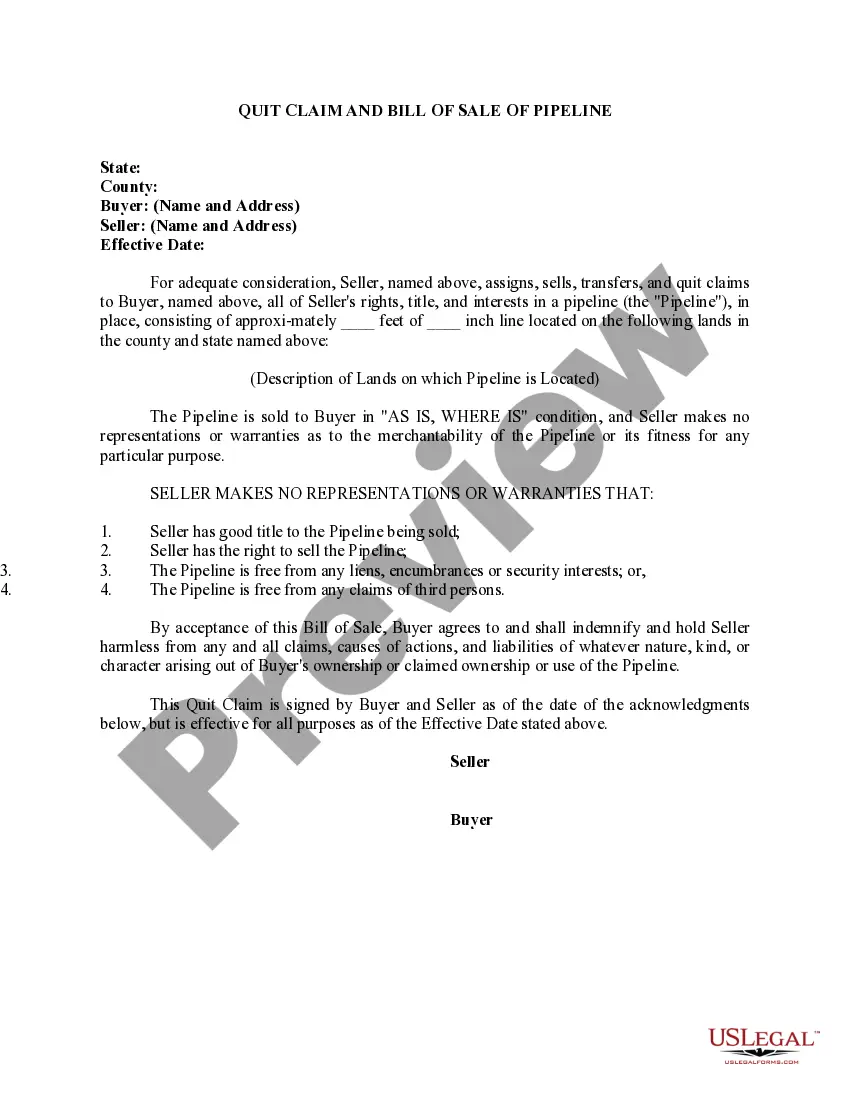
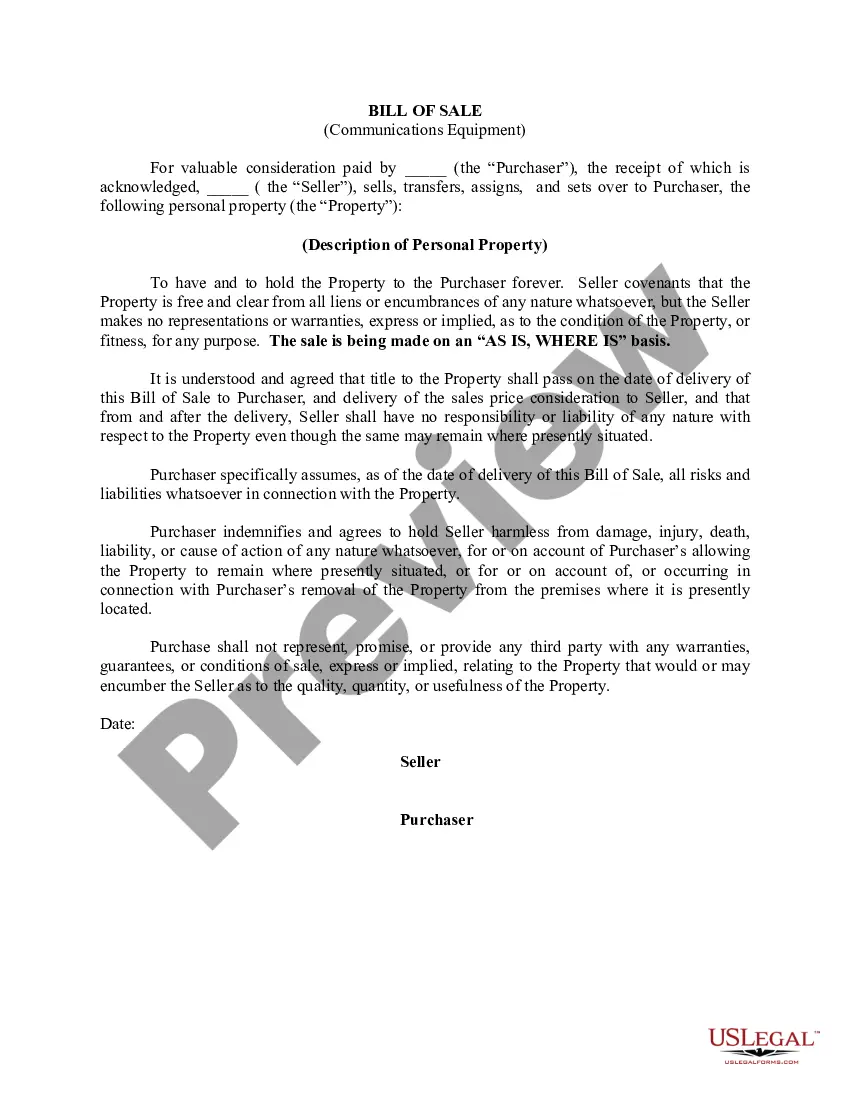
The Bill of Sale and Quitclaim by Surface Owner of All Interest in Equipment Deemed Abandoned on Surface Owner's Lands is a legal document that allows a surface owner to transfer ownership of abandoned equipment left on their land. This form serves as official documentation of the transfer and clarifies the lack of title and ownership claims to the said equipment, differentiating it from standard bill of sale forms that typically deal with more clearly defined ownership situations.
What’s included in this form
- Grantor and Grantee information, including names and addresses.
- Description of the land where the abandoned equipment is located.
- Details about the oil, gas, and mineral lease related to the land.
- Identification of the abandoned equipment listed in an attached exhibit.
- Indemnification clause protecting the Grantor from future claims.
When to use this form
This form is typically needed when a surface owner has abandoned equipment on their property and wants to officially transfer ownership of that equipment to another party. Common scenarios include land becoming vacant after an oil or gas lease has expired, or situations where equipment has been left on the land without removal following ceased production.
Who can use this document
- Surface owners looking to dispose of equipment they deem abandoned.
- Individuals or entities interested in acquiring abandoned equipment under legal terms.
- Attorneys assisting clients with property management or disputes over abandoned equipment.
Steps to complete this form
- Identify the Grantor and Grantee by entering their names and addresses.
- Enter the effective date of the transfer.
- Provide a description of the land where the abandoned equipment is located.
- List the equipment in detail in Exhibit A.
- Both parties should sign and date the document to finalize the transfer.
Does this form need to be notarized?
Notarization is required for this form to take effect. Our online notarization service, powered by Notarize, lets you verify and sign documents remotely through an encrypted video session, available 24/7.
Get your form ready online
Our built-in tools help you complete, sign, share, and store your documents in one place.
Make edits, fill in missing information, and update formatting in US Legal Forms—just like you would in MS Word.
Download a copy, print it, send it by email, or mail it via USPS—whatever works best for your next step.
Sign and collect signatures with our SignNow integration. Send to multiple recipients, set reminders, and more. Go Premium to unlock E-Sign.
If this form requires notarization, complete it online through a secure video call—no need to meet a notary in person or wait for an appointment.
We protect your documents and personal data by following strict security and privacy standards.

Make edits, fill in missing information, and update formatting in US Legal Forms—just like you would in MS Word.

Download a copy, print it, send it by email, or mail it via USPS—whatever works best for your next step.

Sign and collect signatures with our SignNow integration. Send to multiple recipients, set reminders, and more. Go Premium to unlock E-Sign.

If this form requires notarization, complete it online through a secure video call—no need to meet a notary in person or wait for an appointment.

We protect your documents and personal data by following strict security and privacy standards.
Common mistakes
- Failing to accurately describe the abandoned equipment in Exhibit A.
- Not including the correct names and addresses of both parties.
- Missing signatures or dates, which may render the form invalid.
Why use this form online
- Immediate access to a reliable legal document without the need for physical appointments.
- Convenient editing options are available to customize the form as needed.
- Utilization of attorney-drafted templates ensures legal accuracy and compliance.
Looking for another form?
Form popularity
FAQ
Therapy. Seek out the help of a mental health professional, such as a therapist or counselor. They can help you overcome fears of being abandoned. Self-care. People with abandonment issues may benefit from self-care.
Abandon means to give up or discontinue any further interest in something because of discouragement, weariness, distaste, or the like: to abandon one's efforts. Relinquish implies being or feeling compelled to give up something one would prefer to keep: to relinquish a long-cherished desire.
One such fault ground is willful desertion and abandonment. In order for a party to prove willful desertion or abandonment he/she must prove (1) that the deserting spouse intended to end the marriage; (2) that the deserted spouse did nothing to justify the desertion; and (3) the desertion was against the wishes of
Abandoned child syndrome is a proposed behavioral or psychological condition that is said to result from the loss of one or both parents. Abandonment may be physical or emotional; that is, the parent may abandon the child by failing to be present in their life, or by withholding affection, nurturing, or stimulation.
Get Clear on Emotional Responsibility. When your abandonment paranoia gets out of control, do you expect your partner to calm your anxiety? Correct Idealistic Expectations. Learn to Self-Validate. Be Authentic. Practice Self-Confrontation.
In order to prove abandonment, the abandoned spouse must use direct or constructive evidence to demonstrate their claim. The spouse claiming abandonment must prove that the couple kept separate residences and didn't engage in marital relations for a required period, usually a year.
Intrusive, debilitating anxiety. Chronic feelings of insecurity. Chronic depression. Decreased self-esteem. Feelings of loss of control over life. Self-depreciation. Isolation. Obsessive thinking and intrusive thoughts about the abandonment.
If you fear abandonment, it can be almost impossible to maintain healthy relationships. This paralyzing fear can lead you to wall yourself off to avoid getting hurt. Or you might be inadvertently sabotaging relationships. The first step in overcoming your fear is to acknowledge why you feel this way.
State laws differ about what is needed for a parent to be deemed to have abandoned a child. Generally, there needs to be a period of time during which the parent does not have any contact with the child and does not pay child support. In most states, the period of time is one year, but this varies.
Abandonment is a feeling of disconnectedness, rejection, and neediness. The aftermath of this type of trauma generates a looming fear of not only losing connection with the people you love, but being forced to fend for yourself.