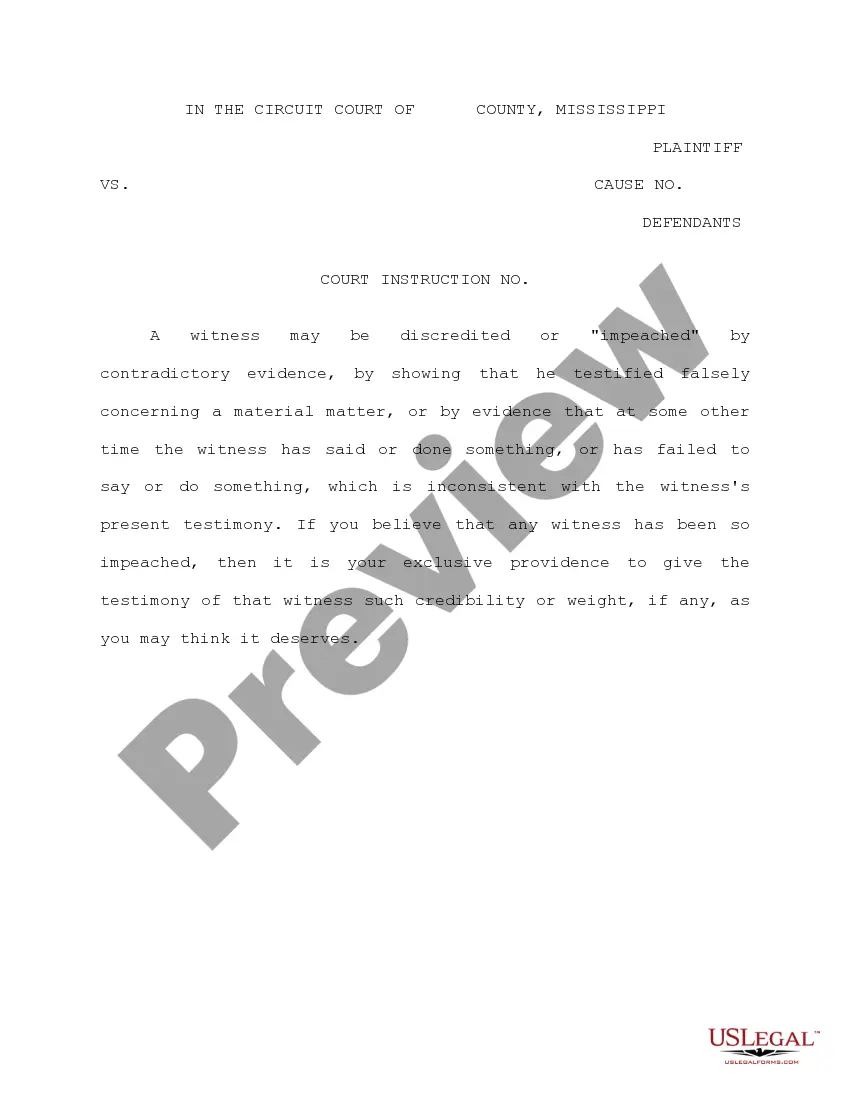
Louisiana Bylaws of Corporation
What is this form?
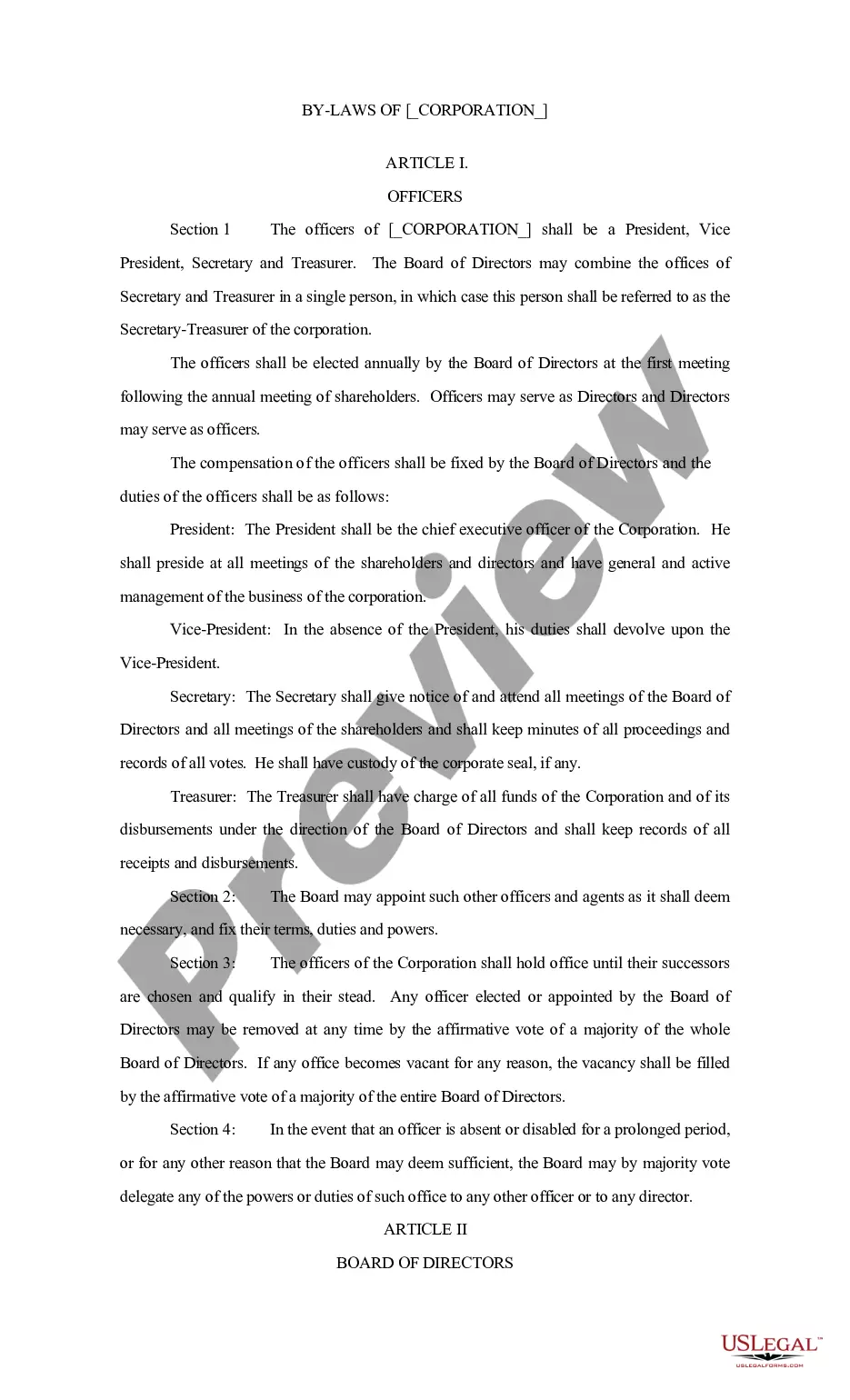
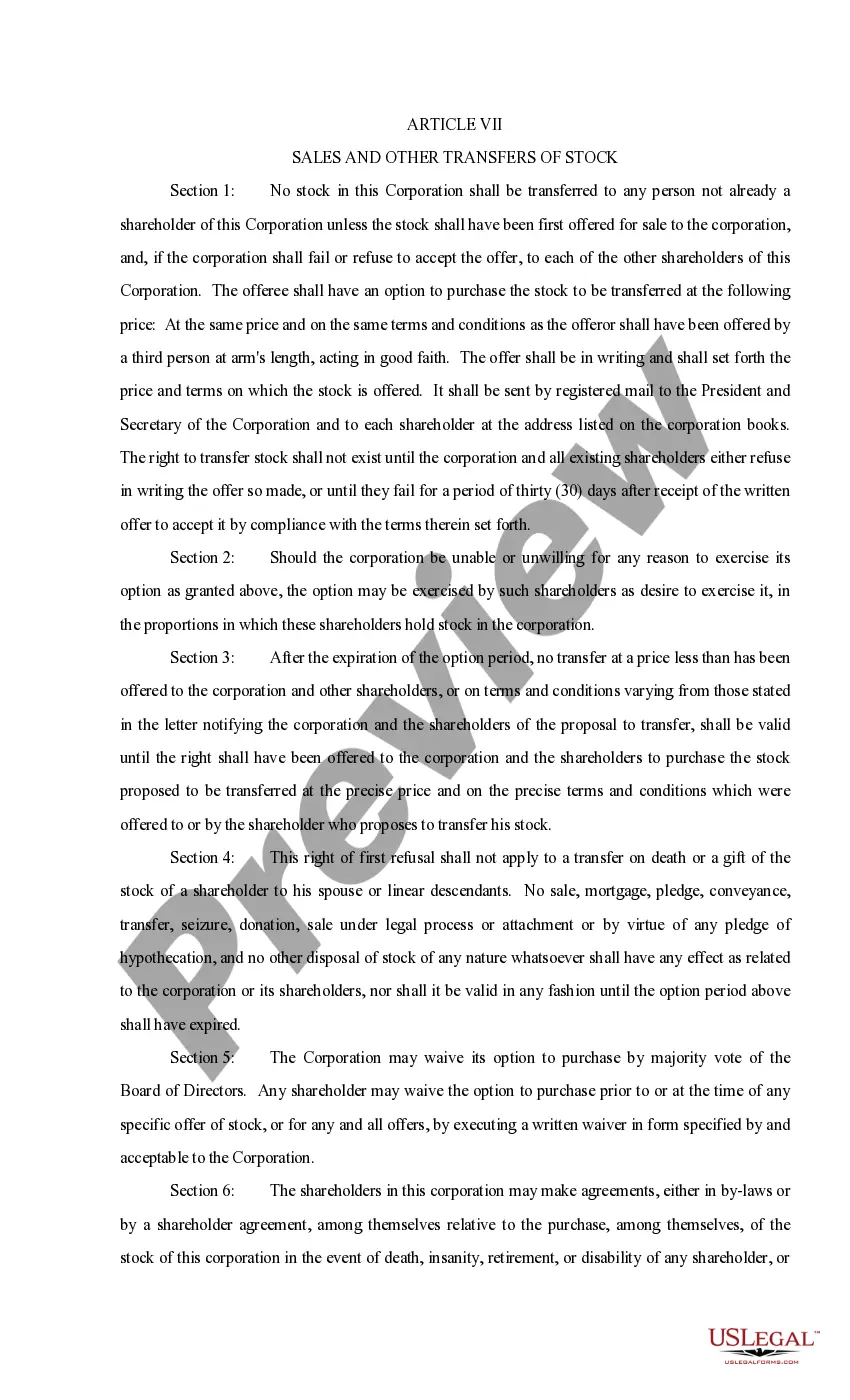
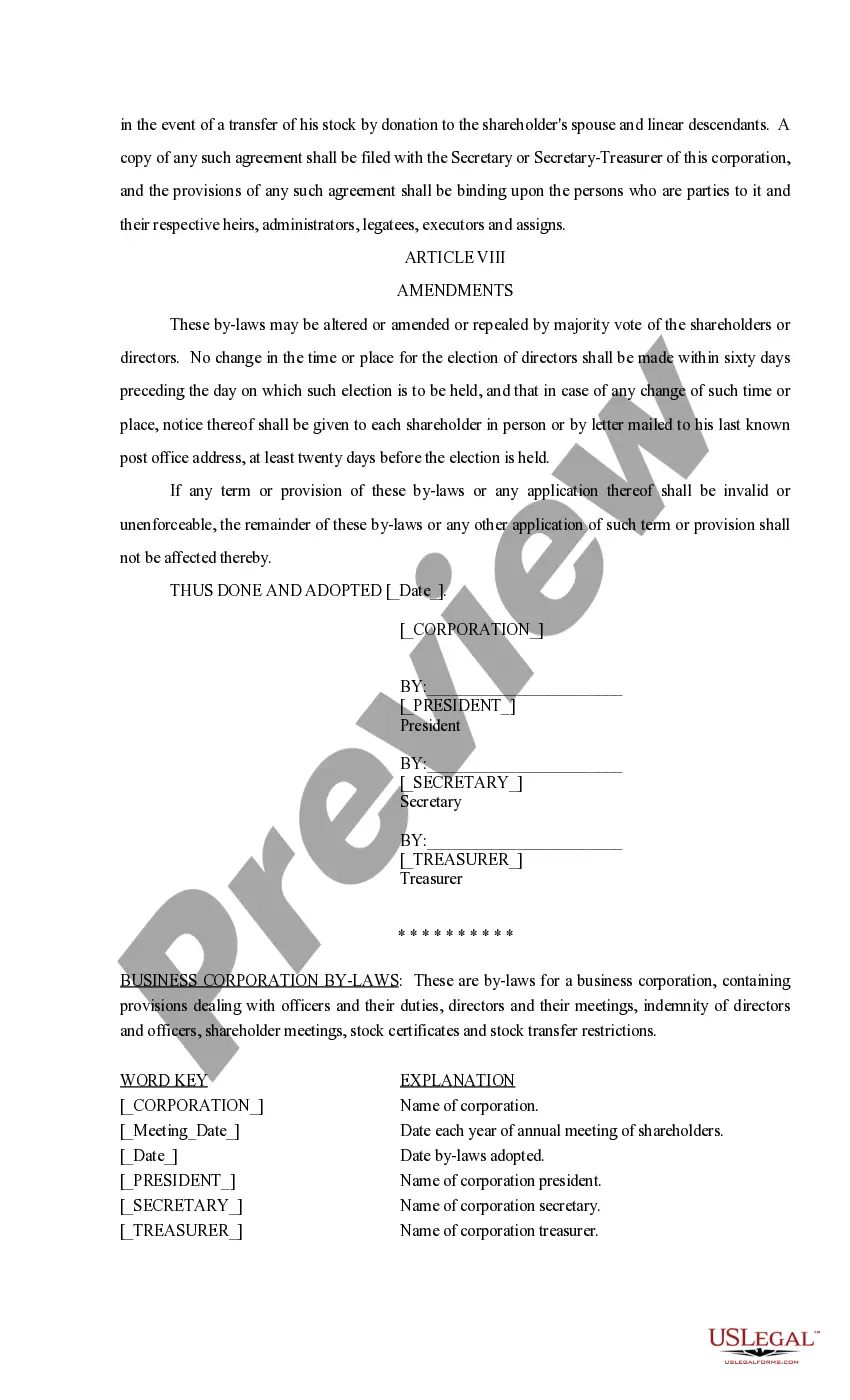
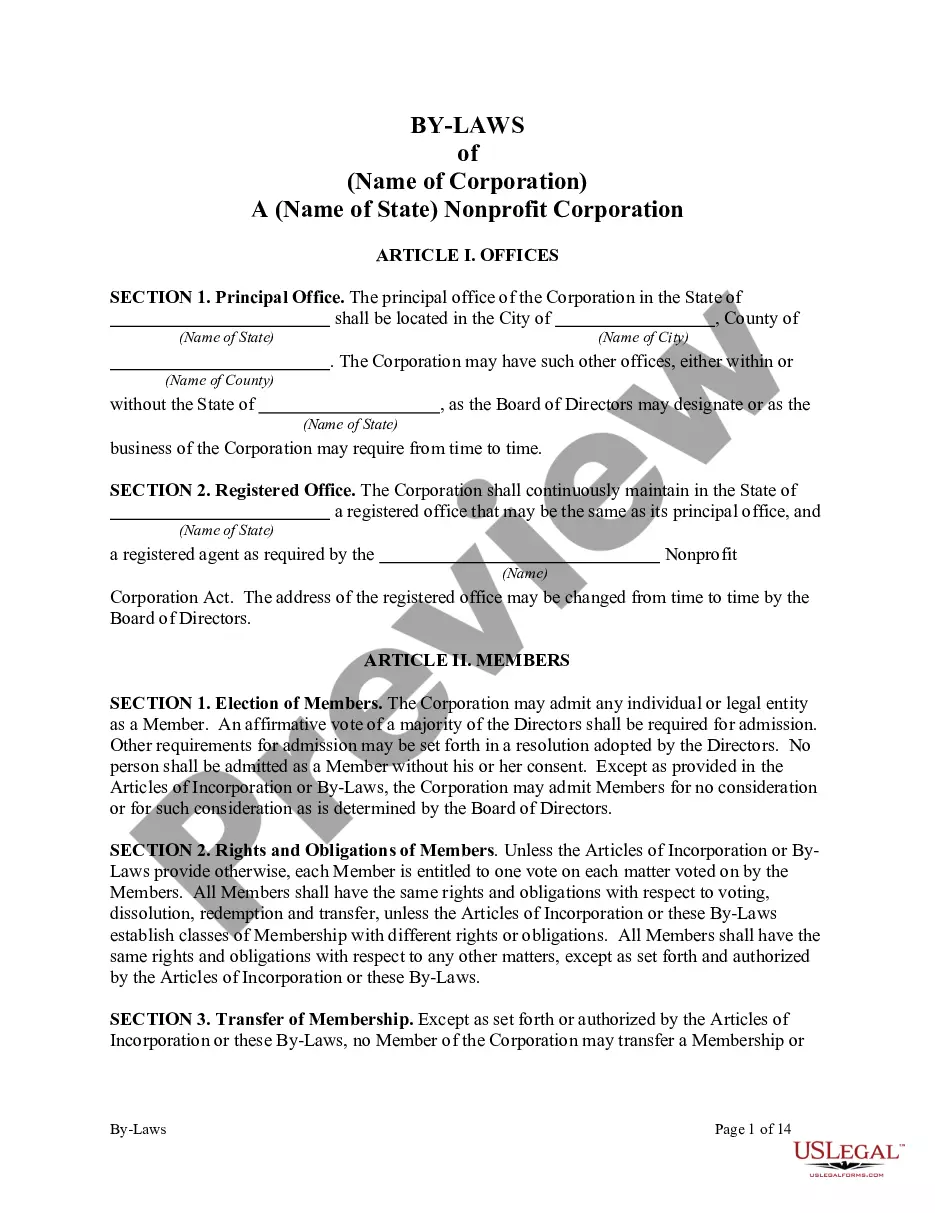
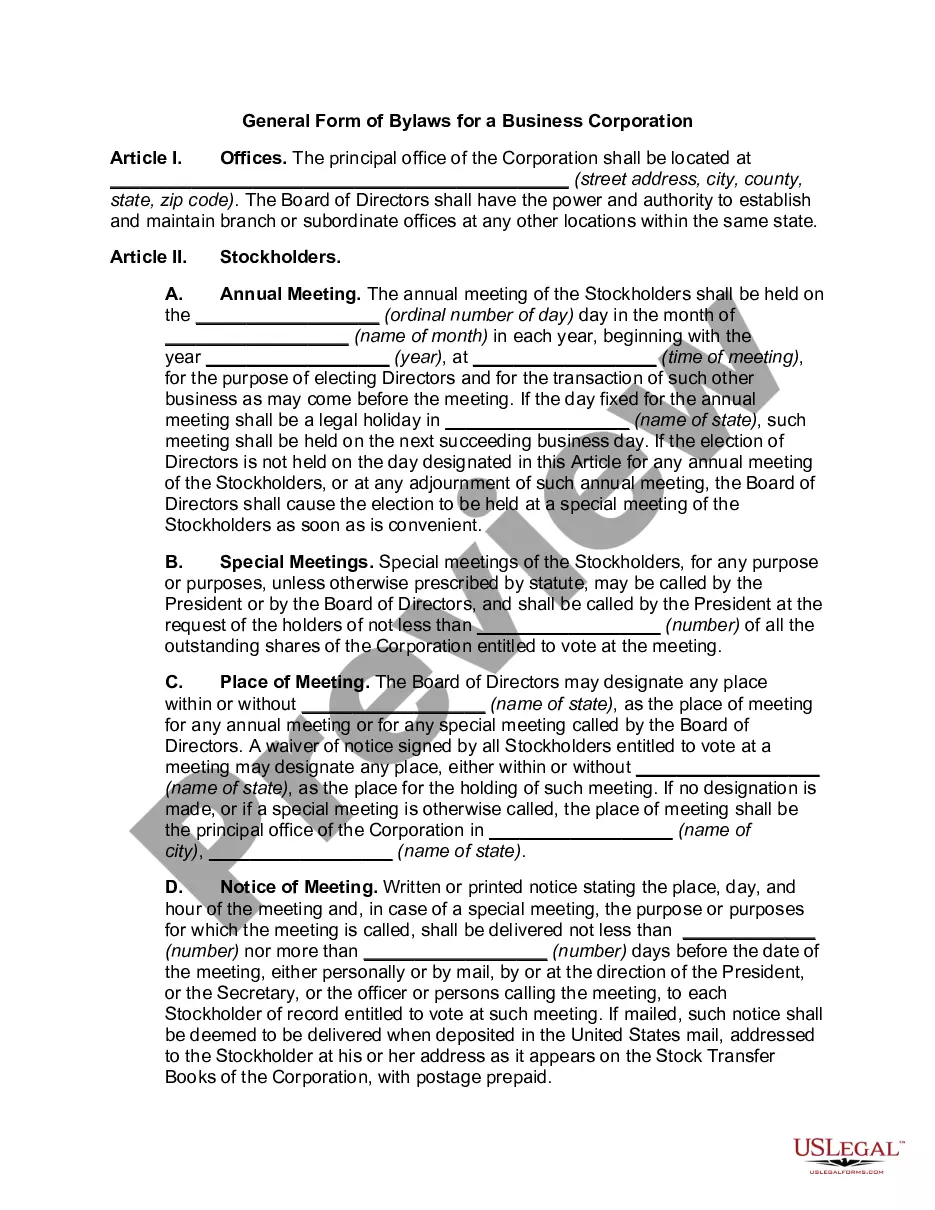
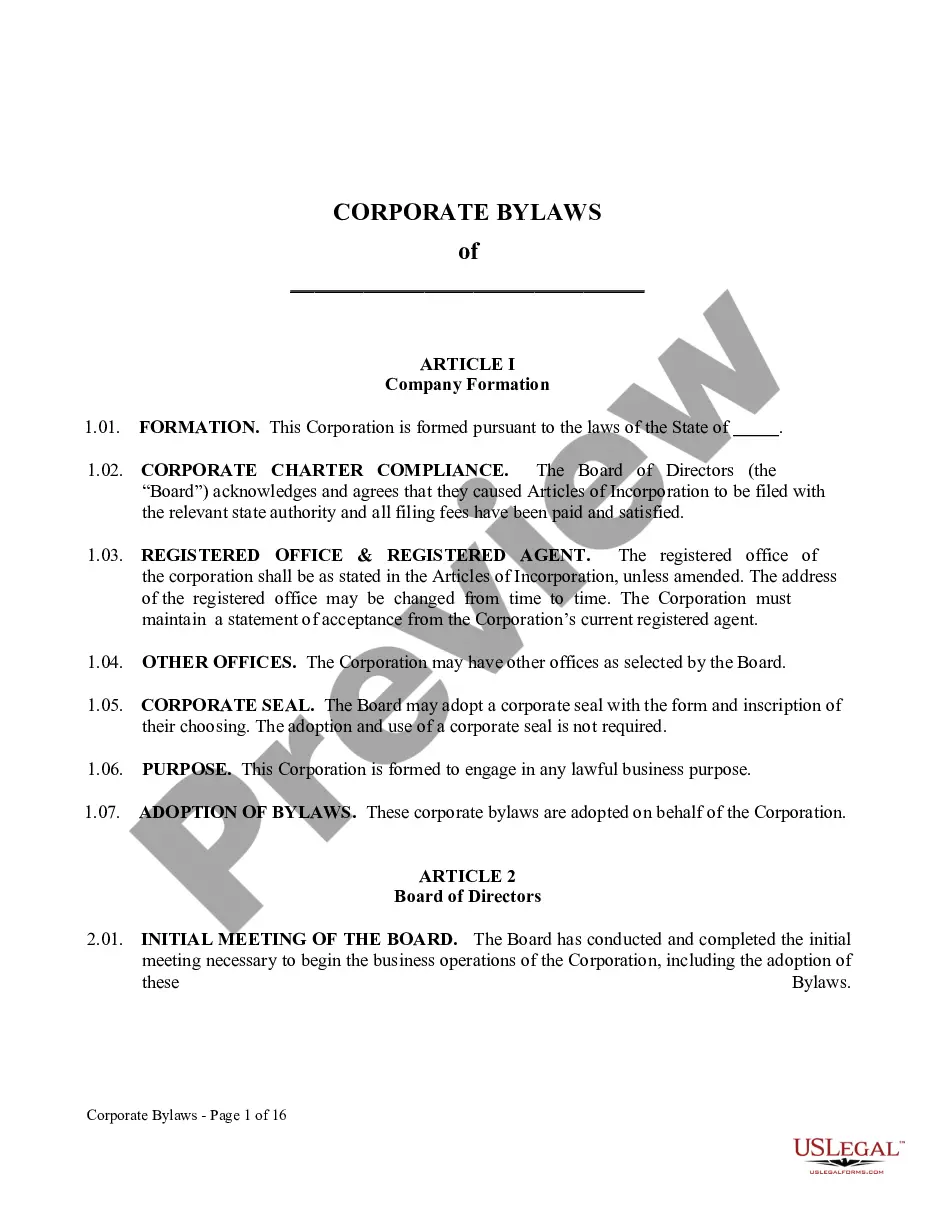
The Bylaws of Corporation outline the rules and procedures for a corporation's internal governance. This form is essential for defining the roles and responsibilities of officers and directors, managing shareholder meetings, and establishing guidelines for corporate transactions. Unlike other corporate documents, such as articles of incorporation, bylaws focus on the operational structure and function of the corporation.
What’s included in this form
- Officers: Defines the roles and responsibilities of the President, Vice President, Secretary, and Treasurer.
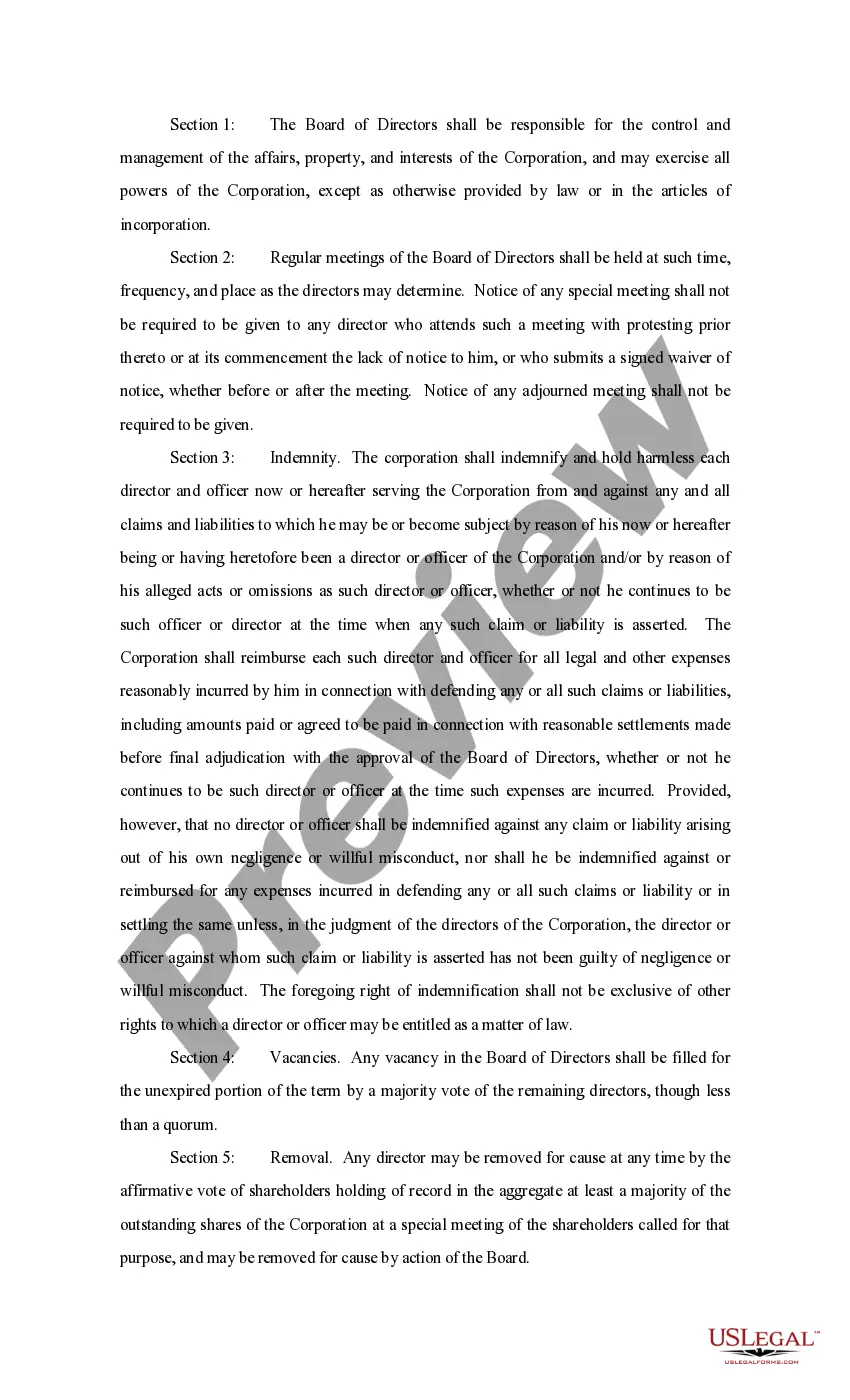
- Board of Directors: Addresses the management and responsibilities of the Board, including meeting protocols.
- Indemnity: Covers protection for directors and officers against certain liabilities arising from their corporate roles.
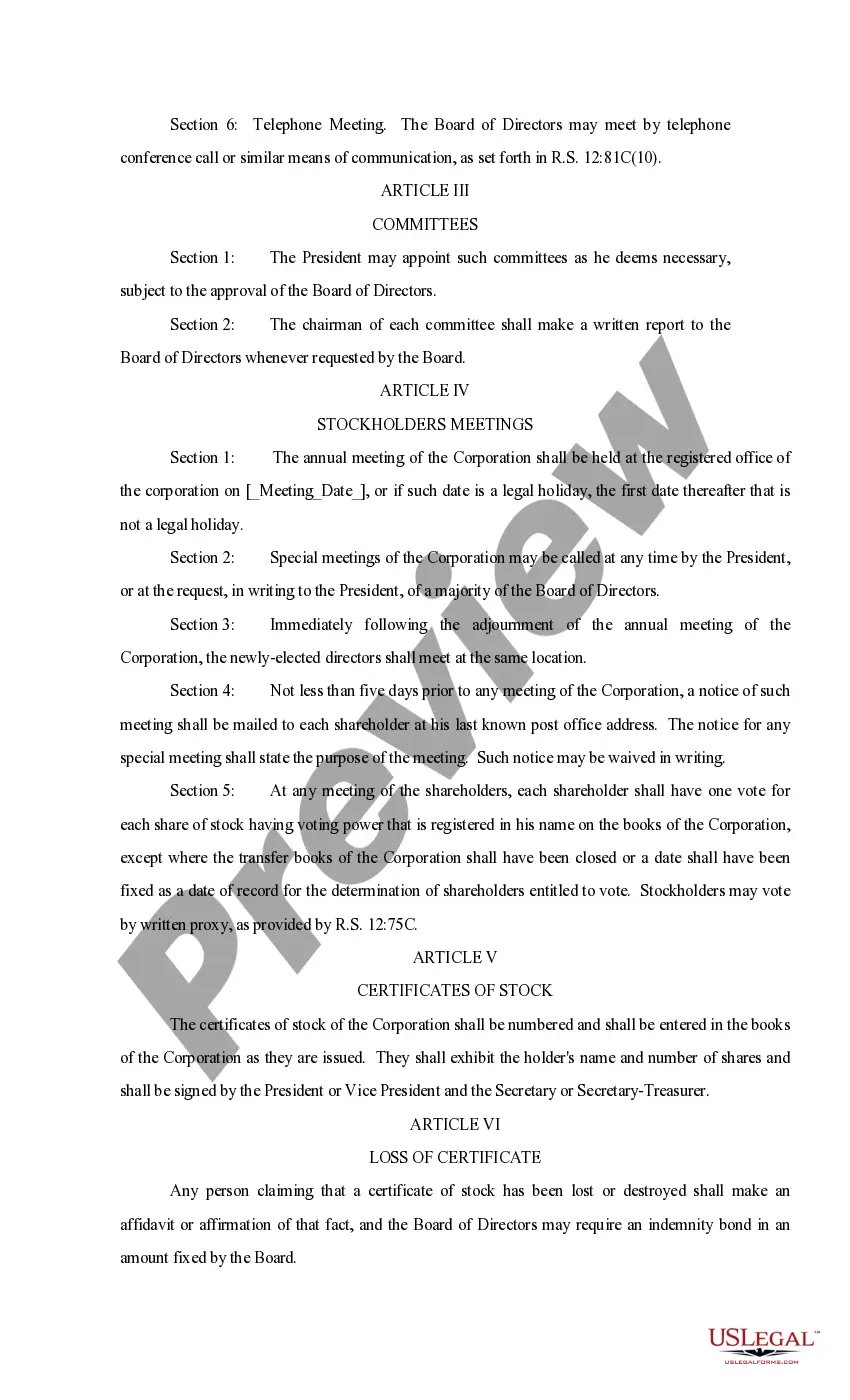
- Shareholder Meetings: Specifies requirements for annual and special meetings, including notification procedures.
- Stock Certificates: Details the issuance and transfer of stock certificates and related procedures.
- Amendments: Outlines the process for altering or repealing the bylaws.


When to use this document
This form is necessary when establishing a new corporation or updating the governing rules of an existing one. If you are starting a corporation, bylaws will help clarify how your company operates, define the powers of officers and directors, and set procedures for important corporate events, such as meetings and stock transfers.
Who needs this form
- Certain circumstances where bylaws are essential include:
- Founders of a new corporation looking to formalize operational rules.
- Existing corporations seeking to revise their governance structure.
- Corporation officers and directors needing clarity on their roles.
- Shareholders interested in understanding voting and meeting procedures.
Completing this form step by step
- Identify the corporation's name and enter it where indicated.
- Specify the date for the annual shareholders' meeting.
- Fill in the names of the appointed officers, including President, Secretary, and Treasurer.
- Detail the procedures and frequency of Board of Directors meetings.
- Set forth any additional provisions regarding stock transfers and any special clauses needed for your corporation.
Does this document require notarization?
This form does not typically require notarization unless specified by local law. However, it is advisable to verify local requirements to ensure compliance with state regulations.
Get your form ready online
Our built-in tools help you complete, sign, share, and store your documents in one place.
Make edits, fill in missing information, and update formatting in US Legal Forms—just like you would in MS Word.
Download a copy, print it, send it by email, or mail it via USPS—whatever works best for your next step.
Sign and collect signatures with our SignNow integration. Send to multiple recipients, set reminders, and more. Go Premium to unlock E-Sign.
If this form requires notarization, complete it online through a secure video call—no need to meet a notary in person or wait for an appointment.
We protect your documents and personal data by following strict security and privacy standards.
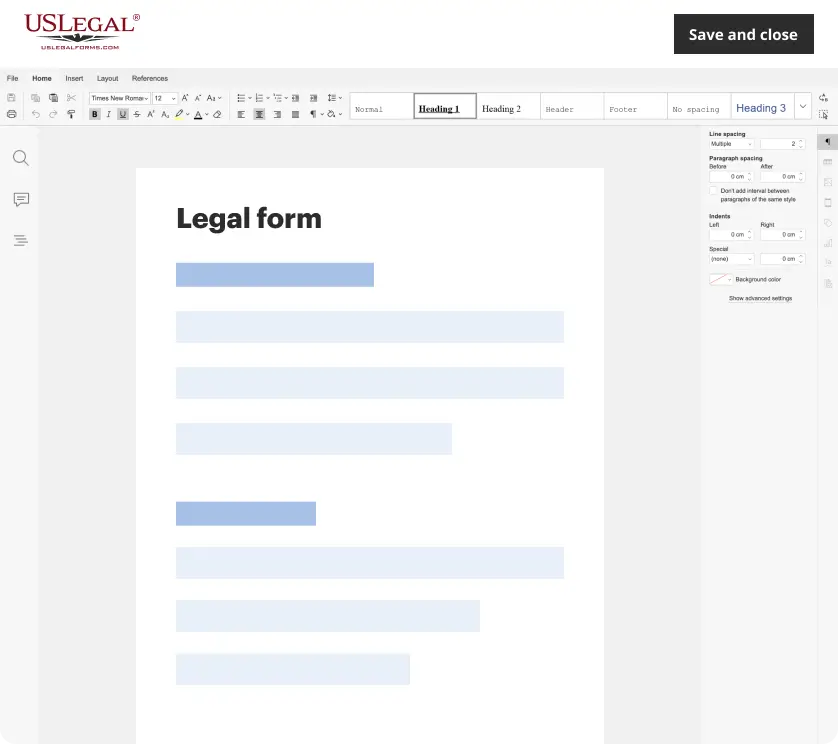
Make edits, fill in missing information, and update formatting in US Legal Forms—just like you would in MS Word.
Download a copy, print it, send it by email, or mail it via USPS—whatever works best for your next step.
Sign and collect signatures with our SignNow integration. Send to multiple recipients, set reminders, and more. Go Premium to unlock E-Sign.

If this form requires notarization, complete it online through a secure video call—no need to meet a notary in person or wait for an appointment.

We protect your documents and personal data by following strict security and privacy standards.
Avoid these common issues
- Neglecting to specify roles and responsibilities clearly, leading to confusion.
- Forgetting to include important meeting procedures or notice requirements.
- Failing to update the bylaws to reflect changes in corporate structure or state law.
Benefits of using this form online
- Convenience: Download and complete the form at your own pace.
- Editability: Easily customize the bylaws to suit your specific corporate needs.
- Reliability: Ensure that the bylaws are drafted with legal accuracy by licensed attorneys.
Quick recap
- Bylaws are crucial for the governance of a corporation.
- Ensure clarity and detail in defining roles and operational procedures.
- Review local laws for any specific requirements related to corporate bylaws.
Looking for another form?
Form popularity
FAQ
The bylaws are the corporation's operating manual; they describe how the corporation is organized and runs its affairs. You do not file the bylaws with the state, but you need to explain the roles of the corporation's participants, and technology can play a role in carrying out the bylaws.
The bylaws of a corporation are the governing rules by which the corporation operates. Bylaws are created by the board of directors when the corporation is formed.
Although the California General Corporation Law requires that the original or a copy of the bylaws be available to shareholders (Section 213), it does not require that corporate bylaws be signed.
Step 1: Create a Name For Your Louisiana Corporation. Step 2: Choose a Louisiana Registered Agent. Step 3: Choose Your Louisiana Corporation's Initial Directors. Step 4: File the Articles of Incorporation.
Basic Corporate Information. The bylaws should include your corporation's formal name and the address of its main place of business. Board of Directors. Officers. Shareholders. Committees. Meetings. Conflicts of Interest. Amendment.
Taxes. Corporations must file their annual tax returns. Securities. Corporations must issue stock as their security laws and articles of incorporation mandate. Bookkeeping. Board meetings. Meeting minutes. State registration. Licensing.
California Articles of Incorporation Apostille The red seal is placed on the front of the original Articles of Incorporation document you received when forming your Corporation.Some of these documents will require notarization (Agreements, Bylaws, Power of Attorney, etc2026).
California Articles of Incorporation Apostille The red seal is placed on the front of the original Articles of Incorporation document you received when forming your Corporation.Some of these documents will require notarization (Agreements, Bylaws, Power of Attorney, etc2026).
Bylaws are not public documents, but making them readily available increases your accountability and transparency and encourages your board to pay closer attention to them. Your board should review them regularly and amend them accordingly as your organization evolves.