Mississippi Complaint for Declaratory Judgment and Interpleader Action
What is this form?
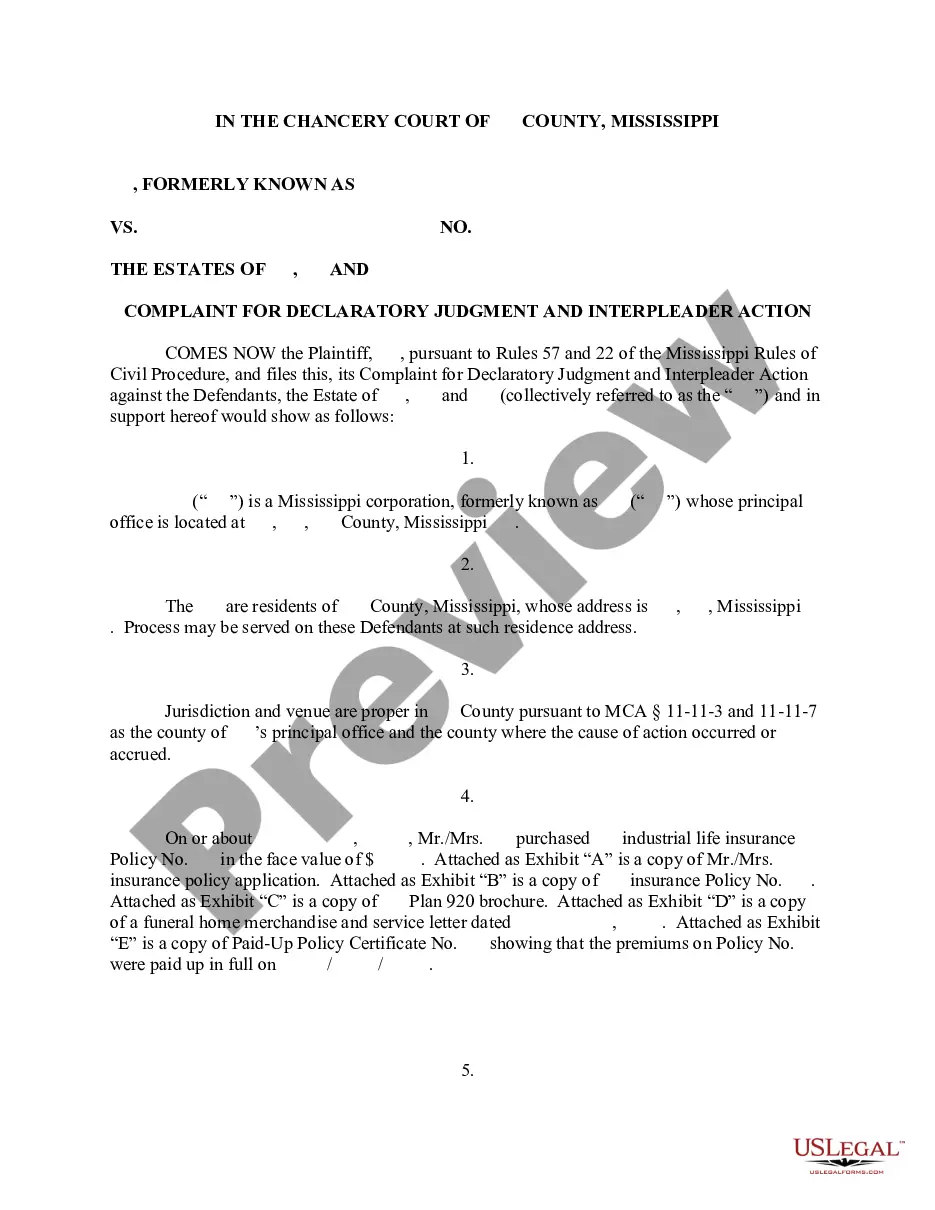
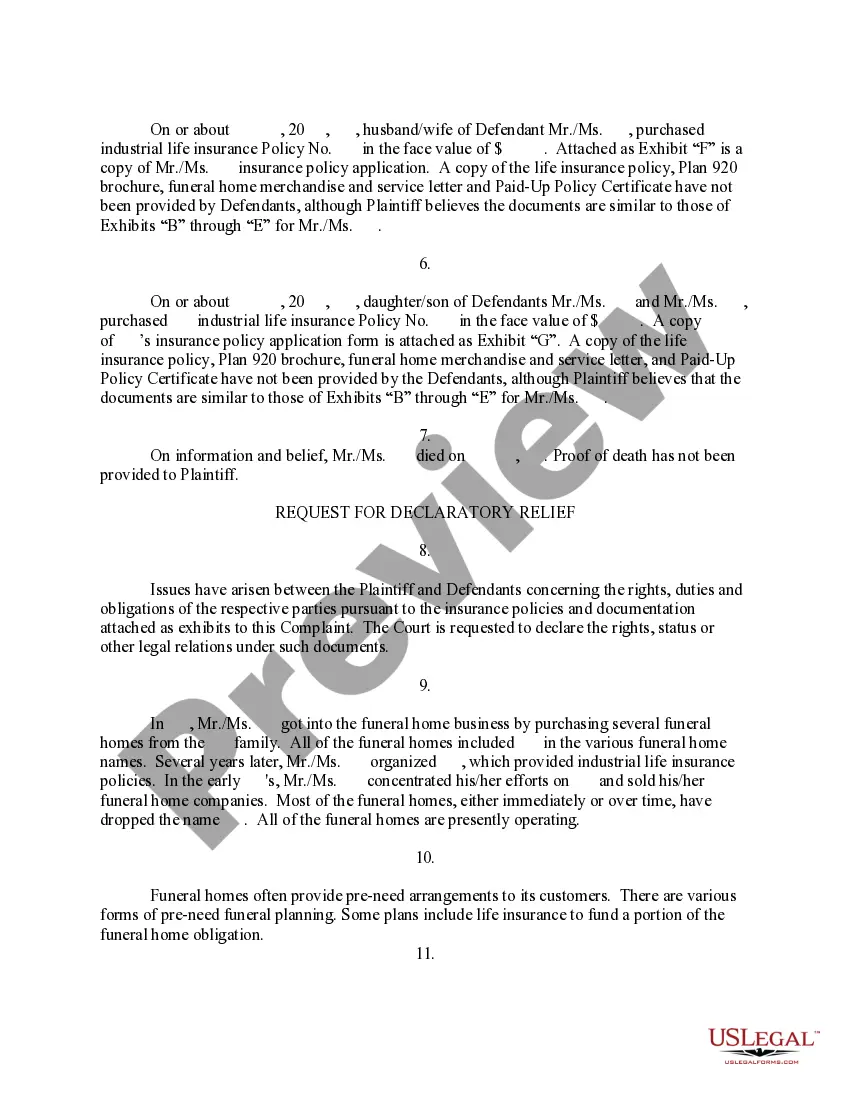
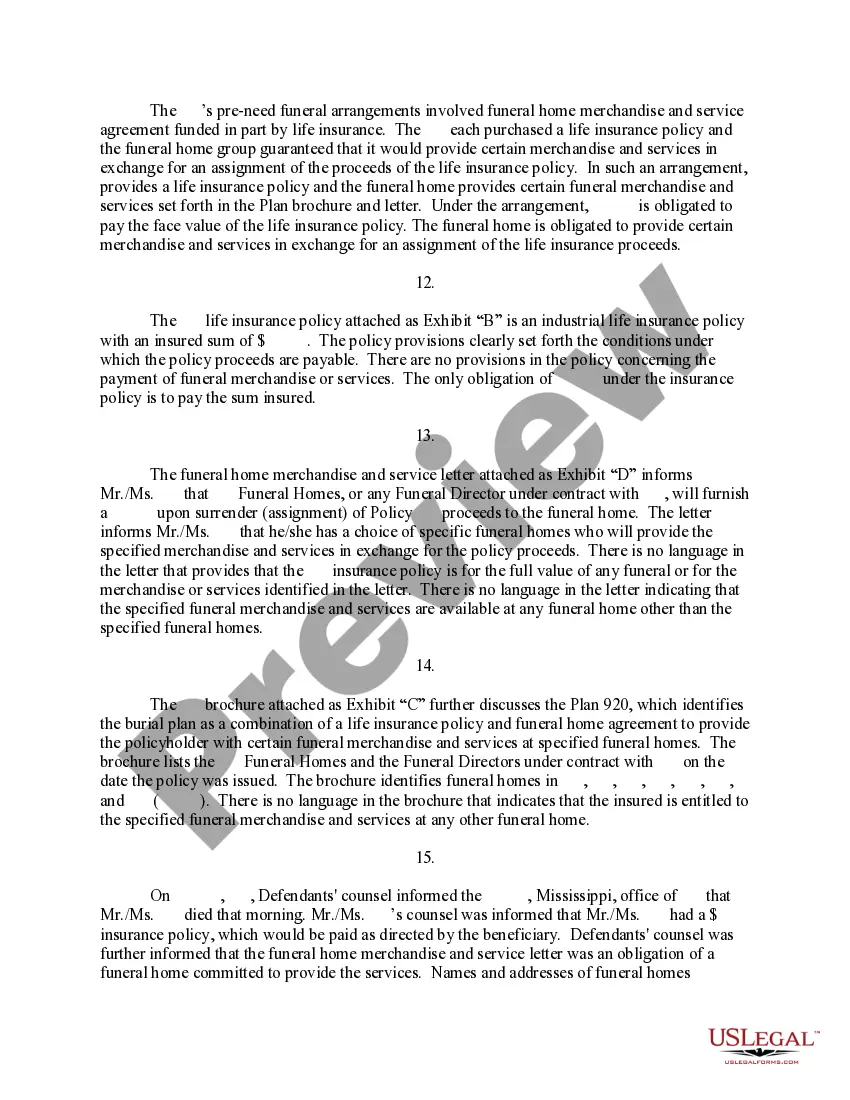
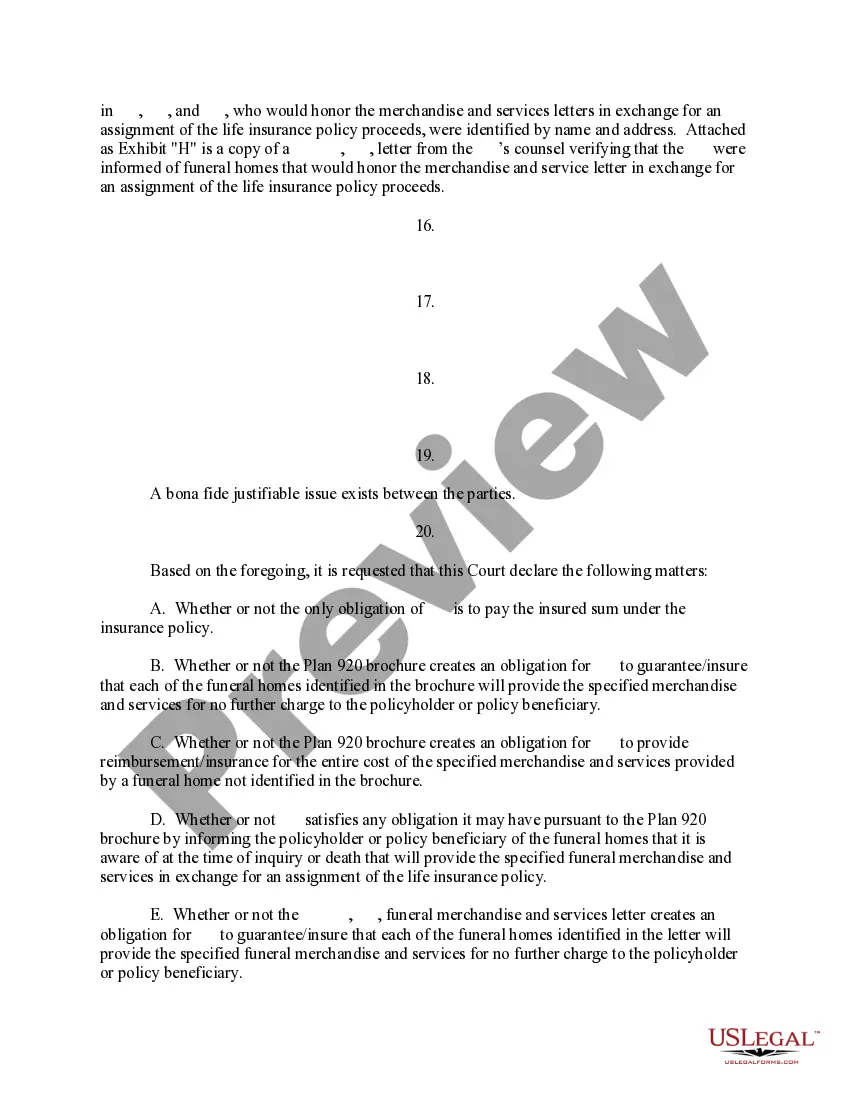
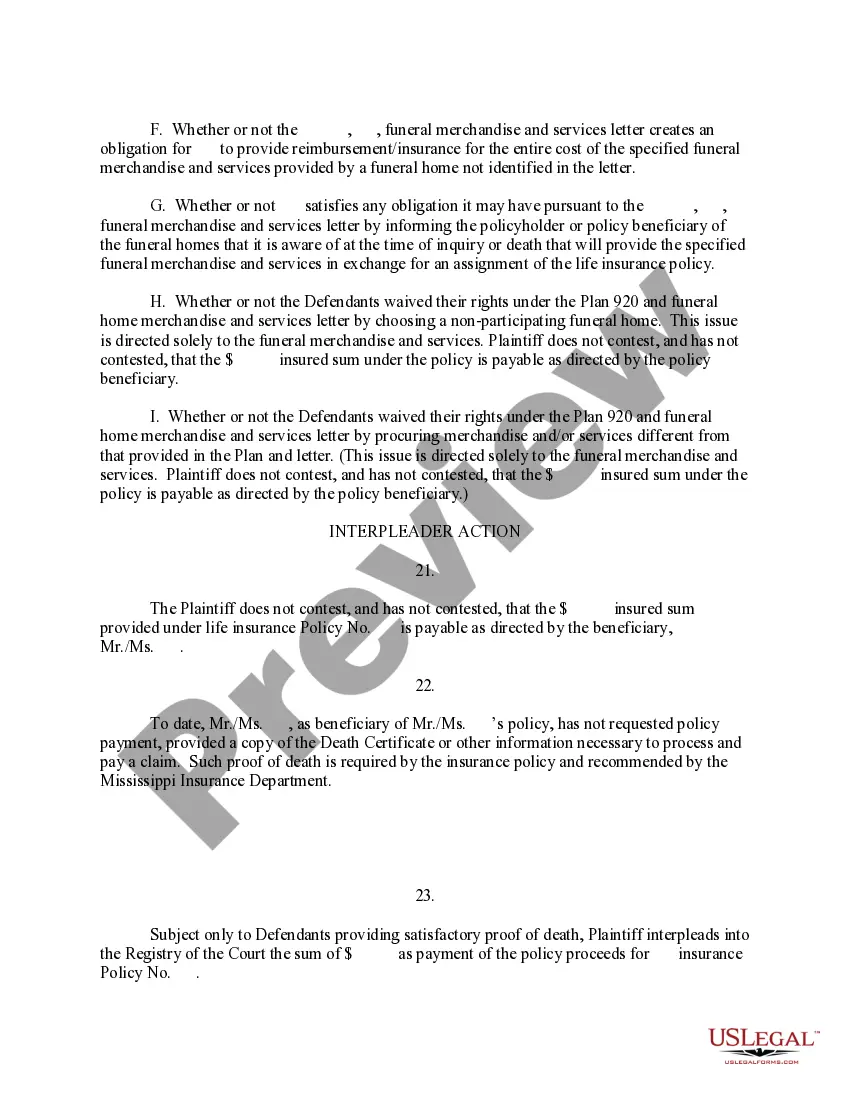
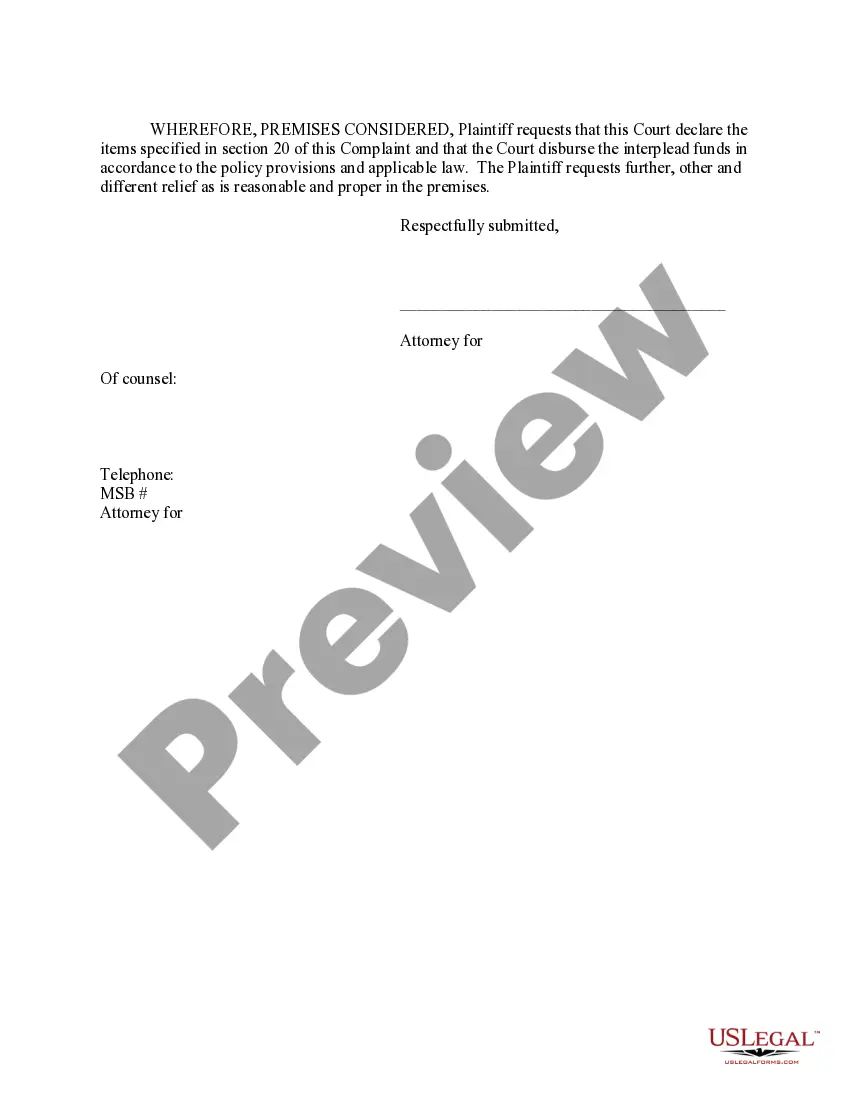
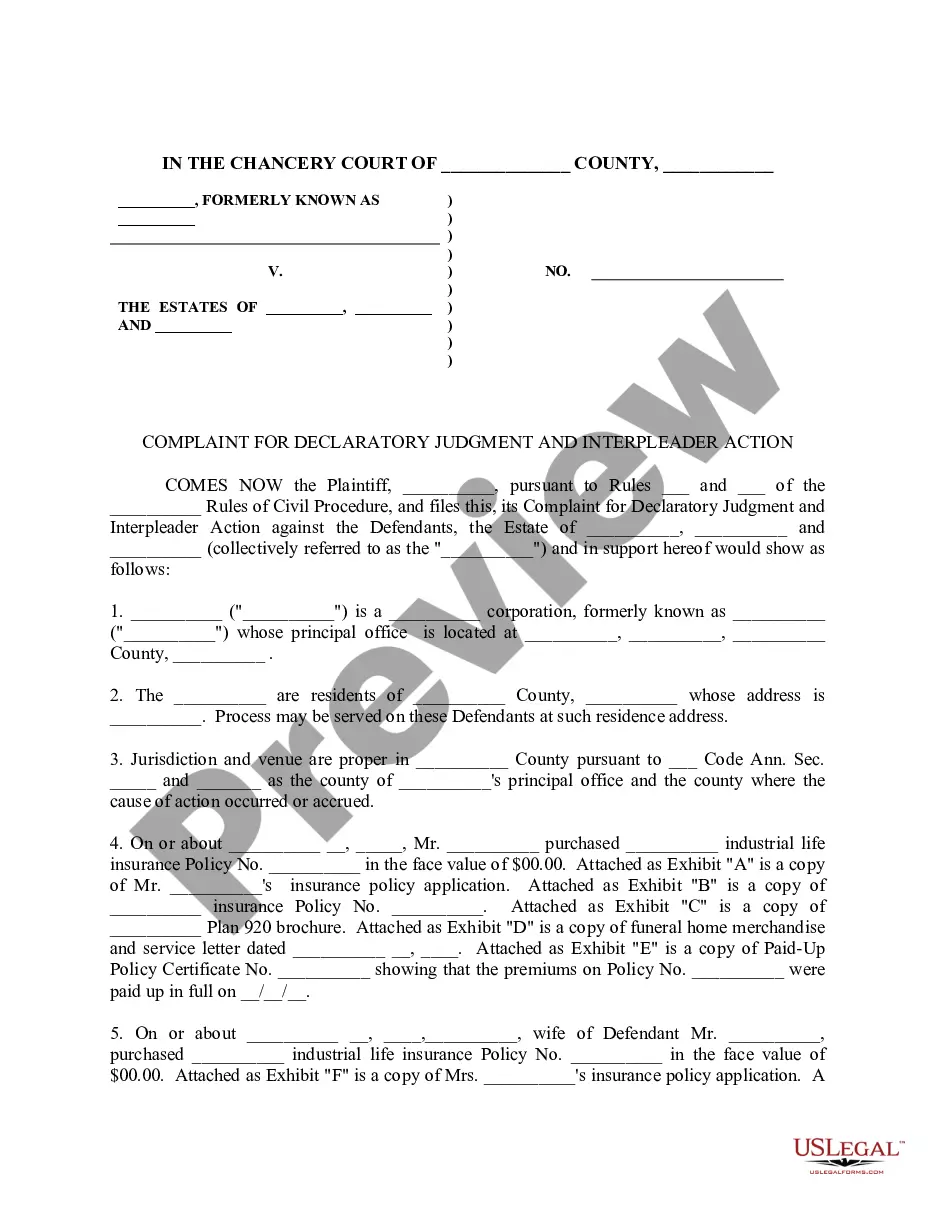
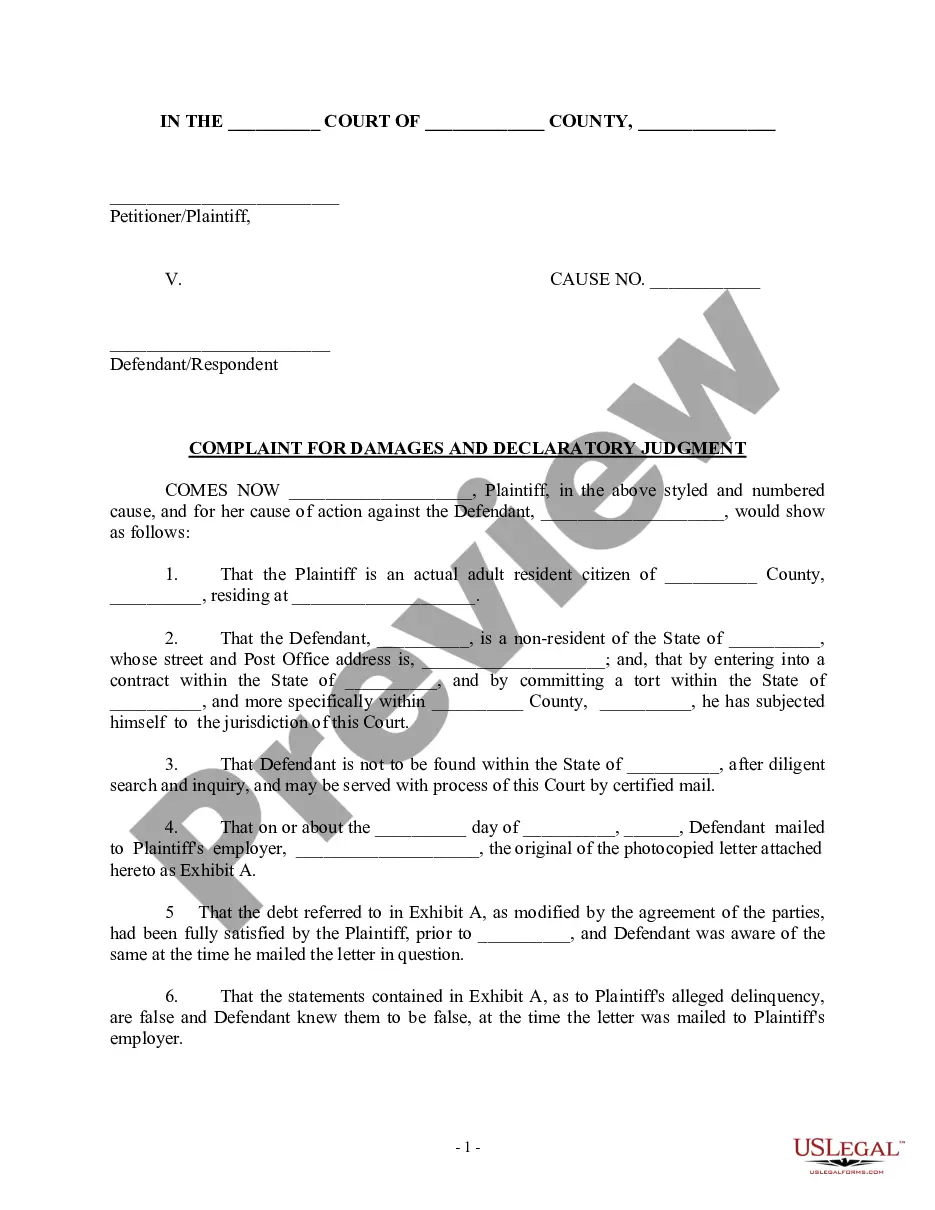
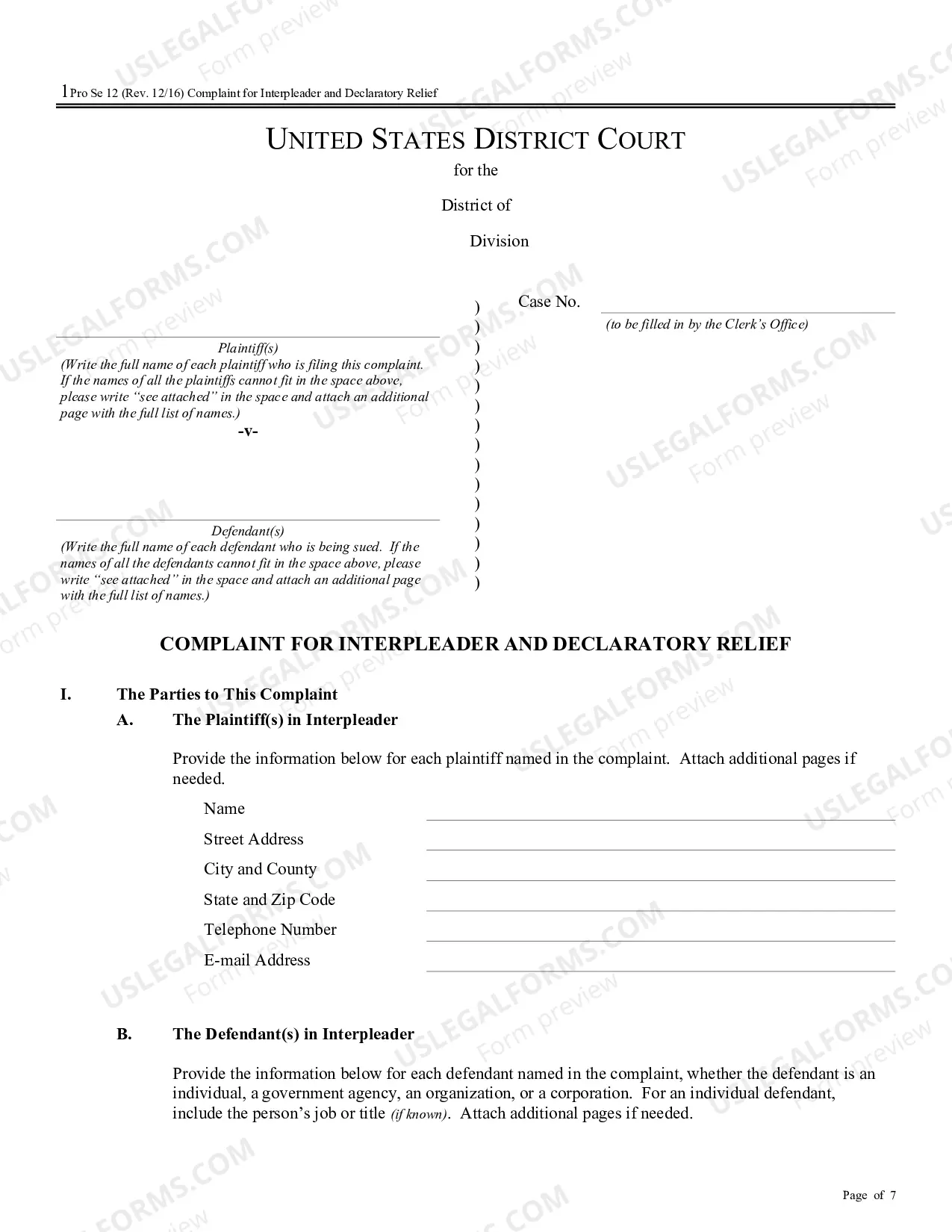
The Complaint for Declaratory Judgment and Interpleader Action is a legal document that allows a plaintiff to seek a court ruling on specific rights and obligations concerning parties involved in a dispute, particularly in matters related to insurance policies and claims. This form differs from other motions by combining both a request for a declaratory judgment and an interpleader action, listing all involved parties and addressing potential conflicting claims efficiently.
Main sections of this form
- Name and contact information for the plaintiff and defendants.
- Background information on the parties and the relevant business entities.
- Details regarding the insurance policies and supporting documentation.
- Specific requests for declaratory relief regarding obligations and rights.
- Reference to applicable procedural rules under Mississippi law.


When to use this form
This form is used when there is a dispute regarding the rights and obligations related to insurance policies, especially when multiple parties have claims against the same policy. It is particularly relevant in cases where one party seeks a judicial determination to clarify these rights before making any payments or commitments, thus avoiding potential liability or conflict.
Who should use this form
- Individuals or entities involved in a legal dispute concerning insurance claims.
- Any party seeking clarification on their rights and responsibilities regarding insurance policies.
- Attorneys representing clients in cases that involve multiple claimants to an insurance policy.
How to complete this form
- Identify the plaintiff and all defendants by providing their names and contact information.
- Describe the background relevant to the insurance claims, including any pertinent company information.
- Clearly outline the issues requiring judicial clarification related to the insurance policies.
- Specify the requests for declaratory relief, stating what you want the court to rule on.
- Sign and date the form to validate it before submission to the court.
Is notarization required?
This form usually doesn’t need to be notarized. However, local laws or specific transactions may require it. Our online notarization service, powered by Notarize, lets you complete it remotely through a secure video session, available 24/7.
Get your form ready online
Our built-in tools help you complete, sign, share, and store your documents in one place.
Make edits, fill in missing information, and update formatting in US Legal Forms—just like you would in MS Word.
Download a copy, print it, send it by email, or mail it via USPS—whatever works best for your next step.
Sign and collect signatures with our SignNow integration. Send to multiple recipients, set reminders, and more. Go Premium to unlock E-Sign.
If this form requires notarization, complete it online through a secure video call—no need to meet a notary in person or wait for an appointment.
We protect your documents and personal data by following strict security and privacy standards.

Make edits, fill in missing information, and update formatting in US Legal Forms—just like you would in MS Word.

Download a copy, print it, send it by email, or mail it via USPS—whatever works best for your next step.

Sign and collect signatures with our SignNow integration. Send to multiple recipients, set reminders, and more. Go Premium to unlock E-Sign.

If this form requires notarization, complete it online through a secure video call—no need to meet a notary in person or wait for an appointment.

We protect your documents and personal data by following strict security and privacy standards.
Typical mistakes to avoid
- Failing to include all relevant parties in the complaint.
- Not providing adequate background information which can lead to confusion about the dispute.
- Leaving out essential details from the insurance policies relevant to the case.
Advantages of online completion
- Convenient download and immediate access to the form.
- Editable fields allow you to customize the form easily to fit your specific situation.
- Access to forms designed by licensed attorneys ensures the legal validity of your document.
Looking for another form?


Form popularity
FAQ
A declaratory order can provide a legally binding decision to the parties to the proceeding, without imposing a penalty, sanction, or other liability, in order to terminate an actual or emerging controversy or to remove uncertainty in the application of existing legal requirements.
The Court clarified that declaratory judgment jurisdiction required disputes to be 'definite and concrete, touching the legal relations of the parties having adverse legal interests'; and that it be 'real and substantial' and 'admit of specific relief through a decree of a conclusive character, as distinguished from
The court may refuse to exercise declaratory relief powers where such relief is not necessary or proper at the time under all of the circumstances.In instances where there is an accrued cause of action for an actual breach of contract or other wrongful act, declaratory relief may be denied.
Declaratory judgments are an important tool in litigation.Both federal and Georgia law provide for mechanisms by which litigants may seek declaratory relief from the courts. Specifically, the Federal Declaratory Judgment Act states: In a case of actual controversy within its jurisdiction, . . .
A second consideration is whether it makes business sense to undertake the costs that go along with a declaratory judgment action. Even in a relatively simple case, it may take $10,000 to $20,000 to obtain a summary judgment on the duty to defend.
To Have Standing to Appeal a Declaratory Judgment Action, the Injured Party Must Have a Direct Interest in the Litigation.
Primary tabs. Declaratory relief is essentially a remedy for a determination of justiciable controversy. This occurs when the plaintiff is in doubt regarding their legal rights.
A declaratory judgment is a binding judgment from a court defining the legal relationship between parties and their rights in a matter before the court. Typically, a party will first send a cease and desist letter prior to seeking declaratory judgment from a court.A declaratory judgment is also called a declaration.