Louisiana Letter from Tenant to Landlord containing Notice to landlord to withdraw improper rent increase during lease
What this document covers
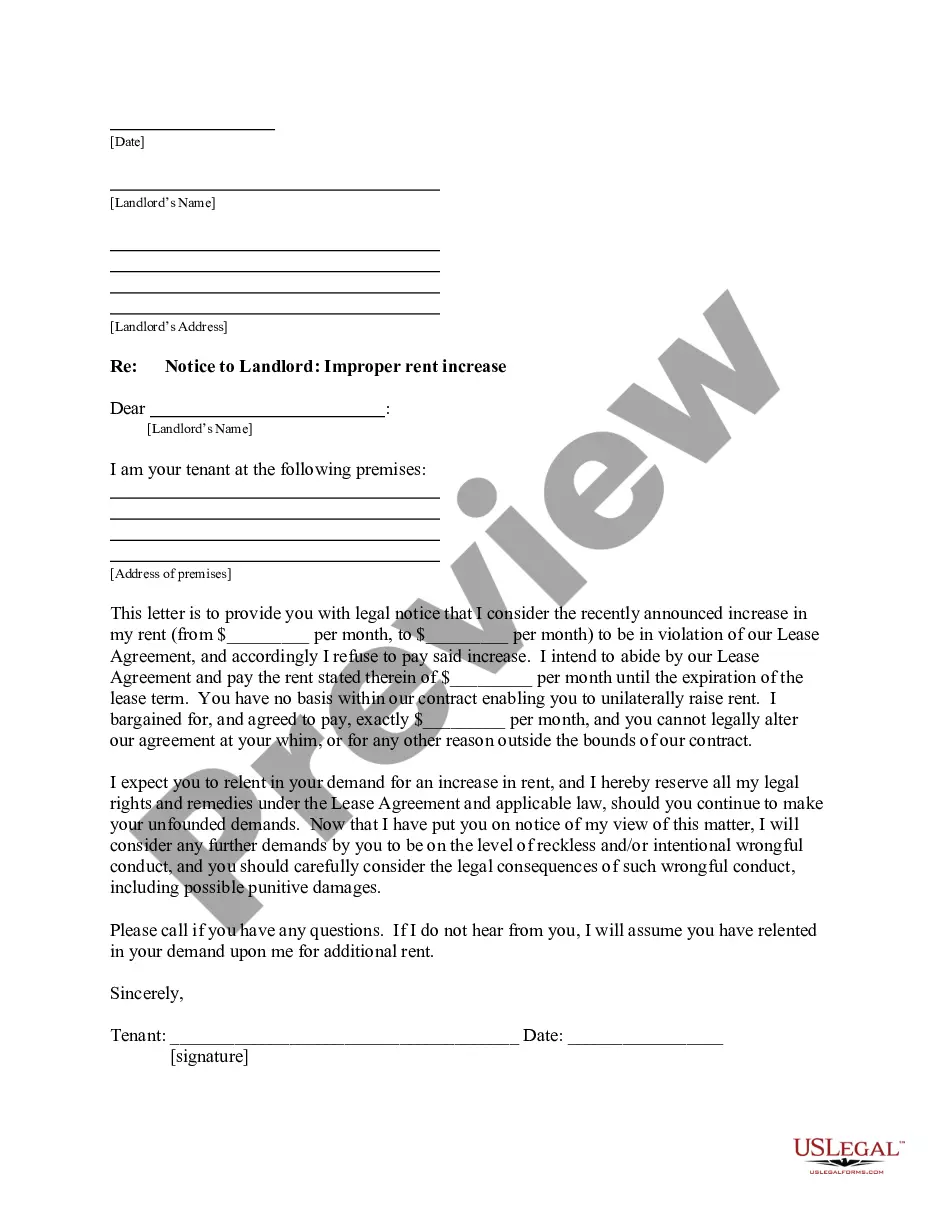
This Letter from Tenant to Landlord containing Notice to landlord to withdraw improper rent increase during lease serves as a formal notice to your landlord. Its purpose is to contest an unreasonable rent increase during your lease term. This form provides a mechanism for the tenant to express their position on the rent increase while reserving their legal rights under the lease agreement and applicable law.
Key parts of this document
- Tenant's demand to withdraw the rent increase
- Reservation of legal rights and remedies
- Warning about potential wrongful conduct consequences
- Request for communication from the landlord
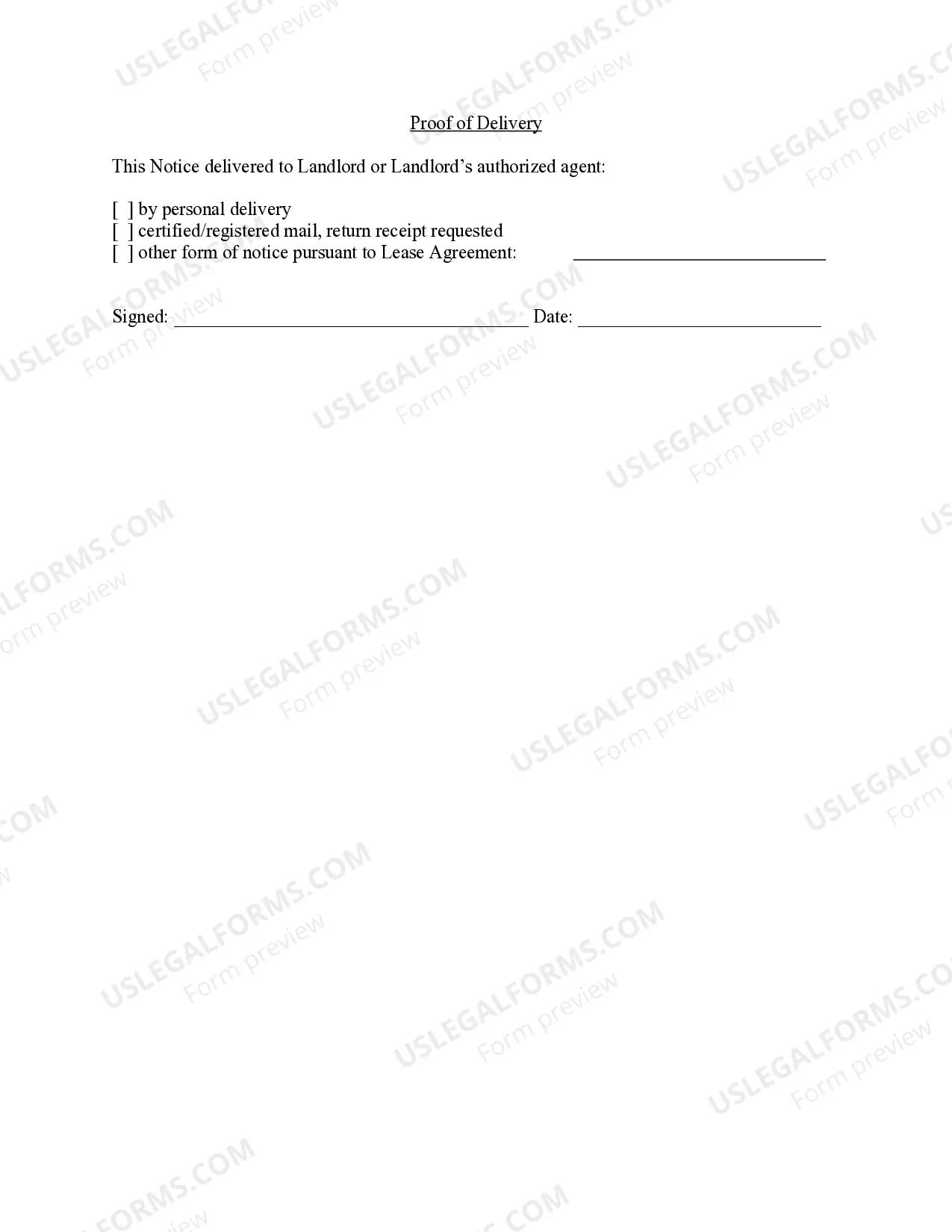
- Proof of delivery section for record-keeping

Situations where this form applies
This form should be used when you, as a tenant, have received a notification from your landlord stating an increase in rent during your lease period that you believe is improper or unfounded. It is crucial to formally contest this demand to protect your rights and clarify expectations moving forward.
Intended users of this form
- Tenants currently under a lease agreement facing a rent increase
- Individuals wanting to officially communicate their objections to their landlord
- Renters concerned about unjust rental demands
Instructions for completing this form
- Identify the tenant and landlord clearly, including full names and addresses.
- State your demand for the landlord to withdraw the rent increase.
- Express your reservation of legal rights under the lease agreement.
- Include a warning about the consequences of continued unjust demands.
- Provide a date and sign the letter for authenticity.
- Deliver the notice, either by personal delivery or through another agreed method, ensuring you have proof of delivery.
Notarization requirements for this form
Notarization is not commonly needed for this form. However, certain documents or local rules may make it necessary. Our notarization service, powered by Notarize, allows you to finalize it securely online anytime, day or night.
Get your form ready online
Our built-in tools help you complete, sign, share, and store your documents in one place.
Make edits, fill in missing information, and update formatting in US Legal Forms—just like you would in MS Word.
Download a copy, print it, send it by email, or mail it via USPS—whatever works best for your next step.
Sign and collect signatures with our SignNow integration. Send to multiple recipients, set reminders, and more. Go Premium to unlock E-Sign.
If this form requires notarization, complete it online through a secure video call—no need to meet a notary in person or wait for an appointment.
We protect your documents and personal data by following strict security and privacy standards.

Make edits, fill in missing information, and update formatting in US Legal Forms—just like you would in MS Word.

Download a copy, print it, send it by email, or mail it via USPS—whatever works best for your next step.

Sign and collect signatures with our SignNow integration. Send to multiple recipients, set reminders, and more. Go Premium to unlock E-Sign.

If this form requires notarization, complete it online through a secure video call—no need to meet a notary in person or wait for an appointment.

We protect your documents and personal data by following strict security and privacy standards.
Avoid these common issues
- Failing to deliver the notice properly, resulting in lack of proof.
- Not including specific details about the rent increase being contested.
- Omitting the date and signature, which can invalidate the document.
- Using unclear language that may confuse the landlord about your position.
Why use this form online
- Convenience of downloading the form at any time.
- Editability allows you to customize the document easily.
- Reliable templates created by licensed attorneys ensure you comply with legal standards.
Legal use & context
- This form is legally sound and can be used in disputes over rent increases.
- It is important for tenants to document their objections to protect their rights.
- Consult local laws to understand any specific requirements or limits in your jurisdiction.
Key takeaways
- Use this form to formally contest improper rent increases.
- Make sure to deliver the notice and keep proof of the delivery.
- Outline your legal rights to reinforce your stance with the landlord.
- Review state-specific requirements to ensure compliance.
Looking for another form?
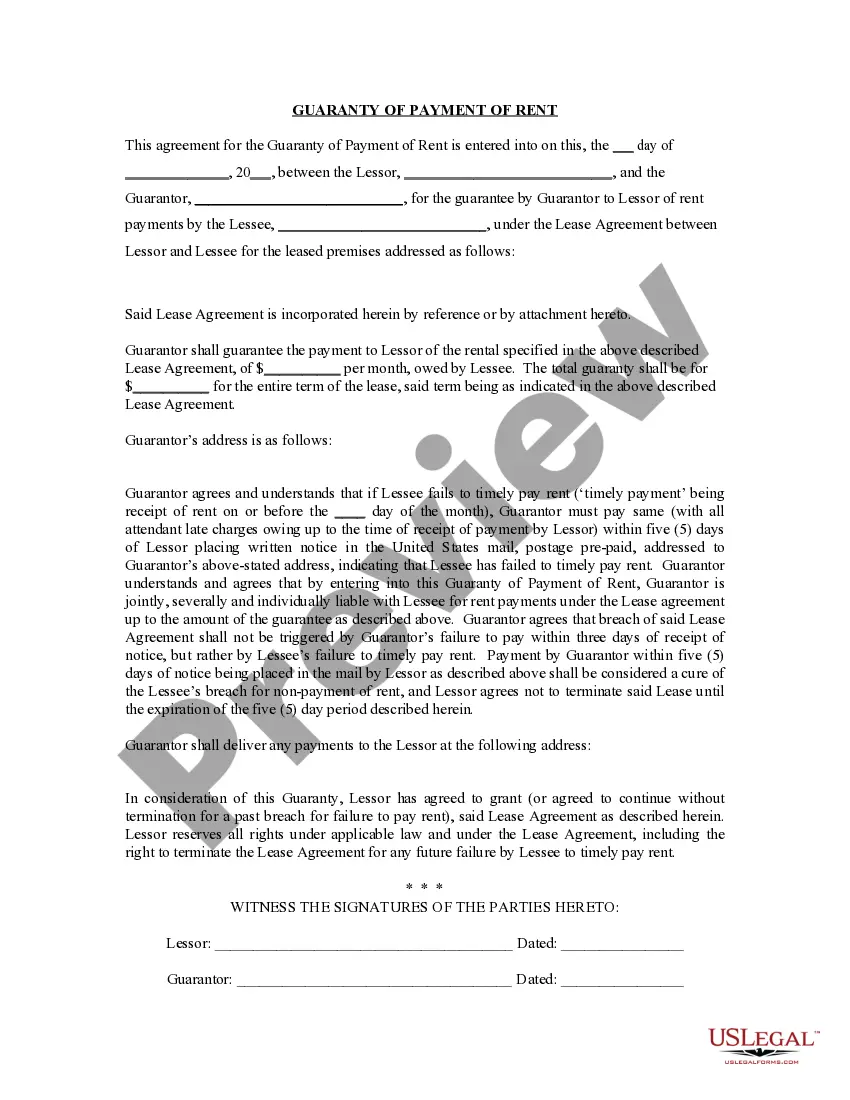
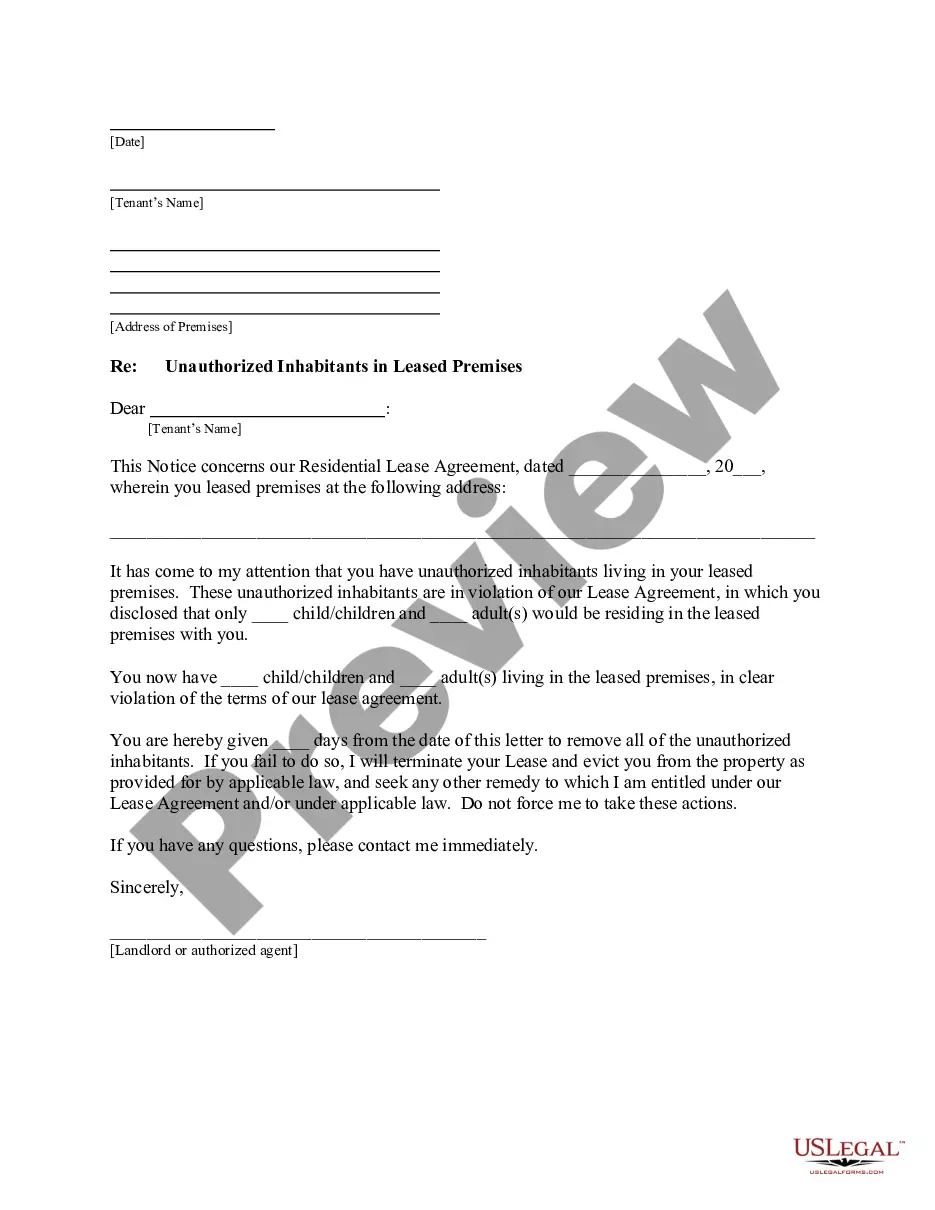
Form popularity
FAQ
Remember you're a business. Do your research. Raise the rent all at once or incrementally. Don't negotiate or ask tenants what they think a fair rent increase would be. Be courteous and firm. Find a template you like. Send a formal letter by certified mail. Give the tenant notice.
The landlord verification form is a document used by a landlord when verifying the previous rental information of an applicant for tenancy. The requesting landlord must send the form to the applicant's current or past landlord in order to obtain all details related to the tenancy of the individual.
A lease is automatically void when it is against the law, such as a lease for an illegal purpose. In other circumstances, like fraud or duress, a lease can be declared void at the request of one party but not the other.
Your name, and the landlord's name and address. The date you're writing the letter. Informing the landlord you're breaking your lease early. The reason why you're breaking your lease. The building and apartment you're vacating. The date by which you're vacating.
The rental property address, including unit number (if applicable) The names of all tenants on the lease agreement. The date the lease violation notice was written. The specific reason for the notice. The time and date the violation occurred (if applicable)
In most states, a landlord must give tenants notice at least 30 days before they'll enforce a rent increase. However, in other states like California, the notice can increase to 60 days' notice if the increase is more than 10% of the current rent rate.
A rental verification helps landlords and property managers to verify the rental history of their applicant. This is done through a background check combined with a phone call verification.Calling the previous and current landlord is an important step of the rental verification.
The date that the tenant warning letter was written. The name and the basic personal information of the tenant. The name of the landlord or the owner of the property. The reason why a tenant warning letter has been written.
Tenant's name. Property address. Landlord name and contact information. Date the letter is written. Date the rent increase will take effect. Amount of rent increase. Current cost of rent.