Iowa Renunciation and Disclaimer of Property from Life Insurance or Annuity Contract
What is this form?
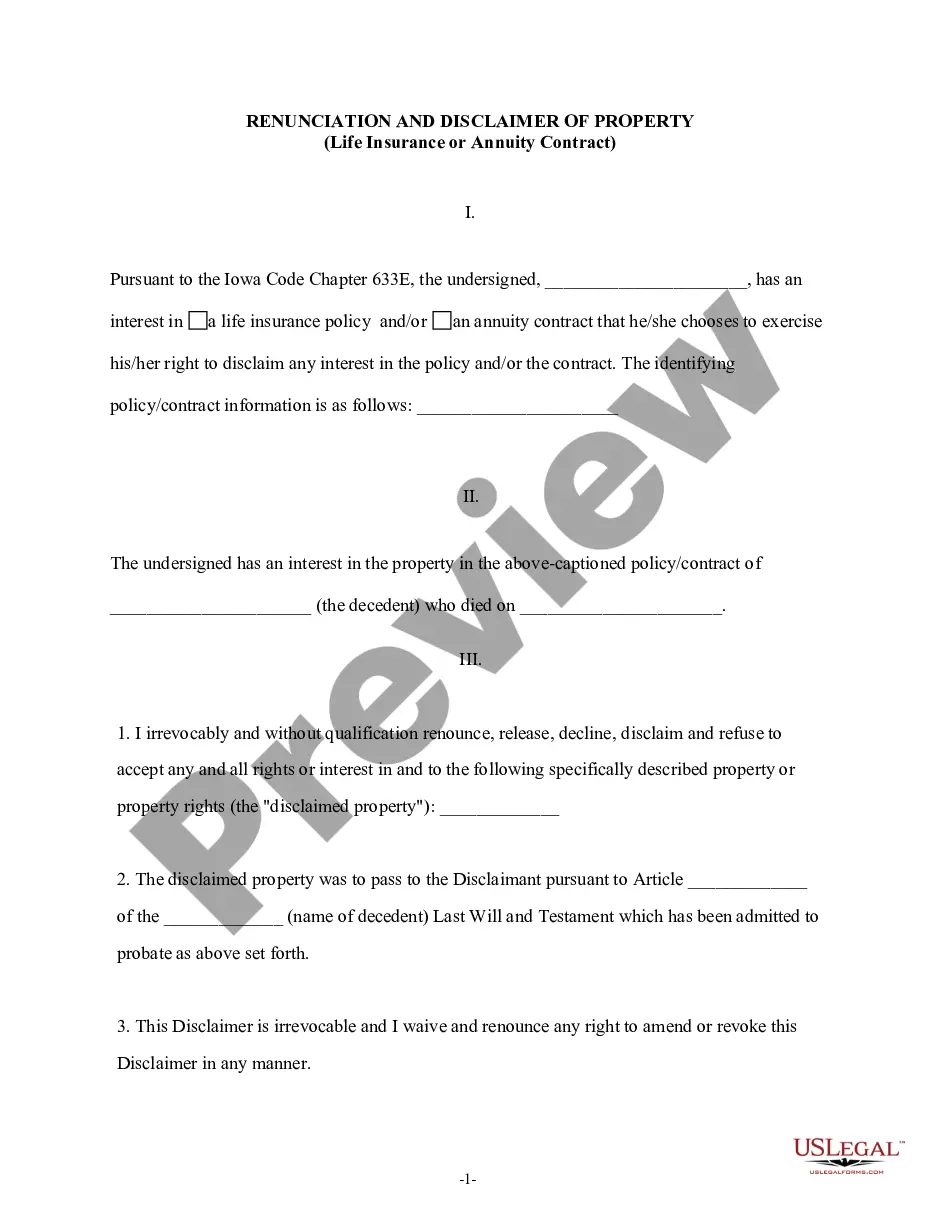
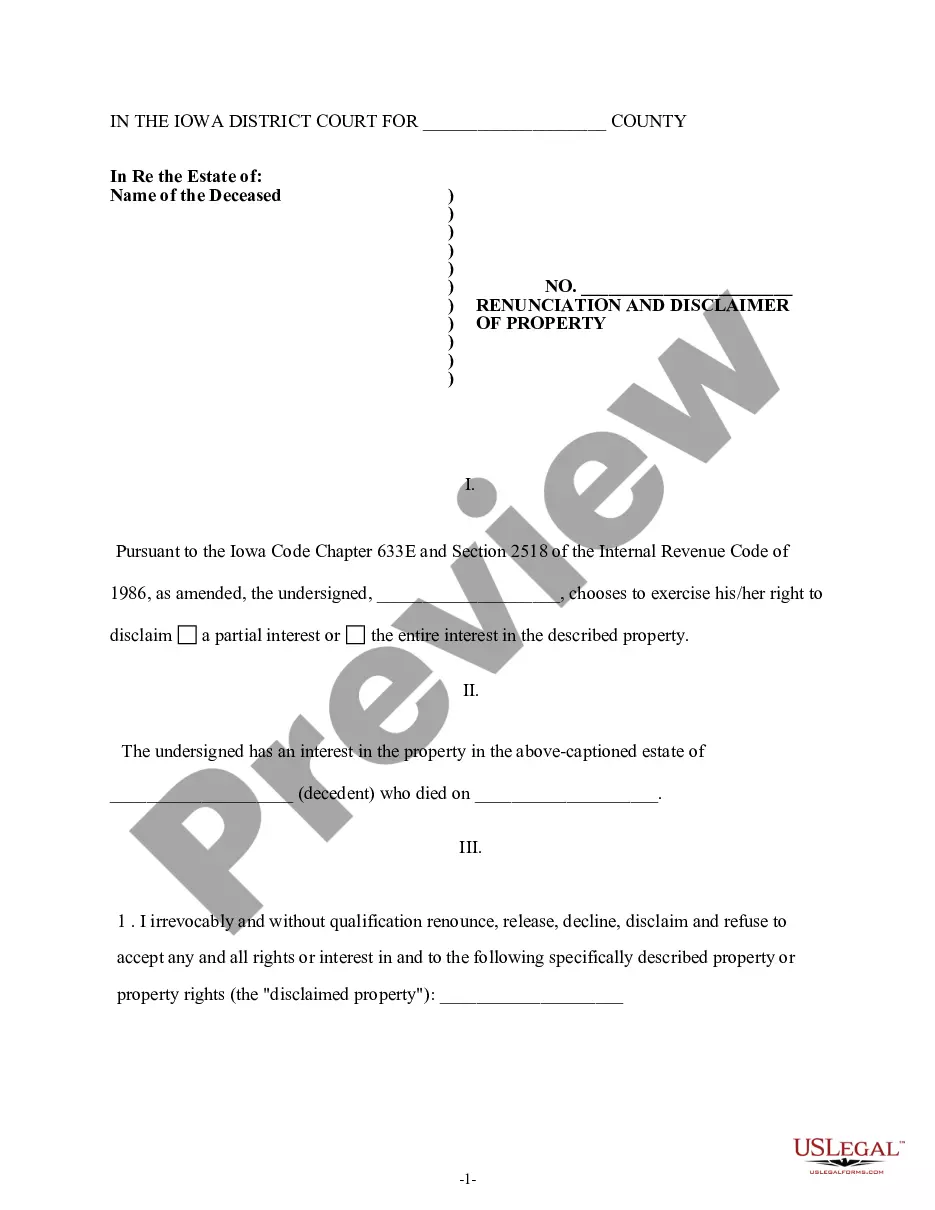
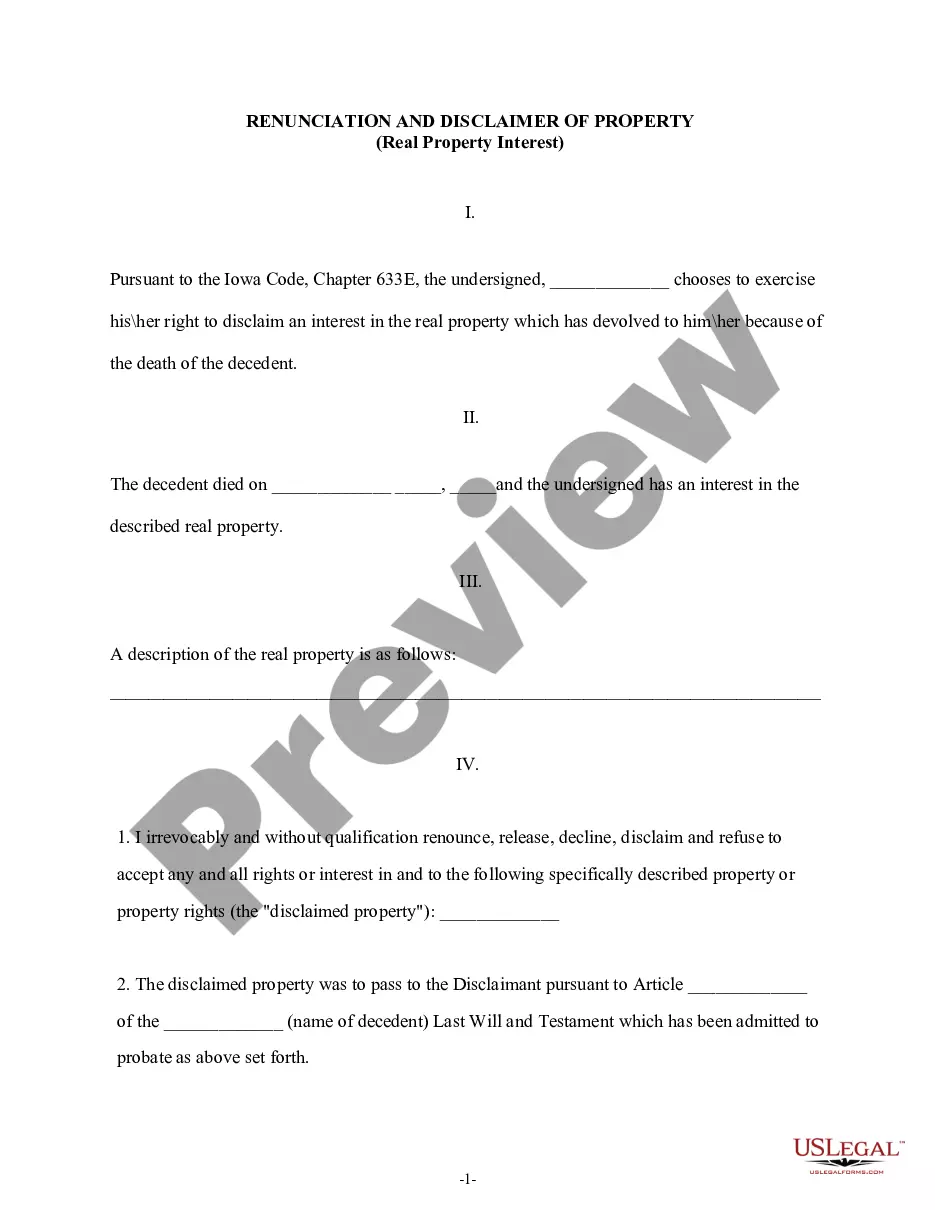
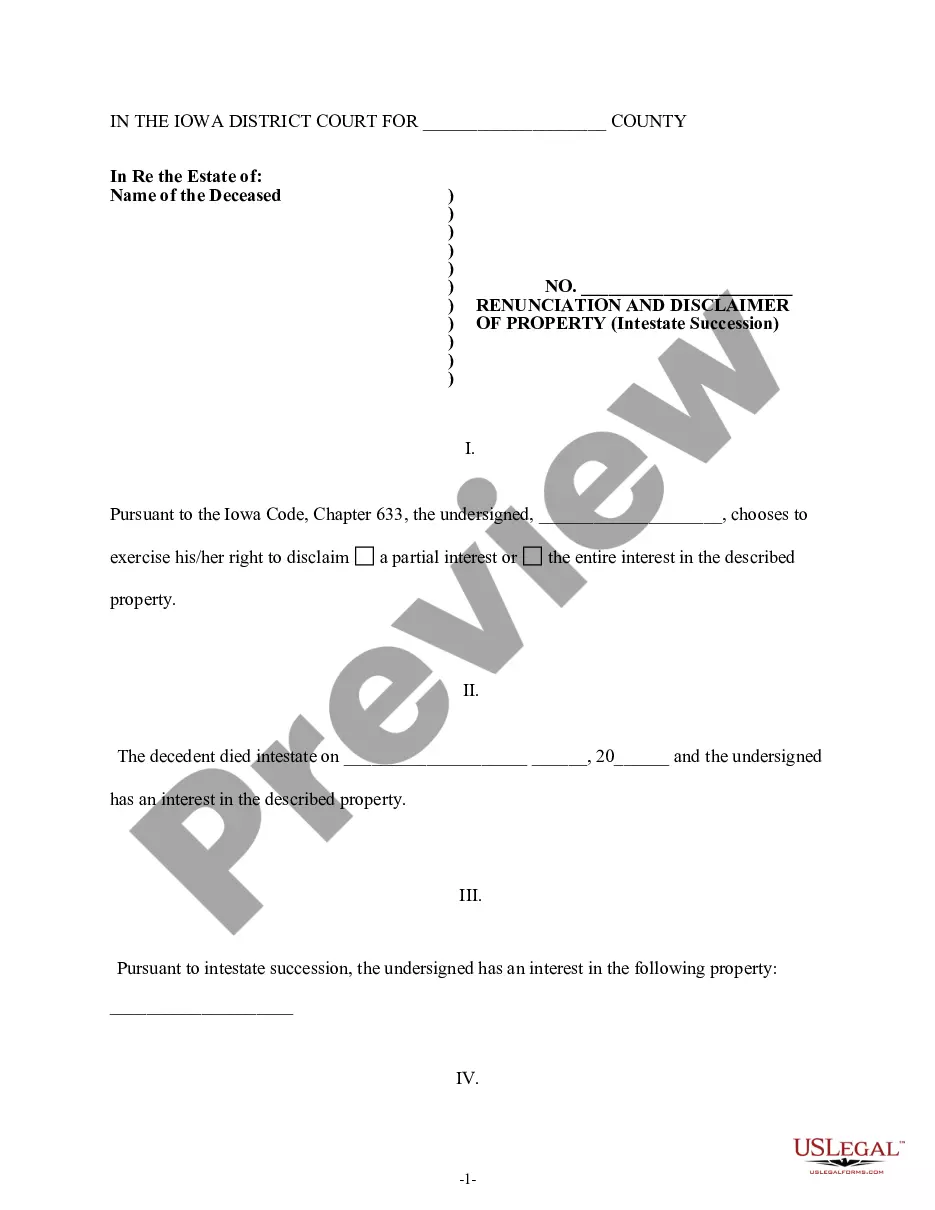
The Iowa Renunciation and Disclaimer of Property from Life Insurance or Annuity Contract is a legal document that allows a beneficiary to formally decline any interest they have in the proceeds of a life insurance policy or an annuity contract. This form is distinct in that it adheres to the specific provisions of the Iowa Code, Chapter 633E, which outlines the process for disclaiming such interests. By utilizing this form, beneficiaries can ensure their rights and intentions are documented legally, making it crucial for situations where one does not wish to inherit certain assets.
What’s included in this form
- Identifying the parties involved, including the beneficiary and the decedent.
- Details of the life insurance policy or annuity contract being disclaimed.
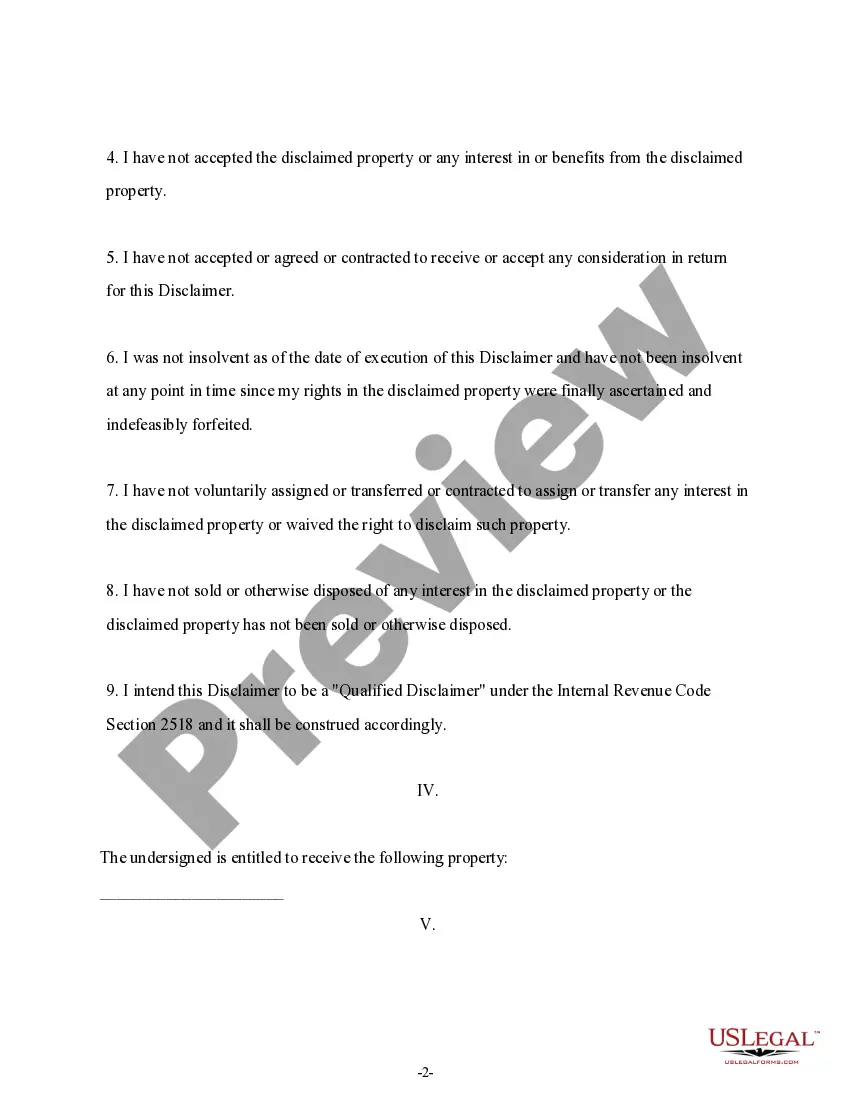
- Explicit declaration of the irrevocable renunciation of the beneficiary's interest.
- Conditions confirming that the disclaimer meets the legal requirements under federal and state law.
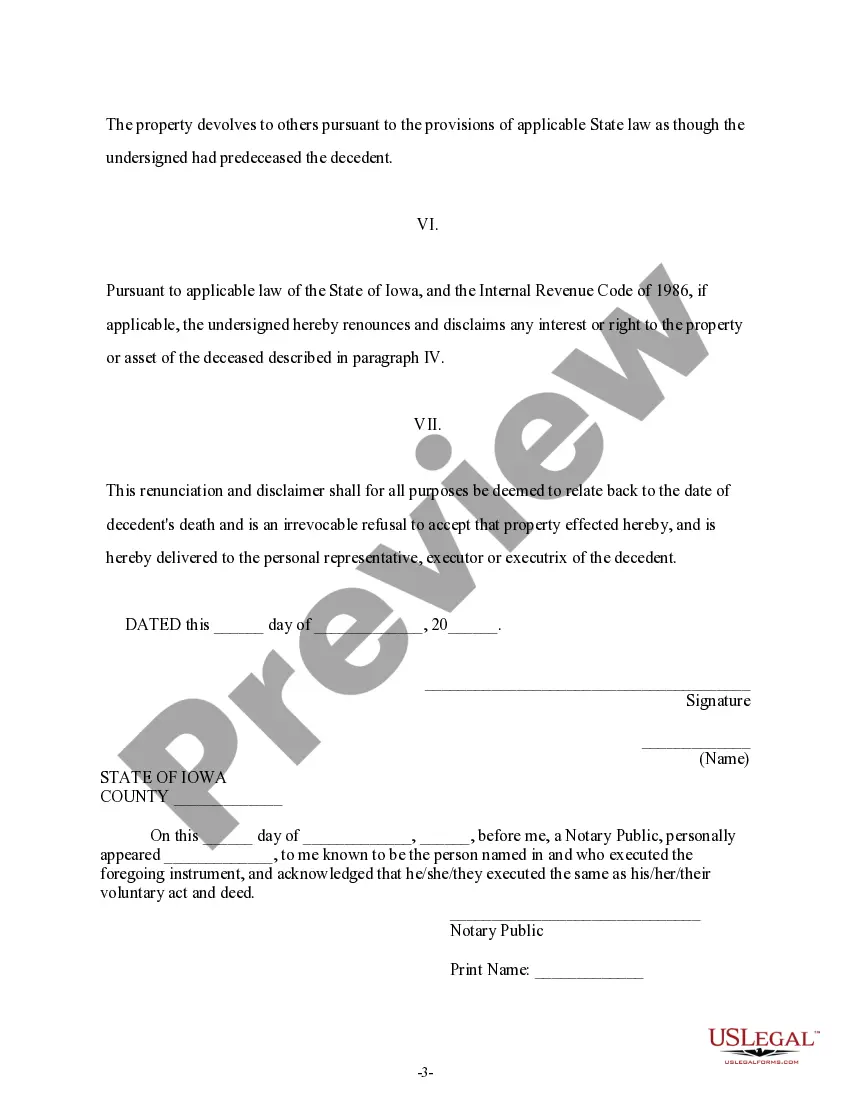
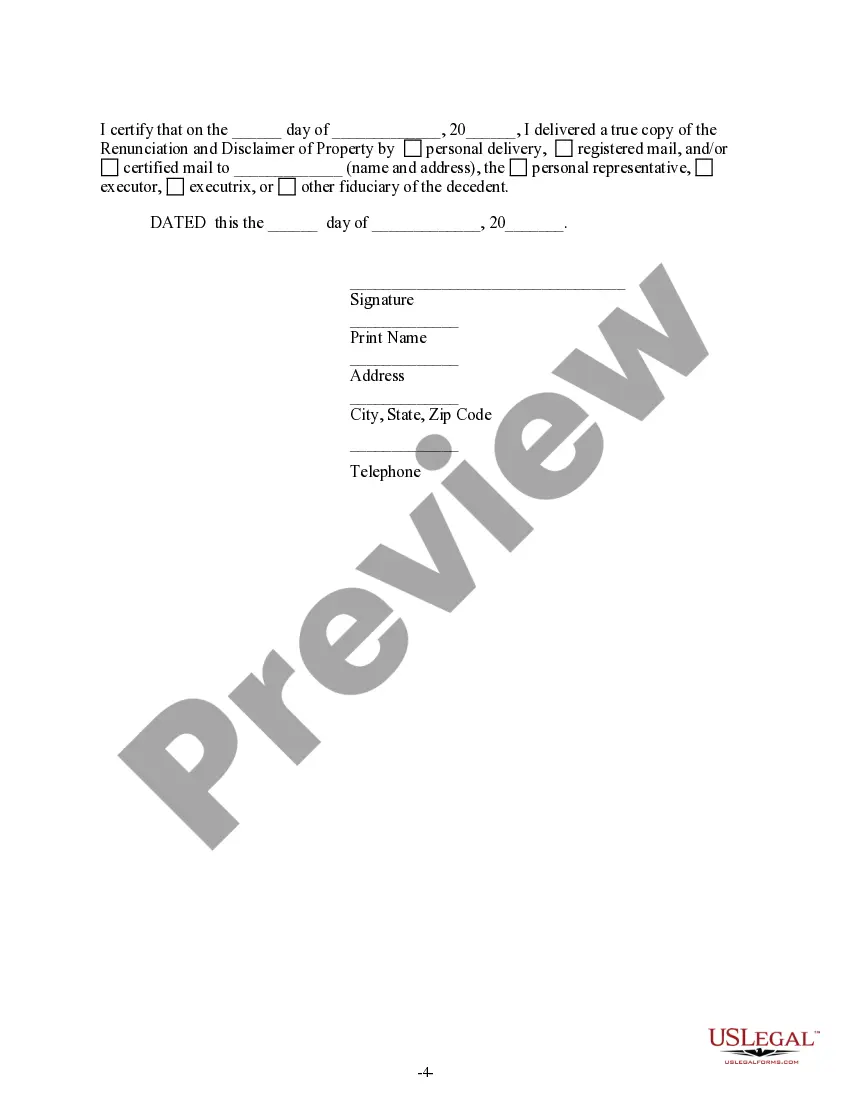
- Certification of delivery to the personal representative of the decedent's estate.

Situations where this form applies
This form is needed when a beneficiary of a life insurance policy or annuity contract decides to refuse their right to the proceeds after the death of the policyholder or annuitant. Situations may arise when the beneficiary does not wish to accept the inheritance due to reasons such as tax implications, debts left by the decedent, or personal preference. This form ensures that the beneficiary's decision is executed clearly and legally.
Intended users of this form
- Individuals designated as beneficiaries on a life insurance policy or annuity contract.
- Heirs who wish to decline an inheritance for personal, financial, or legal reasons.
- Individuals seeking to formally document their refusal of interest in a deceased person's financial assets.
How to prepare this document
- Identify yourself and the decedent by providing their names and pertinent dates.
- Specify the life insurance policy or annuity contract details, including identifying numbers.
- Clearly state your intention to disclaim interest in the property by filling in the designated sections.
- Provide your signature and date the document to indicate your intention.
- Deliver the completed form to the personal representative or executor of the decedent's estate as required.
Is notarization required?
Yes, this form must be notarized to be legally valid. The notary public's acknowledgment is an important step in confirming your identity and the voluntary nature of the disclaimer. US Legal Forms provides integrated online notarization services, allowing for a secure and efficient process without the need for travel.
Get your form ready online
Our built-in tools help you complete, sign, share, and store your documents in one place.
Make edits, fill in missing information, and update formatting in US Legal Forms—just like you would in MS Word.
Download a copy, print it, send it by email, or mail it via USPS—whatever works best for your next step.
Sign and collect signatures with our SignNow integration. Send to multiple recipients, set reminders, and more. Go Premium to unlock E-Sign.
If this form requires notarization, complete it online through a secure video call—no need to meet a notary in person or wait for an appointment.
We protect your documents and personal data by following strict security and privacy standards.

Make edits, fill in missing information, and update formatting in US Legal Forms—just like you would in MS Word.

Download a copy, print it, send it by email, or mail it via USPS—whatever works best for your next step.

Sign and collect signatures with our SignNow integration. Send to multiple recipients, set reminders, and more. Go Premium to unlock E-Sign.

If this form requires notarization, complete it online through a secure video call—no need to meet a notary in person or wait for an appointment.

We protect your documents and personal data by following strict security and privacy standards.
Common mistakes to avoid
- Failing to include complete and correct identifying information for the policy and the decedent.
- Not signing the form or omitting the date of signature.
- Not properly acknowledging the delivery of the disclaimer to the personal representative.
- Overlooking the irrevocable nature of the disclaimer.
Advantages of online completion
- Convenient access to legal forms that can be downloaded and printed at home.
- Editable templates that allow users to customize the form to their specific needs.
- Reliable support and guidance documents that outline the use of each form.
Legal use & context
- The disclaimer is legally binding upon execution and is used to clarify the beneficiary's intentions regarding the property.
- This form is designed to meet the legal specifications under Iowa law, offering protection to the beneficiary from accepting unwanted property.
Key takeaways
- The form is crucial for beneficiaries who wish to disclaim their interest in life insurance proceeds or annuity contracts.
- It must be filled out completely and accurately to be effective and enforceable under Iowa law.
- Proper notarization and delivery to relevant parties are essential steps in this process.
Looking for another form?
Form popularity
FAQ
A beneficiary might want to disclaim property for various reasons, such as tax implications or personal financial decisions. By using the Iowa Renunciation and Disclaimer of Property from Life Insurance or Annuity Contract, they can relinquish inheritance that may lead to unwanted tax burdens. This option also allows the property to pass directly to other beneficiaries and maintain the intended distribution of the estate. It's always wise to consult with a legal professional when considering a disclaimer.
A beneficiary disclaimer is a legal document in which an individual rejects their right to inherit property or assets from a deceased person's estate. Under the Iowa Renunciation and Disclaimer of Property from Life Insurance or Annuity Contract, this process protects the individual from potential tax consequences while allowing the assets to transfer to other beneficiaries. Understanding the implications of a disclaimer as part of your estate planning is crucial. Legal advice can be invaluable to navigate these choices.
A disclaimer example could involve a person who inherits property from a deceased relative but prefers not to accept it due to potential tax burdens. They can file a disclaimer through the Iowa Renunciation and Disclaimer of Property from Life Insurance or Annuity Contract, thus officially rejecting the inheritance. This action prevents the property from being included in their taxable estate while allowing it to pass to another designated beneficiary. Consulting with a legal professional may help in this decision-making process.
An example of a disclaimer of inheritance rights is when a beneficiary formally refuses their share of an estate left by a deceased relative. Using the Iowa Renunciation and Disclaimer of Property from Life Insurance or Annuity Contract, they can file a written disclaimer to relinquish their claim. This process allows the disclaimed assets to pass directly to the next beneficiary rather than becoming part of the beneficiary's estate. It is a strategic decision that can help minimize tax liability and better align with the beneficiary's wishes.
A beneficiary may choose to disclaim an IRA for several reasons, including tax implications or personal financial planning. By utilizing the Iowa Renunciation and Disclaimer of Property from Life Insurance or Annuity Contract, a beneficiary can avoid increasing their taxable income from inherited assets. This strategy may be beneficial in preserving long-term wealth or if the inheritance does not align with their current financial goals. Always consult with a financial advisor to understand the implications of your decision.
You can disclaim life insurance proceeds under Iowa law. By using the Iowa Renunciation and Disclaimer of Property from Life Insurance or Annuity Contract, you can choose not to accept the benefits from a life insurance policy. This action allows the proceeds to transfer to the next beneficiary in line. Ensure you follow the specific procedures for disclaiming to protect your interests properly.
Yes, you can disclaim inherited property, including assets from an estate or trust. In Iowa, beneficiaries can utilize the Iowa Renunciation and Disclaimer of Property from Life Insurance or Annuity Contract to formally refuse an inheritance. This legal process ensures that the property does not pass to you and may instead go to the next eligible beneficiary. Remember, acting quickly is essential, as disclaiming property typically involves strict deadlines.
A qualified disclaimer enables you to refuse property that you would otherwise inherit, such as from a life insurance policy or an annuity contract. This process ensures that the property does not transfer to you and instead moves directly to the next beneficiary. By using the Iowa Renunciation and Disclaimer of Property from Life Insurance or Annuity Contract, you can effectively manage your estate planning. To navigate this complex process smoothly, consider utilizing US Legal Forms, which provides comprehensive resources and assistance.
Yes, a beneficiary can disclaim an interest in a trust under Iowa law. This requires a formal written disclaimer, similar to that of an inheritance, which must explicitly renounce your interest. Utilizing resources like US Legal Forms can help you draft a compliant disclaimer, aligning with the Iowa Renunciation and Disclaimer of Property from Life Insurance or Annuity Contract.
The rules for disclaiming inheritance in Iowa require the disclaimer to be in writing and submitted within nine months post-death. Importantly, you cannot attach conditions to your disclaimer; it must be absolute. Understanding these regulations is critical when considering the Iowa Renunciation and Disclaimer of Property from Life Insurance or Annuity Contract, as compliance will ensure your disclaimer is legally recognized.