West Virginia Last Will and Testament for a Married Person with No Children
What this document covers
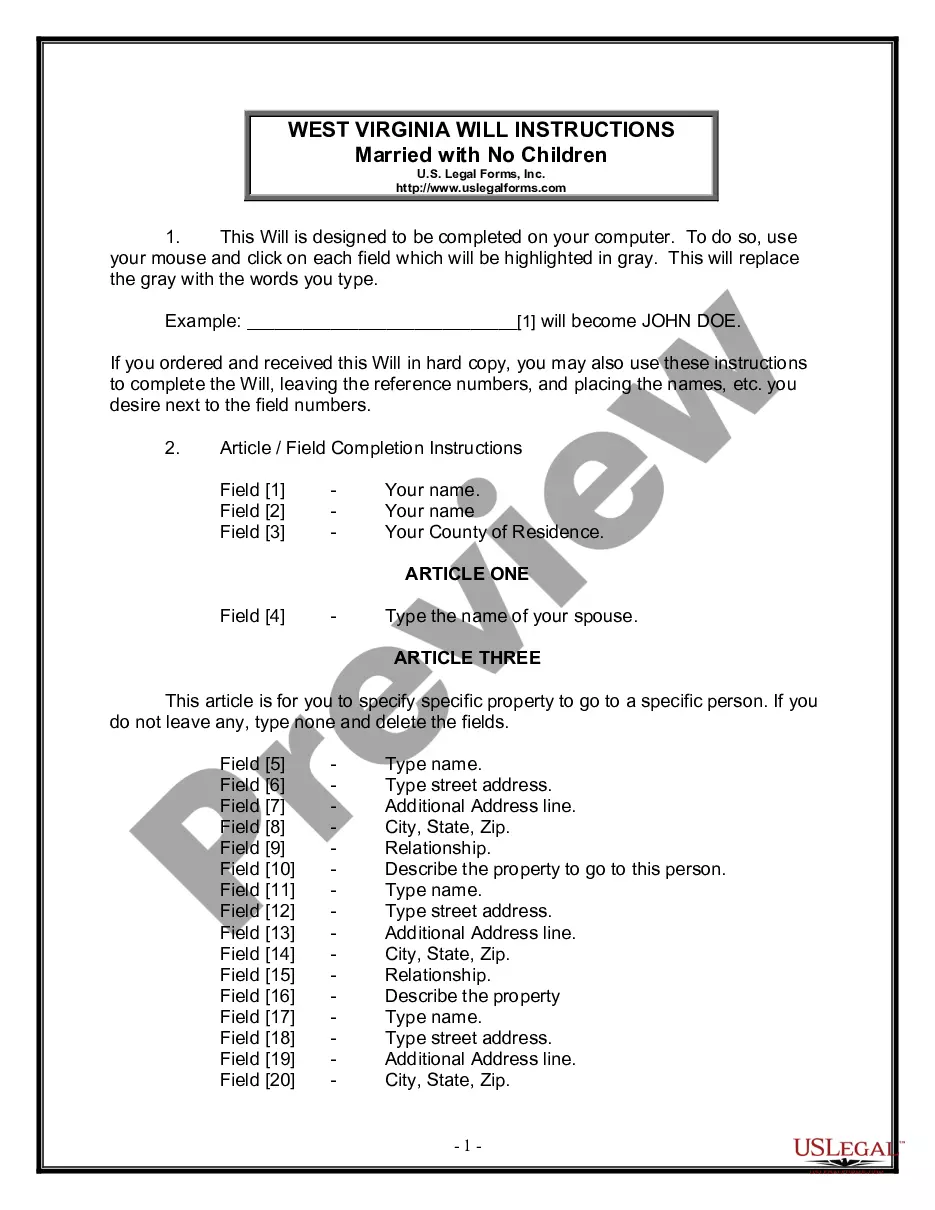
The Last Will and Testament for a Married Person with No Children is a legal document that specifies how your assets will be distributed upon your death. This form is specifically designed for those who are married and have no children, allowing you to appoint an executor, designate beneficiaries, and make specific bequests. Unlike other wills, this will takes into account the spouse as the primary beneficiary and outlines provisions relevant to a child-free marriage.
What’s included in this form
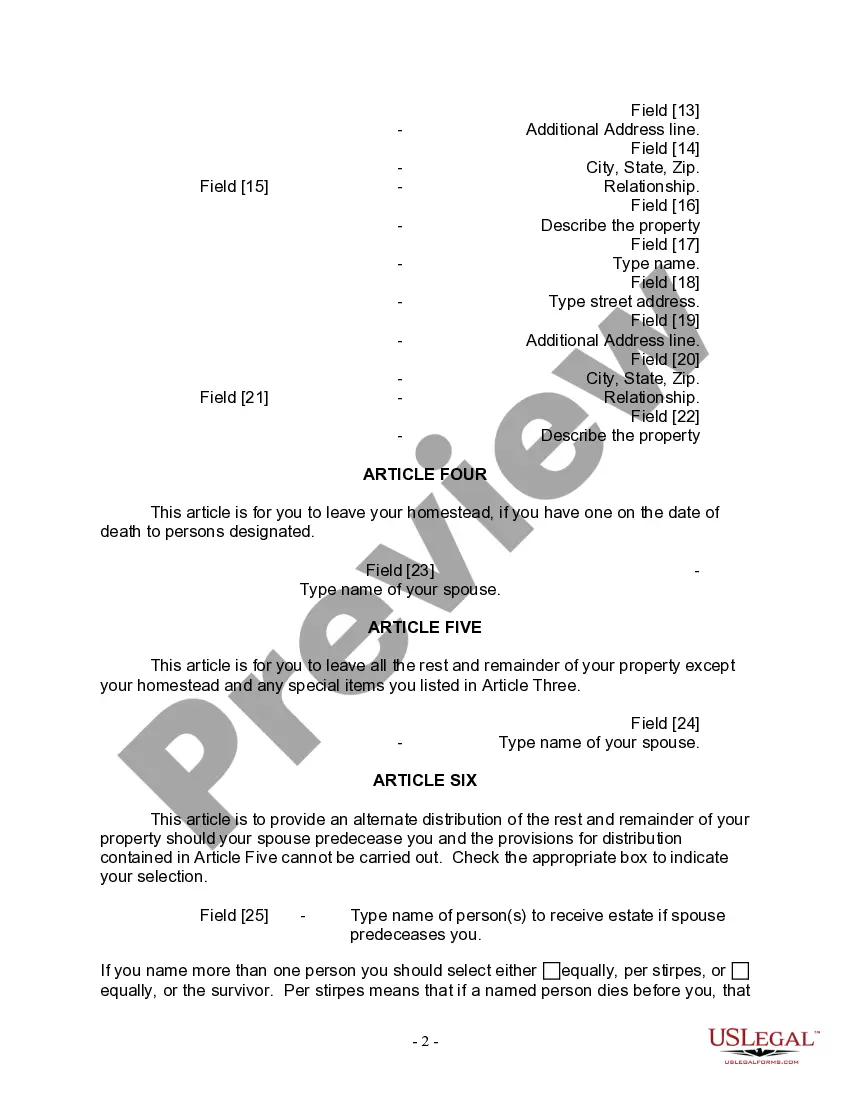
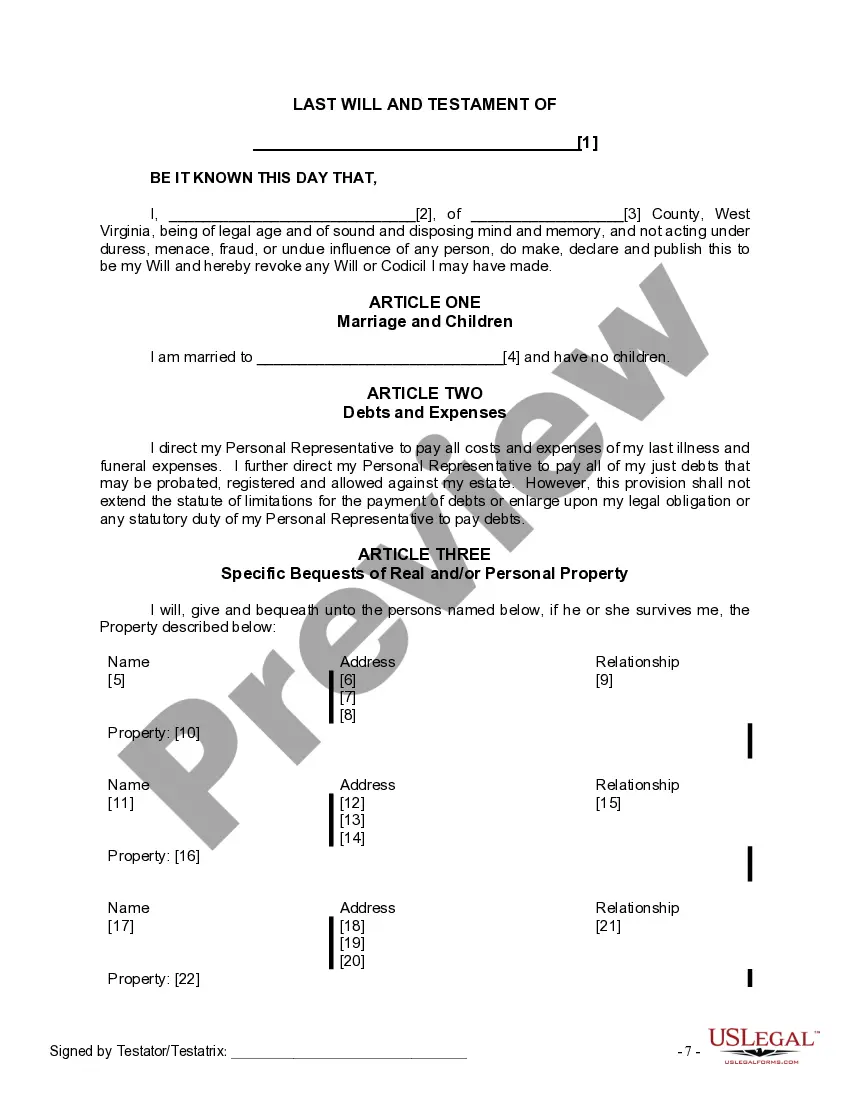
- Article One: Marriage and Children - States the marital status and confirms the absence of children.
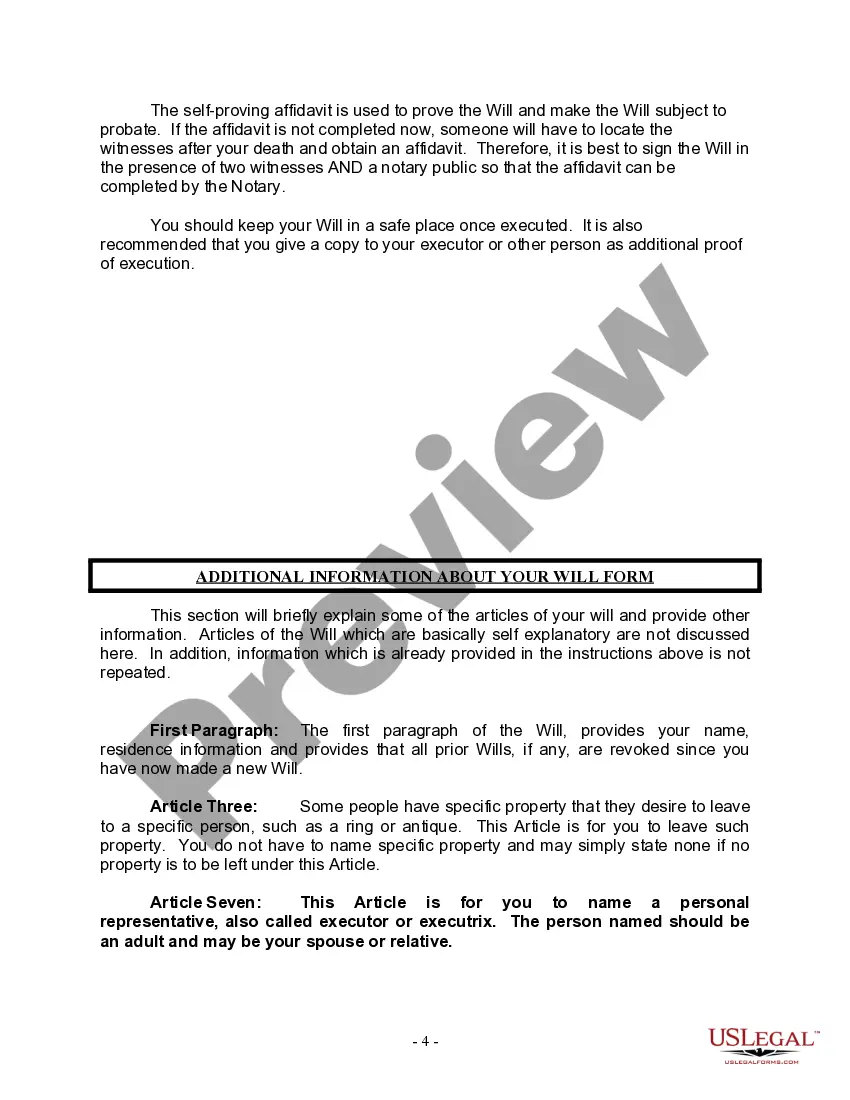
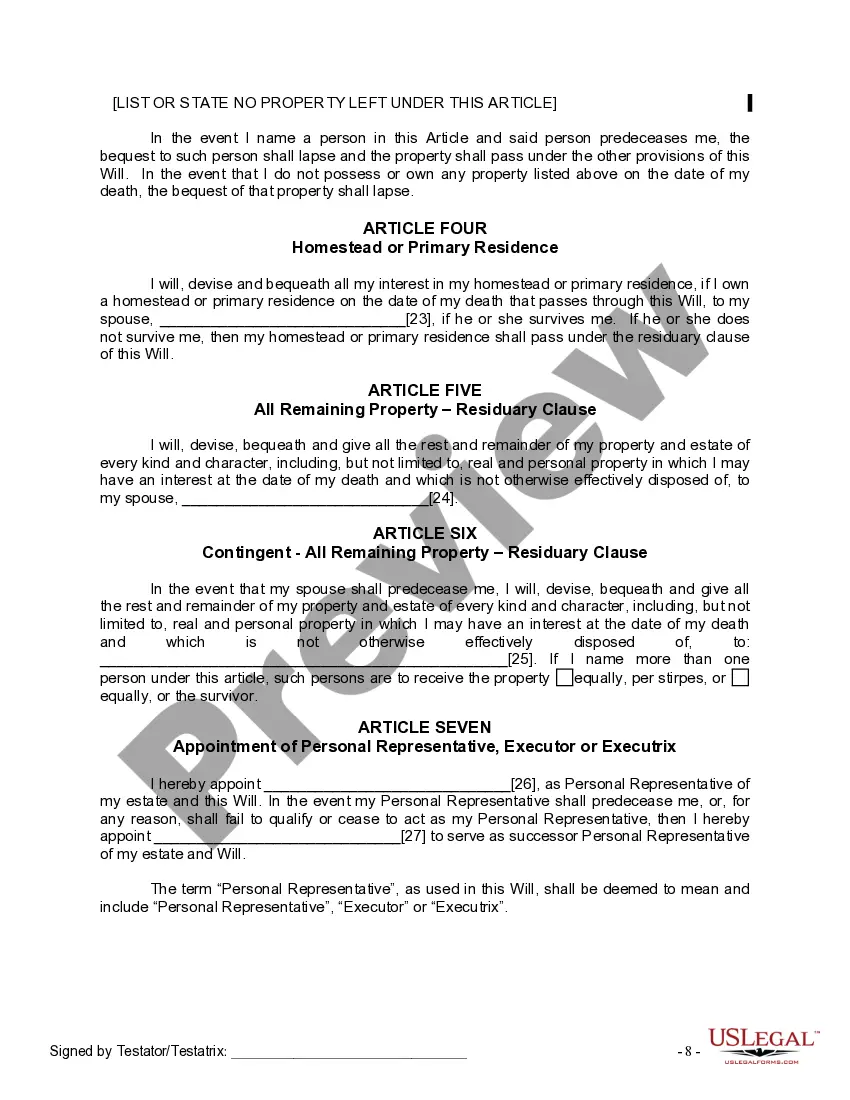
- Article Three: Specific Bequests - Allows you to designate particular items or properties to specific individuals.
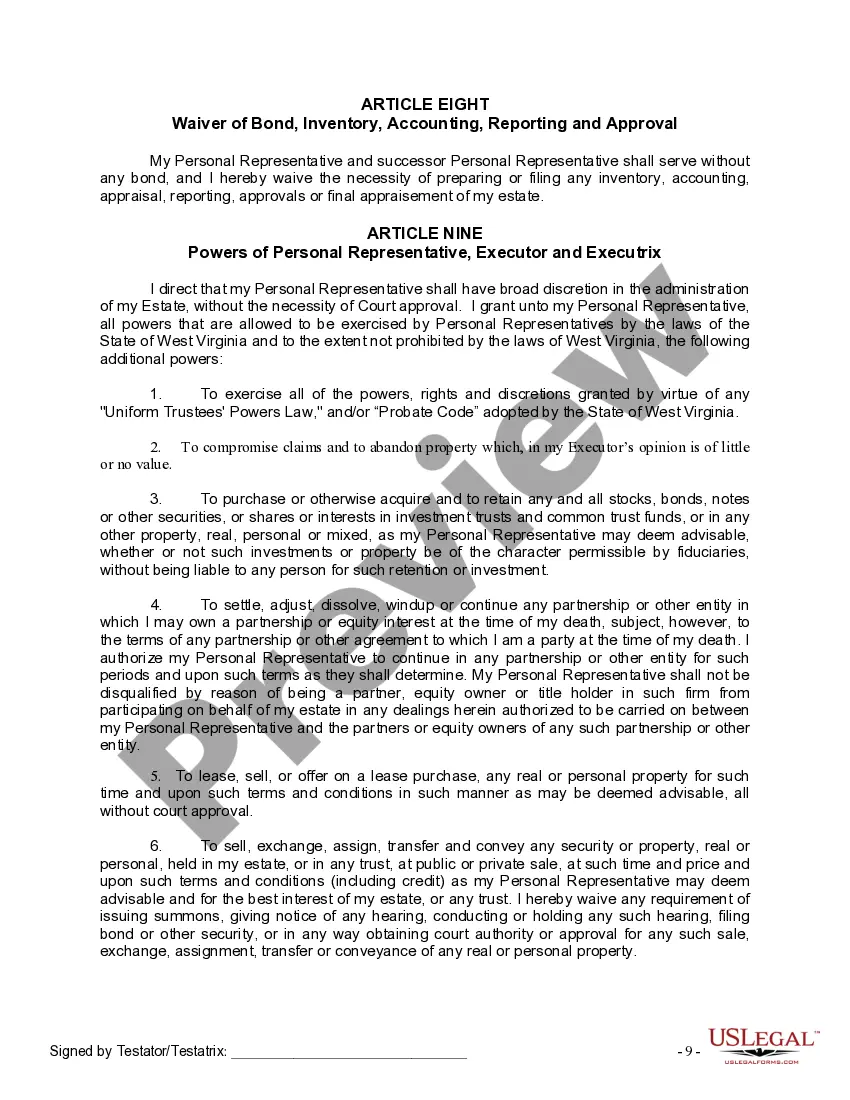
- Article Four: Homestead - Details the distribution of your primary residence.
- Article Five: Residuary Clause - Specifies the remaining assets that will go to your spouse.
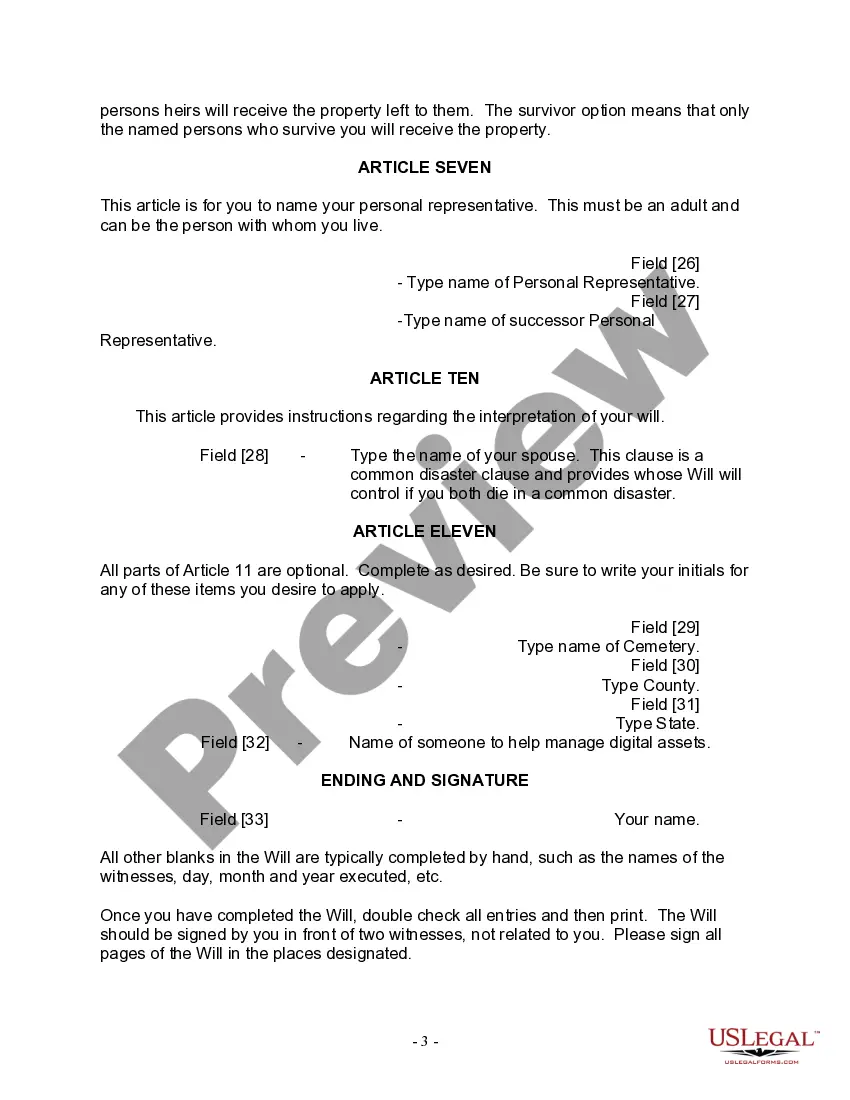
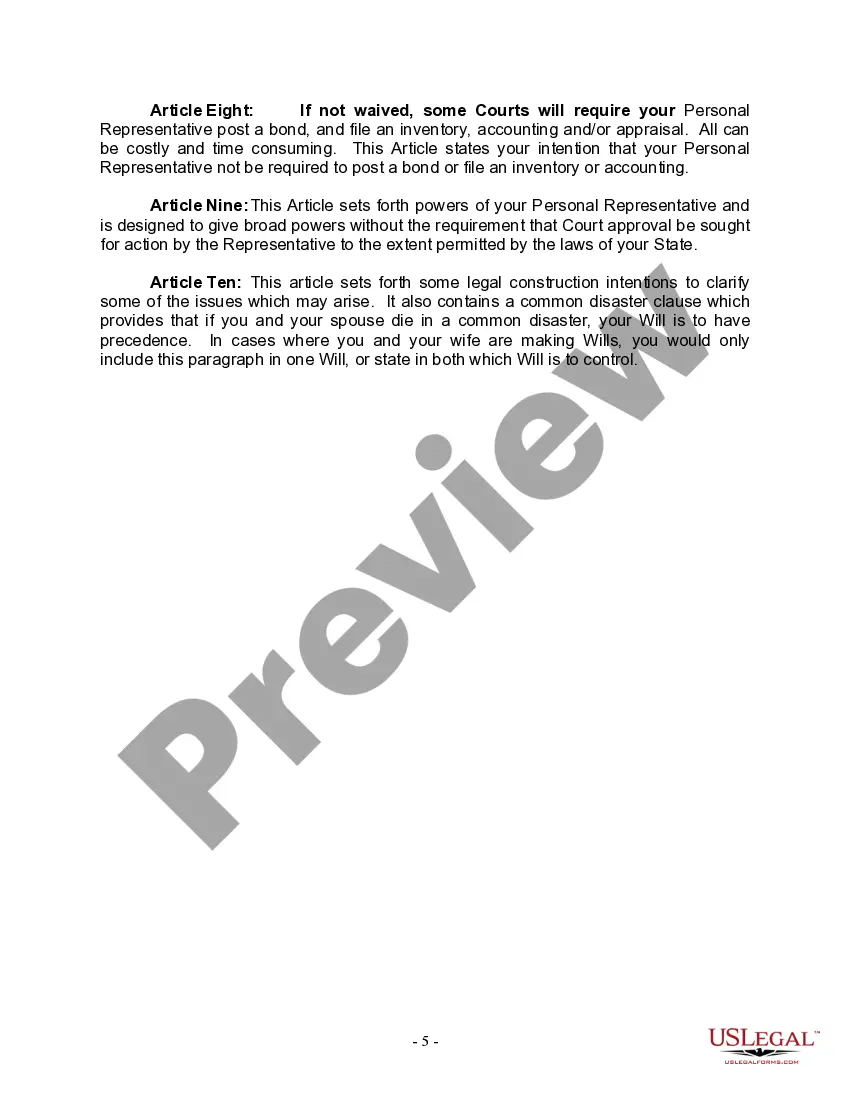
- Article Seven: Appointment of Personal Representative - Designates who will execute your will and handle estate matters.
- Observance of Witness Requirements - Requires signatures from two unrelated witnesses and possibly a notary.

Situations where this form applies
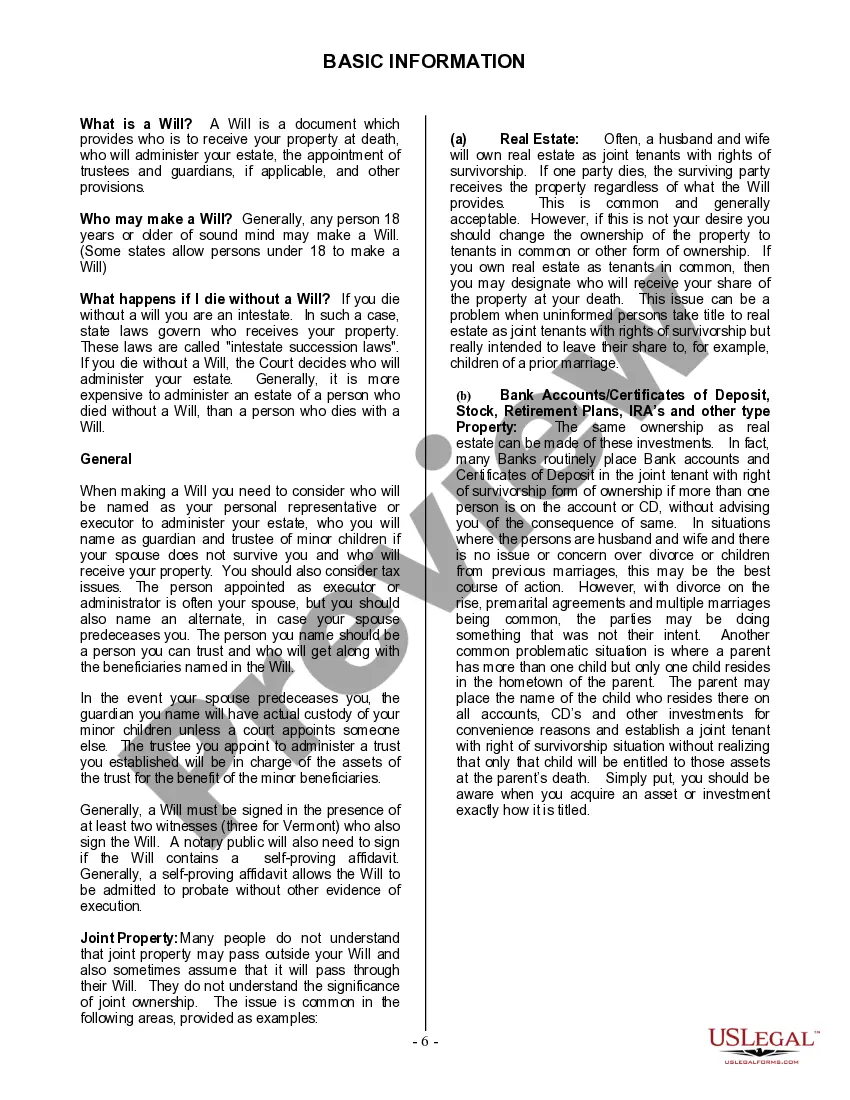
This form is suitable when you want to ensure that your assets are distributed according to your wishes upon your death. It is particularly useful for married individuals without children, as it clearly specifies who will inherit your property and who will manage your estate. Use this form if you wish to avoid the complexities of intestate succession laws, which apply when someone dies without a will.
Intended users of this form
- Married individuals with no children.
- Couples looking to designate their spouse as the primary beneficiary and executor.
- Those who wish to ensure specific distributions of their property after death.
- Anyone wanting to simplify their estate planning process.
Steps to complete this form
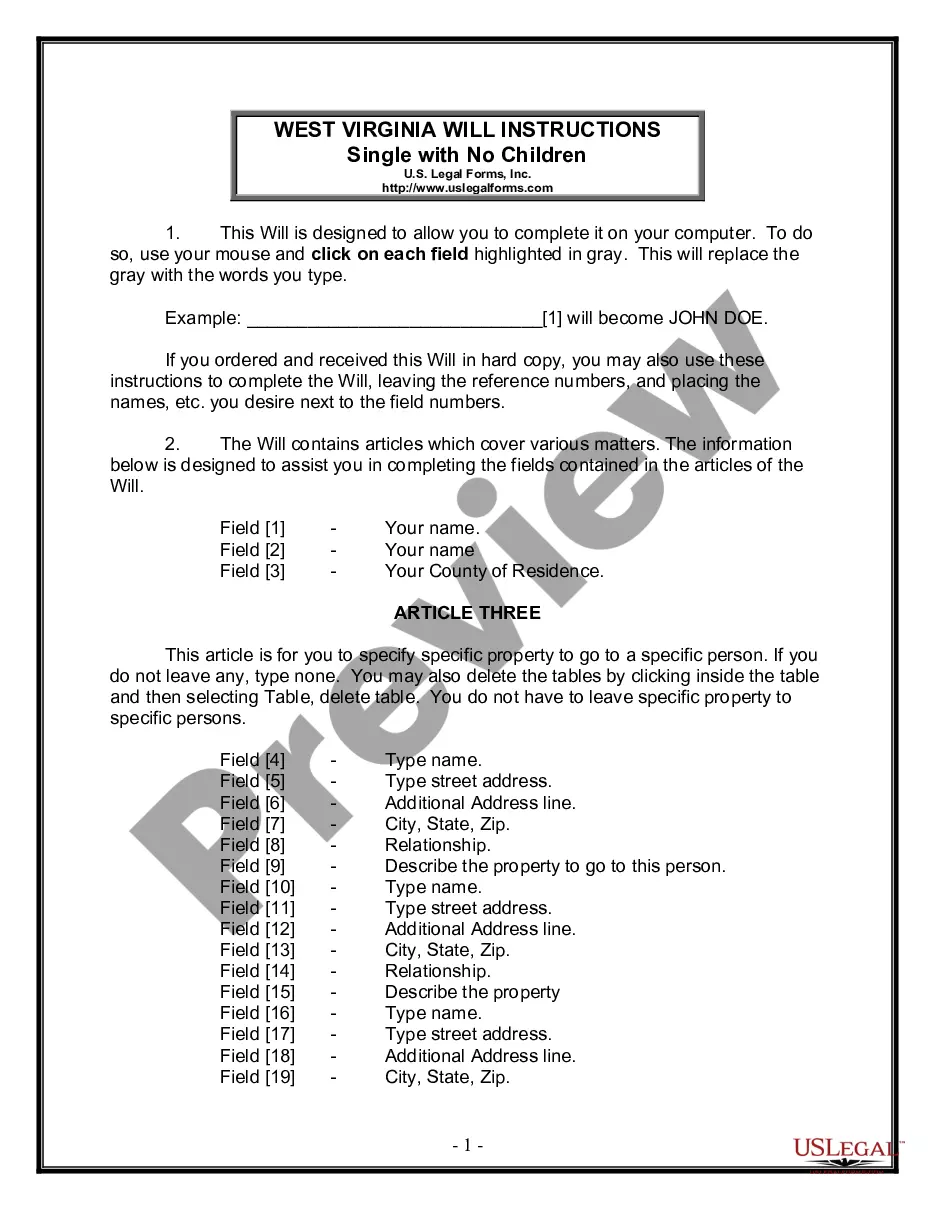
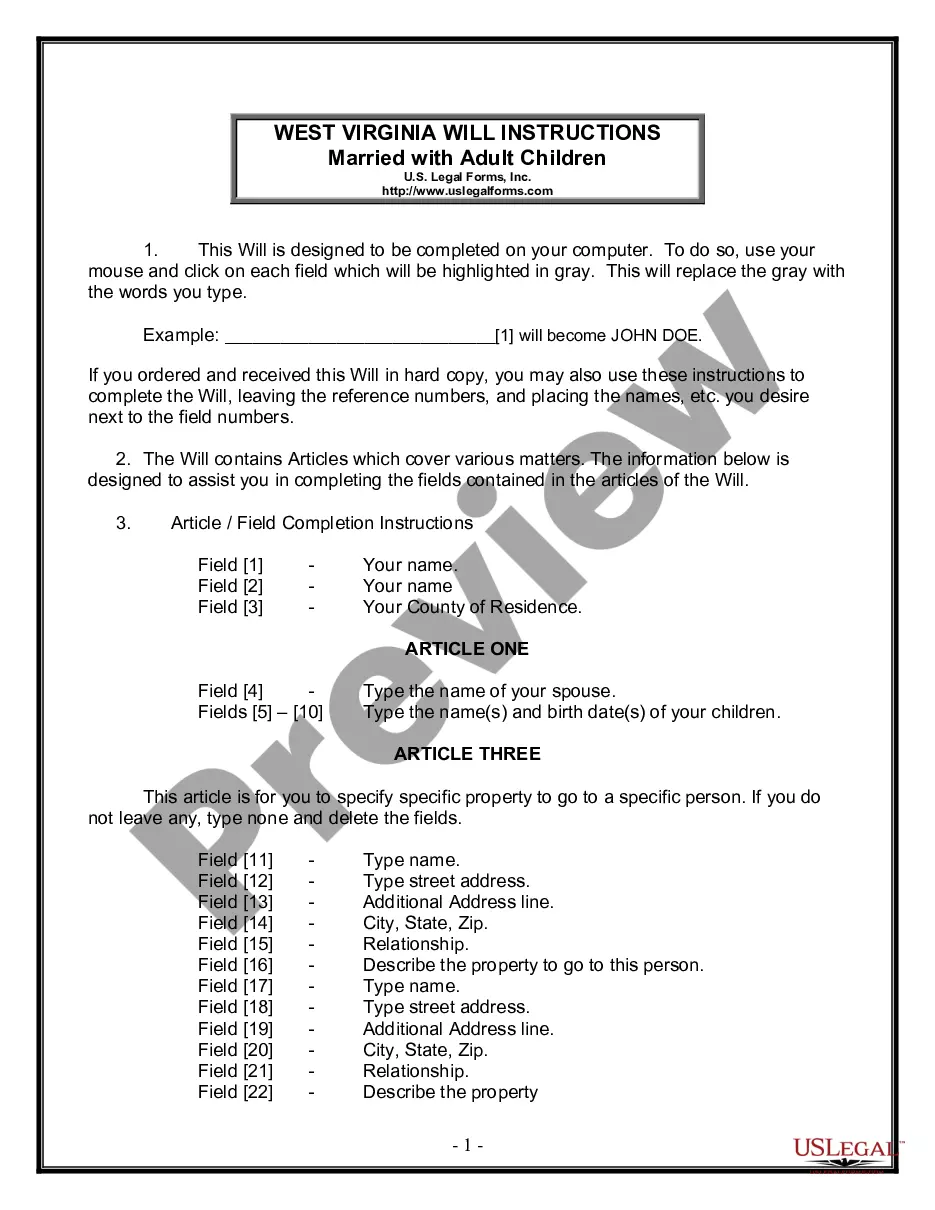
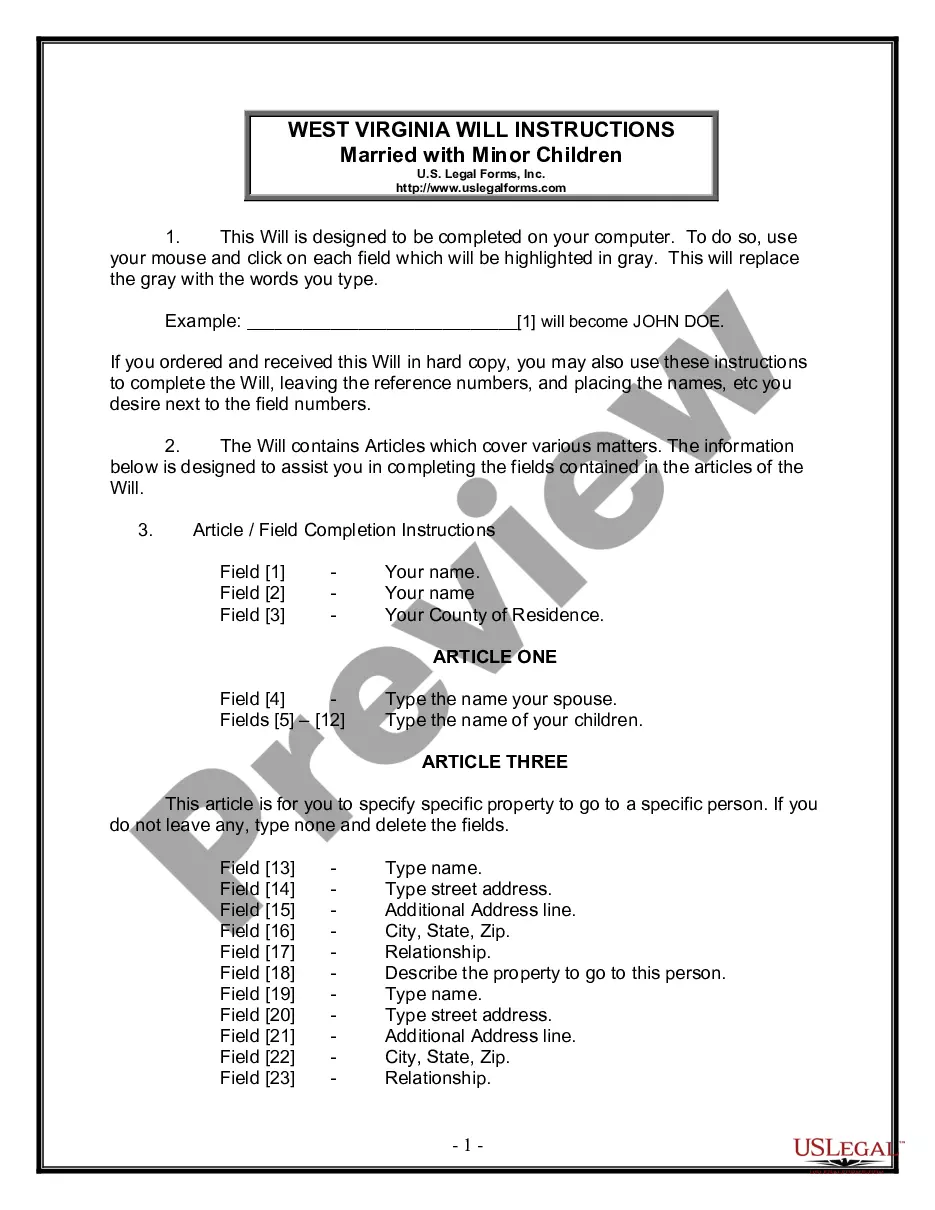
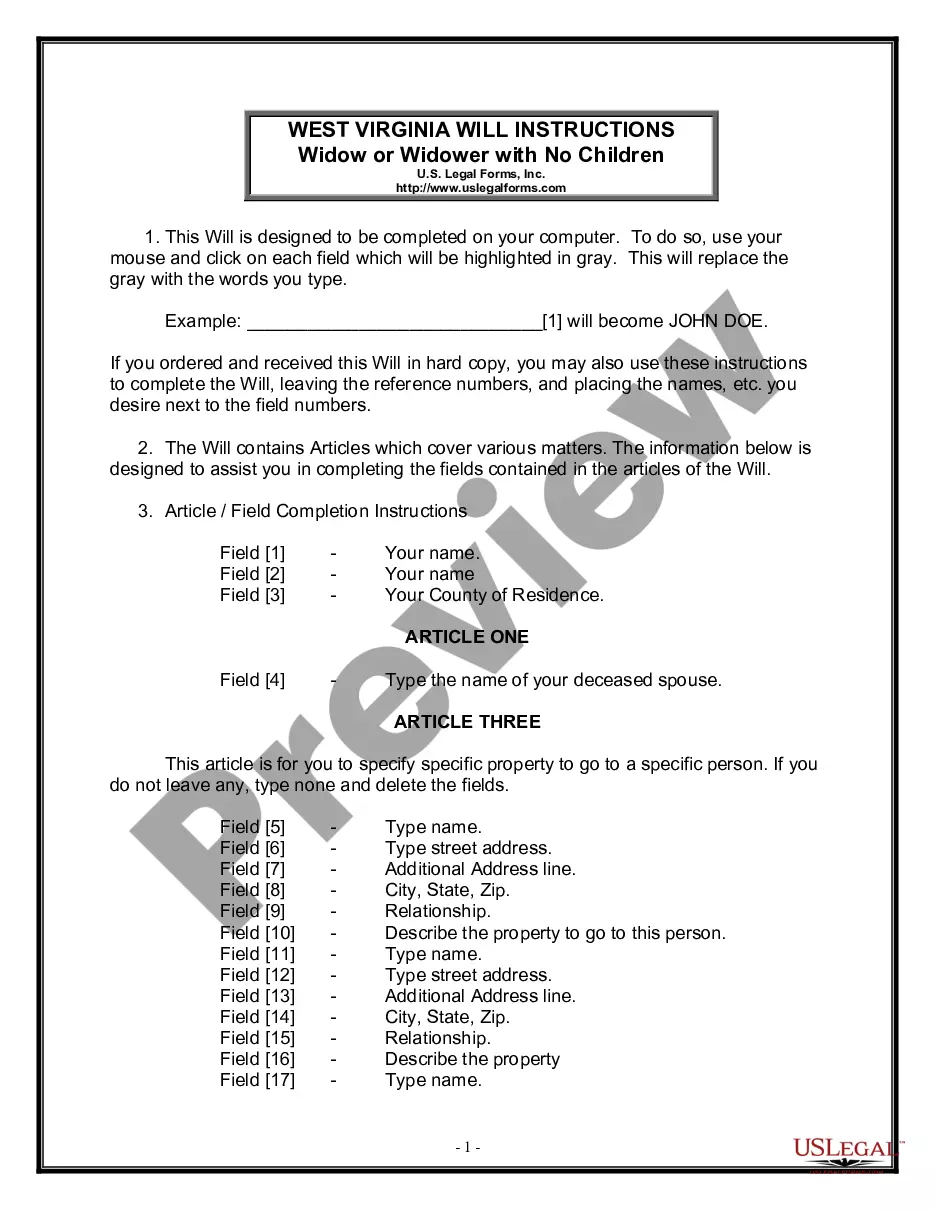
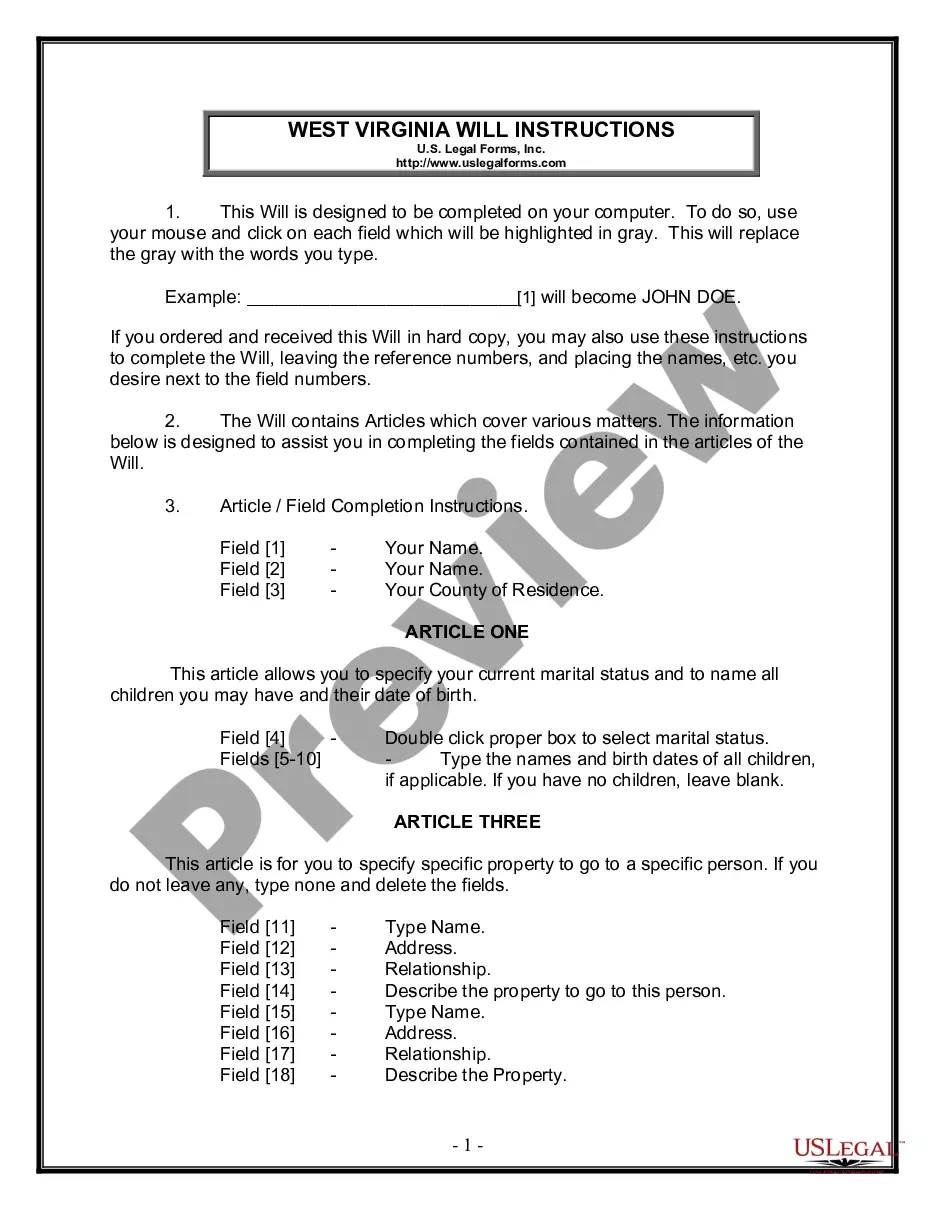
- Fill in personal details, including your full name and county of residence.
- Designate your spouse's name in the appropriate fields.
- Include any specific property you wish to bequeath to others in Article Three.
- Enter instructions about your homestead and other assets in Articles Four and Five.
- Sign the will in front of two witnesses and a notary if required, ensuring all pages are signed.
Does this form need to be notarized?
Yes, this form must be notarized to be legally valid. Notarization helps verify the identity of the signer and prevents fraud. US Legal Forms provides integrated online notarization services, allowing you to complete this process securely via video call without the need for travel.
Get your form ready online
Our built-in tools help you complete, sign, share, and store your documents in one place.
Make edits, fill in missing information, and update formatting in US Legal Forms—just like you would in MS Word.
Download a copy, print it, send it by email, or mail it via USPS—whatever works best for your next step.
Sign and collect signatures with our SignNow integration. Send to multiple recipients, set reminders, and more. Go Premium to unlock E-Sign.
If this form requires notarization, complete it online through a secure video call—no need to meet a notary in person or wait for an appointment.
We protect your documents and personal data by following strict security and privacy standards.

Make edits, fill in missing information, and update formatting in US Legal Forms—just like you would in MS Word.

Download a copy, print it, send it by email, or mail it via USPS—whatever works best for your next step.

Sign and collect signatures with our SignNow integration. Send to multiple recipients, set reminders, and more. Go Premium to unlock E-Sign.

If this form requires notarization, complete it online through a secure video call—no need to meet a notary in person or wait for an appointment.

We protect your documents and personal data by following strict security and privacy standards.
Common mistakes
- Failing to have the will properly witnessed or notarized.
- Not clearly specifying assets or beneficiaries, leading to potential disputes.
- Neglecting to regularly update the will after significant life changes.
Benefits of using this form online
- Convenience of completion from home with a downloadable format.
- Editable fields ensure you can customize the will to your specific needs.
- Access to legal templates drafted by licensed attorneys, giving peace of mind regarding legal compliance.
Quick recap
- A Last Will and Testament is essential for clarifying asset distribution.
- It provides peace of mind by ensuring your spouse is taken care of after your death.
- Proper execution, including witnessing and notarization, is crucial for validity.
- Regular updates to your will are necessary to reflect life changes.
Looking for another form?
Form popularity
FAQ
No, in West Virginia, you do not need to notarize your will to make it legal.A self-proving will speeds up probate because the court can accept the will without contacting the witnesses who signed it.
The Will must be filed with the Probate Office of the County Clerk in the county where the decedent lived. A Petition for Probate must be filed as well. This requests the appointment of an executor. If there is no Will, the clerk will appoint someone to serve as the Personal Representative of the estate.
A notarized will does not need to be probated.When a person dies leaving behind a will that is not notarized, the law requires that its validity be ascertained by a notary or by a court. Similarly, any non-notarized modification made to a will must be probated, whether the will is notarized or not.
A will typically must be properly witnessed to be valid. Unlike other legal documents, a will generally isn't valid unless two adult witnesses watch the will-maker sign it. The witnesses must know that the document is intended to be that person's will, and they must also sign the document themselves.
In order for a will to be valid, it must be: made by a person who is 18 years old or over and. made voluntarily and without pressure from any other person and.signed by the two witnesses, in the presence of the person making the will, after it has been signed.
No, in West Virginia, you do not need to notarize your will to make it legal.A self-proving will speeds up probate because the court can accept the will without contacting the witnesses who signed it.
Yes. A will that you write yourself is called a holographic will. Holographic wills are not valid in every state, but they are valid in West Virginia, as long as they are written entirely in the author's handwriting.