West Virginia Last Will and Testament for a Single Person with Minor Children
What is this form?
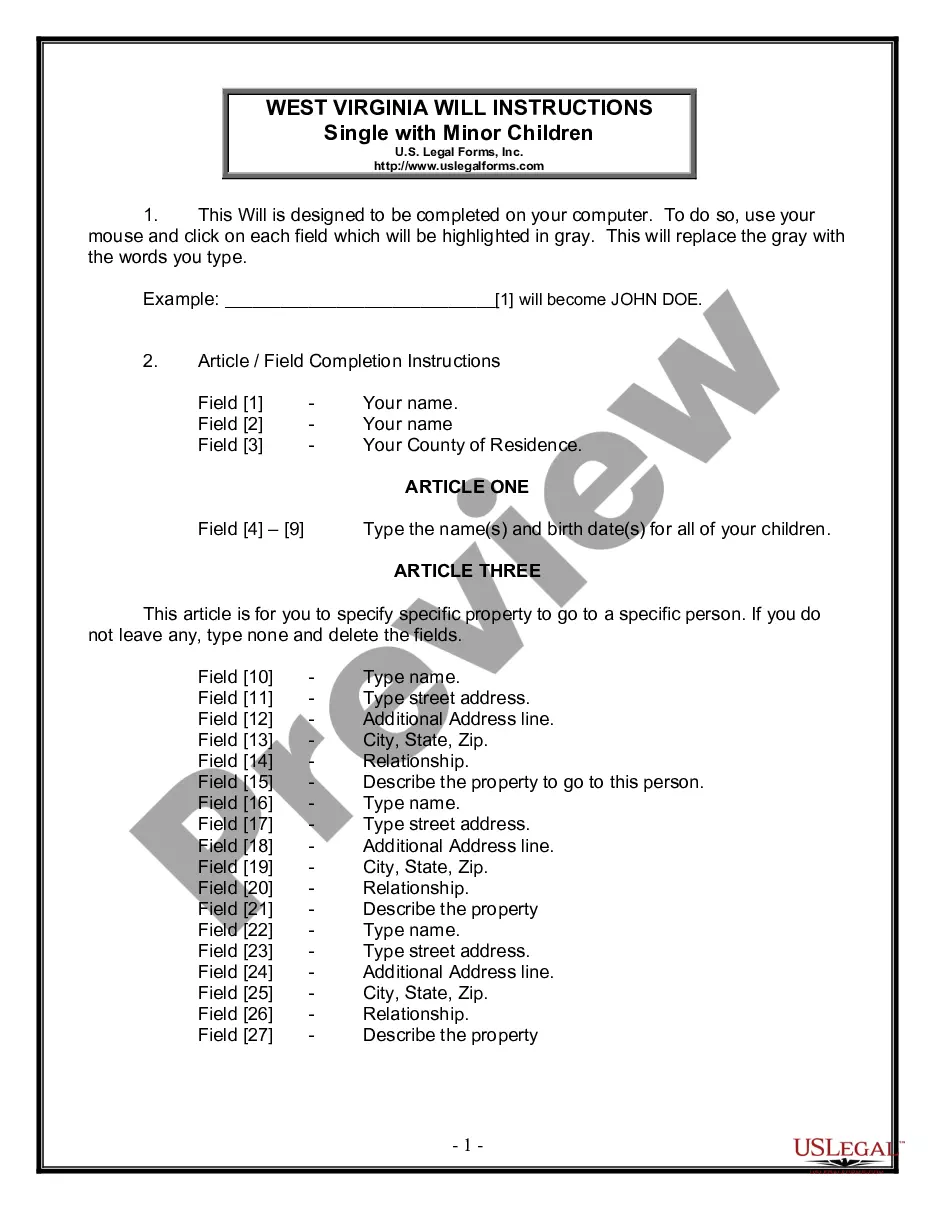
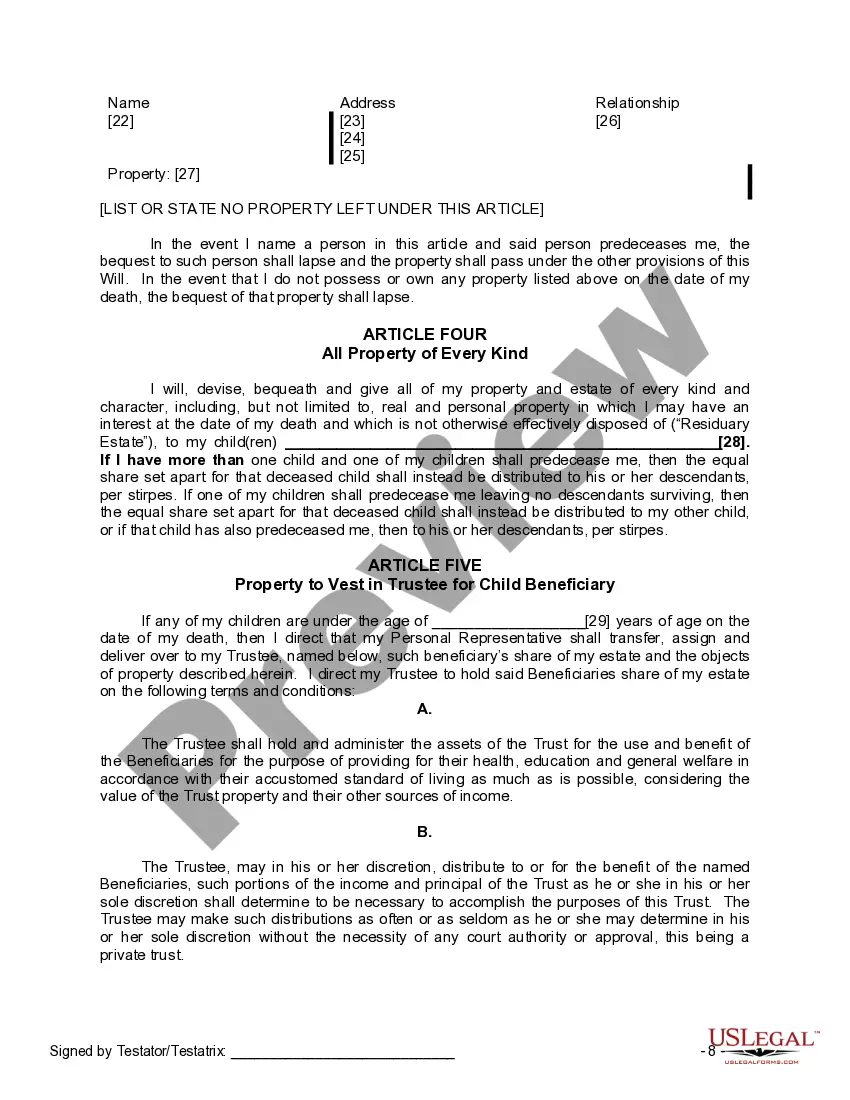
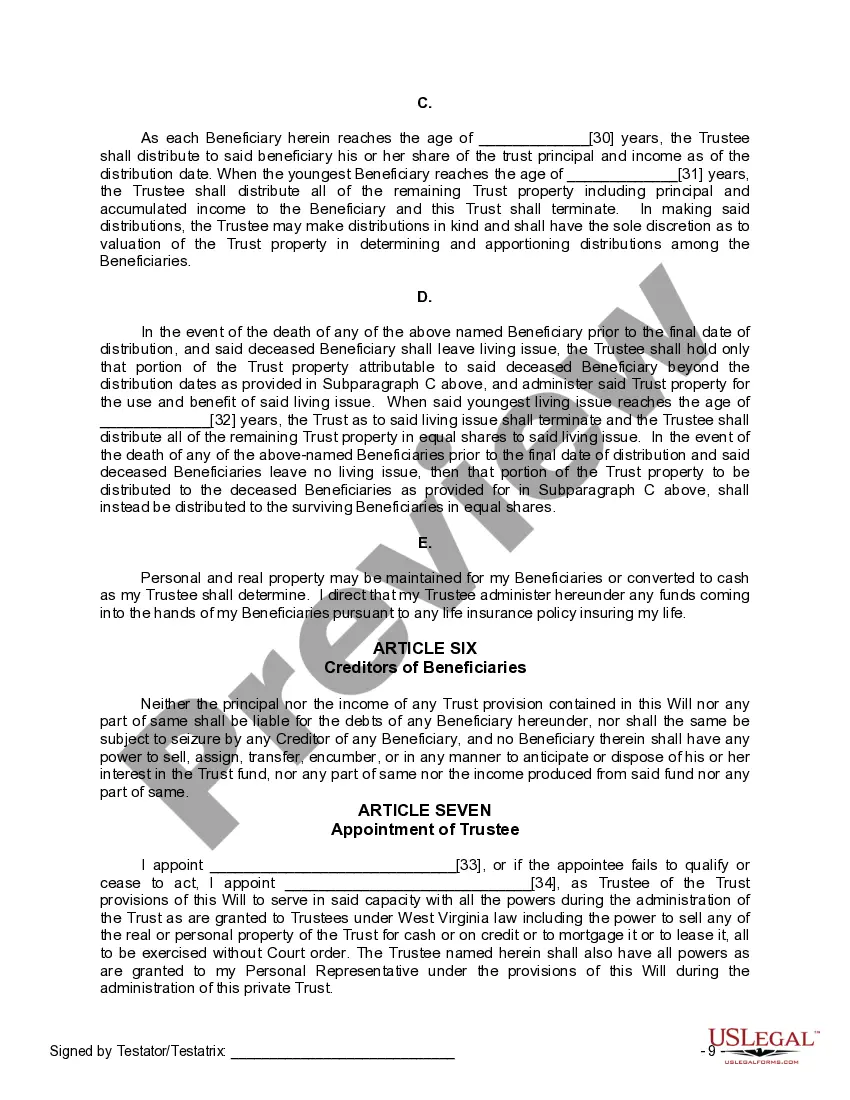
The Last Will and Testament for a Single Person with Minor Children is a legal document that outlines how your assets will be distributed upon your death and who will care for your minor children. This will is specifically tailored for individuals who are single and have dependents, distinguishing it from other wills that may include spouses or other considerations. It provides crucial provisions for appointing guardians and trustees for minor children, ensuring their well-being is prioritized after your passing.
Form components explained
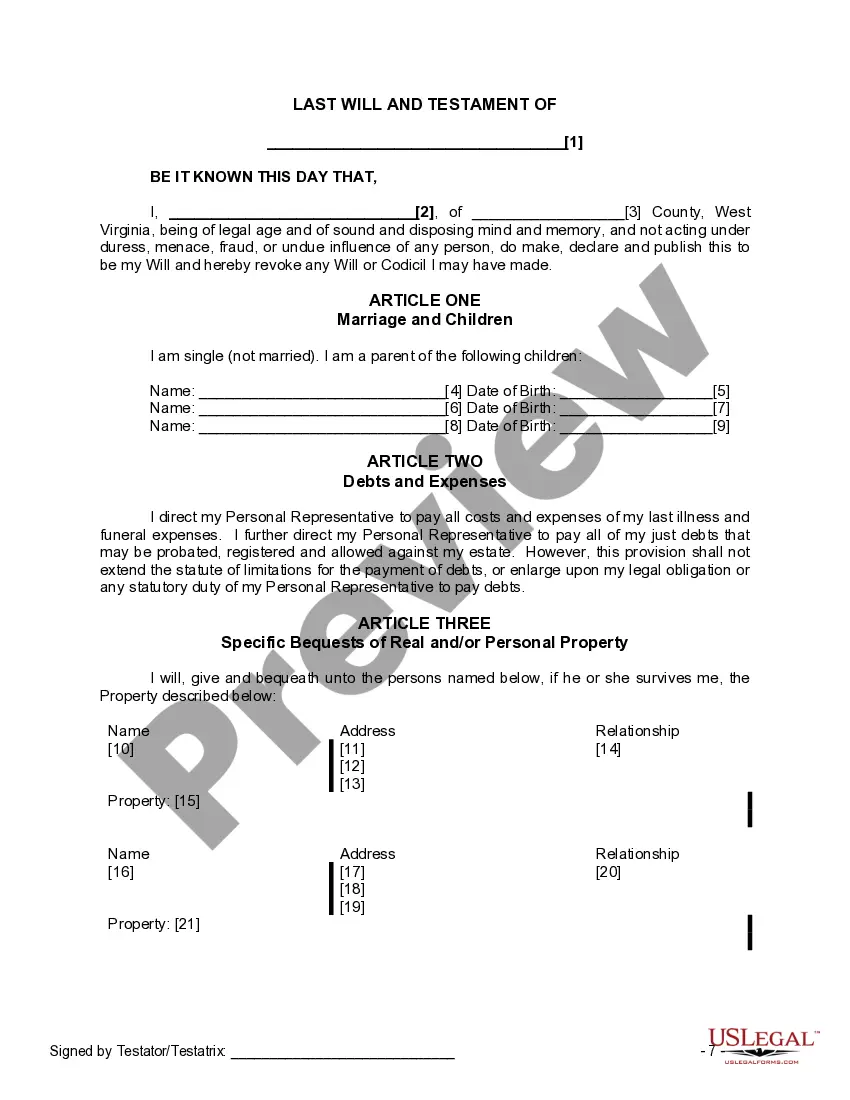
- Appointment of a personal representative or executor to manage your estate.
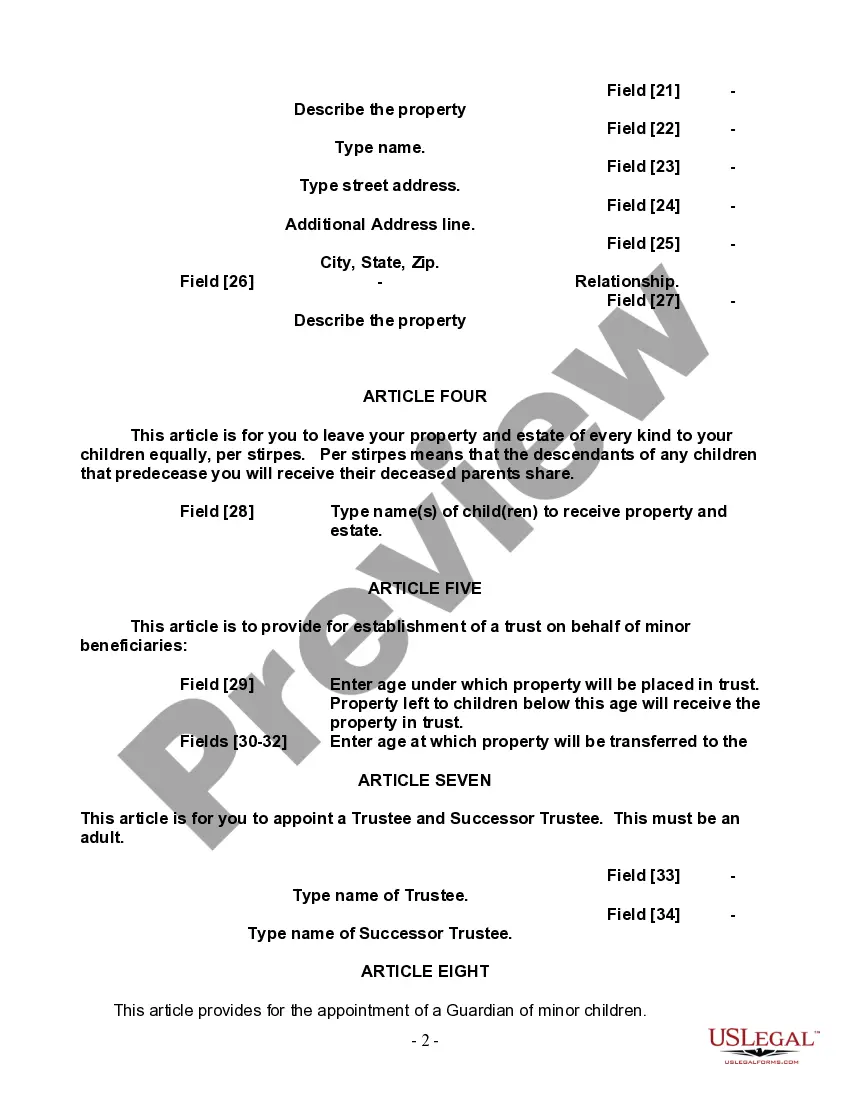
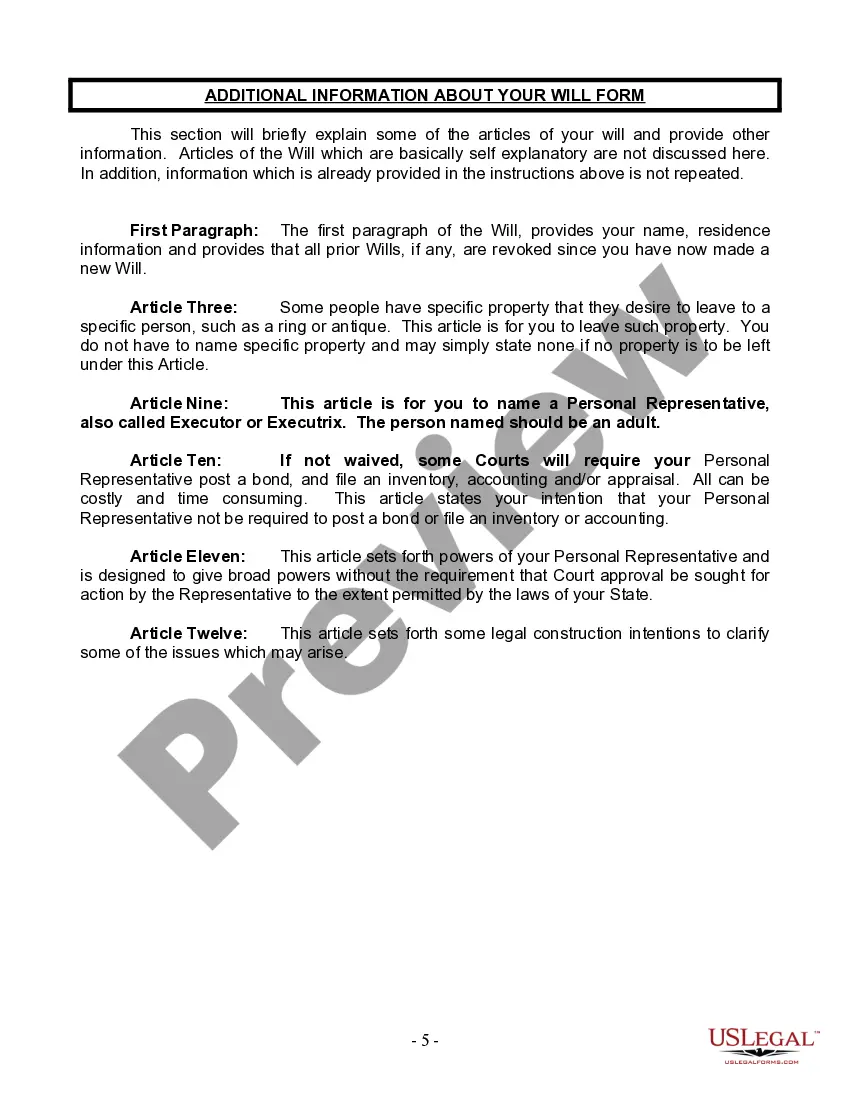
- Specific bequests outlining who receives designated property.
- Provisions for the equal distribution of your estate among minor children.
- Establishment of a trust for minors, delaying asset distribution until they reach a certain age.
- Designation of guardians for minor children to ensure their care and custody.


When this form is needed
This form is essential for single parents who want to ensure that their minor children are cared for and that their assets are distributed according to their wishes after their death. It is particularly relevant if you want to appoint a guardian for your children and set up a trust to manage their inheritance until they reach adulthood.
Intended users of this form
- Single parents who have minor children.
- Individuals who wish to specify their estate distribution after death.
- Anyone looking to name guardians for their minor children in case of their untimely passing.
Instructions for completing this form
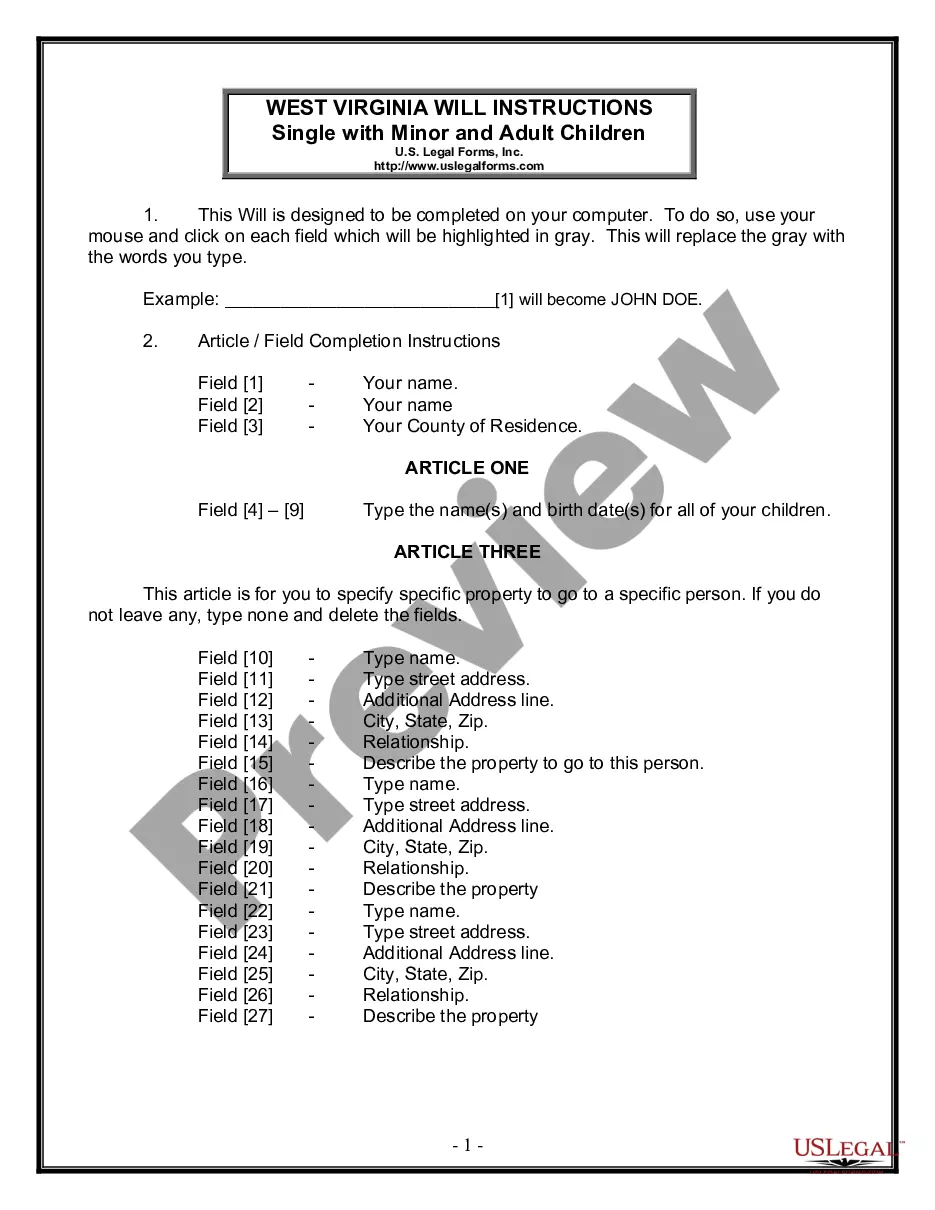
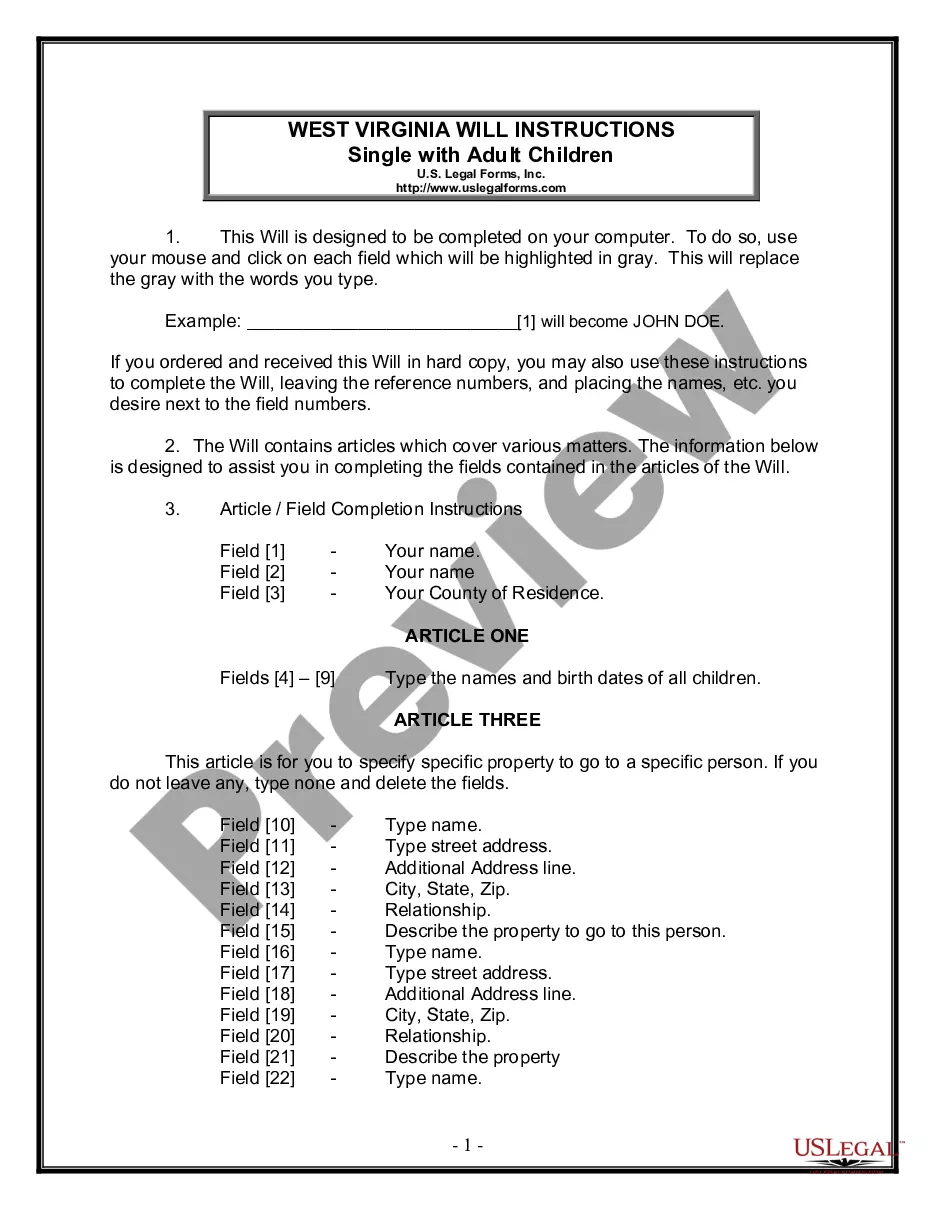
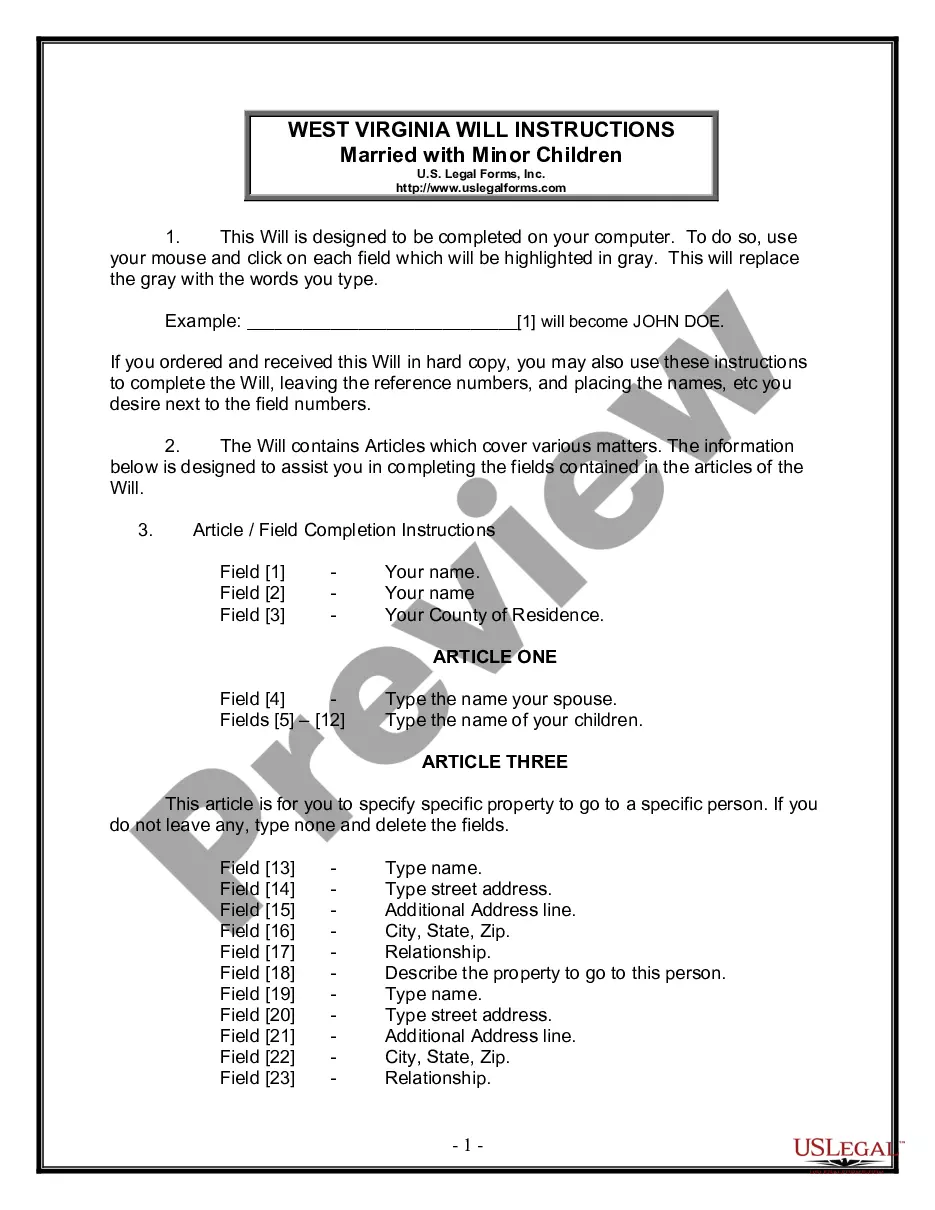
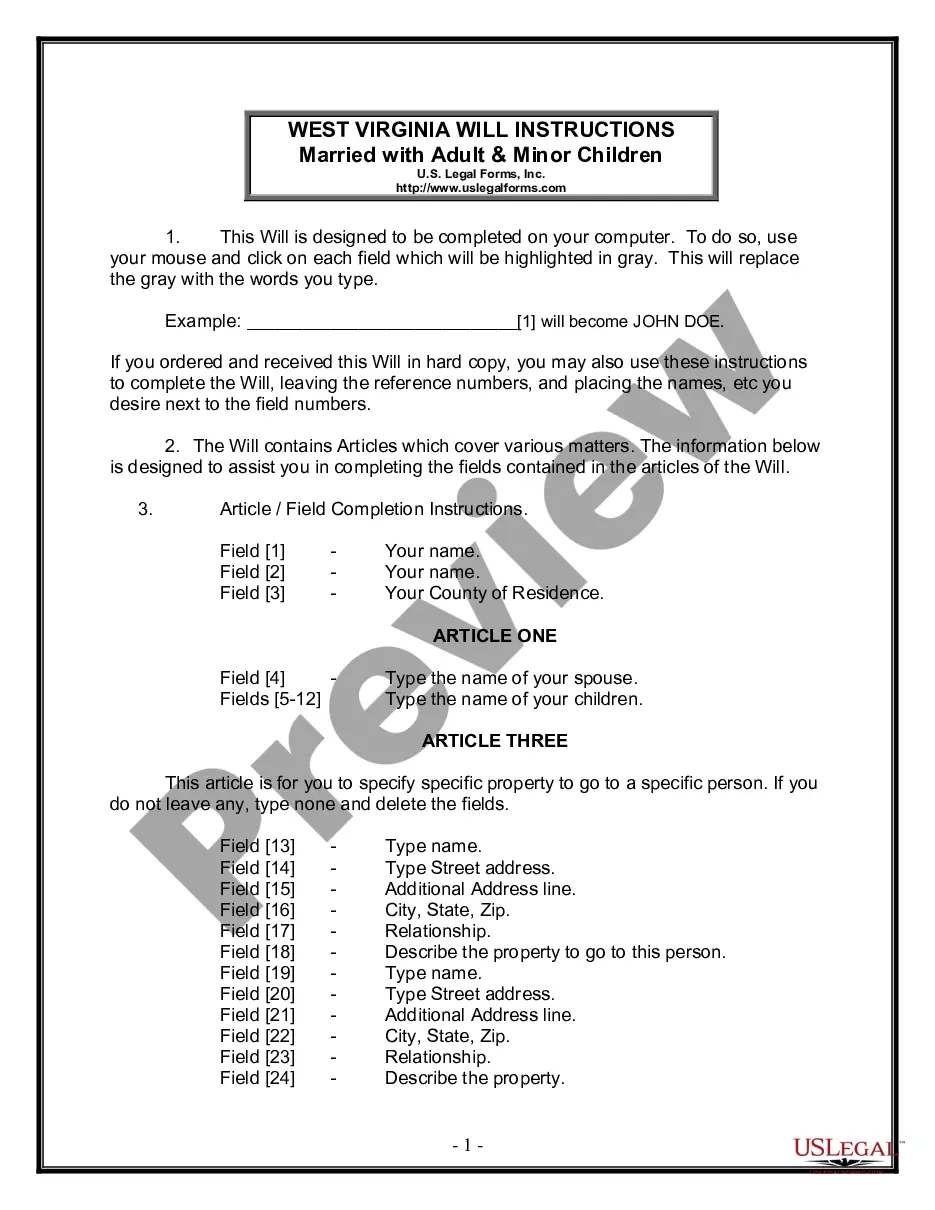
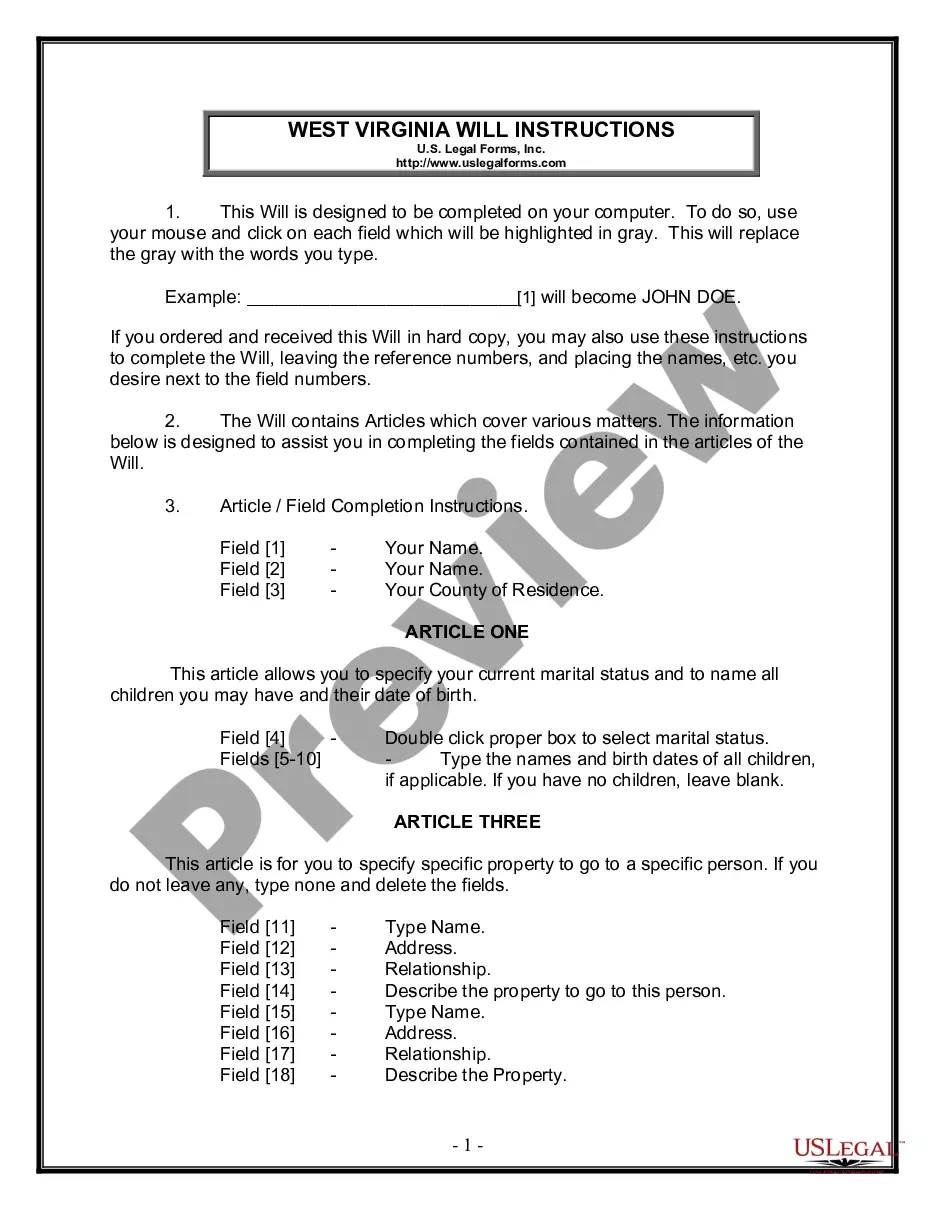
- Start by entering your full name and county of residence.
- List the names and birth dates of all your minor children.
- Detail any specific property you wish to bequeath to chosen individuals.
- Designate a trustee to manage the trust for any minor children until they reach the specified age.
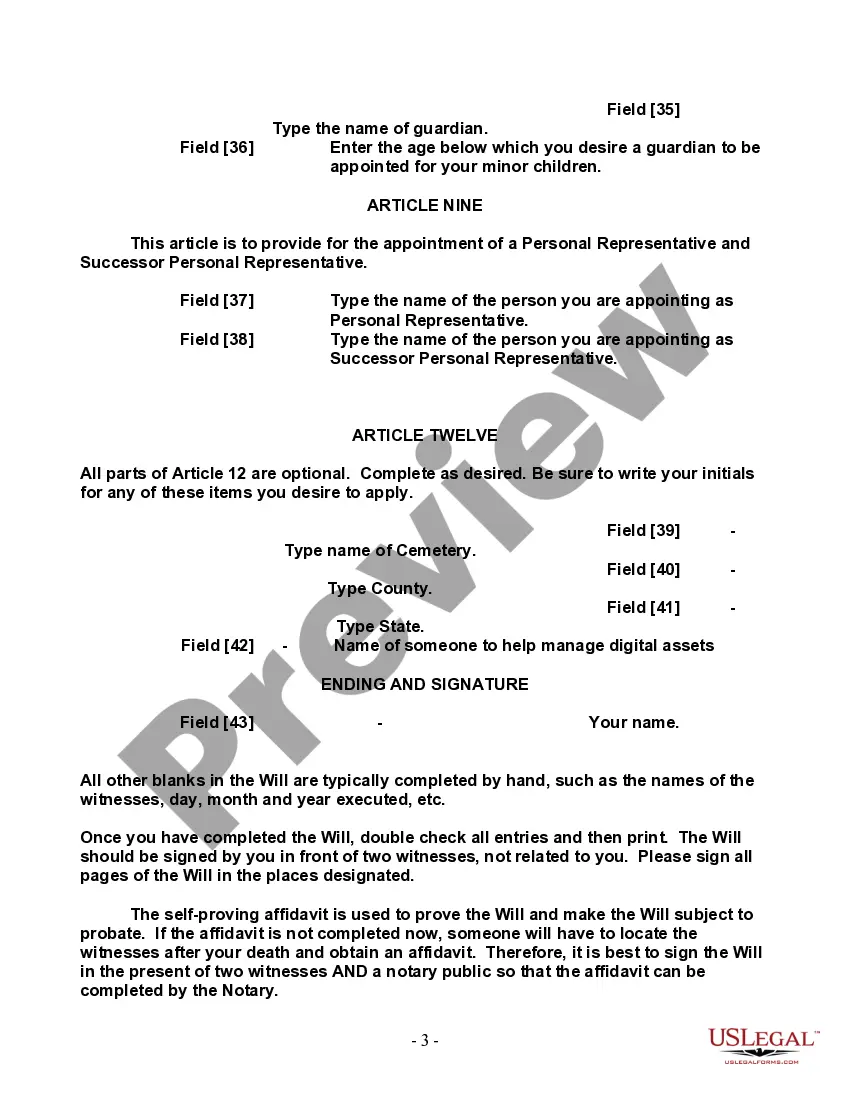
- Sign the form in the presence of two witnesses, ensuring they are not mentioned in your will.
Notarization guidance
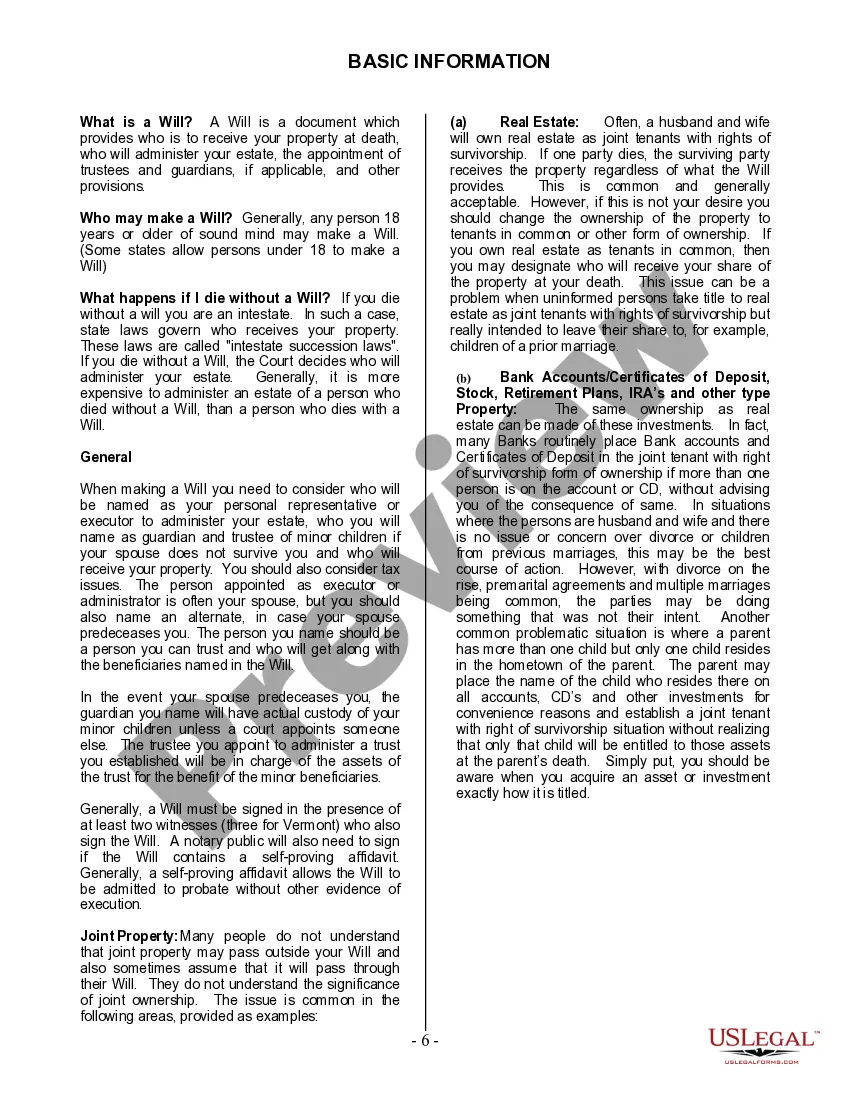
Yes, this form must be notarized to be legally valid. It is important to sign the will in the presence of a notary public to ensure that the self-proving affidavit is completed correctly. This can help simplify the probate process when the time comes.
Get your form ready online
Our built-in tools help you complete, sign, share, and store your documents in one place.
Make edits, fill in missing information, and update formatting in US Legal Forms—just like you would in MS Word.
Download a copy, print it, send it by email, or mail it via USPS—whatever works best for your next step.
Sign and collect signatures with our SignNow integration. Send to multiple recipients, set reminders, and more. Go Premium to unlock E-Sign.
If this form requires notarization, complete it online through a secure video call—no need to meet a notary in person or wait for an appointment.
We protect your documents and personal data by following strict security and privacy standards.

Make edits, fill in missing information, and update formatting in US Legal Forms—just like you would in MS Word.

Download a copy, print it, send it by email, or mail it via USPS—whatever works best for your next step.

Sign and collect signatures with our SignNow integration. Send to multiple recipients, set reminders, and more. Go Premium to unlock E-Sign.

If this form requires notarization, complete it online through a secure video call—no need to meet a notary in person or wait for an appointment.

We protect your documents and personal data by following strict security and privacy standards.
Mistakes to watch out for
- Failing to list all minor children, which could lead to unintended distribution of assets.
- Not having the Will signed and witnessed correctly, nullifying its validity.
- Neglecting to update the Will after major life changes, such as the birth of a child or changes in financial status.
Benefits of using this form online
- Convenience of completing the form online at your own pace.
- Editability allows you to adjust details as needed before finalizing.
- Access to professionally drafted templates ensures reliability and legal compliance.
Summary of main points
- This Last Will and Testament is crucial for single parents seeking to protect their minor children.
- Proper execution, including witnessing and notarization, is essential for the willâs validity.
- The form provides structured fields to ensure critical information is included.
- Planning ahead with this document can alleviate potential legal issues for your loved ones after your death.
Looking for another form?
Form popularity
FAQ
No, in West Virginia, you do not need to notarize your will to make it legal.A self-proving will speeds up probate because the court can accept the will without contacting the witnesses who signed it.
You can make your own will in Virginia, using Nolo's do-it-yourself will software or online will programs. However, you may want to consult a lawyer in some situations. For example, if you think that your will might be contested or if you want to disinherit your spouse, you should talk with an attorney.
A notarized will does not need to be probated.When a person dies leaving behind a will that is not notarized, the law requires that its validity be ascertained by a notary or by a court. Similarly, any non-notarized modification made to a will must be probated, whether the will is notarized or not.
California's Probate Code Section 6100: (a) An individual 18 or more years of age who is of sound mind may make a will.
Yes. A will that you write yourself is called a holographic will. Holographic wills are not valid in every state, but they are valid in West Virginia, as long as they are written entirely in the author's handwriting.
No, in West Virginia, you do not need to notarize your will to make it legal.A self-proving will speeds up probate because the court can accept the will without contacting the witnesses who signed it.
The Will must be filed with the Probate Office of the County Clerk in the county where the decedent lived. A Petition for Probate must be filed as well. This requests the appointment of an executor. If there is no Will, the clerk will appoint someone to serve as the Personal Representative of the estate.
In order for a will to be valid, it must be: made by a person who is 18 years old or over and. made voluntarily and without pressure from any other person and.signed by the two witnesses, in the presence of the person making the will, after it has been signed.