West Virginia Warranty Deed from Husband and Wife to Corporation
What this document covers
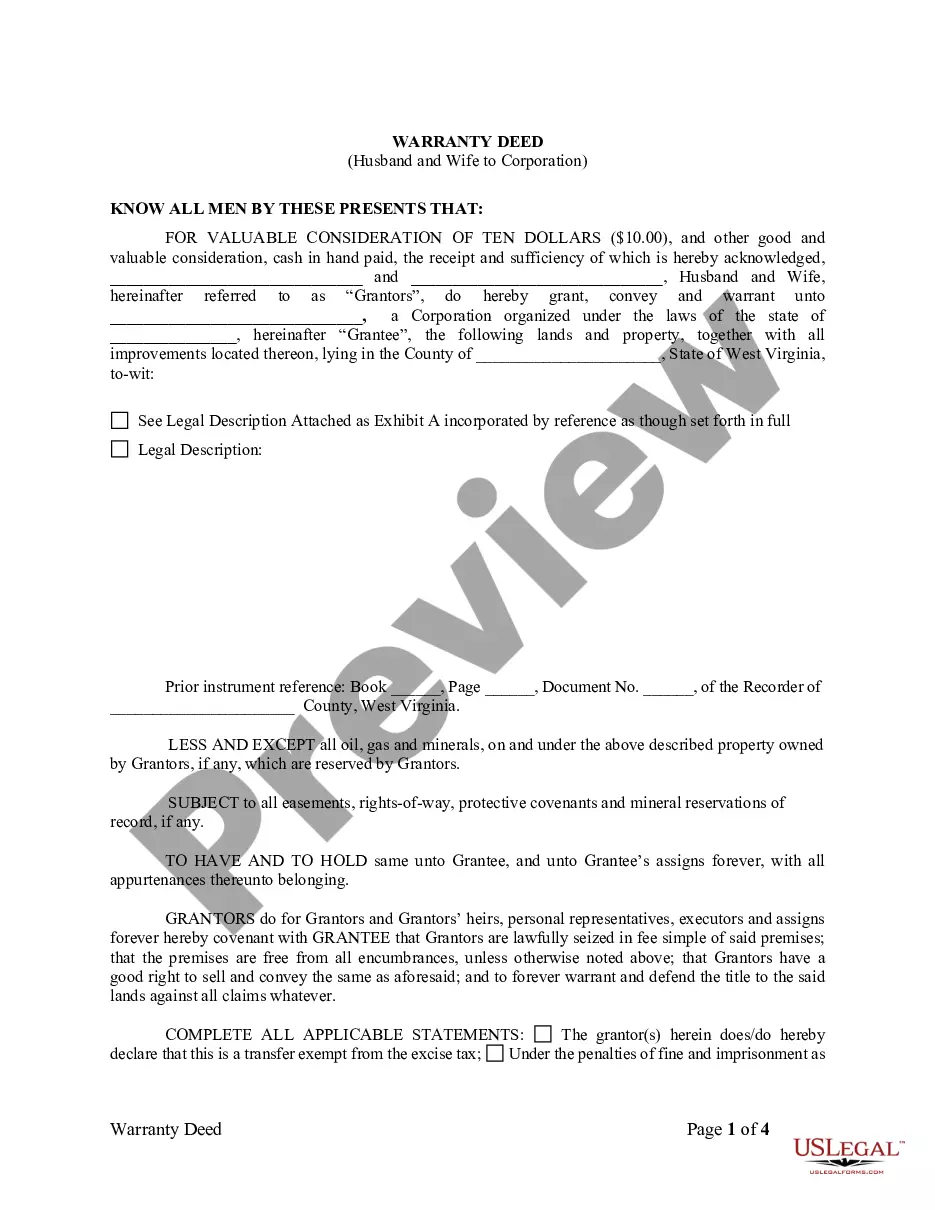
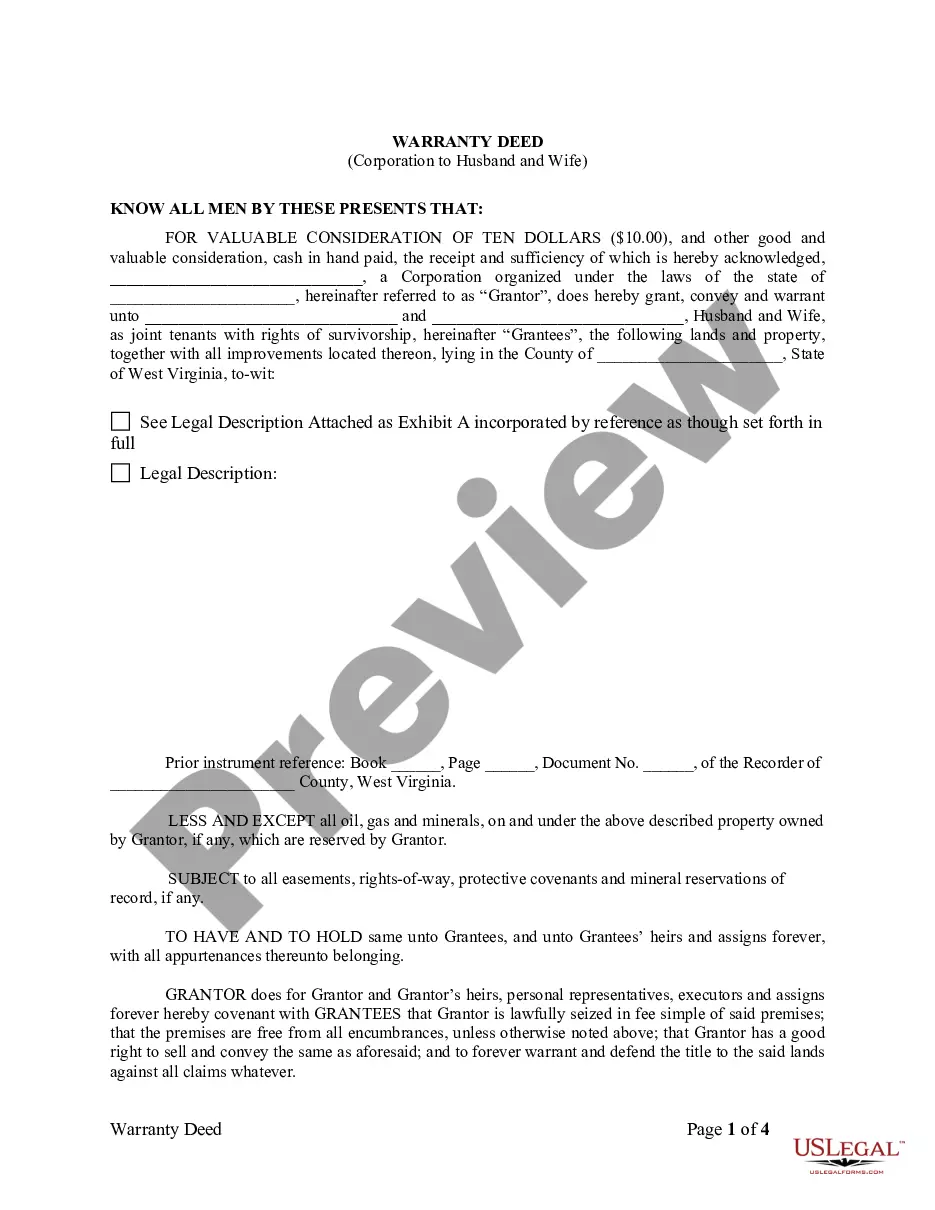
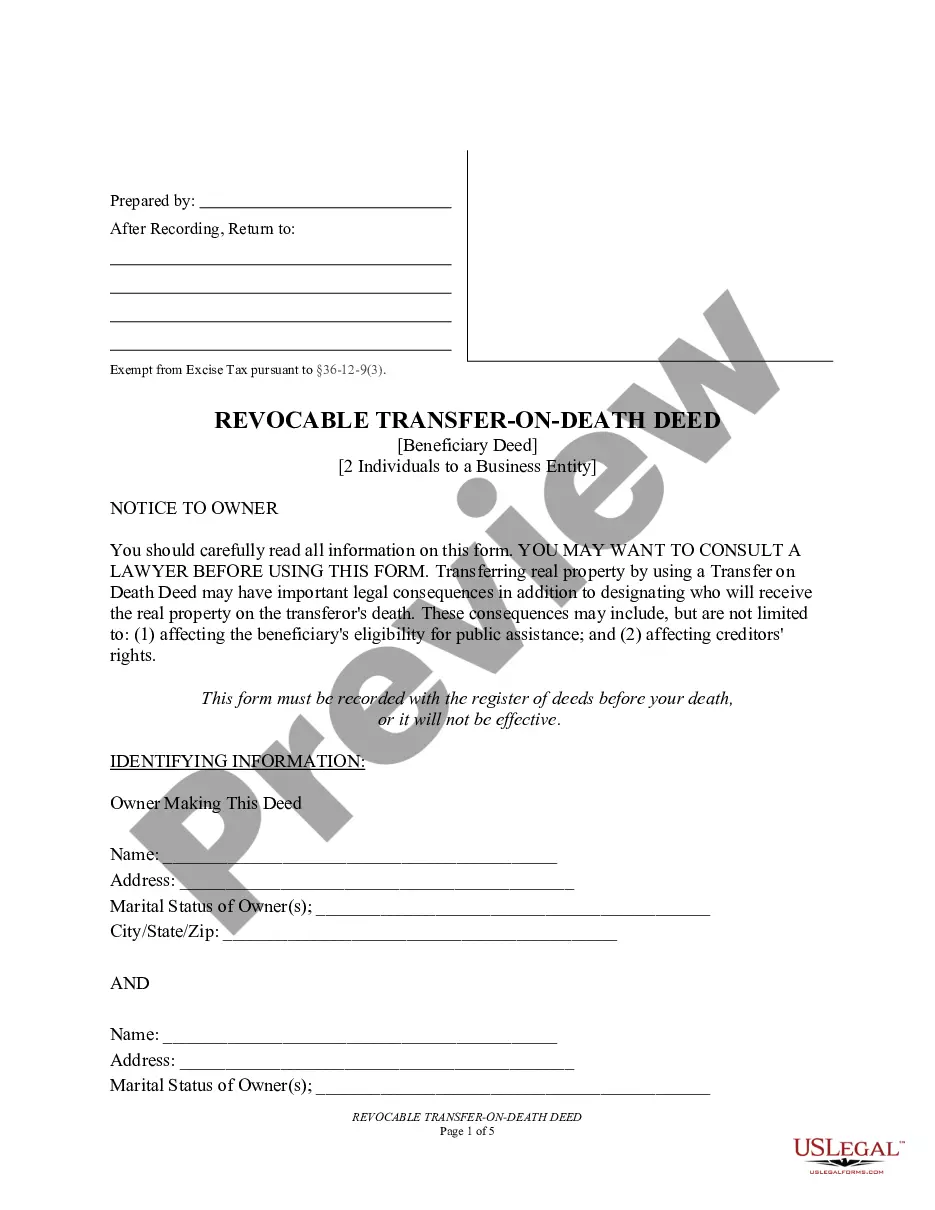
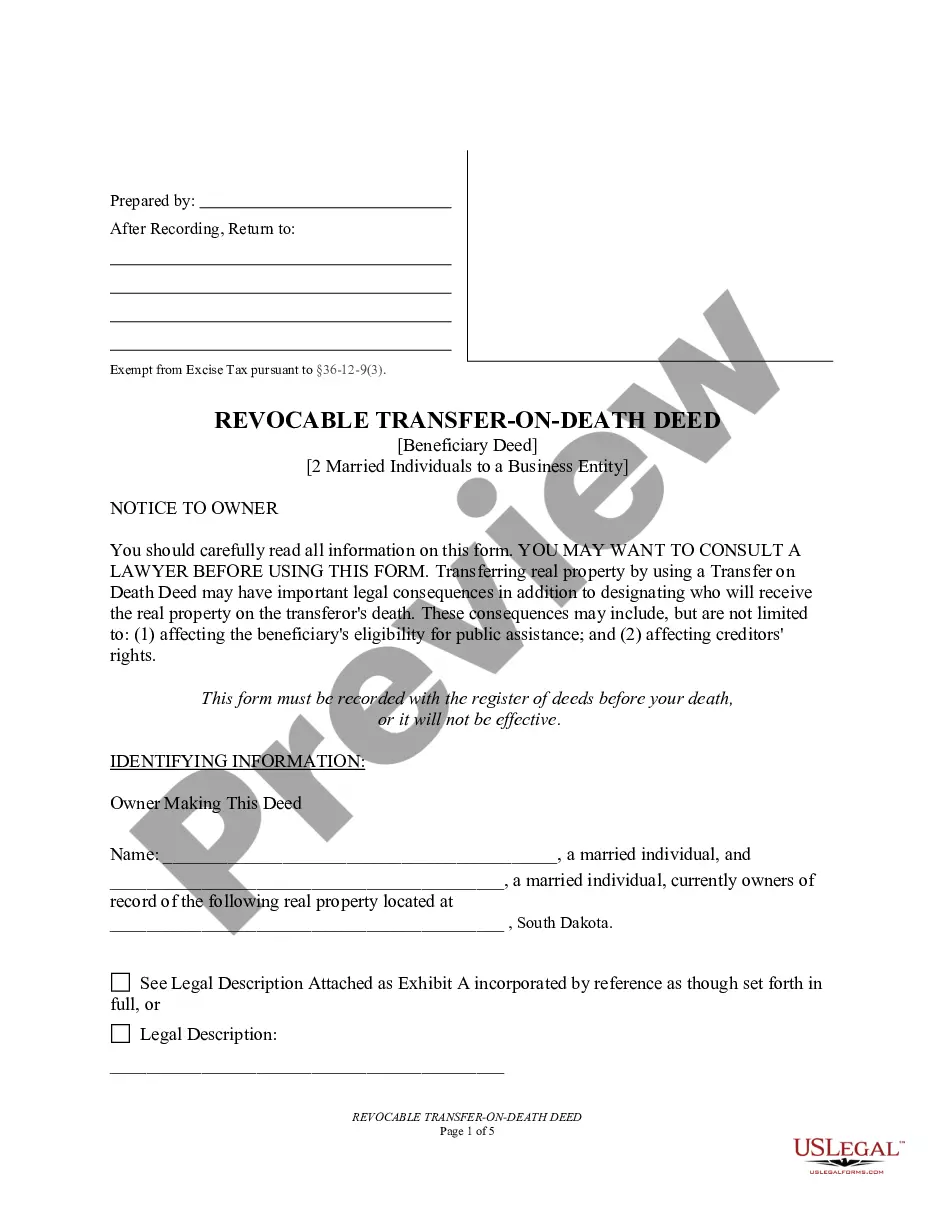
The Warranty Deed from Husband and Wife to Corporation is a legal document used to transfer property ownership from a married couple (the grantors) to a corporation (the grantee). This form guarantees that the property is being conveyed without any hidden encumbrances, but it excludes the rights to any oil, gas, and minerals beneath the surface. Unlike other deeds, this warranty deed specifically outlines the roles of both spouses and the corporate entity in the transaction.
Form components explained
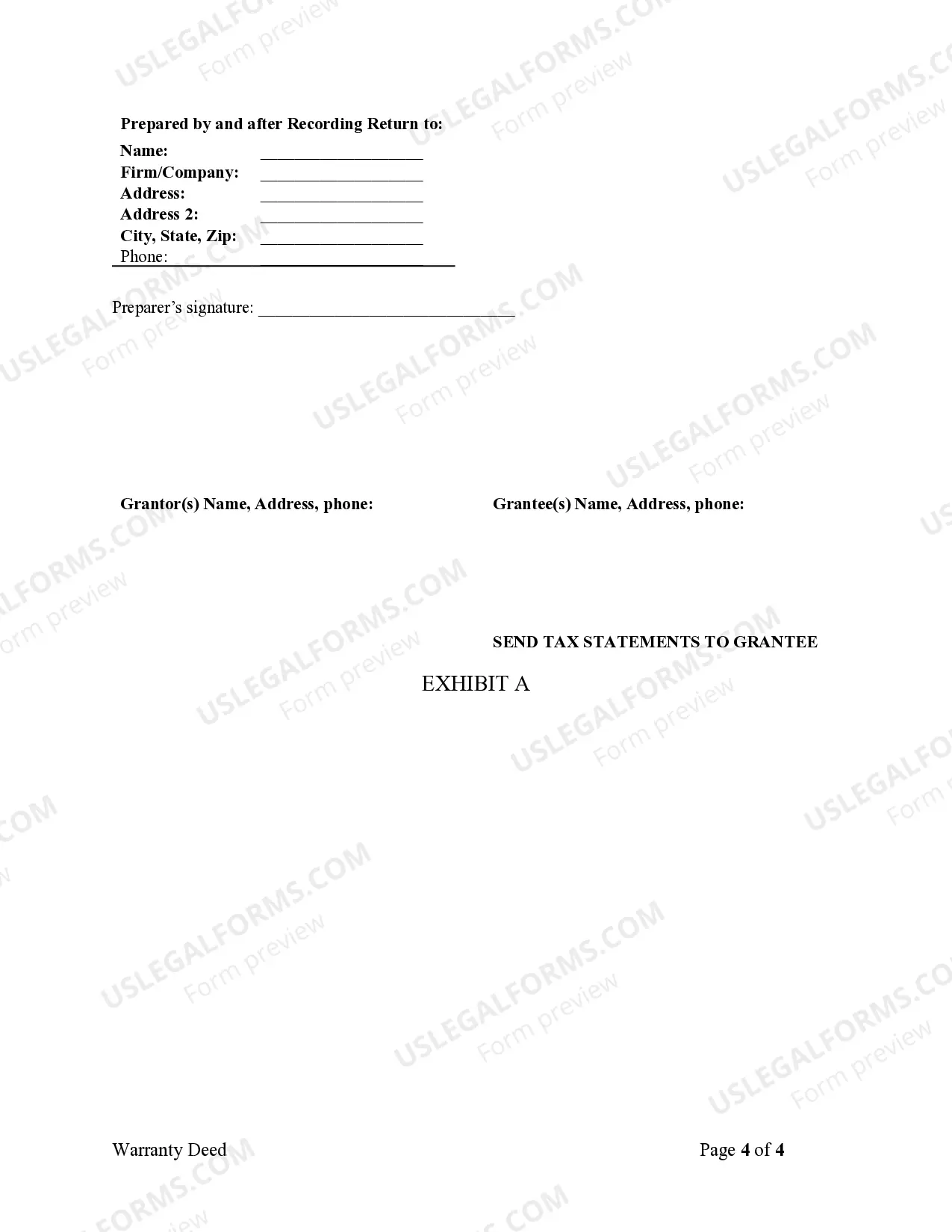
- Identifies the grantors (husband and wife) and grantee (corporation).
- Contains a legal description of the property being conveyed.
- Covers the warranties provided by the grantors regarding the property title.
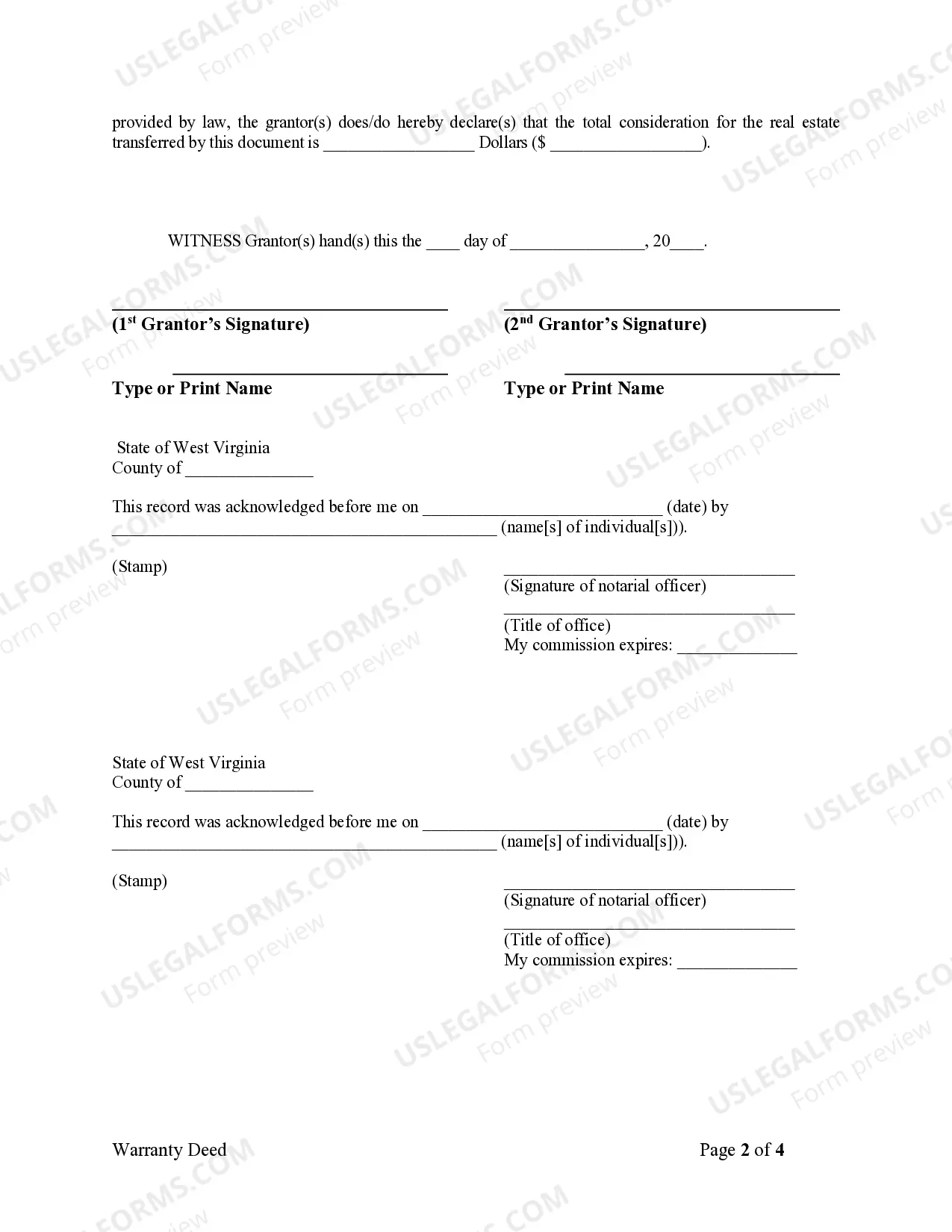
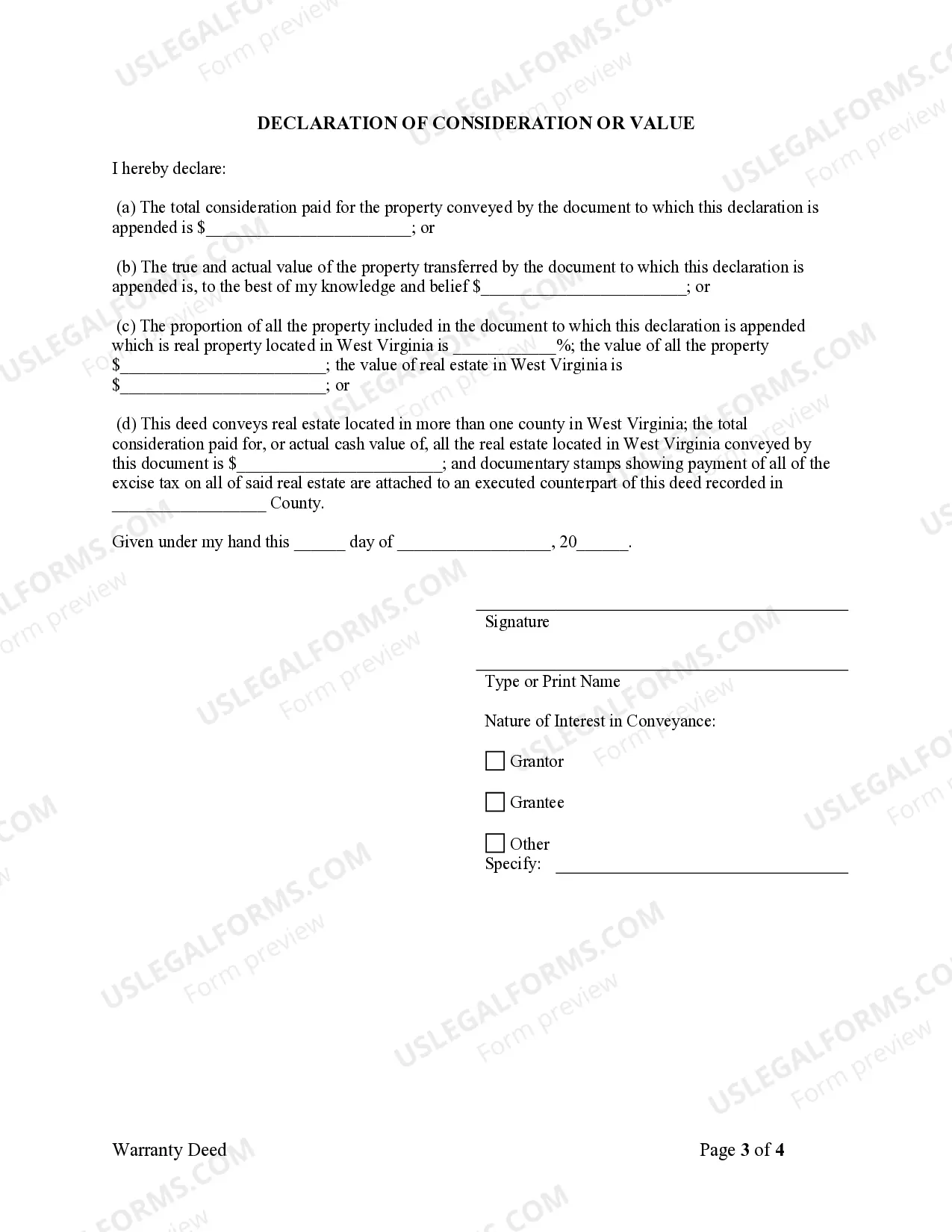
- Includes declarations regarding the consideration for the transfer.
- Requires signatures from both grantors and a notary public.

When to use this form
This form is commonly used when a married couple wants to transfer property ownership to a corporation for reasons such as business purposes, estate planning, or asset protection. It is particularly useful when the property is part of a business investment or when the couple wishes to formally separate personal and business assets.
Who needs this form
- Married couples looking to transfer their property to a corporation.
- Real estate investors operating as a corporation.
- Business owners seeking to establish clear legal ownership of property.
- Individuals involved in estate planning or property management arrangements.
Steps to complete this form
- Identify the names of both grantors (husband and wife) and the corporation receiving the property.
- Provide a complete legal description of the property being transferred.
- Fill in the total consideration for the property, specifying the dollar amount.
- Both grantors must sign the document in the presence of a notary public.
- Ensure that all required acknowledgments are made as per local regulations.
Is notarization required?
Notarization is required for this form to take effect. Our online notarization service, powered by Notarize, lets you verify and sign documents remotely through an encrypted video session, available 24/7.
Get your form ready online
Our built-in tools help you complete, sign, share, and store your documents in one place.
Make edits, fill in missing information, and update formatting in US Legal Forms—just like you would in MS Word.
Download a copy, print it, send it by email, or mail it via USPS—whatever works best for your next step.
Sign and collect signatures with our SignNow integration. Send to multiple recipients, set reminders, and more. Go Premium to unlock E-Sign.
If this form requires notarization, complete it online through a secure video call—no need to meet a notary in person or wait for an appointment.
We protect your documents and personal data by following strict security and privacy standards.

Make edits, fill in missing information, and update formatting in US Legal Forms—just like you would in MS Word.

Download a copy, print it, send it by email, or mail it via USPS—whatever works best for your next step.

Sign and collect signatures with our SignNow integration. Send to multiple recipients, set reminders, and more. Go Premium to unlock E-Sign.

If this form requires notarization, complete it online through a secure video call—no need to meet a notary in person or wait for an appointment.

We protect your documents and personal data by following strict security and privacy standards.
Mistakes to watch out for
- Failing to properly describe the property, which can lead to disputes over ownership.
- Not having the deed notarized, which may invalidate the transfer.
- Omitting required signatures from both grantors, making the deed incomplete.
- Forgetting to include any easements or mineral rights that may apply to the property.
Why use this form online
- Convenience of downloading and completing the form from home at any time.
- Editability allows you to customize the deed to meet your specific transfer needs.
- Access to professionally drafted templates by licensed attorneys for reliability.
Quick recap
- The Warranty Deed from Husband and Wife to Corporation facilitates the transfer of property ownership to a corporation.
- This form provides legal protection by warranting the property title against claims.
- Both signatures and notarization are required for the deed to be valid.
Looking for another form?










Form popularity
FAQ
A special warranty deed to real estate offers protection to the buyer through the seller's guarantee that the title has been free and clear of encumbrances during their ownership of the property. It does not guarantee clear title beyond their ownership.
A special warranty deed is common when a house has been foreclosed on by a bank because the previous owner did not pay their mortgage.The special warranty deed that the bank provides to the new buyer provides no protection for the period of time before the bank took ownership of the property.
Special warranty deeds are most commonly used with commercial property transactions. Single-family and other residential property transactions will usually use a general warranty deed. Many mortgage lenders insist upon the use of the general warranty deed.
Key Takeaways. A property deed is a legal document that transfers the ownership of real estate from a seller to a buyer.General warranty deeds give the grantee the most protection, special warranty deeds give the grantee more limited protection, and a quitclaim deed gives the grantee the least protection under the law
Unlike a warranty deed or special warranty deed, a quitclaim deed makes no assurances whatsoever about the property.For example, in a divorce situation where one spouse deeds the house to the other spouse. Quitclaim deeds are commonly used to transfer real property to an LLC or a living trust.
A warranty deed, also known as a general warranty deed, is a legal real estate document between the seller (grantor) and the buyer (grantee). The deed protects the buyer by pledging that the seller holds clear title to the property and there are no encumbrances, outstanding liens, or mortgages against it.
After your Warranty Deed has been recorded at the County Clerk's Office, it can be sent to the grantee. However, any person or corporation can be designated as the recipient of the recorded Warranty Deed.
A warranty deed guarantees that: The grantor is the rightful owner of the property and has the legal right to transfer the title.The title would withstand third-party claims to ownership of the property. The grantor will do anything to ensure the grantee's title to the property.